
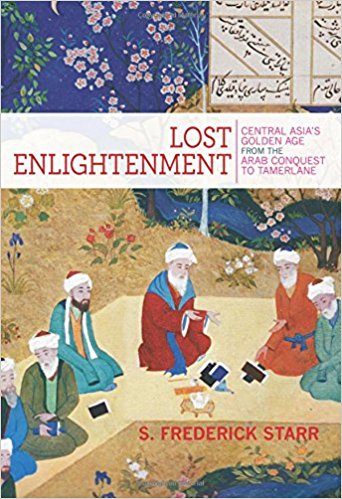
The invention of Hinduism 1,000 years ago by a Muslim

On of the most annoying tropes in modern intellectual discourse, in particular of the postcolonial variety, is its Eurocentrism. That is, the focus on the Western colonial experience is so strong and unwavering that operationally the rest of history becomes prehistory, a formless period which we are ignorant of, when humans were different in fundamental ways.

Empirically this is of course false. Earlier I have mentioned that the Central Asian Iranian polymath, Al-Biruni, had much to say about India. His was one of the earliest extensive anthropologies we have about the subcontinent from the prespective of an outsider. Though Al-Biruni was from a region which had once had a flourishing Buddhist presence, by the 10th century this had faded from historically memory. Whereas earlier Islamic scholars from previous centuries allude to the persistence of Buddhists in what is today Central Asia and Afghanistan, by Al-Biruni’s lifetime non-Muslims were in sharp retreat (though in the fastness of area like Chitral paganism persisted for a thousand years).

In any case, here are some extracts of Al-Biruni on Indian religion:

The belief of educated and uneducated people differs in every nation; for the former strive to conceive abstract ideas and to define general principles, while the latter do not pass beyond the apprehension of the senses and are content with derived rules, without caring for details, especially in questions of religion and law, regarding which opinions and interests are divided.

With regard to God, the Hindus believe that he is one, eternal, without beginning and end, acting by free will, almighty, all-wise, living, giving life, ruling, and preserving; one who is unique in his sovereignty, beyond all likeness and unlikeness, and neither resembling anything nor having anything resemble him. In order to illustrate this, we shall produce some extracts from the Hindu literature….

This is what educated people believe about God. They consider the unity of God as absolute, but that everything beside God which may appear as a unity is really a plurality of things. The existence of God they consider as a real existence, because everything that exists, exists through him. It is not impossible to think

If we now pass from the ideas of the educated people among the Hindus to those of the common people, we must first state that they present a great variety. Some of them are simply abominable, but similar errors occur also in other religions. Nay, even in Islam we must decidedly disapprove of the anthropomorphic doctrines, the teachings of the Jabriyya sect, the prohibition of the discussion of religious topics, and such like. Every religious sentence destined for the people at large must be carefully worded, as the following example shows. Some Hindu scholar calls God “a point,” meaning to say thereby that the qualities of bodies do not apply to him. Now some uneducated man reads this and imagines that God is as small as a point, and he does not find out what the word “point” in this sentence was really intended to express. He will not even stop with this offensive comparison, but will describe God as much larger, and will say, “He is twelve fingers long and ten fingers broad.” Further, if an uneducated man hears what we have mentioned, that God comprehends the universe so that nothing is concealed from him, he will at once imagine that this comprehending is effected by means of eyesight; that eyesight is only possible by means of an eye, and that two eyes are better than only one; and in consequence he will describe God as having a thousand eyes, meaning to describe his omniscience.

Similar hideous fictions are sometimes met with among the Hindus, especially among those castes who are not allowed to occupy themselves with science, of whom we shall speak hereafter.

As the word of confession, “There is no god but God, Mohammed is his prophet,” is the shibboleth of Islam, the Trinity that of Christianity, and the institution of the Sabbath that of Judaism, so metempsychosis is the shibboleth of the Hindu religion. Therefore he who does not believe in it does not belong to them, and is not reckoned as one of them. For they hold that the soul, as long as it has not risen to the highest absolute intelligence, does not comprehend the totality of objects at once. Therefore it must explore all particular beings and examine all the possibilities.

The point of this post is not to show that Al-Biruni had a good idea of what “Hinduism” was, though I think if you read it on the whole he isn’t that far removed from how some moderns would characterize it. Rather, it is to show that the distinctiveness of Indian religious thought was noticed long before Europeans arrived to create a specific categorization system which we utilize today. The details of the system might deviate from Al-Biruni, or Adi Shankara, but in its broad outlines it’s describing the same thing.

(since some people are not subtle, the title is not to be taken literally)
Book Review: Ye Khamoshi Kahan Tak (Silent no more?) by Lt Gen (Rtd) Shahid Aziz

The late great Asma Jahangir once described Pakistan’s generals as ‘duffers’ on national TV. While it would be disingenuous to generalize a whole group as duffers, one can infer that within a strictly hierarchical structure as the army, loyalty to the force and to the commanders is considered a greater asset than intelligence or aptitude. A better experiment would be to take a look at the books written by various retired generals through the decades and reach a conclusion. It can also help us understand what type of characters are highly valued by the institution and thus given promotions. Many of the earliest officers in Pakistan Army wrote their memoirs including (but not limited to) General Ayub, General Sher Ali Khan, Air Marshal Asghar Khan and General Gul Hasan.  General Sher Ali Khan was an ‘ideologue’ of the elusive ‘Ideology of Pakistan’ while Ayub Khan and Asghar Khan had slightly more pragmatist views in that regard. Lt Gen Shahid Aziz belonged to the former category. According to his account, he was an honest officer who always put the interest of institution before any other interests.

He described himself in the following words in his book:

“Why am I full of contradiction? Why can’t I be balanced? Then I console myself with the thought that a pendulum has a balance too; what use is a balance that is static and frozen? Real balance is in movement. One should be flying back and forth on a swing.” (Translation: Khaled Ahmad)

Reading the book, one gets the impression that he was slightly more PakNationalist than the average military Joe and his levels of self-righteousness were high enough to prompt him writing that book. He knew exactly what he was doing and was a man of his (however flawed) convictions. He was the kind of guy who refused to vote for Zia in the sham referendum held in 1984, despite being asked by his superiors in the military, the type of officer who wouldn’t display a star and Pakistan’s flag on his staff car.  Musharraf obviously was wily enough to see through Shahid Aziz’s simplistic stupidity and didn’t promote him as the Vice-Chief of Army Staff. You can see his cognitive dissonance in the book that he has no shame (or self-awareness) appropriating Faiz’s work (the book is littered with poems by Faiz and Ahmad Faraz, both of whom were harsh critics of despotism and military rule in Pakistan and left the country rather than stay under a military dictatorship).

I think he’s the ultimate Nasim Hijazi character (Man on a white horse), someone who imbibed the whole PakNationalist Muslim narrative and decided to live accordingly. By PakNationalist Muslim narrative, I mean believing wholeheartedly in the ‘Two Nation Theory’, believing in conspiracy theories that the US-Israel-India nexus is constantly working to undermine the sovereignty of Pakistani state, holding the military at a higher pedestal than politicians and believing that Pakistani Islam is supposed to save the rest of Muslim world. Throughout the book, he refers to Taliban (of any variety) as ‘Mujahideen’, without any shame or remorse. His view about Pakistani Taliban (TTP) is the following:

“The bombs that kill innocent Pakistanis in bazaars and mosques are planted by friends of America, and this terrorism is done to persuade Pakistan to embrace America more closely, allow the government to pursue pro-America policies, and to alienate Pakistan from the mujahideen. But this trend of support to the killers of Muslims is an open rebellion against Allah.”

In the book, he mentioned two instances during his training in the US when he was approached by people who wanted him to leave Pakistan army and join the US army in the same position that he held in Pakistan. This sounds preposterous because you need to be a green-card holder or a national to enlist as an officer and you can’t be inducted straight as a commanding officer.

One of the more interesting (but not completely unsurprising) aspects of his book was the discussion of nepotism and corruption within the ranks of the army (especially corruption during weapons procurement and the way DHA scams people). Such things, if ever pointed out by civilians, would constitute heresy and treason. Another aspect that intrigued me was his criticism of war tactics during 1971 (he fought along the Kashmir border) and during Kargil (when he was part of ISI).

The most useful part of the book is when he discusses his role as a first-hand observer of Musharraf’s coup and its aftermath. He was also part of the team that selected people for running different ministries under Musharraf and he spilled the beans on how Ministers of Finance, Commerce, Trade, Industry, and Petroleum were ‘pre-selected’ and Shaukat Aziz never even appeared before the interview panel. He was initially optimistic about the monitoring mechanism put in place to hold the relevant ministers accountable but things didn’t work as smoothly or ideally as he wished. He laid the blame squarely at Bureaucracy’s feet.

His thoughts post-9/11 were:
“After 9/11 the bitter reality of a unipolar world was exposed. This incident happened under suspicious circumstances. A lot of American experts claim that this incident was orchestrated by American Intelligence Agencies and Jewish terrorists”.

He was bitter about the fact that Musharraf allowed US forces to use some of our Airbases (Shamsi, Zhob, Dalbandin, Jacobabad). He also mentioned how Indians sneaked into Afghanistan right after the organisedUS-led operation and took over TV stations in Kabul. According to his account, American forces didn’t keep Pakistan informed regarding their hunt for Al-Qaeda militants and knowingly pushed then towards Pakistan. About the first encounters between SSG unit and Al-Qaeda militants, he was full of praise for the militants and commented: ‘how can you compare a salaried individual with a guy who is looking to be martyred?’

Regarding the Indian Parliament attack in December 2001, he had this to say: “After The Delhi bomb attacks, Pakistan was accused in the world as a terrorist haven. This was a ridiculous claim. By that time, Pakistan had ceased help to Kashmiri Mujahideen. ISI was strictly acting upon the new policy. Obviously, Kashmiri Mujahideen were not an organized group, they were nothing more than a ragtag army who were fighting in the way of Allah, not listening to anyone. However, the government wasn’t involved.”

There were tensions within the top brass in 2002-03, which have been highlighted by the author. There were turf disputes between ISI and Army, involving some captured Al-Qaeda militants, close coordination between Army and CENTCOM,  and development of a Quick Response Force and a Special Operation Task Force within SSG. There were two assassination attempts on Musharraf in the period 2003-4 which were orchestrated by people within the military.  He, however, voted for Musharraf in the 2001 Referendum. (Just an aside, I was an ‘observer’ for the Referendum near a village in Mansehra and saw how people brought NICs of dead people to the voting station so that those people’s vote could be counted).

His reflections on becoming CGS (Chief of General Staff):
“My tenure as CGS was really hard for me. Everything that could go wrong, went wrong. In Afghanistan, we collaborated with the U.S. while waving the flag of non-partisanship and were equally responsible for massacre of fellow muslims, a dictator who came to the fore promising change became President for five years based on a sham election, Incapable and corrupt politicians were promoted by the army to run the country, compromises were made on Kashmir under American pressure, separatism in Balochistan was promoted, commercial TV channels were allowed to manipulate our nation’s narrative, ‘Pakistan First’ was used as a slogan and there were efforts to reform Islam under the auspices of ‘Enlightened Moderation’. He argued with Musharraf in favor of keeping the Kashmiri ‘Mujahideen’ as proxies against India.

He rails against both secular people and religious people because they don’t follow what he thinks is the righteous path. According to his plan, religious education in regular schools should be updated and secular education in religious schools should be updated so that in a decade, students of both systems are on par with each other. He sparred with Musharraf and his friends over this at dinner parties. The more alarming insight from the book is that such view and such officers were popular in the army. He also had a romantic view of the ascetic life, free of the burdens of money, job and retirement.

Bangladeshi freethinker shot dead

Freethinking writer and politician shot dead in Bangladesh:

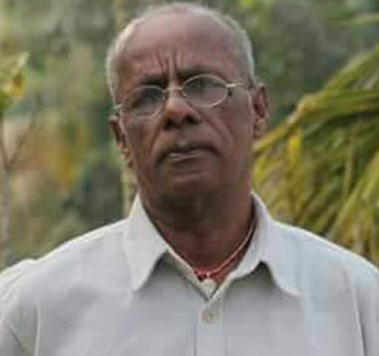
Shahzahan Bachchu was known locally and within the secular Bangladeshi movement as an outspoken, sometimes fiery activist for secularism. He printed poetry and books related to humanism and freethought via his publishing house Bishaka Prakashani (Star Publishers). He was also a political activist, serving as former general secretary of Munshiganj district unit of the Communist Party.

He was reportedly shot and killed this evening near his village home at Kakaldi in Munshiganj district near the capital Dhaka.

The fool hath said in his heart, There is a God.

Brown Pundits