
The South Asian subcontinent is characterized by a complex history of human migrations and population interactions. In this study, we used genome-wide data to provide novel insights on the demographic history and population relationships of six Indo-European populations from the Indian State of West Maharashtra. The samples correspond to two castes (Deshastha Brahmins and Kunbi Marathas) and four tribal groups (Kokana, Warli, Bhil and Pawara). We show that tribal groups have had much smaller effective population sizes than castes, and that genetic drift has had a higher impact in tribal populations. We also show clear affinities between the Bhil and Pawara tribes, and to a lesser extent, between the Warli and Kokana tribes. Our comparisons with available modern and ancient DNA datasets from South Asia indicate that the Brahmin caste has higher Ancient Iranian and Steppe pastoralist contributions than the Kunbi Marathas caste. Additionally, in contrast to the two castes, tribal groups have very high Ancient Ancestral South Indian (AASI) contributions. Indo-European tribal groups tend to have higher Steppe contributions than Dravidian tribal groups, providing further support for the hypothesis that Steppe pastoralists were the source of Indo-European languages in South Asia, as well as Europe.
Day: June 23, 2020
Resilience in the face of religious change
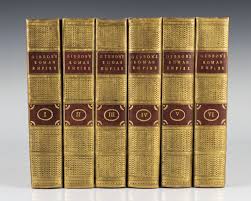 Recently my friend Josiah Neely mentioned offhand how in The Decline and Fall of the Roman Empire Gibbon argued that one reason paganism couldn’t reverse the tide of Christianity is that once a society or individual became Christian and ceased pagan practice, there wasn’t a good roadmap on how to reembrace the old traditions. In contrast, Christianity’s ideological content meant that even if there was a period of apostasy or public cessation of practice, ideological continuity could be maintained.
To be more explicit and extend the argument, I think the key is that there was a class of religious professionals who were devoted in a deep way to the ideological content of Christianity. If, as occurred in Britain and the Balkans, Christianity collapsed, they would endeavor to reconvert the populace, as they did.
There are other cases of this. Han Yu was a Confucian scholar who denounced Buddhism in the year 800 A.D. during the Tang dynasty. This period, between 600 and 900 A.D. was the “high water” point of public state Buddhism in China. But there always remained an alternative tradition of Chinese scholars and officials who were expositors Confucianism. Eventually, these people “recaptured” China during the Song dynasty for Confucianism, and Buddhism became a religion of the popular people and not the state.
As I said elsewhere, this may explain the persistence of Hinduism. Hinduism, like Greco-Roman paganism, is diverse and variegated. But unlike Greco-Roman paganism, there seems to have been a dynamic and reciprocal tension between philosophy and folk religion, mediated by Brahmins. Greco-Roman paganism was fundamentally an expression of ethnicity and identity. Tradition and custom. Greco-Roman metaphysics was the purview of secular philosophers. Hinduism is arguably more fused, and this may have given it more robustness.
Interview with Radcliffe
Cyril Radcliffe gets a lot of (mostly undeserved) flak from people anxious to find some scapegoat for the partition disaster. The following is an extract from Kuldip Nayar’s book “Scoop” (published originally by Scroll, India) that sheds some light on those times and Radcliffe’s role in them.
HOW A KNEE JERK DECISION LED TO MISERY FOR GENRATIONS
An excerpt from ‘Scoop’, in which the veteran journalist, who died on August 23, wrote about interviewing Cyril Radcliffe, Chairman of the Boundary Commission.
“I nearly gave you Lahore,” Lord Cyril Radcliffe, Chairman of the Boundary Commission, told me. “But then I realised that Pakistan would not have any large city. I had already earmarked Calcutta for India.”
Lahore had Hindus and Sikhs in a majority and way up in assets, he said. Yet he had no option because of paucity of big towns in Pakistan. The conversation took place at Radcliffe’s flat in London towards the later half of 1971. I had gone there to meet Lord Mountbatten, the last British Governor-General. I wanted to know how the boundary lines of India and Pakistan were drawn. Although the Boundary Commission had four more members – two from India, Mehar Chand Mahajan and Teja Singh, and two from Pakistan, Din Mohammed and Mohammed Munir – they were all serving judges.
Radcliffe was the one who made the decision because the Commission was divided, India’s members on one side and those from Pakistan on the other. What yardstick did he apply? I was keen to know. I found to my horror that Radcliffe had no fixed rules to go by when he drew the boundaries between India and Pakistan. He had gathered sufficient information by the time he came to demarcate the borders. Continue reading Interview with Radcliffe