
Review: Requiem in Raga Janki by Neelum Saran Gour

Neelum Saran Gour’s novel Requiem in Raga Janki (Penguin Random House India, 2018) is a fictionalized biography of Janki Bai Ilahabadi (1880-1934), one of the most famous Hindustani classical singers of the early twentieth century. Janki Bai was an extremely successful gramophone artist in the early days of recording. She performed at the Grand Delhi Darbar in December 1911, where George V was crowned as Emperor of India. She also wrote Urdu poetry, most famously the Diwan-e-Janki.

Gour begins the novel by describing one of the most famous stories associated with Janki Bai, when she was stabbed by a jealous lover (depending on the version of the story, the man was either her lover or the lover of her father’s mistress). Janki received 56 stab wounds, which led to her receiving the nickname “Chappan Churi” (56 knives). After the stabbing, her father’s mistress, Lakshmi, ran away and Janki’s father abandoned his wife and children to go searching for her. Janki and her mother Manki Bai were then sold to a brothel in Allahabad. In order to protect her daughter from becoming an ordinary sex worker, Manki Bai arranged for her to recieve a high level of musical training from Ustad Hassu Khan of the Gwalior gharana (school) of Hindustani classical singing. Her success at this art is what made Janki a bai or courtesan– a highly valued female entertainer.

The rest of the review can be read on Substack 


Indus Water Treaty: What lies in the future?

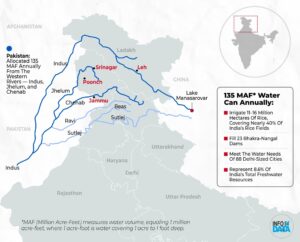
Indus Waters Treaty was signed in 19 Sept 1960 between India and Pakistan under mediation provided by the World Bank. As a political compromise between Pakistan and India seemed improbable the US and UK decided to pressure both into signing onto a technical treaty which could outline the claims and limits of both nations on the flow of the water. Over the years it was touted at the most successful and unequal water sharing agreement where the upper riparian nation only made claim to a minor portion of the river’s waters.

The Indus basin was categorized into two groups of rivers. With the Eastern Rivers (Beas, Ravi, and Sutlej) being controlled by India and the Western Rivers (Indus, Chenab and Jhelum) being controlled by Pakistan.

Many still blame Nehru for this treaty in India for only allowing India to control less than 20% of the Indus’ waters, while many in Pakistan still decry the unequal nature of the treaty in directly awarding a set of rivers to India as that may eventually cause droughts in the parts of Pakistan which are mainly fed by the Eastern rivers. However, the main calls for renegotiations of the treaty have originated in India which at this point has put it into ‘abeyance’. In this post we will go through the main areas of dispute in the treaty and what the possible solutions for the current impasse may be.

Continue reading Indus Water Treaty: What lies in the future?

Brown Pundits