Afghanistan’s History (a)

Special thanks to Mayuresh Madhav Kelkar for sending this. I would start watching this excellent Dari Farsi documentary 1 minute 19 seconds in. There are many excellent ancient maps of central and south Asia.


I just want to watch this again and again, just to listen to the narrator’s voice. Majestic, wise, soft and sweet. For those so sure Afghanistan will fall; any nation with voices like this is perchance stronger than she appears. This may be where the homo sapien sapien modern civilization was born.

+++++++++++++++++++++++++++++++++++++++++
Afghanistan’s History


Avtar Singh Khalsa: Lion of Afghanistan

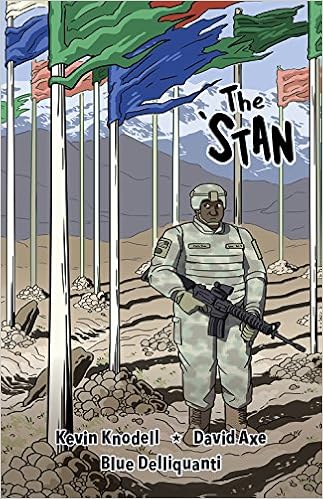
Book Review: The Stan

Dead Reckoning is a (fairly new) imprint of the Naval Institute Press that publishes military-themed graphic novels and books (e.g. they have published “All Quiet on the Western Front” as a graphic novel).   The Stan is a comic book based on stories collected by two American journalists (autors Kevin Knodell and David Axe) who have spent a long time covering the war in Afghanistan. The only story not based on their work is the opening chapter, which is a comic based on the life and words of former Taliban ambassador to Pakistan, Abdus Salam Zaeef. They use this first comic as a capsule history of the background to this war as well as a prediction of its futility and eventual failure.  This is the only comic that gives a nod, albeit a minimalistic and relatively simple one, to the “big picture” of the Afghan war and it is a strictly anti-war and anti-interventionist one. The other comics are all about the “little people”, ordinary soldiers, an Afghan interpreter, an Afghan soldier and an Afghan policeman. The last comic is about one of the authors (Kevin Knodell), who may have some PTSD, and his parting words are that “America’s longest war was going to stretch on longer”. Continue reading Book Review: The Stan

Book Review: The Last Warlord

Book Review – The Last
Warlord

By Dr Hamid Hussain

 The Last Warlord by Brian Glyn Williams is the life
story of Abdul Rashid Dostum; a former Afghan warlord and current First Vice
President of Afghanistan. Dostum is an excellent case study specimen for any
researcher who wants to understand the sanguine history of Afghanistan of the
last three decades. No actor has performed so many roles even in movies which
Dostum has done in real life. A plumber, oil and gas rig worker, wrestler,
meteoric rise from a petty local militia commander to a general commanding a
Corps, warlord, deputy defense minister, presidential candidate, chief of staff
to President of Afghanistan and now First Vice President of Afghanistan.

 Brian’s work gives a friendly account of Dostum’s life
and author admits that ‘he might be able to help Dostum get his story out’.
Many exaggerated stories about the venality of Dostum are given a thorough
scrubbing. The final story which emerges presents Dostum as a moderate secular
leader who is trying to get fair share for his ethnic Uzbek community in
Afghanistan. This is only partly true and there are hundred shades of grey.

Dostum started his career as oil and gas worker and
later joined Afghan army. He was affiliated with the Parcham (Banner) faction of
Afghan Communists. He served with 444 Commando unit. In 1970s and 80s, Dostum
fought against rebels (Mujahedeen) as local militia
commander. He was a successful commander and soon his command rapidly expanded
from a battalion (kandak) to a division
(53rd Division) and
finally a Corps (7th Corps). He led his
tough Uzbek fighters called Jowzjani
Militia
(called Gilamjam or carpet thieves by
adversaries) from the front in battlefields all over Afghanistan. Dostum was
sent to every front when fighting got tough and he proved to be an able
commander in countless battles. He was known for frontal assaults that resulted
in heavy casualties and in the long run caused war weariness among his fellow
Uzbeks.

Dostum was no boy scout but his allies and opponents
were also not representatives of Jeffersonian democracy. Almost all were
unscrupulous rascals obsessed with power with no consideration for their
countrymen. They happily destroyed every standing building of their country
looting even the furniture of schools of their children as war booty. They
destroyed more mosques in thirty years than all the foreigners combined who
passed through their lands over centuries. All were responsible for unspeakable
atrocities against their own people killing and maiming hundreds of thousands
and raping boys and girls. This is the most shameful chapter of Afghan history
which every Afghan conveniently forgets.

Outsiders are perplexed at the most intriguing factor of
shifting alliances of Afghan clients. Dostum is no different than any other
Afghan leader and master of byzantine intrigues. In 1998, Dostum entertained an
American delegation in his fiefdom to be followed by a delegation of Iranian
intelligence agents. He fought alongside communists and Soviet army considered
his men as the most reliable partners in fight against Mujahedeen. In 1992, when
President Najibullah became orphan after the cessation of Soviet aid, Dostum
join hands with Ahmad Shah Massoud to overthrow Najibullah and then fought
against Gulbadin Hikmatyar. When he was not given a seat at Kabul, he waited
for the right time to strike. Two years later, he joined hands with Hikmatyar
to try to overthrow President Burhanuddin Rabbani’s government and fought
against Massoud. For a short while, he rented his air force to Taliban when
they were ousting warlord of Herat Ismail Khan. Later, he tried to stop the
rising tide of Taliban in the north and after betrayal of some fellow Uzbeks,
found refuge in Turkey. After September 11, 2001, he rushed back home and with
the help of a handful CIA paramilitary officers and Special Forces troops was
instrumental in rapid rollover of Taliban authority all over Afghanistan.
Dostum was used and discarded and he in turn used and discarded many patrons
including Russia, United Sates, Uzbekistan, Iran and Turkey.

 Americans later tried to put former warlords in the pen
removing them from powerful positions and marginalizing them. However, local
power plays dictated differently. Americans wanted Dostum away from Afghanistan
during 2009 Presidential elections and asked Turkish officials to keep him in
Turkey for an extended exile. Dostum was cooling his heels as Chief of Staff to
the President but effectively under house arrest and later enjoying Turkish
hospitality. President Hamid Karzai needed Uzbek votes for 2009 elections and
despite warnings from the Americans, Karzai brought Dostum back and got his
support. The same act was repeated in 2014, when Ashraf Ghani nominated Dostum
as his running mate.

To Dostum’s credit at least he accepts his own role in
the painful recent past of his country. He told Brian that “It’s time for a new
generation who don’t have blood on their hands to build our nation. Perhaps it
is fitting that I am my people’s last warlord”. One only wish that his words
prove be true as Afghans need a peaceful future. However, current trends
suggest that a rocky road is ahead for Afghanistan. Recent ingress of Taliban in
northern Afghanistan forced Dostum to change his suit for chapan. When United States
started to wind down its operations in Afghanistan, Dostum started looking for
other sponsors. He is master of these maneuvers. In October 2014, he quietly
visited Uzbekistan and Kazakhstan but made no significant headway. In early
October 2015, he visited Moscow and Chechnya. A bit strange itinerary for
Dostum but there is reasons for the trip. Head of Chechen republic, Ramzan
Kadyrov has established himself as an intermediary between Moscow and Muslim
world. In addition, he is positioning himself to be a partner in fight against
Islamic State in Iraq and Levant (ISIL); new international villain of the Game
of Thrones. Dostum is also presenting himself as a reliable partner against
emerging threat of ISIL franchise in Afghanistan. In view of deteriorating
security situation in Afghanistan and uncertain future, Russia is hedging its
bets and planning for a northern buffer zone under a strong man like Dostum to
keep fires of extremism away from its borders. The likely instrument will be
strengthening of Commonwealth of Independent States (CIS) and nudging them to
contribute resources and supplying some heavy weapons to Afghan national army
especially strengthening helicopter forces. Russia is also reinforcing its
201st Motorized Rifle
Division based in Tajikistan and strengthening a border task force. One
sincerely hopes that Dostum lives to see the new generation of Afghans as peace
makers and not dying as a warlord on the killing fields of Afghanistan.

 Brian Glyn Williams. The Last
Warlord
. (Chicago: Chicago Review Press,
2013)

 
Hamid Hussain

December 05, 2015

William Dalrymple: Afghanistan > India

His view has some merit, the problem is we just finished with an Oxford qualified top-notch Prime Minister who had no vote-base and thus no authority. What is happening in Afghanistan is similar to that of 1950s India, elites being imposed top-down on the electorate. Eventually some Imran Khan like charismatic, hardline person will rise up from  the ranks, thus disappointing Dalrymple once more. OTOH a much more likely scenario is that the Taliban will force out democracy and we will have a Caliphate/Emirate once more.
……………………..
Award
winning author William Dalrymple has said that the top three electoral
candidates in Afghanistan during their recent general elections are far
superior intellectually to India’s three leading political figures –
Narendra Modi, Rahul Gandhi and Arvind Kejriwal.

In an
exclusive interview to TOI at the Scottish Parliament on the sidelines
of the inaugural conference of the Edinburgh India Institute, Dalrymple
expressed his “deep apprehension” about Modi and said he finds Modi
“frightening” and a “big mystery”.

Dalrymple said that
Afghanistan’s three leading contenders, Ashraf Ghani, Abdullah Abdullah
and Zalamai Rassoul were all doctorates and had hugely cosmopolitan CVs.


“The three front runners in Afghanistan were deeply
sophisticated men. All of them were highly educated and held doctorates.
Ghani is a former World Bank official, a PhD from Columbia, a finance
minister, and an ex-university chancellor. Compare that to the
intellectual level of three of India’s top candidates,” Dalrymple said.

He further said, “I consider India my first home and the love and
adoration I feel for the country is immense. But India, a country of
heaving beauty and filled with youth and talent, with majority of its
diaspora dominating the world can’t produce impressive and intellectual
politicians. India is a country alive with geniuses but it is
unfortunate that the best talents don’t go into politics.”

According to him, Gandhi – the grandson of Jawaharlal Nehru is “a
complete disappointment who is dim and concerted in public debate and a
complete washout. Congress has some young talents in its ranks and
should find a new leader”. Dalrymple said he found Kejriwal “hugely
disappointing”.

He added, “I hoped he would be effective and
given a choice, I would still vote for him with a heavy heart. But his
49 days in office is a missed opportunity. He missed his chance.”

…….
Link: http://timesofindia.indiatimes.com/world/uk/Dalrymple-ranks-Afghan-leaders-over-Indian-ones/articleshow/35176161.cms
……..

regards

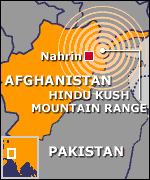
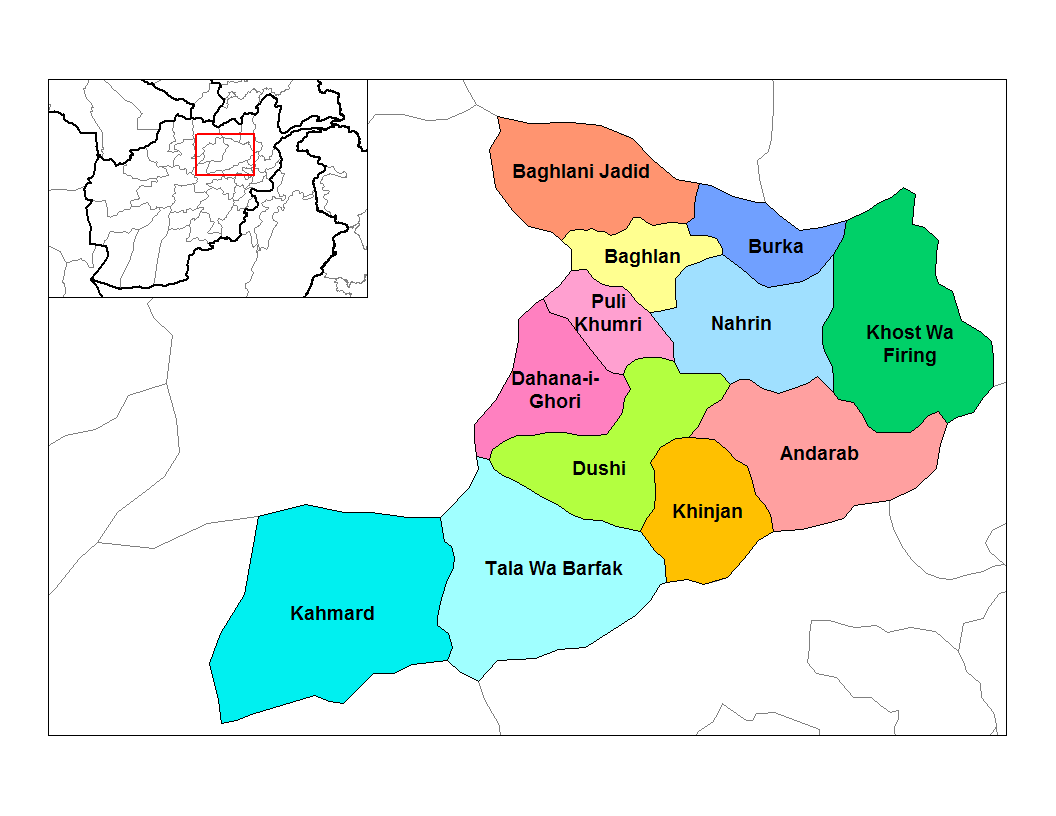
2,800 dead (Nahrin, Afghanistan)

As if man-made miseries are not enough now nature makes a cold call as well. There was a major earthquake on March 03 which killed 100 people, however this appears to be much more severe in terms of human impact. The tremors were felt as far away as Islamabad.

…..
More than 1,500 people are feared dead and 4,000 injured after a
series of earthquakes struck northern Afghanistan on Monday night and
Tuesday, government officials said. A Foreign Ministry official
said the district capital of Nahrin, near the epicentre in the rugged
Hindu Kush mountains, had been destroyed and a Defence Ministry
spokesman said 1,500 homes had crumbled.


The
Defence Ministry spokesman told Reuters: “Our reports say there are
1,500 dead, 4,000 injured, at least 1,500 homes destroyed and 20,000
people are homeless.” “The district capital of Nahrin was destroyed,” he said of a city of mainly mud buildings in the foothills of the Hindu Kush.

“We are sending rescue teams but aftershocks make relief efforts dangerous,” the spokesman said.

This
is the second major earthquake to hit northern Afghanistan this month.
More than 100 people were buried by a landslide in a remote village in
neighbouring Samangan province on March 3 after the last quake.

Aid
workers in the northern town of Mazar-i-Sharif, some 200 km (120 miles)
northwest of Nahrin, said they felt the quake on Monday night and ran
out into the streets. Light shocks were also felt in the Pakistani
capital Islamabad.

The
Seismological Office in the Pakistan city of Peshawar said the
earthquake struck at 1457 GMT on Monday and measured 6.0 on the Richter
scale. “It’s epicentre was in the Hindu Kush mountains,”

said official Lataf Gul. “Since
then aftershocks are being recorded. The last recorded was at 0655 GMT
today (Tuesday) with an intensity of 5.0 on the Richter scale.”

Earthquakes are relatively frequent in the Hindu Kush mountain range. In 1998, two earthquakes killed about 8,500 people and destroyed tens of thousands of houses in Takhar and Badakhshan provinces.
….
Link: http://www.dailymail.co.uk/news/article-106817/Hundreds-feared-dead-Afghan-earthquake.html

……
regards

Brown Pundits