
There was a comment below about who the readers are of this weblog. One thing that is clear is that people who comment are not necessarily representative.
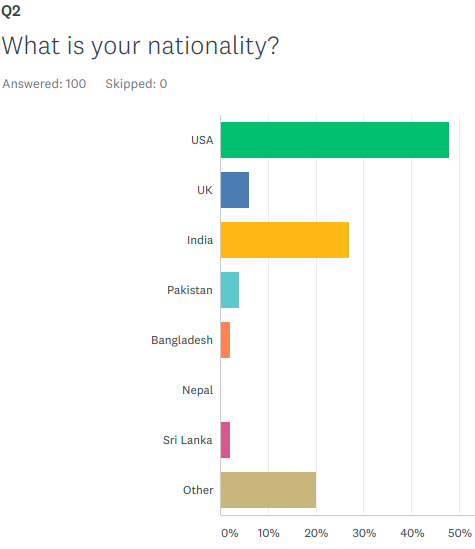
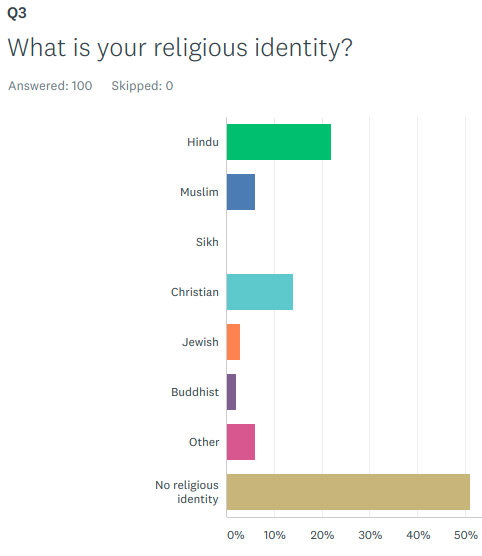
There was a comment below about who the readers are of this weblog. One thing that is clear is that people who comment are not necessarily representative.
 On my other weblog I have a post, On The Instrumental Uses Of Arabic Science, which reflects on the role that the idea of science, the Islamic world, and cultural myopia, play in our deployment of particular historical facts and dynamics. That is, an idea, a concept, does not exist on an island but is embedded in a cultural environment. Several different contexts.
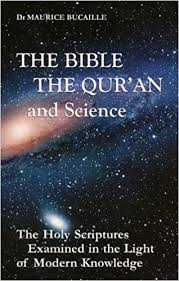 My father is a professional scientist, and a Muslim who lives in the West. In our house there was always a copy of The Bible, the Qu’ran and Science: The Holy Scriptures Examined in the Light of Modern Knowledge. To those not convinced about the beliefs of Islam, as I never was, it was not a convincing book. But it played a particular role in my father’s life of the mind as both a Muslim and a scientist. Its arguments were less important in their detail than that a French scientist had written a book showing that Islam and science were compatible and that in fact, the Koran had prefigured scientific truths.
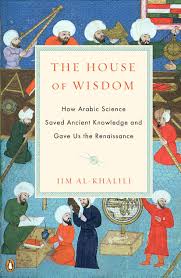
 The intellectual achievements of medieval Islam, particularly the phase focused around the House of Wisdom, are a real thing in and of themselves. But more often they exist as tools for the implicit or explicit agendas of particular peoples with ends which are separate and distinct from an understanding of the past on its own terms.
 For many Muslims, this period defines what Islam could have been. Should have been. More traditionalist Muslims will have a relatively understated take, and perhaps attribute the passing of this period due to external forces (e.g., the collapse of central authority by the end of the 9th century). More progressive Muslims will make a bolder claim, that Islam, that Muslims, made the wrong decisions internally (al-Ghazali often emerges as a villain).
 A modernist, perhaps Whiggish, take would be that the 9th century of Islam was a “false dawn.” Illustrative of the acidic power of rationality, but an instance when it receded in the face of faith (the Mutazilites often become heroes in these tales). A more multiculturalist and contemporary progressive Western take would likely emphasize that Islamic cultural production was just as ingenious as that of the West, and its diminishment was due to the suffocating effect of colonialism.
 But there are even more exotic takes one could propose. The shift from the Umayyads in Damascus to the Abbasids in Baghdad was a shift of the Islamic world from the west to the east. The prominence of Iranian culture during the latter period was palpable. The Caliph al-Mamun was half Iranian, and almost moved the capital of the Abbasids to Merv in Khorasan. The Barmakid family were ethnically Iranian, but also originally hereditary Buddhists. The historian of Central Asia, Christopher Beckwith, has alluded to an “Indian period” of Islamic civilization when the influence from Dharmic religion and Indian culture was strong. For example, Beckwith and others have argued that the madrassa system derives from that of Central Asian viharas.
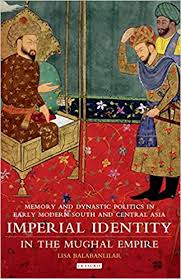 But ultimately this post and this blog is not about Classical Islamic civilization and history. Rather, I want to pivot to the discussion of Islam and India.
This blog now gets in the range of the same amount of traffic as my other weblog. But a major difference is the source of traffic. About two times as many visitors to this weblog come from the USA as India. So Americans are dominant. But, on my other weblog, 15 times as many visitors come from the USA as India. Additionally, since this is a group weblog, I’m pretty liberal about comments, and so this weblog receives between 10 to 100 times as many comments as my other weblog. Obviously, since most people in the world are stupid, many of the comments are stupid. I try to ignore that.
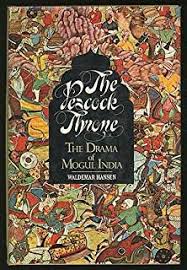 Rather, let me focus on the “hot-button” issue of Islam and India, and how it impacts people here. In the comments of this weblog. Let’s divide the comment(ers) into two stylized camps. Or actually, one person and another camp. The person is commenter Kabir, who has taken it upon himself to defend the honor of Indo-Islamic civilization. On the face of it, that’s not a major problem, but he tends to take extreme offense and demand linguistic and topical policing that’s frankly rather obnoxious (this tendency extends beyond Islam, as he is a living personification of Syme). He’s a bully without the whip. Kabir is somewhat annoying, but I can honestly always just delete his comments. He’s one person.
There are few things that trigger me more into blood-pumping fury than when somebody claims how superior South Asian culture is in respecting women and blah blah family values. By South Asia, I mean India, Pakistan and Bangladesh. I do not want to take space venting my fury here because I primarily want to post the following Guardian article. However, I must write a few lines.
These words need not be said because they are generally well understood by all knowledgable people. South Asia has the world’s worst reputation of treating women. It has worst reputation of violence to women, disrespect to women, sexual objectification of women and just every-day, every hour awkward behaavior to women. It has such bad reputation that whenever a foreign girl, white, black, East Asian, latina, expresses interest in visiting South Asia, all South Asian friends immediately discourage her. Female stewards in international flights specially watch out for South Asian men for perverted behavior. And so on and on. In sum, South Asia has the shittiest culture for women. We can debate till cows come home whether Islam, Hinduism, Muslim occupation, British colonialism etc are to blame for this but there is no escaping what it is now.
Finally South Asia is home to the world’s largest industry of making utterly fake paens, hommages to women. Cue a Karan Zohar movie theme.
Study indicates early marriage, male violence and patriarchal culture are to blame
Nearly two in every five women in the world who kill themselves are Indian, according to a Lancet study published this week that says the country’s suicides rates constitute a public health crisis.
The rate of Indian women who die by suicide has fallen since 1990, but not as fast as elsewhere in the world, and now represents 36.6% of global female suicide deaths, the report in the UK medical journal found.
Indian women who died by suicide were more likely to be married, to be from more developed states and, by a large margin, aged below 35.
“It shows girls in India are in serious trouble,” said Poonam Muttreja, the executive director of the Population Foundation of India, a public health group.
She and other specialists blamed the trend on early marriage – one-fifth of Indian women still marry before the age of 15 – along with male violence against women and other symptoms of a deeply entrenched patriarchal culture.
The suicide rate among Indian women was three times higher than what might be predicted for a country with similar geography and socio-economic indicators, the researchers said.
“Our social norms are very regressive,” Muttreja said. “In the village, a girl is called her father’s daughter, then she is her husband’s wife, and when she has a son, she is her son’s mother.”
Muttreja said research carried out by her organisation had shown that 62% of surveyed women believed it was legitimate for their husbands to beat them.
The researchers speculated the link between suicide and marriage was due to the burdens of youth motherhood, the low social status afforded to wives in some households, the lack of financial independence and exposure to domestic violence.
“The disproportionately high suicide deaths in India are a public health crisis,” the authors, who are mostly affiliated with Indian public health research groups, said.
Around one in four men in the world who die by suicide are Indian, roughly the same proportion as in 1990, the study said.
Suicide was also the leading cause of death for young people of both genders but was worse for women.
The study noted that suicide had recently been decriminalised, so there was a possibility the true rate could be even higher but hidden by families and doctors for fear of stigma or police interference.