Review: Magic in Islam by Michael Mohammed Knight

This is an old capsule review I wrote a few years ago. I have been busier than usual and not writing at all, so I decided to post some old reviews..

26192917

A hot mess of a book, but still worth reading. Michael Knight is now a postmodern conventionally educated scholar, and that is beginning to show. He has obviously read VERY widely and the book contains countless extremely interesting tidbits about magic and magical ideas in Islamicate tradition. But all of this wonderful research is embedded within a curious postmodern framework that can be off-putting and irrelevant to the story. The story he COULD have told is the story of magic and related ideas in the history of Islam and Islamicate culture. THAT story would have been a fascinating and interesting tour through a history that is not well known, especially to outsiders and Western-educated Muslims (like us). And he provides some of that and that is why the book is worth reading. But he is also eager to “correct” our supposed misconceptions about religion and history and too much pleading takes up too much space in this book. Then again, many people seem to want that kind of “mandatory re-education/rectification of names”, so maybe you will like that part too. But personally, I would have preferred more historical details, fewer lectures about orientalism and “the clash of civilizations”.
Best new bit of information for me: that Ibn ul Arabi claimed he had sex with the Arabic letters in paradise. I wish i knew more about the context of that particular quote. But like many fascinating little details in the book, Michael mentions it and moves on. He has clearly read a lot, I wish he had spent more time presenting the information he has collected and less time lecturing us about how “opening space for new fields of knowledge potentially decenters traditions of jurisprudence, even forcing increased opening of an Islam outside normative Muslim legal traditions” and suchlike. Sure, that would be nice. But let us hear the story first, then we can figure out what it means for magic to be (as he describes it) “deconstructive”.
Not that I disagree with his project of “engagement and deep intersection”, just that I wanted more of the facts, less of the postmodern interpretation.

Browncast: Chris Iwanek, India-analyst from Poland

Another BP Podcast is up. You can listen on LibsynAppleSpotify, and Stitcher (and a variety of other platforms). Probably the easiest way to keep up the podcast since we don’t have a regular schedule is to subscribe to one of the links above!

Krzysztof IwanekIn this episode Mukuna and Omar talk to Krzysztof Iwanek (aka Chris), who heads the Asia Research Center in the War Studies University in Warsaw, Poland. Chris also writes regularly for “The Diplomat” and is writing a book about the Ram Rajya Parishad Party (a small traditional Hindu party in India). We talk about Indian politics, his research and whatever else comes up..
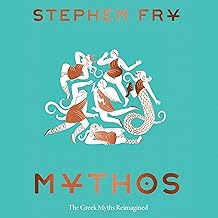
Capsule Review: Mythos by Stephen Fry

Mythos

I read this (or rather, heard this) as an audiobook and loved it. The audiobook is read by Stephen himself and as you may expect, is very nicely read. It is also very nicely written, covering a lot of the Greek myths (this is apparently volume 1, many of the myths and legends that have been left out of this one are likely to be in the second volume titled “Heroes”). Stephen does an especially nice job of outlining the successive layers of Chaos, Gaia, Titans and Gods and makes the exuberant (and confusing) mass of origin stories into a coherent overall narrative. His retelling of the myths is full of humor and shows off his vast erudition with a very light touch. Since polytheism is having a bit of a recovery moment thanks to the intellectual (but not demographic) decline of the big four monotheisms (Judeo-Christian-Islamic and Marxist), this retelling is also timely and likely to strike a chord with some people.

Stephen is clearly a fan and this is a great introduction to these stories. And while his style is humorous and light, he is faithful to the sources and this is not some sort of modern “re-telling” that changes stories and characters to make them more contemporary, though being gay himself, he is more than a little eager to point out that the Greeks and their stories include a lot of same sex stuff. But do note that these are only SOME of the Greek myths and many of the most famous stories are not in this book.  Fry tries to impose a semi-chronological order on the world of Greek mythology (from primal chaos to Gaia and Ouranos mating, to Titans, to Gods, to humans, with a minimal detour into the war of the Giants) so this volume mostly deals with the early universe and the first adventures of the Gods and the humans they created. Later stories (such as the ones in the Odyssey and Iliad) will presumably show up in volume 2.

He does make the mistake in the epilogue of claiming that we should read these myths because they are so unique (“no where else in the world“), which is not really true. The ancient Greeks were not uniquely gifted in this matter (Indians in particular will find it surprising to learn that this cultural package and its multifarious many-sidedness seems so unique to Stephen), but of course they ARE the myths that were best known and most influential in Western Europe, and via that, are the best known and most influential for many modern people.  And because, via Greek and Latin and the heritage of Rome, they are so central to the literary traditions of such dominant languages as English, French and Spanish, they will remain relevant for all people who use these languages, whatever their ethnic or geographical origin. So while I am woke enough to point out to Stephen that his beloved Greeks may not be as unique (in the matter of creating and using such stories to illustrate human nature and the nature of the world at large) as he thinks, I am not in the camp of those who think these should be “decentered” or even thrown away “because Whiteness”. For people from Europe and people who mainly read and write in European origin languages (so really, all of us), these remain must-read literature.
I look forward to volume 2.

Brigadier FB Ali; the Man Who Removed Yahya Khan

From Dr Hamid Hussain. Brigadier FB Ali had an important role in two big events: the coup against Yahya Khan in Dec 1971 and a planned/imagined coup against Bhutto in 1973.. Details below..

Obituary of an officer & gentleman of a bygone era.

Brigadier Furrukh Bakht Ali

Hamid Hussain

Brigadier F. B. Ali (February 1929 – February 2021) passed away in Canada.  He was one of the last of the generation of Pakistan army officers commissioned right after the independence in 1947.  He was a highly respected officer of Pakistan army. Continue reading Brigadier FB Ali; the Man Who Removed Yahya Khan

Hazaras, and Divide and Rule in the British Empire

Some random thoughts from Major Amin about the Hazaras of Pakistan and Afghanistan and the (exemplary and successful) use of divide and rule by the British..

HAZARAS -VICTIMS OF IMPERIAL POLICIES OF DIVIDE AND RULE

Hazara Pioneers were employed by Brigadier General Dyer of Jallianwalla Bagh notoriety in Sarhad District of Iranian Baluchistan in First World War. To my mind and based on family anecdotes of my grandfather’s elder brother Agha Abdul Rauf in British Police since 1914 or so (died 1982-God bless his great soul) Hazaras showed political defiance against the  British when some Hazara soldiers of 124th Baluchistan Infantry deployed in Iran defected to the Persian side. This much unknown incident as per Agha Abdul Rauf played crucial role in British decision to discontinue Hazara recruitment in Infantry units of   British Indian Army after 1921-22.

In his book Raiders of Sarhad Brigadier General Dyer writes words to the effect that Hazara Pioneers were panting to kill the Reki and other Baloch of Sarhad district who being Sunni the Pioneers regarded as infidels and that this would guarantee them a place in paradise. Words to this effect. I read the book in 1977 or 1978. The British cannot be blamed for practicing “Divide et Impera” as they had their own national interests! But Pakistani state of post 1947 cannot be excused for any sectarian or ethnic bias which historians need to research! I will try to find it and would quote Dyers exact remarks.

It is a sad history of how the Britishers divided India and this region and used one tribe against another! The Punjabis against Hindustanis, Gurkhas against Pashtuns, Turi Shias against non-Shia Pashtuns, Hazara Pioneers against Baloch, a Punjabi Police force in Quetta to control Quetta, Hindustanis against Santhals, Hindustanis against Mysore and so on. The history of so called Muslims of Indo Pak is chequered, questionable and frequently highly dubious! Such as the fact that Pathan or Punjabi or Baluchi Muslims had no hesitation in killing Muslims in North India as part of British company’s army in 1857 ! Cureton’s 15th Lancers Pathans were burning and raping Ranghar Muslim villages as part of Cortland’s force in 1857-58 in Jamalpur and many other parts of Hissar but refused to fight against Turks! Similarly Pathans of 124th Baluchistan Infantry were damn comfortable with killing Persian Muslims in South Persia in WW 1 but had issues fighting Sunni Muslims in Mesopotamia, the reason why 124th Baluchistan Infantry was diverted from Mesopotamia to Persia and 2/124th Baluchistan Infantry raised in Persia in WW 1.

The sectarian bug is in Muslims of all parts of the world and the British cannot be blamed at all for using it!

Personally I have many Hazara friends having studied with them at Quetta in 1968-77. They were the most adventurous and sports loving people. Whenever I climbed the Murdar Garh Mountain near my house in Quetta I would see Hazara men on their morning walk climbing Murdar Garh. My Afghan American NGO boss a Pashtun always employed Hazara staff at house and told me once that he liked them because they were far cleaner in personal hygiene and harder working than Pashtuns or Tajiks! Note that this gentleman himself was a Pashtun! Taking his tip I also employed a Hazara maid and she turned my house at Kabul into heavens on earth. Indeed I would say that 70 % of maid servants in Kabul were Hazaras. The assertion of Husseini in Kite Runner about masters of the house fathering sons from Hazara maid servants is a hard fact of Afghan history. What I liked about Ismaili Hazaras was their liberal attitude towards religion. My girlfriend never distinguished between Ramzan and other months of the year. Hazara women , were more painstaking and worked hard in performing their feminine duties while non-Hazara women of all ethnicities , as this scribe personally experienced don’t move a limb at all and regard sex as the sole hard labour job of their male partner.  In Afghanistan again on my morning walks to Tapa i Bibi Mahru I saw Hazaras exercising and jogging. I hardly ever saw any other ethnicity doing it. My Khalqi friend a senior leftist regime member loved Hazara women as he said they were hairless unlike many non Hazara women. Note that this officer had been friends with women of Naghmas stature in beauty and fame ! Was instrumental in creating the female cultural troupe in Afghan Ministry of Interior in 1980s early and was
famous for having some good company under his massive office table while holding the fort in ministry of Interior! Contact with USSR/Russia certainly improved the love making capacity on both sides of Hindu Kush mountains.  Afghans loved going to courses in USSR and my ministry of Interior guards remembered with nostalgia the Russian blondes they met at the Police Training Academy in Riga or the Assassination School near Tashkent !

To sum up the Hazaras are a great people and it is sad that they have been tageted becase of ethnicity and sect. It is right that Hazaras were persecuted in Afghanistan. However the leftists altgough Pashtun dominated finished this discrimination and Sultan Ali Kishtmand was given prime ministers position twice by the Khaliqis and Parchamis. The true liberators of Hazaras were the leftists as well as the USSR who gave them respect and political acceptance.
The Pakistan sponsored Afghan Taliban are die hard enemies of Hazaras. In Quetta starting from 1990s Hazaras have been systematically attacked by Afghan Taliban and the Hazaras are now migrating to Karachi and Punjab.
Parachinar also has some Hazaras from the Fauladi clan. Jughuri in Ghazni Province Afghanistan has one of the highest literacy rates in Afghanistan.

Browncast: Koenrad Elst, Indologist and Hindu Nationalist

Another BP Podcast is up. You can listen on LibsyniTunesSpotify,  and Stitcher. Probably the easiest way to keep up the podcast since we don’t have a regular schedule is to subscribe at one of the links above.

Would appreciate more positive reviews!

In this episode Srikant Kṛṣṇamācārya and I talk to Koenrad Elst, an Indologist who is also a supporter of what can be fairly described as “Right wing Hindutva politics”. We ask him about his understanding of Hinduism, Hindu identity and other topics (including the “Aryan Migration Theory”, which he vigorously opposes, though we did not have the time or inclination to discuss this much further; you can read more of his writings at this link and here to get a clearer idea of where he is coming from and you can read this and this to see the pro-AMT point of view)..

Major Amin’s Summing up of the 3 Major Indo-Pak Wars

From Major Amin’s book on the history of the Pakistan army..

The First 1947-48 Indo-Pak War
The British started with a strategic plan having Britishers dominating the key posts in both the newly created countries! The war was fought largely by individuals on the Pakistani side and by the British Governor General and senior army commanders on the Indian side! Gilgit was won by Pakistan simply because the British officers of Gilgit scouts and the Gilgit Scouts VCOs acted with remarkable unison! No credit to the Pakistani Government, which had no clue about what was happening in Gilgit in September-October 1947. The Indians were doomed in this case since their Dogra Governor made plain his intentions to do away with the Gilgit Scouts! The VCOs of the Gilgit Scouts acted tactically but while doing so achieved a great strategic victory for Pakistan! It was a fairly even contest. There were two non- Muslim Companies in the 6 J and K at Bunji against two non-Muslim Companies! There was an airfield at Gilgit just like there was one at Sringar! The Indians lost the Northern Areas because of outright strategic incompetence! The Pakistanis have proved equally strategically barren! No statue at Islamabad commemorates what the VCOs of the Gilgit Scouts led by the indomitable Scott Major W.A Brown achieved for Pakistan in October November 1947! Without Gilgit or Baltistan what would have been Pakistan’s China policy! There was a Dogra Governor in Gilgit in 1947! Today the Northern Area still does not have a Gilgiti Muslim Governor! Continue reading Major Amin’s Summing up of the 3 Major Indo-Pak Wars

Capsule Review: Homeland Elegies by Ayad Akhtar

This is a very well written book and Ayad Akhtar has clearly come a long way from his debut novel (American Dervish) in terms of style and writing skill. The story is OK but did not really work for me. The book is said to be semi-autobiographical and I found that hard to get past. Is this his story or not? We are not supposed to ask that question, but somehow i kept getting stuck on it (perhaps because I have lived in Brookfield and have some vague notion of where he is from). But mostly I was disappointed by the narrator’s somewhat sophisticated but still very “inside the bubble wokeness”. He presents himself as someone willing to “go there” and talk about (and intelligently criticize/analyze) everything but it turns out that he is skeptical of everything but “super-elite wokeness”, which he seems to accept as just the not-so-simple truth about our world. I expect that well-off second generation desi kids will identify with a lot of what the narrator goes through (real or imagined) but that seems to be a rather narrow demographic. For the rest of us, the insights are less than advertised.
Still, he is, as you might expect from Ayad Akhtar, ready to get into hot topics (including Islam, oral sex, parent problems, racism) with all guns blazing, which can be fun. And his summary of partition and Pakistan is pretty good, and some of the other essay-like digressions (such as his explanation for the ills of late capitalism and what Robert Bork had to do with it) are also interesting; whether they are true (or useful) is not equally clear. if you are a second generation desi or are so intensely woke that think-pieces in “The Guardian” generally seem wise to you, then this is your book. But even if you are not, it is worth a quick read.

Clash of two Jats in the Indian army

From Dr Hamid Hussain

Many folks asked me about recent news item about conflict between two senior Indian army officers.  It was simply personality clash & nothing significant.  However, pedigree of both officers and some interesting historical facts were too tempting for the story teller like me.

Regards,

Hamid

Clash of Two Jats

Hamid Hussain

Recently, conflict between General Officer Commanding-in-Chief of South- Western Command (Sapta Shakti) of Indian army Lieutenant General Alok Singh Kler and his Chief of Staff (COS) Lieutenant General Kamal Kumar Repswal became public.  Chief of Army Staff (COAS) General M. M. Naravane ordered a Court of Inquiry (COI) and Respwal was posted out as COS of Eastern Command. The nature of conflict is not clear, but some suggest that it relates to command decisions and administrative matters.  There is no evidence that there was any financial irregularity or moral lapse. Continue reading Clash of two Jats in the Indian army

Book Review: The Wellington Experience

Book Review – The Wellington Experience: A Study of Attitudes and Values Within the Indian Army by Colonel ® David O. Smith

 Hamid Hussain

David Smith’s book The Wellington Experience is a detailed study of Indian army’s prestigious Command & Staff College that trains armed forces officers for higher ranks. This book is based on interviews of American army officers who attended Command and Staff College at Wellington in India spanning over four decades. Foreign Area Officers (FAO) of US army spent a year at Staff College.

Colonel David Smith is familiar with Indian and Pakistan armies in view of his professional background.  He has been a South Asia hand at Pentagon and Defence Intelligence Agency (DIA) for over two decades. In his professional career, he interacted with number of Indian officers and familiar with the terrain.

This study looks at functioning of Staff College and evolution of its curriculum to train Indian armed forces officers for higher ranks. It also looks at professional and social attitudes and threat perceptions of Indian officers.

The major conclusions of the study are conventional thinking, adhering to staff college solutions to problems, lackluster attention to joint operations and ambiguity about China. However, the most crucial finding is lack of understanding of nuclear dimension of future conflicts with Pakistan. This factor has been noted by other observers of Indian army.  In the aftermath of devastating terrorist attack in Mumbai in 2008 by Pakistan based militant group Lashkar-e-Taiba (LeT), the shocked Prime Minister Manmohan Singh asked his National Security Advisory Board for options. Ministry of Defence (MOD) Simulation and Wargaming Center suggested a surgical strike on training camps of LeT in Pakistan controlled Kashmir. Prime Minister asked what was the probability of a Pakistani response? The army officer said around 75-80%. Prime Minister then asked what is the probability that these attack-counterattack dynamics leading to Pakistan escalating to nuclear counter-strike? The officer replied about 30%.  Political leadership stopped right there as it was too high a risk.

Smith’s work provides an outside perspective of training of Indian army officers at mid-career level and attitudes of officers.  It is perspective of a little over two dozen American officers who spent only a year at one institution.  It is supplemented with input from US government officials and US Defence Attachés in Delhi.  This is main limitation of the study.  US officials and officers view India and its neighborhood through American security interests while India has a different take on security challenges of its neighborhood.  Despite such limitations, it is a very methodical and in depth evaluation of existing instructional norms and pointing to areas of improvement for training of officers for higher ranks.

This study confirms what many observers of Indian army know that conventional thinking is the bedrock of Indian army culture.  Unorthodox thinking and critical evaluation of existing doctrines is discouraged, and curriculum and training encourage conformism.  It provides a window to otherwise opaque world of Indian military officer corps training.  This study can be valuable if Indian high command sees it as a friendly criticism of weaknesses of an eminent teaching institution.  Dynamic institutions improve by introspection and course correction.

David O. Smith.  The Wellington Experience: A Study of Attitudes and Values Within the Indian Army (Washington D.C: Stimson Center), 2020

Acknowledgements: Author thanks input from many informed individuals well informed about the subject matter. 


Hamid Hussain

coeusconsultant@optonline.net

24 January 2021


Defence Journal, February 2021

Brown Pundits