Why Caste Formed In India and how the heck it could have been maintained! – A Structural Model

The following article is the original work of the author – Dr Rajorshi Datta. As such its views should be taken to be the opinion of the author and does not represent the opinion of Brown Pundits. If you find this article controversial the author invites you to post a respectful comment below to voice your arguments and perspectives.


I’ve gone back to 2014 looking at articles and podcasts posted about caste. There is information on the social and religious origins of caste within sacred texts like the Vedas and Dharmasutras. For the astute reader there are accounts from Megasthenes, Fa Hien and Xuanzhang whose writings present oblique perspectives on how caste or varna and jati was viewed by contemporary people living within or visiting the system. There’s a lot been said about the fact it exists strongly in India compared to China and Europe, and the genetic evidence to support this.

But there’s not so much about why this phenomena was so strong and strict in the Indian subcontinent and nowhere else. Here I present my thesis as to why it wasn’t luck but structural predisposition which sent India down its unique path of strict caste endogamy.

A controversial topic – why did the caste system form in India?

Continue reading Why Caste Formed In India and how the heck it could have been maintained! – A Structural Model

India is the successor state of British India – it got independence, Bangladesh and Pakistan were formed

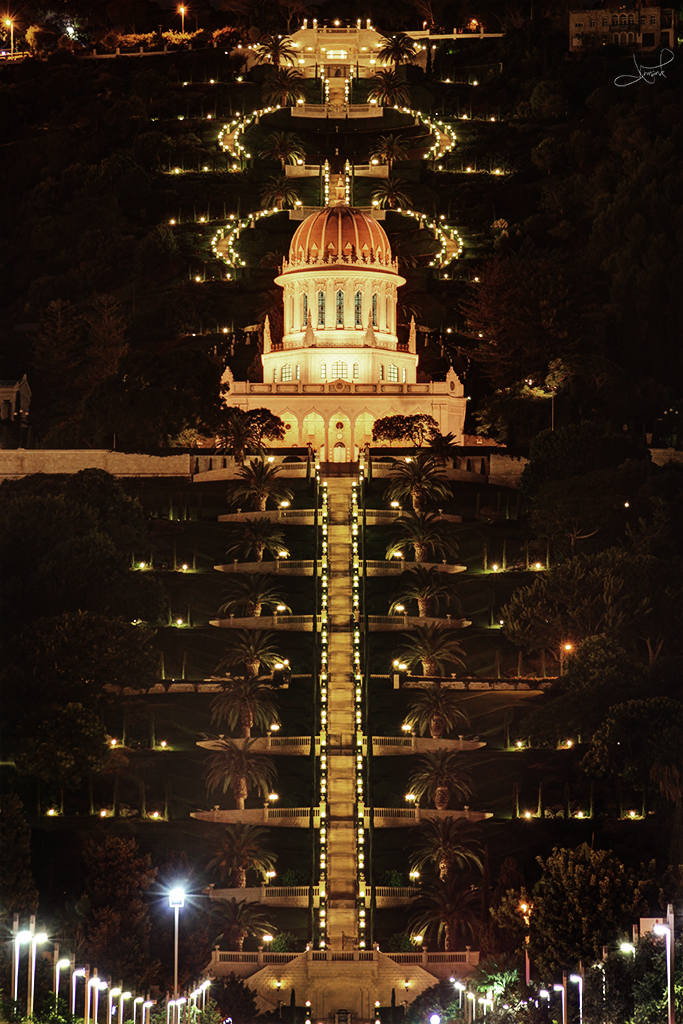
Admin Note: we have brought this picture to the top of BB’s excellent post, which is a Precedent Post, because it deeply move us. Haifa has huge spiritual and sacral significance for us. The Spectacular Shrine of the Báb, the Divine Forerunner of the Bahá’í Faith (and the Symbolic Return of the 12th Imam), overlooks the City.

No photo description available.

Modi at Haifa, Israel paying tribute to the Indian soldiers who died during the Battle of Haifa

File:Shrine of the Báb, Haifa, Israel (8139739814).jpg - Wikimedia Commons

Bharat Mata Ki Ja and the Holy Land join together to shine light on the World. Hurrah.. Both Israel & India house extensive Bahá’í buildings, apparently the most visited Monument in New Delhi is the Lotus Temple. Nowhere else in the Muslim world does the Bahá’í Faith have Sites of Worship (Pakistan has been very good to Bahá’ís but terrible to the Ahmadis).

Explore the Tranquility: 5 Best Things to Do in the Lotus Temple

Apologies for the Hijacking but back to the Badshah of Balochistan, our very own Humza.

In my previous post about India being the successor state to the Mughal Empire, I mentioned how India was also the successor state to hundreds of other polities which existed across many millennia. British India is one such polity which I will discuss today.

Note: As before, when I use India below I mean the current day Republic of India, not the region of “India” which also encompasses some territories of the modern day states of Bangladesh and Pakistan

The Inheritance

Unlike the previous post, I won’t give as detailed a picture because in the modern age the definition of “successor state” is very well defined.

Some examples of succession in the modern period are the Russian Federation taking over from the USSR in 1991 and the French Fifth Republic taking over from the French Fourth Republic in 1958. Both of them got their predecessor’s UN seats as well as the permanent Security Council spot.

The United Nations

Since we are talking of the United Nations, let us begin with that.

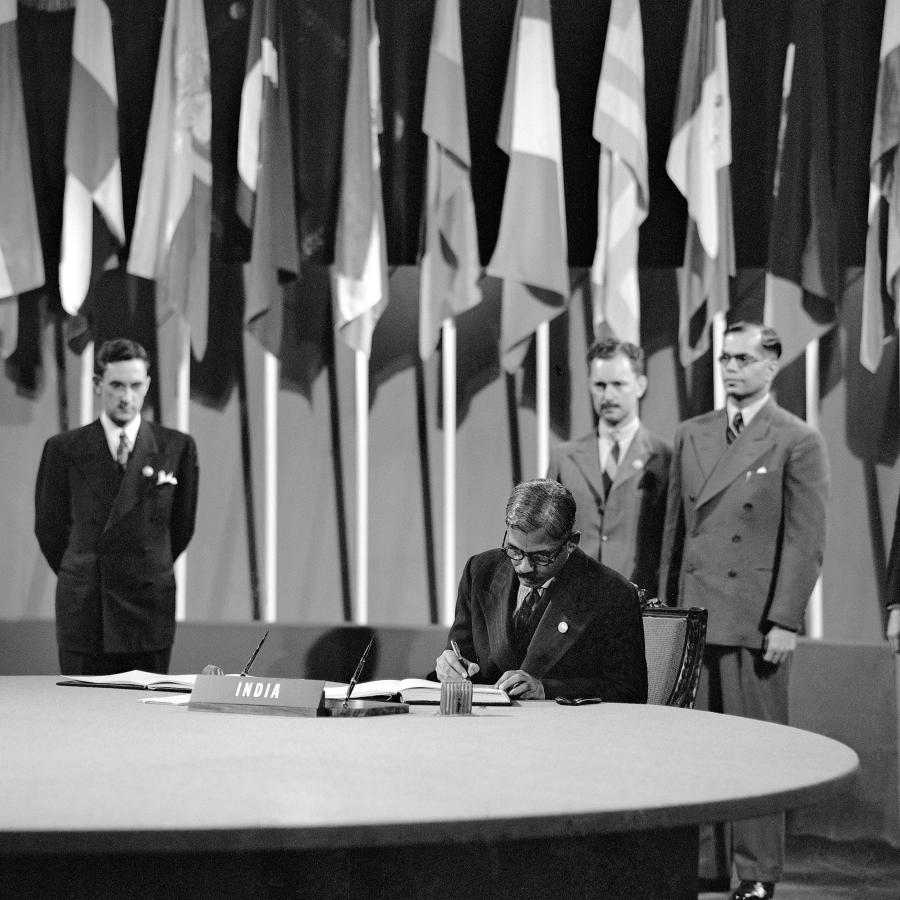
India is a founding member of the United Nations, signing the UN Charter on June 26, 1945, and formally joining on October 30, 1945.

https://india.un.org/sites/default/files/styles/focal_point_square/public/2021-12/235930.jpg?h=cd225dda&itok=sAHVgB5u

Sir Arcot Ramasamy Mudaliar led the Indian delegation and signed the United Nations Charter on June 26, 1945, in San Francisco, United States

Continue reading India is the successor state of British India – it got independence, Bangladesh and Pakistan were formed

India is the successor state of the Mughal Empire (and the various Sultanates)

A precedent post on who is the successor state of the Mughal Empire (as specified by X.T.M in a comment)

There has been a lot of back-and-forth in the comments section about who gets to “claim” the Mughals.

The Republic of India is the successor state of the Mughal Empire as I explain below.

Note: When I use India below I mean the current day Republic of India, not the region of “India” which also encompasses some territories of the modern day states of Bangladesh and Pakistan

The Land

The Republic of India encompasses around 70 percent of the Mughal Empire at its greatest extent.

Again, possession of majority of the land is not a necessary condition. The UK is the successor state of the British Empire, Turkey is the successor state of the Ottoman Empire and so on. But having possession of the majority of the land makes the case stronger.

The reason that the UK, Turkey, France etc are the successor states of various empires is because they house the “core” – the capital, the ruling elite, the major monuments etc.

The Capital

The Mughal Empire lasted for around 300 odd years. 

It’s capitals were:
Agra for 61 years
Delhi for 228 years
Fatehpur Sikri for 14 years
Lahore for 12 years

The first and last capitals were in India and for 96% of the existence of the empire, the capital was in India.

These capitals still exist in India and are UNESCO World Heritage Sites as well as Monument of National Importance by the Archaeological Survey of India.

The last capital is still used by India in official functions but more on that below.

Agra Fort, Agra

Continue reading India is the successor state of the Mughal Empire (and the various Sultanates)

Brown Pundits