India That Is Bharat: The Exceptional Uniqueness and the Dual Identity

This is a Brown Pundits Precedent Post.


We have been asked, repeatedly and in good faith, why Brown Pundits appears to handle criticism of India with more care than it handles criticism of Pakistan. The charge is that we hold a double standard. It deserves a direct answer.

The answer is that we do hold a distinction, and we are not embarrassed by it, but it is not the distinction the charge assumes.

The Distinction

Pakistan is roughly seventy-nine years old as a sovereign state. India as a sovereign state is roughly seventy-nine years old as well. As nation-states under international law, as signatories to the United Nations, as entities with currencies and armies and foreign ministries, the two are pari passu. We treat them that way and we will continue to treat them that way. On every question that applies to nation-states as nation-states, the two sit at the same table and get the same scrutiny.

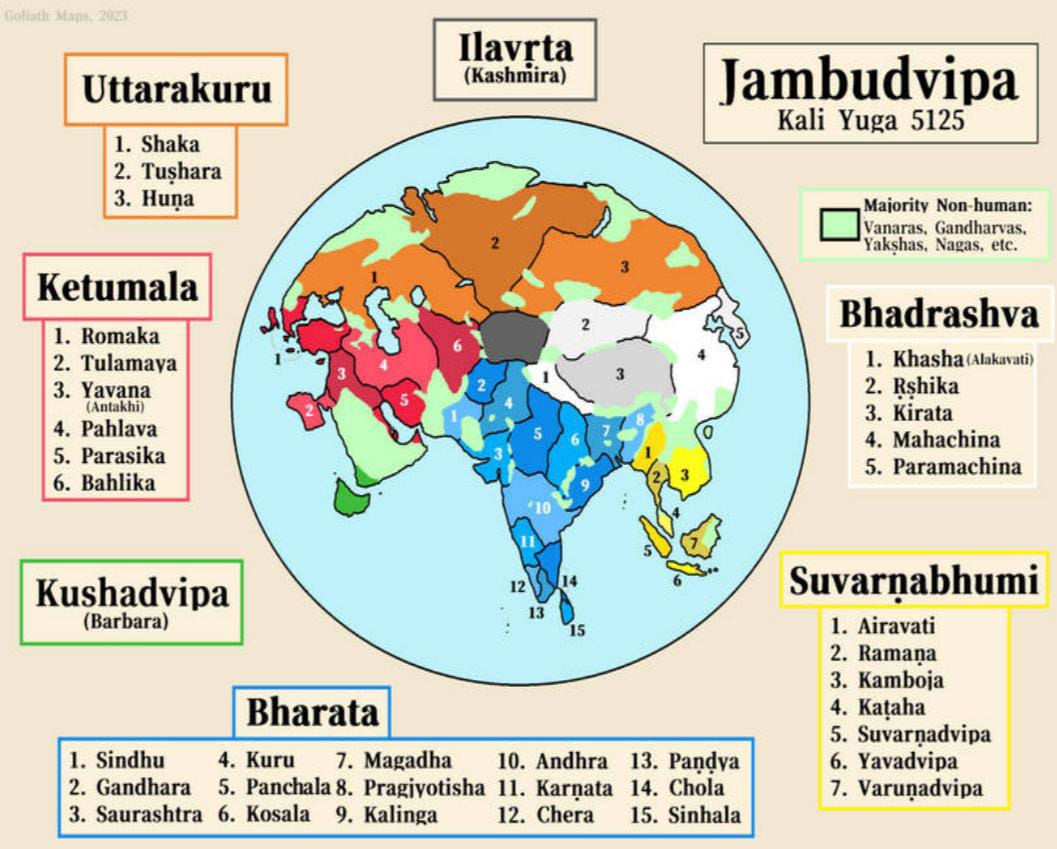
But India is not only a nation-state. India is also a civilisation, and the civilisation is not seventy-nine years old. The civilisation is, give or take the archaeological argument one prefers to have, somewhere around five thousand years old. It stretches from the Indus Valley through the Dravidian-Aryan synthesis, through the Vedic period, through the great classical flowering, through the medieval syntheses, through the colonial rupture, and into the present. One can argue the exact nature of the continuity. One cannot plausibly argue that the continuity is not there. It is there in the same way it is there for China. It is there in the same way it is there for Egypt. It is there.

This is not a claim about superiority. It is a claim about category. Pakistan is a sovereign state. India is a sovereign state and a civilisation. The two facts do not cancel. They coexist.

The Civilisational Peer Group Is Short

How short is short. At the level of a nation-state that is co-terminus with a multi-millennial civilisation, the peer group is essentially India and China. Two entries. Iran and Egypt have the civilisational depth but have been transformed by the Greco-Arab conquest, in an unalterable fashion. Greece has the civilisational depth but the modern Greek state is a nineteenth-century construction with limited political continuity to the ancient polis; the Ottoman interlude was equally determinative. Israel is a unique case and we will come to it.

That leaves India and China. Two countries on the planet where the nation-state is also the civilisation, where the sovereign political entity today is a recognisable continuation of the same cultural-linguistic-religious matrix that produced its earliest texts, and where the ordinary citizen, with some education, can read something written two or three thousand years ago in a language that is still a living vehicle of the culture.

That is not a small claim. It is also not a nationalist claim. It is simply a descriptive one.

The Indian Exception Continue reading India That Is Bharat: The Exceptional Uniqueness and the Dual Identity

The Ukrainian Interlude is over

The Iranian One has just started

Nobody seems to be interested in Pakistan’s diplomatic resurrection. What does it mean that a country written off as failed just a year ago is now the hinge of a regional peace settlement and averting World War Three on the double. This is the actual story of 2026 and it is not on our comment boards.

Pakistan: From Failed State to Diplomatic Champion

A year ago, before Operation Sindor, Pakistan was being written off in every serious strategic publication in the English language. The IMF was reluctant. Every mainstream Indian and Western analyst agreed. Pakistan was finished as a regional actor of any significance.

Today Pakistan is mediating, leading, the Iran crisis. The Hormuz situation, which could have escalated into a catastrophic closure of the world’s most important oil chokepoint, is moving toward resolution largely because Pakistan has positioned itself as the only party credible with Tehran, Riyadh, and Washington simultaneously.

The war that looked civilisational is now looking more like a pivot point. Pakistan is not a failed state. India is not uniquely ascendant under PM Modi. The question of whether the BJP holds power post-Modi is now a live one, not a theoretical one. Iran is not isolated. Israel is not unbreakable. The realignment is happening now, in real time, and almost nobody seems to be writing about it.

Iran Stood Up Continue reading The Ukrainian Interlude is over

Brown Pandas: Rising Toward a Saffron Crescent.

A meditation on conflict, identity, and the severed wings of Mother India


The Name

A small irony to begin: the blog is Brown Pundits, not Brown Pandas. Though Brown Pandas has a certain charm; large, slow-moving, occasionally comic, surprisingly fierce when cornered. Perhaps not so different.


What Is Happening Here

Look at the comment boards today. We have a serious thread on the Aryan Migration Theory; which needs its own Precedent Post, and will get one. We have Indians and Pakistanis locked in the same mutual obsession that has consumed multiple generations post-Independence, the energy of which, if properly directed, might have built something extraordinary.

Here is the paradox that strikes us: the mutual antipathy between India and Pakistan, Iran and Israel, is not only destructive. It is, in a strange and uncomfortable way, generative. These four states, small by population or GDP relative to the great powers, have nonetheless forced themselves into the front rank of military and strategic relevance. China displaced Japan; the Anglo-French condominium displaced Germany; America and Russia defined the twentieth century. Yet India, Pakistan, Iran, and Israel sit alongside them at the table where it matters. That is not nothing.

Conflict, at a certain calibration, makes nations. The Romans knew it. The Persians knew it. The question is dosage. Too much tension and you get stasis, poverty, the endless self-consumption of the security state. Too little and you get complacency. The great irony is that India and Pakistan have had almost exactly the wrong calibration; enough conflict to militarise, not enough resolution to grow. The long peace that compounds prosperity never arrived.

Qinling panda: The shrunken pandas that diverged 300,000 years ago and sometimes come out brown | Live Science
Perhaps, like the Qinling Panda; brown, shrunken, diverged for three hundred thousand years before anyone thought to ask why. The Brown world is simply waiting to be recognised for what it always was.

The Venal Bargain

When Kabir took issue with the phrase “barely educated country” in reference to Pakistan, it was taken as hostility. It was not hostility. It was a diagnosis. Continue reading Brown Pandas: Rising Toward a Saffron Crescent.

The Forty-Day War: Pakistan Saved the World?

[A note before we begin: We held back out of respect for Iran Zamin and the weight of what was unfolding. Pakistan has now acted where others would not, and the moment deserves acknowledgement.

This should have been India’s role. No other power sits closer to both Tehran and Washington. No other civilisational bridge existed with the credibility to hold both sides. That fatal trip, PM Modi’s visit to Tel Aviv, poisoned those waters permanently. It did not merely signal a foreign policy choice. It signalled comfort with regime change in a neighbouring civilisation. The opportunity cost is historic and will not be recovered.

What Pakistan has achieved is without precedent in its modern history. The Muslim Prussian Republic, forged in argument, held together by will, perpetually doubted, walked into the gap the subcontinent’s greater power vacated and stopped a war. The world owes a debt to Quaid-e-Azam and Allama Iqbal’s creation that it will not rush to acknowledge. That is how it goes. But we are noting it here, now, while the moment is live.]

History named the last one. It was called the Twelve-Day War. Clean. Surgical. A rehearsal. This one will be called the Forty-Day War. It began on 28 February 2026 with a decapitation strike that shattered Iran’s command structure in a single night and a brutal attack on a girl’s school. It paused on 8 April, when a Pakistani Prime Minister’s tweet achieved what five weeks of bombardment, ultimatums, and a pope’s intervention could not.

Pakistan forced the pause the world could not secure.

This is not sentiment. It is structural. Islamabad was the only room both sides could enter. Pakistan maintained working diplomatic channels with Tehran throughout the war. It shared enough institutional credibility with Gulf capitals to be trusted as a mediator. It was sufficiently operationally relevant to Washington; Field Marshal Munir’s name appeared, unremarkably, in Trump’s own ceasefire announcement, to be taken seriously rather than patronised. No other state sat at that intersection. Egypt tried. Turkey tried. Neither had all three legs of the stool.

Over forty days, escalation outran control. Oil surged past $110 a barrel and briefly touched $117. Insurance markets seized. Traffic through the Strait of Hormuz reduced to a trickle. American signalling moved from coercive to apocalyptic, “a whole civilization will die tonight.” Iranian signalling hardened even as its leadership structure absorbed shock. Each side retained the capacity to raise costs further. Neither had a clean exit.

Pakistan supplied one.

The mechanics of the pause reveal everything. Tehran accepted a two-week window in which maritime traffic would resume under its coordination. Read that precisely. Coordination, not surrender. The Strait remains, in Iranian framing, an instrument of state power. That is not the language of defeat; though states rarely speak the language of defeat in real time, regardless of battlefield reality. What matters is what the text actually says. Iran controls the reopening. Iran does not yield it.

Washington will declare victory. The machinery is already running. Continue reading The Forty-Day War: Pakistan Saved the World?

Open Thread + A Note on Standards

Brown Pundits has always been a forum for the kind of thinking that most outlets are too timid or too tribal to publish. We intend to keep it that way. But that standard cuts both ways, and we are raising it.

Effective immediately, the moderation policy is zero tolerance.

This is not a crackdown on opinion. We welcome disagreement; sharp, even uncomfortable disagreement. What we will no longer tolerate is noise dressed up as insight.

What does noise look like? You know it when you read it. It is the rattling of nuclear talking points that have not been updated since 1998. It is the reduction of a civilisation of 220 million people, or of a billion-and-a-half, to a single variable: the Crescent, or the Saffron. It is venom without weight, and venting without argument.

Pakistan is complex. India is complex. Every human society is, at its foundation, irreducibly complex.

Any comment that treats either as otherwise will be moderated; sometimes publicly, sometimes silently. We apply the sniff test: does it smell right, given the context? Given how tight our Editorship and Commentariat is, we will be judicious, as we have always been; for instance the Precedent post on the controversial Dhuruandar sequel remains Gaurav Lele’s.

This applies to both sides of every line we cover; geographical, civilisational, sectarian, or political.

We are not asking for bookishness. We are not asking for academic caution or diplomatic hedging. We are asking for the one thing that separates a pundit from a troll: considered thought. If you are going to cast aspersions, earn them. Make the case. Bring the weight. If you cannot, do not post.

We have a large and growing commentariat. That is something to be proud of. It is also a responsibility; to each other, and to the readers who come here because they expect better than what they can find elsewhere.

We expect better. We will enforce it.

Thank you for your attention to this matter.

— The Editors, Brown Pundits Continue reading Open Thread + A Note on Standards

Dhurandhar, Politics of Bollywood & India Pakistan

I had avoided the Dhurandhar hype for the last four months. I finally watched the first movie on Netflix and then read XTM’s review and watched the 2nd part in theatre. I profoundly disagreed with it—especially the line:

“By routing this grief through an anti-Pakistan narrative, the film asks Hamza to deny his Sikhness in order to become fully Indian, and frames that erasure as redemption.”

I’m not writing a formal review of the movie, but I will try to respond to a few generic questions raised on this forum and across social media regarding Dhurandhar.


Is the villain missing?

I agree with XTM that a central villain is missing in Part 1, but perhaps we should see Dhurandhar as a 7‑hour film split into two parts, rather than a standalone first installment.


Part 1 vs Part 2

Personally, I felt Part 1 was more tightly written and better dramatized. While some reviewers saw the love story as a needless distraction, I viewed it as a way to explore Hamza’s humanity despite his profession.


Is Dhurandhar Anti‑Islam?

On the contrary, I felt the filmmakers went out of their way to separate the issue of anti‑India terrorism from Islam—despite the fact that some terror groups do draw on fundamentalist interpretations of religion.
The villains are not portrayed as devout Muslims; they are not shown praying before missions. Rehman Dakait’s wife lighting his cigarette as a good‑luck gesture is a good example.

One could even argue that Dhurandhar focuses almost entirely on political motivations within Pakistan, while ignoring any potential religious motivations behind the Indo‑Pak conflict. I don’t know exactly how the ISI thinks, but I would wager that at least some religious motivations do exist—it cannot be purely political.


Is Dhurandhar Anti‑Pakistan?

Obviously, it is—but I disagree with XTM’s assertion that it dehumanizes Pakistani Muslims.
I didn’t enjoy the montage of political killings by “unknown gunmen”; it felt shallow. But it wasn’t the sort of random, gleeful violence we saw with Gaitonde in Sacred Games during the 1993 riots.

The film definitely leans dark, but I would still call it shades of grey, especially because of Hamza’s conversations with his wife.

I also believe that Major Iqbal’s character is humanized. He carries the burden of his father’s sins, and the mental torture he undergoes—while still maintaining a link to his wife and child—would break almost anyone. We can see why Major Iqbal becomes who he is. Ironically, this humanization also makes him a less effective villain than Rehman Dakait, as many reviewers have noted.


Is Dhurandhar pro‑Modi propaganda?

I may be wrong, but I felt the film used real politics—like demonetization—to weave its plot. Using real events increases impact, and I think that’s what the filmmakers were aiming for.

Does this mean it has no propaganda effect? Of course not. But compared to the list of A‑list Bollywood movies I’ve seen over the years, this is nothing unusual. We will probably see Hollywood films justifying the Iran war in a decade or so—that has always been the pattern.

If you pay attention, the film also touches upon how previous governments—Indira Gandhi’s as well as Manmohan Singh’s—played roles in shaping certain outcomes. It is not a “Modi or bust” narrative.
However, it would be blind to deny that the film does portray the Modi government’s actions toward Pakistan and terrorism in a positive light.


Jaskirat’s Arc

While I found certain aspects of the film underwhelming, I thoroughly enjoyed Jaskirat’s arc. Here, I completely disagree with XTM. The movie does not celebrate Jaskirat’s transformation into a killer—it shows the cost he pays at every step. It also explicitly shows how he is used by the establishment.

Jaskirat doesn’t become an intelligence operative because Pakistan “earned his hatred.” He becomes one because it was the best choice available to him. The film wants viewers to see the price soldiers pay for their “jobs.”

Also i absolutely do not understand why XTM thinks Jaskirat’s Sikhness is erased in the movie. Rather Jaskirat choses to travel back to Pathankot as a tired  Sikh in full Pagdi not macho silky muscly Hamza. I think going beyond this straightforward narrative into the alleged drugs, land dispute, Khalistan angle while thinking erasure of Sikhness or History is something i absolutely do not get.


On Hatred Being ‘Installed’

XTM claims:

“The hatred is not earned. It is installed.”

I disagree. You do see Hamza’s transformation through Lyari’s horrific violence, the betrayal of the Baloch by Rehman, and 26/11. You can see a monster being born in Lyari, but even then he retains his humanity—which becomes evident again when he reacts to killing his friend.

The movie does not end with a “happily ever after” for either Hamza or Jaskirat. It wants you to examine that, not ignore it.


My Take

I enjoyed both movies. Like XTM and many others, I agree that Part 2 has more flaws while Part 1 is far more seamless. Still, Jaskirat Singh Rangi’s arc in Part 2 is the highlight of the entire seven hours.


On India–Pakistan

Contrary to what social media suggests, India as a whole has moved on from Pakistan. You can see this from the declining obsession with India–Pakistan cricket matches compared to the 1990s and 2000s.

Yet, a significant number of Indians derive a kind of sadistic pleasure from Pakistan’s struggles. You see this reflected in reactions to news, such as Pakistan mediating in the Iran crisis—where both the Hindu right wing and the opposition twist the narrative for political ends.

If you once hated your neighbour in the slum you grew up in, would you still mock his poverty after moving into a middle‑class apartment? Or should you aspire to grow on your own terms?

This attitude towards Pakistan is self‑defeating. I honestly pity it.
My message to fellow Indians: Grow up and move on. Look East.

What if Pakistan successfully mediates in the Iran crisis? What if Pakistan continues to punch above its weight diplomatically?

If their mediation helps solve an energy crisis—unlikely, but possible—shouldn’t I, as an energy‑deficient Indian, be happy? If Pakistan’s rise ever poses a genuine risk to India, I will worry about it then. Until that point, I prefer to leave it to the agencies and the government. If Pakistan becomes richer and doesn’t support terrorism against India why would that be a bad thing ? I am not being naive but i think there is a marginal chance of Ind- Bangladesh level relations with Pakistan in 20 years if not 10. Inshallah

Pakistan is the Israel of the Subcontinent

A Brown Pundits Precedent Post

I. The Ideology Before the Nation

Pakistan has a birth certificate: a 1933 pamphlet by Choudhry Rahmat Ali. Israel has the Basel Programme of 1897. Both nations emerged not from an ancient territorial consciousness but from an ideological project; one that required, as its sustaining premise, the claim that a religious minority could not coexist within a pluralist polity. This is not a slur; it is the historical record.

What makes both nations structurally similar is that their nationalism is grievance-generative by design. Israel requires the Palestinian question; Pakistan requires Kashmir. Without the wound, the ideology loses its cohering force. This is why, as Kabir inadvertently demonstrates in thread after thread, Kashmir is not merely a territorial dispute for Pakistan; it is an existential necessity. Indian nationalism has no equivalent. India does not need Kashmir to know what it is. Pakistan does.

II. Organic vs. Constructed Nationalism

Omar has made the point that durable nationalism must be organic; rooted in geography, language, ethnicity, or long civilisational memory. Bangladesh is a useful comparison: Bengali Muslim nationalism is at least tethered to a linguistic and territorial reality. The Bengalis of East Pakistan had a mother tongue, a delta, a literary tradition. When Pakistan tried to impose Urdu on them, they revolted; because Bengali identity had roots.

Pakistan’s tragedy is that Urdu itself is borrowed. It is a prestige creole, Persianised, Arabicised North Indian court language, that is the mother tongue of perhaps 7% of Pakistan’s population (the Muhajir elite but Urdu had admittedly very deep roots in Lahore). It was imposed as a national language precisely because it belonged to no one’s soil, and could therefore function as a neutral imperial medium. The irony is that Urdu is a derivative of Persian, and Persian, the language Pakistan’s nationalism effectively displaced, was the actual civilisational glue of the entire region from Kabul to Lucknow. In the Golestan framework, Persian would resume its natural role as the prestige link language. Pakistan’s nationalism requires its absence.

III. A Core-Periphery Imperial Topology Continue reading Pakistan is the Israel of the Subcontinent

Pakistan must not treat Afghanistan like Gaza

[A note to readers: BB’s open thread is taking a short break while he recalibrates to high-signal posting]

Pakistan Strikes a Hospital in Kabul.

Late on Monday night, the 28th night of Ramadan,  a missile struck the Omid (“Hope”) Addiction Treatment Hospital in Kabul. It is a 2,000-bed facility built in a former NATO camp, housing thousands of young Afghans receiving treatment for drug dependency. Witnesses said they heard three explosions just as patients were completing evening prayers. Two bombs struck patient rooms directly. “The whole place caught fire. It was like doomsday,” one survivor told Reuters. Al Jazeera

Taliban authorities say 408 were killed and 265 injured; figures that remain unverified by any independent party, though the physical destruction of the hospital and the ongoing rescue operation are not in dispute. Rescuers were still pulling bodies from rubble by flashlight through the night. The UN human rights expert for Afghanistan, Richard Bennett, said he was “dismayed” and urged all parties to “respect international law, including the protection of civilians and civilian objects such as hospitals.ABC News

Pakistan insists its strikes “precisely targeted military installations and terrorist support infrastructure” in Kabul and Nangarhar, with targeting “carefully undertaken to ensure no collateral damage.CP24

One witness at the scene noted military units were positioned around the hospital perimeter; which may explain the targeting logic, if not excuse it. No secondary explosions consistent with an arms depot were filmed.

Afghanistan-Pakistan border: new centre of the 'war on terror', by Philippe Rekacewicz (Le Monde diplomatique - English edition, December 2009)
the war

The pattern matters as much as the incident.

Continue reading Pakistan must not treat Afghanistan like Gaza

Kashmir is not Palestine.

It seems apparently that Kashmir is Palestine. That India is Israel. That Kashmiri Muslims are Palestinians.

Why the Return of Kashmiri Pandits Is Still a Distant Dream - The New York  Times
Displaced from their Vatan

First The Pandits were actually displaced. 100,000-200,000 people (estimates vary) fled the Valley in 1990 under explicit death threats, targeted assassinations, mosque loudspeakers announcing their departure was required. This is the closest thing to actual ethnic cleansing the Valley has seen in living memory, and it was directed at Hindus, by militants operating with Pakistani ISI support.

We are not arguing that everything is fine in the Valley. It is not that Delhi’s approach to Kashmir has been faultless, or that the revocation of Article 370 was without consequence for Kashmiri identity. Nor can it be denied that there is genuine anguish among Kashmiri Muslims.

Kashmiri Muslim Women Pray Relic Displayed Editorial Stock Photo - Stock  Image | Shutterstock Editorial
Kashmiri Muslim Women Pray

However the analogy to Palestine is not merely imprecise, for instance the Abdullah family chose India over Pakistan, whereas no Palestinian chose Israel. However this argument is increasingly offensive.

The Gaza Test

Start with the simplest possible question: what is actually happening to the Palestinians?

Gaza before

Continue reading Kashmir is not Palestine.

Kleptocratic Pakistan versus Oligarchic India

A word was flagged in our comments last night. I think it deserves its own post.

Kabir called RNJ’s use “kleptocracyoffensive, when used to describe Pakistan. I understand the instinct. Words carry weight. But here’s my problem: in the High Signal era of Brown Pundits, we don’t retire words because they sting. We interrogate them.

So let’s interrogate this one.

I. What Does the Military Actually Own?

Fauji Fertilizer Company Office PhotosNot metaphorically. Literally. The Fauji Foundation operates across fertiliser, cement, food, banking, and energy. Revenues exceeding $1.5 billion annually. The Army Welfare Trust adds real estate, insurance, agriculture. Neither answers to civilian audit. Neither tables accounts in Parliament. DHA schemes, Defence Housing Authority, operate in every major Pakistani city. Land acquired below market rate. Sold at market rate. The differential isn’t commerce. It’s transfer. Ayesha Siddiqa documented this in Military Inc. back in 2007, estimating military business interests at $20 billion. That figure is now considered conservative. The military controls an estimated 12% of all state land. In a country where land is wealth, that number is not incidental.

II. But Is That Kleptocracy?

Avenfield House, Park Lane by Bree Day Ltd
Continue reading Kleptocratic Pakistan versus Oligarchic India

Brown Pundits