

Admin Note: we have brought this picture to the top of BB’s excellent post, which is a Precedent Post, because it deeply move us. Haifa has huge spiritual and sacral significance for us. The Spectacular Shrine of the Báb, the Divine Forerunner of the Bahá’í Faith (and the Symbolic Return of the 12th Imam), overlooks the City.

Modi at Haifa, Israel paying tribute to the Indian soldiers who died during the Battle of Haifa
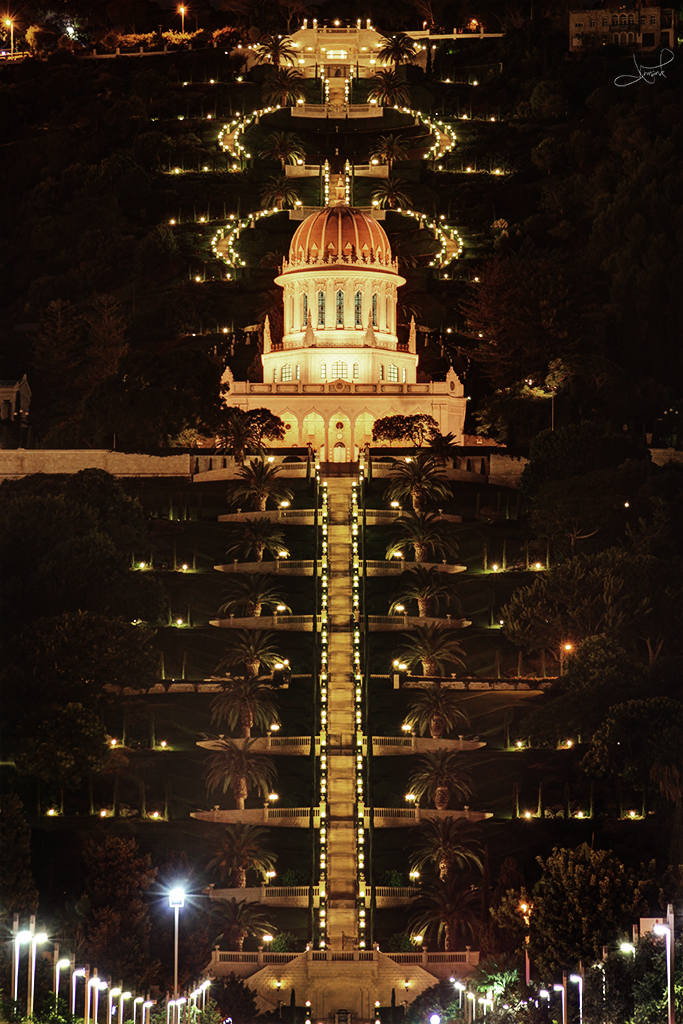
Bharat Mata Ki Ja and the Holy Land join together to shine light on the World. Hurrah.. Both Israel & India house extensive Bahá’í buildings, apparently the most visited Monument in New Delhi is the Lotus Temple. Nowhere else in the Muslim world does the Bahá’í Faith have Sites of Worship (Pakistan has been very good to Bahá’ís but terrible to the Ahmadis).
Apologies for the Hijacking but back to the Badshah of Balochistan, our very own Humza.
In my previous post about India being the successor state to the Mughal Empire, I mentioned how India was also the successor state to hundreds of other polities which existed across many millennia. British India is one such polity which I will discuss today.
Note: As before, when I use India below I mean the current day Republic of India, not the region of “India” which also encompasses some territories of the modern day states of Bangladesh and Pakistan
The Inheritance
Unlike the previous post, I won’t give as detailed a picture because in the modern age the definition of “successor state” is very well defined.
Some examples of succession in the modern period are the Russian Federation taking over from the USSR in 1991 and the French Fifth Republic taking over from the French Fourth Republic in 1958. Both of them got their predecessor’s UN seats as well as the permanent Security Council spot.
The United Nations
Since we are talking of the United Nations, let us begin with that.
India is a founding member of the United Nations, signing the UN Charter on June 26, 1945, and formally joining on October 30, 1945.
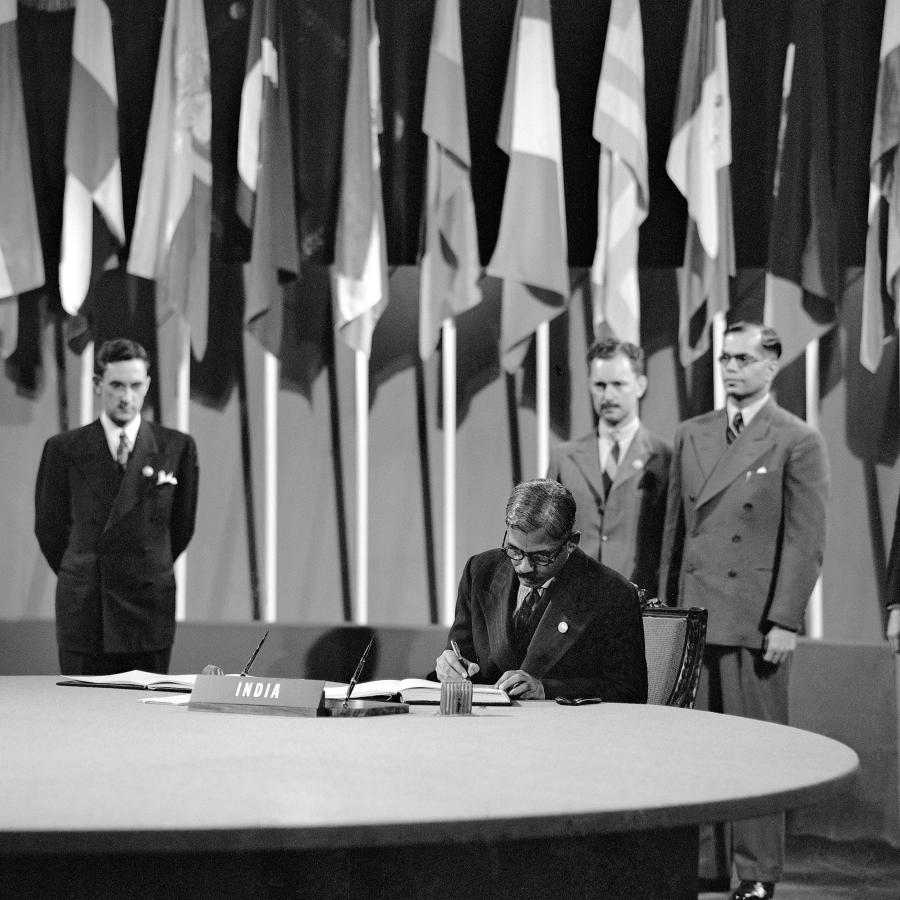
Sir Arcot Ramasamy Mudaliar led the Indian delegation and signed the United Nations Charter on June 26, 1945, in San Francisco, United States

The claim depends on treating South Asian Muslims as a single block. They are not one block. The genetic record is a gradient, and on that gradient several specific populations carry foreign ancestry that exceeds what local conversion alone would produce. Most South Asian Muslims are autosomally close to their Hindu neighbours. That is the modal story. It is not the only story.
The NorthWestern Muslims
Working strongest to softest.
Pashtuns. Y-DNA from Pashtun samples differentiates them from Punjabi and Sindhi neighbours. Elevated R1a-Z93 patterns with Central Asian distributions, alongside meaningful J2 and G. The autosomal work under Reich and Narasimhan places northwest Pakistani populations at a higher Steppe MLBA fraction and closer to Iran-related reference groups than most South Asian samples. The signal is layered, not pure, but it is not reducible to local conversion.
Continue reading Arab Fathers are not fabrications (entirely)