Pakistan and GHQ’s commitment to fight terrorists..

Some people express doubts about the Pakistan army’s commitment to eradicating all Islamist terrorist groups. (and there can be no doubt that it IS the Pakistani army that makes such decisions in Pakistan. ..PMLN, PPP, ANP may be in “power” here or there, but security and foreign affairs are ultimately run by the army and if they are not on board, no strategy can possibly work). Others point to the thousands of soldiers killed in the line of duty and insist that the security forces are doing all they can and criticism is just “playing into the hands of our enemies”.

Is there a way to tell who is right?

Suppose you have no inside information. Just from public sources, can you tell if they are doing all they can? I believe you can. And just off the top of my head, lets look at a couple of things we can use as metrics:


1. The enemy is identified and targeted AS the main enemy. For example, British security services fighting their own dirty war against the provisional IRA were fighting, first and foremost, the IRA. Their Irish-American supporters, Irish Republic politicians, the KGB, Gaddafi, whatever, could all be blamed for supporting them (they could even be mentioned as the one thing that keeps the IRA going, take X out and they will collapse, etc), but there was no question about who the enemy was.
Is this true in Pakistan? I don’t think so. The main focus of the state’s impressive psyops machine seems to be to identify India or Israel or the USA (or all three, or “Hinjews” or whatever) as the cause of our problems, with the actual terrorists (who never happen to be Hindus or Jews or Americans) being nothing more than misguided or paid youth whose own aims and ambitions play no real role in this campaign.
i.e., on this point, GHQ is clearly NOT doing what any outside observer would expect. They don’t spend a lot of time and effort identifying, demonizing and targeting the organizations and people who actually conduct all these attacks.

2. When a terrorist attack takes place, there is an investigation. It may not be very public, but if you are serious about stopping them, you have to investigate where the perpetrators came from, how and why did they join a terrorist organization, who recruited them, who trained them, who led them, who facilitated them….and you have to go back and roll up all these networks. Only then can you hope to defeat them. This is not rocket science, it is basic police work. Some of this clearly gets done in Pakistan too, but very little of this makes it into the news. Why? Because the facts turned up are inconvenient? Because too much focus on the actual perpetrators and organizations would take away from the “RAW did it” storyline? Because the state still wants to protect some of the Islamist networks? Who knows..
On this point, I have no real inside information, but if you hang around police officers, you do hear a lot of anecdotes about police officers who were stopped from pursuing this or that lead by the “intelligence agencies”. Some of these anecdotes may be self-serving lies. But there IS a lot of smoke. With this much smoke, there may also be fire..

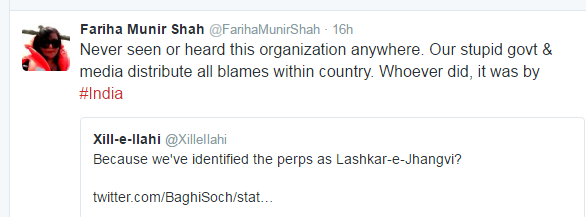
3. The proof of the pudding is in the eating. Follow any paknationalist on twitter and facebook. Count the references to RAW and Mossad. Then look for references to Lashkar e Jhangvi, ASWJ, Jaish e Mohammed, etc.
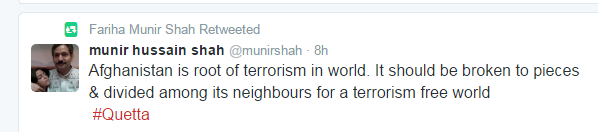
Yes. You will find tweets like these (I assure you, this is a representative sample):

By the way, that last tweet reflects a sentiment that I have heard some people express about another country, one created 200 years after Afghanistan came into being..

Don’t believe the Pakistani army could be stupid enough to STILL play double games with terrorists? Set your mind at rest. See General Asad Durrani in action:

Read more about our narratives and issues by clicking on the following links: 

Quetta. Collateral Damage?

The Narratives Come Home to Roost

Pakistan: Myths and Consequences  

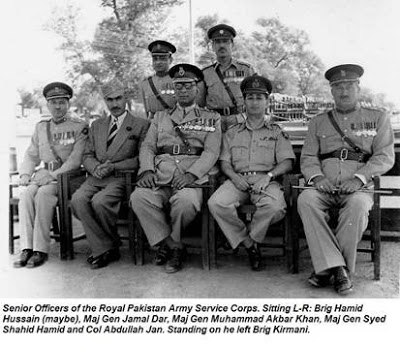
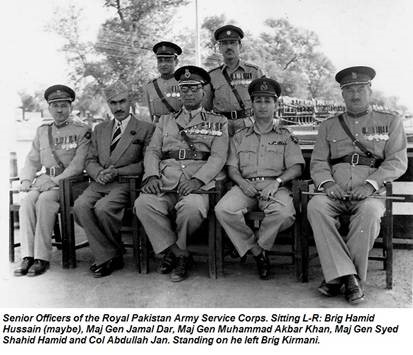
General Mohammed Akbar Khan (and some others)

Down memory lane with the life of PA-1 MG Muhammad Akbar Khan
Major
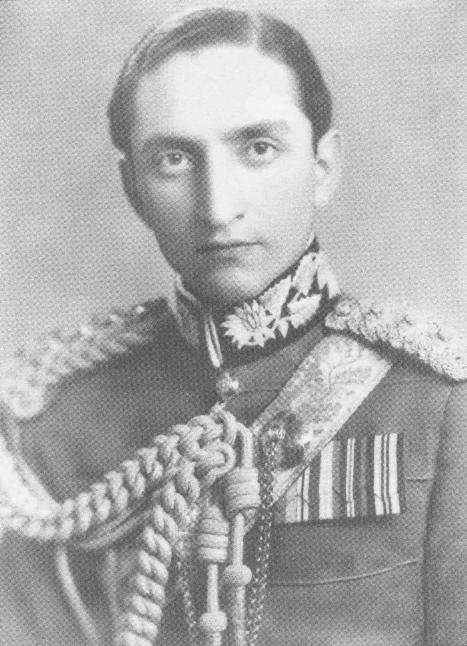
General Muhammad Akbar Khan
Hamid
Hussain
Major
General Muhammad Akbar Khan (1897-1993) was the senior most Muslim officer at the
time of independence in 1947.  He was the son of Risaldar Major Fazal Dad
Khan (1847-1943).  Fazal Dad was a Minhas Rajput from Chakwal area. 
His family’s fortune was linked with Sikh durbar.  After the demise of
Sikh rule and emergence of British Raj, family recovered some of the lost
fortunes under British patronage.  Fazal Dad served with 12th
Cavalry and after a long service granted the title of Khan Bahadur.  He
was granted a large amount of land by the British and had three estates in
Montgomery (Sahiwal), Chakwal and Lyallpur (Faisalabad).  He established a
horse stud farm on one of his estate.  Fazal Dad had cordial relations
with senior British army and civilian officers.  Commander-in-Chief Field
Marshall Lord Birdwood, Archibald Wavell (later Viceroy) and Sir Bertrand
Glancy (later Punjab governor) had close relationship with Fazal Dad. 
Fazal Dad married four times.  Six sons of Fazal Dad Khan joined Indian
army and all were polo players.  

Five
brothers of Major General Muhammad Akbar Khan served in the army.  Major
General Muhammad Iftikhar Khan was commissioned in August 1929 and joined 7th
Light Cavalry.  He was transferred to 3rd Cavalry when later
regiment was Indianized.  During Second World War, he served with newly
raised 45th Cavalry. He was nominated as first Pakistani
C-in-C.  He died in 1949 in a plane crash at Jang Shahi before assuming
the office.  His wife and son also perished in the same crash.  
Brigadier Muhammad Zafar Khan was commissioned in 1934.  He retired as
Director Remount, Veterinary & Farm Corps (RV&FC). Brigadier Muhammad
Yousef Khan was commissioned in 1935. He also retired as Director
RV&FC.  Brigadier Muhammad Afzal Khan was commissioned in 1935 and
joined 16thLight Cavalry.  Later he transferred to Royal Indian
Army Service Corps (RIASC). Major General Muhammad Anwar Khan was commissioned
in 1936 in the Corps of Engineers. He was the first Pakistani Engineer-in-Chief
(E- in-C) of Pakistan Army.

Two
brothers didn’t join the army and settled in England.  Muhammad Tahir Khan
was a lawyer and settled in England. Muhammad Masood Raza Khan was the most
enigmatic of all.  He had BA in political science and MA in English
literature from Punjab University.  He was enrolled at Oxford. 
Although he inherited most of his father’s estate but he was ready to renounce
his feudal heritage at an early age.  He was an intellectual but
psychologically disturbed.  In an ironic twist, he made an appointment
with a psychoanalyst when he landed in London but by mistake they thought he
wanted to be trained as a psychoanalyst.  He ended up a leading
psychoanalyst of his times, highly respected by other professionals and made
wide ranging friends from aristocracy, film and theatre.  He lived in
London and travelled widely giving lectures on psychoanalysis.
Akbar
Khan enlisted in the army in May 1914 and served with his father’s regiment 12th
Cavalry. In July 1915, he was promoted Jamadar and served with the
regiment in Mesopotemia.  After the Great War, commissioned officer ranks
were opened for Indians.  A Temporary School for Indian Cadets (TSIC) was
established at Daly College at Indore.  Forty two cadets started a one
year training course on 15 October 1918.  On 1 December 1919, thirty nine
cadets qualified but thirty three were granted King’s commission with effect
from 17 July 1920. Of the six not granted King’s commission, three resigned,
two found unsuitable and one died. 
Akbar
joined new war time raised 40th Cavalry as Second Lieutenant. 
This regiment was raised in April 1918 by Lieutenant Colonel James Robert
Gaussen D.S.O. of 3rd Skinner’s Horse. Ist Skinner’s Horse
contributed one squadron, 3rd Skinner’s Horse two squadrons and 7th
Hariana Lancers one squadron for 40th Cavalry. Final composition of
the regiment was one squadron of Rajputs and half squadron each of Jats, Sikh,
Dogra and Hindustani Mussalmans. Nephew of His Highness Agha Khan, Captain Aga
Cassim Shah (originally from 3rd Horse) was one of the squadron
commanders of the regiment at that time. In December 1920, Akbar was Quarter
Master (QM) of the regiment.  40th Cavalry was disbanded in
1921.  In 1921-22 re-organization, 11th Cavalry and 12th
Cavalry were amalgamated and Akbar was transferred to 11th /12th
Cavalry.  This new amalgamated regiment was named 5th King
Edward’s Own (KEO) Probyn’s Horse. Akbar served with 5th Probyn’s
Horse from 1922 to 1934 and was regiment’s Quartermaster from 1927 to
1931.  In May 1934, he transferred to Ist
Battalion of 14th Punjab Regiment (now 5 Punjab Regiment of Pakistan
army) and participated in the Mohmand Operation.  He served as battalion’s
adjutant.  A year later, he was attached to the Royal Indian Army Service
Corps (RIASC) to which he transferred on 5 February 1936 and served in
Waziristan operation in 1937.  His newly commissioned brother Muhammad Anwar Khan was also
serving in Waziristan with 4th Field Company.  In 1940, he went
to France with Force K6 in France.  He was second-in-command (2IC) of No
25 Animal Transport (AT) Company.   This force was evacuated to UK
and then returned to India.  He later served in the Burma Theatre.  He used the
suffix of ‘Rangroot’ after his name highlighting his rise from the
ranks. He was also known as Akbar Khothianwala and Akbar Khaccharwala
due to his service with mule companies of service corps.  
Photograph:
Courtesy of Major General ® Syed Ali Hamid from the album of his father Major
General ® Shahid Hamid. 
In
April 1946, C-in-C Field Marshal Claude Auchinleck presided over a selection
board. Several Indian officers were recommended for senior appointments to
prepare them for command when British left.  Akbar was recommended by the
selection board to be Army Commander but it was probably to have a Muslim among
the senior ranks of an Indianized army and not for professional
excellence.  Akbar was the only senior Muslim officer at Brigadier rank
while the remaining six recommend for promotions and coveted postings were
Hindus. Kodandera Cariappa, Rajindra Sinhji and Nathu Singh were recommended
for army commander posts.  S. S. M. Srinagesh was recommended for Chief of
General Staff (CGS), Ajit Anil Rudra as Adjutant General (AG) and Bakhshish
Singh Chimni as Quarter Master General (QMG). 

Photograph:
Courtesy of Major General ® Syed Ali Hamid from the album of his father Major
General ® Shahid Hamid. 
On
15 August 1947, Akbar was promoted Major General and appointed head of the
formation called Sind and Baluchistan area.  It was later re-designated
Sind area and on 1 January 1948, it was re-designated 8th Division.
Karachi sub area was designated 51st Brigade on 1 November 1947 and
Quetta sub area re-designated 52nd Brigade in September 1948. 
8th Division headquarter was in Karachi and in May 1948, headquarter
was moved to Quetta.  Akbar was in command during all these
transitions.  His Indian Army (IA) number was 90 and Pakistan Army (PA)
number was 1 as he was the senior most officer of Pakistan army. He retired on
7 December 1950 handing over command of 8th Division to Major
General Adam Khan. In June 1930, he was appointed Member of the Order of the
British Empire (MBE).
It
is not clear why Akbar first transferred to infantry and later RIASC although
he had good annual reports when he was serving with 5th Probyn’s
Horse.  Early in his career, his squadron commander wrote ‘a very capable
young officer ….  commands the respect of all the Indian ranks’.  His
commanding officer wrote, ‘Above the average in brains and energy …. keen on
his work and good at games ….  a promising Cavalry officer’.  Other
annual reports noted, ‘One of the most efficient King’s Commissioned Indian
gentlemen I have met’ and ‘an officer of distinct ability who should take a
prominent part in the process of Indianisation of the Indian Army’.  Major
General commanding at Peshawar wrote in his Annual Confidential Report
(ACR),’One of the best of our Indians holding King’s Commission’.  In
1946, Delhi area commander Major General Freeland wrote about Akbar ‘A level
headed and most staunch officer. He is more of a commander than a Staff
Officer.  I have great confidence in him’.
Extra
Regimental Employment (ERE) with Frontier Scouts, Burma Military Police and
RIASC carried additional monetary allowance.  Indian officers were not
posted to Frontier Scouts and Burma Military Police that left only RIASC for
any Indian officer looking for extra allowance.  The first Indian officer
posted to Frontier Scouts was Lieutenant (later Lt. Colonel) Mohammad Yusuf
Khan of 6/13 Frontier Force Rifles when he was posted to South Waziristan
Scouts in 1937.  Some officers who needed extra money transferred to RIASC
(Lieutenant General B. M. Kaul as a junior officer had some financial troubles
and decided to leave 5/6 Rajputana Rifles for RIASC).  Akbar was from the
landed aristocracy and financial difficulty was not the likely motive for
him.  One likely explanation is service consideration.  For first
generation of Indian officers, the dream was to end the career with command of
a battalion at the rank of Lieutenant Colonel.  Akbar was one of the first
Indian officers to join a cavalry regiment.  Cavalry was a British
preserve and he may have concluded that it was not likely that he would ever
command a cavalry regiment. 


Photograph:
Courtesy of Major General ® Syed Ali Hamid from the album of his father Major
General ® Shahid Hamid.
Akbar
Khan was among the early generation of Indian lads given commission as officers
when officer rank of Indian army was opened to Indians in the aftermath of
First World War.  He was from a family that prospered under the
benevolence of Raj.  His father received large tracts of agricultural
lands for service and in return family sent its sons to serve in Indian
army. 
Acknowledgements: Author thanks
Major General ® Syed Hamid Ali for providing many details as well as
confirmation of many facts from family members of Akbar Khan, Muhammad Afzal;
nephew of Akbar khan, Colonel Zahid Mumtaz for the details of careers of sons
of Fazal Dad and Ghee Bowman; a PhD candidate working on his thesis on RIASC
contingent in France and England for providing details of service comments in
annual confidential reports of Akbar Khan.  All errors and omissions are
author’s sole responsibility.
Sources:
1-    
Chris
Kempton.  Pack Mules from India, Force K-7 and Force-6.  Durbar,
Volume 29, No.1, Spring 2012.
2-    
Lieutenant
Colonel Gautam Sharma.  Nationalization of the Indian Army – 1885-1947. 
(New Delhi: Allied Publishers), 1996
3-    
Major
General Shaukat Raza.  The Pakistan Army 1947-1949 (Lahore:
Wajidalis, 1989)
4-    
Major
General Shahid Hamid.  Disastrous Twilight (London: Leo Cooper),
1986
5-    
Linda
Hopkins.  False Self: The Life of Masud Khan, (New York: The Other
Press), 2008
6-    
Ashok
Nath. Izzat: Historical Records and Iconography of Indian Cavalry Regiments
1730-1947
(New Delhi: Center for Armed Forces Historical Research), 2009
Hamid
Hussain
October
23, 2016

Defence
Journal, November 2016


Postscript:

Name Confusion – Two Akbars and two Latifs
Hamid Hussain
 
In the first decade after independence in 1947, several officers of Pakistan army were given rapid promotions.  Officers with same names resulted in some confusion.  Two Akbars and two Latifs were frequently confused.   Two additional officers named Akbar served in different times.  One was Khan Muhammad Akbar Khan, commissioned in different times in 1905 from Imperial Cadet Corps (ICC).  He was attached to Malwa Bhil Corps.  These were limited commissions only for Native Indian Land Forces (NILF).  These officers could not command British soldiers and either served with state forces or attached as orderly officers to senior officers.  He faded away and nothing much is known about him.  Another officer named Akbar Khan was from Punjab regiment.  He commanded 105th Independent Brigade in 1965 war.  He was Director General (DG) of Inter Services Intelligence (ISI) from 1966-71.  In 1971 war, he commanded 12 Division.  He rose to the rank of Lieutenant General and served as Karachi Corps Commander.  He was superseded in 1976, when General Muhammad Zia ul Haq was appointed Chief of Army Staff (COAS).  
 
Two Akbars
 
Akbar the senior – PA-1 Muhammad Akbar Khan.  His career dealt in detail in previous piece.  
 
Akbar the junior– Akbar Khan (1912-1994) was a Pathan from Charsadda area of Khyber-Pukhtunkwa.  He was from the pareech khel clan of Muhammadzai tribe that inhabits the village of Utmanzai.  Akbar was from the last batch of Indian officers commissioned from Royal Military College Sandhurst in February 1934.  Lieutenant General B.M. Kaul was his course mate at Sandhurst and they became friends during their service.  Officers commissioned from Sandhurst were called King Commissioned Indian Officers (KCIOs).  Akbar joined 6/13 Frontier Force Rifles (FFRif.).  This battalion is now One Frontier Force (FF) Regiment of Pakistan army.  He fought Second World War with 14/13 FFRif. (now15FF).  This was a new war time battalion raised in April 1941, at Jhansi.  In new war time raised battalions, officers and men were posted from different battalions, usually from the same group.  Lieutenant Colonel Arthur Felix-Williams, DSO, MC of 1/13 FFRis. was the first Commanding Officer (CO).  There were fourteen officers in the battalion and Akbar at the rank of Major was the senior most of the four Indian officers of the battalion.   Lieutenants H. H. Khan, Fazl-e-Wahid Khan and A.K. Akram were other Indian officers (Wahid won MC).  Battalion was part of 100th Brigade (other battalions of the brigade included 2 Borders and 4/10 Gurkha Rifles) of 20th Division commanded by Major General Douglas Gracey. 
 
14/13 FFRif. was one of the few battalions well trained in jungle warfare and performed admirably.  Battalion received three DSOs and 14 MCs.  This included two MCs to Viceroy Commissioned Officers (VCOs); Subedar Bhagat Singh and Subedar Habib Khan.  Battalion was patrolling about 1000 square mile area and many detachments were not in contact with battalion HQs.  Akbar was commanding two companies (B & C) during Irrawaddy crossing and was quite independent in his command due to poor communications with battalion HQs.  Battalion’s defenses fought against the onslaught of Japanese and suffered forty six killed and more than 100 wounded.  Akbar withdrew his two companies into the lines of 9/14 Punjab Regiment.   Akbar fought very well and won his Distinguished Service Order (DSO) in June 1945. 
 
At the time of partition in 1947, Akbar was the only serving Pakistani officer with DSO.  The most decorated Muslim officer inherited by Pakistan was now retired Captain Taj Muhammad Khanzada.  He was from 5/11 Sikh and had won MC, DSO and bar.  The most unusual aspect was that he had won DSO at the rank of Captain.  DSO was usually awarded to Major and upward rank.  5/11 Sikh was captured by Japanese and many including Khanzada joined Subhash Chandra Bose’s Indian National army (INA) and was removed from the service.  Khanzada’s battalion mate was Harbakhsh Singh who stayed away from INA.  In 1965 war, Harbakhsh was Lieutenant General commanding western command of Indian army. 
 
In September 1947, Colonel Akbar was appointed first deputy director of Weapons & Equipment (W&E) directorate.  He got involved with Kashmir operations when he was appointed military advisor to Prime Minister.  He used code name Tariq during Kashmir operations.  He was given the command of 101 Brigade based in Kohat.  He moved his brigade from Kohat to Uri sector in Kashmir.  In addition to his own brigade, Akbar was also coordinating activities of the tribesmen operating in Kashmir.  He commanded 101 Brigade from April 1948 to January 1950.  After Kashmir operations, 101 Brigade was moved to Sialkot.  In 1950, he attended Joint Services Staff College course in London.  He came under suspicion of British authorities when he met some communists in London.  This information was passed on to Pakistani C-in-C General Gracey who already knew about Akbar and some other officers and called them ‘Young Turk Party’.  In December 1950, he was promoted Major General and appointed CGS. 
 
Several officers involved in Kashmir operations were upset at the ceasefire and this resentment evolved into talk about overthrowing the government.  Akbar took advantage of these sentiments and became the leader of the conspiracy.  In March 1951, he was arrested along with several other officers.  A special tribunal convicted and sentenced him to five years in prison.  He was released in 1955.  He joined Pakistan Peoples Party and served as Prime Minister Zulfiqar Ali Bhutto’s national security advisor.  Akbar was married to Nasim Akbar.  Nasim was a social, educated lady from a very affluent family of Lahore.  She had leftist ideas and it was alleged that Akbar was under the influence of his wife.  Nasim was an ambitious woman and allegedly aspired to become the first lady.  Nasim was present in some of the meetings of the conspirators but she was not charged with any offence.  In fact, many officers were upset when Akbar brought some civilians including his wife into the loop.  The couple divorced in 1959. 
 
Akbar has been a controversial figure in Pakistan army history.  Some leftists believe that if Akbar had succeeded in 1951, Pakistan army would have been pushed into the ‘left lane’.   Seven years later, Ayub Khan’s coup decisively put army and the country in the ‘right lane’.  Akbar was well respected by his juniors for his professionalism, gallant performance in war and ease of interaction with juniors.  On the other hand, he had a mercurial temper and at times behaved in a bizarre way.  Several incidents are narrated as evidence of this bizarre behavior but two examples will suffice.  When he was major general, he used to keep a rope at his office table declaring to visitors that some people need to be hanged with this rope.  In February 1972, when he was national security advisor of Prime Minister Bhutto, there was strike by policemen in Peshawar. Akbar phoned commandant of school of artillery at nearby Nowshera asking him to send two 25 pounder artillery guns to sort out policemen.  The order was cancelled by army headquarters.  There was some violent streak in his personality and different interpretations have been offered.  One suggests that in view of family trait of violence, he may have inherited some physical or psychological illness that made him prone to bizarre behavior.  Another theory points towards his clan.  Pathans are generally viewed as having short tempers and even among Pathans, pareech khels are known for even shorter fuses.  The ironies of the times can be judged from the fact that before independence, Akbar portrayed himself as an ardent nationalist and had no love lost for the British.  However, after independence, when he was given his dismissal order by Major General Mian Hayauddin (4/12 FFR), he wrote on the paper that he was a King’s commissioned officer and could not be dismissed even by Governor General.  Long after independence, Akbar was now claiming to be the subject of the King rather than citizen of Pakistan. 
 
Two Latifs
 
Latif I – Muhammad Abdul Latif Khan was a graduate of Prince of Wales Royal Military College (PWRMC) at Dehra Dun.  He was from the last batch of Indians commissioned from Sandhurst in 1934.  He was commissioned in 1/7 Rajput Regiment with army number of IA-262.  In November 1945, he was awarded MBE and later, he was also awarded Officer of the Most Excellent Order of the British Empire (OBE).  In 1947, Joint Defence Council (JDC) was formed to arrange for division of armed forces between India and Pakistan.  An army subcommittee headed by Deputy Chief of General Staff (DCGS) Major General SE Irwin was formed.  Latif, then Lieutenant Colonel was appointed secretary of this subcommittee.  He opted for Pakistan and was appointed the first director of Military Intelligence in July 1948.  He was promoted Brigadier and given the command of 103 Brigade (July 1948 to December 1949).  He was promoted Major General and served as commandant of Staff College at Quetta from August 1954 to July 1957.  In October 1958, when Lieutenant General Muhammad Musa was appointed C-in-C, Latif and Major General Sher Ali Khan Pataudi (7 Cavalry & 1/1 Punjab) were superseded and retired. 
 
Latif II – Muhammad Abdul Latif Khan (1916-1995) was from the princely state of Bhopal.  He attended Indian Military Academy (IMA) Dehra Dun and commissioned in 1936 (IC-105).  He joined 5/10 Baluch Regiment (now 12 Baloch).  In Second World War, he won MC for gallantry in April 1945.  He was the first cadet battalion commander of Pakistan Military Academy (PMA) at Kakul.  His brother in law Major S. Bilgrami (two sisters were married to Latif & Bilgrami) was appointed company commander at Kakul at the same time.  He commanded 5/10 Baluch from November 1948 to February 1949.  He was commanding 5/12 Frontier Force Regiment (FFR) in 1949.  This battalion is now 2FF.  This battalion was part of 101 Brigade based in Kohat and commanded by Akbar.  In February 1950, he was posted GSO-I of 9th Division based in Peshawar, commanded by Major General Nazir Ahmad.  In December 1950, he was promoted to the rank of Brigadier and given the command of 52 Brigade based in Quetta.  He was arrested in March 1951 along with several other officers for conspiracy to overthrow the civilian government. 
 
Latif’s role in 1951 conspiracy is interesting.  In 1948-49, he was in agreement with Akbar about removing the civilian government.  He was present in many important meetings of the conspirators.  In the final plan conceived in late 1949, he was to play an important role and also to serve as member of military council after the coup.  They planned to arrest Governor General in Lahore and Prime Minister in Peshawar during their visits to these two cities.   Latif was then commanding 5/12 FFR in Kohat and he was assigned the task to bring two companies of his own battalion along with a squadron of Guides Cavalry to Peshawar to arrest the Prime Minister. He was present at the crucial meeting at Attock rest house on December 04, 1949.  Later, he withdrew from the plan.  In February 1951, Akbar wrote him a letter to clear misunderstanding between the two.  The same month, Akbar came to Karachi to finalize the coup plan and asked Latif to meet him in Karachi.  According to Latif, he tried to get out of the situation but when Akbar asked if he was disobeying orders, he relented.  Government had some inkling about the activities of many officers involved in the conspiracy and tried to disperse some of the officers.  Major General Nazir Ahmad was sent on a course to London.  Akbar was asked to tour East Pakistan starting in early March and Latif’s name was added to the military mission planning to visit Iran.  When Latif came to Karachi for his onward journey to Iran, he was arrested by military police.  He was dismissed from the service and sentenced to prison.  He was released in 1955.  He led a quite life for the next several decades and died in 1995. 
 
Notes:
1-      Lt. Colonel ® Gautam Sharma.  Nationalization of the Indian Army (New Delhi: Allied Publishers Limited, 1996)
2-      Chris Kempton.  Pack Mules from India, Force K-7 and Force K-6.  Durbar,Volume 29, No. 1, Spring 2012, pp. 14-25
3-      Daniel P. Marston.  Phoenix from the Ashes: The Indian Army in the Burma Campaign (Westport, Connecticut: Praeger, 2003)
4-      Major General ® Akbar Khan.  Raiders in Kashmir (Lahore: Jang Publishers, 1992)
5-      Zaheeruddin.  Rawalpindi Conspiracy 1951 (Karachi: Oxford University Press, 1995)
6-      Major General (R) Shahid Hamid.  Disastrous Twilight (London: Leo Cooper, 1986)
7-      Major General ® Shaukat Raza.  The Pakistan army 1947-1949 (Lahore: Wajidalis, 1989)
8-      Memoirs of Lt. General Gul Hassan Khan (Karachi: Oxford University Press, 1993)
Hamid Hussain
May 25, 2012

Musharraf’s Coup. October 1999

In view of increasing friction between civil and military leaders in Pakistan (again), may be a good time to reminisce about the anniversary of 1999 coup.  This piece was written in 2012.  I’m no wiser in 2016.  Enjoy.

“We expect men to be wrong about the most important changes through which they live.”     Harold Lasswel

Hamid

Count Down – October 12, 1999


Hamid Hussain

“After this operation, it’s going to be either a Court Martial or Martial Law!”  Assistant Chief of  Air Staff (Operations) Air Commodore Abid Rao after attending a briefing at X Corps Headquarters about Kargil operation, May 1999 (1)  

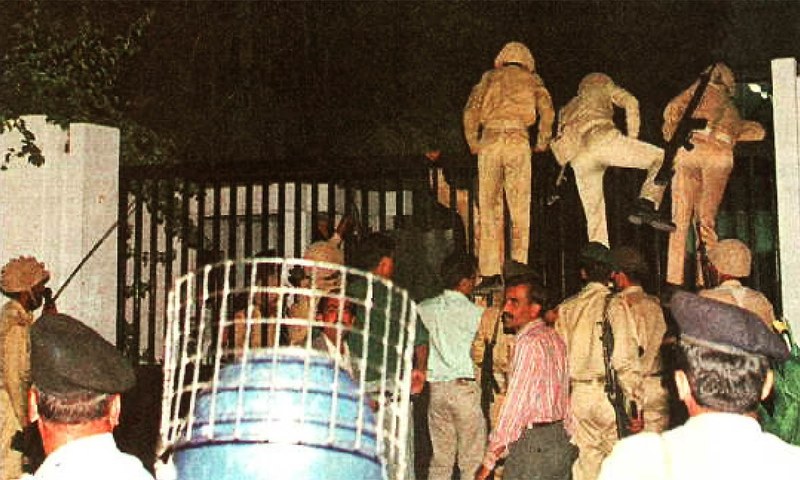
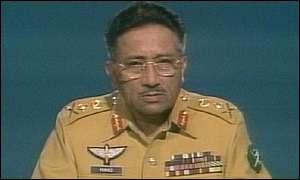
On October 12, 1999, Pakistan army moved to remove Prime Minister Nawaz Sharif’s government when he announced pre mature retirement of Chief of Army Staff (COAS) General Pervez Mussharraf.  Different versions of events were later provided by active participants as well as bystanders.  Later, many also gave a revisionist account of the events.  This article will review the back ground of differences between Nawaz Sharif and Mussharraf that led to fateful decisions of these two key players and events of October 12.


In the fall of 1998, Nawaz Sharif could not be blamed for feeling very confident and on top of his game. Sharif’s government’s two third majority in the Parliament, repeal of eighth constitutional amendment taking away the power from the president to dissolve national assembly, removal of Chief Justice, resignation of president Farooq Ahmad Khan Leghari, appointment of a Sharif family protégé, Rafique Ahmad Tarar as president and resignation of COAS General Jahangir Karamat had decisively shifted the balance in favor of the prime minister.

Two important events started the gulf between civilian and military leaders; resignation of COAS General Jahangir Karamat in October 1998 and Pakistan army’s operation across Line of Control (LOC) in Kargil in the spring of 1999.   In October 1998, COAS General Jahangir Karamat resigned few months before completing his term due to differences with Sharif.  There was deep resentment among the officer corps on this issue.  Sharif picked Mussharraf as COAS superseding Chief of General Staff (CGS) Lieutenant General Ali Quli Khan and Quarter Master General (QMG) Lieutenant General Khalid Nawaz Malik.  In some cases, new army chief makes slow changes of the top tier while in other cases, whole new team of close confidants is brought in quickly.  Mussharraf embarked on major changes and brought the new team of his own confidants to key positions of command of Rawalpindi, Multan, Lahore and Karachi Corps and CGS, MS and DGMI posts (Lieutenant General Muzzaffar Usmani was brought from Bahawalpur Corps to important Karachi Corps while Lieutenant General Salim Haider was shifted from Rawalpindi Corps to Mangla Corps).
There was no history of any problem between Mussharraf and Lieutenant General Khawaja Ziauddin.  Ziauddin was from Engineers Corps and their paths have not crossed during their professional career.  In fact, immediately after the announcement of his appointment, when Mussharraf settled down in Armor Mess (General Karamat was still in Amy House) and started shuffling the senior brass, Ziauddin then serving as Adjutant General (AG) was with him.  Two days later, Sharif announced appointment of Lieutenant General Khawaja Ziauddin as Director General Inter Services Intelligence (DGISI) without consulting with Mussharraf.

In the spring of 1999, a small group of senior officers were involved in the decision of sending Pakistani troops across the LOC in Kargil area of Kashmir, starting a flare up that quickly got out of control of Pakistani decision makers.   Initially, Pakistan refused to acknowledge the presence of its troops across the LOC but later after vigorous response from Indian armed forces and amid international condemnation was forced to withdraw.  There was outcry in the country and civilian and military leadership got entangled in the blame game.

Sharif shifted the blame on the army brass and took the position that army had not fully briefed him about the extent of the operation.   Army brass on its part, now wanted the civilian leaders to take the blame for the humiliating withdrawal of the troops.   All was not well in the army and there was significant resentment among the officer corps.  General Mussharraf toured various formations where he was confronted with harsh questions from junior officers.  (2) Mussharraf shifted the blame on Sharif government by stating that civilian government was responsible for the decision of withdrawal and armed forces were bound to obey it.

Initially, differences between Sharif and Mussharraf were over minor issues.  Sharif removed retired Lieutenant General Moinuddin Haider from the post of Governor of Sindh province.  Haider was senior but had friendship with Mussharraf (later Mussharraf appointed him interior minister).  Sharif asked Mussharraf to sack two Major Generals; Anis Ahmad Bajwa and Shujaat Ali Khan, accusing them of working against him.  Bajwa was Vice Chief of General Staff (VCGS) and fully supported his Chief during Kargil crisis.  Shujaat served as director of internal security wing of ISI.  This section usually deals with the domestic political scene and gets entangled in the palace intrigues.  Mussharraf refused to oblige Sharif on this issue.  After the coup, Mussharraf appointed Bajwa his Chief of Staff (COS) and Shujaat was appointed ambassador to Morocco.

After Kargil crisis, gulf between Sharif and Mussharraf widened and both parties started to strengthen their positions.  In mid-September at Corps Commander’s Conference, Mussharraf asked his senior officers the question of competency of Nawaz Sharif.  While all Corps Commanders agreed that his performance was not good but expressed their view that they could not remove him without a reasonable cause.  Mussharraf then brought the issue of what if Sharif tried to sack him?  The military brass agreed that they would not allow that.  (3) There was now consensus that army will not allow two army chiefs to be removed prematurely.

As the mistrust and suspicion between Sharif and Mussharraf escalated, both sides started to make their moves.  Sharif only had the executive power to replace Mussharraf but he had to move silently and stealthily to achieve his aim.  (4) He also thought that a warning from Washington to the military brass may also help to strengthen his hand.  General Mussharraf’s power base was military and he started to consolidate his position.  His biggest advantage was general resentment in armed forces after forced resignation of previous COAS.  In addition, he successfully deflected the resentment and anger of junior officers about planning and execution of Kargil operation by suggesting that plan was good but it was the civilian leadership that had succumbed to pressure and ordered withdrawal.

Mussharraf was not sure about two Corps Commanders; Lieutenant General Tariq Pervez of Quetta based XII Corps and Lieutenant General Salim Haider of Mangla based I Corps.  In late September 1999, he replaced Haider by promoting Director General Military Operations (DGMO) Major General Tauqir Zia to Lieutenant General rank and bringing him to command Mangla Corps.  Haider was given the post of Master General of Ordnance (MGO); a staff position with no direct control of troops.  Tariq Pervez’s cousin Nadir Pervez was member of Sharif cabinet and Mussharraf thought that Tariq was passing information about decisions at Corps Commanders meeting to Sharif through his cousin.   It is alleged that Tariq Pervez had warned Sharif about the consensus of the senior army brass that if Mussharraf was sacked, the army will take over.  Later, Mussharraf accused Tariq Pervez of ill-discipline and ‘plotting against me’.  (5) Tariq Pervez had criticized the planning and execution of Kargil operation at Corps Commanders meeting and Mussharraf interpreted this as a sign of disloyalty.  On one such occasion, Mussharraf snapped back to Tariq that ‘If you are saying that so that the prime minister knows, let me tell you that I will tell him your views myself’.  (6) This statement provides a clue to the state of mind at that time.  Tariq was retired but given few days at his request until October 13 to say farewell to his formations.

Director General (DG) Analysis of ISI, Major General Shahid Aziz; a relative of Mussharraf was brought in as DGMO.  Mussharraf had already brought his close junior confidant Brigadier Salahuddin Satti to head 111 Brigade in Rawalpindi.  Satti had served as Brigade Major when Mussharraf commanded a Brigade.  It is also alleged that some of Ziauddin’s subordinates (Major General Ghulam Ahmad and Brigadier Ijaz Shah) at ISI stayed with the ultimate fountain of power; COAS.  Mussharraf made all these crucial changes to secure his own position fearing that Sharif was planning to sack him while Sharif interpreted these changes as potential move against him.  Distrust and suspicion between Mussharraf and Sharif was mutual and many on both sides were whispering in the ears of their masters.  Mussharraf was suspicious that one senior officer of his inner circle was informing the other side about decisions of military’s top brass while Sharif feared that his conversations at prime minister house were bugged by the military.  Some also believe that General Head Quarters (GHQ) had a mole in Sharif’s inner circle, informing army brass about discussions in Sharif camp.

Once securing his base in the army, Mussharraf warned Nawaz Sharif through intermediaries.  In his memoir, Mussharraf admits that ‘I had already conveyed an indirect warning to the prime minister through several intermediaries: “I am not Jahangir Karamat”.’ (7) In September 1999, Mussharraf met with Nawaz Sharif’s brother Shahbaz Sharif and bluntly told him to convey two things to his brother.  First that ‘I would not agree to give up my present position of chief of the army staff and be kicked upstairs as Chairman of the Joint Chiefs of Staff Committee CJCSC’ and second recommendation of retirement of Quetta Corps Commander Lieutenant General Tariq Pervez.  (8) By the first week of October, with the exception of DG ISI and a lame duck Quetta Corps Commander, all senior officers as well as some crucial mid level officers were Mussharraf’s trusted appointees.
 GHQ embarked on a contingency plan in case Sharif made his move.  CGS Lieutenant General Muhammad Aziz contacted Commander of Special Services Group (SSG) Brigadier Amir Faisal Alvi and a company of SSG was moved to Army Aviation base at Dhamial near Rawalpindi with cover of training with aviation.  CGS also held a meeting with DGMO and Commander of SSG at his office and at SSG Commander’s residence.  The discussion was about security of the president and prime minister house in case of breakdown of law and order.  (9) General Mussharraf held a meeting at his residence prior to his departure to Sri Lanka.  Participant list included CGS Aziz, Rawalpindi Corps Commander Lieutenant General Mahmud Ahmad, DGMO Shahid Aziz, Director General Military Intelligence (DGMI) Ehsan ul Haq and Director General Inter Services Public Relations (DGISPR) Brigadier Rashid Qureshi.  In this meeting, it was disclosed that Sharif wanted to sack army chief and was trying to politicize the army.  It was decided in this meeting that if Sharif tried to remove army chief, then army will take over.  (10)

Sharif became aware of some of these maneuvers when a brigadier (he was a retired SSG officer who was working on contract basis) serving in Counter Intelligence (CI) section of ISI informed Sharif camp that something was in the offing.  In the end of September, Ziauddin left for a trip to United States and returned on October 08.  On the same day, when Ziauddin met Sharif, this issue was raised.  Ziauddin asked head of CI Major General Jamshed Gulzar Kayani to investigate the matter.  When brigadier was confronted, he claimed that he had never passed such information. (11)
Nawaz Sharif fearful of a pre-emptive strike from Mussharraf dispatched his brother Shahbaz to Washington on September 17.  He pressed U.S. officials to issue a warning against the military coup.  On September 20, US State Department issued a very strange warning stating that U.S. will not approve of any ‘unconstitutional moves’ against the government.  (12) Ziauddin was also visiting Washington during this time.  Former Prime Minister Benazir Bhutto was also in United States and she probably had picked up enough back ground noise to announce that Sharif government will not last until December.

On October 10, Sharif took a flight to Adu Dhabi and Ziauddin accompanied him.  Probably, Sharif finalized his decision of sacking Mussharraf during this flight.  It is not clear how much information he shared with Ziauddin.  Mussharraf was on a visit to Sri Lanka.  I’m of the view that probably at this stage, there was no plan of not allowing the Mussharraf’s plane to land in Pakistan.  Both thought that while Mussharraf was on his way back home from Sri Lanka, the army will accept the change of command.  Ziauddin was confident that he would be able to convince his colleagues and by the time Mussharraf has touched down in Karachi, he would have to accept the change.  Ziauddin underestimated the strength of Mussharraf loyalists and was probably not aware of the fact that the decision reached among the close circle of Mussharraf that they will not allow Mussharraf’s removal.
In the evening of October 12, Ziauddin was appointed new army chief at prime minister’s residence.  Ziauddin pointed to Sharif about the role of the president and Sharif rushed to the president house to get the signature of the president.  Shrewd president Rafiq Ahmad Tarar only wrote ‘seen’ rather than approved on the file and signed it.  The file was then handed over to Defence Secretary Lieutenant General ® Iftikhar Ali Khan to take to the ministry of defense and issue the official notification.
Ziauddin was well aware that two lieutenant generals who were holding two key positions (X Corps Commander Mahmud Ahmad and CGS Muhammad Aziz Khan) were staunch Mussharraf loyalists and will not accept the change.  In addition, by virtue of their posts, they were in a position to thwart the plan.  They needed to be removed from their posts as soon as possible.  He appointed QMG Lieutenant General Muhammad Akram as CGS while MGO Lieutenant General Salim Haider was given back the command of X Corps at Rawalpindi.  Akram arrived at prime minister house but Salim was playing golf and by the time he arrived, tables have been turned and he was not allowed to enter the prime minister house.  Ziauddin informed Military Secretary (MS) Major General Masood Pervez about these changes.  He then contacted other Corps Commanders to get them on his side. Ziauddin claims that he personally spoke to Karachi Corps Commander Muzzaffar Usmani, Mangla Corps Commander Tauqir Zia, Multan Corps Commander Muhammad Yusuf and Gujranwala Corps Commander Agha Jahangir Khan.  When he tried to contact Peshawar Corps commander Saeed ul Zafar, he was told that Zafar was sleeping.  (13) Ziauddin also called two of his subordinates at ISI Major General Ghulam Ahmad and Jamshed Gulzar Kayani asking them to come to prime minister house but they didn’t show up.  (14) It was not surprising that knowing the awkward and very difficult situation most Corps Commanders remained un-committed.  They were contacted by Ziauddin as well as Aziz and Mahmud at about the same time.  Most of them waited on the sideline to let the winner emerge from this tussle.  Aziz and Mahmud also had personal stakes in the whole affair.  If any heads were going to role for the responsibility of Kargil operation after the retirement of General Mussharraf, it would be the heads of these two officers as they were the architects of the Kargil operation.

At 5:00 pm, Pakistan Television broadcast the news of removal of Mussharraf and appointment of Ziauddin as new army chief.  Corps Commander of Peshawar Lieutenant General Saeed ul Zafar called Aziz who was playing tennis with Mahmud and told them about the change.  Mahmud and Aziz rushed to GHQ and set in motion their plan to stop the removal of Mussharraf.  DGMO Shahid Aziz rushed back to his office and his office became the temporary headquarter of the counter coup.  Mahmud, Aziz and Shahid started to contact Corps Commanders.  Most of the Corps Commanders now clearly seeing the stronger party decided to go with the hawks.

Soldiers from the two battalions of 111 Brigade were responsible for guarding president and prime minister house.  4 Punjab Regiment commanded by Lieutenant Colonel Javed Sultan was guarding president house while 3 Azad Kashmir (AK) Regiment commanded by Lieutenant Colonel Shahid Ali was guarding prime minister house.  Mahmud contacted Brigadier Satti and ordered him to secure president and prime minister house.  Aziz and Mahmud were well aware that the first thing they had to do was to stop the television broadcast. First team of fifteen soldiers headed by Major Nisar of 4 Punjab was dispatched to television station to block the repeated broadcast of Mussharraf’s removal.  Major Nisar told the television staff to stop broadcasting the news.   Two SSG detachments at Dhamial and Mangla were also rushed to Islamabad.


Sharif got alarmed when 6 pm news bulletin did not broadcast the news of Mussharraf’s removal.   He sent his Military Secretary Brigadier Javed Iqbal Malik (a gunner officer of 4 Field Artillery Regiment) with an armed escort of elite police to television station to check what was going on.  Probably, Sharif realized at this time that Ziauddin may need some time and Mussharraf should be kept out of country.  Sharif ordered the airport staff at Karachi that airport should be closed and Mussharraf’s plane should be diverted to another destination.  Brigadier Iqbal had a heated conversation with Major Nisar at television station control room and finally, Iqbal drew his handgun on Nisar, forcing him to order his men to disarm.  The army soldiers were locked in a room and near the end of the bulletin, the news of Mussharraf’s removal was re-broadcasted.  Now Mussharraf’s team watching the news at GHQ figured out that something went wrong.  They sent another larger army team to television station which quickly took control and pulled the plug on television broadcasts.  (15)

The small guard units commanded by Majors had already secured the president and prime minister house while awaiting other army teams to arrive.  Lieutenant Colonel Shahid Ali arrived with a larger contingent and confronted fellow officers in the porch of prime minister house.  Ziauddin, Akram and Javed Iqbal were in uniform along with an escort of two SSG commandoes and six plain clothes ISI guards of Ziauddin.  Each side tried to threaten and bluff its way out of this situation.  Finally, when two SSG commandoes laid down their weapons, the tide turned against Ziauddin and he finally ordered his guards to disarm.  (16) After securing prime minister house, Lieutenant General Mahmud accompanied by Vice Chief of General Staff (VCGS) Major General Ali Muhammad Jan Orakzai came to prime minister house to confront Sharif.  (17) Later, when Sharif was confined in an army mess, Mahmud, Aziz and Orakzai asked Sharif to sign on the paper declaring dissolution of national assemblies but Sharif refused.  (18)

General Mussharraf accompanied by his wife Sahba, military secretary Brigadier Nadim Taj and ADC Major Syed Tanvir Ali (he was from Mussharraf’s old 44 SP Regiment and serving his ADC since Mussharraf was a Major General) was on a commercial Pakistan International Airlines (PIA) flight 805 and plane was approaching Karachi. Lieutenant General Muzaffar Usmani, commanding V Corps in Karachi asked General Officer Commanding (GOC) of V Corps Reserve Major General Iftikhar Malik to activate Immediate Reaction Group and take control of the airport to ensure landing of Mussharraf’s plane.  The situation at the control tower of Karachi airport was now chaotic and staff was being given confusing orders.  The senior civil staff was telling them not to allow landing of Mussharraf’s plane while military officials giving contrary orders.  Iftikhar came himself on the line and told the staff to allow the plane to land.  Brigadier Abdul Jabbar Bhatti was sent to the airport and by the time plane was heading to Nawabshah, Brigadier Jabbar took control of the airport and told the control tower staff to call the plane back to Karachi.  Iftikhar also asked Brigadier Tariq Fateh; a serving gunner officer seconded to Civil Aviation Authority (CAA) as director at Karachi airport and in charge of airport security Brigadier Naveed Nasr to help the army contingent.  Iftikhar also arrived at the control tower and spoke to Mussharraf but Mussharraf was not sure about the whole situation on the ground.  Finally, Mussharraf’s plane safely landed at Karachi airport.  (19)

In Lahore, Corps Commander Lieutenant General Khalid Maqbool was out of town.  GOC of 10 Division Major General Tariq Majid was in charge and he sent troops to arrest Governor and secure Sharif’s home in Lahore and his large estate in Raiwand.  Director of Punjab elite Police Training Center, Colonel ® Tariq Ehtasham (a former SSG officer) sent some elite police force to Raiwand estate but they were no match for the army.

Secretary Defence Iftikhar was on his way to Ministry of Defence when he received a call from Shahbaz asking him what army soldiers were doing at prime minister house. (20) His subordinate Additional Secretary of Defence Major General Shahzada Alam also informed him about the troop movement.  Iftikhar knowing that the tide was turning decided to wait and didn’t issue any notification.  Someone at the Military Operations (MO) Directorate from where the counter coup was being directed knew the importance of this technical detail and a Major from Military Intelligence was sent to bring Iftikhar to MO directorate.  (21) In fact, later the legal argument used by Mussharraf was that as Secretary Defence had not issued the official notification, therefore his retirement order was not valid in strict legal sense and Supreme Court accepted this argument.

After the completion of the drama, winners got their rewards and losers paid for their sins.  Mussharraf became President and ruled until 2008 when he was forced to resign.  Key architect of the coup, Mahmud was appointed DGISI but later eased out after September 2011 seismic shifts while other key player Aziz served as Corps commander and later given fourth star and appointed CJCSC.  DGMI Ehsan ul Haq was later promoted and served as Corps commander, DG ISI and finally CJCSC. Tariq Majid responsible for clearing the deck in Lahore was promoted and served as CGS, Corps Commander and finally CJCSC.  SSG commander Amir Faisal Alvi was promoted to Major General rank but later sacked by Mussharraf.   He was assassinated in Islamabad in November 2008.   DGMO Shahid Aziz received third star and appointed CGS and Corps commander and after retirement served as head of National Accountability Bureau (NAB).  111 Brigade Commander Satti was promoted and served as CGS and Corps commander.  Commanding Officer (CO) of the battalion securing president house Javed Sultan reached Major General rank.  He died in a helicopter crash in February 2008.  CO of the battalion securing prime minister house Shahid Ali retired at Brigadier rank.  Brigadier Abdul Jabbar Bhatti responsible for securing Karachi airport was promoted Major General and served as COS of General Mussharraf and later Director of Regional Accountability Bureau in Punjab.  Mussharraf’s military secretary Nadim Taj climbed up the promotion ladder and served as DGISI and Corps Commander.  Tanvir Ali left the army in 2004 and committed suicide in June 2011.  Ziauddin’s subordinate at ISI Major General Ghulam Ahmad was given third star and served as COS of Mussharraf.  He died in a car accident in September 2001.  Another subordinate of Ziauddin and head of Counter Intelligence wing of ISI, Major General Jamshed Gulzar Kayani was given third star and served as Corps Commander.  After retirement, he was appointed Chairman of Powerful Federal Public Service Commission.  He later developed some differences with Mussharraf and was removed from his post.  Ziauddin and Javed Iqbal were arrested and punished through military procedures.  Colonel ® Tariq Ehtesham was arrested and remained in NAB custody on corruption charges for two years but no charges were proven against him.

Events of October 12, 1999 were the unfortunate result of the clash between executive and his army chief.  The two could not resolve their differences and their personal fears, suspicions and dislikes were aggravated by some of their close confidants.  Kargil adventure was the final nail, pushing Sharif and Mussharraf into a dead end street.  In the end, both acted according to their fears ignoring consequences of their actions for their own respective institutions as well as the country.

Acknowledgement:  Author thanks many for their valuable input and corrections.  Conclusions as well as all errors and omissions are author’s sole responsibility.

Notes:
1- Air Commodore Kaiser Tufail.  Kargil and Pakistan Air Force, Defence Journal, May 2009
2- Author’s interview with a brigadier who was then serving with MI and involved in monitoring the mood in cantonments.
3- Owen-Bennett Jones.  Pakistan: Eye of the Storm (New Haven & London: Yale University Press, 2002), p. 39
4- For details of Nawaz Sharif’s planning before sacking Mussharraf, see Jones.  Pakistan, p. 40-48
5- Pervez Mussharraf.  In The Line Of Fire: A Memoir (New York: Simon & Schuster, 2006), p. 111-12
6- Shuja Nawaz.  Crossed Swords: Pakistan; Its Army, and the Wars Within (Karachi: Oxford University Press, 2008), p. 525
7- Mussharraf. In The Line of Fire, p. 110
8- Mussharraf. In the Line of Fire, p. 111-12
9- Carey Schofield.  Inside the Pakistan Army (New Delhi: Pentagon Press, 2011), p. 119
10- Interview of Lieutenant General ® Shahid Aziz in Urdu, 13 May 2010, http://www.youtube.com/watch?v=x6kpHJTh9hU
11- Interview of Lieutenant General ® Khawaja Ziauddin in Urdu, October 31, 2010, http://www.youtube.com/watch?v=R6c72JVCl60&feature=relmfu
12- Nawaz.  Crossed Swords, p. 524
13- Lieutenant General ® Khawaja Ziauddin interview, in Urdu, October 31, 2010, http://www.youtube.com/watch?v=s17v_LQqvZk
14- Interview of Saeed Mehdi; Principle Secretary of Nawaz Sharif who was present on the occasion, in Urdu, November 07, 2010,  http://www.youtube.com/watch?v=QCvCJvzfiBs&feature=related
15- Mussharraf.  In the Line of Fire, 124-125
16- Mussharraf.  In the Line of Fire, 129-130
17- For details of events in Rawalpindi, Nawaz.  Crossed Swords, p526-527, Mussharraf.  In the Line of Fire, p. 120-123 and Jones.  Pakistan, p. 44-45
18- Interview of Saeed Mehdi; Principle Secretary of Nawaz Sharif who was present on the occasion, in Urdu, November 07, 2010,  http://www.youtube.com/watch?v=QCvCJvzfiBs&feature=related
19- Mussharraf.  In the Line of Fire, p.126
20- Mussharraf.  In the Line of Fire, p. 119 & 127
21- Mussharraf.  In the Line of Fire, p.127
Hamid Hussain
October 02, 2012
coeusconsultant@optonline.net

A Tale of Two Professors

Tale of Two Professors
Hamid Hussain
“The tragedy is not that things are broken. The tragedy is that things are not mended again.”  Alan Paton; Cry, the Beloved Country 
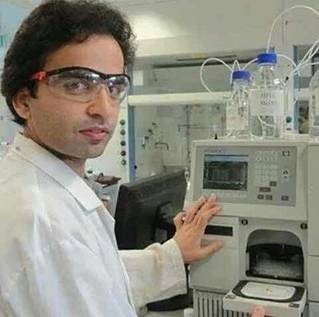
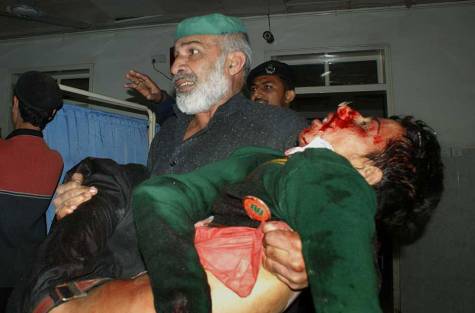
The story of Assistant Professor Hamid Hussain of Pakistan and Assistant Professor Naqib Ahmad Khpulwak of Afghanistan is another sad chapter of the unending violence plaguing the region.  On 20 January 2016, militants attacked Bacha Khan University in Khyber Pukhtunkwa (KPK) province of Pakistan killing twenty two and wounding twenty others.  Among the dead was Hamid who died at the prime of his youth while trying to protect his students.  He left behind a young widow and two children. He died ten days after celebrating his son’s third birthday.  Hamid hailed from a village in Swabi in Khyber Pukhtunkwa (KPK).  He was a bright student and after graduating from local college, he obtained his masters from University of Peshawar.  He earned a higher education scholarship and completed part of his PhD in organic chemistry from Bristol University in England.  Chemistry was his passion and he came back to Pakistan to teach at Bacha Khan University.  
 
Figure: 1: Assistant Professor Hamid Hussain
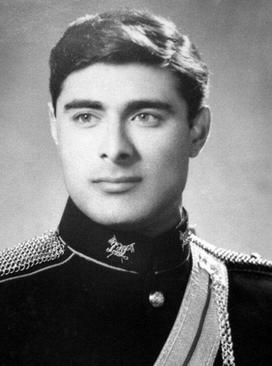
On August 24, 2016, militants attacked American University of Afghanistan in Kabul killing sixteen and wounding thirty six.  Among the dead was Assistant Professor at Department of Law Naqib Ahmad Khpulwak.  Naqib hailed from Jalalabad, Afghanistan.  He obtained his Bachelor of Law & Political Science degree from Nangarhar University where he graduated first in his class. He was a Fulbright scholar, studied at Stanford Law School and completed his Masters degree from Old Dominion University.  He returned to Afghanistan to educate children of his war torn country. 
 
Figure: 2: Assistant Professor Naqib Ahmad Khpulwak
Hamid and Naqib were the flowers of their nations dedicated to education and both were cricket fans.  Both came from a humble and rural background but excelled in their respective fields.  Both were bright students who studied abroad for higher education.  They could have easily found a fulfilling and rewarding career abroad but both decided to come back home and serve their nation. They chose institutions dedicated to educating their countrymen especially Pushtuns. Hamid and Naqib were killed not by some dreaded foreign enemy but by their own and not in a battle at the border but right within the walls of their education institution.   
Pakistan and Afghanistan are ravaged by the same demons but their leadership is involved in blames and accusations.  They are looking for hidden hands but never able to find that hidden hand as that is their own hand.  It is time for both countries to look inwards and find what is ailing their societies.  It is also high time to stop feeding the snakes of neighbors as time and again the monsters created to fulfill delusions have often entered their own homes and eaten their own children.  Civil and military leaders sitting in ivory towers are busy planning grand strategies and have assigned themselves the role of sole custodians of national interest.  They need to climb down and listen to the painful voices of their own countrymen.  The brothers of both victims have articulated the feelings of general public. Naqib’s brother while taking his brother’s dead body back home said that ‘we are the most unlucky nation alive’ and Hamid’s brother at the funeral said that ‘only when this pain reaches the homes of our leaders then they will realize what it feels like losing a son or a brother’. 
Hamid and Naqib were promising young men carrying the candle of hope in trying times of unpredictable violence in their countries.  The best tribute to these gentle souls is to have a program where faculty members of both universities teach a semester at the sister university. This will help to create an environment of trust and respect for each other.  People of both countries deserve much better future and only they can force their respective leaders to pull back from a destructive course. 
“Sorrow is better than fear. Fear is a journey, a terrible journey, but sorrow is at least an arrival”    Alan Paton; Cry, the Beloved Country 
Hamid Hussain
coeusconsultant@optonline.net
August 28, 2016

Indian History, Brexit, Trump and the Bombay Fornicator

Continuing with the
random thoughts theme:
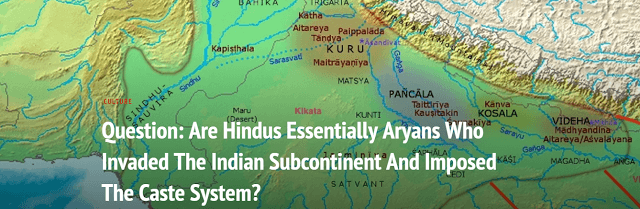
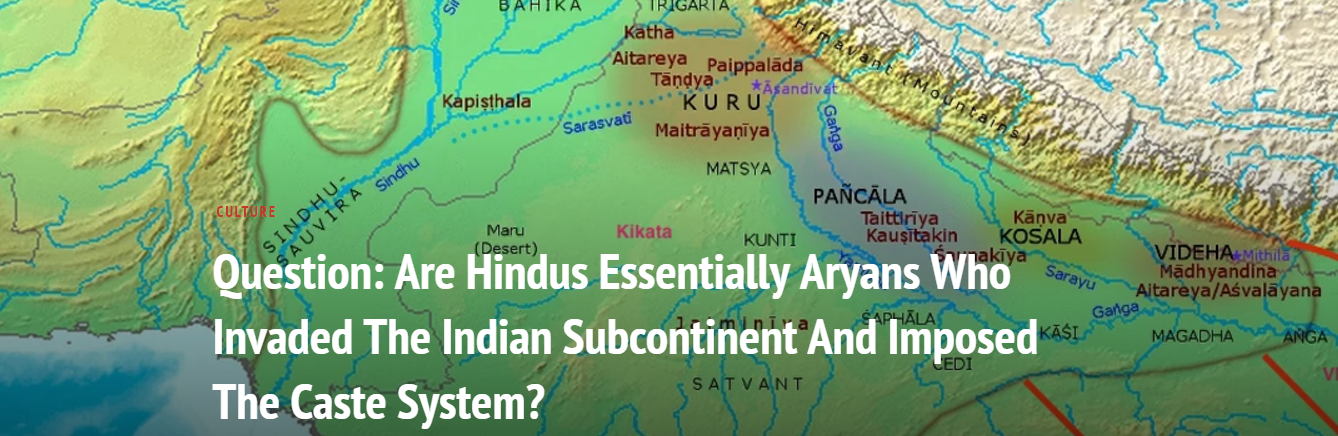
1. Indian History: I think this short piece is a reasonably good summary of our
current state of knowledge about the Aryans and India. ..except for the wholly
unnecessary waffle on “out of India” theory (the weight of evidence
against that seems overwhelming), this is a good place to start. I posted this
on twitter and got several reactions that seem to indicate that Pakistanis
(even educated and reasonable ones) tend to repeat 1950s textbook cliches on
this subject even more than I expected. I think we should all read more about
this topic 🙂

You can start here
with this summary by a rather extreme Hindu-nationalist (I don’t
know if the author would approve of this title, but i use it loosely and
without any pejorative intent; he can correct  me if he happens to
disagree). This author has consistently displayed a vast knowledge of ancient
India and is worth reading for that reason, whether you agree or not with his overall interpretation of history and culture.

From the same guy,  This description of an ancient indo-european feast is worth a
read as well.. 

And of course, you can
always start with Razib Khan’s blog posts about this topic including this, or this.… or this (with the caveat this his conclusions are likely to change
as more information comes in..as should the conclusions of anyone who is trying
to “seek truth from facts”, as comrade Deng would say 🙂

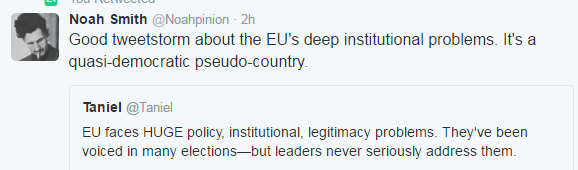
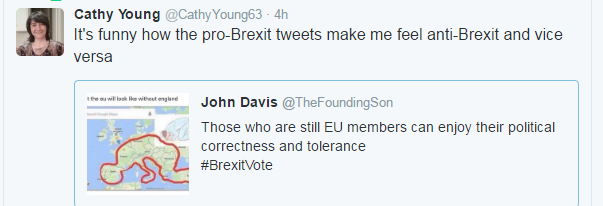
3. Brexit. I took no interest in this until it was over,
but it is apparently going to be a very big deal. Anyway, it does look like the credibility of both the left-liberal elite AND the finance-capital elite is at a new low among the proletariat. More to come on this topic I am sure..

I asked on twitter and
got this from @Sam_Schulman as an example of a good article about what happens
next: The Norway Model …

My first thought is that
this is likely not a useful comparison because there are too many differences
between Norway and Britain..and between the context in which they ask for deals
with the EU. but again, I don’t know much about this. Reading suggestions
welcome. 
3. Trump. I had written in March that his worthless team will sink him. I still
hopeful that his personal ignorance, superficiality and general lunacy, in
addition to his weak team, will cause him to lose big time in November, even
though there are real trends (as indicated by Brexit) that would be expected to
empower a candidate who opposes (or pretends to oppose) the globalist Left as
well as the globalist finance-capital Right…
But I think we do have
to keep fingers crossed. He is a conman and will disappoint everyone, including
those voting for him on nativist or proto-fascist grounds, but that does not
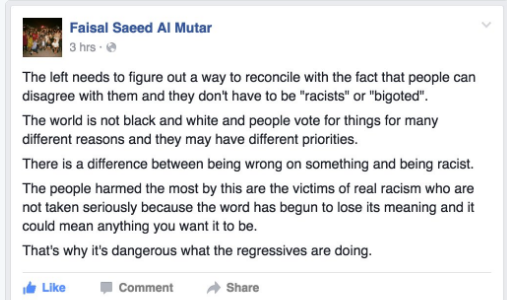
mean he cannot win. If Hillary goes too far into super-elite SJW territory and
Jihadi terrorists manage a serious atrocity very close to elections, then even
this Queens casino-operator could have a chance. I say this because I have a feeling that Hillary is something of a super-elite SJW at heart (though she is willing to sell out). There is a backlash against that ideology in the US these days (and as Brexit partially indicates, in other Western countries as well) and if she lets too much of that emerge, Trump may still have a chance, in spite of his obvious weaknesses and problems. 

Fingers crossed. And
hoping that the FBI does a good job of keeping the jihadis at bay.
4. The inimitable
Salman Rashid
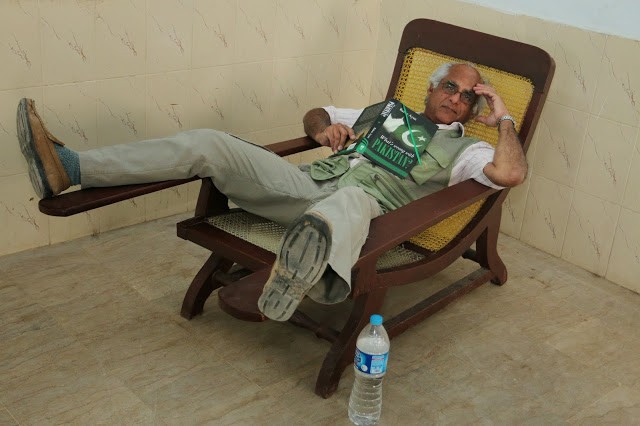
writes about the Bombay Fornicator. A piece of furniture and a piece of history..

5. Orlando. Nothing new to say. As Loretta Lynch said, we don’t know for sure what his motives were. Well, we know for sure he claimed to be killing for Islam/Islamic-state, but it cannot be denied that there are possible sub-conscious motivations at work here in addition to the obvious “spirit of Jihad” thing. (gays, latinos, paranoid-schizophrenia?). Perhaps we can say: “Jihadist Islam that encourages “spontaneous lone-wolf jihad” and endorses violence against gays led a psychologically disturbed and culturally confused Afghan-American to make use of lax gun laws to kill random gay people” .
About the spirit of Jihad thing, I wrote in some detail after the San Bernardino attacks. I am copying and pasting the last few paragraphs here:
Can any Muslim become radicalized and fall victim to spontaneous jihad syndrome at any time?
This is the right-wing fringe’s mirror-image of the liberal belief that Islam never causes jihad and all of it can be explained by “inequality” or “Sykes-Picot” or some such story.  Both mirror-images are clearly false. The real situation is that we can look at the Muslims of the world and see several disparate groups; Shias, Ismailis and Ahmedis are outside the Sunni Jihadist universe and so are not going to spontaneously take up arms in the war between shariah-based Islam and other civilizations.  They are all relatively small minorities, but they are the most obvious examples of “Muslims who will not get radicalized and join the Sunni Jihad, foreign policy, Israel, Sykes-Picot and Picketty notwithstanding. These supposedly powerful motives for hating America will not cause these groups to go postal. There is a lesson in there somewhere.
 Coming to Sunni Muslims, we have a very large number are “moderate Muslims”, which is shorthand for Muslims who were not brought up in shariah-compliant households and who do not practice that kind of Islam. Their numbers vary from country to country, but one can say with a lot of confidence that they are not spontaneous jihad material either. They can covert, but it is a slow process, it is observable and even preventable (if they are kept away from hardline preachers). Then there are the shariah-compliant Muslims who believe that the Shariah’s orders for Jihad are meant for very specific situations where a Sunni state has declared Jihad and those situations (fortunately) do not exist. So they get on with life in all parts of the world. Many of them are model citizens because they avoid intoxicants, deal honestly and follow the law. A very tiny fraction of them may “radicalize” but most will not. The same applies to converts. So yes, about these (small) groups one may say “they can radicalize” , but very rarely. And even then, there are warning signs and it is never an overnight process. Finally, there are the true-believer Jihadists. They have obvious links with Jihadist schools, groups and teachers. They are small in number and they are not hard for the community to identify, if is so chooses. And they are indeed high risk. Liberals see none of them, right-wingers see too many. Both are wrong.
I guess what I am saying is that notions of Muslim hordes just waiting for a chance to attack are far outside the bounds of reality. Common sense can actually be a guide here. There is no need to throw the baby out with the bathwater and equally there is no need to be willfully blind to warning signs. Biased agenda pushers on BOTH sides of this debate have obscured common sense options. And while Liberals may underestimate or misrepresent the threat from radical Muslims, conservatives frequently generalize the threat to all Muslims.
Last but not the least, all nutcases cannot be stopped beforehand. Some surprises will always happen in a large and complex society . There is no risk-free society, with or without Muslims. But this is not World-War Three. Not in the United States. In parts of Europe the proportion of jihadists is likely higher (for various reasons, including racism and multiculturalist liberalism). Meanwhile, in the core of the Muslim world itself, all bets are off. There is no well-articulated theology of liberal Sunnism. Other organizing ideologies (like Marxism and pan-Arab nationalism) have manifestly failed. The authoritarian regimes that exist are (for now) the only game in town. These authoritarian elites, who disproportionately  benefit from the modern world,  impose their will using a combination of force, persuasion and foreign support. But they lack a deep legitimating ideology. This crisis of ideology is extremely serious, and it may devour some of those countries (though the survival of Jordan is a good example of the fact that even the most arbitrary modern states have more strength than we sometimes imagine). Those Muslim states that are further away from the Arab heartland (and the Israeli-Palestinian conflict) may do better. They can frequently rely on other identities to maintain the legitimacy of their states and new Islams can arise in them with time. But even they will not be compltely free of Jihadist conflict. No state is completely free of conflict of course, and many conflicts unrelated to Islam or Jihad could easily kill millions and destroy whole countries. But predominantly Islamic countries do have the added burden of the conflict of Classical Islamic ideals with modern civilization (not justWestern civilization), and it will take time to resolve this conflict.
Hold on tight.
– See more at: http://www.3quarksdaily.com/3quarksdaily/2015/12/san-bernadino-terror-attack.html#sthash.6IuA9qYd.dpuf

Operation Z to A

Dr Hamid Hussain on operation Zarb e Azb:

Following was at the request of a good friend and well informed Pakistani officer who has a more pessimistic view about ongoing operations.  As expected, even in army there are diverse opinions depending on the knowledge and experience of particular officer.  In my interactions I found quite a broad range.  On one end, some have already declared victory and planning victory parades and elevating their favorite senior officers to high pedestals, others are more realistic and know that the water is more muddier when you get close to it and still others who are quite pessimistic as regional dynamics are beyond Pakistan’s control. This is not unusual as every conflict generates different views in the military that is tasked with tackling the problem.  I incorporated some views of tribesmen (most keep their thoughts to themselves as environment is not very conducive for a candid discussion).  In addition, many non-Pakistanis are kind enough to candidly share their perspectives and I incorporated that perspective even if I don’t fully agree with that. 

Hamid 

Pakistan Army Military Operations – Summary


Hamid Hussain


War is uncertainty, characterized by friction, chance and disorder”.            Clausewitz

From 2003 to 2008, for a variety of reasons, Pakistani state gradually lost control over federally administered tribal areas.  The reasons were more related to strategic myopia at the highest level rather than strength of the militants. It took a while before military leadership understood the nature of the threat and started more professional planning, training and overhauling doctrine to face the new threat.  The nature of modern militaries is such that from conception to application on the ground takes time. 


 In post 2008 period, military embarked on a cautious push back.  In an effort to limit civilian casualties, civilians were asked to leave the intended area of operation.  This approach while beneficial on one level had a serious drawback as militants also moved on to their next rest stop before the start of operations.  The nature of the terrain with hills, forests and narrow gorges meant that interdiction attempts will be high risk.  In the early part of the operations, Special Services Group (SSG) was used to interdict some escape routes but when casualties mounted, this approach was scaled back.  The result was that majority of the militants including important leaders escaped the net.  Many mid and high level commanders of Tehreek-e-Taliban Pakistan (TTP) were eliminated by U.S. drone strikes.  By 2012, army was able to take control of major towns of Malakand division and many tribal agencies.  Only swamp left was North Waziristan.  Under the direction of the office of the Chief of General Staff (CGS), final push towards North Waziristan was finalized and inner circle of Corps Commanders gave the nod for the operation. However, Chief of Army Staff (COAS) General Ashfaq Pervez Kayani didn’t give the final go for reasons best known to him.  In my view, his own nature of contemplation and slower decision making process, deteriorating relations with United States and quarrels with political leadership made him think twice.  He was criticized for this and some ridiculed him with ‘analysis-paralysis’ syndrome.  To be fair to Kayani, people tend to forget the environment in which he was working.  General public opinion was not in favor of military operations, army was not trained for the task, security forces had experienced some embarrassing early reversals and state had lost not a small geographic area but lost control over large swaths of a very difficult terrain.  Army had gradually asserted control over Malakand division, Kurram, South Waziristan, Mohmand and Bajawar agencies as well as large parts of Orakzai and Khyber agencies during the tenure of Kayani. However, he could have proceeded with North Waziristan operation earlier.  When General Raheel Sharif succeeded Kayani in November 2013, he gave the final order and wheels were set in motion for North Waziristan operation. In June 2014, operation was formally started after many announcements asking locals to leave. A large number of militants also listened and moved across the border. 

In most operations especially post 2008, army asked everybody to leave and then considered the territory ‘hostile’.  Those who remained were viewed with suspicion either as outright ‘hostile’ in sympathy with militants or not serving as ‘gracious hosts’ to the army.  Army was given unprecedented authority of kill and capture and they could use artillery and air assets as well as authority to destroy residential and commercial buildings. There is significant local resentment and it is not due to sympathy with militants but tribesmen are distressed by liberal use of bombings. These sentiments could have been ameliorated by more robust engagement of tribesmen and explaining to them the need for some of the measures such as curfews and neutralization of heavily fortified areas and tunnels with artillery and air assets.  A large number of tribesmen (not militant sympathizers) from Waziristan have taken refuge in Afghanistan. 

In moving forward, one main hurdle is deep suspicion between army and civilian administrators of tribal areas. Currently, there is almost universal denouncement of civilian administration by the army.  In my conversations with a number of army officers they consider civilian political agent system as corrupt and inefficient and there is an element of truth in it (even today, many tribesmen recount with fond memory to me the bygone era of British political agents).  On the other hand, civilians criticize army for focusing only on kinetic operations and monopolizing all development projects in tribal areas thus not allowing civilian set up to gradually re-assert and they also have a valid point.  In current situation, tribesmen know where the power center lies and they work directly with Colonels and Brigadiers.  In the long run, army has to hand over to the civilian set up in tribal areas. This is army’s ticket out and no matter how imperfect ultimately civilian structure needs to be put in place in secured areas.  Both parties should remember that they are on the same team and need to work together if they want to succeed. When army helped to equip and train police, the performance of Khyber Pukhtunkhwa (KPK) provincial police markedly improved. Similar joint efforts can improve working relationship but army should be willing to share power while civilian administrators have to take some risks and go back to work among people. 

At general public level the ‘success’ of Operation Zarb-e-Azb is mainly at psychological level where average Pakistani not aware about the nuances came out of the depression and some sense of confidence is visible. Operationally, securing of main towns and major roads removed industrial scale bomb making factories resulting in marked reduction in large scale bombings of military and civilian targets.  This also resulted in removal of militants from general population which is an important piece of any counter-insurgency struggle. There has been marked improvement of efficiency of the army. I can see a sea change in terms of morale, training, efficiency, vigor and willing to tough it out in a very harsh terrain. One would not recognize the company, battalion and brigade level commanders of present army when compared with pre 2001 era.  War is a great auditor and teacher of institutions.  Army has reeled back from a perilous course and learned some very valuable and right lessons from the conflict. This is good omen both for the army and for the country. 

The question of Pakistani TTP militants taking refuge in Afghanistan needs special elaboration.  First, the nature of Pakistan-Afghanistan border is such that it is very difficult to control cross border movement.  In the past, when Afghans and Americans complained about Afghan militants taking refuge on Pakistani territory after attacking targets in Afghanistan, Pakistanis told them that it was beyond their capacity.  To my knowledge, up to 2008, Afghans, Americans and Indians had no business with TTP (also hands off as far Baluch were concerned).  One needs to make a distinction between intelligence gathering and intelligence based covert operations using local assets. In view of multifaceted challenge, Pakistan’s neighbors as well as western intelligence agencies need information about the cauldron just as Pakistan needs information about threats to its own national interests.  Intelligence gathering is an accepted norm (in addition channels are also used especially for negotiating prisoner swaps or release of prisoners for money and Pakistan, Afghanistan, United States and Iran have used the channels for this specific purpose) but one needs to take a long deep breath before embarking on covert operations where unintended consequences usually surpass intended consequences.  Afghan and American outrage followed by Indian outrage at Mumbai carnage in 2008 changed the dynamics.  All three parties were convinced that Pakistan will not change its behavior and in internal debate, hawks got an upper hand.  Now, TTP became another bargaining chip in the dirty games and national narrative on each side became more confused and erratic. In February 2013, commander of militants in Bajawar Faqir Muhammad and in October 2013 Hakimullah Mahsud’s envoy Latif Mahsud were arrested in Afghanistan.  There was some confusion regarding Latif and he was snatched by U.S. Special Forces from intelligence personnel of National Directorate of Security (NDS) in Afghanistan.  Later, he was handed over to Pakistan and a shaved and more humbled Latif is now singing like a canary.  If Pakistan had no interest in going after Afghan Taliban on its territory then surely Afghans and Americans were in no hurry to go after Mullah Fazlulluah parked in Nazyan in eastern Ningarhar province. 

The complexity of current situation can be judged from events in remote areas of Ningarhar and Kunar where there is great pow wow of Afghan Taliban, Pakistani TTP and Daesh.  Pakistani militants who escaped from Pakistan army’s operation in Orakzai and Khyber agencies crossed the border into eastern Afghanistan and strengthened the hand of nascent Daesh.  With this newly acquired muscle, Daesh starting from Shinwar district cleared the Taliban and expanded influence in Achin, Nazyan, Spin Ghar, Khogyani and Chaparhar districts. When Pakistanis obliged Washington, U.S. drones started to hunt for Fazlullah and he narrowly escaped. Afghans and United States gave a free pass to Afghan Taliban while Tehran happily handed some cash so that Afghan Taliban could thin the ranks of Daesh.  Afghan Taliban assembled a large posse and went after Daesh and in the process downgraded their structure. Since the start of 2016, U.S. has expanded its drone policy against Daesh in eastern Afghanistan with more wider targeting authority.  Militants will now likely move towards Kunar and drones will also likely follow them there. Drones need to be integrated with Afghan security forces and local militias to prevent militants from entrenching in a specific geographic area. It will be interesting to see how the conflict unfolds in Kunar as there will be a volatile mix of militants from Taliban, Hizb-e-Islami of Gulbadin Hikmatyar, local Salafi armed groups and newly arrived Daesh as well as Pakistani militants who have crossed over from Bajawar. 
 All concerned parties (Pakistan, United States, Afghanistan, Iran, India; in that order of importance) suffer from the same illness and that is sacrificing long term interests for short term gains.  The desire of ‘instant gratification’ is so strong that they lose the larger picture. All this is happening in the backdrop of deep suspicions about motives of the ‘other’.  Reminds me Henry Kissinger’s words quoted in Beschloss’s May Day about Cold war when he summed up the behavior of the two super powers as ‘like two heavily armed men feeling their way around a room, each believing himself in mortal peril from the other, whom he assumes to have perfect vision.  Each tends to ascribe to the other a consistency, foresight and coherence that its own experience belies’. Some adult supervision is needed at many levels where each party understands its own limitations and finds ways to work on common grounds despite genuine differences. 

 “They who run for cover with every reverse, the timid and faint of heart, will have no part in winning the war.  Harry Hopkins

 Note: These views are based my interaction with diverse groups of people not only well informed but also ordinary folks including Pakistanis, Indians, Afghans and Americans as well as travels to the region.

Hamid Hussain
April 17, 2016
coeusconsultant@optonline.net 

Sahibzada Yaqub Khan

The following are three notes about Major General Sahibzada Yaqub Khan, who passed away January 25th after a long and very eventful life. First and foremost is an article about him that was written a few years ago by Dr Hamid Hussain, a well known, extremely erudite and highly respected chronicler of the British Indian army and its successor armies. The second is from Major Aghan Humayun Amin whose knowledge of military history in general and the history of the Pakistani army in particular, is second to none, and who is not shy of making his opinion known in sometimes salty and direct language. The last one is from Abbas Raza, who runs the famous 3quarksdaily.com and who has written a very personal obituary about a man he clearly greatly admires.


Before we get to any of these notes, let me put out there some questions of my own. Anyone who has answers to these, please let us know in the comments section; you will do a service to history 🙂

My questions are about his actions in March 1971. Unfortunately now that he has passed away without giving his own account of those days, we need someone else to step in with the details.

Sahibzada Yaqub Khan was the martial law administrator in East Pakistan as well as commander Eastern Command. His command had already prepared contingency plans for military action as early as November or December 1971 (“operation Blitz”). In February 1971 Admiral SM Ahsan (Governor East Pakistan) took a stand against the Yahya Khan regime’s actions (Sheikh Mujib had just won a majority in the National assembly, but his becoming Prime Minister was forestalled by Yahya’s decision to delay the national assembly session using various excuses) and Ahsan objected to this policy, then resigned and left Dhaka (in early March). All this is well documented in official records and personal accounts. Later on it became general knowledge that General Yaqub had been similarly courageous and far-sighted and had resigned rather than carry out the poliicy being sent down by GHQ. Once this was mentioned in one or two books, it was re-quoted in other books and by now it is “common knowledge”. But if you look closer, matters are a bit more muddled. It is not clear at what stage  and to what extent he made his opposition known, and no resignation is clearly mentioned. All we know is that he left Dhaka around 5-7 March (as far as I know, no one claims he had resigned before he left Dhaka) and went to Karachi; what happened when he got there? I have heard from junior officers (obviously not direct participants in high level meetings) that Yahya Khan was very angry with Yaqub for “having left his post without permission” and there are claims that General Yaqub was in danger of being court-martialed for desertion. According to Major Amin, he was questioned in the transit camp in Karachi and was then demoted to major General. Where was he posted then? Had he resigned? or was he forcibly retired? A formal inquiry was supposedly held against him for leaving his post, but its contents have never been revealed either (and may no longer be traceable). I am sure that as a highly intelligent person, he very likely opposed the army action being contemplated then by the high command, but the point is, the details of his opposition and actions remain unknown.

So, can someone fill in this gap with direct information or with quotes from written accounts? When did he leave Dhaka? and in what circumstances? Did he offer to resign? Was there an inquiry against him and what were its conclusions? What were his formal postings after that event? Under what circimstances did he eventually leave the army? Did he retain his pension and benefits when he did leave the army?
I hope someone can clarify these points.

By the way, what is clearly documented (by Altaf Gauhar in newspaper articles if I remember correctly) is his positive role in another fiasco: when Zia was President the army considered an early version of the Kargil plan that Musharraf later put into effect. General Yaqub Khan was Zia’s foreign minister at that time and opposed the plan in a cabinet meeting and it was dropped because of his opposition.
He may have been similarly prescient about 1971, but the details remain murky. For the sake of history, it would be good to find out exactly what happened and when..

Of course, Sahibzada sahib’s career as Bhutto’s ambassador to several great powers, as Zia’s foreign minister, then as the establishment’s chosen foreign minister to keep Benazir in check, and then as Musharraf’s envoy to justify his coup, all indicate that he was a solid and upstanding member of Pakistan’s ruling elite and was comfortable with military rule, and with the foreign policy priorities of the Zia and Musharraf regimes (including the jihad in Afghanistan and its softer version in the Musharraf era). He was also highly educated and well read and had an impressive personality that a lot of people remember with awe. And of course, he got high praise from people like Nixon and Kissinger. One imagines that had he been born into the elite of a great power (instead of being born into the fading North Indian Muslim elite) he could have been an Edward Grey, though probably not a Curzon or Palmerston.
I wish he had written his memoirs.
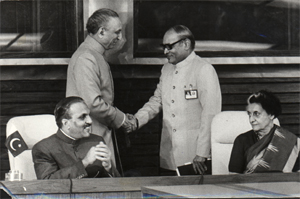


From Dr Hamid Hussain: 

MG ® Sahabzada Yaqub Khan recently passed away.  Last of the generation of officers raised in Raj army and served with successor states armies.  Few years ago, I wrote a piece about him that was published in his alma mater RIMC Dehra Dun magazine.  In addition to profile of Sahabzada, I also took a detour into archaic regimental histories as I found some facts fascinating.  May be this can be a tribute and obituary of the officer and gentleman.  Rest in Peace Sahabzada.

Hamid

Stranger Than Fiction – Lieutenant General ® Sahabzada Muhammad Yaqub Khan 
Hamid Hussain

Sahabzada Muhammad Yaqub Khan is part of that generation of subcontinent that witnessed some of the most exciting events of the last seventy years.  He was not only a witness but active participant in many events of these challenging times.  Some events of his life seem material for a novel rather than real life experiences.  This generation born at the zenith of British Raj in India received the best education that the Raj could offer and joined Indian army during Second World War.  Young lads from different religions and ethnicities were comrades in elite regiments fighting under the guidance of their British mentors.  As Captains and Majors they saw the independence of their land and departure of British.  Some had to leave their ancestral lands that happened to fall on the wrong side of the divide.  Former comrades became foes when their newly independent countries got entangled into prolonged conflict over the disputed territory of Kashmir.  Many fought against each other as Captains and Majors in 1947-48 war in Kashmir, in 1965 war as Brigadiers and Major Generals and in 1971 war as senior commanders of their respective armies.  In case of Pakistan, they saw the successful secession of eastern wing in 1971.  Yaqub is a poster child of this generation of officers.

Yaqub was born in the aristocratic household in the princely state of Rampur.  He studied at Prince of Wales Royal Military College at Dehra Dun.  He joined Royal Indian Military Academy at Dehra Dun and commissioned in Indian army.  He joined elite 18th King Edward VII Own Cavalry of Indian army.  During Second World War, 18th Cavalry left India in January 1941 for the Middle East theatre and landed in Egypt.  Regiment was then commanded by Lieutenant Colonel Howard Fowler (he had just taken over command from Lieutenant Colonel H. M. Tulloch) and senior most Indian Viceroy commissioned Officer (VCO) was Risaldar Major Kapur Singh.  Lieutenant Yaqub was with A Squadron (Hindu Jat) commanded by Captain J. M. Barlow.

18th Cavalry was part of 3rd Indian Motor Brigade commanded by Brigadier E. W. D. Vaughan (later Brigadier Filose) and grouped with  two other elite cavalry regiments; 2nd Royal Lancers (Gardner’s Horse) and 11th Prince Albert Victors’ Own (PAVO) Cavalry.  They were supported by 2nd Field Regiment of Indian Artillery.  Volunteers from all three cavalry regiments of 3rd Indian Motor Brigade formed Indian Long Range Scouts (ILRS).  It was a squadron strength organization commanded by Major Samuel Vallis McCoy and consisting of J (Jat), R (Rajput), M (Muslim) and S (Sikh) patrols.  In May 1942, Italian forces overran 3rd Indian Motor Brigade and large number of Indian officers and men became Prisoners of War (POW).   Yaqub’s comrade in 18th Cavalry was Second Lieutenant Abhey Singh.  Yaqub and Abhey came from similar backgrounds.  Yaqub was from the princely house of Najibabad and his father Sir Abdul Samad Khan was Prime Minister of the princely state of Rampur.  Abhey was from the princely state of Kota where his father Major General Sir Onkar Singh was Prime Minister of the state.   Two other officers of the regiments fighting alongside Yaqub’s 18th Cavalry were also from aristocratic families.  Major Rajendrasinhji Jadeja (he has the distinction of being first Indian officer to win DSO and later rose to become Chief of Staff of Indian Army 1953-55) commanding B Squadron of 2nd Lancers was from the princely state of Nawanagar and Lieutenant Sardar Hissamuddin Mahmud el- Effendi of 11th PAVO Cavalry was scion of the Afghan royal family.  Yaqub and Hissam were later polo buddies (along with Colonel ‘Huskey’ Baig and Colonel Sikku Baig they played at Lahore Polo Club).

Yaqub and Abhey along with the senior most Indian officer Major P. P. Kumaramangalam (2nd Field Regiment) were together in Italian POW camps of Avers and Avezzano.  In the confusing times of 1943 when Italian forces capitulated, these three officers escaped.  Yaqub had learnt Italian during captivity therefore he was leading the pack interacting with Italian peasants to try to reach the allied lines.   They were captured again, this time by Germans and they spent next few years in German POW camp of Braunschweig.  Yaqub learned German during his stay with Germans.  He was repatriated after the end of war in 1945.  1947 Yaqub opted for Pakistan army while his comrade Abhey Singh stayed with Indian army.  Abhey transferred to 17th Poona Horse and led a tank squadron in ‘Operation Polo’ when Indian army moved into the state of Hyderabad in 1948.  In 1965 war, Yaqub’s parent battalion 18th Cavalry managed to reach the Burki Police Station on Lahore front and their commandant Lieutenant Colonel Hari Singh Deora (later Brigadier) had his picture taken in front of Burki police station.  Yaqub commanded 11th PAVO Cavalry in 1952-3; the regiment that was in the same formation when he served with 18th Cavalry during Second World War.  In 1947, Hindu and Sikh soldiers of regiments allotted to Pakistan went to India and Muslim soldiers of regiments allotted to India came to Pakistan.  Muslim elements of 2nd Lancers (along with some elements of 8th Cavalry and 9th Deccan Horse) joined 11th PAVO Cavalry while Sikh squadron of 11th PAVO Cavalry went to 18th Cavalry and thus the circle was completed.

In 1947, Yaqub was Second in Command of Viceroy’s Bodyguards then commanded by Lt. Colonel Peter Hussey.  Indian army regiments were divided between India and Pakistan including Viceroy’s Bodyguards.  This unit consisted of Punjabi Muslims and Sikhs.  Like all other regiments, personnel and equipment of bodyguards was also divided.  Major Yaqub representing Pakistan and Major Gobind Singh (Jaipur Guards) representing India went to the stables of Viceroy’s Lodge to divide the property of the regiment.  Mountbatten’s ADC Lieutenant Commander Peter Howes arbitrated and at one time a coin toss decided about which country will get the gold carriage of Viceroy.   Yaqub came to Pakistan with the Muslim component and their share of the property of one of the oldest regiment of Indian army and became the first commandant of Governor General’s Bodyguards.  Yaqub’s elder brother Sahabzada Muhammad Yunus Khan was commissioned in Indian army from Officers Training School (OTS) at Bangalore and served with Garhwal Rifles.  In Second World War both brothers fought under Union Jack and both earned Indian General Service Medal (IGSM).  In 1947, Yunus opted for Indian army.  Immediately after independence, India and Pakistan went to war in Kashmir.  Yaqub was sent by Pakistan army while Yunus was sent to the same theatre by Indian army.  Yunus was with Garhwal Rifles (most likely 3/18 Garhwal Rifles commanded by a fine officer Lt. Colonel Kaman Singh and a superb senior most JCO Subedar Major Sher Singh Rawat as this unit saw lot of action and 1/18 Garhwal Rifles came to the theatre quite late in July 1948).  Yunus served as Deputy Military Secretary to President of India and retired at the rank of Colonel.

A number of Indian and British officers were captured by Italians in Middle East theatre in May 1942.  All three commanding officers of the regiments of 3rd Indian Motor Brigade; Lt. Colonel Fowler CO of 18th Cavalry, Lt. Colonel De Salis CO of 2nd Lancers and Lt. Colonel P. R. Tathem CO of 11th  PAVO Cavalry were bagged by Italians.  In the Aversa POW camp in Italy, a very strange chapter of Indian military history was recorded.   Italian commander of the POW camp, Colonel Errera appointed several Indian officers for management of prisoners.  These officers of different faiths and ethnicities were fighting under the flag of British Indian army and were now prisoners.  Major Kumaramangalam (2nd Field Regiment) being the senior most officer was appointed commanding officer of the camp.  Captain Yahya Khan (4/10 Baluch Regiment, now 11 Baloch of Pakistan army) was camp Adjutant and his assistant was Lieutenant Shamsher Singh.  Captain Tikka Khan (2nd Field Regiment) was Quarter Master.  Other inmates of the camp were Yaqub Khan (18th Cavalry), Major Ajit Singh (Royal Indian Army Service Corps), Captain Kalyan Singh (2nd Field Regiment), Captain A. S. Naravane (2nd Field Regiment), Lieutenant Abhey Singh (18th Cavalry) and Lieutenant Sardar Hissamuddin Mahmud el-Effendi (11th PAVO Cavalry).  Many officers of this POW camp later played important part in the history of India and Pakistan.  The Italian Colonel of the POW camp could not have imagined that he was holding a whole crop of future high power society.  This camp has the world record of holding so many future senior officers under its roof.  Kumaramangalam escaped from Italy but captured by Germans and was their guest for few years.  He later became Chief of Army Staff of India (1966-69).  Yahya Khan rose to become Pakistan army chief and then President (1966-71).  In 1971, Tikka Khan was Commander of Eastern Command and later became Pakistan army chief (1972-76).  2nd Field Regiment of artillery can be proud to have two army chiefs of rival India and Pakistan.  Yaqub Khan became Lieutenant General and served as commander of Eastern Command during the fateful days of 1971.   After retirement he served as ambassador at several important posts and Foreign Minister of Pakistan.  Hissam rose to the rank of Brigadier in Pakistan army.  Ajit Singh rose in the ranks to become Lieutenant General, Kalyan Singh and Naravane became Major Generals and Shamsher Singh Brigadier in Indian army.

Yaqub left his mark on Pakistan army.  He has many admirers as well as his critics.  Yaqub is pioneer of starting the intellectual life in Pakistan army.  He served as Director Armored Corps as Brigadier, 6th Armored Division commander, Commandant of Staff College and Chief of General Staff (CGS)  as Major General and Corps Commander of East Pakistan at the rank of Lieutenant General .  As Commandant of Staff College at Quetta, he introduced Pakistani officers to the higher direction of war.  He was also instrumental in establishment of National Defence College (now National Defence University) with its two tiered course.  There were not too many thinking generals in Pakistan army at that time.

In view of his aristocratic background and intellectual bent, Yaqub was different in outlook.  He was from the old school of strict adherence to protocol and traditions.  One of his junior officers who served with Yaqub when later was commanding 11th PAVO Cavalry recalls an incident in the mess.  In one of the early days of his command, Yaqub stormed out of the dinning room because his cold meat was not properly dressed and potatoes were not of uniform size.  The officer swears that he saw tears in Yaqub’s eyes.  I can easily visualize that during Second World War, when ready to surrender, Yaqub donning his best cavalry uniform and asking his orderly to polish the boots with extra shine and then put on his cavalry sword and wait for the Italian officer to show up and Yaqub surrendering with full protocol.

Yaqub’s critics point to three incidents pertaining to three different times of his life.  First is when he was in Kashmir war in 1947-48.  Yaqub was ordered to rescue a small picket surrounded by Indians.  He was a thinking officer and kept calculating his own likely action and enemy’s possible reaction.  In the meantime, Indians overran the picket.  Second was when he refused to carry out military action against Bengalis when he was commander of Eastern Command.  Yaqub was sacked from the army for his refusal.  At that time, almost all officers regardless of their rank and social background denounced Yaqub.  Later, with hindsight, some changed their mind and thought Yaqub did the right thing.  Third criticism relates to his post retirement career.  He served at important ambassadorial positions under Prime Minister Zulfiqar Ali Bhutto and later served as Foreign Minister of Bhutto’s executioner General Muhammad Zia ul Haq without any qualms.

In one life, Yaqub has enjoyed every aspect of an adventurous journey.  A long and fulfilling military career was followed by an equally rewarding career of a well respected diplomat.  In addition to these full time occupations, he continued his passion of reading (his grandfather Abdus Salam Khan was an avid reader and kept a large library) with some philosophical bent and played polo.  He is probably the oldest living officer in Pakistan and at the ripe age of 91 he has a treasure chest of memories that can bring a smile as well as a tear or two in the eyes.

Notes:

1- Major General Partap Narain.  Subedar to Field Marshal (New Delhi: Manas Publications, 1999)
2- Major General ® A. S. Naravane.  A Soldier’s Life in War and Peace (New Delhi:  A. P. H. Publishing Corporation, 2004) 
3- Larry Collins and Dominique Lapierre.  Freedom at Midnight (New York: Simon & Schuster, 1975)
4- Charles Chenevix Trench.  The Indian Army and the King’s Enemies 1900-1947 (New York: Thames & Hudson, 1988) 
5- The Tiger Kills (London: Her Majesty’s Stationary Office,1944)
6- M. Y. Effendi.  Punjab Cavalry: Evolution, Role, Organisation, and Tactical Doctrine 11 Cavalry (Frontier Force) 1849-1971  (Karachi: Oxford University Press, 2007)
7- Colonel Abdul Qayyum.  Pakistan Army’s Mosaic of Ideas – I.  Defence Journal, July 2000
8- Hamid Hussain.  Stranger than Fiction – Story of Identity, Loyalty, Sacrifice and Betrayal.  Defence Journal, December 2007
9- Hamid Hussain.  Lest We Forget.  Defence Journal, March 2010

Agha H Amin , Major (Retired) ,
11 Cavalry , 29 Cavalry (attached) , 58 Cavalry , 15 Lancers , 5 IAS (commanded) , 14 Lancers, 15 SP (attached)

From Major Agha Humayun Amin: 

My fascination with Sahibzada Yaqub Ali Khan began in 1975 as I read about him and heard about him from my father.

He descended from Yusufzai Pathans from a village called Maneri near Swabi , who migrated to Raohailkhand as raiders and maruaders in 17th and 18th century .I made it a point to visit Maneri while serving as an instructor at Armour School Nowshera in 1991 . Interestingly I found Maneris fame as a top class village of UJRATIS , paid assasins who in 1991 killed people for as low as 3000 Rs in 1991. My Pashtun friends told me that women of Swabi were notorious or illustrious for being EXCEEDINGLY DOMINATING.

 A similar breed of Shinwaris as Sahibzadas ancestors, from Dur Baba constituted my maternal grandfathers fifth ancestor Mattay Khan a Shinwari from Dur Baba  present day Ningrahar who settled in Sikandara Rao in Aligarh District. Mattay Khan built a Haveli on a hill overlooking a pond (Jouhar) or (Hauli) . The Haveli still exists and the owner was the principal of the High School at Sikandara Rao.

Colonel Salman famous as Ustaad of Ustaads in Afghanistan having taught all the WHOS WHO from Hekmatyar and Ahmad Shah Massoud down to OBL and Mulla Omar belonged to a family who had migrated with Babar from Uzbekistan to Dibai near Sikandara Rao . Salmans father Colonel Ahmad won an MC in Burma while serving in Punjab Regiment and later raised 1 East Bengal. His uncle Aftab Sahib was my maternal uncle Saad Khairis batchmate in the CSP/PFS. Aftabs niece is married to my first cousin. Major General Wajahat also belonged to a village near Sikandara Rao.

When I visited Dur Baba last in January 2015 it was more notorious for being targeted by US drones.

These Shinwaris served in Mugahl Army , army of Nawab of Oudhs  and in Maratha Cavalry as part of various Risallahs of Pathans.They also contributed to all Ten Light Cavalry regiments of Bengal Army from 1780 to 1857. In 1857 Sikandara Rao followed Punjabi Opportunism in staying loyal to English East India Company while major part of Aligarh district was in rebellion against the company. Five of my maternal grandfathers uncles and grand uncles joined the rebellion and simply disappeared after 1858 . But Sultan Khans grandfather remained staunchly loyal although 5th Light Cavalry and Sultan Khans father served as Prosecuting inspector at Hoshiarpur till 1901 or so.Veteran PPP leader ND Khan also hailed from Sikandara Rao or surrounding area.Sikandara Rao had a varied collection of Shinwaris , Yusufzais and Sherwanis who were the leading zamindars and talukdars of Aligarh district.A relative Obaidullah Sherwani rose to rank of Deputy Secretary Establishment in Pakistan retiring in early 1960s. His son in law Mr Karrar served as General Manager of the glorious Midway House owned by KLM for many years from late 1960s to 1980 or so. Karrar Uncles son migrated to UK and married an Italian lady.

He appeared to be an ideal military personality and I quoted him as a high calibre personality in my article Orders and Obedience published in Pakistan Army Journal in March 1991.

I met him in 1994 and met him frequently till 1999 or so.

As I studied Pakistans 1971 debacle Ex Major General Yaqub Ali Khan (demoted to Major General in 1971) appeared a highly overrated character.

When the Sahibzada resigned he was a three star general . He was then demoted to two star and made to sit in a majors office in Transit Camp Karachi which now houses the ISI . His resignation was then accepted a few months later .

A rare case where a Pakistan Army officer resigned which means surrendering all pension and privileges.

Ill informed and poorly read Pakistani journalists fallaciously describe General Jahangir Karamats retirement as resignation while in reality it was forced retirement with the general enjoying all military perks and privilieges including pension.

He was admired for being a strategist but he FAILED to correctly formulate a strategic plan for the Pakistan Army for 1971 war . This includes his successors and all the stewards of strategic planning of Pakistan Army from 1947 to 1971.

While Mr ZA Bhutto was painted as Pakistan Armys scape goat for 1971 Crisis the hard fact is that Pakistan Army was TOTALLY STRATEGICALLY CLUELESS and had no viable STRATEGIC PLAN to deal with Indian Major Attack on East Pakistan.

When Sahibzada Yaqub Ali Khan was ordered to carry out a military crackdown in East Pakistan he refused . His motives are not clear . Whether it was excess of Moral Courage or Irresolution , we do not know and he never made it clear as long as he lived.

A man of all seasons he served in various ambassadorial assignments under various civilian and military governments.

As one who contributed in education of future generations by sharing his knowledge , his role was ZERO as he did not publish any memoirs.

He was an untested horseman in actual operations of war as he never commanded anything in war except as a very juniour officer at Gazala where he was captured by DAK and incarcerated as a PW in Italy.

His role at Chawinda remains controversial and unclear and many allege that he was responsible for the Pakistani rout at Phillora although Sardar Yahya Effendi tried to give him a clean chit.

His conduct as PW was eventless and drab as unlike his fellow prisoner Yahya Khan he never made any attempt to escape.Also another PW in Italy was another overrated general Tikka Khan who later rose to be Pakistan Army chief who also never tried to escape.

It goes to Yahya Khans credit that he made four attempts to escape.After his failed third attempt the Wehrmacht German camp commandant warned him that if he tried to escape again he would have him shot.

Yahya Khan succeeded in his fourth attempt and walked 350 miles cross country , enjoying traditional Italian hospitality in many villages to join the British Indian forces in middle of Italy.

A famous incident about Sahibzada Yaqub Ali Khan  as Commanding officer 11 Cavalry was when he asked the Risaldar Major for 5000 Rupees and when the Risaldar Major gave him 5000 Rs kept searching the regimental accounts for the missing 5000 Rs .

When the Risaldar Major inquired why he remained in office that whole night he told him that he was searching for the 5000 Rs that he gave him .The RM in disgust showed him his cheque book and told him that he had withdrwan 5000 Rs from his personal bank account and the 5000 had nothing to do with PAVO 11 Cavalry Funds.

If Aunty Nunni ( daughter of Nawab Mumtaz Hassan Khan Bangash of Jahangirabad and a descendant of Nawab Shefta Khan Bangash) is to be believed he frequently visited his brother in Rohailkhand in India to settle his share of the properties in India.

In best tradition of Indian Muslims no Nawab from India migrated from UP to Pakistan as this would have disinherited them.Only Nawabzadas , Sahibzadas came who were not entitled to any major share in Talukas or Jageers by law of primogeniture that entitled only the eldest son to the estate).


From Abbas Raza:
At 3quarksdaily.com
A great man and one of the most significant figures in the history of Pakistan has just died. I consider it my great fortune that I came to know him and the idea of a world without him in it is quite unbearable. Here is what I wrote about him more than 10 years ago on 3QD:

Sahabzada Yaqub Khan is the father of one of my closest friends, Samad Khan. He is also probably the most remarkable man I have ever met. All Pakistanis know who he is, as do many others, especially world leaders and diplomats, but to those of you for whom his name is new, I would like to take this opportunity to introduce him.

The first time that I met Sahabzada Yaqub Khan about six years ago, he was in Washington and New York as part of a tour of four or five countries (America, Russia, China, Japan, etc.) relations with which are especially important to Pakistan. He had come as President Musharraf’s special envoy to reassure these governments in the wake of the fall of the kleptocratic shambles that was Prime Minister Nawaz Sharif’s so-called democratic government. Samad Khan, or Sammy K as he is affectionately known to friends, invited me over to his apartment to meet his Dad. I had heard and read much about Sahabzada Yaqub and knew his reputation for fierce intellect and even more intimidating, had heard reports of his impatience with and inability to suffer fools, so I was nervous when I walked in. Over the next couple of hours I was blown away: Sahabzada Yaqub was not much interested in talking about politics, and instead, asked about my doctoral studies in philosophy. It was soon apparent that he had read widely and deeply in the subject, and knew quite a bit about the Anglo-American analytic philosophy I had spent the previous five years reading. He even asked some pointed questions about aspects of philosophy which even some graduate students in the field might not know about, much less laymen. Though we were interrupted by a series of phone calls from the likes of Henry Kissinger wanting to pay their respects while Sahabzada Yaqub was in town, we managed to talk not just about philosophy, but also physics (he wanted to know more about string theory), Goethe (SYK explained some of his little-known scientific work, in addition to quoting and then explicating some difficult passages from Faust), the implications of Gödel’s incompleteness theorem, and Urdu literature, of which Sahabzada Yaqub has been a lifelong devotee.

001

PS: a note from Khalid Hasan regarding SYK:

By the way, now that we are on anecdotes, here is one i heard from an officer who was with him in the armored corps: General Zia (then colonel Zia) was his GSO, but he wouldnt let Zia ride in his car with him…he said Zia puts oil in his hair and it makes his car smell of hair oil. … Darogh ba gardan e ravi 🙂

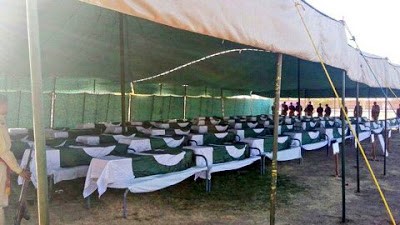
More “collateral damage” in Bacha Khan University

Taliban terrorists attacked Bacha Khan university in Charsadda in Northwest Pakistan 2 days ago and killed at least 22 students and faculty. The same group that claimed responsibility for a horrendous school massacre in December 2014 has claimed responsibility for this one.  The attack should not come as too big a surprise, since Umar Mansoor, the “Khalifa” of the Taliban group that claimed the first attack had vowed after that attack to attack more schools and universities. You can see his statement in the video below.

After the last attack, the Pakistani army claimed it had killed those involved in planning and facilitating the attack and stopped talking about Umar Mansoor until he showed up a few months later to claim some new attack. Even then, he would be in the news for a day or two and then disappear from the radar. He is now back in the news. In a few days, he will again disappear from it.
So it goes.

Meanwhile, Pakistan’s incredibly efficient and competent “Inter-Services Public Relations” (ISPR) department (headed by a three star general, probably the only military PR department in the world, perhaps the only one in history, to be led by a three star general; we may not produce Guderians and Rommels, but we do produce Bajwas, Mashallah) was on air within minutes to make sure we all understood how:
A. The army had reacted extremely competently to the attack and the attackers had been killed in short order (this claim has some credibility; our mid-level officers and soldiers are indeed competent, brave and aggressive and deserve some credit. They are certainly more competent than their Indian counterparts and in Pakistan, that may be all that matters. The university’s security staff and the police may or may not deserve some credit as well, but we will likely never know, since Police-ISPR and Chowkidar-ISPR are not as well funded as the army’s ISPR).

B. The attackers came from Afghanistan and may have had foreign backing (hint hint cough RAW cough cough), so dear contrymen, we are off the hook. WE didnt do it and neither did OUR proxies.

C. The army chief is flying around as we speak, raising morale, calling the Afghan president for a chat and generally doing stuff (and need we say, the civilians have no clue).

But what this ISPR effort (and the concurrent appearance of multiple military proxies on TV channels, all claiming that India was behind this attack) really tells us is that the game remains the same. Even as we were being told that we are the victims of cross-border terrorism and that this was intolerable and no state could allow its neighbors to harbor terrorists who come across the border and kill innocents, OUR terrorists (the good Taliban) proudly claimed responsibility for killing another group of innocent civilians in Kabul. And of course, this comes just weeks after another party of “good terrorists” had attacked an Indian airbase in Pathankot, and of course we need not go back all the way to another group of “good terrorists” who shot up civilians in Mumbai train stations and hotels several years ago.
And so it goes.

General Asad Durrani, ex-chief of the ISI and proud “intellectual soldier” said it best; the deaths of hundreds of innocent students in Pakistan are the collateral damage of our successful strategy of “winning” in Afghanistan. Great nations have to be willing to make small sacrifices. And what are a few lies between friends?

Watch at 9 minute mark onwards. Please do. You will not regret it.

 What more can one say?
There are, literally, no words.

But the people are beginning to lose their patience.

Peshawar: Massacre of the Innocents.

This post was originally posted last year the day after the massacre. What parts are now irrelevant and what remain unchanged? judge for yourself.

 ہے زلزلہ زمیں کو گہن میں ہے آفتاب / بارش ہے خون کی چشم فلک اشکبار ہے 
 ہے عنقریب پھونکے سرافیل صور کو / بس حکم کبریا کا فقط انتظار ہے

The Earth is shaking, the sun eclipsed, the sky is raining blood
The time is nigh when Israfeel will blow his trumpet (to end the world). 
All that is awaited is a signal from God… (Mir Anis)

I saw a pair of big black boots coming towards me, this guy was probably hunting for students hiding beneath the benches.
My body was shivering. I saw death so close and I will never forget the black boots approaching me – I felt as though it was death that was approaching me.
I folded my tie and pushed it into my mouth so that I wouldn’t scream. The man with big boots kept on looking for students and pumping bullets into their bodies. I lay as still as I could and closed my eyes, waiting to get shot again.
When I crawled to the next room, it was horrible. I saw the dead body of our office assistant on fire.
She was sitting on the chair with blood dripping from her body as she burned.
(a surviving student’s account)


7 men drove up to the Army Public School in a high security area fo Peshawar. They poured petrol on the car and set it on fire, then entered the school and started shooting people. They were not psychotic loners. They were trained soldiers, fighting for a cause.They were “moral” men. They were following rules and making distinctions. According to their handlers, they had been told not to kill underage children and in this they were following Sharia law (the example of the massacre of the Banu Qurayza was specifically mentioned). They cold-bloodedly went from room to room, shooting school children cowering under their desks (per one journalist, most of the dead had been shot once….in the head). And while students were shot calmly and the assassins may even have confined themselves to older children, some teachers faced a more horrendous fate. A couple of them seem to have been set on fire in front of their students. Whether before or after they were shot is not clear. Perhaps because they were female. 
This is not a psychotic loner going nuts and shooting up a kindergarten. It is not even the same as Chechen terrorists taking a school hostage and causing the deaths of hundreds of children in the subsequent firefight and explosions (started accidentally or during the rescue attempt). This is atrocity at the Nazi level. People following orders, systematically and ruthlessly, for many hours. Shooting school kids. Burning teachers. 
And proudly accepting responsibility and promising to do more. 
They were also talking to their handlers all the time. The last time they called, the terrorist told his handler “we have killed all the children in the auditorium, what do we do next?”

These are the attackers, posing before they go to kill kids 

  
There has been an explosion of outrage in Pakistan. Even Imran Khan managed to condemn the TTP by name (though PTI’s offical account still tweeted that “Whoever” did this, did something awful). The Pakistani state has reportedly stuck back already at Taliban targets. The PM and the army chief have promised action (and are likely sincere, as far as that goes). The media has condemned the attack. Social media has been on fire. So far so good. 
But within hours, the narrative has already started to fracture. First the media groups managed to invite people like Hamid Gul, Hafiz Saeed and Maulana Abdul Aziz (of Red mosque fame) to comment on this terrorist attack. And they managed to muddle the issue with references to the Indian hand and the eternal enemies of Pakistan (Afghanistan, Jews, America, that sort of thing). And on ARY (the most pro-army of Pakistan’s many pro-army channels) the anchors themselves have been leading the charge. Mubasher Lucman, for example, angrily demanded that the first step needed at this time was to ban Indian overflights to Afghanistan! Top Military propagandist Ahmed Qureshi and loonies like Zaid Hamid have been busy blustering about how India will be made to pay for this latest atrocity. 
The more things change. .

I wrote a piece three and a half years ago about the Pakistani anti-terror narrative and it’s confusions and it is depressing to find that little or nothing needs to be changed in that article. The entire piece, unedited, is pasted at the end of this post. 

There is a lot of talk about how this particular horrendous event is SO horrendous that now things really HAVE to change. Maybe. But do keep in mind that this is not the first mass casualty attack. There have been attacks on the Marriot hotel, an Ahmedi mosque, a volleyball match, a meena bazar, a church, even a mosque near GHQ (where the son of a corps commander was among the civilian victims killed in cold blood). And of course there have been countless massacres of Hazara and other Shias. Literally thousands of people have died in these attacks. But until now, there is no evidence that the army has changed it’s basic “good terrorist/bad terrorist” policy. Terrorists who kill schoolchildren and shoot up railway stations in Kabul and Mumbai are good. Terrorists who kill children in Pakistan are bad. That policy has not worked for 13 years. It is not going to start working now. 

How can we tell that GHQ is really changing policy: 

1. Ahmed Qureshi and Zaid Hamid are suddenly out of a job and publicly disowned by the army. 

2. Omar Saeed Sheikh, who was sentenced to death years ago for the killing of Daniel Pearl (a terrorist act he may not have committed, though he has surely committed many others). He has not been hanged. In fact there are intermittent reports of him living it up in prison. If he is hanged, that will be a sign of change. Especially since his handler was the famous brigadier Ejaz Shah (a close associate of the father of the double game, Pervez Musharraf himself). 
3. Mumbai attackers rapid trial and punishment. Outside of Pakistan, everybody and their aunt knows that a group of ten terrorists from Pakistan landed in Mumbai in 2008 and cold bloodedly killed a 168 innocent people. In a famous picture, one of the attackes is calmly walking down the platform at Mumbai Railway station, shooting random civilians sitting on the platform. 

Because of international pressure, the FIA (federal investigation agency) in Pakistan actually carried out a very thorough inquiry in Pakistan and identified several people who arranged things for the killers, who trained them, who sent them on their way. The FIA may not have reached all the way to the top, but they certainly made a case against some of the lower level people involved. But 6 years have passed and the trial of these terrorists has not moved forward. The prosecutor has been shot dead. And the supposed military mastermind (Zaki ur Rahman Lakhvi of the JUD/LET) is living it up in prison, and reportedly even got married and conceived a child in prison. If the army has changed it’s mind about terrorism, then the trial of these terrorists has to move forward. 


Unless you see some of these happenings, things will go back to “normal” ….

A dissenting note about the double game from a friend on facebook: 
no, not a double game any more. they are being played by the taliban now, manipulating the internecine fault-lines inside the ISI and the army. they don’t mind a few casualties in the mountains, if that is the price (in fact their foot-soldiers welcome the chance for martyrdom). they have the indomitable resolution of a madman doing god’s work, while the army has the emptied ideology of a failed religious state being devoured by corruption. by day the generals pay hollow homage to the motherland and at night send tithes to their new fathers in the mountains, hoping to buy personal protection from the next suicide attack for themselves and their families.

more sober take from the redoubtable Ahsan Butt on Five Rupees. 

POSTSCRIPT: it is not looking good for those who thought some great sea change is coming. The script on the media has changed on PTV and to some extent on GEO, but remains the same on other channels and especially on the army’s favorite channels like ARY and Dunya….. Blame India, CIA and the Jews. Invite Hafiz Saeed, Hamid Gul and other similar jokers to fog everything up. Bomb someone in the tribal areas and generate suspiciously exact body counts. 
Until the next bombing.
Unfortunately it does look like the song remains the same…

Postscript2: Got some feedback from people focused on the role of Islam in these outrages. I would like to emphasize that while various forms of Islamism are causing problems in many parts of the world, Islam is NOT the proximate cause of the choices made by the Pakistani establishment. Hard Paknationalism is the primary driver. Someone like Musharraf (father of the infamous double-game) was not too bothered about Islam. What caused him to maintain the Taliban and other Jihadist groups was Paknationalism; specifically the “hard paknationalist” belief that we have to defeat India and to do that we need certain force multipliers/strategic-assets/deniable-non-state-actors and the Jihadis are the only people who will do that job. It is this belief that drives the “good-taliban/bad-Taliban” policy and the double games it entails. Commitment to fundamentalist Islam has little or nothing to do with it. (though of course, no Islam, no partition in the first place, so there are other turtles below the first one)…

Postscript3: Lakhvi granted bail by anti-terrorism court. He many not actually walk free if tremendous pressure comes from Uncle Sam, but signals are (or are being misread in Pindi) that Uncle Sam is OK with India-specific terrorists. Lets wait and see…

Postscript 4: Some explanation is needed of two positions that seem contradictory to some people. 
1. I seem to imply that the Pakistani establishment is not going to change, at least not soon. 
2. I objected to right-wing Indians who wanted to shut down “IndiaStandsWithPakistan” because they felt sympathy for a terrorist-supporting nation was unjustified or naive. 

I tried to explain this on twitter with limited success. So trying again:

1. Simple human empathy caused most humans (EVERYWHERE) to feel intense sympathy for the parents of those whose children were so callously and brutally murdered in one of the most awful and bone-chilling atrocities, even in a world filled with atrocities. That simple human empathy is worth preserving and should not be dismissed. Without it, what will be left?

2. Pakistan is a state in crisis. It’s core establishment is fracturing. There is a very real constituency for changing course. That constituency is not just in the so-called liberal parties like the PPP, ANP, MQM etc (not to speak of the tiny but culturally significant Marxist and Post-Marxist Left) but even (and sometimes more so) in mainstream civilian parties like the PMLN and even the JUI. The paknationalist hardcore (defined by complete loyalty to the “hard-paknationalist” agenda of permanent war against India, colonization of Afghanistan, dreams of power projection in Central Asia, etc etc) is still in control of key policy areas, but has to FIGHT to stay in control. Among the civilians, they mostly get their way via manipulation of media, pakstudies brainwashing, taking advantage of the foolishness of young PTI supporters and so on. True ideological clarity is limited to a relatively small faction of the army, it’s pet journalists and think-tankers and touts like Sheikh Rasheed.

3. That fracture will increase with time anyway (since the Paknationalist hardcore cannot deliver what most pakistanis want: peace and development) but it is helped, not hindered by gestures like “IndiaWithPakistan”. I suspect that some understanding of this lay behind the Modi government’s willingness to express sympathy and make positive human gestures. Of course, they are also human, so some real human sympathy was probably involved. But beyond that, the cynical calculation is also in favor of such gestures.

4. When and if the hard-Paknationalist establishment spits in their face by doing something like bailing out Zaki Lakhvi, the fact that they made the gesture only goes in their favor. It does not hamper any other action they may or may not take.

5. With Uncle Sam desperate to get out and save face, options are limited. Planning has to be long-term.

Makes sense?

 
“Dark house, by which once more I stand
Here in the long unlovely street,
Doors, where my heart was used to beat
So quickly, waiting for a hand,

A hand that can be clasp’d no more –
Behold me, for I cannot sleep,
And like a guilty thing I creep
At earliest morning to the door.

He is not here; but far away
The noise of life begins again,
And ghastly thro’ the drizzling rain
On the bald street breaks the blank day.” 
― Alfred TennysonIn Memoriam


My older post from 2011…unedited. Original at 3quarksdaily.com

The Narratives Come Home to Roost

by Omar Ali

Most countries that exist above the banana-republic level of existence have an identifiable (even if always contested and malleable) national narrative that most (though not all) members of the ruling elite share and to which they contribute.  Pakistan is clearly not a banana-republic; it is a populous country with a deep (if not very competent) administration, a very lively political scene, a very large army, the world’s fastest growing nuclear arsenal and a very significant, even if underdeveloped, economy.  But when it comes to the national narrative, Pakistan is sui-generis.  The “deep state” has promoted a narrative of Muslim separatism, India-hatred and Islamic revival that has gradually grown into such a dangerous concoction that even BFFs China and Saudi Arabia are quietly suggesting that we take another look at things.
The official “story of Pakistan” may not appear to be more superficial or contradictory than the propaganda narratives of many other nations, but a unique element is the fact that it is not a superficial distillation of a more nuanced and deeper narrative, it is ONLY superficial ; when you look behind the school textbook level, there is no there there. What you see is what you get. The two-nation theory and the creation of Pakistan in 712 AD by the Arab invader Mohammed Bin Qasim and its completion by the intrepid team of Allama Iqbal and Mohammed Ali Jinnah in the face of British and Hindu connivance is the story in middle school textbooks and it turns out that it is also the story in universities and think tanks (this is not imply that no serious work is done in universities; of course it is, but the story of Pakistan does not seem to have a logical relationship with this serious work).
This lack of depth and sophistication dooms this narrative to a cardboard existence and removes it from the ranks not only of the story of America or the history of that sceptered Isle north of France, but also of the “5000 year old civilization of China” and “Eternal India”. Some intellectuals are aware of these shortcomings and half-hearted attempts to remedy the situation have been made, but I think it is fair to say that nothing has yet brought home the (halal) bacon; the story does not fit the post-enlightenment liberal notions of the world and does not even offer an alternative that claims to go beyond the ruling paradigm. Instead, the claim of an alternative system is being used to create just another nation state in a world of Westphalian nation-states. The working part of the state is entirely within the world norm, the supposed ideology has almost no connection to that norm, and problems were bound to arise at some point.  This statement will sound strange to many people since in polite company it has been usual to ignore the contradictions between the two-nation theory and liberal notions of national identity; to the point that even liberal Pakistanis are not conscious of their own unusual and unique position. This willful blindness is not without precedent in our world and can in fact be said to be just another “normal” facet of the world we live in, but there are contradictions and then there are contradictions. Ours have reached breaking point and will no longer hide quietly in the background. This is, of course, my opinion and may or may not make sense to everyone, but let it sit around in your mental living room for a few months;  it may start to seem worth a look.
I would add that a superficial and even contradictory national narrative is not necessarily the road to ruin. Life goes on, even in countries with less than convincing “national narratives”. Pakistan is a country, it exists, it is located at a strategic location, it encompasses very productive land, it is blessed with many bounties of nature and a talented and resourceful population, and it has an ancient and resilient culture.  It can succeed (and success is being defined here as nothing more than “normal” existence in the world of today, all problems of capitalism and nationalism fully included) in spite of its creation myth since human beings can apparently hold several contradictory ideas in their head at one time (it is even “normal” to do so). So this is not a claim that it is bound to fail, just that it can succeed in spite of its myths, not because of them.  If someone wishes to argue that myths and hot air are being overvalued in my piece today, they may be right. But it is my claim that realpolitik and narrative have intersected with great force in Pakistan today, and while the “deep state” faces many very “real” problems that will take years to solve, the narrative is itself a problem that is making all the other problems much harder to solve.
Let us quickly review some history: In 1954, the ruling elite found its international partner (not without some effort) and Pakistan joined SEATO and CENTO. While Pakistan was happy to be part of the international anti-communist alliance, its elite saw India as the primary enemy. But when they launched an adventure in 1965 that ended in war with India in September, SEATO and CENTO were nowhere to be found.  This started a narrative of American betrayal (a narrative that no American took too seriously) that was accentuated in 1971 when the Indian liberation of Bangladesh proceeded with little more than symbolic American intervention on the Pakistani side. The estranged lovers (estrangement being mostly one-way; the relationship was rather asymmetrical as Uncle Sam never seems to have paid too much high level attention to the hurt feelings of their “ally”) made up in 1980 in order to bleed the Soviets in Afghanistan.
But there was now a new element in the relationship since  Pakistan was led by more ambitious and intelligent people at this time, and managed the relationship with greater independence and “agency”.  The simple-minded and childish notions of the 1950s and 1960s were left behind and the Pakistani high command was able to use American aid while building nuclear bombs and planning for a future projection of Jihadist forces into Kashmir and Afghanistan and beyond.  Whether the American side understood what was going on and ignored it for devious reasons of their own, or whether their arrogance prevented them from seeing that their agents had a mind and plans of their own, the fact remains that the United States was no longer the sole creator of policies and projects in this era.  After the US left the region with “mission accomplished” in Afghanistan, their ally did not allow this to interrupt their glorious work of arming and training Islamist armed groups. Rather they accelerated the process, eventually arming and training half a million young men to fight in the cause of Islam. By the mid-1990s, Pakistan had established a somewhat unruly client regime in Afghanistan and Pakistan and Afghanistan became “Jihad central”; the “go-to place” for any young Muslim dreaming of a new caliphate. This growing network was supported by the intelligence agencies of the state and a wider network of international funders and political supporters built around some favored Madrasahs and the existing Islamist political parties like the Jamat e Islami.
 When some of these warriors took the fight to the West and triggered a much larger war (justified or not is another argument) Pakistan’s military establishment decided to dump its more unruly friends (the “bad jihadis”) but either through lack of capacity or lack of will, did not wish to go after the good jihadis (the ones who target India and Afghanistan).  Unwilling or unable to find a narrative that justified their sudden change from pro-jihad to anti-jihad, GHQ opted for a short-cut. Bad Jihadis were described as agents of evil powers (mainly CIA, RAW and Mossad). Many of the Taliban killed in Pakistan were said to be uncircumcised Hindus. India was said to have 14 consulates in Afghanistan from where they and their American friends were running this vile operation.  Military-affiliated websites like paknationalists.com and rupeenews.com provided a narrative that may seem fantastically improbable to outsiders but that fit in well with previous military psyops efforts and was smoothly accepted by many middle class Pakistanis.  When losses in this new civil war accelerated, another element was added to the narrative. Now we were innocent victims of America’s “so-called war on terror”. This narrative could also draw upon liberals in the West who had their own suspicions about their ruling elite and served as a rich source of  talking points for the military’s favorite propagandists.  
This narrative of “we are fighting America’s war” cleverly excluded any mention of our own role in bringing this menace to our shores. That America (and not just America) may have picked on Pakistan because Pakistan’s own armed forces had worked hard to make it the world headquarters of jihadist terrorism was not part of the story that was put together. Instead, it was all America’s fault. They brought the jihadis here, they dumped them on us and left. They were now using the jihadis as an excuse to attack us unfairly and with mala fide intent.  The mala fide intent was usually presented as an American desire to “steal our nuclear arsenal”, but other theories like “imposing Indian hegemony” or protecting Israeli interests (the last being an activity that the US has long performed at great cost to itself, so it was not a claim without any foundation) were also cited.
This story, while useful in the short term since it got the armed forces off the hook and preserved the possibility that the mullah-military alliance could be revived once the Americans left, is now turning out to be too clever by half. The crucial assumption in this scheme was that America would leave and let us return to status quo ante prior to our being overwhelmed by the confused civil war we are fighting in the interim. This fine balance also required that the Americans remain indifferent to the narrative and don’t take counter-measures in the media-management field. Finally, it assumed that the US could be alternately pressured and pleasured forever without seriously rupturing the relationship. Unfortunately, the plan did not factor in Seal Team Six and Obama’s willingness to risk a unilateral operation that simultaneously humiliated and pressurized the military high command while putting them in a very uncomfortable position in front of their own people.
Only time will tell if the net effect of this operation will be positive or negative. In the early weeks, the only thing that is clear is that GHQ had not anticipated any such operation and may not even have known about Osama’s presence half a mile from their military academy. The Pakistani leadership (which in this case means not just the military leadership but also the political leadership, who have been handed an unexpected opportunity to play a role beyond being the military’s human shield) initially reacted by trying to find some backup from China and Saudi Arabia and even Russia. But early indications are that neither China nor Saudi Arabia is willing or able to bail them out if they continue with their past policies. The word is that the Chinese have told the Pakistani leadership that they are our bestest, fastest, deepest friends and the entire politburo prays for our health every day, but as far as budget support is concerned, it may be a good idea to apply to the IMF and Uncle Sam. The half-hearted effort to wave a Russian offer in America’s face is even more of a joke as both the Russians and the Pakistanis are just blowing hot air in an attempt to get Uncle Sam’s attention and neither is likely to get very far. Meanwhile, the jihadis are not rolling over and playing dead either, which complicates matters further.
In short, in the real world, the second coming is not about to happen and the black flags from Khorasan are not going to drive the infidels into the sea. Pakistan will have to live within its current boundaries and will have to make a serious effort to go after any transnational terrorists based in our territory. Even the India-specific terrorists will have to be told the game is over. For the deep state, this is not an easy news bulletin to deliver to its own people because they have been telling a very different story for a very long time.   Most people in Pakistan do not even know that Pakistan was world headquarters for international Jihad for so long and that our own intelligence agencies set up most of the militant organizations and trained most of the terrorists we are now fighting. Most Pakistanis probably believe that 9-11 was an “inside job” and Mumbai was staged by some rightwing Hindu colonel. This amazing level of denial and disinformation has been carefully cultivated by the deep state, but is now coming home to roost. With the US plucking Osama a stone’s throw from PMA Kakul and with the jihadis attacking our most cherished institutions (GHQ, the Sri-Lankan cricket team, now Mehran airbase) the narrative is coming home to roost with a vengeance.
What will happen next? As an eternal optimist, I think things will slowly get better after several years of civil war in which the state will be pitted against the very people it created and lionized not too long ago. While the initial phases of this civil war were fought while telling our own people that our enemies are Hindus and Jews and their uncircumcised agents in the tribal areas, this clever scheme will have to be abandoned because it is impossible to fight one set of jihadis while working with another set as friends and allies. They all see each other as friends and they can see (even if some people in GHQ cannot) that this war can only mean that the state is abandoning its jihadi dreams in exchange for membership of the capitalist globalized world led by Chimerica. To them, this means war and it means war to the finish. This would be a very hard war to fight even if we know what is going on; it an impossible war to fight when our own people don’t know who is fighting whom. Which is why the narrative will have to be altered and a start has already been made by the generally pro-army anchor, Kamran Khan.  It will not be an easy job and there will be much resistance from within GHQ’s own propagandists, some of whom have such serious psychological issues with India that this realignment threatens to fry their fragile eggshell mind. But there is no choice. Slowly but surely, the times they are a changing…
 I may have been too optimistic. There are some other pieces too

http://www.3quarksdaily.com/3quarksdaily/2014/02/pakistan-negotiations-and-operations-and-islamicate-rationality.html

http://www.3quarksdaily.com/3quarksdaily/2013/03/pakistan-and-its-stories.html

http://www.3quarksdaily.com/3quarksdaily/2012/12/the-state-withers-away-in-pakistan-.html

see more at http://www.3quarksdaily.com/3quarksdaily/MondayMusings.html (scroll down a lot till you see my articles listed)

Hamid Hussain: Remembering Colonel Shuja Khanzada

Colonel ® Shuja Khanzada (28 August 1943 – 16 August 2015)
Hamid Hussain


Shuja Khanzada as a young cavalry officer.

On August 16, 2015, Punjab Home Minister Colonel ® Shuja Khanzada was killed in a suicide attack in his hometown of Shadi Khan in Attock.  He belonged to a military family and several family members served in British Indian army and junior civil service.  His grandfather Subedar Major and Honorary Captain Ajaib Khan had served in British Indian army.  Ajaib Khan was Subedar Major of 76th Punjabis (later 3rd Battalion of Ist Punjab Regiment and now 3rd Punjab Regiment of Pakistan army).  He was with his battalion during First World War in Mesopotemia and won Indian Order of Merit (IOM) in an action.  On May 15, 1915, Ajab stormed a fort in Khafajiyah with six other soldiers.  In this action, his orderly Sepoy Burhan Ali was killed in action and awarded posthumous IOM.  Ajaib retired after a long service and was awarded OBE and OBI.

Ajaib’s one brother served in Indian Medical Service while three other brothers served in civil service in Hong Kong.  Hashim Khan spent his whole career in post office department, Sardar Khan was chief clerk of harbor office and Khawas Khan was clerk at Supreme Court.  Shuja’s uncle Captain ® Taj Muhammad Khanzada was one of the most decorated officer of Indian army.

Taj Muhammad Khanzada was Shuja’s uncle.  In 1926, Taj joined Royal Indian Military College at Dehra Dun. After completion of his education, he was selected for Indian Military Academy Dehra Dun.  He was among one of the early batches of Indian officers trained at Dehra Dun.   After completion of training, he was commissioned with army number of IC-53.  He joined 5th Battalion Duke of Connaught’s Own 11th Sikh Regiment (now 5 Sikh Regiment of Indian army).  His battalion mates included Harbakhash Singh (later Lieutenant General), Khanolkar, Ajaib Singh, Ranjit Rai (later Lieutenant Colonel), Allahdad Khan, Hamid Hussain (later Brigadier), Muzaffar Khan, Nausherwan Khan, Hassan and Khushalpal Singh.  Taj won Military Cross (MC) in 1939 in Waziristan and DSO and Bar in 1941 in Burma theatre.  During Japanese captivity, he joined Indian National Army (INA) and put in charge of special service group.  However, his role in INA is not clear. After Japanese defeat and surrender, members of INA now came under British captivity.  INA members were designated Black, White and Grey.  Taj was labeled white and was kept in cantonment in Delhi.  Later, he was removed from the army when he was holding the rank of Captain. When India and Pakistan gained independence in 1947, both armies decided not to re-instate former INA officers.  In 1947-48 Kashmir war, several former INA officers fought in Kashmir.  In addition to Taj, Muhammad Zaman Kiani, Burhanuddin and Habibur Rahman fought on different fronts.  Taj fought in Poonch sector with the temporary rank of Lieutenant Colonel.

Shuja had his early education in Khyber-Puhktunkhwa (KPK).  He joined Pakistan army in 1967 and commissioned in 13th Lancers.  13th Duke of Connaught’s Own Lancers is an old cavalry regiment of British Indian army inherited by Pakistan.  Shuja was with his parent regiment in 1971 Indo-Pakistan war.  13th Lancers was part of 8th Armored Brigade commanded by Brigadier Mohammad Ahmad.  Other two regiments of the brigade included 27th Cavalry and 31st Cavalry. 13th Lancers participated in battle of Barapind/Jarpal in western theatre where it fought against a fine Indian cavalry regiment 17th Poona Horse.  Shuja was MTO (Mechanical & Technical Officer) of the regiment and his tireless efforts helped to recover and repair many damaged tanks.  Shuja lost five fellow officers in this battle and the list included Captain Ejaz Alam Khan, Lieutenant Pervez Aslam, Lieutenant Zafar Ali Akbar, Second Lieutenant Qaiser Nazir Qureshi and Second Lieutenant Khalid Masud Yaqub.  All officers belonged to military families with long association with the army.  Shuja commanded his parent regiment from 1983-85.

After command of his regiment, he went to Inter Service Intelligence (ISI).  He was appointed head of Quetta detachment of ISI.  It was here that Shuja got involved in a tussle way above his pay grade. As head of Quetta detachment of ISI, his main task was counterintelligence.  In late 1980s, ISI got embroiled on several fronts and different tasks got mixed up.  Counterintelligence department was used for political re-engineering in Pakistan and it also got mixed up with Afghan affairs.  The result was internal turf battles within ISI.  Old Afghan hands of ISI operating from the Afghan Cell who were handling Afghan clients on the ground for over a decade resented interference from new kids who were not part of Afghan Cell.  Pakistan was managing a wide variety of Afghan clients.  British intelligence got limited support of ISI as well as CIA to try to use Royalist commanders and traditional tribal dynamics to force a change in southern Afghanistan.  Syed Ahmad Gilani’s National Islamic Front of Afghanistan was the main Royalist group among seven parties operating from Pakistan (they were not much effective on battle ground but were suave diplomats wearing expensive silk suits and brand name watches and eyeglasses.  This earned them the nick name of ‘Gucci Muj”).  Syed’s nephew Ismail Gilani opened up channels with 2nd Corps Commander General Nurul-Haq-Ulumi (a scion of Barakazi tribe).  The plan envisaged that Gilani’s commander in Spin Boldak Asmat Muslim (member of the local influential Achackzai tribe) would capture border town of Spin Boldak and head towards Kandahar where local garrison would defect.  Once major Southern town was secured then at some point former King Zahir Shah would land as titular head and march towards Kabul and on the way, major garrisons would defect.  This was a highly ambitious plan based on unrealistic expectations, ignoring tribal and clan conflicts and severely underestimating the staying power of Afghan government.  DGISI and head of Afghan Cell gave cautious and limited blessing to the plan but Afghan handlers on ground were not in agreement.  They thought that it was a plan of British intelligence to highjack the whole Afghan project.  The result was that some of the dealings with Royalists commanders were assigned now to counterintelligence division.  It was in this context that Shuja came into the picture, however, his influence was very limited.  ISI Afghan Cell handlers on ground for Southern Afghanistan didn’t agree with the project and launched a series of ambushes of Afghan columns which finally resulted in removal of General Ulumi (they think that their efforts were instrumental in removal of Ulumi but in my view internal Afghan dynamics and rivalries had more to do with the removal). In addition, they also supported the Achakzai’s rival Noorzoi tribe’s militia to gain control in border region of Spin Boldak. Afghan players were masters of byzantine intrigues and played one against the other to extract maximum benefits.

Shuja served as Defence Attache in Pakistan embassy in Washington from 1992 to 1994. He developed  problems with Pakistani ambassador Maleeha Lodhi.  It was a classic example of dysfunctional institutional relationships inside the country exported even to diplomatic posts. On Maleeha’s recommendation, Prime Minister Benazir Bhutto recalled him back on a twenty hour notice and he was later sacked from the army.  It was understandable that he was very bitter about it.  However, he accused Maleeha and Benazir Bhutto of working to roll back Pakistan’s nuclear program and freezing of Kashmir issue and cited this as reason for his recall.  When back in Pakistan, he contacted then Chief of General Staff (CGS) Lieutenant General Jahangir Karamat, Director General Inter Services Intelligence (DGISI) Lieutenant General Javed Ashraf Qazi and Director General Military Intelligence (DGMI) then Major General Ali Quli Khan to vent his anger at un-ceremonial exit.  He blamed army brass for not standing up to the civilian government and protecting him.

In addition to military service, politics was the second career adopted by the Khanzada family.  Subedar Major and Honorary Captain Ajaib Khan was appointed member of Legislative Council of the Governor General of India in 1916.  Contrary to popular perception in Pakistan, Muslims were patronized by British in different fields to help them advance.  Seven other candidates were considered for the position which Ajaib finally filled at Viceroy’s Council and out of seven, six were Muslims (three Punjabi Muslims, three Pathans and one Deccani Muslim) while the sole non-Muslim was a Gurkha.  Ajaib participated in debates on Indianisation of the officer corps of Indian army and at one time questioned by Muhammad Ali Jinnah.   Later, Ajaib was appointed first British representative to Mecca and received a decoration from the King of Hejaz.  He also served with British Military Mission in Meshad in Persia.  Later, Ajaib also served as the nominated member of Punjab Legislative Council from 1924-26.  Taj Muhammad Khanzada followed in his father’s footsteps and also had a long political career.  He first became member of West Pakistan provincial assembly in 1962 and was active in politics for over three decades until late 1990s. Shuja followed in the footsteps of his ancestors and joined politics. After brief affiliations with two political parties, he joined Pakistan Muslim League of Nawaz Sharif. He was advisor to Punjab chief Minister Shahbaz Sharif especially on law and order.  

Some allege that he was responsible for disbandment of the intelligence efforts to tackle terrorism.  This needs some elaboration to clarify a complex situation.  A Special Intelligence Agency (SIA) was created in Punjab to gather intelligence about terrorists.  Around two to three hundred former Military Intelligence (MI), Inter Services Intelligence (ISI) and Special Service Group (SSG) soldiers and Non-Commissioned Officers (NCOs) were recruited on contract basis.  SIA was headed by a Colonel (a cavalry officer who had also served with SSG and ISI).  No intelligence agency (with intelligence gathering authorization) can be instituted at provincial level. Secondly, Criminal investigation Agency (CIA) and Special branch in Punjab police have legal authority to collect crime related intelligence. Establishment of SIA was certainly a way to short circuit the system and hence the idea was opposed by police and civil service.  They saw this measure as encroachment of military in its area of operations. SIA finally became an orphan.  Members were first sent to CIA Headquarters where they lingered even without a salary and finally dismissed as they were recruited on contract basis. SIA was finally disbanded under federal pressure in 2010-11.

In 2014, Shuja was appointed Home Minister of Punjab province.  In this capacity, he was responsible for the law and order. His military and intelligence background helped him to work smoothly with military authorities now charged with cleaning the mess. Counter Terrorism department of police was strengthened and National Action Plan (NAP) was expanded to tame sectarian demons.  Leader of a rabid anti-Shia group Lashkar-e-Jhangvi Malik Muhammad Ishaq was arrested and on July 29, 2015, counter terrorism department of police announced that he was killed in an encounter along with his two sons when his comrades tried to free him from police. Two weeks later,  Lashkar-e-Jhangvi struck and claimed responsibility for killing Shuja in a suicide attack as revenge of their leader’s death.

Shuja was a very handsome man and when he died few days short of his 72nd birthday, he was still full of vigor and energy.  A courageous man gave his life for the greater good.  Rest in peace.

  
         Colonel ® Shuja Khanzada

Hamid Hussain
coeusconsultant@optonline.net

Brown Pundits