Zinda Laash (the Living Corpse)

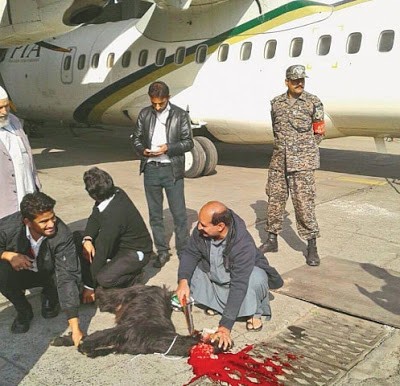
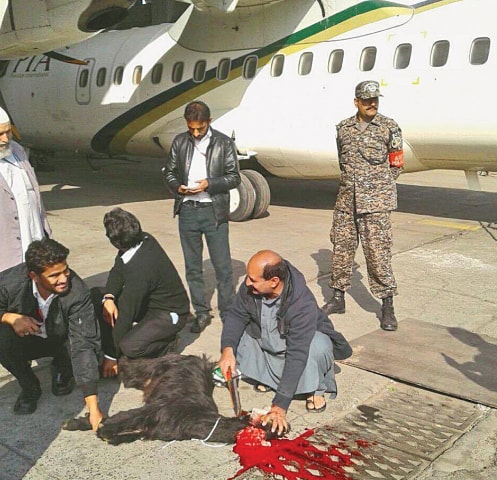
The video is here, https://instagram.com/p/Bf8nM8OgV08/

The biggest mistake Pakistan did was to move the capital from Karachi to Islamabad.

Probably was a big factor in the secession (the jute profits went to build Islamabad), Punjabified/Pathanicised the country.

Muhajirs, sadly lost political control after that I think until Musharraf, who incidentally was Pakistan’s best leader. Again it was lawyers in Lahore who conspired against him.

Paki Elites & where they live

I could be wrong but Pakistan’s elites are in the following cities:

Islamabad is the home to the political & bureaucratic elite. Very chaste and crisp Urdu and a real redoubt of the Pakistani government. I spent alot of time in this city when growing up but have found to be a Talibanised version of an English village (I jest but not by much). The main ethnicities are Punjabis, who are thoroughly Urdufied and Pakistanised and Pathans, who are the exotic minority in the city with their colourful language & weird accents.

Pindi (Rawal) is the ugly older sister of Islamabad but of course is where the military is based and so would probably be where all the military elite (which is the shadow government of the country) is based.

Lahore is the home to the economic elite, after all Punjab is the largest and most influential state. It is no Karachi however and is far more regional than cosmopolitan. It has a rough macho culture and can be a bit crude & crass. However as one of Pakistan’s oldest and most prestigious cities it has considerable sway. Punjabi language & ethnicity has obviously a strong sway here as the common tongue mixed in with Urdu of course.

Pakistan’s greatest city (& my personal favorite) is of course Karachi. It may not necessarily have the moneyed but the social trendsetters are here . Predominantly drawn from Pakistan’s once dominant elite (the Urdu-speakers are sort of like the Wasps in Pakistan, a faded elite) who go to certain schools (well only one, KGS), study abroad, live in Defence & Clifton and have a rather hedonistic approach to life (not in the manic way as upper-crust Lahoris but in a more studied & sophisticated way). The living room arbiters of the cultural life of the nation; English-speakers with Muhajir heritage (of course most of these families have intermarried with the locals etc). Love-hate relationship with India and very confused about Pakistan in general; believe that they are the last continuance of the Mughal decadence of Delhite culture. I may be projecting my own love of Karachi here but it really is the Queen of East; the last redoubt of Urdustan.

Much as I like New Delhi (I much prefer New Delhi to Lahore & my truest roots are there since my late grandmother was born in Karol Bagh) it’s not very inspiring to see the Muslims clustered in ghettos like cattle waiting to be slaughtered. Ghalib would probably find Karachi, more than Delhi, to be a more familiar city..

New low in civil-military relations in Pakistan

From Dr Hamid Hussain

A brief summary of my response to many questions from non-Pakistanis (but keen observers of the scene) not familiar with background about recent friction in Pakistan. Pakistanis are much more informed about the issue.

“Neither to laugh; nor cry
Just to understand”. Spinoza

Past is Prologue – New Ebb in Civil-Military Relations of Pakistan
Hamid Hussain

“It is difficult to envisage some thirty or forty generals and a smaller number of admirals and air force commanders appointed solely by Providence to be the sole judges of what the nation needs”. The Times, April 6, 1961

In 2017, Pakistan is going through another cycle of severely strained civil-military relations. A certain level of friction in civil military relations is norm in many countries. This is especially true in the case of countries where military has maintained its dominance in national decision-making process. Opinions are so polarized that making a rational argument has become an arduous task. Anyone pointing to deficiencies of civilian leadership and improvement of governance is labelled as sweeping the floor for the military while anyone cautioning military leadership to pause and reflect is labeled as lackey of corrupt politicians and unpatriotic. Continue reading New low in civil-military relations in Pakistan

Inter Services Public Relations; ISPR (Pakistan)

From Dr Hamid Hussain

Some questions came my way about ISPR and following was the response. Every officer posted to ISPR should read Brig. R Siddiqi’s book. It is out of print but I’ll be happy to lend them my own copy.

Regards,
Hamid

Battle of Narrative – Public Relations of Pakistan Army
Hamid Hussain


“The expansion of its image gradually cuts the military establishment adrift from its professionalism, and it succumbs to a kind of narcissism, loving its media-contrived image too well to brook any rival image”. Brigadier ® A. R. Siddiqi; Former Director General of Inter Services Public Relations (ISPR).

Army is the dominant and most powerful institution of Pakistan. Every conflict between army and civilian institutions results in a competing narrative from each party. Armed forces manage its narrative through Inter Services Public Relations (ISPR). There are few officers from air force and navy but ISPR is mainly manned by army officers. During direct military rule, army chief is also President and information ministry is used for communication. ISPR is the main channel for communication when army is not directly controlling the levers of power. Public opinion in Pakistan is very positive about armed forces and any criticism on professional grounds is usually very limited. Unfortunately, any criticism is viewed by armed forces as challenging its authority and equated with anti-state activity.

ISPR has evolved over seventy years into a huge media machine with a large bureaucracy. It was a small entity headed by a Lieutenant Colonel rank officer and today headed by a Major General rank officer. Previous Director General (DG) ISPR was a Lieutenant General rank officer. It was backwater for officers not destined for further promotion. This changed in the last two decades. The importance of a stint as DGISPR can be gauged from the fact that DGISPRs have been posted to important combat formations. One DGISPR became Chief of General Staff. In the past, a brief statement was given to DGISPR to pass it on to the press. Now, DGISPR sits in important high level meetings and travels with army chief on foreign travels. The horizon has also expanded from brief press statements to frequent press conferences and extensive use of print, electronic, digital and social media as well as big budget productions. Continue reading Inter Services Public Relations; ISPR (Pakistan)

Objectives Resolution: Logical Culmination or Building Block?

The creation of Pakistan was a culmination of the ‘Indian Muslim National Project’ that was started by Muslim Elites primarily based in UP. It was bound to be a country where religion took center stage in the political arena. Led by a charismatic, populist British lawyer, All India Muslim League was a hotchpotch of landed gentry and titled aristocracy. The Second World War paved the way for an early exit by the British and handed a historic chance to Indian leaders to decide their destiny. It is difficult to predict if a ‘United India’ would have survived for some time in the absence of British interlocutors since fratricide and ethnic cleansing in Potohar had started much before the actual partition. The Muslim Elite (Ashraf) that founded Pakistan decided that the country would be an ideological state, the ideology was chosen to be Islam. Not because the elite overwhelmingly consisted of Islamists (with a few exceptions) but because religion is an easy way to manipulate people. The Khilafat movement had provided a glimpse of what mixing religion and politics could achieve and Muslim Leaguers were well-aware of its power, which is why they used the ‘Islam in Danger’ card during the 1945 election.

Continue reading Objectives Resolution: Logical Culmination or Building Block?

Clarifying Two Misconceptions

First up, I want to admit that I been a harsh critic of Pakistan Army’s interference in political matters, their gross inefficiency during all the wars that they fought (and lost), their myopic worldview and land grabbing in the garb of ‘National Security’. However, I believe that two very common misconceptions about our army need to be addressed.

  1. While talking about General Zia, an Islamist dictator who ruled Pakistan for eleven years (1977-88), many people refer to his role in the ‘Black September’ events from 1970. If you try to look this up on the internet, there are conflicting stories about his involvement. What we know for sure is that he was stationed in Jordan as part of a military training mission (Read here) sent by Pakistan in the aftermath of the 1967 Arab-Israel war. The Deputy Chief of Mission (DCM) in Amman at the time was Mr. Tayyab Siddiqui. According to an article he wrote in 2010, (Read here)

“Following the June 1967 military debacle, the Arabs requested Pakistan for military training. Pakistan sent training contingents to Syria, Jordan and Iraq.”

In August-September 1970, the Palestinians, aided by the Syrians, revolted against the Hashemite Kingdom of Jordan. During the battle, the Commanding Officer (CO) of a Jordanian infantry unit deserted. King Hussain asked Brigadier Zia to take charge of that unit temporarily. Zia sought permission from the embassy where Mr. Siddiqui established contact with Secretary Defence, Mr. Ghiasuddin. Ghias’s comments are the most cringe-worthy issue in this whole affair. He cabled Amman that

“We had [performed] Istikhara, Hashmite Kingdom’s star is ascendant. Go ahead. Follow king’s commands.”

In Ambassador Siddiqui’s words:

“That the foreign and defence policy of Pakistan was formulated not on a dispassionate analysis of the situation but on the dubious religious invocation still amazes me”.

Zia took temporary charge of the unit but before any fighting could take place, the Syrians withdrew and the offensive ended. Later on, Zia developed contacts with Palestinian leadership and was not accused of being the ‘Butcher of Palestinians’ by any Palestinian fighter. In fact, Yasser Arafat visited Pakistan three times during Zia’s regime.

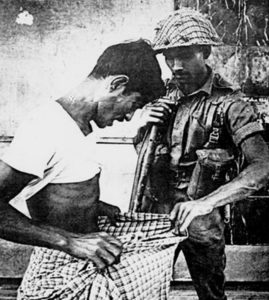
2. You might have seen a picture of a soldier inspecting a Bengali man’s Dhoti, from 1971. That is provided as a proof that Army folks there used to inspect Bengali men’s genitals to decide if they were Muslim or not (based on circumcision status). While the Pakistan Army indulged in some of the worst atrocities against the Bengalis, this picture is not a valid evidence.

This picture was taken by Indian photographer Kishor Parekh. In an interview, his son Swapan Parekh mentioned that it was a photograph of Indian army personnel checking the [Bengali] collaborators for weapons. The caption in Kishor Parekh’s book validates this backstory.

Review of Crossed Swords; a History of the Pakistan Army

The following review was written by Major Amin in 2008. Things have changed since then and the Russians and Chinese are now said to be on board with Pakistan’s Taliban plan. We will see. But as usual, an acerbic but well informed review from Major Amin..

17 March, 2012 Crossed Swords-Shuja Nawaz Reviewed by Major Agha H Amin (Retired) September 2008 

Crossed Swords , Pakistan,Its Army,and the Wars Within-Shuja Nawaz , Oxford University Press,Pakistan , 2008 700 pages; 13 black and white photographs, 6 maps; ISBN13: 978-0-19-547660-6ISBN10: 0-19-547660-3

Crossed Swords is the latest addition to the list of books dealing with Pakistan Army . Written with an eye on the Western audience by a Pakistani who has settled in USA the book is a welcome addition to books on Pakistan Army.It contains some new sources and some new information .Unfortunately most of the information is anecdotal and the narrators are extolling their own performance. 

The author’s viewpoint is somewhat subjective as he is a brother of one of the ex chiefs of Pakistan Army General Asif Nawaz. The book contains some factual errors , some possibly typing errors,expected from Oxford University Press Pakistan which has a reputation of doing this.Some errors are however historical and factual and were entirely avoidable.On page 8 3rd Light Cavalry of Meerut fame is written as 3rd Light Infantry and on page 9 becomes 3rd Light Cavalry.On page 22 Ayub Khan is placed in Assam regiment though Ayub’s battalion officer Joginder Singh specifically stated that Ayub Khan was in Chamar Regiment in WW Two.On page 426 Naseerullah Khan Babar is promoted to lieutenant general and similar fate befalls Major General Sarfaraz Khan on page 223. 13 Lancers becomes 13 Cavalry on page 305.On page 470 he changes the ethnicity of Sardar Balakh Sher Mazari a Baloch Seraiki by calling him a Punjabi , an honour that no Baloch would like to have. A far more serious error Shuja makes while discussing the ethnic composition of Pakistan Army on page 570.He states that Sindhis and Baluchis are 15 percent of Pakistan Army.This is a serious distortion of history.The term Muslim Sindhi and Baluchi abbreviated to MS&B was given to
Ranghar/Kaimkhani/Khanzada Rajput recruitment in Pakistan Army in 1950s.The aim was to rationalise the recruitment of Ranghars in Pakistan Army. Later the usuper Zia in order to appease the Sindhis created the Sindh Regiment but Sindhis as far as my research reveals are far less than Ranghars/Kaimkhanis/Khanzada Rajputs in the army.The Ranghars are a significant class in fightig arms, being at least 35 % of armour and distinct from Punjabis.The Baloch are hardly represented in the army.As a matter of fact the Pakistan Army has such a reputation in Balochistan that no Baloch would like to join it.All thanks to General Musharraf,Zia and ZA Bhuttos policies. 


These are expected errors and more so from Oxford University Press Pakistan known for changing authors photograph with those of their uncles on jackets of books as they did with Colonel M.Y Effendi in his book Punjab Cavalry published by Oxford University Press in 2007.The old prince narrated to me the sad story when I met him and was also quite cheesed off by the fact that the princess running Oxford Pakistan is too arrogant to meet any author or to even discuss anything on the telephone. It is significant to note that so disgusted did Effendi become with this Ameena Syed of Oxford that he withdrew his books rights from Oxford University Press Pakistan.Its possible that Effendis book was deliberately sabotaged by Ameena Syed as her brother brigadier Javed Hussian was with Effendi in the tank corps and both did not get along well.

The above errors are insignificant.However Shuja has made some asertions which can be classified as serious errors or even distortion of history.On page 71 he asserts that calling off of Operational Venus by Pakistan’s civilian government was one of the reasons why the 1947-48 war failed.I state this because the sub title of the chapter is ” Why the War Failed”.On the other hand he fails to point out the major fatal decision when the Pakistani government refused to allow the armoured cars of 11 PAVO Cavalry to assist the tribesmen in breaking through to Srinagar.Those who are not familiar should know that the main reason why the tribals failed to take Srinagar was because Indian armour counterattacked them and destroyed them at Shalateng. This fact was discussed by Brig A.A.K Chaudhry also in his book. The Operation Venus plan came much later.At that time the Indian Army was well established in Kashmir and well poised to meet any threat.

Very few participants of the Kashmir War have left any written accounts of their war experiences. General Iqbal who participated in the war and later on rose to the rank of full general and Chairman Joint Chiefs of Staff Committee, long after the Kashmir War made one very thought provoking remark about the Kashmir War in an article in the Pakistan Army Green Book 1992. This particular publication was sub titled ‘Year of the Senior Field Commanders’. Iqbal wrote; ‘During 1948 Kashmir Operations I saw one senior officer sitting miles behind the frontline and counting availability of mules and rations. He had relegated the fighting to a senior battalion commander . 
In 1963 once Major General Fazal I Muqueem Khan in his book The Story of Pakistan Army .Fazal thus wrote; ‘To the Army’s horror, Pakistan during her greatest hour of triumph in Kashmir agreed to accept the ceasefire…it was difficult to understand why Pakistan let that opportunity pass. Was it assumed weakness; or as a result of pressing advice; or from misplaced chivalry towards an unfriendly neighbour in distress? Whatever the reason,Pakistan’s reluctance to accept the risks of continuing the war,cost her Kashmir at that time. It was a risk worth taking.” But note that the Pakistani attack force collected for Operation Venus consisted of about six infantry battalions and two armoured regiments. To oppose this the Indians had two infantry brigades (50 Para Brigade and 80 Infantry Brigade) .In addition there were two armoured regiments in the same area i.e. Central India Horse and the Deccan Horse . In addition the Indians also possessed more than 10 other armoured regiments which were not in Kashmir but in Punjab or Western UP and could move to Kashmir. We shall see in 1965 how Pakistani armour functioned and the reader can keep that as a yardstick in order to appreciate how Pakistani armour and infantry would have behaved in Operation Venus; had it ever been launched! Fazal does not explain how the capture Of Beri Pattan bridge would have led to complete collapse of Indian hold over Kashmir, apart from temporary severing of the line of communication to Poonch. Greater part of the Central India Horse was at Nowshera close to Beri Pattan while Deccan Horse in Chamb-Akhnur area was also within striking range and the battle would have been a hotly contested affair! 
Shaukat Riza did not take the extreme viewpoint similar to Fazal’s when he wrote his book on Pakistan Army.He merely said that ‘On December 30 both sides saw the wisdom of cease-fire’. Lately in an article General K.M Arif adopted a more rational viewpoint, when he stated that the Kashmir War of 1948 was mismanaged simply because Pakistan was not in a position to fight it successfully summing it up by stating ; ‘It is too hazardous a risk to fight a war on ad hoc basis’.
On the other hand, there is no doubt that Pakistan was in a favourable position to win the Kashmir War at least till the first week of November. Mr Jinnah exhibited great Coup de Oeil when he ordered Gracey to employ two brigades and advance with one brigade each towards Jammu and Srinagar. But Mr Jinnah was unlucky in possessing no one like Patel and his Prime Minister and his entire Cabinet proved to be an undoubted failure at least as a war cabinet!
Mr Jinnah’s decision not to have a Pakistani C in C, although taken in the best interest of the country and the Army as Mr Jinnah saw it, ensured that the British acting C in C procedurally blocked the execution of Mr Jinnah’s orders in October to attack Kashmir. Pakistan was unlucky in having a man like Iskandar Mirza at the Ministry of Defence.Mirza did not advise Mr Jinnah correctly and the fact that he had hardly served in the Army and did not understand military affairs further ensured that Mr Jinnah and the Prime Minister remained as ignorant as they were about military affairs as they were when they were in high school. 

But again, it is incorrect to criticise Liaqat for Operation Venus since in December 1948 the Indian position was much more secure than in 1947.Liaqat can be criticised for not ever visiting Kashmir while the war was on and for not standing by Mr Jinnah in pressurising Gracey in October 1947 to order the Army to attack Kashmir.Had a Pakistani C in C been appointed even in December or in March 1948 the Indians may not have held on to Poonch- Nowshera area at least. Had Major Masud been allowed with his armoured cars on Domel-Baramula Road despite Ghazanfar Ali and Sher Khan’s objections;Srinagar may have been captured by the Tribesmen by first week of November 1947. The Indians were lucky in having comparatively more regular army officers who led from the front as is evident from higher officer casualties among Indian Army officers above the rank of captain vis a vis the Pakistan Army. 

The treatment of 1857 is also very superficial.The author states that of the Bengal Army which rebelled, some 80 % were Purbias (page.7) , but fails to point out that the vast majority of cavalry which led the rebellion notably at Meerut i.e 3rd Light Cavalry which actually captured Delhi was Muslim and mostly Ranghar Muslim.His use of the term British for the pre 1858 period is also factually incorrect as India till 1858 was ruled by the English East India Company using mostly its private Bengal Army ,Madras Army,Bombay Army , its private European regiments and some regiments on rent from British Army to conquer entire India. In his discussion of Martial Races Theory the author totally ignores the fact that Punjab Loyalty in 1857 to the British was one of the main reasons why martial races theory was evolved.This is a simple point noted even by British writers like Philip Mason.The author also fails to note the politically important fact that the English East India Company’s army was the knight in shining armour which saved the Muslims of Punjab and settled areas of present Pashtun NWFP from the Sikhs who were using Muslim Mosques as stables and gunpowder magazines and plastering their walls with cowdung. Perhaps this fact does not suit the “martial races” who were ruled by a 10 % minority (the Sikhs) in the Punjab and settled Pashtun areas (for more than four decades in Punjab and some two decades in modern NWFP’s settled districts). 
The author talks about martial races theory and thinks that martial races theory was all about Punjab and Frontier as it is now but perhaps does not know that one of martial races theory’s most famous exponent Major General Macmunn regarded the Khanzada Rajputs of Firozpur Jhirka as the finest fighting race in India. The author also fails to note that the Sikhs were in majority in the fighting arms till First World War and were reduced to a minority by being replaced with Punjabi Muslims after First World War because the Punjabi Muslims were regarded as phenomenally loyal, even against Muslims, by the British.Thus the author conveniently ignores two important developments of WW1 i.e the Singapore rebellion of 5th Light Infantry by Ranghar Muslims and the tribal Pashtun mutinies against British as a result of which tribal Pashtun recruitment was reduced to the gain of Punjabi Muslims. 

In his discussion of Ayub Khan the author totally ignores allegations about Ayub’s tactical timidity in Burma.This incident was discussed by three writers of the time; Major General Joginder Singh of Indian Army who was Ayub’s battalion mate , Sardar Shaukat Hayat who was an ex Indian Army officer and Major General Sher Ali Khan.In an article Brigadier Nur Hussain a reliable authority did state that Ayub Khan was close to General Gracey because they drank together. The authors discussion of old officers is also partial.On page 31 he notes that Brigadier Gul Mawaz got an MC , a medal which many earned but fails to note that Major General Akbar Khan won a DSO which is higher in scale than MC.On page 33 he states that ” Akbar Khan who gained notoriety in Kashmir …..” .Akbar Khan was the pioneer of Kashmir war but Shuja thinks that he was notorious! A strange assertion. Mr Jinnah’s historic decision of creating two infantry battalions of Bengalis is also not at all discussed by the author.It may be noted that Ayub Khan refused to expand the East Bengal Regiment till 1966 as a result of which the Bengalis were further alienated for not being given the due share in the armed forces.this decision was reversed by Yahya Khan in 1966 but by then it was too little too late.

The authors analysis of the origin of the officer corps is also superficial.He fails to note the 50 % ranker quota that the British kept for Indian rankers in the officers selected for IMA Dehra Dun in order to keep the Indian officer corps slavish and backward. The author does note the fact that Pakistani SSG captured Indian War Plan on Samba Kathua road before the war actually started but fails to note the fact that it was Pakistan’s Military Intelligence led by Director Military Intelligence Brigadier Irshad who refused to give any serious thought to this discovery and dismissed it as an Indian ruse! This was revealed to this scribe in an interview by Major General Naseerullah Khan Babar in March 2001.

The most serious distortion of history committed by Mr Shuja Nawaz is on page 226 when he gives the credit of 25 Cavalry’s action of 8th September 1965 at Gadgor to Brigadier Abdul Ali Malik.The authority he quotes is Farouk Adam , then a very junior officer and not in 24 Brigade Headquarter. It must be clarified that a good military historian or analyst’s prime motivation in all writing has been to endeavour to write “what men did” rather than what “they ought ideally to have done” or what “someone later with the benefit of hindsight tried to portray , what they had done”. Thus the analysis of Chawinda Battle done with pure loyalty to service without any inter arm rivalry or nationalistic motivation. Pure and unadulterated military history filtered dispassionately separating fact from fiction and myth from reality. History as
Frederick the Great once said can be well written only in a free country and ours has been continuously under civil or military dictators since 1958. I maintain as one great master of English prose said that “all history so far as it is not supported by contemporary evidence is romance”! Battle of Chawinda was thus not romance! What many in this country wrote and was outwardly military history was essentially “Romance”! Inspiring, superhuman but a myth promiscuously mixed with reality!Chance plays a key role in battle and at Chawinda chance played a very important role! Nisar, when he deployed 25 Cavalry did not know what was in front of him ! KK Singh Commander 1st Indian Brigade also did not know what was in front of him! This mutual ignorance saved Pakistan on that crucial day ! Later heroes were created! I repeat “Heroes were created” ! The hero had to be from the Salt Range however ! At least Shuja Nawaz wants it this way ! What were the key facts? Most important tangible fact was “casualties” ! These were deliberately hidden since these would have let the cat out of the bag! Everyone would have discovered who really fought and who got gallantry awards on parochial,regimental or old boy links! How many were killed in the biggest military blunder “Operation Gibraltar”! This is Top Secret ! How many infantry men died at Chawinda? Again no mention of any figures! The real
motivation here is not national interest but to preserve or more important to “guard reputations” 

Now lets talk about the broad front deployment that Shuja Nawaz refers to .There is no doubt that the “broad front deployment” was done by Nisar and Nisar alone and Brigadier Abdul Ali Malik had no role in it. It is another matter that Nisar also did not know what was in front of him. It was like Jutland when both contending fleets were running towards each other at express train speed. Why Nisar behaved as he did and what actually happened even today is hard to understand, whatever anyone may claim now with the benefit of hindsight! Shuja Nawaz here in his 600 page book offers no tangible proof that the actions of 25 Cavalry had anything to do with what Brig A.A Malik told Nisar. Nisar was told to “do something” as clearly stated by an authority no less than Pakistan Army’s official historian Major General Shaukat Riza, apparently not from Jhelum or from North of Chenab by a twist of fate. There is no doubt that Nisar did something without the least clue of what was in front of him. The important thing is that Nisar did something rather than getting paralysed into inertia and inaction! The “Do Something” order by Brig A.A Malik to Lt Col Nisar CO 25 Cavalry should not have been glorified to something higher by Shuja Nawaz simply on authority of an article written by a person who was a company 2IC in an infantry battalion of 24 Brigade and that too only in 1992.This is a serious historical failing.At least in a military historian but is the Oxford University Press Pakistan run by professionals? One may ask Colonel M.Y Effendi. The fact that Abdul Ali Malik was a close relative of Shuja Nawaz’s wife makes this distortion a distortion par excellence. The same words of Brig A.A Malik ” Do Something” were repeated by Nisar in his article published in Pakistan Army Journal in 1997. Perhaps Shuja Nawaz did not read all the accounts of direct participants.Perfectly excusable as he is based in USA.But not good military history certainly.The fact is that the 25 Cavalry on 8th September 1965 was functioning in a vacuum.Brig A.A Malik had no clue about armour warfare and Nisar had no higher armour headquarter to guide him.. 24 Brigade had two infantry units, one which had been overrun and dispersed on 8th September i.e 3 FF and 2 Punjab which was at Chawinda. The crucial action took place at Gadgor few miles north of Chawinda in which 25 Cavalry faced the entire Indian 1st Armoured Division. This was an extraordinary situation and Nisar acted on his own best judgement since Malik had abdicated to Nisar by stating that he should “do something”. It is another thing that Nisar also did not know what was in front of him and acted boldly and unconventionally. Had he known what was in front of him he may have been paralysed by inertia and inaction! But this is speculation and some part of history always remains unfathomed and hidden! Nisar acted through sheer reflex and deployed his unit in an impromptu manner. The fire fight which took place at Gadgor between 0900 hours and 1200 hours was a pure tank versus tank affair. 25 Cavalry versus two leading tank regiments of Indian 1st Armoured Division! Thus the Indian Armoured Corps historian stated “The Armoured Brigade had been blocked by two squadrons of Pattons and in the first encounter had lost more tanks than the enemy had…the worst consequence of the days battle was its paralysing effect on the minds of the higher commanders. It took them another 48 hours to contemplate the next move. This interval gave Pakistanis time to deploy their 6th Armoured Division…in fact the golden opportunity that fate had offered to the 1st Armoured Division to make worthwhile gains had been irretrievably lost” (Refers-Pages-393- 394-History of Indian Armoured Corps-Gurcharan Singh Sandhu-Vision Books-Delhi-1990). Thus the Indians acknowledged “This regiment’s (25 Cavalry) performance was certainly creditable because it alone stood between the 1st Indian Armoured division and its objective, the MRL canal”.(Refers-Page-395-Ibid). This is not the only source.Major Shamshad a direct participant has already stated on record that SJs were awarded to some officers for an attack in which not a single man was killed on both sides! Here he refers to Major Farouk Adam.
This reminds me of an incident in armour school Nowshera in 1991.I was an instructor in Tactical Wing.The Senior Instructor incharge of the Young Officers Tactical course asked us , ” Should we give an Alpha Grade” . My lone reply was that no Sir , since Armour School gives Alpha to sons of generals only .This was a norm then .The Infantry School where I did the junior tactical course but later on it started giving alphas after 1985 to oblige some sons of generals.But that is how Pakistan Army is. The historical fact remains that 25 Cavalry was part of 24 Brigade but all that Nisar its CO did on the crucial 8th September at Gadgor was based on his own judgement. On 9th and 10th September no fighting took place as Indians had withdrawn their armoured division to the crossroads. On 10th September, 6 Armoured Division took over and 24 Brigade was a part of 6 Armoured Division. On 8th September there was a vacuum and Nisar acted in a sitaution which can be classified as one characterised by “absence of clear and precise orders”! Shaukat Riza’s book is basically a compilation of existing facts. It has historical value since Riza was allowed access to official records.Shaukat had no axe to grind . Shuja Nawaz by his own confession is a close relative of A.A Malik. Shuja also forgets Brig A.A Malik’s request to withdraw when Indian tanks had crossed the railway line on 16th September and occupied Buttur Dograndi and Sodreke. This fact was brought to light not by the much criticised Shaukat Riza but by the then GSO-2 of 6 Armoured Division Major (later General K.M
19. Arif), first more bluntly in Pakistan Army Green Book-1993 and again a little tactfully in his recently published book Khaki Shadows. Thus no connection with 3 FF, an infantry unit which as far as I know suffered more casualties than any other infantry unit at Chawinda. 3 FF fought admirably but was launched thoughtlessly as brought out by Major Shamshad in his letter published in Sept 2001 DJ and consequently suffered enormous casualties at Sodreke-Buttur Dograndi area. Shamshad was the tank troop leader in support of 3 FF when it disastrously attacked Buttur Dograndi. In opinion of Shamshad, the attack had failed not due to any fault of 3 FF but because of poor planning by Commander 24 Brigade. Even at formation level Chawinda was not a big battle in terms of casualties since the Indian 1 Corps suffered less casualties than 11 Indian Corps in Ravi Sutlej Corridor. A.A Maliks poorly planned counterattacks leading to bloody casualties for Pakistan Army were also discussed by Major General Fazal i Muqeem in his book on 1971 war. http://pakistan-army-interviews.blogspot.com/2010/11/bara-pind-jarpal-charge-of- pakistans.html 

On page 233 while discussing the main Pakistani offensive in Khem Karan, the author fails to point out that the Pakistanis had a 7 to 1 superiority in tanks and yet they failed. Further he fails to point out the fact that major failure of Pakistani 1st Armoured Division occurred in the 4th Brigade where its commander Brigadier Bashir ordered its tank regiments every night to return to leaguer at their start point every night thus abandoning all territory they had gained during the day. In the treatment of Chamb Operation of 1971 the most significant decision of Major General Eftikhar to switch from North to South is not discussed at all.This was one of the most landmark operational decisions in history of Pakistan Army.The author also fails to highlight the cowardly action of then Brigadier Rahimuddin Khan in not joining 111 Brigade on pretext of dealing with Shiekh Mujibs trial. Of course this great warrior later rose to full general in the Pakistan Army.

Shuja also gives no thought in his worthy analysis to Pakistan Army’s launching a pre-emptive attack on India in September 1971.This if done in the words of Indian Commander Western Command General Candeth would have thrown all Indian plans to attack East Pakistan to the winds . (Refers-The Western Front -Candeth). In the chapter dealing with Z.A Bhutto Shuja does not discuss the cadrisation plan proposed by ZA Bhutto and his tasking of Pakistan Army’s Military Operations Directorate to implement it. This plan if implemented would have reduced the standing army in size and enabled the Pakistani government to spend more money on training.This plan was scrapped by Zia in 1977. 

On page 477 he states that ” Abbasi was the man who had been removed from his command in the Kargil area of Kashmir…………after having undertaken an unauthorized and costly foray into Indian held territory in 1990‿.Now this comes straight from a man who repeatedly claims nearly total access to all direct participants. Now the facts of the above situation. Poor General Abbasi had done nothing in Kargil. First the use of the word Kargil by Shuja Nawaz is unwarranted and irrelevant and above all totally out of context! Abbasi’s command was not just Kargil only but a much larger area i.e. the entire Northern Areas of Pakistan. Second the foray he Shuja refers to was not launched in 1990 but in 1992 when Shuja Nawaz’s very own brother was the army chief! Third the foray was not as unauthorized as claimed by Nawaz. Abbasi was commanding the FCNA, part of 10 Corps Rawalpindi and his corps commander Lieutenant General G.M Malik,a man of extreme ambition had a tacit understanding with Abbasi that in case he succeeds he was a part of the team and if Abbasi failed G.M did not know about the attack ! A very typical and known phenomenon in all armies, organizations and bureaucracies all over the world. Fourthly poor Abassi’s unauthorized foray was not in Kargil but in Siachen an area far away from Kargil. Lastly Abbasi had been packed off to the FCNA in late 1990 a time when snow made any foray in Kargil or Siachen impossible. This happened once Abbasi expressed disagreement with the then corps commander 4 Corps Lahore Alam Jan Mehsud.The incident was narrated by this scribe to then Brigadier Salahuddin Tirmizi (later lieutenant general).Alam Jan thought that Abbasi should be posted to FCNA where he could catharsize his spirit of Jihad on those snowy rocky icy pinnacles of Siachen Glacier. Catharsize he did, with disastrous and bloody results in 1992., but not 1990 as this “privy to inside sources in the army” claims. And that too when his brother was army chief.A sad reflection on how an operation was mounted by an overzealous divisional commander, with secret authorization of his direct superior corps commander, while keeping a so called professional army chief in absolute darkness ! A sad but logical end to the career of Abbasi who was a more upright and internally motivated general officer and shoulders above most of the general officers that I saw in my army service. Shuja Nawaz repeats the above assertion again on page.509 when he states that “among the many attempts to gain advantage at Kargil was a failed attempt in 1990 by……Major General Zaheer ul Islam Abbasi. On the same page again Shuja once again repeats the same totally incorrect assertion “without clearance from the army chief General Mirza Aslam Beg, Abbasi launched an attack on the LOC. Poor Beg the target practicing range of Shuja Nawaz had no connection with Abbasi’s ill fated attack in 1992 ! Beg had retired in August 1991. 

Burhanuddin Rabbani promoted or demoted to Mullah Burhanuddin Rabbani by Shuja Nawaz on page.479 was the president of Afghanistan in 1992 and not “subsequent to 1994” as stated by Shuja. In footnote.2 on page.502 Shuja Nawaz has forcibly thrust the honour of being Chief of Staff 12 Corps on General Kakar, when he states that Kakar served as Chief of Staff of 12 Corps at Quetta under Rahimuddin (famous for not joining his command in Chamb in 1971 thus making his then commanding general Major General Eftikhar state that he would court martial this man after the war. To Rahimuddin’s good luck Eftikhar embraced martyrdom in the war and Rahimuddin survived).This is a factual error as 12 Corps at Quetta did not exist at that time. This corps was raised somewhere in 1985 when Rahimuddin was already the chairman joint chiefs. In the same footnote Shuja Nawaz states that Kakar was wounded at Chawinda in 1965 war .When the 1965 war started Kakar was at intelligence school in Murree.This assertion of Kakar being wounded, while possible, is questionable .Its possible that Kakar joined his unit in later part of the war. 

On page.508 Nawaz states that “one of the first actions in 1948 Kashmir war was the securing of Kargil heights by Pakistani forces.This is a serious factual error. The first major action of the 1947-48 Kashmir war was the attack on Muzaffarabad in October 1947 and the seizing of heights near Kargil happened much later in May 1948 by the Eskimo Force of Gilgit Scouts under Captain Shah Khan (later an air force officer).As a matter of fact Kargil itself was captured by the Gilgit Scouts and they had then captured Zojila Pass and advanced across it. But all this happened much later after October 1947. 

Good in details, written from the relative calm and safety of USA, this book possibly written with good intentions, got lost in the woods of details and failed to present the broad picture. Many Bhagwans of military history reviewed it and failed to find any fault with it! On page 471 Shuja glorifies General Kakar for having no liking for politics.He ignores the fact that Kakar was not groomed for higher ranks and was promoted because of ethnic biases.Simply because a Pashtun president was comfortable with a harmless compatriot.He also fails to note that General Kakar acted against Nawaz Sharif not because Kakar was a democrat but simply because he feared Nawaz as a threat to his chair of army chief. General Musharraf has himself acknowledged in his book that General Kakar was parochial and was favouring Pashtun officers.No compliment to an army chief who is supposed to be a much bigger man.No wonder that Kakar had been packed off to a backwater in Quetta by General Baig. Becoming chief was something that a man of Kakar’s mediocre intellect could never have imagined but this happened only because of party baazi in the army and the fact that Ghulam Ishaq Khan wanted a Pashtun brother. Fair enough in a backward and tribal medieval society like Pakistan ! It is my conviction based on a deep study of that period,that if Kakar would have been the army chief in 1996 and 1997 General Musharraf or any non Pashtun officer would never have become the army chief ! Why ? Simply because Musharraf was not a Pashtun ! Here it must be noted that Jahangir Karamat, Kakar’s successor was miles above Kakar in intellect as well as professionalism.Though a Punjabi he was not from the more parochial tract of area between Chenab and Indus and thus a man with a broader outlook. Its a tragedy of the Pakistan Army that he became a victim of a conspiracy made successful by his own brother officers in ISI , that too because there was that parochial net during that time between the then prime minister and the boss of the prime inter service security agency. The author lauds caretaker premier Moin Qureshi’s role in making the state bank independent but forgets Qureshi’s most controversial release of advance to Bayinder Turkey for Islamabad Peshawar Motorway while also stating that this project was uneconomical.This gained nothing but total loss for Pakistan as Bayinder repatriated many million dollars without doing anything and later successfully sued Pakistan for huge damages in International Court of Justice at Hague. 

On page 480 Shuja extols Talibans wild west justice in hanging Afghan President Dr Najeeb but fails to note the allegation that Pakistani agencies were suspected to be behind the assassination of Mulla Borjan, the most popular and independent leader of the Taliban. On page 481 Shuja quotes Benazir to prove that General Kakar was a brilliant strategist.What did Benazir know about strategy and what strategy did Kakar ever successfully execute other than removing a Punjabi Kashmiri prime minister against decision of supreme court just to assist a fellow Pashtun president? What is Shuja trying to prove . In discussing tenure of General Jahagir Karamat Shuja ignores totally the Ukrainian tank deal commissions. Nawaz Sharif the then prime minister tasked ISI to launch an investigation. Major General Zulfiqar then in ISI was tasked to investigate. He went to Ukraine and Azerbaijan and compliled a thick volume on the whole transaction and commissions taken.This was used by Nawaz later and was one of the reasons why Karamat quickly stepped down.The information was given by a staff officer from Corps of Engineers of major rank with DG ISI of that time and confirmed by an Intelligence Bureau officer. It is strange that Shuja Nawaz who seems to know everyone who matters fails to discuss this serious issue.Or perhaps he succumbed to the conspiracy of silence. Karamat was betrayed by his brother officers and that too just out of selfish motives to please the then prime minister.Not out of any national motives. 

As an officer who served from 1981 to 1988 how would I sum up the Pakistan Army. 1981 to 1983 a cheap emphasis on being good Muslim, growing a beard to get a good report from Zia. Further Zia used religion to get dollars.This was the basic motivation. Beg’s time saw for the first time a tradition of some criticism being accepted.An effort was made to introduce the culture of intellectual honesty in the army. Asif Nawaz time saw emphasis on starch but no change in the army.We did not see any professional change in Asif Nawaz’s time other than introduction of peak cap in the uniform! Kakar’s time saw parochialism par excellence with a chief at the head who used to count cherries in his garden and was upset when some guards ate some.( This first hand account was given to me in Okara in June 1993 when Kakar was the army chief and at the height of his power by a Lieutenant Colonel Feroz , an officer from FF Regiment , whose unit provided Kakars guard while he was a corps commander in Quetta). A petty man elevated to the highest rank.No wonder he was non political because in the heart of his hearts he must have thanked his stars that he became a four star general.An authority no less than General Musharraf has stated in his book that KAKAR WAS PAROCHIAL . In this case Musharraf has hit the nail right on the head.

Karamat I did not see in service and did not serve with so I cannot comment but is reported to be a mild man. Musharraf as I saw him as a major general was flashy,extrovert,egoistic but dynamic.The present army from what I learn from serving officers is again business as usual.Nothing much to write about.The agencies of course play the usual games for money and for their own naukri and Islam being misused for operational reasons. The most serious criticism of Shuja’s analysis is in treatment of Islamic fundamentalism in the army. Shuja on page 585 consoles the audience of his book that Islamic fundamentalism is still not a threat in Pakistan Army. Shuja ignores the more dangerous fact that the army has misused Islam as a slogan to mobilise the populace to achieve its narrow institutional agenda.This is more dangerous than being Islamist.Now this policy may go out of control. Right from Zia in 1977 the army generals used Islam as a slogan to fight a proxy war in Indian Kashmir and Afghanistan.Events may prove that this would be the undoing of Pakistan as it stands in its present form.Now Pakistan is perceived in the west as part of the problem and not the solution.Particularly its army and intelligence agencies are seen as the heart of the problem.India is continuously preparing for a war although a low intensity one and no solution has been achieved in Kashmir.Afghanistan is increasingly hostile and a strange but logical Indian-Russian-Iranian-NATO un-declared strategic alliance has come into place in Afghanistan against Pakistan.All these are serious developments.The coming ten years may vindicate this assertion. The Pakistan Army and its generals may be remembered in history as one of the reasons for Balkanisation of Pakistan.Not a good omen for Pakistan.The army’s involvement in Pakistan’s politics and government is now a serious reason of imbalance for Pakistan’s political system.No hope appears in sight as we hear rumours that the agencies are still active in destabilising Pakistan’s own elected government. Shuja has burnt his midnight oil.He has compiled and collected all the facts in a nice way but his analysis has been shallow.We expected something far more profound than this.600 pages written in vain. 

http://www.scribd.com/doc/61839666/Indo-Pak-Wars-A-Pictorial-History
28. http://www.scribd.com/doc/21686885/TALIBAN-WAR-IN-PAKISTAN- AFGHANISTAN-A-WRITERS-PERCEPTIONS-FROM-2001-TO-2011 http://www.scribd.com/doc/22457862/Military-Decision-making-and- leadership http://www.scribd.com/doc/22151765/History-of-Pakistan-Army-from- 1757-to-1971-PRINTING-ENABLED-Do-acknowledge-to-the-author http://www.scribd.com/doc/22455178/Letters-to-Command-and-Staff- College-Quetta-Citadel-Journal http://www.scribd.com/doc/23150027/Pakistan-Army-through-eyes-of- Pakistani-Generals http://www.scribd.com/doc/23701412/War-of-Independence-of-1857 http://www.scribd.com/doc/22107238/HISTORY http://www.scribd.com/doc/21693873/Indo-Pak-Wars-1947-71-A- STRATEGIC-AND-OPERATIONAL-ANALYSIS-BY-A-H-AMIN-THIS-BOOK- CAN-BE-PRINTED-FROM-THIS-SITE

Martial Races Theory. Myths and Consequences

Major Agha H Amin (retired)

About the Author: Agha H. Amin , Retired Tank corps major. His writings were published in Pakistan Armys prime journals , Pakistan Army Journal and Citadel Journal of Command and Staff College Quetta. Wrote The Essential Clausewitz in 1993, Sepoy Rebellion of 1857-59 in 1998 , Pakistan Army till 1965 in 1999 ,Development of Taliban Factions in Afghanistan and Pakistan (2010) ,Taliban War in Afghanistan (2009). Served as Assistant Editor of Defence Journal ,Executive Editor of globe and Founder Editor of Journal of Afghanistan Studies . An associate of the think tanks ORBAT and Alexandrian Defense group. Carried out various oil and gas and power transmission line surveys in West Asia. Editor in Chief of monthly Intelligence Review and monthly Military and Security Review. Heads the think tank Centre for study of Intelligence Operations established in early 2010.
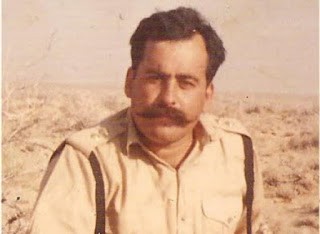
Image result for major agha amin
Myths ,Distortions and Misconceptions of Indo Pak History-Part One
A Chapter of the book The Sepoy Rebellion of 1857-59 by Agha.H.Amin
(note: this post is from a transcript of the first chapter of the book. Formatting was an issue and if you want to see the whole thing, see here: http://www.slideshare.net/AAmin1/martial-races-theory )

The sepoy war of 1857 gave birth to a new theory in India. This theory was floated in the late nineteenth century: that the races living in the north west part of India i.e. present northern regions of Pakistan and parts of Indian Punjab were the “Martial Races of India”! This theory was partly (but as shown below, only partly) based on the “Punjab and Frontier” loyalty factor of 1857. Its most serious proponent was Lord Roberts, the British C-in-C in India (563).

When I joined the army in 1981 I observed that many of the officers and soldiers serving in Pakistan Army were convinced that the races or castes living in the area between Chenab and Indus Rivers were especially “martial”. Some Pathans originating from the NWFP were also regarded as junior partners of these martial races!
Most of the invasions of India took place originating from areas north of Khyber Pass or west of Quetta i.e. Persia etc. Then the Mughals after 1526 recruited from Hindu Rajputs, Muslim Pathans, Muslim Rajputs, some Muslim Punjabis and Muslim Baloch, but the preference was given to trans-Indus races, mostly Pathans or Persian speaking, or to Hindu Rajputs. The EEIC (English East India Company) since it made its entry from the east had no choice but to recruit from Oudh, parts of Bihar, North West Provinces Madras Bombay Central India etc. In the earlier part of this work we have seen that using a predominantly Hindu army recruited from the Gangetic plain and led by British officers, the pre-1857 Bengal Army defeated all races of India, Pakistan, Nepal, Afghanistan etc. A small contingent of the Bombay Army (made up mostly of Hindu Marhattas) quickly made Persia behave! A couple of Bengal Army Regiments reinforced by an odd European regiment successfully defended Kandahar and Jallalabad against vastly superior forces.
But the rebellion of 1857 changed British perceptions about Indian people and keeping in view the political reliability as well as the administrative convenience factor the British decided to recruit mostly from the north west i.e. Punjab and Frontier provinces of India plus the Gurkhas from Nepal. This change started from 1857 but became significant only around 1895. But loyalty and reliability were not the only factors, because the Madras and Bombay Armies had also stayed loyal. Partly based on the personal biases of Lord Roberts, and under his influence of some other British senior officers, the recruitment policy was changed.


Initially, following 1857 the British adopted the policy of non-reliance on any particular race and even the Punjabi Muslims and the Pathans who had remained loyal were mixed with other castes and religious communities, with only the Gurkhas and certain Muzhbi Sikh Regiments grouped together. An experiment of having pure Muslim or pure Hindu Rajput regiments was started from 1893 but abandoned by 1919, keeping in view the mutinies of 5th Light Infantry and 15 Lancers at Singapore /Mesopotamia.
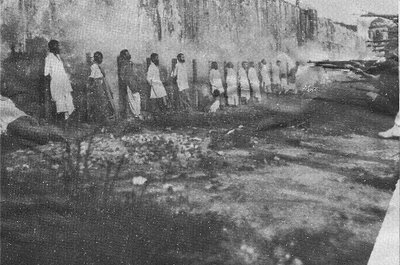

Singapore Mutineers being shot. The Ranghar Muslims of 5th Light Infantry were superior in stature to any Indian soldiers who were mercenaries of British. Among Pashtuns their greatness was matched by Wazirs, Mehsuds, Afridis and Alizais who rebelled against the British in First World War.
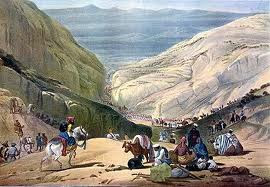

The Bengal and Bombay Armies march through Bolan Pass to attack Kandahar in the First Afghan War

In the 1880 and 1890s it was widely believed that the Indian army was supposed to face the Russian threat originating from Central Asia. It was thus said that the Bombay or Madras soldiers who were shorter in height and smaller in physique were not fit for mountain warfare in India’s north west (564). Charles Chenevix Trench an Indian Army British Officer and a respectable military historian has given a reason for the British bias against east of Jumna and South Indian races. He says in his book on the Indian Army that “Reasons for preferring northerners were largely racial. To Kipling’s contemporaries, the taller and fairer a native, the better man he was likely to be. He looked more impressive on parade, he might be physically stronger, he would surely be braver and more loyal than the down country men. There was a general preference for the wild over the half educated native as being less addicted to unwholesome political thinking”. Charles Chenevix Trench went further in explaining this British bias, he said “Brahmins had been prominent in the Mutiny, and their diet and prejudices though somewhat illogical by stating as following: “The Madrasi soldier was smallish, blackish and rather low caste. The Mahratta was also in origin of no very high caste, and smallish to hoot. The fact that his grandfather had held India to ransom did not make him more acceptable to the Indian Army ” (567).

It must be noted that the first Afghan war was fought by a largely Hindu army. Whatever the initial British failures, the British won the First Afghan war, giving Afghanistan such a mauling that the Afghans dared not attack India in 1857 when the British were really highly vulnerable. It would be false and erroneous, however, to assume that the British immediately changed the class composition of the Indian Army (Bengal Army in particular) in the years following 1857. In this regard the British quality of patience and subtlety in terms of long-term thinking is admirable. They still continued recruitment from the areas around Delhi and east of Jumna; which had played a major role in the rebellion. The real shift and bias in British policy was a slower process; and had little connection with any war fought by a still largely Hindu majority and Hindustani heavy Bengal Army as evident in terms of 1885 statistics; in the period between 1880 and 1914.
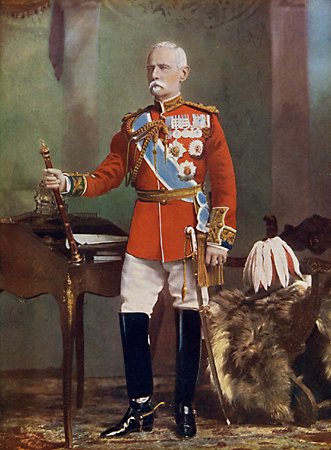

Lord Roberts

The major factor in the anti-Hindustani/anti-Maratha/anti-Madrasi bias was the influence of Lord Roberts who remained the C-in-C of Madras Army and more importantly that of Bengal Army from 28 Nov 1885 to 7th April 1893 (568). Lord Roberts who was one of the principal fathers of martial races theory Robert played on the fears of Russian threat to India and succeeded in convincing the Viceroy and India Office to significantly change the class composition of the Bengal Army from a mixed affair to a largely Punjabised army dominated by Punjabi Muslims followed by Sikh Pathans and Gurkhas. Thus the “Martial Races Theory” had its origin in the mind of Lord Roberts and was not based on any significant and convincing conclusions deducted from war performance; and by this I mean comparative war performance of Hindu versus Muslim or Hindustani/Madrasi versus Punjabi/Pathan. Political reliability, however, became more serious as a factor as education increased in areas east of Jumna following 1857; by virtue of a deliberate British policy to educate Indians starting from 1857 when the three universities of Calcutta Bombay and Madras were established. Thus statistics show a major change in British recruitment policy in the period from 1885 to 1914 (569):- Composition of British Indian Army in 1885

Companies Percentage
Gurkha 53 26.63
Dogra Hindu 18 9.04
Other Hindu 56 26.63
Rajput Hindu 47 23.61
Brahmin Hindu 25 12.56
Total Hindu 199
Punjabi Muslims 25 32.89
Hindustani Muslims 36 47.36
Pathan Muslims 15 19.73
Total Muslim 76 21.59
Sikhs 77
Total Hindu 199 56.3
Total Muslim 76 21.59
Sikhs 77 21.87
Grand Total 352 100

Ethnically this came to the following Regional strength in terms of numbers of “Infantry Companies:– PUNJABI HINDUSTANI GURKHA/HILL MEN PATHANS Punjabi Muslims- 25 Muslims- 36 Gurkha- 53 Settled Area- 10 Dogra- 18 Hindu Brahmans – 25 Nefa Hill Men – 9 Tribal Area- 5 Sikhs- 77 Hindu Rajput – 47 Assamese – 3 Other Hindu – 44 Total- 120 Total- 152 Total- 65 Total- 15 34.09% 43.18% 18.46% 4.26%

Further another major change took place in 1895. The three armies i.e. in Bengal Madras and Bombay armies were amalgamated. The percentage of ethnic Madrases and Mahrattas from Bombay was systematically reduced as a strict matter of policy(570). Henry Lawrence one of the eminent Lawrence Brothers made a very subtle remark in late 1840s. He said “Courage goes much by opinion; and many a man behaves as a hero or a coward, according as he considers he is expected to behave. Once two Roman Legions held Britain, now as many Britons might hold Italy” (571).
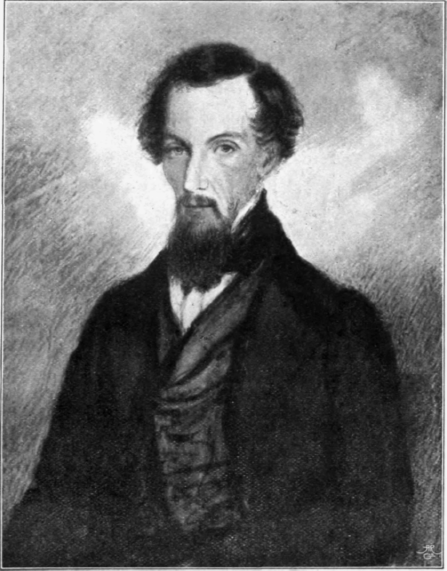

Sir Henry Lawrence

Even many Britishers knew that there were no martial races. But Robert remains the culprit for having introduced a bias in recruitment. A bias which became a policy and has had a negative fact at least in the political situation in Pakistan in the post-1947 scenario. The theory of martial races was tested and convincingly disproved in the First World War. The Mahrattas who had been dismissed as non-martial before First World War performed well during the First World War. In this regard particularly prominent was the battle performance as a unit of the 103, 110 and 117 Mahrattas at Kut al Amara against the Turks. At Sharqat the 114 Mahrattas with just three British officers played a decisive role in the defeat of the Turks (572). In any case a major change took place in the class composition of the Indian Army which is evident from the class composition of Indian Army in 1914 573:- a. Infantry:-(Total Companies-1096) 1. 431 Companies- Wholly Punjabi. 2. 221 Companies-Paltry Punjabi b. Cavalry:- (Total 155 Squadrons) 1. 95.5 Squadrons- Wholly Punjabi
10. 2. 47.5 Squadrons-Partly Punjabi.  Despite this preponderance, the non-Punjabi Hindu Gurkhas and Hindu Garhwalis did well in the Indian Army in WWI. e.g. theoretically at least the Punjabi Muslims who were the largest community in the fighting arms should have won the maximum number of VCs, but this did not happen. The intention behind the whole argument is to prove that bravery has little connection with race or religion.

The theory of “Martial Races” influenced the post-1947 Pakistani Politics in a negative way. The new state was a federation composed of five nationalities. The army due to pre-1947 British policy was largely Punjabi. It was perceived by Sind, Baluchistan and East Pakistan largely as a Punjabi show in which the Pathans were junior partners. The army officers of that period were convinced that they were a martial race and the Hindus of the Indian Army were cowards. This myth was largely disproved in 1965 when despite having more sophisticated equipment, numerical preponderance in tanks and the element of surprise the Pakistan Armoured Division miserably failed at Khem Karn merely due to poor and irresolute leadership at the brigade and divisional level to a complete extent and even regimental level to a partial extent. Meanwhile the army employment in Baluchistan in 1950s made the Baluch think that little if any had changed since 1947. The officer from Potohar with limited grey matter perceived the Muslim Baloch as a foreigner as much as the British pre-1947 officer had thought. This was not the fault of the Punjabis as such, but the result of a British policy introduced during the period  Usurping of power while leading the largely Punjabi based army by Ayub Khan increased the East-West divide. Things in Pakistani politics were then judged on ethnic lines. The on ground realities were different. Ayub was not a Punjabi but later in 1971 the Bengali Muslims blamed the Punjabis for all their maladies! In reality the Punjabis being leaderless were manipulated by both Ayub and Yahya! Bhutto who played a major role in persuading Yahya to launch the military action was a Sindhi!
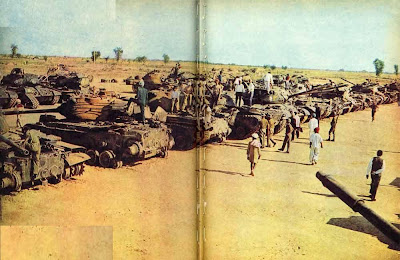
A complete tank regiment of Pakistan Army along with most of the officers was captured by the Indians at Khem Karan in 1965 1857-(1910).
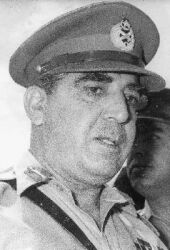

General Yahya Khan

General Agha Mohammad Yahya Khan’s trigger happy use of excessive military force in 1971 precipitated a war which led to the creation of Bangladesh. It appears that the Two Nation Theory had ceased to exist in the killing fields of East Bengal in 1971. But why was the army so actively participating in the genocide? The same Britishers who were so active in criticising the Pakistani atrocities in 1971 had as a matter of fact created this machine following 1857 based on antiquated and irrational ideas of Robert in the post-1880 period. The disease started in 1857 when the British reaped the harvest of the policy of divide and rule when they employed the Gurkha against Indian, and within India the Punjabi (whether Sikh or Muslim) against the Hindustani. The Gurkha against the Punjabi. The Jallianwalla massacre in which Gurkha troops fired on the public meeting comprising Punjabi civilians in 1919 was a good example of the fact that the British did not love the Punjabis, but were merely using them. The Punjabis started learning this from 1919 but by the time the awareness was growing the Britishers were already winding up. The most glaring example of the policy of selective recruitment was in the old NWFP region of pre- 1947 India. Here the British deployed one Pathan against another. Sometimes from the same tribe and sometimes from the other. Sometimes the Turi Shia(574) against the non-Shia Wazirs or Mahsuds or Afridis.
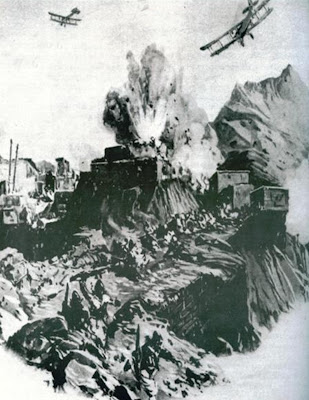
RAF planes bomb Waziristan

The post-1947 rulers of Pakistan, instead of remedying a basically illogical recruitment policy which had no logical basis became its victim. Thus whenever army was used in a province other than Punjab it was perceived as “Punjab against Sindh” or “Punjab against Bengal” or “Punjab against Baluchistan”! The rulers were merely the instruments of a pre-1947 policy. The army outside Punjab was trigger happy because it was fighting in a foreign land. For short-term purposes this policy is viable but for how long? In the long-term it will only lead to creation of more Bangladeshes? The British divided us by their negative policies both in India and in Pakistan. In Pakistan the problem became more serious because the military usurpers were not interested in changing the recruiting policy. The same trend continues and it seems that little has been learnt from the 1971 tragedy. There are two unique shipwrecks lying at the bottom of the Bay of Bengal. One is the shipwreck of the “Martial Races Theory”, the other is the ship of the “Two Nation Theory”!

Once Pakistan was created in 1947 an endeavour at the official level was made to advance and prove a theory that Hindus and Muslims were two nations ever since the first Muslim conqueror landed in India in 711 A.D. I feel that the creation of Pakistan as an independent Muslim state in 1947 was the result of a conscious realisation among the Muslims of Indo-Pak sub-continent mostly in the post-1937 period about the necessity for an independent Muslim state in India. Till 1857 as we have seen the Hindus who were the majority accepted the Muslim political ambitions at least in Northern India. The post-1857 period saw a deliberate British policy of divide and rule. This policy as we have seen not only pitched the Muslims against Hindus but created divisions even among the Muslims. The Hindustani Muslim versus Punjabi Muslim rift has very clear cut origins in the post-1857 British policy., Firstly they conquered the Punjab and Frontier with a predominantly Hindustani army comprising some 75% up Hindus and some 25% Hindustani Muslims. Subsequently when largely the Hindustanis turned against the British, they very cleverly manipulated a largely Punjabi based army against the treacherous Hindustanis. They established a negative precedent by using Punjabi Muslim Pathan and Sikh troops in Sind during the Hur uprising. In 1919 they used Gurkhas at Jallianwala to give the South of Chenab Punjabi Muslims, Sikhs and Hindus a taste of hot lead. Dyre’s action convinced the too pragmatic Punjabis about the gross futility of martyrdom! The British cannot be blamed since their prime interest and; rightly so was to preserve their empire! The “Two Nation Theory” was not in existence in 1857. Muslims fought loyally for the British at Delhi in 1857 against a largely Muslim city led by a Muslim King. More Hindu Bengal Army sepoys fought at Delhi for the Rebel cause than Hindu troops in the British force attacking Delhi. In 1846 and in 1849 a largely Hindu majority army was used to destroy the independent country of Sikhs. Even among Hindus there were sharp divisions like the Mahratta Bombay Army fighting against a largely Hindustani army led by a Marhatta, Tantia Topi. The Madras Hindu of the Madras Army fighting against the Hindustani or Purbeah Hindu infantry man of the Bengal Army in Central India.

Theories cannot create nations or hold them together. Such theories are only the results of naive spinster-like imaginations of pedantic Indo-Pak professors teaching Indian history in Canadian or American universities! Today a ridiculous argument is presented to justify the partition by citing the figures of casualties during transfer of population. These historians forget that Russians who were all one race and belonged to one Christian sect killed some ten million Russians in the Russian Civil war (575) just because of the funny theory propounded by Karl Marx. Actually cleverly manipulated theories have divided nations regardless of religion more than uniting them.

Thus, in the Spanish Civil War some 600,000 (576) Spaniards were killed merely because one Spaniard believed in the socialist theory while the other was an anti-Republican! The Two Nation Theory did not protect the Muslim Bengali from being slaughtered by the Muslim Punjabi or the Muslim Pathan. It did not help the Baloch in 1974-76. It did not keep peace in Sindh in 1986 or in 1992 or 1995 or even today. The problem of Pakistan is that there is too much theory and too little practice and little effort has been made to rid the country of the pre-1947 cynical British policies whose harm a prophetic philosopher like Karl Marx could see as early as 1857. The civil servant or soldier of today’s Pakistan behaves like a British ICS or like Brigadier Dyer of pre- 1947 era. Although qualitatively the standard of both civil and military officials is poorer than the British, many ways in which they perceive the populace are similar.


The non-Bengali or non-Sindhi civil servant in Sindh or previously in pre-1971 East Pakistan viewed the local Sindhi or Bengali as a despicable native! In March 1971 the Dacca University massacre of the students was as vehemently approved in Punjab, as Dyers Jallianwalla Bagh massacre of 1919 in Britain! The North of Chenab Rangers inspector or soldier behaves just like the Sikh soldier or any other Punjab irregular soldier whether Pathan or Muslim roaming in the deserted streets of post-20 September 1857 Delhi city. The soldier on internal duty in interior of Sindh behaves in a manner remarkably similar to the British Indian Army soldier in 1940s during the Hur uprising. A judge of the highest court in Pakistan notes that there was uniform precedence and similarity in the behaviour and verdict of Supreme Court judges in dealing with petitions of dismissed Prime Ministers belonging to Sindh! The Pakistani Muslim judge of today is as much a loyalist to the status quo as his pre-1947 predecessors. Subconsciously Punjab loyalty of 1857 is the pattern to be followed even today. “Loyalty pays” is the unwritten law followed by judges, civil servants, army officers, journalists, etc.!!
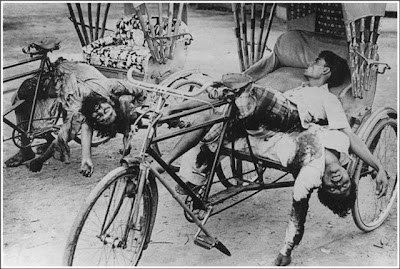

Dhaka 1971

The British divided us into Hindu-Muslim or Sikh-Muslim or Punjabi Muslim-Hindustani Muslim or into Pathan- Punjabi or Afridi versus Turi or Pathan versus Baloch once they left in 1947. They divided us into Shia-Muslim when they used the Shia Turi tribesmen against Sunni tribesmen. The Britishers are very intelligent and brave people but their approach towards other nations is highly cynical and Machiavellian.
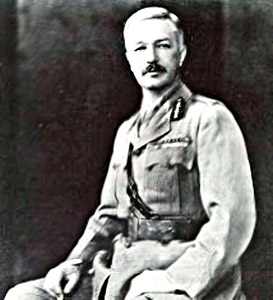

Brigadier General Dyer

Brigadier General Dyer,  the British Hero of Jallianwala was observing the following whose implications few Indian Muslims realised in 1918, Dyer thus stated”, it will be remembered that the Hazaras are Shias, hence their eagerness to blot out as many of the Sunni Sarhadis, per man as they could manage (577)”. Dyer was writing about his employment of the Hazara Shias of Quetta against the Sunni, Iranian, Baloch, tribes of Iranian Baluchistan against whom the British Indian government had sent an expedition to Persian Baluchistan during the First World War. Brigadier General Dyer used Hazaras like this devastatingly against Iranian Baloch in 1915-16 just because they regarded Sunnis as non believers and vice versa !

The Americans who are richer materially but a little naive intellectually at least in their State Department realized the strength of Shia sect only in 1979!! It is instructive to note that the first major British administrative decision after 1857 was placing Delhi and the area under the government of Punjab. This was a deliberate administrative manoeuvre aimed at increasing the Hindustani- Punjabi divide. The Punjabis were told that this was punishment to people of Delhi and the Muslim Ranghars for having participated in the Sepoy Rebellion of 1857 and a reward to the people of Punjab for the Punjab loyalty in 1857! What actually happened was that the Muslim majority in Punjab was reduced because of this measure from some 61% to 57%578 and also forced a culturally different Ranghars Muslim community to travel all the way to Lahore for settlement of their matters relating to the provincial government and provincial high court in Lahore. The people of Delhi also had to travel all the way to Lahore from 1858 to 1911. The injustice done by this decision was remedied only once the present Indian State was created.

Armwise Analysis of The Rebel Sepoys
The trouble started with the infantry but was contained with the successful disarming of the sepoy units in Calcutta and surrounding area. The significant move which led to the transformation of the series of mutiny into a full fledged political military rebellion aimed at ousting the English East India Company from India and achieving independence was, however, started by the cavalry. The role of cavalry as leaders can thus be seen :– a) The 3rd Light Cavalry’s rebellion at Meerut on 10 May 1857 and its lighting move to Delhi and the seizure of Delhi on 11 May 1857 was a coup de’tat and an outstanding example of initiative and courage. Had the Pakistani or Indian armour commanders possessed even 50% of this elan they would have been on the Amritsor Jallandhar Road bridge on the Beas River or in Gujranwala in case of the Indians in 1965 war! The British through some remarkable feat of military genetic engineering created a system which encouraged mediocre Indians to become officers! Perhaps even British generalship with few exceptions has always been mediocre! b) The decisive rebellion at Cawnpore was initiated and led by the 2nd light cavalry on 4th of June 1857. c) The rebellion at Sialkot was initiated and led by 9th Light Cavalry in July 1857. d) The 7th Light Cavalry played a leading role in the rebellion at Lucknow in June, 1857. e) The 1st Light Cavalry led to rebellion at Mhow and at Nimaeh in Central India and Rajputana. It must be noted that some 75% of the Bengal Regular Cavalry was Ranghar Muslim or Hindustani Muslim from the districts around Delhi. Thus the Muslims were the leaders in all the major rebellions whereas the bulk of infantry was Oudh, Hindu, Rajput or Brahman and these actively joined the predominantly Muslim cavalry in the rebellion. Concentration of predominantly Hindu infantry regiments at Delhi and Cawnpore illustrates that till 1857 the Hindus still regarded Muslims as the natural leaders. The role of artillery was crucial during the rebellion. The native artillery was a comparatively highly developed arm in 1857. It played a crucial role in the defence of Delhi and Lucknow. Two out of the total four horse troops of the Bengal Army artillery rebelled in 1857. Six out of the total 18 batteries of the Bengal Army also rebelled in 1857. Subedar Bakht Khan the famous sepoy leader was from Horse artillery and had served in the First Afghan War and in the Sikh Wars. The post-1857 reorganisation of the Indian Army resulted in abolition of native artillery on security grounds. Thus after 1857 the only Indian artillery retained were few insignificant mountain batteries. G.G.O. of 1861 dearly laid down that: “resolved henceforward with few exceptions as may be rendered necessary by local considerations, there shall be no Native Artillery” (579). Most of the infantry regiments of the Bengal Army also joined the rebellion. Just 11 of the 73 Regular Infantry Regiments of the Bengal Army survived the rebellion (580). Sikh artillery played havoc with British at Chillianwallah in January 1849.

Status of 1857 in Pakistan
In Pakistan this rebellion has by and large been largely ignored. Unlike India in 1857 no centenary celebrations took place in Pakistan. No governmental effort of any significance was made in Pakistan to study the rebellion. The reasons are obvious. The areas which comprised Pakistan both East and West were loyal to the British and actually Punjab and Frontier played a decisive role in providing cannon fodder to the British in suppressing the rebellion. Why this happened has been discussed under the heading “Punjab Loyalty”. Tribes of the Ravi especially the Kharrals and Fatianas did actually actively participate in the rebellion which was very creditable, keeping in view the fact that they had no representation in the EEIC army unlike the Hindustanis or the Punjabi Mussulman and Pathan soldiers of the North of Chenab river region. But the Kharrals and Abbasis were two glorious but isolated exceptions in Punjab. The grandfather of Liaqat Ali Khan, the first Prime Minister of Pakistan played an active role in protecting the British line of communication in the Karnal area. Ancestors of Malik Feroze Noon another Prime Minister of Pakistan rendered active service in assisting the EEIC forces during the siege of Delhi. The ancestors of Sir Sikandar Hayat and Sardar Shaukat Hayat two prominent Punjabi Muslim leaders were actively represented at the British camp opposite Delhi. Sikander Hayat’s grandfather was junior native aide de camp with the indomitable Nicholson. Sir Syed Ahmad Khan the leader of UP Muslims in particular and Indian Muslims in general in the post-1857 period rendered active service in loyally assisting the British cause in Bijnor in 1857. The Nawabs of Rampur, Bhopal, Hyderabad, Loharu, Pataudi etc. were all loyal and staunch to the British cause during 1857. The Nawab of Loharu actually told Blunt an Englishman who visited India during the Viceroyalty of Lord Ripon that “What he did not like about the mutiny was that most of them were Hindus” (581)! This is funny coming from a man whose ancestors served Hindu rulers. Those who do not know the background of this Mickey Mouse little state will be surprised to know that its founders owed their rise to loyal service under the Hindu Mahrattas. Subsequently these men transferred their allegiance to another Hindu i.e. Raja of Alwar (582)! The rebellion thus was largely ignored in Pakistan. Lip service was paid in history text books but only a limited attention was devoted to the event.

In the late 1980s and 1990s another tendency has surfaced. Many intellectuals have actually openly declared the Punjab loyalty to the British as correct and have devoted a considerable energy in vilifying and criticising the Hindustani Muslims as villains of 1857. Manzoor Ahmad Manzoor has written a book titled “The Pakistan Problem — Historical Backwardness of Punjab and Consolidation of Pakistan” published in 1993 by Frontier Post Publications Lahore. Manzoor Ahmad Manzoor has vehemently defended Punjab loyalty in this book. This is understandable and justified and as we have seen in the analysis of the “Punjab Loyalty Aspect”, there were reasons why Punjab remained loyal. Every action in history of a region has a background. Unfortunately Manzoor Ahmad Manzoor has avoided discussing the Sikh movement in greater detail. A dispassionate analysis of Punjab history convincingly proves that the most redeeming and reassuring part of Punjab history was the Sikh Guerrilla war against the Mughals and Afghans and the subsequent establishment of Punjab as a strong state by Ranjit Singh. Manzoor Ahmad Manzoor, however, in his hostility to Hindustani Muslims has lost sight of that scholarly balance which may have been the hallmark of his otherwise reasonable work of reinterpretation of modern Punjab history. He has, however, failed to offer a viable solution to the fact that centrifugal tendencies are on the rise in Pakistan. The other provinces of Pakistan are not viewing Punjab in as positive a light as they should have merely because of the fact that the province has failed to provide a leadership which is commensurate with the political representation, resources and potential of the province. A historian has to be forthright and even blunt but sheer ethnic hostility degrades a historical work to the level of a propaganda leaflet! How can historians remain historians when they start criticising Liaqat Ali Khan just because he was a Hindustani Muslim? The man may be criticised for being indecisive and incompetent in constitution making or in being a sycophant but to criticise him using labels like Urdas and Urdu vis reduce a historian’s level to that of a commercial writer who merely wants to sell his books to one particular province. Similarly Hindustani Muslims spend considerable energy in slightly deflating Iqbal’s role. The major problem of today’s Pakistan is lack of mutual understanding. The different ethnic regions must learn to respect and understand each other rather than despising each other. In this regard Manzoor’s opinion about the Hindustani Mussulmans who constitute some 20 to 25% of the population is extremely adverse. The Hindustani Muslims also suffer from an unfounded superiority complex which does not endear them to any of Pakistan’s other four nationalities. On the other hand the Punjabis have to get rid of the “Martial Races superiority complex”. The army has to be made more broad based so that its soldiers are not trigger happy in any region whether it is Karachi, Baluchistan or Northern Area. The politician must become responsible and adventurism in intelligence agencies which has destroyed the country’s foreign policy as well as internal political stability must be curbed. The Urdu speaking people should remember that a century ago UP was as afraid of open competitive examinations as the comparatively backward provinces of Pakistan. 100 years ago no one in India could compete with the Hindu Bengalis in competitive examinations! If the Urdu speaking populace of UP has a higher literacy level than other people it is merely because the EEIC annexed their area long before Sikh Punjab or Talpur Sind! The Punjabis also must remember that 150 years ago a mere 10% Sikhs ruled them and they became a so-called martial race only after 1857! A very deliberate effort is required to frame a sound policy to interpret the country’s history on rational lines. At the moment history is the most distorted and abused subject in the country’s educational institutions.

The 25 years of military rule have played a very negative part in this regard. A serious and devoted response is required to correct this deplorable state of affairs. In the first years of independence two groups of ICS officers started this process by giving all the credit to Aligarh or Lahore! Only one out of seven rebels of 1857 was a Muslim whether a Ranghar from Delhi Division or an east of Jamna Hindustani Muslim. Some four to five out of ten natives fighting for the British against the rebels were Muslims, either Punjabi or Pathan. This demolishes the connection that anyone in Pakistan may like to imagine between the rebellion and the “Two Nation Theory” or with the majority of races or ethnic groups in today’s Pakistan with the whole affair! The leadership of the rebellion thanks to the Light Cavalry regiments who took the lead in all major outbreaks at Meerut, Mhow, Sialkot, Cawnpore Lucknow, Jallandhar, Jhansi Neemuch was no doubt Muslim but only Hindustani Muslim or Ranghars from Delhi territory who do not even today identify themselves in any way with Punjabi Muslims. The same Ranghars who were a thorn in the eye of many politicians in 1947-48 since they were changing the constituency composition of many feudals in rural Punjab or Sindh! Whose camps in Sahiwal district were fired upon so as to discourage them from settling in as compact a way as they wanted.

What conclusions should be formed. The fact that the EEIC liberated the Punjabi Muslims from Sikhs and was the principal benefactor of Punjab should be acknowledged! The maximum damage done to Punjabi Muslims came from the Sikhs and Afghans. The leadership deficiency in Punjabi Muslims can be directly traced to the Mughal discriminatory policies. There is another myth in many circles in today’s Pakistan that the British did not trust Muslims in the army after 1857. The major component of the Indian Army in world war one in the fighting arms was Muslim. This dismisses and dismantles this ridiculous myth also. The majority of these were Muslims which constitute Pakistanis majority. There is another myth that the Muslims were more martial. If they were more martial then keeping in view their number in the fighting arms they should have won more Victoria Crosses than they actually did, but this never happened! There is another typically Pakistani myth that there were no all Muslim units. Many respectable Senior Generals who are writers also and other scholars writing their Ph.D. theses advanced this ridiculous myth. Even Cohen while writing
his history of Pakistan army committed this gross factual error.

Actual facts are as following:- a. The British trusted the Muslims. They successfully employed “All Pathan Muslim” units to economically punish the tribal areas Pathans very successfully from the 1880s right till 1947. Mark the words, “All Pathan” troops under an “all Pathan” JCOs! They knew the mercenary capabilities of at least the Muslims. b. Even in regular Bengal Army Infantry they trusted even the Muslims and particularly the Hindustani Muslims and Ranghars to allow creation of “All Muslim” and mind you “All Hindustani Muslim/Ranghar” Infantry Regiments. This is 1890-93 they converted the following “Bengal Native Infantry Regiments” and Bombay Pioneer units into “All Muslim” Regiments583:- (1) 5th Bengal Native Infantry (Ranghars and Hindustani Muslims) in April 1893.584 (2) 12th “ “ “ (Punjabi and Pathan Muslims) in April 1893.585 (3) 17th “ “ “ (Ranghars and Hindustani Muslims) in April 1893.586 (4) 18th “ “ “ (Ranghars and Hindustani Muslims) April 1893.587 (5) 33rd Bengal Native Light Infantry (Punjabi Muslims) in December 1890 588 (6) 40th Bengal Native Light Infantry (Pathan Muslims) in January 1892. 589 (7) 106th Hazara Pioneers (Pure Hazara Mongol Shia Muslim Unit) 590

What happened in the first world war to 5th Bengal Native Infantry, then known as 5th Light Infantry stationed at Singapore! The Regiment having four companies of Hindustani Muslims and four companies of Ranghar Muslims mutinied on 15th February 1915, killed their officers and were masters of Singapore for three days till their mutiny was crushed on 18 February 1915 (591)! After First World War they stopped trusting not only Muslims but all communities in India. c. In the cavalry they had all Muslim regiments like the skinners Horse (All Hindustani) and 15 Lancers till 1919. There is too much talk of Khilafat Movement in today’s Pakistan. The fact that Iqbal the philosopher of the Nation was more interested in Knighthood than the Turks is conveniently ignored. The fact that the 85 percent Indian Army units were involved in fighting against the Muslim Turk negates the theory that there was much of sympathy for the Muslim Turks in the Punjabi Muslim troops at least, who constituted some 75% of all Muslim troops fighting against the Turks. The only major rebellion/resistance against fighting the Turks was witnessed in the following cases:- a. The 15th Lancers composed of Dera Ismail Khan Pathans in Mesopotamia.
b. The Pathan platoons of 130 Infantry 592
c. The Ranghar Muslims of 5th Light Infantry who mutinied because they mistakenly thought that they were marked to be despatched to Mesopotamia or Egypt to fight against the Turks.
d. Jemadar Mir Mast Afridi the indomitable Tirah Afridi who so much sympathised with the Turks that he defeated the Germans in France with 14 other Afridi Pathans on the night of 3rd /4th March 1915 and came all the way back to Tirah to fight against the British 593.
e. Not a single Unionist leader who joined the Muslim League in 1946 participated in the 1919 agitation against the British in Punjab which was largely a Sikh or Punjabi Hindu dominated show. Amritser and not Lahore was the leader in the 1919 agitation!
Many Afridi Pathans deserted from the 40th Pathans to the German lines in France and East Africa (594).

The figures of Indian army illustrate that major part of Indian Army in World War One was deployed against the Turks 595:-
a. Against Germans-138,000 or 14.69%
b. Against Turks – 801,000 or 85.30%

Dangerous and highly erroneous conclusions have been drawn from the British Indian military history in Indo-Pak in general and Pakistan in particular! The latter was witnessed in the writers personal insignificant capacity! The Pakistan Army is the best army in the world! In the two world wars the Indian Army consisting of mostly Muslim Punjabi troops from Jhelum and Chakwal saved the British Empire! The ISI is the best intelligence agency in the world! The fact that it failed to discover location of the Indian Armoured Division in 1965 and the fact that Indians came 35 miles inside our territory in 1984 without the intelligence finding it out and which they still occupy today are perhaps regarded as feathers in the cap of the intelligence bosses! The fact that Afghanistan has landed into the biggest chaos in its history due to our pedantic intelligence agency is an event which posterity shall remember with reverence and respect! Ethnic nationalities who demand constitutional
rights are Indian agents! Human rights activists are Jewish agents! Anyone who questions the ruling Junta or the army or its quixotic intelligence agencies is a “terrorist”! The patriots are only in certain Martial Doabs and nowhere else! In the favoured Doabs also only obscurantists believing in certain medieval theories are in favour. The rest is fiction, a RAW agent or a Zionist agent etc. etc.

British Casualties in 1857 The highest number of casualties were suffered in the siege of Delhi. The casualties at Delhi exceeded the combined casualties in all the other following campaigns of 1857:-
a) Havelock’s campaign from date of leaving Allahabad to the first relief of Lucknow in September 1857.
b) Outram’s subsequent defence of Lucknow Residency enlarged position from September 1857 till relieved by Sir Colin Campbell in November 1857.
c) Sir Colin Campbell’s relief of Lucknow in November 1857.
d) Outram’s defence of Alambagh position South of Lucknow city from November 1857 to March 1858.
e) Windham’s defence of Cawnpore.
f) The complete Central India Campaign of Sir Hugh rose.
g) The siege and final capture of Lucknow by Sir Colin Campbell in March 1858.
h) Whitlock’s campaign from first to last in Central India.

It is interesting to note that all the combined total casualties of all the above mentioned campaigns do not come to within 200 of the total casualties sustained by the Delhi Field Force. The total casualties suffered by the Delhi Field Force were 3837 and the total casualties suffered in all other campaigns previously mentioned were less than 3637596! BRITISH CASUALTIES IN SOME BATTLES IN INDIA BATTLE TOTAL STRENGTH KILLED WOUNDED & Missing TOTAL KILLED % Age WOUNDED % Age TOTAL % Age Opponent ASSAYE 598 1803 4500 428 1156 1584 9.51 25.68 35.20 Mahratta Hindu + Mercenaries LASWARI 599 1803 6000 172 653 825 2.86 10.88 13.75 ” MIANI 6001843 1800 62 194 256 3.44 1077 14.22 Baloch Muslims MUDKI 601 1845 12350 215 657 872 1.74 5.32 7.06 Punjab Sikhs FEROZSHAH6021845 16700 720 2157 2877 4.31 12.91 17.22 Punjab- Sikhs SOBRAON 603 1846 16000 321 2064 2385 2.00 12.90 14.90 ” CHILLIANA 604WALA- 1849 13000 602 1755 2357 4.63 13.50 18.13 ” GUJRAT 6051849 2000 96 710 806 0.48 3.55 4.03 ” JALALABAD6061841- 42 2000 Less than 50 2.5 Afghan Muslims DELHI 607 1857 9366 922 2845 3837 10.59 30.37 40.96 Hindustani Muslims Ranghars & Hind LUCKNOW6081858 19771 127 608 735 0.64 3.08 3.72 ” AMBEYLA 609 1863 9000 908 1009 Hindustani Muslims GHAZNI 6101839 7800 17 165 182 0.20 2.32 2.33 Afghan Muslims

Percentage wise the British suffered more casualties at the siege of Delhi than in the siege of Sevastopol in the Crimean War of 1854-56 which was one of the bloodiest sieges in the history of the British Army. The total British casualties at Delhi were 40.96 of the total force whereas those at the siege of Sevastopol were 14.36 of the total force 597. The above mentioned clearly illustrates that Delhi ranges at the top among all battles fought in India by the British in terms of casualties suffered. Michael Edwardes has discovered another very interesting fact about the casualties of the
24. British. According to Michael Edwardes during the actual fighting some 2034 white officers and men were killed, but no fewer than 8,987 died because of heat stroke cholera etc.611.

END NOTES 
563 Roberts while describing the battles of the Second Afghan War in his book Forty One year in India made many references to the fighting qualities of various races in India dubbing the Bombay Army as one which could not be composed of the best fighting races of India (Pages-24 to 98-Forty One Years in India-Volume II-Op Cit). Under Roberts tenure as C-in-C the class composition of Indian Army was changed from largely Hindustani Hindu to Punjabi Muslim Sikh Dogra and Pathan (Page-346-Philip Mason-Op cit). As per Roberts the races from Punjab were more martial than all other races of India. Thus the Madras Army was for all purpose reduced to a Punjabised Army with very few Madrasis from 1885 onwards when Roberts became C-in-C Bengal Army and thus C-in-C India. Similarly the recruitment of Marathas from Bombay was also severely reduced (Pages-346, 347 & 348-Philip Mason-Op Cit).
564 Pages-12 & 13-The Indian Army and the King’s Enemies-1900-1947-Charles Chenevix Trench-Thames and Hudson-London-1988. 565 Page-11-Op Cit. 566 Ibid. 567 Pages-11 & 12-Ibid. 568 Page-534-Lieut Gen S.L Menezes-Op Cit. 569G.G.O Dated 20 January 1883-Reproduced by Lieut F.G Cardew-Pages-405, 406 & 407- Lieut F.G Cardew-Op Cit. 570Pages-349,350, 360 & 361-Philip Mason-Op Cit. 571Page-104-Quoted by T. A Heathcote-The Indian Army-T.A Heathcote-Op Cit. 572 Pages-89 & 90-C.C trench-Op Cit and Page-439-Philip Mason-Op Cit. 573 Pages- 51 to 58-India and World War One – Edited by S.D Pradhan-Columbia University-178. 574 Pages-12, 13, 35, 72, 73, 74 & 75- The Frontier Scouts — Charles Chenevix Trench-Oxford University Press-Oxford-1986. 575Page-988-Hitler and Stalin-Alan Bullock-Alfred. A Knopf-New York-1992. 576 Ibid. 577Page-184-Raiders of the Sarhad —Brigadier General R.E.H Dyer-H.F & G Witherby -326 High Holborn-London-1921. 578 Calculated from district — wise statistics of Punjab population as given on pages-58, volume- Two-Pages-62, 63 & 65-Volume-three- of The Partition of Punjab (Four Volumes) -National Documentation Centre-Lahore-1983. 579 Page-20 – The History of the Indian Mountain Artillery – Brigadier General C. A. L Graham-Aldershot-Ale and Polden- 1957. 580Page-78-Chapter Ten-Indian Infantry Colours-Op Cit. These were 21 NI, 31 NI, 32 NI, 33 NI, 42 NI, 43 NI, 47 NI, 59 NI, 63 NI, 65 NI & NI. Three Regular Infantry Regiments which did not openly rebel but showed positive signs of rebellion were disbanded.These were the 4t h NI, 58 NI and 73 NI (Page-110-The Armies of India-Op Cit). 581 Page-68-India under Ripon, a Private Diary -Wilfred Scawen Blunt-London-1909. 582 Page-478-Punjab Chiefs-Volume Two-Op Cit. 583 Page-428-Lieut F.G Cardew-Op Cit. 584 Page-4-60-Ibid. 585 Page-461-Ibid. 586 Page-462-Ibid. 587 Ibid. 588 Page-464-Ibid. 589 Page-466-Ibid. 590 Pages-185 & 186-The Armies of India-Op Cit. 591 Pages-278 & 279-Lieut Gen S. L Menezes-Op Cit. 592 Page-427-Philip Mason-Op Cit. 593 Page-77-The Frontier Force Rifles-Op cit and Page-425 Philip Mason-Op Cit. 594Pages-110 to 140 – the role of the Indian Army in World War One – S.N Saxena-New Delhi-1987. 596 Pages-150 & 151 – The Indian Mutiny-Volume One-G.W Forrest-Op Cit. 597 Page-151-Ibid. 598 Page-176-Wellington’s Campaigns in India-Intelligence Branch Army-India-Superintendent Government Printing India-Calcutta-1908 and Page-955-Henry Beveridge-Volume-II-Op Cit. 599 Pages-87 & 88-Lieut F.G Cardew-Op Cit and Page-169-The Battle Book-Op Cit. 600 Pages-196 & 197-Ibid. 601Pages-207-Ibid and Page-609-Henry Beveridge-Volume-III-Op Cit. 602Page-61-Henry Beveridge-Vol-III-Op Cit-Page-210-Klieut F. G Cardew-Op Cit. These were sub-divided as:- 39 British Officers Killed, 17 Native Officers Killed, and 664 Men Killed making a total of 720 All Ranks Killed. The break down of Wounded/Missing was as following:- British Officers-82, Native Officers-19, Men- 1,677 i.e. Total Wounded-1,778. In addition 379 Men were missing who in all probability were killed. In the statistics cited above those reported as missing have been included in Wounded. 603Pages -218 and 219 -Lieut F.G Cardew-Op Cit. 604Pages-127 & 128-S.S Thorburn-Op Cit. Pages-216 & 217-The Sikhs and the Sikh Wars-Op Cit. Page- 450-J.W Fortescue-Vol-XII-Op Cit. Thorburn places the British-Indian strength at men. Fortescue forever magnifying the odds against the British placed Gough’s strength at 12,000 men. In this case I have selected the middle figure of S.S Thorburn and followed the casualty figure given by Cardew (Page-234-Lieut F.G Cardew-Op Cit). 605Page-464-J.W Fortescue-Vol-XI-Op Cit and Page-240-F. G Cardew-Op Cit. Henry Beveridge put the British strength at 25,000 (Page-651- Henry Beveridge-Vol-III-Op Cit)Since Thorburn also put the British strength at 20,000 (Page-143-S.S Thorburn-Op Cit) the figure advanced by Fortescule has been accepted as correct. 606Page-146-The Battle Book-Op Cit. Page-184-Lieut F. G Cardew-Op Cit. Cardew placed the available strength when Jalalabad was relieved at 1,500. 607 Pages-150, 151, 152 & 153-History of Indian Mutiny-Volume One-G.W Forrest-Op Cit. 608 Pages-283 & 284-Lieut F. G Cardew-Op Cit. The Strength of 19,771 is taken from Strength Return as earlier referred in Forrest’s Selections from Letters Despatches and Other State Papers. Fortescue placed the British strength at 18,277 all ranks excluding General Franks 4th Division (Foot Note-Page-338-J.W Fortescue-Vol-XIII-Op Cit). 609Pages-654 & 655-Appendix-Four- Record of the Expeditions against North West Frontier Tribes – Lieutenant Colonel W.H Pages &
25. Lieutenant A.H Mason-First Published-1873-Revised Edition-1884-Whiting & Company Limited-London-1884. 610Pages-80, 81, 82, 84 & 85-J.W Fortescue-Volume-XII-Op Cit. 611 Page-209-Battles of the Indian Mutiny-Op Cit

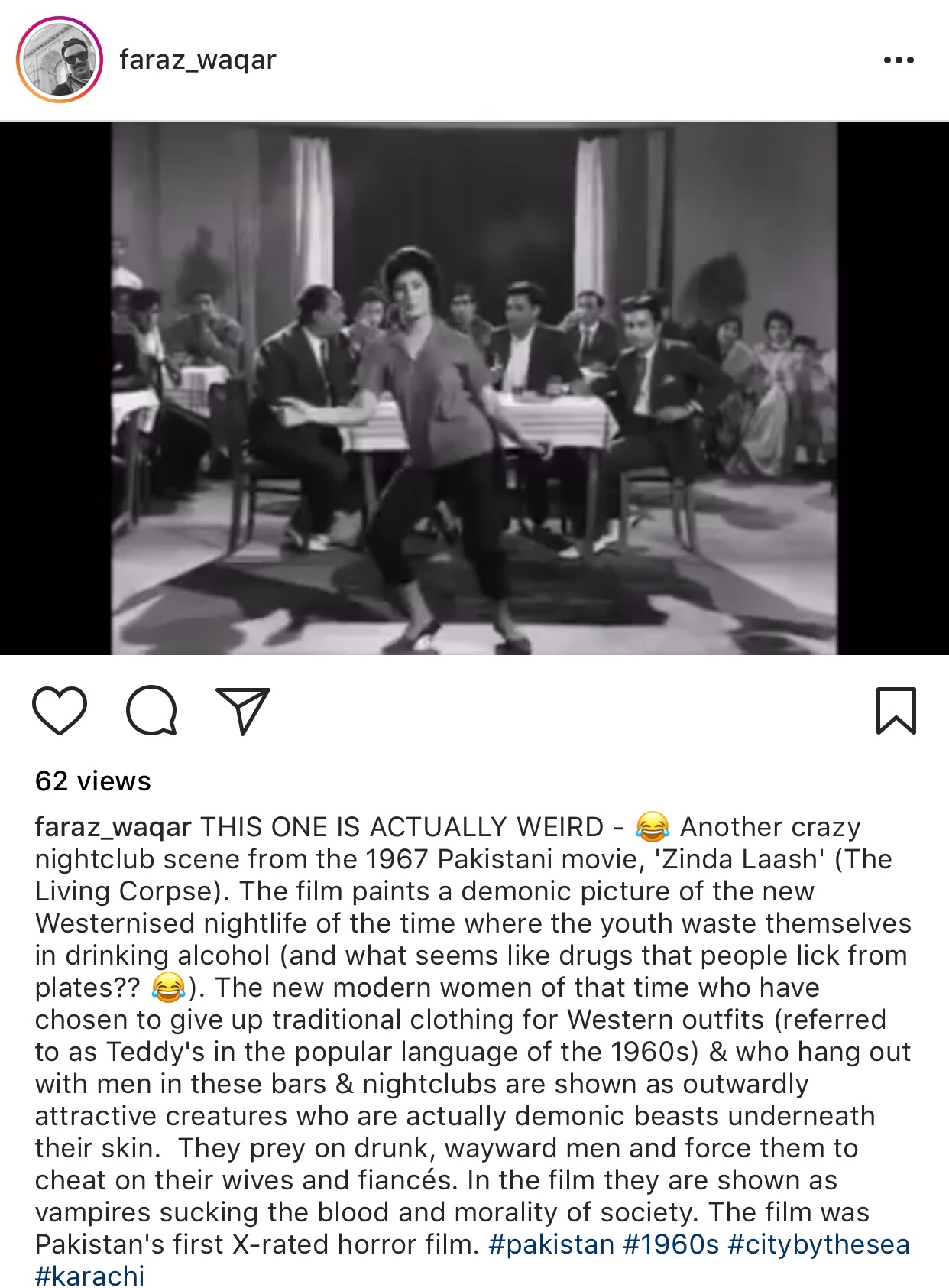
The Bokhari Brothers and Lionell Fielden

December 25, 2016
This summer on a visit to the
grave of Patras Bokhari, I spent some quite time at his grave.  I
reflected about the lives of two Bokhari brothers and an amazing character of his
times Lionell Fielden.  This piece was the outcome of that exercise. 
 Good time to pay tribute on the death anniversary month of December of AS
Bokhari and birth anniversary month of January of ZA Bokhari. 
Hamid
Bokhari
Brothers
Hamid
Hussain
Ahmed
Shah Bokhari and Zulfiqar Ali Bokhari were scions of Peshawar.  Both
brothers were very talented, had multiple interests and excelled in their
chosen fields.  Bokhari brothers are associated with the history of
broadcasting in India. 
Radio
service in India was started in July 1927 as a private and amateur venture when
Bombay radio station was established.  This was the birth of Indian
Broadcasting Company (IBC) about seven months after establishment of British
Broadcasting Company (BBC).  This private venture ended in a failure and
company was liquidated in 1930. 
In
August 1935, Lionell Fielden arrived in India on loan from BBC to start Indian
broadcasting.  When radio arrived in India, no one knew about the
importance of this new invention. In 1935, Marconi Company offered a radio
transmitter and fifty radio sets to Indian government but no one was interested
in it.  Central government asked provincial governments if anyone was
interested in the offer.  Governor of North West Frontier Province (N.W.F.P.)
Sir Ralph Griffith accepted the offer.  He chose a young recent Oxford
graduate Muhammad Aslam Khan Khattak in-charge of this project.  Later,
Fielden organized Indian broadcasting on a professional level and soon radio
became the main instrument of information and entertainment.

Ahmed
Shah Bokhari (25 October 1898 – 05 December 1958)
Ahmad
Shah Bokhari was educationist, writer, broadcaster and a diplomat.  He was
born in a lower middle class family in Peshawar city. He completed his early education
in Peshawar.  He learned English by reading old English newspapers
collected from soldiers stationed in Peshawar.  After completing his
maters in English from prestigious Government College Lahore, he started
teaching at his alma mater. He went to Cambridge and returned back to
Government College.  In 1936, he was offered the job of Deputy Controller
Broadcasting of All India Radio in New Delhi.  In 1940, he became the
Controller (in 1943, the designation was changed to Director General) and served
at this post until 1947.  In Delhi, towering personalities of the time
were frequent visitors to his house.  Ahmed’s guest list included
Jawaharlal Nehru, Sarojini Naidu, Abul Kalam Azad, Zakir Hussain and Faiz Ahmad
Faiz.  In 1947, he became principal of Government College Lahore. His
residence in Lahore attracted famous writers and poets. M.D. Taseer, Imtiaz Ali
Taj, Sufi Tabassum and Ghulam Abbas frequently visited his house in
Lahore.  In 1951, he was appointed Pakistan’s permanent representative to
United Nations (UN). In 1954, he became Under Secretary Information at UN and
served at this position until his death in 1958. His simple small house in New
York was full of books and he had a wide circle of friends from diplomatic and
literary society. 

Ahmed
Shah and American poet Robert Frost (Picture from Website about Ahmad Shah
Bokhari. 
http://patrasbokhari.com
He
is buried at Kensico cemetery at Valhalla New York.  This summer when I
visited his grave, I was gratified that he could not be buried at a better
place.  He is buried at a picture perfect serene place and surrounded by
graves of numerous artists.  Many stage, television and film actors, opera
singers, writers and poets including famous composer Sergei Rachmaninoff are buried
at Kensico cemetery. On his tombstone are inscribed words of his American poet
friend Robert Frost, “Nature within her innermost self divides to trouble
man with having to take sides from iron tools and weapons’
.

A.S.
Bokhari’s grave at Kensico cemetery New York.  Photograph by Hamid
Hussain, 14 August 2016.
He
wrote Urdu prose with pen name of Patras Bokhari and is known by his pen
name.  He published a small collection of short stories but it was a
masterpiece and gave him a place in the ranks of famous Urdu writers.
Zulfiqar
Ali Bokhari  (01 January 1904 – 12 July 1975)
Zulfiqar
Ali Bokhari popularly known as Z. A. Bokhari was younger brother of Ahmad
Shah.  He was the rebellious one and didn’t attend college.  He
completed oriental courses of munshi fazil and adeeb alim
He was employed in the office of board of examiners in oriental languages of
General Staff branch at army headquarter at Simla. Board of examiners evaluated
British officers who completed native language courses.  In Simla, Bokhari
became friend of ADC to Governor of Punjab.  When Lionell Fielden came to
India to start broadcasting, this ADC referred Bokhari to him.  Lionell
appointed him assistant station director at Delhi. In 1937, Bokhari went to
England for training.  In 1940 Malcolm Darling of BBC hired Bokhari at the
recommendation of Fielden.  Bokhari was in charge of Indian section of the
eastern service of BBC in London.  He covered Second World War in Europe
and returned to India in December 1944 to become station director at
Calcutta.  After independence in 1947, he served a long career in
broadcasting in Pakistan.  He served as director general of Radio
Pakistan.  In 1967 he became general manager of Karachi television
station. He was also a poet and also wrote a book on classical music. 

Z.
A. Bokhari as BBC Home Guards at Bedford College, 1941. (Picture from Imperial
War Museum).
Lionell
Fielden had great influence on the lives of both brothers.  Fielden is an amazing
character for his time period.  He was member of British aristocracy, a
relative of Viceroy Lord Linlithgow and personal friend of British Prime
Minister Stanley Baldwin.  He was raised on a Surrey family estate and
educated at Eaton but became rebel at a very early age. He was closely
associated with E. M. Forster and J. R. Ackerly.  His experience in First
World War when he fought at Gallipoli made lasting impression on him.  He
was intelligent enough to see the gross negligence of military high command and
developed disdain for authority.  He passed the civil service examination
but was so irked by his interview at Foreign Office that he denounced the
Balfour Declaration and told his interviewers that Britain had sold out the
Palestinian Arabs to Jews.  In 1927, he landed at BBC when it was
established.  In 1935, he came to India on loan from BBC to start
broadcasting service in India.  He was an outsider and frequently clashed
with authority.  He settled in Italy where he was involved in renovating
old buildings damaged during Second World War.  He died in 1974 in Italy.
There
was lot of speculation about relationship between Lionell Fielden and his young
Indian protégés.  The relationship was not a normal superior and
subordinate or even a friend.  Lionell was a homosexual and though he
admitted this fact later in his memoirs, there was enough evidence from his
behavior that this subject was talk of social circles in India and
London.  Lionell was member of a group of young British men and women disillusioned
with the slaughter of First World War.  Many were writers, intellectuals
and a number of these men and women were homosexuals.  It is an open
question whether they were naturally inclined or this was one of the symptoms
of rebellion against an established order.  Official British circles and
traditional aristocratic elites called these folks having ‘loose morals’. 
In India, Indian police special branch was keeping a tab on Fielden.  One
police official brought some intercepted letters to show to Fielden what was
being talked about him.  True to his character, Fielden refused to look at
the letters stating that it was inappropriate to look at private
correspondence.
It
is important to understand social conditions of India in 1930s to comprehend
why Fielden generated controversy both among British and Indians.  British
interaction with Indians was mainly in official context.  There was not
much social mingling between two communities although there may be few
exceptions.  British would unwind only in the presence of fellow
countrymen at exclusive civil and military clubs.  Fielden crashed on the
scene breaking all the rules.  He avoided British social circle and
interacted with Indians of different social backgrounds.  Indians had not
interacted with British in such informal, friendly and relaxed
environment.  Many Indians developed genuine respect and admiration for
Fielden even if there was no sexual aspect to the relations. Official British
circle was aghast at Fielden’s non-adherence to social norms as well as
personal indiscretions. 
Fielden
also faced criticism from Indian circles.  Fielden had personal relations
with Congress leaders and polarized politics of the time meant that some Muslim
League leaders were critical of his work.  Fielden had surrounded himself
with newly educated urban Muslim youth.  These young men saw Persianized
manners of old Mughal court and Urdu as a refined cultural heritage.  This
prominence of Urdu in emerging broadcasting arena aroused anger of Hindu
nationalists who saw old Indian Hindu cultural heritage as true beacon for
emerging nationalist India.  They constantly criticized Fielden for giving
preference to Urdu as the expense of old Sanskrit arts and literature.
Fielden’s five year stay in India was full of all these clashes at different
levels.
Z.A.
Bokhari’s own memoirs in Urdu provide enough evidence that he had special
relationship with Fielden.  Bokhari was close to Fielden and took care of
his personal chores and in charge of his household.  Bokhari went to meet
Fielden at Cecil Hotel in Delhi for the interview. He narrates his first
meeting with Fielden that when he entered the room, Fielden was naked only in
his underwear.  Fielden told him that it was too hot and that he should
also take off his coat. Bokhari states that ‘this meeting was like love on
first sight’ and that ‘after few minutes it felt like we knew each other for
long period of time’. Fielden hired Z.A. Bokhari but Bokhari’s boss a Colonel
at army headquarters at Simla refused to let him go to Delhi.  Fielden
wrote to Viceroy Lord Willington to remove all hurdles and brought Bokhari to
Delhi.  Fielden then took Bokhari to his house and summoned his own tailor
to measure Bokhari and ordered six suits for him.  When Bokhari went to
London for training, Fielden’s tailor in London stitched Bokhari’s suits. 
Bokhari describes Fielden’s dress on his first day of work ‘silk pants, half
sleeve open collar see through shirt’.  Bokhari was seriously injured
after a fall in a blind well.  When he woke up, he saw his room filled
with flowers and Fielden crying.  Later, Fielden took him to the hill
station of Almora to recuperate where they spent a lot of time together and in
the company of famous scientist Boshi Sen.  Bokhari writes about that time
together at Almora that ‘my heart was attracted towards Fielden like a
magnet’.  Fielden had gout problem and Bokhari narrates that while in
London at one time Fielden suggested to him that ‘let’s resign and settle down
in an Italian city’.  

Fielden
hired a number of young and handsome Indian men in their early twenties when he
came to India to start broadcasting service.  Fielden in his autobiography
recounts the disappointment when faced with choosing his personal bearer from
two old men.  He wrote, ‘Had I not pictured to myself something so vastly
different?  Slim, intelligent youth, with eyes of gazelles, worshipping me
with silence but so effective service’? In his memoirs, Z.A. Bokhari describes
the physical features of his colleagues.  He calls Sajjad Sarwar Niazi
‘dashing’ and goes on to describe him having ‘fair skin, sharp features and
thin rose petal like lips’.  Israr-ul-Haq Mejaz is described as having
‘long black hair, salty complexion and thin waist’.  Agha Ashraf (grandson
of famous Urdu writer Maulana Muhammad Hussain Azad) had ‘salty complexion and
white teeth that were blinding the vision’. These are unusual expressions for
male colleagues and suggest special attraction. 

Mohammad
Aslam Khan Khattak who was in-charge of first radio transmission project in
N.W.F.P. narrated in his memoirs that he was offered the post of deputy
director general in Delhi under Fielden.  He states that ‘I went to Delhi
for a look and found the people, who had taken over broadcasting, nauseating’. 
He didn’t elaborate what he found ‘nauseating’ but he may be referring to
twenty something youths in matching silk suits surrounding Fielden. 
Khattak instead opted for Indian foreign commercial service.

Z.A.
Bokhari with Risaldar Major Muhammad Ashraf Khan IOM, IDSM of RIASC  in
England 1940
A.S.
Bokhari was an educationalist, broadcaster, writer and diplomat.  Z. A.
Bokhari was an amateur theatre actor, poet and broadcaster. Bokhari brothers
were a very talented duo who excelled in their chosen fields and left a mark on
the pages of history of India and Pakistan.
Sources:
  • Z. A.
    Bokhari.  Sarguzhust (in Urdu). English translation of
    extracts used in the article is by the author.
  • Khalid
    Ahmed.  Pakistan Behind the Ideological Mask (Lahore:
    Vanguard), 2001
  • Raza
    Rumi.  Reclaiming the Legacy of ZA Bokhari.  The Friday Times,
    14 October 2014
  • Joselyn
    Zivin.  Bent: A Colonial Subversive and Indian Broadcasting.  Past
    and Present
    , No: 162 (February 1999), pp. 195-220
  • Lionell
    Fielden.  Natural Bent (London: Andre Deutsch), 1960
  • Kanchan
    Kumar.  Mixed Signals.  Economic and Political Weekly,
    May 31, 2003
  • Mohammad
    Aslam Khan Khattak.  A Pathan Odyssey (Karachi: Oxford
    University Press, 2004), p. 32)
Hamid
Hussain

December 23, 2016

PIA’s Black Goat Sacrifice

Genesis 8:21. And the LORD smelled a sweet smell; and the LORD said in his heart, I will not again curse the ground any more for man’s sake; for the imagination of man’s heart is evil from his youth; neither will I again smite any more every thing living, as I have done.

A few days ago a PIA ATR-42 aircraft crashed while on a routine flight; as a result, all ATR aircraft were grounded while PIA carried out some tests and made sure they were good to fly. Having conducted whatever testing PIA engineering considered necessary (and I have no doubt they did whatever testing is standard in the industry; they are a well established airline with many competent engineers), they resumed flight operations. But the engineering department at Islamabad international airport felt they should take some extra precautions before they sent off their first flight. They decided to sacrifice a black goat to ask for Allah’s blessings on this occasion. Pictures of this (necessarily blood-stained) ceremony went viral on the internet and excited considerable interest.

Westernized Pakistanis (and Indians for that matter) were almost universally derisive about the event. Some common themes included:

1. That this is rank superstition and shows us in a bad light, as it seems that PIA is relying on superstitious mumbo-jumbo instead of good engineering practice. 
2. That while quasi-religious or religious rituals (even this one) maybe OK for someone to do in his or her private life, a state owned corporation should not be indulging in them. 
3. That it looks gross and unsanitary and is a horrible image to put out there. 
And so on. 
There was also some comment from orthodox Muslims saying that sacrificing a black goat is “not our tradition” and is a form of “bidaa” (innovation); there was some discussion that this is a Hindu practice and not “really Islamic”
I had the following thoughts on this and wonder if people have any comments. 
1. We are obviously not the only people who perform some rituals to obtain divine favor, good luck or simply honor tradition, on such occasions. As the following pictures make clear, this kind of thing is nearly universal and most societies seem to have some rituals that are performed when any new or hazardous undertaking is begun. Airlines may not always perform any complicated ritual when clearing a fleet for operations, but it all seems to depend on how routine you feel your undertaking happens to be. In this case, PIA seems to have felt it was important enough. You can disagree with that, but it is not totally outside the realm of normal human practice to ask for divine favor at such a time. 

2. Nor is the shedding of blood that far outside traditional practice. Mary and Joseph offered two doves (Luke 2:21-24) for the birth of the prince of peace. Muslims offer two sheep for the birth of a boy and one for a girl (Sunan Abu Dawood 2836). If the clearance of an aircraft for flight sounds a bit less significant, consider that the hadith literature includes a hadith about the holy prophet advising a man to sacrifice a sheep to help get rid of head lice (the man was also advised to shave his head, so the sheep was NOT the only intervention) (Sahih Bokhari 71:604) . And of course, we sacrifice millions of animals on Eid every year. And of course, there are goat sacrifices (and chickens, and other animals) in Shaktist Hinduism and the horse sacrifice was a famous part of ancient Indo-European religion.

So, while many people may consider animal sacrifice outdated or cruel, it it neither uncommon, nor outdated, certainly not for Muslims (considering how many animals are sacrificed every year for various reasons).

3. I take it as a given that we all agree that rituals per se are an important part of any shared culture and no culture can really exist without any rituals. Whether a particular ritual is good or bad is another discussion.

4. So I propose that the opposition to this particular ritual really reflects something else about our culture. That it is not, in fact, a culture where there is wide agreement about what constitutes our culture. No culture has universal agreement on such things, and all cultures are hybrids and are constantly in transition, but ours is perhaps more so than most. Are we Indians? Ex-Hindus who retain some Hindu features? Arabs (or rather, neo-Arabs)? Westerners? Something else entirely?

When the PIA engineers sacrificed this goat, they thought they were doing something well established and even standard in our culture: i.e. sacrificing a black goat to ward off bad luck. They felt so easy about this that they did it in public and probably made videos and took pictures as they did it with no fear that they will be ridiculed and insulted for doing so. They turned out to be wrong (i.e. they were widely ridiculed). Now, there can be no doubt about the fact that many people in Pakistan do think sacrificing a black goat to ward off evil is not a bad idea. The ex-president of Pakistan, Asif Ali Zardari, is said to have sacrificed one every day of his presidency (and it worked, he completed his term). But equally clearly, there are many neo-orthodox Muslims who are convinced that his is, in its origins, a Hindu ritual (they may be right). These orthodox Muslims clearly do not approve of it. And then there are many Westernized Pakistanis (whether “moderate Muslim”, secretly atheist, semi-secretly agnostic or vigorously rationalist) who find this superstitious, distasteful and even laughable.

I am not too concerned in this post with “who is right”, but mostly with just bringing it up that we have very sharp divisions on this topic. If President Obama pardons a Turkey or Queen Elizabeth smashes a bottle on the Royal Navy’s few remaining ships, almost nobody finds it objectionable. Even rationalists will go along with it as a “harmless ritual”. Our culture is more conflicted. And when it comes to animal sacrifice, things start to get even more complicated. In a Muslim country, this is not yet a topic on which there can be strong public disapproval of ALL animal sacrifice as such; the practice is too firmly supported by classical Islam for anyone to risk a blasphemy or apostasy charge by going too far in their opposition, whatever their private feelings. But it is increasingly likely that animal sacrifices outside of Aqeeqa and Eid (two occasions on which the classical Islamic position is crystal clear, so no opposition can go too far) will become increasingly controversial. Those (like sacrificing a black goat) that can be accused of pagan roots will become less and less likely in official settings, though private use will likely continue for generations.
What do you think?

Brown Pundits