Who is Malik Riaz Hussain?

After seven years of brutal struggle the Red Mosque is resurgent again and General Musharraf, the man who had been instrumental in its (temporary) destruction is in a soft prison.

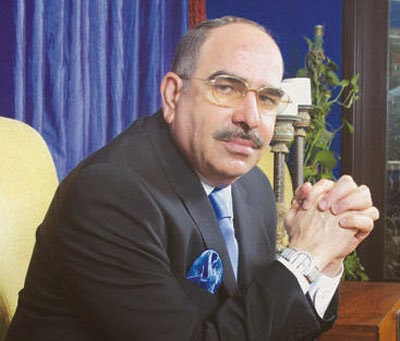
The New York Times looks into the background of a tycoon by the name of Malik Riaz Hussain who has donated millions to bring back the red mosque to its original glory. When the question was raised about his motivations, he had this to say:“I have huge interests in Islamabad and Rawalpindi,” the businessman,
who has close ties to the military, told The New York Times in a 2010
interview. “Bad law and order is bad for my business.”
……
“If
Pakistan truly has freedom of expression, then we should be able to
express our love for our heroes,” said Mr. Aziz,
a willowy, bespectacled
man with a wiry gray beard, in a room with the sign “Martyr Osama bin
Laden Library” on the door. “And we love Osama bin Laden.”

But
the Red Mosque’s resurgence is about more than publicity stunts.
As a
jihadi brand, it has burnished its credentials as a citadel of Islamist
revolt. And, just as they did seven years ago, the mosque’s clerics are
exploiting the government’s failure to offer an alternative vision of
Pakistan’s future.


Today,
Mr. Aziz delivers thunderous Friday sermons from the lavishly
refurbished Red Mosque, a stone’s throw from the Parliament building.
And he oversees a network of madrasas that teach 5,000 students.

Only seven years ago, the mosque was in the throes of a pitched battle
against the authorities. Mr. Aziz tried to escape the siege under the
cover of a burqa, a purse clutched in his gloved hands, but was captured
and paraded by the intelligence services on national television, still
wearing the black cloak.

The cleric’s brother, Abdul Rashid
Ghazi, and his elderly mother died in the firefight. After the siege was
over, Mr. Aziz was charged with murder, abduction, arson and terrorism.
Yet within a couple of years, the mosque and Mr. Aziz were back in
business.

Malik Riaz Hussain, a sympathetic property tycoon,
provided a temporary home for hundreds of madrasa students and spent at
least $150,000 on refurbishing the bullet-pocked mosque. He attributed
his generosity to pragmatism rather than to religious conviction.

“I have huge interests in Islamabad and Rawalpindi,” the businessman,
who has close ties to the military, told The New York Times in a 2010
interview. “Bad law and order is bad for my business.”

The city
provided land worth millions of dollars in central Islamabad for the
rebuilding of Jamia Hafsa, a women’s madrasa that was bulldozed after
the 2007 siege. The madrasa, whose construction is not complete, is home
to the Osama bin Laden library.

But it is the courts that have
been most indulgent toward Mr. Aziz and his followers. Over the past
year, judges have dismissed all of the 27 criminal charges against Mr.
Aziz, who at times has used the courtroom as a pulpit to call for the
imposition of Shariah law.

Instead, the court’s attention has
mostly focused on Gen. Pervez Musharraf, Pakistan’s former military
ruler. A judicial inquest determined that General Musharraf, not Mr.
Aziz, was responsible for the deaths during the siege of the Red Mosque,
even though armed jihadis from banned militant groups had joined the
students inside.

In October, a senior judge, prompted by Mr.
Aziz’s lawyers, charged General Musharraf for his role in the siege and
placed him under house arrest. In recent weeks the Martyrs Foundation, a
group that represents the families of students who died in the siege,
petitioned the Supreme Court to prevent General Musharraf from leaving
Pakistan until the completion of his treason trial, underway now.

The police, however, are more skeptical of Mr. Aziz. In a
recent court hearing, the Islamabad police chief argued that the
cleric’s name should remain on an official schedule of suspected
terrorists for his longstanding links to Sipah-e-Sahaba Pakistan, a
sectarian militant group known for violence against Shiite Muslims.

At the Bin Laden library, Mr. Aziz offered a qualified denunciation of
violence — it was justified only in self-defense, he said — and denied
accusations that his reverential gesture toward the onetime enemy of
America was a publicity stunt.

“A majority of Pakistani people love Osama bin Laden,” he said.

Opinion polls do not support that assertion, but it is true that many
Pakistanis — torn among Taliban violence, anger toward America and
continued uncertainty about the place of Islam — harbor ambiguous
feelings toward Bin Laden.

At Jamia
Hafsa, Mr. Aziz has named a dispensary after Aafia Siddiqui, a Pakistani
woman who is serving an 86-year prison term in the United States on
charges of attempting to kill an American soldier and an F.B.I. official
in Afghanistan.

Whatever its direct ties to militancy, the Red
Mosque remains a powerful battle cry for extremists. The nominal leader
of Al Qaeda, Ayman al-Zawahri, has issued statements in support of the
Red Mosque, while former students have carried out bomb attacks on
Westerners and Pakistanis.

The Red Mosque has also staged a
comeback on the Internet: Its Facebook page is named after the 313
Brigade, a fearsome band of armed female students
that conducted raids
on suspected brothels and video stores in Islamabad in 2007, in the
months before the siege.

Early this
year, the government inducted Mr. Aziz into the talks with the Taliban,
hoping to use him as a militant interlocutor. But in February the cleric
abandoned the process. No talks are possible, he said at a news
conference, before Shariah law replaces Pakistan’s Constitution.

……
Link: http://www.nytimes.com/2014/05/07/world/asia/paying-homage-to-bin-laden-mosque-re-emerges-as-bastion-of-militancy.html
…….
regards
Why Hamid Mir was shot..

This video will give you an idea

It is about 2 years old. On this particular issue, he has been (surprisingly) vocal from day one. For that he should get credit. A lot of people are digging up old segments in which Hamid Mir professes the kind of Paknationalist idiocies and Islamist fantasies that are a staple of mainstream media in Pakistan. And yes, he is certainly capable of those. He is, after all, a mainstream Pakistani journalist. Others have pointed out that his behavior within the GEO organization was rather haughty and he did not treat his colleagues and staff in a nice manner (for example, a journalist complained that she was told by a flunkey to leave the elevator because “sahib is coming”…it was Hamid Mir coming to work). That may be true, I have no idea. But he has certainly tried to publicize the Balochistan issue when no one else in the electronic media was touching it. And for that, he may have been shot.
It is still possible he was shot by someone else. Possible, but hardly likely.

His own article about this shooting:

Hamid Mir
Monday, April 28, 2014

Karachi is the largest city of Pakistan but some consider it the most dangerous city as well. When Geo — the biggest Pakistani TV channel — was launched in 2002 from Karachi, I stayed there for three months for training.
During the training, one morning a powerful bombing took place near the US Consulate while I was busy in my training session at a 5-Star hotel not far from the consulate. The explosion was so powerful that many pieces of broken glass fell on me. The deafening sound of the blast gripped me and many of my colleagues. We completed our training in this very incomprehensible fear.
When I returned to the capital as Bureau Chief of Geo TV, high-ups in the government followed me and tried to instill in my mind that ‘Geo TV is an anti-state channel and that a patriotic journalist like me should stay away from it.’
My response was very simple: “This country is run by an army chief. If I am shown the proof that Geo TV is anti-state, I would quit the channel.”No proof was shown; however, the torch-bearers of patriotism got angry with me.
In Pakistan, the start of private electronic media was not so pleasant. The government in power wanted to keep the channels under its thumb in order to get results of October 2002 general elections of its liking. On the one hand, to please the West, the Musharraf government initiated the farce of giving freedom to the media, while on the other hand dangers for media persons started increasing.
The media persons were the most favourite target of extremists as well as the secret agencies. Some journalists became spokespersons for secret agencies in the name of patriotism. Some started supporting the extremists in the name of Islam. Some of them were caught in the cobweb of nationalists.
Space started narrowing for media persons in the country conceived by Quaid-i-Azam. Killing and kidnapping of journalists became the order of the day and the media industry started losing the sense of protection.
Gen Pervez Musharraf’s emergency of 2007 divided the media in two distinct groups. One group became a plaything in the hands of powerful secret agencies. The other group that stuck to the right was dubbed ‘traitor and anti-state’. This division was not restricted to the media alone, it made its appearance among the politicians too.
When on the orders of the Supreme Court, the case of high treason for violation of the Constitution was initiated against Pervez Musharraf, this division assumed the form of confrontation. Musharraf’s trial started sending many important national issues to the backburner. The biggest problem Pakistan faces today is terrorism. Some said if drone attacks stop, terrorism will come to an end. However, terrorism persisted even after no drone struck for 100 days. Some said if talks with the Taliban are held, everything will be hunky dory. Drones stopped and negotiations with the Taliban also started, but still terrorism continued unabated. The Geo TV arranged a special discussion on this vital issue.
I proceeded to Karachi by air on the noon of 19 April. I have conducted many programmes in Karachi but I must admit that my every journey to Karachi started with an unspecified fear. It is very easy in Karachi for the sleuths of secret agencies to eliminate unwanted media persons. However, if a journalist like me shies away from going to Karachi due to this lurking fear, how can I claim to represent the popular sentiments? These very thoughts encouraged me to overcome the old fear with respect to Karachi and I decided to go on with the visit.
I asked my wife to sacrifice a black goat, as weak media persons like me consider such a sacrifice sufficient for their safety. After this sacrifice, I proceeded to Karachi on Saturday morning. As soon as I landed at the Karachi Airport, I received a message from my co-producer that Asad Umar of PTI who had to represent his party in tomorrow’s special discussion had regretted that he would not be able to attend. I asked the co-producer to invite PTI leader Shah Farman from Peshawar.
Engrossed in these thoughts I came out of the airport and got into the car. I asked the driver about the security guard. The driver told me that he was standing outside the airport. After a short while the security guard also got into the car which came out of the airport. Once again, I started sending an SMS to my co-producer asking the time of the next day’s meeting.
Meanwhile, I was discomfited to hear firing shots. When I saw the right window of the car smashing, I realized I was the target. A bullet had already pierced my shoulder. I asked the driver to look sharp. But we were caught in a jungle of traffic.
Firing continued and bullets were penetrating my legs. When the motorcyclist and car drivers realised that a car was being fired upon, they started making way for us. Firing still continued and I felt another bullet piercing the left of my waist. I started reciting the Kalima Tayyaba. The attackers were still following our car and went on firing without a gap. I started telling my colleagues in the office that I am being shot at. I asked the driver to rush to a hospital as two more bullets had pierced my belly. Wading through a flood of traffic, hounded by the attackers and myself perspiring profusely, we somehow were able to reach the Emergency of the Aga Khan Hospital. Darkness began to appear before my eyes. I mustered the courage to come out of the car and fell on a stretcher. Then I lost consciousness and do not know what happened.
On the third day of the attack, I regained consciousness and doctors began to disclose gradually that I had received six bullets but was safe. At that time, I was thinking about the animosity the attackers could have had against me. Then I concluded that the culprit was not the attacker but the one who had planned the attack.
Faces of many ‘planners’ flashed before my eyes. I could ignite new pits of fire by narrating incidents taking place within the first two weeks of April alone, and this could ignite a horrible fire and bring more destruction. Then I thought that in that case there would be no difference between me and a terrorist. Those who dubbed Geo TV traitor in 2002 are once again dubbing it traitor today. They neither had any proof then, nor do they have now. I leave all this to my Allah Almighty and to the courts.
I only want to share my feelings with you. I wish to tell you about so many ups and downs of the acute pain during the seven days of stay at the Aga Khan Hospital. But one thing is certain: the excruciating pain I passed through has only served to consolidate my faith, my courage and my determination. I express my profound thanks to all those who stood by me in this hour of trial and prayed for my health. I am feeling great pain even now as I write these lines. I am bearing this pain only to promise you that I will use the cuts made by six bullets in my body to illuminate the nation to dissipate the darkness of illiteracy.

The six bullets and seven nights spent at the Aga Khan Hospital have convinced me that it is not the common populace of the country that in fact wields the real power and rights. It is someone else. The destination of pure independence is still far away. Disappointment is a sin. The last to laugh will be the common man. We still need lots of sacrifices to reach that destination.

Deep State Fatwa: shut down Geo TV (or else)

Who is the Boss? After all these years (decades) and all the going back and forth there is not an iota of doubt. Aam aadmi-s (even elites such as Hamid Mir) may say whatever they want to say, provided the Deep State does not mind what they say.

And while we continue to chatter about foolish nothings, let us also drop the pretense of some strange, rogue element being responsible for taking care of Obama* Osama, shooting down Mumbai etc. An all powerful deep-state will not tolerate a single rogue element, let alone remain ignorant about multi-million dollar operations which required years of planning. Hafeez Saeed may be farting in your general direction but he is just a front-man in this scheme of things.
…….


Pakistan’s
army demanded the closure of the country’s most popular television
channel on Tuesday following allegations that the military’s main
intelligence agency had ordered an assassination attempt on its star
journalist.

In a three-page petition to Pakistan’s broadcast
regulator the ministry of defence accused Geo News of mounting a
“vicious campaign” to libel the Inter-Services Intelligence Directorate
(ISI) and called for its operating license to be revoked. “The telecast
in question was aimed at undermining the integrity and tarnishing the
image of state institution and its officers and falsely linking it with
terrorist outfits,” the notice said.


The confrontation between the
country’s most powerful institution and its biggest media group was
triggered on Saturday when Hamid Mir, a household-name presenter, was
severely injured when gunmen opened fire on his vehicle as he was
travelling along one of Karachi’s busiest thoroughfares.

Even as
he underwent emergency surgery Geo News broadcast non-stop claims,
relayed by Mir’s brother, that the ISI and its director general
Zaheer-ul-Islam should be held responsible for the attempt to kill him.

Mir
said he had feared he would be targeted because of his criticism of the
army over its interference in politics and the brutal counterinsurgency
being waged in the troubled province of Balochistan.

Outspoken
journalists run great risks in Pakistan, particularly from militants who
have targeted media workers who dare to criticise the Taliban or
highlight deadly sectarian attacks on religious minorities.

Raza
Rumi, a prominent liberal analyst, fled the country after he survived a
gun attack on his car in Lahore that killed his driver in late March.

Recently
Mir had demanded the high treason trial of former military ruler Pervez
Musharraf be expanded to include other people involved in ordering
emergency rule in 2007. The trial, which has dragged on since December,
has become an area of tense disagreement between the government which
initiated it and the military which wants Musharraf to be allowed to
leave the country.

In a public show of support on Monday Nawaz
Sharif, the prime minister, visited Mir in hospital and promised a
thorough investigation into the assassination attempt.

The ISI has
a reputation for being an all-powerful “state within a state” and has
in the past been accused of various misdeeds, including the killing of
journalist Saleem Shahzad in 2011 who had been investigating the
penetration of al-Qaida into the army.

But never before have such
serious claims of criminality been made by a such a prominent figure as
Mir, a widely admired journalist whose night time show attracts front
rank politicians as guests and is watched by millions. Although Geo
later insisted it respected the military and had reported the army’s
denials alongside Mir’s claims, the affair has caused uproar within army
ranks.

Any move to put out of business the most prominent of all
the private channels will be met with alarm by supporters of greater
democracy in the country.

The Committee to Protect Journalists
(CPJ) said Pakistan’s broadcasting regulator should not act on the
“spurious complaint” and called on the country’s security services “to
recognize the critical role of the media and exercise tolerance and
maturity”.
“The ISI is free to rebut allegations in the media but
should not try to censor coverage,” said Bob Dietz, the CPJ’s Asia
programme coordinator. 

……
Link: http://www.theguardian.com/world/2014/apr/23/pakistan-army-demands-tv-station-closure-assassination
…..
regards
*acknowledgement: Asok

Jamia Hafsa (Lal Masjid) builds a new shrine

We all need heroes…even if they are shipped in from foreign shores. 
Also it is an incontrovertible fact that one man’s terrorist is another (wo)man’s freedom fighter. 

Finally when a legend is born, it is not possible to kill it by getting rid of a mere man, that golden voice will continue to speak (and command) from beyond the grave and it will be resounding deep in our (faithful) hearts.

Jamia Hafsa, a religious school for women in the Pakistani
capital Islamabad connected to the notorious Lal Masjid
has renamed its
library in honour of slain al Qaeda leader Osama bin Laden.

The
seminary is run by controversial hardline cleric Maulana Abdul Aziz,
the imam of the city’s Lal Masjid (Red Mosque), once infamous as a
hideout for hardliners with alleged militant links.

Now the Jamia Hafsa seminary connected to it has
named its small library, stocking Islamic texts, in honour of bin Laden,
who masterminded the 9/11 attacks in the United States.

“It is
true that we have named the library after Osama bin Laden,” a source
told AFP Thursday, speaking on condition of anonymity. “He might be a terrorist for others but we do not consider him as a terrorist. For us he was a hero of Islam.”

A small printed sign stuck over the library door gives bin Laden’s name and refers to him as a “martyr.”
….
Link: http://www.dawn.com/news/1100526/lal-masjid-names-library-after-osama-bin-laden
….
regards

Zulfi Bhutto of Pakistan


Someone on twitter suggested collecting stories of where you were when you heard the news of Bhutto’s execution. I hope others will post their stories below, I have a couple..and some random comments:

I was at home because our board exams had been postponed in anticipation of the hanging. I woke up to see Ami (my mother) crying…she just said “they have hanged Bhutto”. Everyone was stunned. All of Lahore seemed so quiet. We went to our uncle’s place and there was a Sui Gas (Natural gas) pipeline near his house (it was one of those things where a big pipeline comes out of the ground and goes back in and there is a fence around it, they are all over the place in Pakistan and I am sure elsewhere). I remember staring at it all day and imagining ways of blowing it up. Of course I did nothing of the sort. But two weeks later we were back in the hostel and studying late at night for our much-delayed board exams. I was with a like-minded friend and we got into some sort of “political discussion” with two boys who were Zia supporters. Upset at some perceived insult to the memory of the late chairman we went and got rooh afza (a red colored drink..meant to evoke blood) in something and threw it at them with the shout of “Chairman key naam per” (in the name of the chairman). That was the sum total of our protest…


A few months before, we happened to see Bhutto in Kot Lakhpat prison. We had gone there to meet my uncle (who was locked up there for trying to launch an earlier coup against Bhutto!) and Bhutto and family and his lawyer Yahya Bakhtyar happened to be in the entrance corridor of the prison. My father stepped foward said salam and Bhutto smiled and salaamed back. I dont remember if there was any other conversation. But he looked over us and nodded and smiled. My mother was anti-Bhutto those days (because he had put her brother in jail) but for several minutes after that she was just speechless. His charisma was very striking. I have not hobnobbed with any great leaders, but Zia came to our parents day ih school and I explained our model of a nuclear power plant to him (I was president of the chemistry club and nuclear power was the patriotic thing)  and he was the furthest thing from “charisma”. Bhutto on the other hand had an absolutely electric presence. I have no clue why or how. My father, who was pro-Bhutto, had a field day with my mother’s having succumbed so completely to his charm with just one smile and Salam.

A friend from south Punjab wrote this comment about his memory: That was very sad day, very sad. I was in school in Bahawal Nagar. I remember my dad was going to for a wedding but he returned home, about half an hour after he left home. He said something is not right, there is something very bad in atmosphere, he noticed movements of army in the town. …….. When the news came out, I saw women wailing on the streets, literally like someone close, a brother, father or son had died. People were so sad, they cancelled any joyful activity. That day in Bahawal Nagar I hardly saw any eye without tears. I did not understand well enough then, but now I know how much he was genuinely loved by people, poor people whom he gave recognition, a voice, an identity.

Another friend from Lahore had this to say: Hero for some in Punjab and Sindh but villain for all Balouch & Bengal, he is the person who declared Ahmadis a minority, murdered political workers in Balochistan, ordered ban on Alcohol, opium & Bhang and helped establish control of organisations like Jamaat Islami supported JTI in educational institutions, the list is very long.

After the above comment, I thought one could add the fact that Bhutto was the big daddy of both the Kashmir war of 1965 (and therefore of the “hard separation” of pakistan and India that only became fact after that, and of the later Kashmir Jihad) and the Afghan Jihad (not called Jihad back then…the CIA and ISI came up with that term later…at the time it was just a Paknationalist operation against Afghanistan run by the “Afghan cell” that recruited such luminaries as Islamist acid-thrower Gulbuddin Hikmatyar to start activities against the pro-Pakhtoonistan regime of Mohammed Daood in Afghanistan). He was also the one who put the emphasis on Pan-Islamism to compensate for the “loss” of Bangladesh and organized the “Islamic summit” in Lahore. These trends were never his sole property, but he certainly worked for all of them. I am sure there are others I am missing right now. But he was also killed by Zia, which compensates for many many crimes. Now safely dead, he is a martyr for people who are generally against all of these evil things…

In any case, the feelings he evoked in people and the kind of people he mobilized into politics are a separate issue and may still evoke a warm glow when many of his own actual choices do not. I am thinking also of the way many third world leftists felt (or can still feel) about terrible events like the Soviet revolution and the Chinese revolution and about mass murderers like Stalin and Mao who killed millions and destroyed the life and culture of so many captive nationalities…. The feelings of the admirers can be sincere and well meaning and can even evoke sympathy when the actions of the “leaders” were not at all what their distant fans imagined them to be. …I have to flesh this thought out. But this connects with the thought that in countries like Pakistan where “people’s revolution” is not even a distant possibility, the role of the “Left” is frequently positive. They stand for human rights, for protection against police brutality and high-handedness, for worker’s rights, for women’s rights, for better public education and better basic healthcare, for the rights of smaller nationalities and minority religions. They are at the forefront of efforts to support the language and culture of Pakistan’s nationalities against the imposition of Paknationalist monoculture. They do a lot of good work, especially in resisting the dominant Paknationalist cultural fascism. Suppose one could continue all that without slipping too far into higher level “class-based political analysis” and other such formulaic jokes (not an impossible task…many leftists repeat those formulas but actually work for mainstream parties and function pretty normally in mainstream “bourgeois politics”).. it would not make anyone happy, but….
Its just a thought.

Who is Mudassar Bukhari?

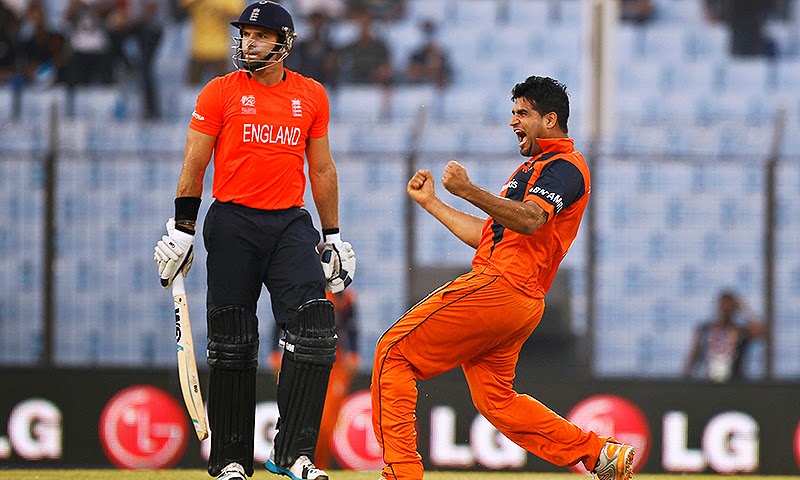
In the ongoing ICC T20 World Cup, the Netherlands just defeated England by a margin of 45 runs. England, chasing a modest total of 133 crashed out for 88 instead.  

After recovering from the initial shock, we note that a Dutchman named Mudassar Bukhari has been responsible for the devastation (3 wickets for 12 runs).


It turns out that Mudassar is actually from Pakistan (born in Gujarat in 1983).  It is surely a memorable milestone for him, but the thought arises that his home country could have also benefited from his services.

Another Pakistani player who has taken the cricketing world by storm is Imran Tahir (South Africa), who incidentally helped South Africa escape from an embarrassing defeat against…Netherlands.

This sort of “brain drain” in cricket is nothing new (Kevin Pietersen is a South African who was one of the best players ever to play for England in modern times). However in Pakistan’s case the lack of home tours (by international teams) may create a sense of despondency and encourage players to try their luck elsewhere. It would not be a good thing to lose a bunch of promising youngsters to the opposition.

regards

Sardar Ahmad

Killing (muslim) journalists is not good for propaganda but then the Taliban is not usually known for finesse.

Also the teenage soldiers cant seem to (understandably) shoot straight, the two year old baby of Ahmad did manage to survive (still in ICU).  

Perhaps one day he will try to avenge the actions of the killers of his parents and siblings….by becoming a journalist. Best wishes for the kid who (thankfully) does not understand the scope of his loss.

One more feather in the cap for the ISI (as the Afghans are calling it).

The Guardian links to the last story that Ahmad filed before he died.

Kabul zoo on Tuesday unveiled its new star attraction – Marjan
the lion,
who lived on a rooftop in the city until being rescued by animal welfare officials last year when close to death.

A
businessman in the Afghan capital had bought the male lion cub as a
status symbol for $20,000, and kept his pet on a roof terrace.

But the fast-growing cat was seriously ill when Kabul municipal officials tracked him down last October. “We
found him in a very dire condition. He was almost dead. He couldn’t
move. He couldn’t even raise his head,” vet Abdul Qadir Bahawi told AFP. “We
were not sure that he would survive. But our efforts paid off, and he
is much better. Now he loves to play with us. I think he loves us a
lot.”

Marjan is named after a famous half-blind lion who lived at Kabul zoo and became a symbol of Afghanistan’s national survival after living through coups, invasions, civil war and the hardline Taliban era, before dying in 2002. The
first Marjan, born in 1976, was blinded by a grenade thrown by a
soldier whose brother had been killed after entering his cage.


Government
inspectors took him from the owner and started an intense five-month
rehabilitation programme at the zoo to bring him back to health,
including regular massage and physiotherapy sessions.

….Afghanistan
said an attack on a Kabul hotel that left nine civilians dead,
including an AFP journalist, was planned “outside the country” in a
veiled reference to Pakistan.

The NSC said the attack on the hotel, which was carried out by four
teenage gunmen and claimed by the Taliban, was in fact the work of
“foreign intelligence services” — a phrase normally meant to mean
neighboring Pakistan.

“Witness testimony and preliminary
information analysis shows that this terrorist attack was directly
executed or carried out by foreign intelligence services outside the
country,” the council said in a statement.

“Another information
of the NDS (National Directorate of Security) shows that earlier when
one Pakistani diplomat entered the Kabul-Serena hotel to use its sport
club, he filmed the corridors of the hotel which the hotel staff raised
objections to,” it added.

The victims of Thursday’s attack included AFP
journalist Sardar Ahmad, his wife and two of their three children,
along
with another Afghan and four foreigners — two Canadians, an American
and a Paraguayan. The couple’s youngest son, two-year-old
Abozar, survived with bullet wounds to the head, chest and leg and
remained in intensive care today.

Afghanistan made a similar
allegation following a deadly restaurant bombing in Kabul in January
that killed 21 people including 13 foreigners.

regards

Carlotta Gall

She claims physical abuse by the Pakistan Special Branch (or perhaps even agents of the ISI or MI).

This may have provided her with the motivation to write her book which accuses the Army Chief (Gen Ashfaque Pervez Kayani) and ISI chief (Gen Ahmed Shuja Pasha) in Pakistan of being knowledgeable about the presence of Osama Bin Laden.

Conclusion: keep a (well connected, foreign) reporter happy or else. We can also see the example of Neville Maxwell (reporting on the Indo-China war and his comments with regards to the Henderson-Brooks report).

…..
New York Times correspondent Carlotta Gall tells ABC News she was
assaulted by plain-clothed government security agents while reporting in
Quetta, a Pakistani city near the Afghan frontier where NATO suspects
the Taliban hides its shadow government.


Akhtar Soomro, a freelance Pakistani photographer working with Gall,
was detained for five-and-a-half hours. According to Gall, the agents
broke down the door to her hotel room, after she refused to let them
enter, and began to seize her notebooks and laptop. When she tried to
stop them, she says one of the men punched her twice in the face and
head.


“I fell backwards onto a coffee table smashing the crockery,” she
recalled in a written account of the incident. “I have heavy bruising on
my arms, on my temple and my cheekbone, and swelling on my left eye and
a sprained knee.” 

Gall says the agents accused her and Soomro of trying to meet the
Taliban. They identified themselves as working for Pakistan’s Special
Branch, an undercover police department, but Gall said other local
reporters identified them as employees from one of the country’s two
powerful spy agencies: Inter-Services Intelligence or Military
Intelligence.
  

a few of the conclusions as laid out in her book

On ISI and evidence of actual culpability (still no smoking gun as we can see):
In trying to prove that the ISI knew of Bin Laden’s whereabouts and
protected him, I struggled for more than two years to piece together
something other than circumstantial evidence and suppositions from
sources with no direct knowledge.
Only one man, a former ISI chief and
retired general, Ziauddin Butt, told me that he thought Musharraf had
arranged to hide Bin Laden in Abbottabad. But he had no proof and, under
pressure, claimed in the Pakistani press that he’d been misunderstood. 

Finally, on a winter evening in 2012, I got the confirmation I was
looking for. According to one inside source, the ISI actually ran a
special desk assigned to handle Bin Laden. It was operated
independently, led by an officer who made his own decisions and did not
report to a superior. He handled only one person: Bin Laden.
I was
sitting at an outdoor cafe when I learned this, and I remember gasping,
though quietly so as not to draw attention. (Two former senior American
officials later told me that the information was consistent with their
own conclusions.) This was what Afghans knew, and Taliban fighters had
told me, but finally someone on the inside was admitting it. The desk
was wholly deniable by virtually everyone at the ISI — such is how
super secret intelligence units operate — but the top military bosses
knew about it, I was told.

On Afghanistan: When I remember the beleaguered state of Afghanistan in 2001, I marvel at
the changes the American intervention has fostered: the rebuilding, the
modernity, the bright graduates in every office. Yet after 13 years, more than
a trillion dollars spent, 120,000 foreign troops deployed at the height of the
war and tens of thousands of lives lost, Afghanistan’s predicament has not
changed: It remains a weak state, prey to the ambitions of its neighbors and
extremist Islamists.
This is perhaps an unpopular opinion, but to pull out now
is, undeniably, to leave with the job only half-done. Meanwhile,
the real enemy remains at large.


regards

A very brave, wise man speaks his mind

Kamal Siddiqui, editor The Express Tribune. A proud son of Pakistan.

Over the past six months, our media group has been attacked thrice.
In the first instance, two employees were injured. In the most recent
attack, which took place on a DSNG van of Express News in
January, three staffers were shot dead. The TTP took responsibility for
the last attack. We still have no clue about the other two.


While it is difficult to work under such circumstances, it is not
impossible. But as an editor, one has to be cautious about what appears
in print or online, more so for the safety of our staff.


While we have a duty to inform our readers, we also have a duty to
our colleagues to not put them in unnecessary danger. Being part of the
Coalition for Ethical Journalism, I have repeated time and again to
colleagues that no news story is worth the death of a journalist.

Stories cannot be killed. But people can.


After the attacks, we looked at our policy on the comment and opinion
pieces. On some occasions, we felt contributors went overboard. We did
not stop reporting on militant outfits. We did not censor incidents. We
are in the business of journalism, we know what our readers want.
For
some reason, many  have accused us of cowing down. I ask these armchair
analysts to come and spend a day in the field, like my staff do, and
then tell us what to do. 


Working in the media in Pakistan is a fine balancing act these days.
We are one of the world’s most dangerous countries for journalists. The
public’s expectations have to be balanced with those of different
players, some of whom are extremely sensitive on how we portray them.

We have worked hard to report on the real Pakistan. As an editor, I am
of the firm belief that Pakistan’s main issues are not what the prime
minister or president said that day but health, education, population,
poverty and yes, polio.
We have consistently written about the plight of
religious minorities, marginalised communities, crimes against women
and on subjects as varied as human rights and poor governance.


I concede that the space for our media is receding. But Pakistan
still has one of the most vibrant media in the Muslim world.
It is an
irony that under the dictatorship under Gen Zia-ul Haq, journalists were
routinely threatened and in some instances incarcerated by authorities.
Now that we are comparatively freer, we are still under threat and
adhere to self censorship as the state has stepped aside and non-state
players are threatening us.


It is somewhat misleading to assume that only the ‘liberal’ media in
Pakistan is under threat. All media houses are affected. What
disappoints me today is that the state has in some ways abdicated its
role of protecting the media. And if that is not enough, some media
houses are playing petty. Instead of rallying behind us when we were
attacked, the largest media house in Pakistan and its allies instead
chose not to run the story. That for me is the bigger tragedy.

regards

Brown Pundits