The good old days (Karachi 1986)

“The Pakistani doctors were
angels. One of them gave me his stethoscope so that I could walk about
freely looking for a handy phone”…. lady doctor escorted him to the radiology department…..collected as many addresses of patients from Bombay. “As I
gave my father the last contact, the line went dead.”

The “bite hue din” when minorities (Shia doctors) were safe and there was a sense of working for an unified public cause (as opposed to multiple sectarian causes). Ironically even the terrorists of old were secular with a goal to establish a multi-confessional Palestine. Pipedream? Perhaps. But in the eyes of most citizens of Karachi, a golden age as opposed to now when you have jihadis shooting up planes (and killing old ladies returning from Haj).

We always hear about how – just below the surface – South Asians have a real sense of bonding. And the article below makes a powerful case for this sentiment. The problem supposedly is that at the official level each side is on a warpath against everyone else.

For this theory to be credible we have to believe that the government and the army are divorced from the people at large. Then again perhaps the common man, fighting against inflation and a hundred other injustices, is only a passive bit player. What is the responsibility of the elites in all communities in helping to create and sustain this mess?

Take one example. Right now we have a 50:50 nation in Bangladesh, the P-I type (partition I) vs. P-II type people. To put things simply (simplistically) are you a Bangali first or a Muslim first?

It is really nothing less than an existential battle. Each community (elites) want total domination at the local level and parity at the nation-collective level.

The consequence is deadly (and predictable). Now that Hindus have been wiped out from Pakistan (and in the distant future from Bangladesh as well) all we will have is Muslims being targeted by other people…everywhere. From Chittagong to Peshawar, muslims will die because they are muslim, or because they are the wrong type of muslim.

Gandhi, for all his faults, consistently maintained that killing is wrong and the path forward lies through non-violence. Today, the elite thinkers consider the G-man to be wrong-headed and old-fashioned. The elite left in particular wants more guns and more blood-shed….the storm-troopers are supposedly Gandhian with guns. But unless we forswear violence and lay down the guns, there will be no progress. None.
………
…Mukul’s first row account of the terrifying incident…. It
left 20 people killed, including Pakistanis, Indians and Americans, and
several others shot, or injured while escaping the four well-armed but
nervously fidgety gunmen who took control of the 747 Jumbo at Karachi
airport’s tarmac.

During the three or four days he spent in the
city Mukul acquired deep affection for Karachi, its Edhi Foundation and
its caring, selfless doctors. However, a broad-brush view of the
political context in 1986 could help us locate the distance we have
traveled through the turbulent decades with their sharp ideological
bends and political U-turns culminating in the brazen terror attack on
the same airport a few weeks ago, albeit with a contrary purpose this
time.

The issue for the Arabic-speaking Pan Am hijackers was the liberation of Palestine from Israel’s occupation. 

Those who have watched the Middle East for the last three decades or
more would know how that objective has become a distant dream with
chances of an equitable and just fulfillment for the region’s Jews and
Arabs looking more remote than ever before.
By contrast the recent
attack on Karachi’s Jinnah Airport had pretty much an opposite purpose.
In fact, the outrage mirrored what could be a string of choreographed
events in Baghdad, Tripoli and Damascus whereby self-styled Muslim
puritans are targeting those who had assiduously supported the idea of a
free and multicultural Palestine.

At several levels, the
intra-Muslim bloodshed dominating the political firmament of the Middle
East and swathes of South Asia today, seems to have its genesis in the
disastrous 1981 Fez summit of the Arab League. Saudi Arabia’s Fahd Plan,
which effectively proposed to recognise Israel and promised it security
in return for what major Arab leaders saw as a moth-eaten Palestinian
state with municipal rights, was rejected by Iraq, Syria and Libya. 

Look closely, and you would find the three countries that steadfastly
opposed the Fahd Plan are the ones confronting an existential challenge,
their secular and tyrannical rulers being sought to be replaced by
rabid and tyrannical rulers who largely share Riyadh’s political
allergies, if not its worldview.

I didn’t ask Mukul Vaingankar if
he had a preference between Israel and Palestine
when he was seated on
the window seat right in the front row of the economy class cabin while
disaster prepared to strike the plane. Nor does he evidently have a view
now.
What was evident from his narrative though was that ordinary
Indians and Pakistanis have a subtle bonding that endures, albeit
undetected largely because it is their governments mostly that are
handling or mishandling each other.

When the Arab gunmen stormed
the plane dressed as airport security personnel, an alert member of the
cabin crew was able to transmit the message to the pilots. The pilots
fled through the cockpit windows perhaps as part of a drill to deny the
hijackers leverage to use the plane’s communications and to immobilise
its flying ability. A total of some 360 passengers were rounded up from
different cabins and herded into the area where Vaingankar unwittingly
found himself in the crosshairs of the Abu Nidal gang. His two
neighbours were Gujarati-speaking women from a dance troupe on its way
to perform in New York.

At some point at night after a nearly
10-hour terror vigil, the power grid on the plane collapsed and the
lights went off. The gunmen who were parked right near Vaingankar’s row
began shooting randomly in the dark, but they spared the seats to their
left and right possibly as it would have required them to turn and risk
losing their bearings in the invisible commotion.

A military
assault followed and a chute was lowered for the surviving passengers to
escape. Vaingankar could have walked off to the safety of the airport
terminal as several other passengers had done. He was, however,
persuaded by a Gujarati woman with a fractured foot to escort her in one
of the Edhi ambulances that were headed for the Jinnah Hospital. He
briefly became her interpreter.

“The Pakistani doctors were
angels. One of them gave me his stethoscope so that I could walk about
freely looking for a handy phone,” he recalled, explaining that security
was tightened after one of the suspected hijackers was brought wounded
to the hospital. The phone lines were jammed with anxious callers. A
helpful lady doctor escorted him to the radiology department where
Vaingankar found a phone that had been spared the melee. By then he had
collected as many addresses as he could of patients from Bombay. “As I
gave my father the last contact, the line went dead.”

Mukul
Vaingankar has nothing but unalloyed respect for the Pakistanis he
engaged with. He feels strongly that it is a particularly South Asian
syndrome — the instant warmth and readiness to help each other
unselfishly in a crisis.
He was pained by the turn of events in Pakistan
since his 1986 ordeal. He knows that the good doctors he met and the
caregivers of the Edhi Foundation he befriended are in trouble today at
the hands of those that attacked the Karachi airport recently. Mukul
Vaingankar wants to help, but like many others, he doesn’t know where to
begin.

………

Link: http://www.dawn.com/news/1116156/this-karachi-nightmare-and-that

……

regards
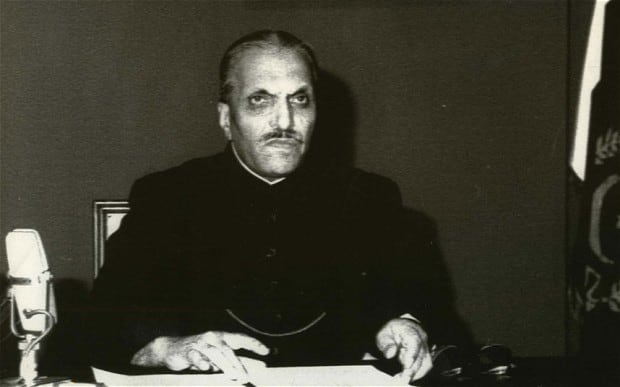
General Zia in Jordan

A note from Dr Hamid Hussein.
Incidentally, I happen to have heard from a first hand reporter that General Hamid (then chief of army staff) was also involved in the line of people who “forgave” General Zia and thus played a part in giving a specifically Deobandi color to Pakistan’s subsequent Islamization and its associated disasters.  As a side note, I think some sort of military takeover and the use of Islam to promote Pakistani nationalism were both going to happen anyway in Pakistan …Islamism is built into Pakistani Nationalism (remember the two-nation theory?) and was promoted in many ways by Bhutto himself; and no political party was likely to overcome the army after Bhutto himself undermined constitutional rule and proper procedures in a thousand different ways … but it is possible to imagine that if a future coup had been mounted by General Jilani or much later, by General Aslam Beg (to pick two random examples, neither necessarily being the most likely actor in any alternative history) they would have used Islam, but would not have been as interested in, say, destroying Pakistani cinema or putting women in purdah or beating up on Ahmedis, as Zia was because of his personal convictions.

Anyway, the story I heard was that General Nawazish (Zia’s superior in Jordan and the person leading the Pakistani military mission) criticized Zia for overstepping his authority and taking direct part in Jordanian military operations, and recommended action against him. This recommendation alone would have sunk his career, irrespective of what action was taken, unless the slate was somehow wiped clean. Zia got Pir Abdullah Shah and General Gul Hassan to help him on the the “mai-baap” frequency (senior officers being begged to help out a junior because he belonged to the same arm or the same unit, no particular personal qualities or links being necessarily critical in such an appeal) and Gul Hassan talked to General Hamid, who then told Yahya to “let the boy off the hook” and removed this blot from his record…. Thus adding a specially painful layer to Pakistan’s future pains.
btw, I wish Dr Hamid had given more details about the actual operations carried out by the Jordanian division commanded by General Zia. What role did he play in an operational sense? How involved was he in actual killing of Palestinian or Syrian forces? was he (God forbid) an effective commander?
Does anyone have any information to add in that respect?

(post script: the Pakistani charge d’affaires in Amman at that time has written a newspaper article in which he also states that General Zia’s role was much exaggerated in later years (he underplays it though, his role was not THAT peripheral, since he did help to hold a critical Jordanian division together, and there was real fighting against the Syrians in Irbid, but I have no doubt that later legends about Zia killing thousands of Palestinians are mostly just legends. by the way, the “istikhara” mentioned here need not be a literal istikhara (recourse to Quran to guess what course to follow) but may be other things, like a signal from the Americans)

Dr Hamid Hussein’s note follows:

June 18, 2014

Someone asked about the veracity of following statement;

“In 1970, when the Hashemite Kingdom of Jordan requested Pakistan’s help in putting down a Palestinian uprising, the Golden Arrow commanded by Brigadier Ziaul Haq restored order.”

I don’t know what is the context of the above statement but it is probably related to the role of Pakistani troops in Jordan’s clash with Palestinian radicals in 1970.  Pakistan army’s 7 Infantry Division based in Peshawar is called Golden Arrow.  Last several years, a much reinforced 7 Division (much larger than normal division size) is operating against militants in tribal areas.  In one short sentence the above statement is incorrect.  Unfortunately, in the absence of serious research culture, folklore is passed on as a historical fact in Pakistan. A while ago, I wrote a piece about Pakistan’s security cooperation with Arab states (Pakistan and Arab World: Security Cooperation, Defence Journal, July 2011) and one segment dealt with this particular episode.  The relevant segment is attached below that will hopefully clarify few things and give a glimpse of intrigues of byzantine proportions still practiced in the region;
“In 1969, Pakistan sent a military training mission to Jordan.  The mission’s primary task was to assess state of Jordanian forces in the aftermath of 1967 defeat at the hands of Israelis and recommend overhaul.  Officers from different arms (Infantry, Armor and Artillery) of army and air force were part of this mission.  Main objective of the mission was survey of Jordanian armed forces, find deficiencies, recommend solutions and guide in training.  Pakistanis got entangled in Jordan’s clash with Palestinians.  The simmering tensions between Jordanians and Palestinians resulted in September 1970 showdown when King Hussain ordered  Jordanian forces  to quell an attempt by Palestinian groups based in Jordan to overthrow the Hashemite kingdom.  There were exaggerated reports circulated by Palestinian sympathizers that Pakistani troops helped Jordanian forces in combat.  Later, after General Zia-ul Haq’s coup, those opposing him continued these unsubstantiated reports as Zia was in Amman during that time period.

Pakistani training mission consisted of only about two dozen army and air force officers and no combat troops (only exception was an Anti-Air Craft detachment sent in June 1970 at King Hussain’s request as he was worried that Syrian and Iraqi air forces may intervene in support of Palestinians).  Pakistan military mission was headed by Major General Nawazish Ali while Air Commodore Anwar Shamim (later Air Chief Marshal and Pakistan air force chief) was in charge of air force officers.   During main Jordanian offensive in September, Pakistani ambassador in Amman Nawab Rahat Ali Chattari as well as head of military mission Major General Nawazish were not in the country.  Brigadier Zia ul Haq was in charge of the military mission.  King Hussain asked Brigadier Zia to take over the command of a Jordanian division.  Pakistan’s charge de affairs got approval of this move from Ministry of Defence.

In Amman, 4th Mechanized Division commanded by Brigadier Kasab al-Jazy operated and 60th Armored Brigade of the division commanded by Colonel Alawi Jarrad was at the forefront.  After 1967 war, 3rd Iraqi Armored Division had stayed back in Jordan and was deployed in Zarqa.  King Hussain was suspicious about the motives of Iraqis and he deployed 99th Brigade commanded by Colonel Khalil Hajhuj of 3rd Jordanian Armored Division near Iraqis to keep them in check.  However, young Saddam Hussain emerging from his own recent successful power struggle inside Iraq shrewdly pulled Iraqi troops away from conflict area and finally removed them from Jordan to avoid getting entangled.

2nd Jordanian Infantry Division was based in Irbid near the Syrian border.  Palestinian guerrillas had taken control of the town.  Syria entered the fray in support of Palestinians by sending 5th Division commanded by Brigadier Ahmed al-Amir.  This was a reinforced division consisting of 67th Mechanized, 88th Armored and 91st Armored Brigades of Syrian army and Hittin Brigade consisting of Palestinians.  Commanding officer of 2nd Jordanian Infantry Division Brigadier Bahjat al-Muhaisen (he was married to a woman from a prominent Palestinian family) went AWOL and Brigadier Zia took command of the division at the request of King Hussain.  2nd Jordanian Infantry Division was shaky after desertion of Jordanian commander and Zia helped to keep the formation intact.  This division helped to take back control of Irbid.  Syrian armored thrust near Irbid was tackled by 40th Armored Brigade commanded by Colonel Atallah Ghasib of 3rd Jordanian Armored Division. Major damage to Syrian armor was done by Royal Jordanian Air Force.  Inside Syria, a power struggle between Saleh Jadid and Defence Minister and Air Force commander Hafiz al-Asad was at its peak and Asad decided to keep Syrian Air Force out of conflict.  In the absence of air cover, Syrian forces were mauled by Jordanian air force and within two days, battered Syrian troops retreated back.  Two months later, Asad took control of the affairs of the country sending Jadid to prison.  In 1970, Nawazish gave a bad Annual Confidential Report (ACR) to Zia although details of it are not available.  It is not clear whether report was written before or after September 1970.  Apparently, report was bad enough to possibly end Zia’s career at the rank of Brigadier.  Zia asked his former Commanding Officer (CO) of Guides Cavalry Colonel (R) Pir Abdullah Shah for help.  Abdullah asked then Chief of General Staff (CGS) Major General Gul Hassan Khan (Zia had also served under Gul Hassan) and report was quashed by army chief General Yahya Khan on Gul’s recommendation.”

Hamid Hussain

“who will help me run my household after Nabeel?”

….the bodies of the seven workers were …burnt
beyond recognition. “We could only recognize three…”  ….the
doctors gave them three choices. “…bury the bodies near one another while waiting for
the DNA reports, as we were told all of them were Muslims, so it
shouldn’t matter who buried whom”

Not to worry, our elites have made it clear that we are all
collectively paying for the sins a few of us have committed.
We must bear the burden
with a few tears but mostly with a smile. 

While Pashtun nationalists attempt to transform Pakistan from an impure (as they see it) to a pure country (again) it will be the poor who will suffer the greatest indignities. The Karachi Airport Cargo employees who died were mostly middle and lower middle class bread-winners and their families will sink into mud in their absence. The poor monsoon which has already had an impact on inflation in India (and presumably Pakistan) will hurt even more. But we must remember – as per the dictates of God and fate – we shall collectively pay for the criminal acts committed by the few.

Finally, much as we hate to create a stacking order of victims but this must be said- while three of the seven bodies above could be identified, we do not know the identities of the 25 Shia pilgrims who were murdered in Taftan. Why is that? It seems as if it really does matter – unlike the sentiments expressed by the doctors of Jinnah hospital above- which muslim was buried by whom.
………….
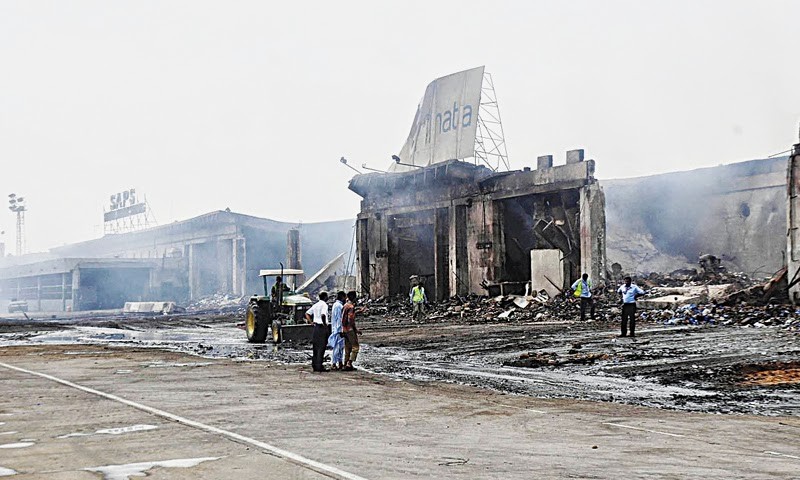
On Tuesday morning
charred remains of the seven cargo workers were retrieved from the
cold-room facility 26 hours after they took refuge there when the
airport came under attack. The families said that it was only after they
staged a protest near the Star Gate that the authorities finally
listened to their incessant pleas. Most of them stood there till late in
the night as huge flames engulfed the warehouse “leading up to the
cold-room facility in a corner”.

Father
of two, Inayatullah had been heading the administrative sector of the
cargo area for six years. This is not the first tragedy for the family
as Inayat’s father died in a similar way inside a ship a few years ago.

Two blocks away from Inayat’s home, 26-year-old Nabeel Ahmed’s
family continued receiving relatives, friends and colleagues in their
two-room apartment in Saudabad, Malir.

Nabeel was the first one
to inform his family about an attack inside the airport. On Sunday, at
11:05pm, Nabeel’s sister Sana received a text message from him asking
her whether there was a report of an attack by militants on TV channels.
“We got worried because at the time not a single news channel had
reported anything,” his sister said. Fifteen minutes later the news
filtered in that the airport was in fact under attack by militants who
were trying to get close to the planes parked on the tarmac. 

“The last message that we received from him was that ‘I’m at a safe
place, don’t worry about me’. We had been in contact with him till
4:15am. After that his mobile phone went off,” added his sister.

From
inside the cold-room facility, Fareedullah Humayun was constantly in
touch with the head of the workers union, Yunus Khan.

Speaking by telephone, Yunus told Dawn that he was on leave and was trying to help those trapped inside.
“Fareedullah
told me that there were three terrorists inside the import operation
warehouse which houses the cold-room facility. The warehouse is roughly
400 metres long, full of raw material, chemicals, machinery and
medicines. There were 12 people from the cargo department inside the
warehouse at the time — four of them managed to escape, one is still
missing, and seven of them ran towards the cold-room storage,” he said.

Through the phone calls, Yunus continued giving directions to Fareedullah until one of the suicide bombers blew himself up.

The
terrorists, he said, were constantly firing into the air and at anyone
they thought posed a threat to them. “Fareedullah was also injured and
told me that he slipped while running away from them. Of the three
terrorists, one was shot by an ASF commando; another ran out, while the
third one with a suicide vest blew himself up at around 3am, because of
which the chemicals inside the warehouse caught fire. I lost touch with
Fareedullah soon after that.”

When Fareedullah didn’t receive
his phone till 4:30am, Yunus went towards the warehouse with a few men
to inquire what was happening. 

“There are two warehouses right next to each other. One is used for
import operations and the other for delivery. The import operation
warehouse caught fire. From there it engulfed the entire cold-room
facility near it in flames, from where it went towards the delivery
warehouse.”

The CAA director general, retired Air Marshal
Mohammad Yusuf, however, said in a press statement that “the bodies were
recovered from the warehouse and not from the cold-room facility”. But
the family members of the victims refuted his statement calling it “a
face-saving measure by them”.

The families of the workers having
learnt of the fire tried to get inside the facility, but were stopped
by security personnel.

“We understood that they had a bigger
menace to deal with. But we were also pleading with the authorities to
at least get the Civil Aviation Authority to do something,” said Sana.

Yunus
added that after an hour-long wait they managed to get inside. “There
were 10 fire tenders standing there, but as much as they tried to
extinguish the fire, it aggravated further.”

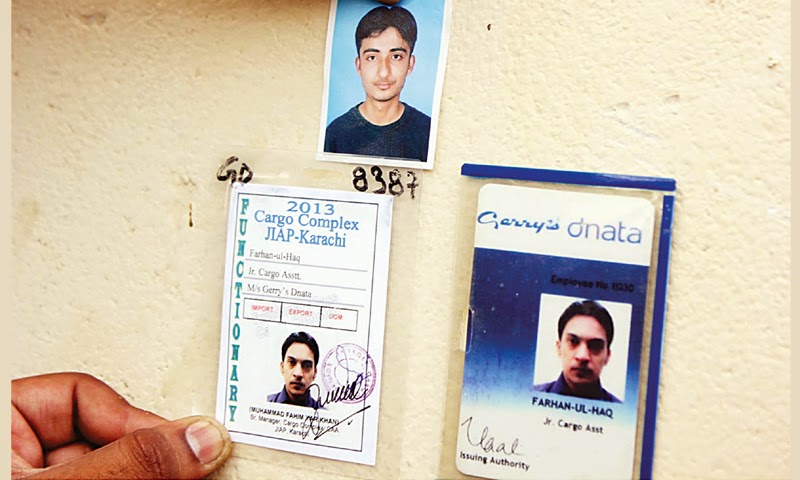
On Tuesday morning,
when the bodies of the seven workers were taken out, they were burnt
beyond recognition. “We could only recognise three — Saifur Rehman from
his height, Nabeel Ahmed from the chain he wore around his neck, and a
slightly burnt picture of Inayatullah in his upper pocket helped us
recognise him,” he added quietly.

Furthermore, when the bodies
were taken to the Jinnah Postgraduate Medical Centre’s mortuary the
doctors there gave them three choices. “Wait for the DNA samples report,
which takes 21 days; bury the bodies near one another while waiting for
the DNA reports, as we were told all of them were Muslims, so it
shouldn’t matter who buried whom; to recognize the bodies — which is the
most arduous task in such circumstances,” said Yunus.

All the family members decided to bury the dead and are now waiting for the DNA reports.

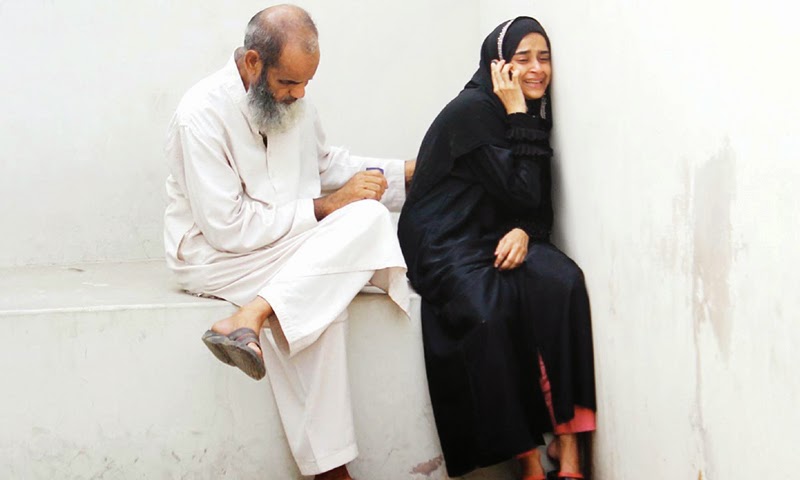
“As
much as I hate myself for saying this, but who will help me run my
household after Nabeel?” said his sister. “I’ll have to wait for the DNA
samples report. This is the only proof I have that my brother is dead.”

……..

Link: http://www.dawn.com/news/1111875/the-last-message-we-received-from-him-was-im-at-a-safe-place-dont-worry-about-me
………

regards

Green-light for Musharraf

In a victory for the Army the Sindh High Court has permitted the ex-dictator to leave Pakistan following a 15 day notice period. During his tenure he played a double game proficiently but then (as is the habit with dictators) ended up making a fool of himself. He should have never come back and in our opinion he will not be missed (he is also lucky to be alive).
….
The Sindh High Court (SHC) on Thursday ruled that the name of former
military ruler Pervez Musharraf be removed from the exit control list.

The
ruling was issued by a two-judge bench of the SHC comprising Justice
Mohammad Ali Mazhar and Justice Shahnawaz following the hearing of
Musharraf’s request for the removal of his name from the ECL.

The
bench stated that parties opposing the ruling could approach the Supreme
Court during the next 15 days, adding that Musharraf cannot leave the
country during that period.

Earlier on May 29, the court had
reserved its ruling on Musharraf’s plea after his counsel Barrister
Farogh Naseem and Attorney General Pakistan Salman Aslam Butt concluded
their arguments.

….

Link: http://www.dawn.com/news/1112244/shc-orders-removal-of-musharrafs-name-from-ecl

….
regards

Pakistan Predictions 2014?

The redoubtable Ahsan Butt has written an article about the possibility of of a “Taliban victory” in Pakistan. Since I have done two prior articles about “Pakistan predictions” (and now that even the President of the Maldives feels its unsafe to come to Pakistan), I thought I would pitch in with part three:

Just to get you up to speed, these were the predictions from 2012: 

1. Mutually Assured Corruption. This is comrade Zee’s current prediction (and he claims copyright on the term); Pakistan’s army and bureaucracy used to get first dibs on everything, but their short-sighted policies have weakened their hold over the country and they will now share power with the politicians and the judiciary in an arrangement of mutually assured corruption. This elite will continue to enrich itself and will provide limited governance at least in the core Punjabi and urban areas. The Jihadis will continue to occupy sections of FATA and the current on-again off-again peace process will alternate with tit for tat bombings and killings for the foreseeable future, but they will not be able to expand beyond the Islamic emirate. Punjabi Jihadis will remain divided between true believers and ISI-controlled assets and will continue to be used to milk the Americans and to maintain a background level of Islamism in society. Baluchistan will become Pakistan’s Kashmir, an unhappy population subject to harsh measures but unable to break away. Unlike Kashmiris, they will also be swamped by settlers and thumped by Jihadis allied with the army. In that sense, they will be worse off than Kashmir. But they cannot break away unless a foreign power (the USA and no other) acts on their behalf and that will not happen because the US has interests in Pakistan and no matter how badly the Pakistani army behaves, as a nuclear power they will get a second (and third and fourth) chance as long as they themselves remain aware of the limits of American patience.


2. Jihadi Army. Dr. A proposed this scenario in 2009 and he is sticking by his prediction. He says that that the “optimists” assume that economic self-interest or non-jihadist cultural elements will somehow dominate the hardcore Jihadist elements because economics and deep cultural roots trump fringe Jihadism in principle. But this fails to take into account the peculiar nature of the Pakistani state. Pakistan is the perfect marriage of Islamic supremacism, psychotic self-hatred (i.e. hatred for our own Indian roots) and elite incompetence. The elite may indeed regard hardcore Islamism as a step too far, but they are terminally corrupt and incompetent and every passing year brings us closer to revolution. And in Pakistan, the revolution will not be Marxist, it will be Islamist. An overwhelming majority of the population long since abandoned all “un-Islamic” identities in principle (though not in practice, yet). When the shit hits the fan, they will look towards something called “Islam” to solve their problems. And it won’t be the thinly imagined Islam of Ziauddin Sardar or Westernized Karachi socialites. It will be the real deal; Salafist-Wahabi Islam willing to kill all infidels. And they will start at home with Shias and other internal enemies.


My own prediction in 2012: More of the same. I agree with comrade Zee that the elite will hold on with “mutually assured corruption”. I think Baluchistan will remain a festering wound but it will not reach Bangladesh or Kashmir level of violence. I think some of the Jihadist militias in FATA will continue to fight the state but outside of Khyber-Pakhtunkhwa the level of violence will be tolerable. And I think Imran Khan will not be able to solve corruption in 19 days or terrorism in 90 days. In fact, I think he won’t even be able to come into power. I think the US will gradually lessen its footprint in the region and will try to hand over a lot of the local imperialist duties to China, but the Chinese will prove too smart to take up the job. Through all this, economic growth and rapid cultural change will continue in Pakistan and will even accelerate. The army’s hold on the country will weaken over time. Their dream of a “Chinese model authoritarian regime with Islamic characteristics” will remain unfulfilled.  Nothing will look satisfactory to anyone, but the state will not collapse and there will be no wider war. In short, I don’t think Pakistan is about to collapse, but I don’t think it is about to undergo some magical transformation under the wise leadership of Kiyani or Imran Khan either. And I don’t think it’s going to see an “Islamic revolution” because there is no there there. The Islamists themselves have no workable plan for any such revolution. They are mouthing empty slogans and at some level most people know this.


The long term future of Pakistan is “Indianization”. Not in the sense of “Indian cultural invasion” or “Indian hegemony”, but in the simple literal sense of “becoming more like India”. Obviously not exactly like India, but close enough for government work; a corruption-ridden, imperfect third world democracy with an expanding capitalist economy and many internal divisions and stresses and the additional burden of Islamic fantasizing. And I think there is little chance of developing a unique indigenous socialist/islamist/vegetarian short-cut past all these problems, much to the dismay of the Arundhati Roys and Tariq Alis, not to speak of Hindutvadis and Islamists. Pakistan will not show the world some new path to the future. It will be a “normal” South Asian country, trying to stabilize a democratic model derived from British Indian roots while working out a modus vivendi between its ancient cultures, its “Islamic” ideals and the modern world. The economy has now become too large for even the narrow elite to be dominated by imperial mercenary duties or scams related to the same. In that sense, things will be a little better. It’s not a perfect outcome, but we do not live in a perfect world.

– See more at this link.

What about now?

1. Dr A (source of the “Jihadi Army” prediction in 2009 and 2012) says he has NOTHING to change in his prediction from 2009. Pakistan ka matlab kya, La illah a illalah (What is the meaning of Pakistan? There is no God but Allah). All has been prepared for the feast. Apostates, liberals and Shias should book their tickets while Karachi airport is still operational. The triumph of the warriors of Allah is not far. Most of the current army will switch sides. And will then discover some decidedly unpleasant facts about their more Islamic partners from Waziristan. Zaid Hamid and Hamid Gul will be hanged in Islamabad BEFORE the attack on Red Fort Delhi ever begins. Somalia will look like a walk in the park compared to the shit that will fly in the land of the pure. Eventually, warlords and mafia gangs will break up the country and foreign powers will try to establish zones of influence in the more useful/governable areas. Or it may all vaporize in a nuclear exchange.

2.  Comrade Zee’s comments are awaited.

3. My prediction: I no longer feel confident of making any predictions. As Ali Minai might say, it is a complex situation and unpredictable phase transitions are the only safe prediction. It could be that there will be a stabilization of the Sharif regime and the army will gradually take action against all Jihadists in some mysterious order only they understand. But I must admit that even an eternal optimist like me now feels that it is more likely that phase one will be a continuing confused and inept response from the Sharif government, with the army simultaneously fighting the bad Taliban and undermining the elected government. When the shit has hit the fan in sufficient quantity (shit-fan contact being a process rather than a singular event in Pakistan) the people of Punjab (the only ones who really matter as a people) will be so sick of MNS that the army will be “forced to impose Martial Law”. Phase two would then be a temporary stabilization under army rule. At that point the British colonial roots of the army could hold, allowing it to act as a disciplined force to suppress true believers and brazenly lie its way through to bloody and shaky stabilization of pseudo-Islamic crony capitalist Pakistan. Or it could all fall apart after that, in which case the fate of the constituents depends on how well India and Afghanistan are holding up and what China and America are pushing for (with the minor safe prediction that China will make more rational choices in that situation than America will).
Predicting everything from Sharif stabilization to Army stabilization to complete anarchy is not really a prediction, its many contradictory predictions. That is where I am right now.

Add your predictions. The more concrete the better.

View image on Twitter

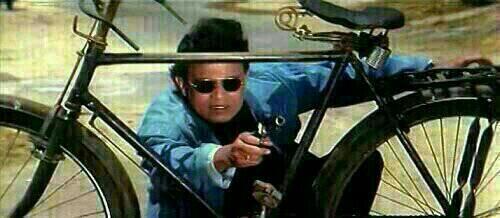
Mithun well protected as he takes cover behind a bicycle. Image courtesy of Ahsan Butt.

Karachi: After Altaf, the deluge?

Karachi, Pakistan’s Economic capital (contributing around 1/4th to national GDP) and South Asia’s largest city- more than twice the area of Delhi with more people than Mumbai in city proper (due to lack of recent census, exact numbers may be debatable here), is also  an extremely violent place- no other megacity’s homicide rate comes within 25 per cent of Karachi’s.

Laurent Gayer


Laurent Gayer

Ordered Disorder and the Struggle for the City

Laurent Gayer

Laurent Gayer

Ordered Disorder and the Struggle for the City

Laurent Gayer

As if the current levels of violence are not bad enough, Dr Christophe Jaffrelot argues that

things may get out of hand in near future:

Until recently, The combination of electoral politics and paramilitary
techniques helped MQM, retain control over urban Karachi. But growing Pashtun assertiveness has gradually
become a major challenge. According to the 1998 census, only 49 per cent
of the city population are Urdu-speakers (to whom the Gujaratis, with 8
per cent, must be added to obtain the proportion of mohajirs), whereas
Pashto-speakers made up 11.50 per cent, Punjabis 14 per cent, Sindhis 7
per cent and Balochis 4 per cent. But the war in Afghanistan that
started in 2001 and the growing instability in Pakistan’s Pashtun belt
resulted in the migration of one million people to Karachi, the largest
Pashtun city today. The mohajirs felt threatened by these Pashtuns also
because of the growing number of Sunni militants and Taliban supporters
among them.


To resist the Pashtun more effectively, the MQM has further refined
its paramilitary style and introduced sophisticated weaponry. This has
meant an unprecedented escalation of violence in Karachi. While the
previous wave of killings had resulted in 1,742 deaths in 1995 before a
quick return to normalcy, the number of casualties has been rising since
2006 to reach the unprecedented number of over 3,200 casualties in
2013, partly because of the tensions generated by the elections. But it
is not that Karachi is mired in chaos. As the mixed strategy described
above suggests, and as Laurent Gayer has recently shown in his book,
Karachi: Ordered Disorder and the Struggle for the City, there is a
rationale behind the conduct of the parallel state that the MQM in
Karachi has become.


The judicial vulnerability of Hussain, who had been arrested on
suspicion of money laundering and who will have to report to the police
again in July, may affect this relatively stable brand of instability.
Hussain is the one who keeps the MQM united and has no obvious
successor. If the party breaks apart, an already volatile atmosphere may
spin out of hand — in spite of the ongoing deployment of security
forces.

To an outside non-expert, things do look grim for South Asia’s largest city or  perhaps I am papering over the stabilising forces of modern economy, self-preservation capacity of local elites/bourgeoisie, spread of PakNationalist brotherhood and the ‘spirit’ of the port city?

The Officer’s Advice

By Waseem Altaf
The fact that Hamid Mir received six bullets on his body is no more an issue. That Hayatullah, Musa Khankhel and Saleem Shahzad were brutally murdered was never an issue either. How terrorists infiltrated into airbases at Mahran and Kamra and the GHQ never caused a dent in the “dignity” of those responsible, nor did the mass surrender during 1971 war and the crushing defeat in Kargil ever shamed the ones involved. And nobody ever bothered how the disastrous effects of military rule for nearly half the life of this country played havoc with state institutions and impacted the society.
But when the brother of a man fighting for his life accused “an institution” and the picture of an army general was flashed on the TV screens, all hell broke loose.
It disturbed so many in the sacred land while the “dignity” of an institution was held at stake- and it was a national issue!
It perturbed everybody from anchorman Mubashar Luqman to terrorist Hafiz Saeed, to traders to groups of lawyers to Mullah Qadri and Imran Khan who came on the streets; being associates of the “powers that be” they were fully mobilized.
Advertisements with names of fake associations were splashed on national dailies, banners were hoisted praising ISI and army with pictures of serving generals and entire media groups were deployed to denounce Geo.
And today some extremely cheap measures are being employed. Right from severing cables of operators showing Geo to pressurizing private members of PEMRA to ban Geo to implicating its workers in a blasphemy case, every abhorable step is being taken by those who demand the nations’ unconditional respect.


The way the most organized institution of the state is behaving is pathetic. It’s like how a newly recruited cadet behaves with a policeman on a traffic violation. Unfortunately they never mature. Right from the rank and file to top leadership they exhibit the same immature behavior.
And they think that nobody understands who is behind Sarwat Qadri and Tahir Qadri, Imran Khan and Hafiz Saeed. Go to a barber shop and people are discussing ISI; such utter humiliation of a state institution. I recall its not long ago when nobody would even mention ISI during a discussion and today the talk of the town is the tussle between a private limited company vis-à-vis the army and ISI.
A British Superintendent of Police during pre-partition Lahore was wiser.
It so happened that a police officer by the name of Qurban Ali Shah was shopping in civvies at Anarkali Lahore when he spotted a policeman beating a tongawala with a lash, who had apparently made a traffic violation. He went to the policeman and without introducing himself asked him to stop that for beating someone like that was illegal. “Babu, mind your own business or I will do the same with you” was the constable’s response. The officer noted the identification number of the constable from his belt and left the place. He had thought of teaching him a lesson for insulting him.
In office, when he went to see his boss, an Englishman, he narrated the whole incident. He also informed him of his intention to “discipline” the policeman.
“Well you are a Superintendent of Police (SP) and have all the powers to punish the constable but let me tell you something” asserted the British officer. Only you know and I know that a constable insulted an SP and none else. Tomorrow when you will punish him, the entire Lahore police will come to know that a constable defied an SP. And let me say that not you but the constable would emerge as the hero. SP Qurban Ali Shah got the logic and immediately dropped the idea.
Any lapse on part of Geo could have been downplayed and a graceful apology on behalf of the company was sufficient. But today the army and the ISI are feverishly after a private limited company called Independent Media Corporation. They want to teach it a lesson. While completely oblivious of consumer rights, they want a complete ban on its transmission. Though the maximum they can achieve is a partial ban in cantonment areas.
In the process the khakis have completely forgotten that Geo is gaining everybody’s sympathies and that it would emerge as the hero out of this mess while the losers are all set to lose another war.
No doubt it was due to their farsightedness and wisdom that the sun never set on the British Empire.
Waseem Altaf

The Martyrdom of Dr Faisal Manzoor

I first met Faisal Manzoor in 1975. I was one year senior to him in high school and then in Medical School (where he was one of my students when preparing for physiology and pharmacology exams). I have been in touch ever since and the last time I met him was in August 2013.
When we graduated from medical school, most of us moved to England and the US to “improve ourselves” or some such shit. In those days, one did not leave Pakistan because one was Shia or even liberal (though some other minorities had already got the memo, starting with Sikhs and Hindus in 1947). That started later. Still, a lot of people left or were encouraged to leave by parents and elders who were surprisingly pessimistic about the future of the great nation they had created and whose “real” half they continued to rule.  But not Faisal. Faisal moved back to his small hometown and built a modern hospital there. It grew and prospered and provided round the clock service in a dozen different specialties. And it was right on Sher Shah Suri’s Grand Trunk road, so every friend going towards Peshawar or Abbotabad or points North (where the ISI in its infinite wisdom liked to locate their training camps for Jihad and other needs) would stop by Faisal’s hospital and get infinite hospitality at any time of the day or night.
When an earthquake struck Northern Pakistan, Faisal loaded up a truckload of blankets, tents, food and medicines and headed North. He camped out there, distributing help to all and sundry. Some of them, unfortunately, were already members of the great Pakistan Islamic Purification initiative, but of course at that time we still did not know where that purification would head next.
Well, as we all know now, it headed for the Shias. Or maybe it was already heading that way, but we didnt really see it till years later because every cancer needs time to grow…. And Faisal and his family were Shia. In fact, they supported the local Imambargah. They were not just Shia, they were prominent Shias. They were also prominent philanthropists, prominent doctors, prominent helpers of those in need, prominent hosts of distant cousins of friends of friends..and prominent friends of all and sundry. But being prominent Shia was what got them targeted…..and all the other prominences did not help one bit when the motorbike boys came looking for targets.
2 months ago, Faisal’s older cousin (a doctor at his hospital and the deputy director of the local polio campaign) was shot dead while coming out of the hospital. He was shot dead on main GT road. At 8 pm or so. Nobody was caught. Pakistan moved on.  Shit happens. What can one do? it is the will of Allah. Or at least the will of Allah’s little helpers in Pakistan.

We asked Faisal if he was thinking of “getting out”. In fact, some of us specifically advised him to get out. He said where would I go and what would I do? my life and my work are all here. My family is here. My friends are here. My patients are here. My home is here. How can I leave? I will get some guards. This or that friend who is a senior police officer or a senior civil servant or a senior army officer has promised that this time, the culprits will be found.
But they found him first.
He was shot dead at 8-20 pm, leaving his hospital for home.  He was shot at the same spot where they shot Babar. He had not proven hard to find.
Another light has gone out in Pakistan. The darkness is descending faster than we thought.
Very sad.
Tomorrow the Attock branch of the Pakistan Medical Association will pass a condolence resolution and maybe they will also conduct a token strike. The chief minister may “order the police to apprehend the culprits” (we all know they never move without orders). Sometimes, these things can get noticed, even by a busy man life Shahbaz Sharif. And surely the blessed army will promise to relentlessly defend the ideological frontiers of Pakistan. While you sleep in peace, ISI is awake (as recent expensively printed posters have told us all). Indeed.
But unfortunately we also know that the culprits will be back. If arrested, they will be freed. If convicted, they may escape. Shit happens.
This is murder number three in the last 15 months, just in our close circle .
Dr Ali Haider, Eye surgeon, only son of the legendary Professor Zafar Haider and Professor Tahira Bokhari. Shot dead along with his son in Lahore.
Dr Babar Ali, Faisal’s cousin, an exemplary gentle soul who literally had no enemies. Shot dead in Hasanabdal 2 months ago.
Dr Faisal Manzoor, shot dead today.
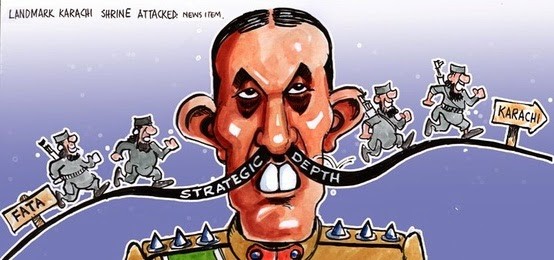
Its getting closer. Strategic depth has come home to roost.
Embedded image permalink

Giving away prizes at the local school:

Are you wondering what pre-genocide propaganda looks like? Wonder no more. Here are the proud students of the University of Sargodha

Meanwhile in Gujrat:
http://www.dawn.com/news/1105756

GUJRAT: A senior doctor, who was killed at his clinic in Jalalpur Jattan city on August 7 last year, was not a victim of extortionists but of the alleged militants belonging to banned outfits for his liberal views.
A reliable source in a law enforcement agency told Dawn that three militants, recently arrested in connection with the target killing incidents in Gujrat, had revealed during interrogation that Dr Attaur Rehman, a known medical practitioner of Jalalpur Jattan, had also been a victim of their target killing besides many others last year.
The law enforcement agency had arrested the suspects in a kidnap-for-ransom case. During investigation, they revealed their involvement in target killing of seven people, including Professor Shabbir Shah of the University of Gujrat (UoG), a religious figure Fazeelat Shah alias Phul Shah in Jassoki area of Kunjah police and a policeman Sarfraz. They had also attacked a Sara-i-Alamgir-based businessman belonging to Ahmadi community who sustained bullet injuries but survived two attacks on him.
Though officials are terming the arrests as a major breakthrough in the investigation of target killing cases, the revelation of Dr Attaur Rehman being targeted by the banned outfit had really shocked them as they had earlier considered involvement of extortionists in the incident.
The militants told investigators that they had killed the doctor due to his liberal views he used to express publicly at his clinic and it was a medical representative of a pharmaceutical company who had connived with the suspects, telling them that the doctor often gave, what they termed, provocative remarks about religion and the information had been the sole reason for targeting him.
The revelations came as the investigators were probing the suspects in a kidnap-for-ransom case. All the three arrested suspects, including two real brothers Abrarul Haq and Anwarul Haq, residents of Dedhar village of Gujrat Sadar police precincts and Asif Maqsood of Jhandewal village, Gujrat, were arrested by a joint raiding team of Jhelum and Gujrat police a few weeks back in a case of kidnap-for-ransom of Haji Iqbal, a British national. They also confessed to being involved in four other major incidents of target killing in Gujrat district during the later half of 2013.
Earlier, the then Gujrat DPO Ali Nasir Rizvi had claimed the arrest of seven extortionists of a gang of Jalapur Jattan during a news conference on August 28, three weeks after the killing of the doctor, saying the extortionists had killed the doctor for extortion. Police had framed charges against seven suspects for anti-terrorism court of Gujranwala where the trial of alleged gangsters continued despite repeated statements of the complainants in their favour.
A police official said the heirs to Dr Rehman had formally asked the court in writing that the seven alleged extortionists were not his killers. The suspects’ release was likely after the legal formalities.
Police sources said DPO Rizvi, under pressure from the agitating medical fraternity of Gujrat chapter of the Pakistan Medical Association, had declared the seven alleged gangsters as killers of Dr Rehman just to pacify the concerned voices in Gujrat over the rise in extortion incidents.
It was also revealed that DPO Rizvi himself had also been a prime target of the arrested terrorists for belonging to the Shia community. The security of Mr Rizvi had been higher than routine security of a DPO and two Elite Force vehicles used to move with him instead of one mobile van while a concrete security wall had also been constructed outside his house.
The three alleged killers of Dr Attaur Rehman had been in Jhelum police custody for their involvement in abduction of Haji Iqbal who was released by them after payment of Rs3.5 million ransom.
DPO Jhelum Afzal Mehmood Butt confirmed to Dawn that the arrested suspects had confessed to killing of Dr Rehman and they had been on physical remand of six days until May 15 in a kidnapping case of Haji Iqbal. Efforts were being made to bring Iqbal back to Pakistan to pursue the legal formalities of the case, he added.
DPO Gujrat Rai Ijaz said three arrested militants were yet to be brought to Gujrat from Jhelum for legal proceedings in target killing cases. Two more suspects, Qari Afzal and Zakriya Khalid, of the same network are already in custody of Gujrat police on physical remand whereas the law enforcing agencies had been making efforts to arrest the remaining members of the gang.

“I accept being called a traitor”

You divide terrorists into ‘good’ and ‘bad’ categories to confuse the
people. I believe in unveiling your deceit.

Powerful words from a still very fragile man. Let us at least agree in wishing him full recovery even if we think that the public finger-pointing has been unhelpful.
……….

Traitors
are of two kinds. First, those who get into a deal with foreign enemies
and help enslave their own people. Syed Jafar Ali Khan aka Mir Jafar,
the chief of Sirajuddaullah’s army is one such example whose name has
managed to stay on top of our local ‘traitors’ list despite a few
centuries having gone by.


The second, or other kind of ‘traitor’ does not collaborate against
foreign powers. Instead, he raises his voice against those high and
mighty who are bent on collaborating with the foreign powers in the name
of ‘patriotism’.


Our history is brimming with this second category of traitors. At
present, a campaign has been launched to label people like myself and
some other journalists in this second category. Those who live under the
shadow of the gun not only want to label me and my organization Geo TV
as ‘traitor’ but they also want to revoke my citizenship. 

With due respect, I dare ask, what heinous crime have I committed to
deserve this tag? An assassination attempt was made on my life a few
days ago in Karachi.

I received six bullet injuries and Geo TV aired the suspicion of my
family that elements within the country’s premier intelligence ISI could
be the mastermind of that attack because I had informed my management
many times in the recent past that some ISI officials were trying to use
some extremists for silencing my voice. 

I was unconscious when my
family suspected ISI for using some extremists against me. Upon opening
my eyes, and realising that I had come out alive from the assault, I
endorsed the stand taken by my family and immediately ISI sent a
reference to the government for declaring Geo TV as a traitor. Some
banned militant outfits came out on the roads in support of ISI. These
included Hafiz Mohammad Saeed of the Lashkar-e-Toiba.
Their only purpose
is to get me, and the organization I work for, officially declared as
traitors.

The men with guns have used
this label to describe Fatima Jinnah, the sister of our founding father
Mohammad Ali Jinnah, despite the fact that she played a prominent role
in the Pakistan movement.
When military dictator Ayub Khan moved to
subvert democracy, Miss Jinnah mocked the power of the men with guns.
When she fought the presidential election against the dictator, powerful
people labelled her an Indian agent and traitor.


Habib Jalib too was similarly described as a traitor simply because he
wrote poems condemning the army action in Dhaka in 1971.
The regime of
the dictator General Yahya Khan who ordered the surrender of troops in
Dhaka not only labelled him a traitor but also threw him in prison. 


Pashtun nationalist Wali Khan, Baluch Nationalists Ghaus Bux Bizenjo
and Ataullah Mengal,
even though these leaders had played a key role in
framing the Constitution of 1973 and pledged loyalty to Pakistan under
that Constitution
too were labelled as traitors.

Next, it was the turn of someone by the name of Zulfikar Ali Bhutto
who gave us the constitution of 1973. His elected government was toppled
and he too was dubbed an Indian agent.
He was then falsely implicated
in a murder case and sent to the gallows. It was during the regime of
General Zia-ul-Haq, the military dictator who hanged Bhutto, that India
occupied the heights of Siachen. During this period politicians like
Benazir Bhutto, Maulana Fazlur Rehman, poets like Faiz Ahmed Faiz, Ahmed
Faraz, and my father Prof Waris Mir as well as countless political
workers, journalists, poets and writers were also labelled traitors.


Dubbing a war fought for the sake of foreign interests as ‘patriotism’, 
Zia-ul-Haq, introduced the culture of the Kalashnikov, sectarianism,
linguistic and ethnic divisions and narrow provincialism in the country.
To weaken the political forces arrayed against him, Zia doled out guns
to certain religious groups, and along with the accusations of
treachery, fatwas declaring people ‘Kaafir’ too became part of the
political discourse.


When another Prime Minister Nawaz Sharif refused to bow before the power
of the gun in 1999, his government too was toppled and a case was
lodged against him for hijacking as he too was declared a traitor. 

Then
it was the turn of Akbar Bugti to be termed as a traitor, even though he
had voted in favour of Pakistan when it was born in 1947.
For this, he
was driven in his old age to a cave deep in the hills of Baluchistan
which became his final refuge and where he was killed. his killing was
blamed on General Musharraf, a man who subverted the Constitution of
Pakistan not once but twice.

Today, I do not seek to address those who have sold their conscience
to the enemies of democracy but to address you directly. I want to tell
you that only a person like me who has suffered bullet wounds on his own
body can feel the importance of the sacrifices of our brave soldiers. I
too salute the sacrifices of our brave soldiers for the defense of the
country.


You divide terrorists into ‘good’ and ‘bad’ categories to confuse the
people. I believe in unveiling your deceit.
You aim to further your
personal interests by handing over the country’s bases to foreign
powers. You allow drone strikes on your own country and term your
opportunism as patriotism. I believe such patriotism is a slur on the
name of Pakistan. I believe in peace. You want to fan a civil war. I
believe in holding my head high and speaking the truth to everyone. You
believe in stabbing people in the back.


Agreed, you are very powerful because you have guns and tanks. But I do
not want to beg you for a certificate of patriotism. If Fatima Jinnah
could be called a traitor, if Jalib, Bhutto, Faiz, Wali Khan. Mengal,
and Akbar Bugti were traitors,
I accept being called a traitor. 

……….
Link: http://www.outlookindia.com/article.aspx?290687
………
regards

Rashid Rahman Khan

One more great soul (muslim) departs under (unwritten) blasphemy laws- even if you defend a client accused of blasphemy you deserve to die.

Repeating after Omar, things will be worse before they become better. We say this because we have hope for South Asia when it may be that most people have already abandoned hope (we cannot say that they are wrong to do so).
………
Human Rights Advocate Rashid Rehman Khan was gunned down by
unidentified attackers in Multan, DawnNews reported late on Wednesday
night.


Initial reports suggest that Khan’s car was
targeted by the gunmen near Kachehri Chowk. The attack also left two
other people injured.

Advocate Rashid Rehman Khan was a
coordinator for the Human Rights Commission of Pakistan (HRCP). The
senior lawyer was representing a blasphemy accused and had complained
that he had been receiving threats on his life.

The HRCP had voiced serious concern over the threats extended to Khan.
…….
Link: http://www.dawn.com/news/1104788/rights-advocate-rashid-rehman-khan-gunned-down-in-multan
…….
regards

Brown Pundits