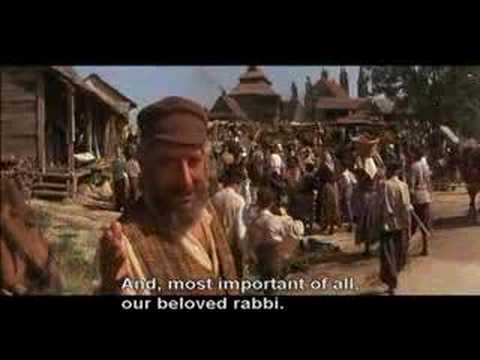
The Fiddler (on the Roof) and his son

…..At the service, I began my eulogy with an anecdote from a few years
earlier…..My father and stepmother were en route from New York to
Westport, Connecticut, when he began feeling ill……by the time they
arrived, an EMS crew was waiting……
“How do you feel?” asked the head EMS guy.“I don’t feel so good.” “What hurts you?” “It hurts me that George Bush is president.”…..
…………
Dad, Joel Stein, was a (jewish) communist then a (jewish) progressive in middle-class America. Son, Harry Stein, was a (jewish) lefty and switched over to the evil (jewish) neo-con side. Dad would be asked by his friends: when did your son become a fascist?
…………..


The life-story of dad, famous playwright, memorable for his creation: Fiddler on the Roof, where crisis overtakes a tradition bound (jewish) family when a daughter falls for a gentile boy.

As Stein explains reality was not so different after all: My parents never cared that I dated out of the faith or that the
woman I married is about as Jewish as her Mayflower forebears. The only
remark on the subject I ever heard from my father (for whom the closer
to the truth, the funnier) was: “Why don’t you ever bring home a black
girl, so we can show how liberal we are?”

What we liked best was this death-bed humor from an old, tired man: It was Carl Reiner….“It’s
incredible, it should be in the Guinness book of records! I told Mel
[Brooks], and he said, ‘It’s impossible, no 98-year-old could possibly
fall down 14 steps backward and survive!’ ”
…..He listened for a moment as Carl repeated
what he’d told me.
….“Tell Mel,” he replied wearily, “that not only is it
possible; there are several people to whom I’d highly recommend it.”


………….
My father, playwright Joseph Stein, was so vital for so long that when
he died in October 2010, at 98, some people were actually taken by
surprise. Nearly half a century after his greatest success, Fiddler on the Roof, he had been hard at work on a new musical.

At the service, I began my eulogy with an anecdote from a few years
earlier. My father and stepmother were en route from New York to
Westport, Connecticut, where one of his old shows was being revived,
when he began feeling ill. They called ahead, and by the time they
arrived at the theater, an EMS crew was waiting.


“How do you feel?” asked the head EMS guy.

“I don’t feel so good.”

“What hurts you?”

“It hurts me that George Bush is president.”


The line drew a roar from the huge crowd at Riverside Memorial
Chapel, as I knew it would. These were his people, New York theater
folk, as reliably left a bunch as you’re likely to find anywhere outside
a university campus.


….
It was my parting gift to a man I’d loved greatly and—over the
previous decade or so, since moving to the right—had argued with
incessantly. Though anyone with a passing acquaintance with my father
knew that he was almost preternaturally good-humored, someone able to
wring a laugh from even the direst of circumstances, this was something
he just couldn’t wrap his head around.


….
It was a situation surely familiar to others in families sharply
split along ideological lines, though the generational divide generally
runs in the opposite direction. My father simply couldn’t fathom how any
thinking person, let alone someone who’d imbibed politics at his knee,
could have ended up a . . . well, he never actually used the word, at
least not directly. The closest he ever came was reporting the reaction
of a friend, one of Broadway’s better-known composers, who had come
across something I’d written: “When did your son become a Fascist?”


For my part, I understood his worldview far better—a Communist in
young adulthood, he’d been a proud progressive ever since—but I found
him no less frustrating. In other respects thoughtful, even wise, how
could he not see the damage that today’s aggrieved and self-righteous
Left was inflicting on the country we both loved?


….
To the contrary, having lived to see Barack Obama elected and his
health-care plan bludgeoned to passage, my father was delighted with the
drift of things. Indeed, a few months before he died, he confided, only
partly joking, what few others on his side of the political spectrum
would be honest enough to admit, assuming that they were astute enough
to grasp it: “I never moved, the Democratic Party came to me.”


….
On September 22, 1964, when Fiddler opened
on Broadway, I was two months shy of my 16th birthday. For a
stagestruck kid, the timing was perfect—I was old enough to sneak into
rehearsals on my own but innocuous enough that no one seemed to care. 

I’d watched the show’s development pretty much from the beginning;
watched my father labor over the initial drafts of the script in his
office in our suburban home and rush off to meet with his collaborator
buddies, Jerry Bock and Sheldon Harnick; sat in on backers’ auditions in
our living room; slipped into those rehearsals, evading the laser gaze
of the martinet/genius director, Jerome Robbins; attended, along with my
then–best friend, Frank Rich, every performance of the show’s
Washington tryout, as new material came and went almost nightly; and at
last, sat thrilling at the New York opening—and then, the next morning,
with the appearance of the first reviews, watched the line snaking down
West 45th Street from the Imperial Theater.


….
By then, I figured that I knew everything there was to know about Fiddler, including every word of dialogue and every song cut from the production. So I was caught short by much in Wonder of Wonders,
Columbia Journalism School professor Alisa Solomon’s exhaustively
researched account of the show’s history and cultural influence, one of
several books timed to its 50-year anniversary. 

Solomon uncovered memos
between my father and the composers as they struggled with the daunting
task of moving Sholem Aleichem’s Old World characters from the page to
the Broadway stage. I never knew they’d considered replacing the story
line of Chava, the daughter who breaks her father’s heart by marrying
out of the faith, with an even more tragic one about another daughter,
Sprintze; or that my father, aware that everyone in the business,
including his agent, regarded the material as “too Jewish,” toyed with
giving the daughters less “exotic” names like Rachel and Sarah; or that
early on, the show’s ending had Tevye’s family moving to America while
he, “too old” and “afraid of new things,” and knowing that “survival is
his strongest trait,” stays behind in Anatevka. 

I’d long known that it
was director-choreographer Robbins who instinctively grasped that Fiddler had
to be not just about a family with marriageable daughters and unlikely
suitors but also the story of an entire people; and that, in a flash of
inspiration, he seized upon the unraveling of long-standing traditions
as the backdrop against which such a theme could play out. But the
eye-opener was how explicitly anti-tradition the show was meant to be.


The show left no doubt as to how vital had been the rites of the
shtetl, both secular and religious, in preserving the identity of a
despised and beleaguered people. Yet the most fiercely adhered-to
social/religious tenet of all—the injunction against marrying outside
the faith—was meant to be depicted, in a changing and more sophisticated
world, not merely as outmoded but as outright bigotry. In fact, wrote
Robbins of Tevye’s initial refusal to accept Chava’s Gentile mate, the
conditions “he has lived under have made him become as prejudice[d] as
his attackers.” 

In early rehearsals, the director—who, during the run-up
to West Side Story, had segregated the actors playing Jets from
those playing Sharks—even instructed the mixed religious couple to think
of themselves as Southern blacks “buying a book in a bookstore where
blacks are not allowed.” 

He told Bert Convy, the actor playing Perchik,
the revolutionary who embarks on a dangerous anti-czarist mission, to
imagine that he’s setting off to register black voters in Mississippi.
As those familiar with the show know, Tevye mostly comes around in the
end, giving his grudging blessing to the union as he and the rest of the
family embark for America. It’s a deeply affecting moment, one that, as
Solomon observes, in its depiction of “tolerance and equality as
supreme values,” nightly moved the overwhelmingly secular Jewish
audience whose experience it affirmed.


….
True to form, my father, always averse to the merest hint of the
maudlin, followed up that moment with a laugh—one equally telling, in
its way. As the two youngest daughters begin dancing about, chattering
about the trip they’re about to take, their sharp-tongued mother cuts
them off: “Stop that! Behave yourself! We’re not in America yet!”


….
The show’s ending worked, of course, Robbins’s staging of the
departure scene making it one of the most effective in musical history.
That Tevye’s love for his child finally outweighed all else gave the
show a remarkable universality. My father often described the reaction
of an audience member in Japan, where the conflict between old ways and
modernity had particular resonance: “Do they really understand this play
in America? It’s so Japanese.”


….
Of the more than a dozen Broadway shows—musicals and
comedies—that my father wrote over his long career, none ever sounded
more like him or more fully reflected his social and political views.
Every time I see the show, I’m struck by how much he’s there in
Tevye—his playfulness, his sardonic optimism, his habit (so irksome to
Golde, as it could be to my mother) of kidding around even when the
occasion calls for the utmost seriousness. But I’ve no doubt he
identified equally with Perchik, the young revolutionary and
good-natured smasher of tradition—in many ways, the noblest character in
the piece.

PERCHIK: In this world, it’s the rich who are the criminals. Someday, their wealth will be ours.
TEVYE: That would be nice. If they would agree, I would agree.

One of the odder ideological back-and-forths I had with my father
involved his abiding contempt for business and businessmen. “You make
them sound,” I laughed, “like the little guy with the monocle and top
hat in Monopoly.” For once, he didn’t smile back. “Exactly! That’s just
who they are!” 

Knowing how much he’d have enjoyed it, I regret that he
didn’t live to see Occupy Wall Street.


….
My parents never cared that I dated out of the faith or that the
woman I married is about as Jewish as her Mayflower forebears. The only
remark on the subject I ever heard from my father (for whom the closer
to the truth, the funnier) was: “Why don’t you ever bring home a black
girl, so we can show how liberal we are?”


….
What might seem odd about this is that my
father’s own life was the very essence of the American dream—a Horatio
Alger tale if ever there was one, the poor, scrappy kid making it big in
America by virtue of talent, hard work, and moxie. A child of
immigrants who never mastered the language or any but the rudiments of
American life—and never had to, so self-sufficient was their
Yiddish-speaking neighborhood—he was passionately engaged by this
wondrous country from the start. I have a diary he began at 15, in 1927.
On page after page, he goes on excitedly about the events of the day,
the plays and novels he’s been reading, the latest bon mots of columnists in the New York World, and the fortunes of his beloved New York Giants.


….
Then, again, the explanation is pretty straightforward. To be New
York Jewish in the first third of the twentieth century, living entirely
among refugees from the poisonous anti-Semitism of Eastern Europe and
their offspring, was by definition to wind up on the left—accepting as a
given that the world was basically divided into exploiters and
exploited, the selfish and those working for the betterment of all; the
only question was how far one wished to go.


It wasn’t until my father graduated from James Monroe High School
(class of ’29) and started commuting to City College that, having
rejected his parents’ religious orthodoxy, he adopted leftist politics
as his defining creed. In those Depression years, CCNY was the
campus for radical activism, with Communists in the lead. My father (and
mother, and everyone else in their circle) seems to have uncritically
accepted that, if perhaps not the paradise on earth proclaimed by some,
Stalin’s Russia was certainly the best hope for humankind.


….
Four decades later, when, though still on the left myself, I’d ask
them how they could have been so credulous as to accept the approved
line on the Soviet show trials of the 1930s or gone along with the
Party’s about-face on the Nazi threat after Stalin’s notorious pact with
Hitler, my father would revert to jokester mode. How could anyone not
trust Stalin, he would ask, with that “cute mustache”? 

But my mother
would get wistful, talking about the idealism of those years and how far
ahead the Communist Party was on civil rights—with its defense of the
Scottsboro Boys and other victims of virulent racism—and on women’s
rights. In fact, it was the Communists who’d coined the term “sexism,”
she said. More than a few in their crowd underwent abortions—including
her. Once, when I asked her what she thought of Gone with the Wind, she said she’d never seen it. “I was out front picketing.”


….
Little wonder that, within a few years, like so many other “red
diaper” babies, I emerged as a leading troublemaker on my college
campus; or that, a few years after that, just out of journalism school
and intent on writing a book, I chose as my subject an oral history of
the American Communist Party. Tentative title: Saving the World Together.
Thankfully, it never came to pass. 

But I do have to live with the
embarrassment of my first published magazine piece, an interview with
Earl Browder, the Party’s elderly former head. It appeared in the
December 1971 issue of my favorite magazine, American Heritage.
Having dragged my reel-to-reel tape recorder out to Princeton, where
Browder lived with his son, the head of Princeton’s mathematics
department, I sat nodding as he lied to me about everything from the
Party’s independence from Moscow (total!) to the innocence of the
Rosenbergs.


…..
Since, by the 1950s, my parents were basically Stevenson Democrats,
it had taken me a while to learn about this aspect of their past. It
began to come out when I was in sixth grade. I had a wonderful teacher,
Mr. Hubley, who would often fulminate about the evils of Communism, with
particular emphasis on Nikita Khrushchev—regularly identified as “a
cold-blooded murderer”—and the Red Chinese. 

I was going on about the
Chinese one evening at dinner when I noticed my parents exchanging
concerned looks—red-baiting at their own dinner table!—after which they
cautiously explained how, not long ago, the people of China had been
starving. So I should bear in mind, they counseled, that Mao Tse-tung
and Chou En-lai had also done some very fine things.


….
My political education continued in 1960, when I was called upon to
debate on John Kennedy’s behalf in history class against some kid
representing Nixon. The night before, my father offered a primer on what
a vile monster the Republican candidate was, closing with a key piece
of advice: “If you get in trouble and don’t know what to say, just ask,
‘What about Alger Hiss?’ ” 

I wasn’t sure what that meant, but the next
day, I used the line—and was gratified to see our teacher nodding in
agreement, before declaring me the winner a few minutes later. This was
my first clue about how much it can pay off to be on the left.


….
Within a few years, I was savvy enough to challenge my father, or at
least give him a hard time. There was, for instance, the evening I first
ran across that old diary of his in the bottom drawer of a filing
cabinet. I read it in wonder, startled that at my age, he could know so
much and write so well. 

Wandering to my parents’ bedroom, I found my
father watching TV and asked, “Dad, do you remember the Sacco and
Vanzetti case?”

“Of course I do.”

“What did you think at the time?”

“What do you think? I was a good left-wing kid—I completely supported them.”


…..
At which point, I started reading him entries from the diary, starting with:

“Aug. 10, 1927. A subway station has been bombed in London. This is
the sixth of a series of bombings this week, a protest against the
sentence against Sacco and Vanzetti. . . . The efforts to save them have
resulted in damage more costly than the lives of these two men, it
seems. Editorial writers are storming about ‘Justice for all’ and
‘reasonable doubts,’ radicals are threatening destruction to the nation,
lawyers are arguing about ‘constitutional rights.’ . . . I cannot see
the reason for terming the guilt ‘reasonable.’ I would call this ‘Much
ado about nothing!’ ”


….
By now, my father was fuming, demanding that I hand over the diary,
but I skipped away, keeping it at arm’s length. “Aug. 23,” I continued.
“Sacco and Vanzetti are executed at last. It is about time. All these
reprieves only excited radical sentiment all the more. Now there will be
a hubbub which will gradually simmer and die down. Then, the case will
be generally forgotten. This should have been done a long time ago.”


….
That my father wasn’t blacklisted was
largely a matter of happenstance. He originally wanted to be a
journalist, but as the Depression deepened, he instead became a social
worker, remaining one for nearly a decade. He didn’t so much fall into
comedy writing as grab at the flimsiest reed of possibility. 

At a Bronx
dinner party of fellow thinkers, another guest, a small-time comic named
Zero Mostel, mentioned that he’d just landed a local radio show and
could use some funny sketches. “I write those,” my mother was astonished
to hear my father pipe up. Back home late that night, he wrote his
first. Within a few years, he’d quit social work and was writing for
radio full-time, and several years after that, with TV taking off, he
joined Sid Caesar’s legendary writing staff.


….
By then, the blacklist was established fact, but in Caesar’s shop, at
least as my father told it, it was less a source of terror than a game
of keep-away, with the willing participation of the network brass. 


“Every so often, some NBC functionary would call asking why no one had
signed the loyalty oaths, and we’d say we lost them, so they’d send over
another batch, and we’d immediately lose those.” 

Presumably, my father
never found himself under more direct threat because, as a social worker
during most of his time in the Party, and a member of the Bronx rather
than the Manhattan branch, he was not well-known to many in the business
(including those naming names).


Not everyone we knew was so lucky. One of my earliest memories is of a
writer-director named Aaron Reuben, a close friend of my parents and
one of the sweetest guys in the world, hiding out in our suburban home
to avoid a subpoena. Aaron would go on to produce such subversive
programming as The Andy Griffith Show, Gomer Pyle, and Sanford and Son.


….
This is the conception of the blacklist with which I grew up, and the
one that has generally taken on an aspect of religious truth in the
decades since: that it was an unconscionable targeting by the
reactionary Right of entertainment-industry progressives, singled out
for their enlightened views. 

And, to be sure, a great many of those
whose careers and lives were wrecked by the blacklist fit the
bill—guilty, whether Communists or not, of nothing at all, save possibly
naïveté; and, yes, often their persecutors were not just indifferent to
the constitutional niceties but, as products of the opposite end of the
yawning American cultural divide, clumsily unknowing about who or what
they were dealing with.


….
Only years later did I come to grasp, as the formulation has it, that
some of the witches were real; or at least, that they were less
principled idealists than pitiless ideologues and
apparatchiks-in-waiting for their dream of a Sovietized America. There
was, for instance, V. J. Jerome, who, as the Party’s longtime cultural
commissar, served as its ideological enforcer and hatchet man in
Hollywood. 

As Howard Husock has chronicled in these pages, the Communist
effort to harness “culture as a revolutionary tool,” using left-leaning
artists and intellectuals “to insinuate the Marxist worldview into the
broader culture,” found its “bluntest expression” in Jerome’s pamphlet
“Let Us Grasp the Weapon of Culture.” (See “America’s Most Successful
Communist,” Summer 2005.) 

Husock focused on Pete Seeger and the singer’s
attempts to bring that aim to fruition in the musical realm, and it’s
shocking to learn of the extent to which he succeeded; just as it is
startling (and amusing) to know that screenwriter Lester Cole,
blacklisted as one of the Hollywood Ten, once put Spanish Communist icon
La Pasionara’s famous cry that it was “better to die on your feet than
live on your knees” into the mouth of a high school football coach.


….
My father, for all his political conviction, regarded such
propagandizing as offensive and bizarre. His allegiance always was to
the work, his comic sensibility, as Solomon observes, grounded “in the
absurdity of situations and in the sure-fire Jewish outsider stance.”
While the stories he told reflected his values, his characters were his
most honest expression of what those people would say and do. 

This was
as much the case when, in late middle age, he was writing the musical Zorba—its title character intent on resisting the ravages of time—as it had been with Tevye or Perchik.


His closest friends in the business were the same way: very funny and
very liberal. Leaving New York for Hollywood, they became the
generation that revolutionized television comedy. In doing so, almost
inadvertently, by being true to themselves, they played a key role in transforming—and liberalizing—American culture.


…..
The show that irrevocably altered the family sitcom was the one created by Rob’s father, Carl, the much beloved Dick Van Dyke Show.
As old friends and New Rochelle neighbors of the Reiners from the
Caesar years, we were fans from the first episode, and we always got a
special thrill when Mary Tyler Moore’s Laura mentioned that someone
wasn’t around because they were “over at Sadie and Joe Stein’s.” 

Set
equally in our hometown and my father and Carl’s old workplace, the show
not only sounded like us—no talk of malt shops here—but it was also
unmistakably, if subtly, liberal in the best, generous-spirited (which
is to say, now nearly antique) sense of the term. One of its most
memorable episodes, the premiere of season three, had a younger Rob
Petrie, in flashback, nearly hysterical because he’s convinced that
they’ve brought home the wrong newborn from the hospital, their infant
having been confused with one named Peters. 

At the end, he opens the
door to greet the Peterses—and they’re black. This was still daring
stuff for a sitcom broadcast nationwide, just a month after the March on
Washington. As the New York Times observed on the episode’s 50th
anniversary, it “perhaps nudged the needle of social change toward
integration and inclusiveness.”


As Andrew Klavan observes, it is now “almost an
unwritten law of Hollywood that any glancing reference to real-life
politics in a film or television show must be slanted left.” Just as
viewers can safely assume that the straightlaced businessman on
contemporary crime shows will turn out to be a bad guy, it’s an
excellent bet that, far from knowing best, today’s sitcom dad will be a
hapless lunkhead, while his fictional kids will be gung-ho
environmentalists. 

………..
If Ned Flanders of The Simpsons stands as TV’s idea of a do-gooding religious traditionalist, no one is fairer game on award-winning shows like 30 Rock or Parks and Recreation
than real-life conservative pols, with Sarah Palin an especially
attractive piñata. (Of course, President Obama is off-limits.)


For some of us on the right, this is a profound source of
frustration, a key reason that we are not only losing the culture war
but not even in the game. The problem is not so much a lack of comic
targets on the left—why not a sitcom set on one of today’s insanely
politically correct campuses or in a lapdog mainstream newsroom? Why no
gags at the expense of a Joe Biden or Harry Reid?—as it is a shortage of
network executives and creative types to make it happen.


……..
I never discussed any of this with my father. While he agreed that
there was too much pointless sexual innuendo on lots of today’s shows—he
hated cheap laughs like poison—he otherwise wouldn’t have grasped what I
was complaining about. Like most everyone else on the left, he saw the
attitudes and values so pervasive on TV today as unobjectionable, since
they mostly reflected his own. And, as far as comedy was concerned, all
that mattered to him was whether something was funny—and with that,
politics notwithstanding, I wouldn’t have vigorously argued.


….
It’s not as if we didn’t have enough to fight about, anyway. We could
go back and forth about almost anything—Giuliani or the Clintons, the
Koch brothers or Michael Moore, Rush Limbaugh or the New York Times;
global warming or the Middle East or race. For a while, the most
innocuous comment was apt to trigger an outburst. One of our ugliest
fights, over dinner in an Italian restaurant, involved the Duke lacrosse
scandal, set off by the sight of a kid at another table wearing a
Carleton College lacrosse T-shirt.


….
When I was a liberal, he’d taken pride in the pieces I published in places like the New York Times and
in the invariably favorable reviews of my books in that revered
publication. Now, I often maintained a discreet silence about what I was
writing; he learned of the existence of one book, a largely comic take
on conservatives marooned among the smugly intolerant in America’s
deepest blue precincts, only a month after it appeared—with predictably
unhappy results. And this time, “Relax, Dad, at least it’s funny” didn’t help.


….
More than once, we got into it about Israel, too. My father, who
never would have brooked a word against the Jewish State when I was
young, was now just as adamant that in its treatment of the
Palestinians, Israel had turned away from a reverence for justice that,
for him, was the essence of Jewish identity. He blamed the despicable
pols of the Israeli right, the “religious crazies,” and, especially, the
“racist” settlers.


….
Still, even knowing his feelings on the subject, I was caught by surprise at the premiere of Fiddler’s
2004 revival by a change he’d made to the dialogue. It occurs late,
when the Jews, expelled from Anatevka, are bidding one another farewell,
and Yente is asked where she’s going. She’d long replied: “I’m a
matchmaker, no? I’ll arrange marriages, yes? Children come from
marriages, no? So I’m going to the Holy Land to help our people increase
and multiply. It’s my mission.” But, as Solomon observes, since those
lines might have been taken “as an endorsement of the idea of a
‘demographic war,’ ” Yente is now going to the Holy Land because “I just
want to go where our foremothers lived and where they’re all buried.
That’s where I want to be buried—if there’s room.”


…..
Indeed, each time I saw my
father, we began afresh. And particularly toward the end, we battled
less, as for different reasons—he for the fun of it, I because so much
of it was new—we were both eager to talk instead about the old days: his
start in radio, the remarkable range of showbiz luminaries he’d known,
the early years of TV comedy, the ups and downs of his many shows.


…..
So it’s unfortunate, if oddly appropriate, that our last exchange was
an unpleasant one about politics. It was October 2010, a few weeks
before the midterm elections, and sitting up in his hospital bed, he
asked, “If you lived in Delaware, you wouldn’t vote for that idiot
Christine O’Donnell, would you?”

“Well, Dad,” I replied, “I’m afraid I’d have to.” Just as, disbelieving, he started furiously to object, we were
interrupted by a nurse, shooing me from the room to perform some tests.
The next time I saw him, he was in a coma.


That’s why I prefer to remember another episode, in a different
hospital room not long before. Trying to do too much, both hands full,
he’d fallen backward down a long flight of stairs, landing on his
shoulder. He was to have surgery the next day, when the phone on his
bedside table rang, and I picked up. It was Carl Reiner. “I heard what
happened to your dad,” he exclaimed, more excited than alarmed. “It’s
incredible, it should be in the Guinness book of records! I told Mel
[Brooks], and he said, ‘It’s impossible, no 98-year-old could possibly
fall down 14 steps backward and survive!’ ”


….
I tried handing the phone to my father, but he demurred, whispering
that he was too tired. But I knew his old friend would cheer him up, so I
held the receiver to his ear. He listened for a moment as Carl repeated
what he’d told me. “Tell Mel,” he replied wearily, “that not only is it
possible; there are several people to whom I’d highly recommend it.”

…….

Link: http://www.city-journal.org/

…..

regards

“Discount Maids” on display

…”maid agencies”, display women at work….domestic workers
push each other around in wheelchairs, as though they’re taking care of the
elderly…..In another gallery, a woman cradles a baby doll and pretends to change
its diapers..
…Istiana,
an Indonesian domestic worker in
Singapore…..”Those signs that say ‘cheap price’ and ‘discount maid’. But
these are people”…. 

………………… 
It is quite a common practice in barbarian lands however you have to appreciate the grace and elan with which such activities are packaged in the free world. Complete with banners and posters..it is a worship of freedom, really. You are eligible to get a discount on human beings…because their humanity is not fully assured.

….
Also for those who would blame it on market forces gone wild, remember this. In Singapore you are not even allowed to spit on your own hands without prior govt permission (application in triplicate to the Ministry of Good Behavior). 

……………

Go to the Bukit Timah Shopping Centre, a
1970s mall in central Singapore, and you will find five levels of brightly lit
rooms and galleries called “Homekeeper” and “Budget Maid”.
Inside these rooms, dozens of women sit in a listless, artificial silence. They
nod respectfully as you enter, and some watch closely as you speak to staff.
You might take one home with you – for two years, or longer.


The women, domestic workers, come from
Indonesia, the Philippines, and Myanmar. They sit beneath garish signs and
posters, testifying to their friendliness and industriousness, or advertising
“super promo” rates and “special discounts”.


Some “maid agencies”, as they’re
known locally, display women at work. Along one aisle, domestic workers
push each other around in wheelchairs, as though they’re taking care of the
elderly. In another gallery, a woman cradles a baby doll and pretends to change
its diapers. Others stand in mock living rooms ironing the same shirt, or
making the same bed – scenes enacted elsewhere in Singapore at malls like
Katong Shopping Centre on Mountbatten Road.


Jolovan Wham, executive director of the
Humanitarian Organisation of Migration Economics (HOME), a migrant workers
advocacy group based in Singapore, said that some agencies market their
domestic workers like “commodities”. He adds that racial stereotypes
are sometimes used in transactions with patrons. “Some of the stereotypes
include Filipinos as ‘smarter’, Indonesians as ‘less bright’ and Burmese as
‘sweet-natured and compliant’.”


There have also been complaints of women
being underfed at certain employment agencies, according to
Ummai Ummairoh, president of the Indonesian Family Network
(IFN). “We always receive calls about agencies not giving enough food. In
one case, an agency was spending $20 to feed 40 people.”

Ummairoh, who also worked as a maid, added
that the shopping centres made women look like “dolls at a
supermarket”.


For Anandha Nurul, a domestic worker who
spent seven years in Singapore, her time at the shopping malls was marked by
boredom and long hours. “They did not treat me very nicely,” she
said, recalling that she was fed instant noodles for the three days she was at
her agency. “We didn’t even boil the noodles properly. We just used warm
water.”


But standards vary considerably within the
industry, and other agencies claim to afford female domestic workers more
dignified conditions. “We should be fair and treat these workers as human
beings,” said Dawn Sng of PrimeChoice Maid Agency, who claims that her agency
provides domestic workers with in-house training, free meals, and counselling.
“We should not put them into a lower category of people.”


Bukit Timah and other shopping centres like
it are the culmination of networks and organisations extending from Singapore
to various parts of Southeast Asia: from brokers who recruit women from poor
countries, to training centres that prepare women for life abroad, to
“runners” who ferry domestic workers from airports to shopping
centres, and finally to the employment agencies themselves, of which there are
hundreds in Singapore, competing in what is effectively a multimillion dollar
industry. Wham says that there are currently 215,000 domestic workers in
Singapore.

For most women, according to Wham, the
shopping centres are fleeting experiences that last no longer than a
week. Before coming to Singapore, most domestic workers have already found
their employers after a phone or webcam interview from their home countries. The
malls are essentially transition points, and the women are soon sent to their
employers after completing a “settling-in programme” and a mandatory
heath check.

..
But some maids return to the malls and can
end up staying there for as long as a month. In the language of employment
agencies, these women are “transfer maids”, and have either been
released by their original employers, or have requested to leave after
experiencing problems at work.


Shelley Thio, executive member of Transient
Workers Count Too (TWC2), attributes most problems to “working
conditions”, and cites verbal abuse, non-payment of wages, and excessive
work hours as among the most common reasons domestic workers request formal
transfers.


Thio also raised concerns over Singapore’s
“live-in” requirement, by which a full-time domestic worker is
legally obliged to live in the home of her employer.


“We
have continually advocated that the live-in requirement is unsatisfactory
because it easily leads to abuse,” Thio said, adding that some women
become vulnerable because of the removal of mobile phones, which isolates them
from friends and organisations such as HOME and TWC2.


The live-in requirement can leave women
vulnerable to sexual abuse. Earlier this year, a Cambodian domestic worker was
sexually harassed by her employer’s father, with whom she was made to share a
room. Although the woman had complained about this arrangement, both to her
employers and employment agency, nothing was done to change her situation prior
to the abuse.

….
Problems in Singapore are sometimes
compounded by unscrupulous practises and weak oversight in the female workers’
underdeveloped home countries. In Indonesian training centres, for instance,
women commonly complain that dormitories are overcrowded and that they are not
given enough food, according to Wahyu Susilo of the advocacy group Migrant
Care.


“We are always finding migrant workers
in cramped rooms and living with poor sanitary conditions. In one case we found
200 migrant workers sharing two or three toilets.”


He adds that monitoring by the Indonesian
government is generally weak, which has led to exploitative conditions at a
number of centres, including unreasonable fees and deceptive recruitment
practises.


In some cases, monitoring of training centres
in originating countries is limited due to corruption. According to the
managing director of one centre in Indonesia, who spoke to Al Jazeera on the
condition of anonymity, local police accept bribes from the training centres
they are tasked with inspecting. 


Most domestic workers who come to Singapore
have large debts in the form of placement fees paid to agencies as monthly
salary deductions.

..
Thio at TWC2 said that she has come
across instances where domestic workers end up owing $4,500 to their agencies,
adding that the average debts women accumulate are between $2,500 and $3,000.

“High placement fees are charged to the
worker because the agencies can get away with it,” according to Wham, who
said that some agencies disguise these fees as “loans”.


“The worker pays these fees because she
feels that she doesn’t have a choice. And our laws do not make it mandatory for
employers to bear the bulk of the fees.”


Some domestic maids also work in Singapore
illegally. A number of women are employed even though they are underage,
according to Thio, and some will be brought into the country under conditions
indicative of trafficking.


But at shopping centres, where clients stroll
past “Homekeeper” and “Budget Maid”, and where domestic
workers continue their unending simulation of household work, little of this is
expressed or known.

“I
watched all those things”, recounts Istiana, an Indonesian domestic worker
who has recently come to work in Singapore. “Those signs that say ‘cheap
price’ and ‘discount maid’. But these are people,” she added. 

…..

Link: http://www.aljazeera.com/indepth/features/2014/06/buy-discount-maid-at-singapore-malls-201462495012940207.html

…..

regards

Their Bahu our Beti (we all love her)

…..Sania blamed patriarchy for BJP leader’s sexist remark, saying “we live
in an extremely male chauvinist society (and) unfortunately have to deal
with this as women”…..I have an Indian
passport and am (still) playing for India”…..”I do not know
whether it happens in any other country where you have to keep proving
that you are from that country. Is it because I am married to someone
from another country? Is it because I am a woman?”….

….
There are many different layers of stupidity. You question some-one’s nationality and patriotism, a person who has made India proud on the global stage. You harm relations between neighbors, working against the goals supposedly set by your own Leader. You insult women in general by implying that a bahu (daughter-in-law) will have to change her identity upon marriage.

…….
But let us say all is fair in war (politics). You are advertising the fact that Telengana is a muslim-heavy state (historically the kingdom of Nizam) where you plan to capture votes by pitting the sons-of-soil (that magical word) against the invaders. The reason why Sania Mirza is an outsider is not because she was born in Bombay, but because her ancestors (men) came from Middle-East and Central Asia.


The effect of this (and the forcing chapati down the throat business) is that muslims will never consider voting for the BJP (reason #101). There will be no reconciliation between a party/organization that dreams of being the natural ruling party of India and the largest minority. That makes (politically) very little sense to us.

……
Now consider the fact that Sania Mirza has faced adversity off the court before as well…from muslims!!! Conservatives complained that she wears shorts (which infringes on modesty) and issued fatwas against women playing tennis (or presumably any sport). Sania of course faced down her opponents with grace and determination (just as she is doing now). BJP should be supporting Sania and (Muslim women in general) who would like to throw away the chains. These women can help provide backing for an Uniform Civil Code which is an important political plank for the BJP.

BJP rose to power on the back of Mandir politics. The slogan was “Garv se kaho hum Hindu hain” (say proudly that you are a Hindu). It is time to update the slogan as “Garv se kaho hum Bharat-vasi hain” (say with pride that we are Indians). It is the wise thing to do, it is also the right thing to do.
……………….
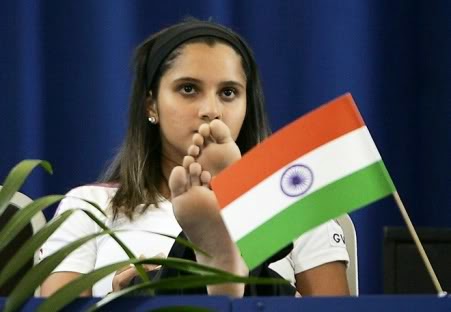
Indian tennis star Sania Mirza, a Muslim wed to a Pakistani
cricketer, broke down in tears Friday after being described by a Hindu
nationalist politician as “Pakistan’s daughter-in-law” and unfit to be
an Indian representative.

………..
Mirza, 27, who is married to Pakistani
cricketer Shoaib Malik, wiped away tears as she told India’s NDTV
network she was tired of continually being forced to defend her
“Indianness”.

“I am a very patriotic person that is why I am so
emotional right now,” Mirza, who wed Malik in 2010, said in the
interview aired on television.

In comments reported earlier this
week by local media, K. Laxman, a regional legislator belonging to the
national ruling Bharatiya Janata Party (BJP), questioned the credentials
of Mirza to be “brand ambassador” for the country’s newest state
Telengana in southern India.

Laxman was quoted as saying Mirza’s marriage to Malik made her a
“daughter-in-law” of Pakistan, India’s Muslim neighbor and
nuclear-armed rival with which the mainly Hindu but officially secular
country has fought three wars.

Telangana, carved this year out of
the state of Andhra Pradesh “is proud of Sania,” said in appointing her
brand ambassador for the region.

Mirza grew up in the city of Hyderabad in what is now Telangana.

“Fans
across the country don’t think her Indianness has gotten mysteriously
diluted,” because of her wedding to Malik, the Times of India said in an
opinion-page piece.

Mirza, who has played for India at all
major-level sporting events, has been defended by leaders across the
political spectrum, including BJP members who said its party member’s
comment did not reflect its official stance.

Mirza earlier this
month achieved a career-best rank of number five in the world when the
new World Tennis Association doubles chart was released.

“After
winning medals for India after I got married, (I) don’t know why I have
to keep justifying that I am Indian,” Mirza told NDTV.

The latest
incident is seen as potentially further fanning concern among Muslims
and other religious minorities over Prime Minister Narendra Modi’s Hindu
nationalist BJP government.

The controversy has erupted just days
after some MPs from the Hindu right-wing Shiv Sena tried to forcibly
feed a chapati – an Indian flatbread – to a Muslim restaurant manager
fasting for Ramadan because they were unhappy about food at a government
canteen.

The lawmakers belonging to Shiv Sena, a BJP ally, said
they had not known the canteen supervisor was Muslim and they were
complaining because the bread was so hard it “didn’t even break”.

……

Link: http://www.dawn.com/news/1121562/sania-cries-over-pakistans-daughter-in-law-taunt/

…..

regards

Irony of ironies

So it seems that Indians (or Pakistanis or Dravidians of the Indus) got to Australia before the current crop of Brit-Australians (whose descendant now go and attack Indian students for being “foreign”). Reality is so much stranger than fiction.

http://www.australiangeographic.com.au/news/2013/01/aboriginal-genes-suggest-indian-migration/

Proof (Browns are sand-niggers)

“Just as your capital is welcome here to produce good-paying
jobs in the U.S., I’d like our capital to be welcome there,” he said. “I ask
cooperation and commitment and priority from your government in so doing. Can I have that?”…..The question prompted a lengthy pause and looks of confusion
from State Department and congressional staff…….”I think your question is to the Indian government,” Biswal
said. “We certainly share your sentiment, and we certainly will advocate that
on behalf of the U.S.”………

 ……
We recommend an immediate embargo on the appointment of any new Indian-Americans as front-line officials. It is not healthy for the country’s (or a section of it) self-image as a Christian, White nation (btw did you know that Jesus was white and had blonde hair and blue eyes?).

That said, we are (easily) impressed. A Tea Party politician claiming to be a fan of Bollywood? Right now people are planning for a special lecture to be delivered to a joint session of the Congress by our Maha-Purush (Great Man). Make sure that you sign the petition, sir-ji!!!

………………
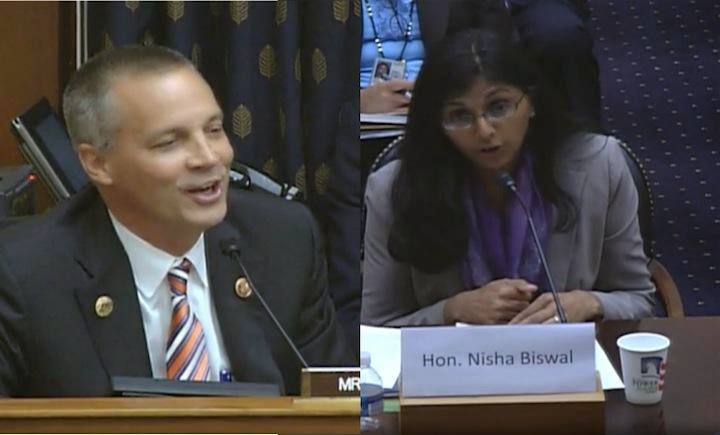
In an intensely awkward congressional hearing of the House Foreign Affairs Committee on Thursday,
freshman Rep. Curt Clawson misidentified two senior U.S. government officials as
representatives of the Indian government.


….

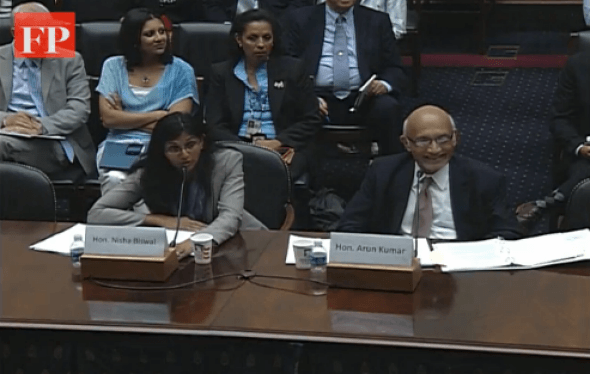
The two officials, Nisha Biswal and Arun Kumar, are Americans
who hold senior positions at the State Department and Commerce Department,
respectively.
Although both Biswal and Kumar were introduced as U.S. officials
by the chairman of the Asia and Pacific subcommittee, Clawson repeatedly asked
them questions about “your country” and “your government,” in reference to the
state of India.


….

“I’m familiar with your country; I love your country,” the
Florida Republican said. “Anything I can do to make the relationship with India
better, I’m willing and enthusiastic about doing so.”


….

Apparently confused by their Indian surnames and skin color,
Clawson also asked if “their” government could loosen restrictions on U.S.
capital investments in India.


“Just as your capital is welcome here to produce good-paying
jobs in the U.S., I’d like our capital to be welcome there,” he said. “I ask
cooperation and commitment and priority from your government in so doing. Can I have that?”


….

The question prompted a lengthy pause and looks of confusion
from State Department and congressional staff attending the hearing.
“I think your question is to the Indian government,” Biswal
said. “We certainly share your sentiment, and we certainly will advocate that
on behalf of the U.S.” 

………….

It’s extremely uncommon for foreign officials to testify before
Congress under oath. Even so, it’s unclear if at any point
Clawson realized his mistake, despite the existence of a witness list
distributed to the various members detailing Biswal and Kumar’s
positions. Clawson’s office did not respond to multiple requests for
comment. 


….

During the hearing, he
repeatedly touted his deep knowledge of the Indian subcontinent and his
favorite Bollywood movies. None of his fellow colleagues publicly called him
out on the oversight — perhaps going easy on him because he’s the new guy.


….

The Tea Party-backed lawmaker won a special election last month
to fill the seat of Trey Radel, who resigned after being convicted for cocaine
possession. Clawson pitched himself as an outsider with private sector experience and touted his role as chief
executive of an aluminum wheel company.


….

Thursday was Clawson’s first day sitting on the subcommittee on
Asia and the Pacific. He was named to the full committee July 9. Subcommittee
Chairman Steve Chabot (R-Ohio) promoted Clawson’s deep international business
acumen and knowledge of four languages in welcoming him. “Our newest member of
this committee, Curt Clawson … speaks four languages and all kinds of other
great stuff,” Chabot boasted.


The gaffe comes as members of Congress seek to strengthen U.S.
ties to the world’s largest democracy following the election of Indian Prime
Minister Narendra Modi this spring. Lawmakers are circulating letters to have Modi address a joint session
of Congress.


….

Following Clawson’s opening statement, Rep. Eliot Engel, the
full panel’s ranking Democrat, appeared eager to point out that Biswal and
Kumar work for the United States. “Thank you both for your service to our
country, it’s very much appreciated,” New York’s Engel said.


….
Update: While Clawson’s office did not respond to a request for comment, the congressman apologized in a statement to USA Today later
on Friday. “I made a mistake in speaking before being fully briefed and
I apologize. I’m a quick study, but in this case I shot an air ball,”
he said.

…..

Link: http://thecable.foreignpolicy.com/posts/2014/07/25/exclusive_freshman_congressman_mistakes_senior_government_officials_for_foreigners

…..

regards

No home but Rome

He would start off with – Bandhu! kaimun acchen? After the usual Bhalo and Ami-o Bhalo, there would be the usual bari kothaye and questions about Italy….Some would be arrogant and say their bari is Rome and dont know any other bari (bari = home)….dad would nod his head disappointingly and mutter – arrogant bastard, forgetting his roots.
……
We are especially fond of quoting Tariq Ali Sahab but this comment can come from any South Asian (non-Indian, non-Hindu) blogger.

Why they ask – when India has such a brutal record as certified by the Goddess of Aymanam (you just got to love Malayalam word-mixtures – Ay is Tamil for five, Vanam is Sanskrit for forests, Aymanam is the land of five forests- ref. Wiki) – why does India get such nothing to see here just move on press, while other countries in South Asia (mainly Pakistan) get such bad press?

We were curious about this as well. While the international press certainly played up the liberals think Modi/RSS is the devil incarnate theme, they were also (in our opinion) receptive to the Vikaas Purush (god of development) image that Modi was selling (toilets before temples etc). They liked the fact that he comes from a humble back-ground. They really really liked the fact that he is a lower caste Shudra. We may have imagined it but there was tacit appreciation of the fact that India does need a strong leader to make its way in the world….

…..That said we feel there is something more than all the above…..


That elusive factor (in our opinion) is that the West (politicians, press, public to some extent) do not simply see Hindus as a threat. They see Hindus integrating into Western society in fairly large numbers and doing well. Their interactions with India (business, sports-IPL, medical tourism) may be frustrating but manageable. They see India well integrated into the Western-Westminister model. They may even feel that India is doing a good job of keeping 1.3 bil people calm and peaceful (relatively). To the extent they think that BJP is going to keep muslims down, they may even approve of this (in small doses). Common enemies and all that.

OTOH the West is scared shit of muslims (also Chicoms). They really think that the Taliban may one fine day capture the nuclear arsenal. A muslim man is automatically considered a terrorist (unless proven innocent). You want sharia laws, you keep women in burqas, your mosques are taking over ancient pubs, you want to even islamize schools. You want to join  the jihadis in Syria, fine, just go and dont come back. BTW did you know that muslim snitches are highly valued by MI6/FBI/CIA, you can make some serious money by acting funny in the mosque? Deal??

The point is that (we imagine) the societal pressure on a South Asian immigrant from muslim background will be much more intense (as opposed to non-muslims). If asked (even by fellow browns) they may be forced to say something like Rome is our home not Rangpur. That is sad and even a bit pathetic. Or maybe it is all our imagination. Sorry to have wasted your time.
…………
Amar

I think I have been witnessing, in little visual
sightings over 4 years, the rise of the Bangladeshi community in Italy.
 

In the early years, they were selling umbrellas and knick knacks on
street corners, carrying everything they sold. Then I started seeing
them behind the counter in semi-permanent and corner shops, and in
restaurants, as waiters and chefs.

Then I saw that some of them
had their own small shops, and I even found a place with Bangladeshi
candidates for rival parties competing in local elections.

This
year, for the first time, I saw that women had followed the men, and I
saw families together – man, woman, and little children. These families
were not selling products, they were checking out things like normal
family on weekend,
and then to cap it all, I even saw overly ghettoised
Bangladeshi teens, in expensive sneakers wandering on their own.

I feel like I have seen community evolution in high speed.

Akbar

My
father just picked on any Bengali vendor whenever i was busy looking
for a street on the map – one of his ways to keep himself entertained.

He would start off with – Bandhu! kaimun acchen? After the usual Bhalo and Ami-o Bhalo, there would be the usual bari kothaye and questions about Italy and waghiara waghaira, and directions – which bus to take etc.

Some would be arrogant and say their bari is Rome and dont know any other bari (bari = home), and dad would nod his head disappointingly and mutter – arrogant bastard, forgetting his roots.

Near the colloseum, dad combined an old Pakistani film dialogue into his own – Yeh woh jaga hai jahan Rome kay zaleel kuttay kharey hokar tamasha dekhtay tey. I responded – Ab Bengali kharey hotay hain!!

We bought coconut slices and fruit salad from a Bengali vendor. In the heat the taste was heavenly.

……

Link: http://www.amar-akbar-anthony.blogspot.in/2008/10/a-on-italys-deshis.html

…..

regards

Around the world!

As I’m spending my summer in London (I’m beginning to tinker with the notion that summer period May-Oct in the Northern Hemisphere, the rest in the Southern) and collecting my various thoughts I’m starting to notice the world again.

(1) the Malaysian airlines crash is a real shocker especially since I remember on my commute to work in march in Uganda the news was simply M370 and Ukraine. Now somehow the stories have shockingly and unimaginably collidle (Malaysian aircraft crashes in the Ukraine!) Also I remember a very well-connected friend darkly suggesting to me at the time that there was more than meets the eye and that the two events (Ukraine & Malaysia disappearance) were connected on a more profound level than I imagined. I dismissed him at the time however the immediate news has made me incline to believe.
(2) as we are mid-way through the fasting period I must give a heads up to the Muslims who are doing 17hr fasts or whatever it is (in the northern hemisphere). I had a Very pleasant fasting period in March (for the Baha’i fasts), it was a long 12 hrs but it was enerverating and kick started my current super-healthy phase.
(3) finally an Indian was remarking to me that they found that Pakistanis had a spark that was lost in Indians. The reasoning being that Indians were fairly straightforward in their goals (money, success, sex or whatever) whereas Pakistanis are so conflicted and convulated that they have to develop very eccentric and interesting characters to cope. A certainly interesting thought..

Now we know (who you are)

The world of BPeeps (as we imagine it) is pretty pish-posh. An insight into the life-style that we would love to follow (if we had the money). For now we can only find release in idle envy and non-lethal barbs (no occupy movement for us).

The propaganda is intended to be soft (focused on women) but ends up looking a bit silly (in our opinion).
……

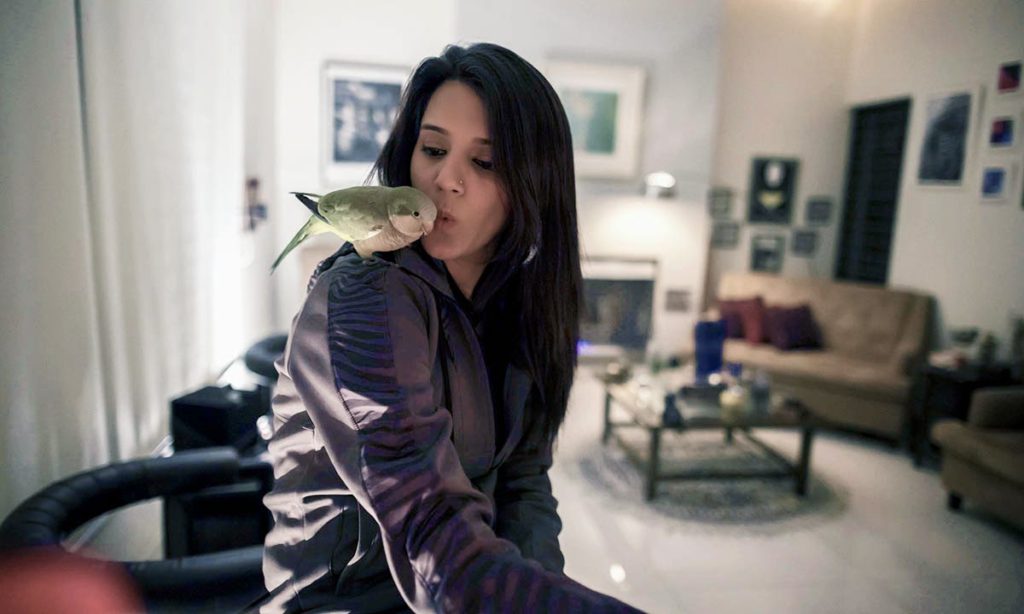
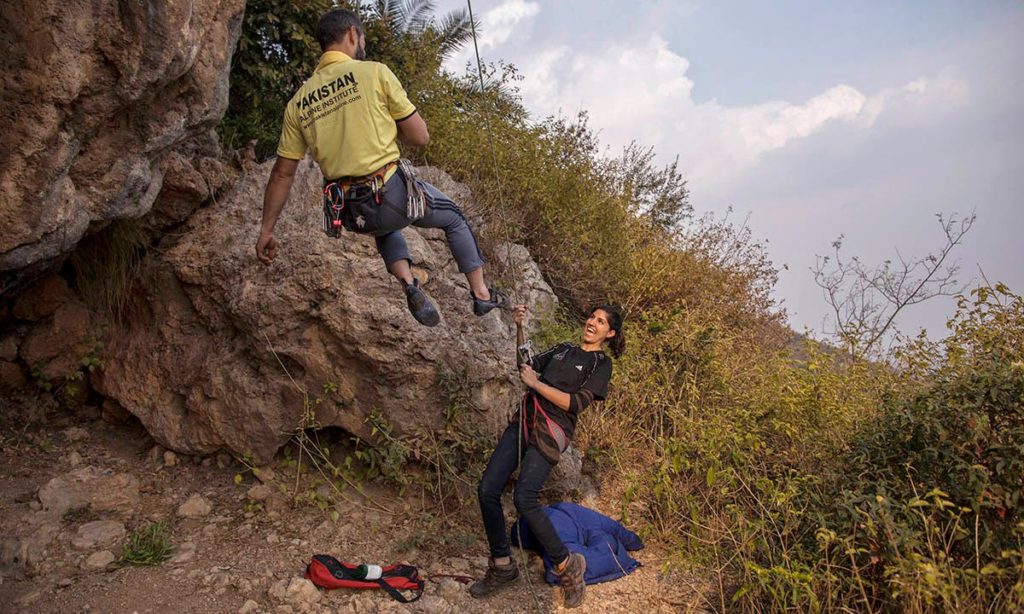
Nice pix, gonad busting (slightly scary) lady.

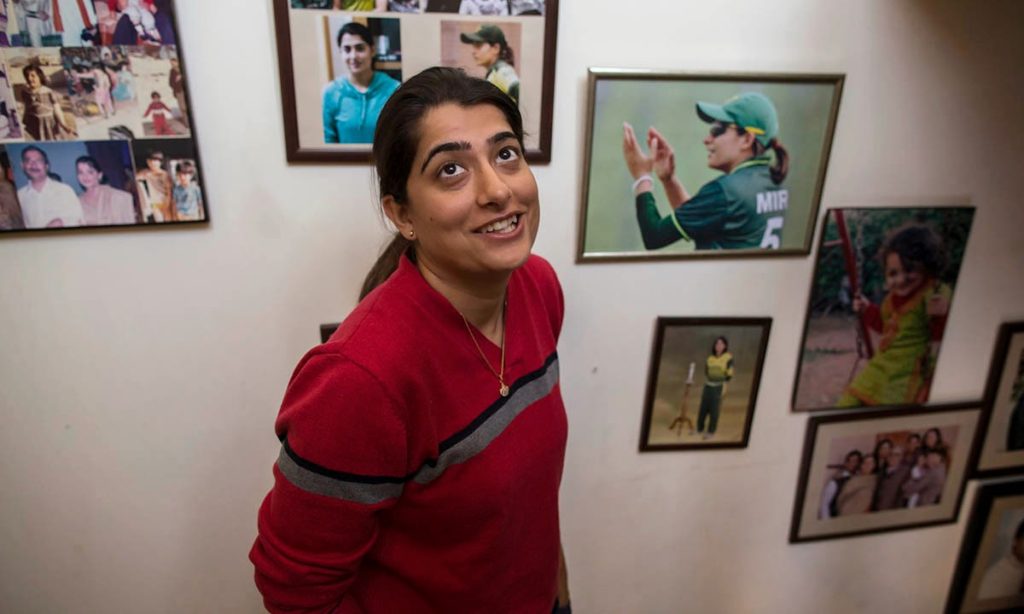
Genuinely likeable case #1. Sana Mir is a role model for all of us.

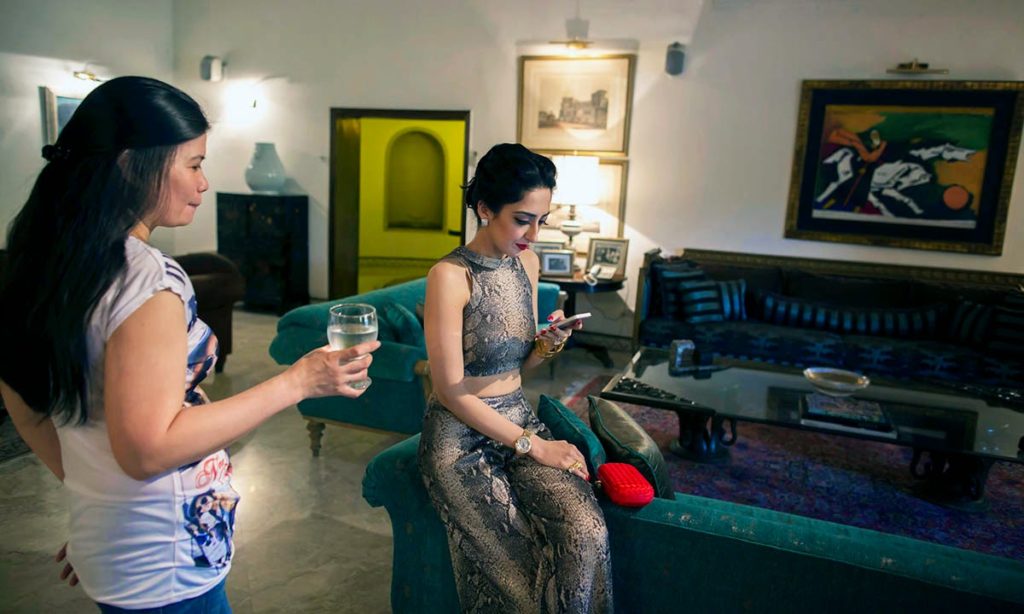
We are not sure of the propaganda value of this picture. It used to be that rich people would employ domestics from the village (gaon). Now they have upgraded to imported labor from the Philippines. Also, what is an educationalist??

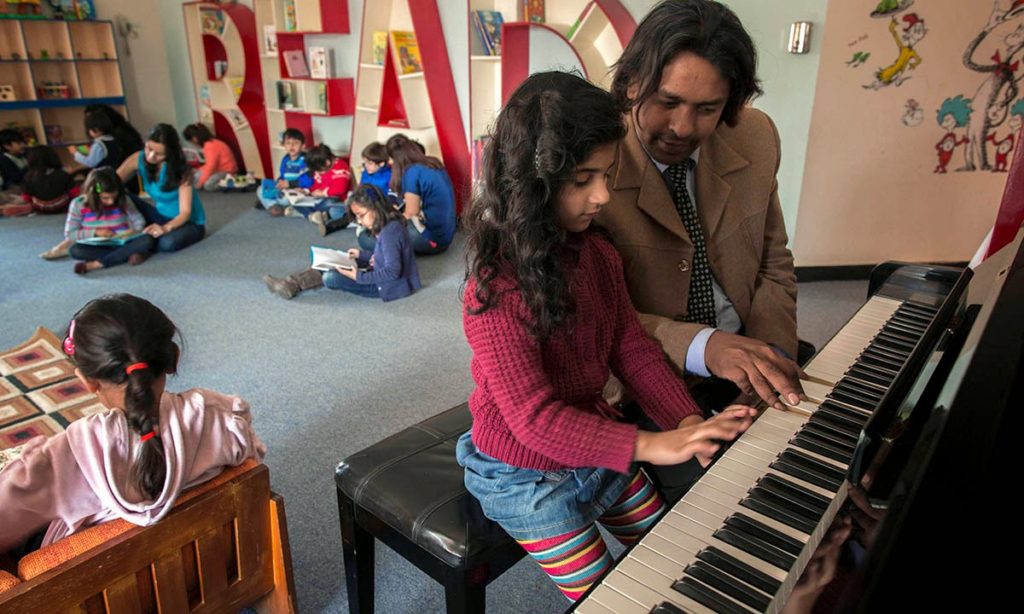
This is the place where the super-rich will send their kids to learn about the nice things of life. The music instructor plays the sophisticated piano (not the ridiculous harmonium) and he is dressed appropriately in a suit and a tie.

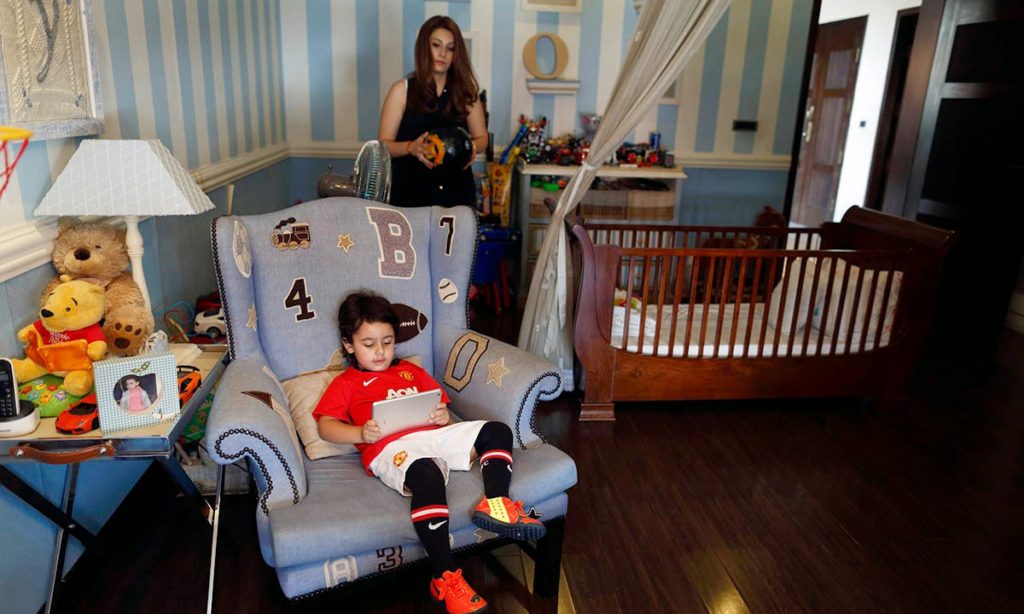
A cozy throne for the little emperor.

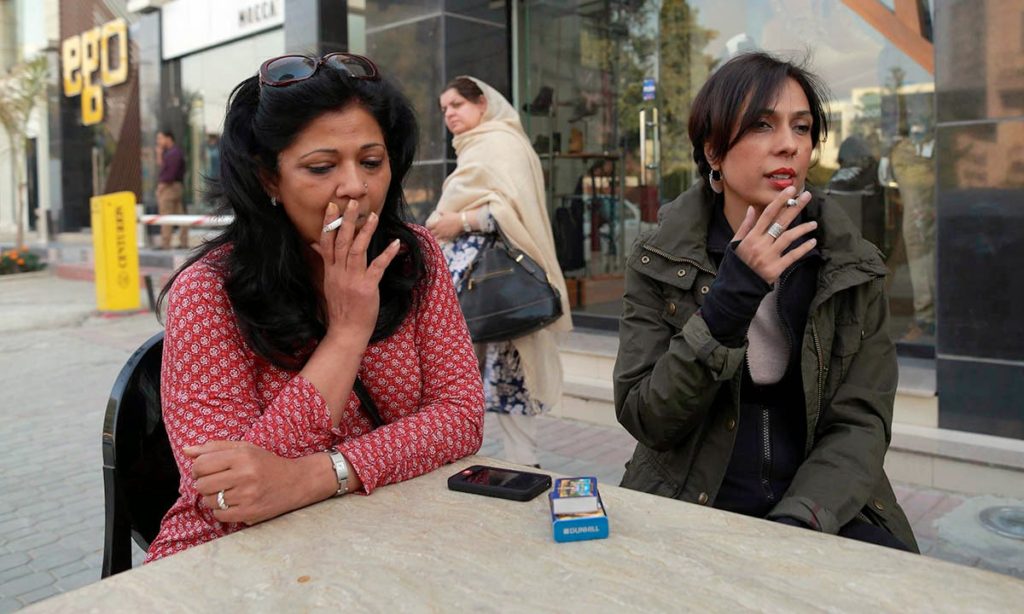
She is a health-specialist and she smokes? We really dig the rebellious spirit….if we were a cool teenage girl that is.

Looks like a villain in a Bond movie (why not females?).

Genuinely likeable case #2

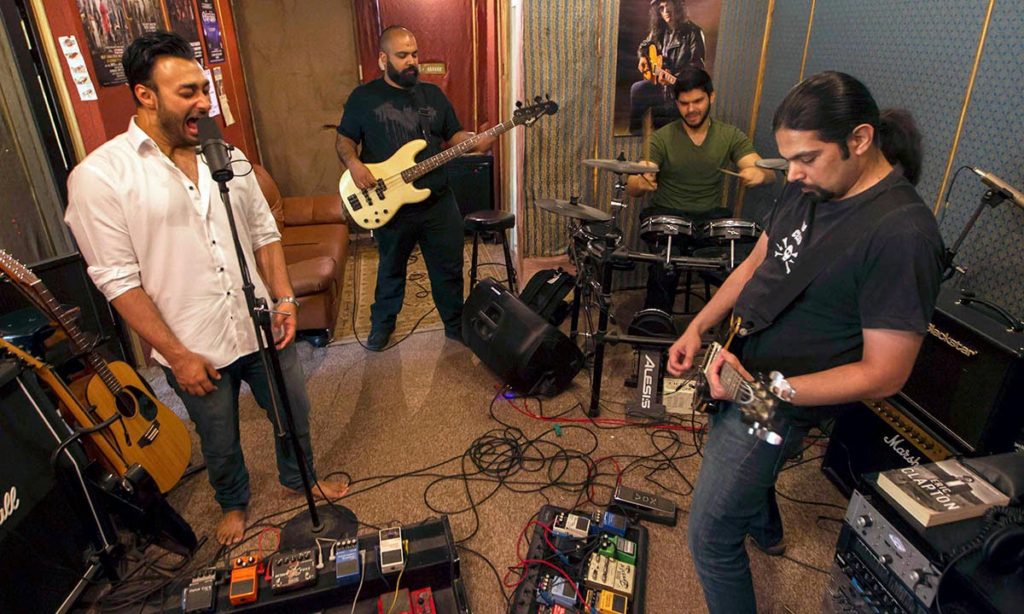
The inevitable band of brothers, much better than smoking hookah together.

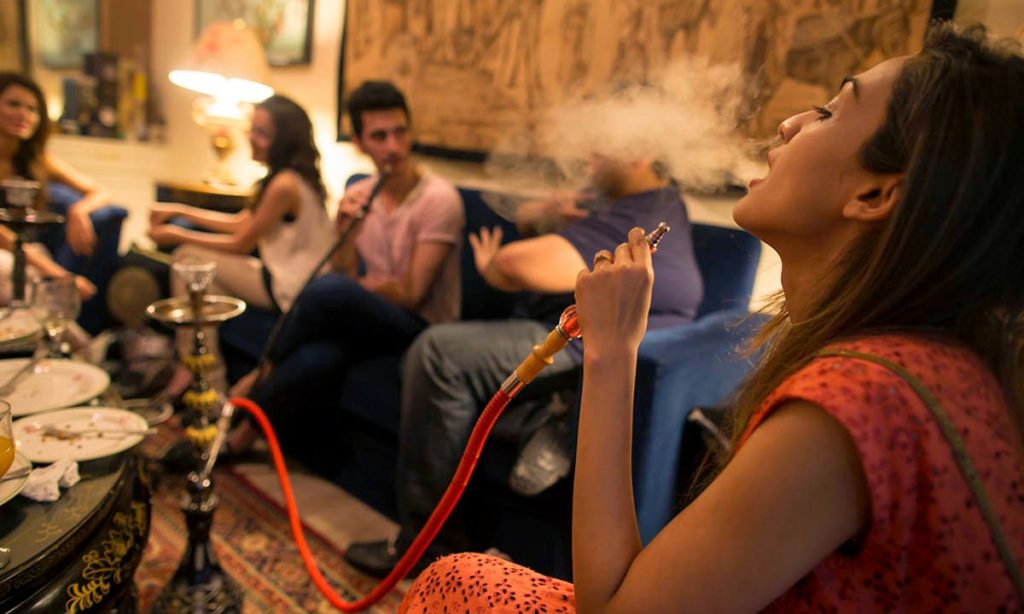
Artists smoking the hookah (this is also alarmingly popular amongst rebellious youth in the USA)

…..

Link: http://www.dawn.com/news/1118136/the-other-pakistan

…..

regards

Total Information (South Asian Muslim) Management

“It’s entirely false that US intelligence agencies conduct electronic
surveillance of political, religious or activist figures solely because
they disagree with public policies or criticize the government”
….Three of the five American Muslims marked for surveillance are of Pakistan origin, community sources told Dawn.

Two
of the three – Asim Ghafoor, (Asok-mon informs that Asim is Indian origin, thanks Asok) Faisal Gill – are lawyers while the third,
Agha Saeed, heads a Muslim think-tank.

……

The Intercept said it identified at least five persons, all American citizens, based on their email addresses. These include Indian-origin attorney Asim Ghafoor, who has represented clients in terrorism-related cases.” I believe that they tapped me because my name is Asim Abdur Rahman
Ghafoor, my parents are from India, I traveled to Saudi Arabia as a
young man, and I do the pilgrimage,” Ghafoor was quoted as saying by The Intercept.


….

It is likely that these community leaders would be well known in the Brown world. It is unlikely that the surveillance stops with just these activists. Please take care. 


How do they know if someone is an islamist radical? They do not. The assumption is that if you are a muslim you are guilty until proven innocent. So they watch and wait….

This would normally be bad enough but it gets to be more sinister than that. They will purposefully introduce some radical element who will faithfully attend mosque sessions and make blood-curdling speeches. Some innocent boys (mostly) will be trapped and the sheeple will rest happy knowing that the authorities have taken so much trouble to nip the trouble-makers in the bud.

Of course there are as always romantic, hot-headed youth who are converging upon the Caliphate (as we speak) to fight the thousand year old war(s). And when they return home they are so imbued with propaganda that they would target Jewish fellow citizens.
In the meantime, Jews in Israel, Hindus in India, Buddhists in Sri Lanka, Burma and Thailand and Christians in the Philippines are killing Muslim fellow citizens (to the extreme point of de-recognizing muslims as citizens).

That leaves the Sikhs (and to a lesser extent Hindus and other browns) settled in the home of lunatics with bazookas. Some low-wattage person will always manage to find his way to a Gurudwara and shoot people down (because from a distance they look like muslims).

In summary, muslims are kiling muslims for being the wrong type of muslims. They are also killing non-muslims. Non-muslims are killing all types of people (but mostly muslims) fearing that muslims will take over the world.

Of course there are hundreds of valid reasons and thousands of invalid excuses for all of this. But please do not tell insult our intelligence by claiming that religion has nothing to do with all of this (the recent left-liberal world view).
……..

The FBI and National Security Agency
monitored the emails of prominent Muslim-American activists, academics
and a political candidate, according to a report co-authored by journalist Glenn Greenwald.


The report appearing in the online news site the Intercept said the
surveillance was authorised by a secret intelligence court under
procedures intended to locate spies and terrorist suspects.


The report, citing documents in an NSA spreadsheet leaked by former
contractor Edward Snowden, showed the emails of the individuals, but not
their names.


The Intercept said it identified at least five persons, all American citizens, based on their email addresses.


….

They were Faisal Gill, a longtime Republican Party operative and
one-time candidate for public office; Asim Ghafoor, an attorney who has
represented clients in terrorism-related cases; Hooshang Amirahmadi,
an Iranian-American professor at Rutgers University; Agha Saeed, a civil
liberties activist and former professor at California State University;
and Nihad Awad, the executive director of the Council on
American-Islamic Relations.


….

According to the report by Greenwald and Murtaza Hussain, the
spreadsheet shows 7,485 email addresses listed as monitored between 2002
and 2008.


Many of the emails appeared to belong to foreigners suspected of being
linked to Al-Qaeda, including Anwar al-Awlaki, the Yemeni-American
cleric killed in a 2011 drone strike.


But the journalists’ investigation also found a number of US citizens
monitored in this manner, which requires an order from the secret
intelligence court based on evidence linking them to espionage or
terrorist activities.


US officials, responding to the report, said communications are only
monitored with a “legitimate foreign intelligence or counterintelligence
purpose.”


“It is entirely false that US intelligence agencies conduct electronic
surveillance of political, religious or activist figures solely because
they disagree with public policies or criticise the government, or for
exercising constitutional rights,” said a joint statement from the
Justice Department and office of the Director of National Intelligence.


….

“Unlike some other nations, the United States does not monitor anyone’s
communications in order to suppress criticism or to put people at a
disadvantage based on their ethnicity, race, gender, sexual orientation
or religion.”


….

The statement added that a court order for any surveillance of this kind
requires “probable cause, based on specific facts,” which indicate that
the person “is an agent of a foreign power, a terrorist, a spy, or
someone who takes orders from a foreign power.


Both the Department of Justice and Director of National Intelligence
immediately denied that they conducted electronic surveillance of
political, religious or activist figures solely because they disagree
with public policies or criticize the government, or for exercising
constitutional rights.


….

“It’s entirely false that US intelligence agencies conduct electronic
surveillance of political, religious or activist figures solely because
they disagree with public policies or criticize the government, or for
exercising constitutional rights,” the Office of the Director of
National Intelligence and the Department of Justice said in a joint
statement.


Unlike some other nations, the US does not monitor anyone’s
communications in order to suppress criticism or to put people at a
disadvantage based on their ethnicity, race, gender, sexual orientation
or religion, the statement said.


….

“Our intelligence agencies help protect America by collecting
communications when they have a legitimate foreign intelligence or
counterintelligence purpose. With limited exceptions (for example, in an
emergency), our intelligence agencies must have a court order from the
Foreign Intelligence Surveillance Court to target any US citizen or
lawful permanent resident for electronic surveillance,” it said.


….

“These court orders are issued by an independent federal judge only if
probable cause, based on specific facts, are established that the person
is an agent of a foreign power, a terrorist, a spy, or someone who
takes orders from a foreign power,” it said.


….

“No US person can be the subject of surveillance based solely on First
Amendment activities, such as staging public rallies, organizing
campaigns, writing critical essays, or expressing personal beliefs. On
the other hand, a person who the court finds is an agent of a foreign
power under this rigorous standard is not exempted just because of his
or her occupation,” the statement added.

……

Link: http://www.outlookindia.com/news/printitem.aspx?848980

…..

regards

Revenge!! Justice!!!

Dov Charney, CEO of American Apparel was finally kicked out of the company he founded, apparently because of sexual harrasment lawsuits, but also because the company was losing money- bigtime.

One thing the New York Times and the liberals forgot. The sex maniac exploited an young Bangladeshi girl supposedly to draw attention to the fact that AA was paying americans to make clothes, not some sweatshop in Bangladesh. This was seen by many as an insult to islamic traditions (see Rezwana Manjur opinion below). Finally it did not take into account the fact that such sweat-shop work has created some real opportunities for Bangali women to the point where the social indicators in BD lag only behind Sri Lanka in the sub-continent.

Conservative Bangalis who were outraged at American Apparel must be saying their thanks in their daily prayers. Good riddance to sex maniacs who take advantage of the power they hold to take advantage of young powerless people.

Only one small point remains. The people who felt insulted by Dov Charney must also remember the dead young women (and men) who were victims of deliberate negligence of garment manufacturers in Bangladesh. Dov Charney is indeed a criminal, but those people are monsters. Justice must be served, even if cold.
……..

Last week, after a decade of sexual harassment allegations
against American Apparel founder and CEO Dov Charney—and countless
brazen media appearances where he copped to soliciting sexual favors
from employees and embraced his “dirty guy” persona
—Charney was finally
axed by his company’s board. What took so long? Today, the New York Times parses the factors behind the board’s decision. It was a little bit about harassment. But it was mostly about money.


On the surface, the board’s decision was directly sparked by a sexual
harassment finding against Charney. American Apparel forces its
employees to bring claims against the company in private arbitration,
not in the courts.
 

That means that the results of any sexual harassment
allegations were kept secret and, in many cases, ended in settlement
agreements even before the arbitrator could determine whether Charney
was at fault. (In one case, Charney’s lawyers offered a former employee
who claims she was sexually harassed by Charney $1.3 million to agree to
allow him to publicly announce that he was found innocent of her
charges; the arrangement hit the press after the employee backed out of
the deal). 

The process left the company’s board with “very little in the
way of established legal fact,” the Times reports. But this
year, one of these arbitrated disputes finally resulted in a firm ruling
against Charney: An arbitrator found Charney responsible for
“defamation for failing to stop the publication of naked photographs of a
former employee.”
She was awarded about $700,000, and the board finally
had the ammunition to fire its CEO.


But in the background, it was flagging profits that forced the board
to act. In 2007, shares of American Apparel were worth $15; last year,
they plummeted to a low of 47 cents a share. The company lost $106
million in 2013, and as it scrambled to secure more capital, interest
rates on its loans spiked to 20 percent…..


In years past, even if the board had good reason to fire Charney
based on his behavior alone, “it did not have the appetite to remove the
company’s driving creative force,” the Times reports…..Charney’s
practices only caught up to him when they stopped being bankable—just
like other moneymakers with harassing reputations. Given the history,
it seems doubtful that the board was really moved by the sexual
harassment allegations. Sex sells until it’s bad for business.


……
American Apparel has made headlines again with another controversial ad.

The brand, which famously featured 62-year-old Jacky O’Shaughnessy as its lingerie model, revealed its latest campaign with a bare-chested Bangladeshi model.

Posted on its retailer’s website, it identifies the model as Maks who is a Bangladesh-born merchandiser and has been with the brand since 2010.


The description under the ad then reads: “She doesn’t feel the
need to identify herself as an American or a Bengali and is not content
to fit her life into anyone else’s conventional narrative.”


This I personally find ironic because labelled across her chest, by American Apparel, are the words: “Made in Bangladesh.”


…..
I’m forced to question: If Maks did not wish to be identified as of a
particular nationality, why pose for a picture that boldly proclaims:
“Made in Bangladesh”?


Having my own roots tied to Bangladesh, I can attest that in the
largely Muslim nation, an ad such as this would be highly inappropriate
and unfathomable.


….
American Apparel told Marketing it was not commenting on the commercial.

Check the image out here: http://www.americanapparel.net/presscenter/ads/images/a9000/type3/9826_MAKS_AD_040314_LG.jpg


….
Here’s the full text that came along with the image:

She is a merchandiser who has been with American Apparel since
2010. Born in Dhaka, the capital of Bangladesh, Maks vividly remembers
attending mosque as a child alongside her conservative Muslim parents.
At age four, her family made a life-changing move to Marina Del Rey,
California. Although she suddenly found herself a world away from Dhaka,
she continued following her parent’s religious traditions and sustained
her Islamic faith throughout her childhood. Upon entering high school,
Maks began to feel the need to forge her own identity and ultimately
distanced herself from Islamic traditions. A woman continuously in
search of new creative outlets, Maks unreservedly embraced this photo
shoot.


She has found some elements of southern California culture to be
immediately appealing, but is striving to explore what lies beyond the
city’s superficial pleasures. She doesn’t feel the need to identify
herself as an American or a Bengali and is not content to fit her life
into anyone else’s conventional narrative. That’s what makes her
essential to the mosaic that is Los Angeles, and unequivocally, a
distinct figure in the ever-expanding American Apparel family. Maks was
photographed in the High Waist Jeans, a garment manufactured by 23
skilled American workers in downtown Los Angeles, all of whom are paid a
fair wage and have access to basic benefits such as healthcare.


…..
In my opinion, the ad is also borderline disrespectful to the
conservative religion of Islam where women are encouraged to stay
covered. Under her topless figure, the ad describes Maks as “vividly
remembering attending mosque as a child alongside her conservative
Muslim parents”. In fact, it was her parents’ traditional ways that
helped “sustain her Islamic faith throughout her childhood”.
I am not sure how going into such depth about her Islamic upbringing
is necessary to pointing out that one can build his or her own identity.
Was this simply a sly move for the retailer to take a jab at the
conservativeness of Islam? I wonder.


And if you can actually grab your eyeballs away from her naked chest,
you will see Maks wearing a pair of high-waisted jeans, which according
to the garment manufacturer were made by “23 skilled American workers
in downtown Los Angeles, all of whom are paid a fair wage and have
access to basic benefits such as healthcare”.


….
Even if this was actually an attempt to raise awareness on the 2013 Rana Plaza factory collapse and make a balanced stand for the issue, I
feel that an ad with a bare-chested Bangladeshi youth does absolutely
nothing for the three million women in the Bangladesh garments industry
slaving away.

……

Link (1): http://www.slate.com/blogs/xx_factor/2014/06/27/dov_charney_firing_american_apparel_ceo_was_fired_for_financial_reasons.html

Link (2): http://www.marketing-interactive.com/did-american-apparel-go-too-far-ad/

……

regards

Brown Pundits