255, 261, 264, 350, 381

Five Indians in the Forbes USA Top-400 list. In one way it is nice, the percentage of  the ultimate high earners is in line with the expat Indian community strength in the USA. However the list is empty at the top (no one in Top 200).

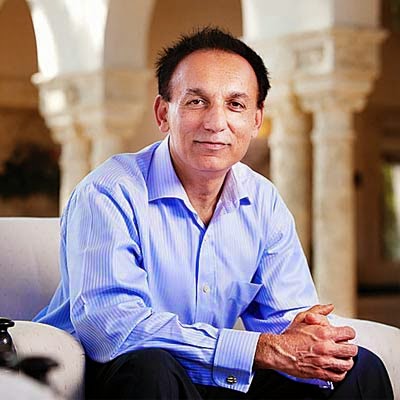
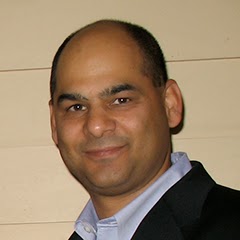
As expected, Bharat Desai, John Kapoor, Ramesh Wadhwani, Ram Shriram, and
Vinod Khosla
have either technology backgrounds or play in technology.
Specifically, Desai (IIT Bombay), Wadhwani (IIT Bombay) and Khosla (IIT Kharagpur) are Indian Institute of
Technology graduates and are committed to improve those institutions and create entrepreneurs (not just technology officers).
………

 ….
The Indian Institute of Technology (Bombay) in
Powai (Mumbai) received quite a windfall recently when billionaire alumnus
Bharat Desai, chairman of US-based company Syntel, donated $1 million to
his alma mater. The money will go toward starting a robust
entrepreneurship centre so that many more technicians come out as
entrepreneurs
rather than just as degree-holders.

……
Five Indian-Americans have been named among the 400 richest people in
the US by Forbes, a list topped by Microsoft co-founder Bill Gates for
the 21st year in a row with a net worth of USD 81 billion.


Founder of outsourcing firm Syntel Bharat Desai, entrepreneur John
Kapoor, Symphony Technology founder Romesh Wadhwani, Silicon Valley
angel investor Kavitark Ram Shriram and venture capitalist Vinod Khosla
are among The Richest People In America 2014 list by Forbes.


….

Forbes said 2014 was another record year for American wealth, when the
aggregate net worth of the richest 400 Americans was USD 2.29 trillion,
up USD 270 billion from a year ago. 


“Thanks to a buoyant stock market, the richest people in the US just keep getting richer,” Forbes said.


….

Gates is the richest American for the 21st year in a row, with a net
worth of US 81 billion. The Microsoft chairman’s stake in the software
company he cofounded accounts for just under 20 per cent of his total
net worth. His friend Warren Buffett, chief executive of Berkshire
Hathaway, occupies the number two spot on the 400, a rank he has held
since 2001 with a net worth of USD 67 billion.


Larry Ellison, who just announced that he was giving up the CEO role at
Oracle, the software firm he founded, comes in at number three, with a
net worth of 50 billion dollars.


Facebook co-founder and CEO Mark Zuckerberg is now the 11th richest
person in the US, and the biggest dollar gainer on the list. His fortune
soared to USD 34 billion, up USD 15 billion since last year, due to a
sharp rise in the price of the social network’s shares.


Desai and his family rank 255 on the list, followed by Kapoor who is ranked 261, Wadhwani (264), Shriram (350) and Khosla (381).

….

Desai, 61, and wife Neerja Sethi founded outsourcing firm Syntel in 1980
while studying at University of Michigan. The Indian Institute of
Technology alumnus has a networth of USD 2.5 billion.


Kapoor, 71, debuts on The Forbes 400 as a serial entrepreneur who has
founded two pharmaceutical companies that he has guided to exceptional
success.


The bulk of his wealth is concentrated in shares of Akorn
Pharmaceuticals, an Illinois-based generics manufacturer that Kapoor has
been involved with since the early 1990s, and INSYS Therapeutics, a
cancer-treatment maker that went public in May 2013.
Kapoor, whose net worth is USD 2.5 billion, also has a small chain of
fast-casual Indian restaurants in Arizona called Bombay Spice, as well
as Roka Akor Japanese eateries in Chicago, Scottsdale and San Francisco.


Wadhwani, 67, an Indian Institute of Technology Bombay alumnus has a net
worth of USD 2.5 billion. Forbes said over the last decade, his galaxy
of companies has expanded to 20 and is generating three billion dollars
in revenues with 18,000 employees worldwide.


He is the recipient of the 2013 Forbes India ‘Non-Resident
Philanthropist Award’ and sits on the boards of the Kennedy Center and
the Center for Strategic and International Studies. Wadhwani signed Bill
Gates’ and Warren Buffett’s Giving Pledge last year.


….

Shriram, 57, has a net worth of USD 1.87 billion. He was an early Google
backer and has been a Silicon Valley angel investor since 2000. Through
his Sherpalo Ventures, he has backed early-stage tech firms such as
Zazzle and Paperless Post, as well as the frozen yogurt retailer
Pinkberry.


Shriram made most of his fortune through Google and has been on its
board since the company was founded in 1998.
In June 2014, Shriram and
his wife donated $61 million to engineering initiatives at Stanford
University, which both of his daughters attended and where he is a board
trustee.


Khosla, 59, has a net worth of USD 1.67 Billion and has run his own
venture capital firm, Khosla Ventures, since 2004,
following nearly two
decades at VC firm Kleiner Perkins. His highest-profile investments have
lately been in clean tech: wood-based biofuel, new types of batteries
and water purification. 


All together, the 400 wealthiest Americans are worth a staggering USD 2.29 trillion, up USD 270 billion from a year ago.
The average net worth of list members is USD 5.7 billion, USD 700
million more than last year and a record high. An impressive 303 of the
400 saw the value of their fortunes rise compared to a year ago. Only 36
people from last year’s list had lower net worths this year. 


The list has 27 newcomers including Elizabeth Holmes the youngest woman
on the list, and the youngest self-made female billionaire in the world.
Just 30 years old, the Stanford University dropout has built blood
testing company Theranos into a firm that venture capitalists have
valued at USD 9 billion.

…..

Link (1): outlookindia.com

Link (2): dnaindia.com/bharat-desai-donates-1-million-to-iit-b

….

regards

Pakistani makes the largest political bet in history –

It seems us Pakis are instinctively Unionist (which makes sense – God save the Queen).

Describing himself as a committed unionist of Pakistani-German heritage, he said he had been partly motivated to gamble that much money – the largest political bet in British history and believed to be one of the largest worldwide – because it was good publicity for the pro-UK campaign.
But he added: “The first thing I should say is: don’t try this at home. Perhaps I have a bit of a unique background given what I do given I have been involved in markets and as my daughters tell me, I’m a bit of a data geek and information nerd.”
Nicknamed “Peter” by Vine after he insisted on remaining anonymous, he said he had studied more than 80 polls on the academic referendum website whatscotlandthinks.org, overseen by the Strathclyde University polling expert Professor John Curtice.
http://www.theguardian.com/politics/2014/sep/22/city-trader-bet-900000-scotland-no-vote-scottish-referendum

Brand Brown Muslim

….Rahman was born into a family of
struggling Bangladeshi immigrants….Putting himself through Oxford, Cambridge, Munich and Yale, he has been a mathematician, investment banker and international
human rights lawyer……..one is often tempted to speculate about
which of the two characters derives from Rahman himself…..Is it the brilliant, Bangladeshi Zafar?….Or could
it be the aristocratic Pakistani investment banker
with no name?…. 

….

 ….

In a way (and we accept this with great reluctance) the founding fathers of Pakistan had it right. There is a lot to be said for the creation of a “Medina in South Asia” as the authentic voice of sub-continental Sunni muslims. We have strong reasons to believe that once the memories of the dead and afflicted have faded, the sub-surface links between erstwhile East and West Pakistan will re-assert themselves.
…..

….
It is a shame that the (West) Pakistanis did not really recognize the Bangali muslims as their peers and equals. The gaps are now slowly mending (even as the gap with India and Indians is rising). With the help of imaginative leadership (aided by generous Gulf dollars) a broad coalition of Sunni muslim countries across South Asia (and perhaps even beyond) is possible.

If such a federation comes to life, a huge vote of thanks will be due to …who else…the imperialist United Kingdom (and the West as an extension). The Brown Muslims of London and New York who feel alienated by Western ways and discriminated by Western elites will be the prime movers in any reconciliation, rapprochement and if it comes to that even the hard work of federation building.

Already Bangla-Pak alliances are popular in the West…and why not? The BMs are defined (and constrained) by what they are and what they are not…not Indians (but browns), not Arabs (but muslims), not Westerners (but living in the West).

While inter-marriage will help, the heavy lifting must be done by powerful, sublime literature that help underline the commonalities between Bangladeshis and Pakistanis and subtly (and not so subtly) highlight the differences with other people. Thus we have “In the Light of What We Know” by Zia Haider Rahman a cultural (and spiritual) sibling of “The Reluctant Fundamentalist” by Mohsin Hamid and one which adds to the growing (and unique) voice of Brown Muslims. May such a thousand flowers bloom. 
….
The really interesting thing (for us) is the reaction of Indian Muslims. First off, the non-Sunnis (Shias, Ismailis, Bohras, Ahmadis…) may turn away from emphatic declarations of Sunni faith and due to the lived experience of non-sunni muslims in those countries. Muslims from South India (who are quite prosperous, mostly) may form a distinct cohort which resists assimilation with other Brown Muslims (similar to how Tamil Shudras will always reside outside and in opposition to the Hindu-Hindi majority).

The two most “vulnerable” groups are the Muslims of Eastern India (primarily Bengal and Asom) and those of the Hindi belt (primarily Uttar Pradesh and Bihar). As the Hindu-Hindi state grows in strength it is likely that the sense of alienation amongst muslims will keep growing. The eastern muslims are probably the most deprived of the lot (as per the Sachar committee report). The northern muslims are probably the most victimized – Azamgarh in UP is routinely termed in the news media as Atank-garh (terrorist town).

At the end of the day partition is as much a state of the land as it is a state of the mind. It will be a very good thing if the Hindu-Hindi state is able to overcome the caste divide that has poisoned our society for thousands of years. But it will be a very bad thing if the result is that the Muslims are defined as the common enemy (just like they are in the west).  

India cannot realistically hope to expel all muslims to Bangla-Pak. Even in that narrow sense there is no choice then but to co-exist.

This is no doubt an asymmetric situation (and Hindutva-vadis are naturally upset) but ultimately the secular way is the moral way. Nations who stand on immorality will never attain their fullest potential. Alternatively, to adopt Amartya Sen’s terminology, the contributions from the missing millions of minorities would have been a source of pride and joy…and ultimately strength of any nation.
…………

Imagine a book in which a gossipy story about former Pakistan
president Pervez Musharraf peeing in a women’s washroom and drunkenly
pursuing the Norwegian ambassador’s wife co-exists with a chance meeting
with Hamid Karzai, “at that time a rather shady figure involved in the
oil business”.


Or where a riff on Princeton mathematician Kurt Godel’s
Incompleteness Theorem is followed by an explanation of German physicist
Johann Poggendorff ‘s Illusion. Or which tells you that kings in Saudi
Arabia are buried in unmarked graves in keeping with austere Wahhabism
and the question that Charles II asked members of the Royal Society. 


Now
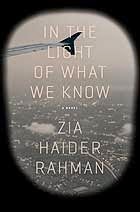
don’t imagine, read Zia Haider Rahman’s extraordinary book, In the
Light of What We Know. The banker-turned-human rights lawyer tells the
story, over 500 pages, of a conversation that spans the lifetimes of its
two protagonists: Zafar and the nameless narrator.


The two men
meet at university at Oxford and over the course of several years
develop a friendship that survives heartbreak, nervous breakdown and
cataclysmic world events, the war in Afghanistan and the collapse of the
American banking system. It takes them from long walks in Manhattan
which sometimes end up in Ellis Island, to ambles in London from the
British Museum through the elegant Georgian squares of Bloomsbury.


There
are more dramatic leaps of time and place: Zafar travels to rural
Bangladesh, where his family originally came from before his father
found work as a waiter in London; to Oxford, where he fights his own
embarrassment about his parents’ status in life; to Kabul, where a proud
nation is enslaved by the West in what the latter believes is a
civilising mission; to a sunlit but sterile kitchen in a New York home,
not necessarily in that order. 

….
The narrator, in the midst of being
accused of financial irregularities, takes time out to listen to a
friend he feels he left behind, partly propelled by guilt and partly by
the collapse of the certainties of his own life. It is a contrast in
privileges: The narrator’s own posh, have-it-all Pakistani family
compared to Zafar’s impoverished Bangladeshi parents unable to overcome
the atrocities of the 1971 war. 


It is
no surprise that Rahman’s book is earning rave reviews, gathering much
acclaim as it sweeps readers off their feet with its scope and
sensibility. The writer, who lives in London, and whose life seems a
tempting reflection of that of his narrator, has created an
extraordinary adventure. It is far away from the colonial narrative of
Afghanistan, which makes it a committed political novel if ever there
was one.


At its heart, it is a post 9/11 novel. which is why one
finds occasionally echoes of Mohsin Hamid’s The Reluctant
Fundamentalist.


It is a novel of rare beauty and power that has electrified the
literary establishment. It begins in London, about the time of the
financial crisis of 2008. The narrator, a young Pakistani
mat­hematician-tur­ned-investment banker, opens the door one morning to
see a bedraggled, half-­familiar figure outside. It takes a mom­ent for
him to recognise Zafar, the Bangladeshi math prodigy and his one-time
mentor who had disappeared mysteriously years ago.
The narrator takes
Zafar in and instals him in his guest room, and Zafar’s strange,
disturbing story emerges, thro­ugh conversations and diary pages, its
eve­nts cross-cutting between Oxford, Lon­­don, New York, Kabul and
Islamabad.

In the Light of What We Know is a work of post-9/11 fiction, a
territory that has been well covered by writers like Mohsin Hamid and
Nadeem Aslam (not to mention Don De Lillo and Martin Amis), but Zia
Haider Rahman presents his version of it with a seething new anger. It
is a story that mixes the political and the personal—friendship and
betrayal, class and alienation, the collapse of financial markets, as
well as of nations.


Reading the book, one senses resonances of Jos­eph
Conrad, V.S. Naipaul, Graham Gre­ene, John Le Carre, but most of all,
perhaps, W.G. Sebald, whose novels, like this one, are a hypnotic
mixture of travel, memory, fact, quasi-fact and fiction. 

It is a hugely
ambitious work, which could so easily have gone wrong, but Rahman’s
towering imagination, combined with his elegant, almost mathematically
precise prose, help him pull it off with env­iable ease. The novel ends
with a painful twist and a reference to Godel’s Incompleteness Theorem,
which seems to be at the heart of it all: in every system there are
propositions that are true, but cannot be proved to be true. And then,
one final, wry Sebaldian touch: a blurred black-and-white photograph of
two men, app­arently Einstein and Godel, taken from behind, as they take
one of their long walks through a Princeton evening. Thus, in a sense,
we come back to where the author started out, 555 pages earlier.


….
Rahman, the author’s profile tell us, was born into a family of
struggling Bangladeshi immigrants (his father was a bus conductor).
Putting himself through Oxford, Cambridge, Munich and Yale, he has
successively been a mathematician, investment banker and international
human rights lawyer. This book clearly owes its authenticity to his own
personal story. Reading it, one is often tempted to speculate about
which of the two characters derives from Rahman himself. Is it,
obviously, the brilliant, born-into-pove­rty Bangladeshi Zafar? Or could
it, not-so-obviously, be the aristocratic Pakistani investment banker
with no name? 

As the novel unfolds, one alternately thinks this way and
that, until one realises that they are probably both Rahman, in
different avatars, as he pours his self into the narrative. (In that
blurred black-and-white photograph of Einstein and Godel on their walk
through Princeton, after all, you can’t tell which is which). 

……..

indiatoday/in-the-light-of-what-we-know-by-zia-haider-rahman

Link (2): outlookindia.com

….

regards

“My dad is from Jullundur”

….the President was
relieved to have at least one Indian person in the receiving line…..Prime Minister looks at me, and says oh you are Indian, I said
yes…the President nodding approvingly….Prime Minister
Singh asks: Where are your
parents from? I said…Punjab. my dad is from Jullundur…..The Prime Minister said, “Oh, his father and I are from the same place….”


The Viceroy-elect to India has been declared after long months of intense deliberation:  Richard Rahul Verma is a very close associate of the next-in-line-to-the-throne. 


In our opinion this is quite a master-stroke by our overlords. While “yellow” China and Japan are promising filthy cash, here is truly a bonding of souls, “white” and “brown.” If proof was ever needed on this point, we point to Exhibit #1: US Congressman Curt “Bollywood lover” Clawson (Florida-19) who got confused by brown skinned officials representing the United States of America.
….
But think about the nature of Clawson’s goof. Sitting across a
congressional hearing room from Nisha Biswal, an official at the State
Department, and Arun Kumar, who works at the Department of Commerce,
Clawson addressed the two Indian-Americans
as if they were representatives of the government of India.
Which is to
say: He had trouble recognizing that two Americans who trace their
ancestry to the developing world are really American.

…..

Nisha Desai Biswal (immigrant from Gujarat, married to an Odiya) is the Assistant Secretary of State for South and Central Asian Affairs, and now we have an Indian-American ambassador to India as well. The cup of joy will surely overflow if/when the future Madam President selects Dr Amerish Babulal “Ami” Bera (Gujarati immigrant, Congressman representing CA-7, Sacramento County- East, California) as Vice President. That will be the day….

The only problem will be if/when a fire-breather like Preet Bharara is
given a “sensitive” posting….indeed this would be a scenario with
maximum scope of amusement.

We are not sure whether to be proud (first time an xx-American has been appointed to an xx country) or parochial – why not a Bong or Mallu ambassador, why do Punjus…and Gujjus always get to be first?

Then again we are given to understand that appointments to important government posts (also university faculty positions) in the USA require checking for prior communist associations. As we know, one cannot be too careful these days.
…..

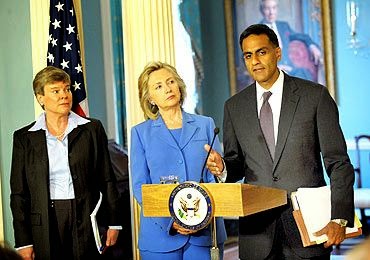
Richard
Verma remembers the time when he was a little kid, seeing his mom in
her sari waiting for a bus to go to work in sub-zero centigrade
temperatures in blowing and drifting snow.
His father had emigrated from
Punjab, arriving in New York City in 1963 with $24 in his pocket, and
his mother and siblings had followed a few years later.

“The times were
hard. We had no money. The kids could be mean in school to this new
immigrant family. But they persevered,” he recalls.
“They showed us what
it meant to be strong, what it means to stay together, and confront
challenges as a family, and they taught us to be proud of our roots.”


On Thursday, the proud son of Indian immigrants who personify Indian
enterprise and academic excellence — his parents were the first ones in
the family to be educated; his father went on to earn a PhD — was
nominated by US President Obama to be the US ambassador to India. He
will be the first Indian-American to take the job if (or when) he is
confirmed by the Senate; indeed, he will be the first Indian-American to
get an ambassadorial appointment to a major country, not counting the
sinecure (to Belize) Obama’s bestowed on his collegemate Vinai
Thummalapally.

Richard Rahul Verma is from a different stock
from the entrepreneurial Thummalapally, who now has a key job in the
Department of Commerce; the Indian-American of Punjabi stock is himself
no slouch when it comes to academic and professional accomplishment.
While there is an element of surprise in his nomination given his south
Asia background and India roots, his formidable resume (including an
ongoing PhD program at Georgetown University) and the Washington roadmap
he has traversed for two decades make him a shoo-in for the New Delhi
job, despite reservations in some quarters about whether an
Indian-American is best suited for the post.

Verma is a
consummate Washington insider who has worked in both the legislature and
the executive; in fact, his last post bridged the two — he was the
Assistant Secretary of State for legislative affairs during Hillary
Clinton’s stewardship
of Foggy Bottom — and that job came to him by
virtue of his years as a chief foreign policy aide to Senate leader
Harry Reid. Before that, between clerkships and stints at law firms, he
worked with the legendary Pennsylvania lawmaker Jack Murtha, learning
the ropes on the Hill.

In fact, in a farewell to Verma when he left the US state department
job in 2012, Clinton recalled in a very personal way how much Verma
guarded her back and how much he meant to her. “My mother lives with us
in our house here in Washington, and I was saying goodbye to her this
morning and she said, ‘What’s wrong, you don’t look very good.’ And I
said, ‘Well, I know, I am not just in a very good mood today.’ And she
says, ‘Well, you know, there’s so much going on in the world, all over
the country, and the economy.’ But I said, ‘No, it’s not it; it’s Rich
Verma (leaving).'” Clinton related.

Of course, Obama would know — also
personally. Verma assisted him in debate prep during his 2008
Presidential campaign, and like the President and his wife, Verma and
his wife Pinky are also legal eagles, a power couple with law degrees
from American University and UPenn respectively. When he arrives in New
Delhi later this year or early next year, Verma will bring with him not
just legalese, having worked on a ton of legislation and international
treaties (including some New Delhi is not particularly fond of), but
also a smattering of Hindi, which he is said to have kept up with.

Doubtless, much more than that will be needed to elevate the US-India
partnership. But despite his relatively modest vintage (he’s only 45 and
of Asst. Secretary rank; previous US ambassadors have been heavyweight
political appointees like David Mulford and Tim Roemer; or foreign
service veterans such as Frank Wisner and Tom Pickering), Verma will
bring to the table impressive range of work, from national security
legislation to international treaties on non-proliferation, to bilateral
agreements, including the US-India Civilian Nuclear deal, which he
oversaw from the Senate side.

But most of his, he will bring an
India connection, the likes of which is unprecedented, as is evident
from this story he relates: In the fall of 2009, Verma was invited to
the White House arrival ceremony of Prime Minister Manmohan Singh. When
he told his father about this, his dad was very excited “because in my
dad’s words, ‘we are from the same place’ in India.” 
With my dad, says
Verma, no matter what Indian person we meet anywhere in the world,
shopkeeper, waiter, restaurant owner, doctor…it doesn’t matter, he
always say you are from the same town, went to the same school, from the
same village. “I said Dad, there are 1 billion Indian people, it is
mathematically impossible that all of you can be from the same
place….he said well, I’m telling you, you should tell the PM. Thanks,
dad, but I’m not doing that….”

“When the day comes, and I am
getting my turn in line, and there is the President, and he says this is
Rich he works at the State Dept (you could tell the President was
relieved to have at least one Indian person in the receiving line…).
The Prime Minister looks at me, and says oh you are Indian, I said
yes…the President nodding approvingly. What do you do? Prime Minister
Singh asks: Oh I work at the State Dept Great, he said. Where are your
parents from? I said, Northern India, Punjab. He asked where … and I
said my dad is from Jullundur. The Prime Minister turned to the
President and said, “Oh, his father and I are from the same place….”

……

Link (1): timesofindia Richard-Verma-new-US-envoy-to-India

Link (2): theatlantic.com/a-florida-representatives-indian-american-gaffe-is-revealing
….

regards

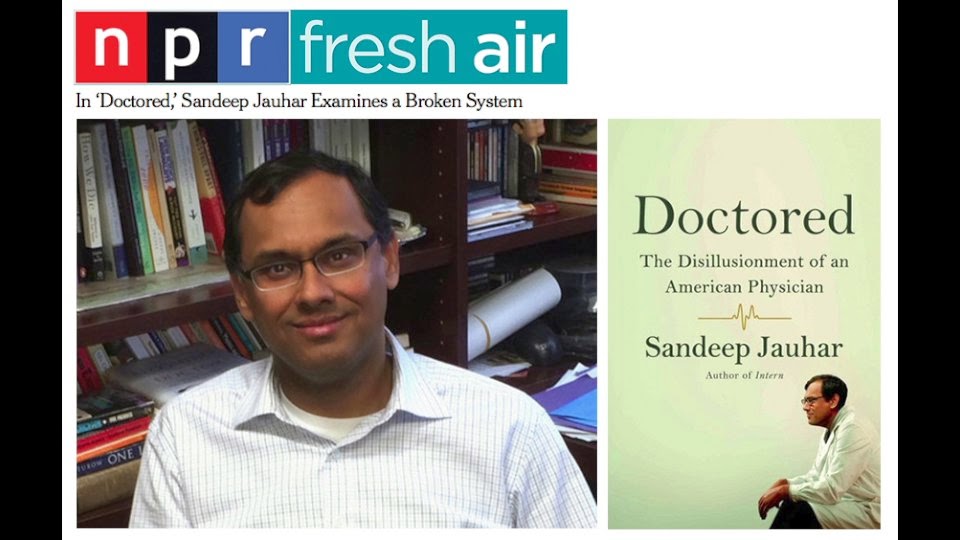
The doctor has no heart

….the Indian-American physician….describes how the medical profession has become pitiless, mercenary…..money ripping vocation where doctors treat patients as revenue
generators….keep patients in hospital longer than
necessary….order needless tests….helping predatory pharmaceutical companies sell dangerous
drugs……doctors are
suffering from a “collective malaise” of discontent, insecurity, and
immoderation….. 

….

 …
No no no no, we did not say that….we still hero-worship doctors..for us it is the ultimate noble profession.

But then according to Dr Sandeep Jauhar,  things are very wrong with the medical community in the USA. He speaks as a person from within the belly of the beast, and he claims to speak on behalf of the many outstanding doctors from the Indian American community (and the medical profession as a whole). Who knows if there is any substance in his (devastating) allegations…common people will tend to think that no smoke can result without fire.
…….

The growing discontent has serious
consequences for patients. One is a looming shortage of doctors,
especially in primary care, which has the lowest reimbursement of all
the medical specialties and probably has the most dissatisfied
practitioners. 
Try getting a timely appointment with your family doctor;
in some parts of the country, it is next to impossible. Aging baby
boomers are starting to require more care just as aging baby boomer
physicians are getting ready to retire. The country is going to need new
doctors, especially geriatricians and other primary care physicians, to
care for these patients. But interest in primary care is at an all-time
low.

Perhaps the most serious downside,
however, is that unhappy doctors make for unhappy patients. Patients
today are increasingly disenchanted with a medical system that is often
indifferent to their needs. 

People used to talk about “my doctor.” Now,
in a given year, Medicare patients see on average two different primary
care physicians and five specialists working in four separate practices.
For many of us, it is rare to find a primary physician who can remember
us from visit to visit, let alone come to know us in depth or with any
meaning or relevancy.

Insensitivity in
patient-doctor interactions has become almost normal. I once took care
of a patient who developed kidney failure after receiving contrast dye
for a CT scan. On rounds, he recalled for me a conversation he’d had
with his nephrologist about whether his kidney function was going to get
better. “The doctor said, ‘What do you mean?’ ” my patient told me. “I
said, ‘Are my kidneys going to come back?’ He said, ‘How long have you
been on dialysis?’ I said, ‘A few days.’ And then he thought for a
moment and said, ‘Nah, I don’t think they’re going to come back.’ ”

My patient broke into sobs. ” ‘Nah, I don’t think they’re going to come back.’ That’s what he said to me. Just like that.”

It
is the Holy Grail for almost every Indian parent: that their son and or
daughter go to medical college, become doctors, and embark on a thriving career
that brings laurels – and sure, some lolly. 
…It’s no different with NRIPIO
parents, in the US, UK, or elsewhere, which is why the nearly 100,000 Indian
American physicians in the US includes some 20,000 who are either born or have
grown up in America and graduated from US medical schools. 
Dr Sandeep Jauhar
has been there, done that – and not liked it one bit. And he’s blown the
whistle on his profession – or ripped it apart with a scalpel. Medicine, as
practiced in the United States, is sick – very, very, sick.

In a devastating – and immensely self critical – book that is making waves in
the US, the Indian-American physician, with specialization in cardiology,
describes how the medical profession has become a pitiless, mercenary medical
profession, money ripping vocation where doctors treat patients as revenue
generators rather than human beings, keep patients in hospital longer than
necessary to bill them more, order needless tests to generate profits, and cozy
up with drug reps helping predatory pharmaceutical companies sell dangerous
drugs. American doctors – and that includes Indian-Americans like himself -are
suffering from a “collective malaise” of discontent, insecurity, and
immoderation.

None of this is a great secret; discerning patients, activists, and even many
physicians themselves have recognized this for a long time in the US. But its
Dr Jauhar’s astonishing candor in `Doctored: The Disillusionment of an American
Physician’ that has shocked the medical fraternity and layman alike, shattering
the image of the doctor as a do-gooder -and for Indians, that of the NRI
physician as the epitome of nobility. 

No one comes out looking good in this
tortured, self-lacerating book: not Jauhar himself, nor his brother (also a
cardiologist), nor physician friends and mentors, and not the American system.
This is the Ferguson moment in medicine – ugly but true.

Asked in an interview
on Thursday if he intended to stay on in the medical profession at all, given
the shock and horror his book is creating (the NYT reviewer said this is the
first book that’s prompted her to write “Yuck!” in the margin), Dr
Jauhar said he owed it to his readers to give them the unvarnished, unfiltered
truth, without being irresponsible. 
“Probably the person who comes in most
for criticism is myself. When you are willing to be self-critical, people will
appreciate it,” he told me gravely, after initial jokes about his taking
potshots at his own family, including his father, subsided. “I am
disillusioned with how medicine is practiced in this country but not
disillusioned with being a physician. “
….
Jauhar’s sulfurous chronicle of the
medical profession in the US begins almost as soon after he graduates from
fellowship and takes a salaried job at a hospital (after 19 years of college
education, including a PhD in physics). 
The hours are brutal, the money is
meager, and before long he becomes part of the venal system, treading dodgy
ethical terrain to keep his body, soul, and family together. He moonlights on
other jobs and shills for pharma companies as he observes compromises,
cronyism, and corruption flow like crud through the system. Doctors, hospital
administrators, the health insurance sector, and pharma industry collude and
conspire in sundry ways to rip-off patients – some who want to live forever
despite being at their careless best.

The dysfunction is not entirely due to doctors. Jauhar describes how external
sources – the government, the insurance industry, and pharma companies – have
all played a role. Doctors, particularly primary care physicians and
internists, who previously spent 20-30 minutes with each patient, now hurry out
after 10 minutes because they now have to see twice the number of patients to
generate the same revenue. 

….
As a result, patients do not get the attention they
deserve and are not diagnosed properly. Meanwhile, some specialist doctors get
to bilk the system (which is why everyone wants to specialize and there are
fewer primary care doctors in the US), prescribing a multitude of tests and
treatment -some to cover for malpractice liability, others to generate more
revenue. Patients who came in complaining of even routine breathlessness are
hustled into taking nuclear stress tests and bumped into cardiac procedures.
That’s because insurance companies don’t pay doctors to spend time with
patients trying to understand their problem. But they pay for CT scans and
stress tests whether they’re needed or not.

Elsewhere, hospital administrators are also constantly putting pressure on
doctors to keep occupancy rates high enough to generate profits (somewhat like
hotels). Jauhar cites the economist Julian Le Grand’s idea of humans as
knights, knaves, or pawns, to describe how the American system promotes knavery
over knighthood. 


But most of all, once you read this tormented, self-lacerating book, it’s hard
to see a doctor with the same respect. Doctors know it too. In a survey cited
by Jauhar, 30 to 40% of US physicians today say they will not choose the same
profession if they had a choice; and even more would not encourage their
children to. The medical profession, it appears, is terminally ill, in the
United States at least.

…..

Link (1): wsj.com/usa-ailing-medical-system-a-doctors-perspective

Link (2): A-heartless-profession

…..

regards

“Jihadi John” from Maida Vale

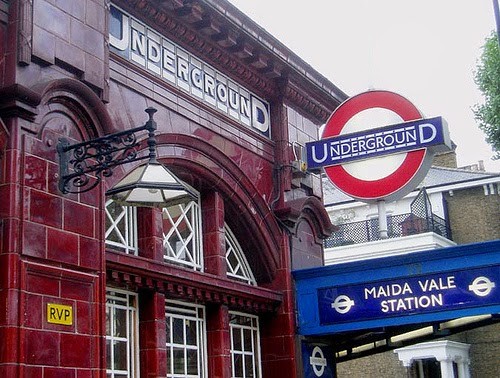
Do you have to be rich (or merely middle-class) to own a 1 mil pound home in Maida Vale, West London (W9)? It is part of posh Westminster and if you are a BPeep looking for a villa in St John’s Wood (just east of Maida Vale, home of Lord’s Cricket Ground) it is likely to cost you upwards of 10 mil pounds!!!
……..

….
Maida Vale was founded in the 19th century and is named after Sir John Stuart, Count of Maida (1759–1815), who was a British Lieutenant-General during the Napoleonic Wars. Maida is a town in the Calabria region of southern Italy, 31 km west of the provincial capital Catanzaro. The British (under the leadership of Sir John) routed the French in the Battle of Maida in 1806 [ref. Wiki].
…….

……
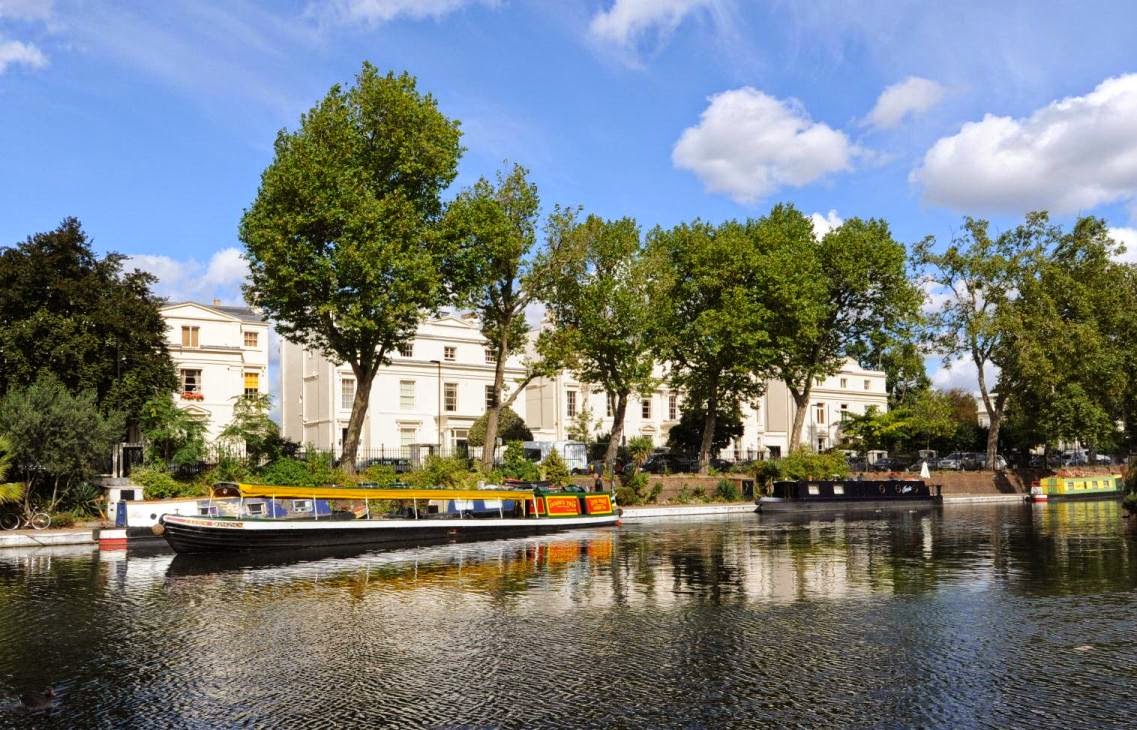
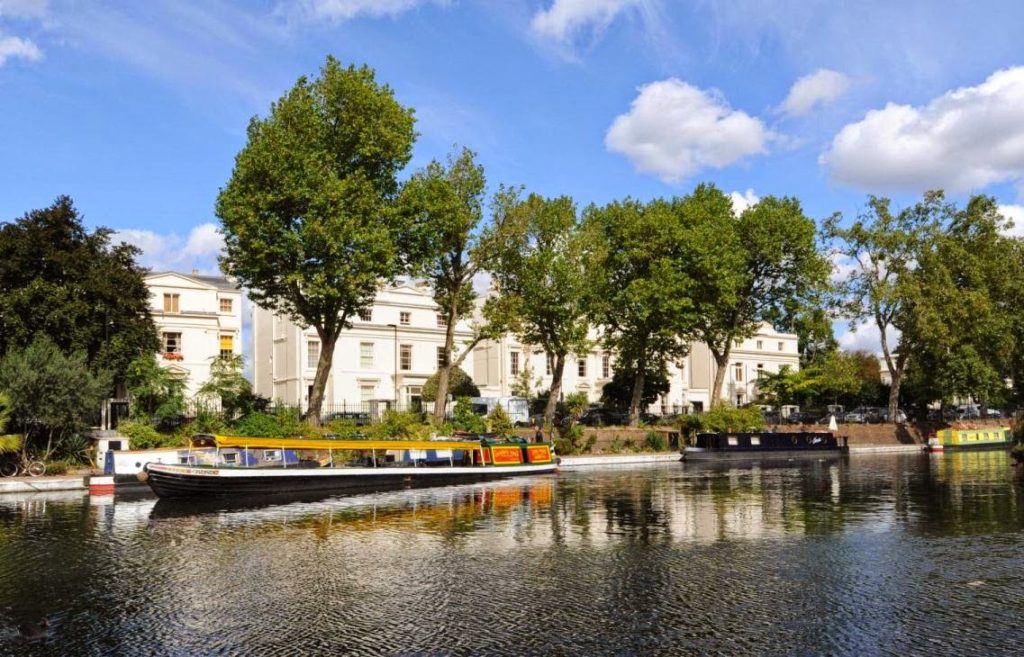
Maida Vale is primarily known for Little Venice bordering Regent’s Canal, but it has a new reason to be famous. It is the residence of Jihadi John, also known as Abdel-Majed Abdel Bary. John is a hip-hop artist whose rap music has featured on BBC. He is also a “person of interest” in the beheading of the American photo-journalist James Foley.
……

 …….
Perhaps a future Wiki entry will note that there were two famous Johns in Maida Vale, one who fought on behalf of the Anglos in the Mediterranean and one who fought against them in the Middle-East. Will this John be equally fortunate is his battles? We will shortly find out. 
…………

MI5 and MI6 have identified the British fighter suspected of murdering the
American journalist James Foley, senior government sources confirmed last
night.


.
The masked man with a London accent, who is said to be known to fellow
fighters as “Jihadi John”, was seen in the shocking video of Foley’s death
released by the Isis extremist army last week. While sources gave no details of the man they have identified, a key suspect
is Abdel-Majed Abdel Bary.

London rapper Abdel-Majed Abdel Bary, 23, left his family’s £1million home in Maida Vale to join jihadis in Syria. His father Adel Abdul Bary is a suspected al-Qaeda mastermind extradited to the USA in 2012.


The Islamic State fanatic, whose rap music has featured on BBC
Radio 1 Extra, posted the Twitter picture of himself surrounded by bags
of terrorists’ favourite bomb material PETN, reports the Sunday People. A caption underneath read: “Fireworks ;)”

The Twitter page, which has since been taken down, also showed sick pictures of Bary apparently holding a severed human head. Underneath the horrifying image the depraved Londoner wrote: “Chillin with my other homie, or whats left of him.”

……….

Link (1): thesundaytimes.co.uk

Link (2): mirror.co.uk/pictures-british-hip-hop-artist

…….

regards

Sunil Dutta: super-cop

..I’m a cop….If you don’t want to get hurt, don’t challenge me….don’t argue with me…..don’t say I’m a racist pig…..don’t threaten that you’ll sue me
and take away my badge…..don’t scream at me that you pay my salary……

…..

 
Sunil Dutta, a Professor of Homeland Security at Colorado Tech
University, has been an officer with the Los Angeles Police Department
for 17 years. The views presented here are his own and do not represent
the LAPD.

Education
  • M.A. Homeland Security, Naval Postgraduate School, United States Center for Homeland Defense and Security, Monterey, CA, (2012)


  • Ph.D. Plant Biology, University of California, Davis (1995)

  • M.S. Plant Physiology, University of Florida, Gainesville (1989)

  • B.S. Botany, Haryana Agricultural University, Hisar, India (1986)
Background 
…..Dr.
Sunil Dutta is a full time law enforcement professional working in Los
Angeles.  He has been with the LAPD for sixteen years.  His assignments
have included Watch Commander, Internal Affairs Investigator, patrol officer,
and Collision Investigator…..Prior
to joining the LAPD, Dutta was a scientist with a specialization in
biochemistry (host-pathogen interactions, plant hormones, carbohydrate
metabolism, and regulation of dormancy).  He is an amateur musician….

To
be honest, once we recovered from the shock (that was an Indian speaking??),
we
were ready to admit that Dr Dutta has penned an impressive op-ed. Based
on his bio, we guess that he hails from a Punjabi or Haryanvi background. He is
the “first” Indian-American law and order conservative that we
have ever heard from (or heard about). Also he is quite a sharp-spoken biologist (we
know a few of them).

As for the rest, yes…excellent advice…for (black, brown) young males in the USA. When we first learned to drive it was drummed into our rebellious heads (incidentally, by a black tutor) that in case the police ordered you to pull over, you must come to a stop….slow and easy (with hazard lights ON), keep your windows lowered, and your hands visibly placed on the wheel at all times. 
……….
If they ask you to step out, immediately comply, while keeping the hands held high. Under no circumstance, do you keep the hands in your pockets. Do not make any sudden movement. Never crack jokes, be courteous, always address the “racist pig” as “Officer.”  

The response to our indignant whys was an angry whisper: Brother….do you want to die?

No Officer Dutta, we do not want to die. And we respect you for doing a tough job. And yes – as you have admirably pointed out – if the police can afford military grade weapons they can stretch the budget to include a video camera. The absence of video is baffling, but then if you think twice….it all makes sense.
………..

A teenager is fatally shot by a police officer; the police are
accused of being bloodthirsty, trigger-happy murderers; riots erupt.
This, we are led to believe, is the way of things in America.
…..It is also a terrible calumny; cops are not
murderers.
 

……
No officer goes out in the field wishing to shoot anyone,
armed or unarmed. And while they’re unlikely to defend it quite as
loudly during a time of national angst like this one, people who work in
law enforcement know they are legally vested with the authority to
detain suspects — an authority that must sometimes be enforced.
Regardless of what happened with Mike Brown, in the overwhelming
majority of cases it is not the cops, but the people they stop, who can
prevent detentions from turning into tragedies.


….
Working the
street, I can’t even count how many times I withstood curses, screaming
tantrums, aggressive and menacing encroachments on my safety zone, and
outright challenges to my authority. In the vast majority of such
encounters, I was able to peacefully resolve the situation without using
force. Cops deploy their training and their intuition creatively, and I
wielded every trick in my arsenal, including verbal judo, humor,
warnings and ostentatious displays of the lethal (and nonlethal)
hardware resting in my duty belt. 

One time, for instance, my partner and
I faced a belligerent man who had doused his car with gallons of gas
and was about to create a firebomb at a busy mall filled with holiday
shoppers. The potential for serious harm to the bystanders would have
justified deadly force. Instead, I distracted him with a hook about his
family and loved ones, and he disengaged without hurting anyone. Every
day cops show similar restraint and resolve incidents that could easily
end up in serious injuries or worse.


…..
Sometimes, though, no amount
of persuasion or warnings work on a belligerent person; that’s when
cops have to use force, and the results can be tragic. We are still
learning what transpired between Officer Darren Wilson and Brown, but in
most cases it’s less ambiguous — and officers are rarely at fault. When
they use force, they are defending their, or the public’s, safety.


…..
Even
though it might sound harsh and impolitic, here is the bottom line: if
you don’t want to get shot, tased, pepper-sprayed, struck with a baton
or thrown to the ground, just do what I tell you. Don’t argue with me,
don’t call me names, don’t tell me that I can’t stop you, don’t say I’m a
racist pig, don’t threaten that you’ll sue me and take away my badge.
Don’t scream at me that you pay my salary, and don’t even think of aggressively walking towards me. Most field stops are complete in minutes. How difficult is it to cooperate for that long?

I know it is scary for people to be stopped by cops. I also
understand the anger and frustration if people believe they have been
stopped unjustly or without a reason. I am aware that corrupt and bully
cops exist. 

When it comes to police misconduct, I side with the ACLU:
Having worked as an internal affairs investigator, I know that some
officers engage in unprofessional and arrogant behavior; sometimes they
behave like criminals themselves. I also believe every cop should use a
body camera to record interactions with the community at all times. 

Every police car should have a video recorder. (This will prevent a
situation like Mike Brown’s shooting, about which conflicting and
self-serving statements allow people to believe what they want.)
And you
don’t have to submit to an illegal stop or search. You can refuse
consent to search your car or home if there’s no warrant (though a
pat-down is still allowed if there is cause for suspicion). Always ask
the officer whether you are under detention or are free to leave. Unless
the officer has a legal basis to stop and search you, he or she must
let you go. Finally, cops are legally prohibited from using excessive
force: The moment a suspect submits and stops resisting, the officers
must cease use of force.


But
if you believe (or know) that the cop stopping you is violating your
rights or is acting like a bully, I guarantee that the situation will
not become easier if you show your anger and resentment. Worse,
initiating a physical confrontation is a sure recipe for getting hurt.
Police are legally permitted to use deadly force when they assess a
serious threat to their or someone else’s life. 

Save your anger for
later, and channel it appropriately. Do what the officer tells you to
and it will end safely for both of you. We have a justice system in
which you are presumed innocent; if a cop can do his or her job
unmolested, that system can run its course. Later, you can ask for a
supervisor, lodge a complaint or contact civil rights organizations if
you believe your rights were violated. Feel free to sue the police! Just
don’t challenge a cop during a stop.


….’
An average person cannot
comprehend the risks and has no true understanding of a cop’s job.
Hollywood and television stereotypes of the police are cartoons in which
fearless super cops single-handedly defeat dozens of thugs, shooting
guns out of their hands. Real life is different. An average cop is
always concerned with his or her safety and tries to control every
encounter. That is how we are trained. 

While most citizens are courteous
and law abiding, the subset of people we generally interact with
everyday are not the genteel types. You don’t know what is in my mind
when I stop you. Did I just get a radio call of a shooting moments ago?
Am I looking for a murderer or an armed fugitive? For you, this might be
a “simple” traffic stop, for me each traffic stop is a potentially
dangerous encounter. Show some empathy for an officer’s safety concerns.
Don’t make our job more difficult than it already is.


….
Community
members deserve courtesy, respect and professionalism from their
officers. Every person stopped by a cop should feel safe instead of
feeling that their wellbeing is in jeopardy. Shouldn’t the community
members extend the same courtesy to their officers and project that the
officer’s safety is not threatened by their actions?

……..

Link: im-a-cop-if-you-dont-want-to-get-hurt-dont-challenge-me

…..

regards

London- World City #1

……Beyond these traditional strengths, London
has become Europe’s top technology startup center……upward of 3,000 tech startups…..Google’s largest office outside Silicon Valley……

….
East or West….London is the best. Singapore (4), Hong Kong (6), and Dubai (7) are ranked ahead of Beijing (8, tie with Sydney) and Shanghai (19).  
Dubai ahead of Shanghai, really?

Frankfurt is the top rated city in Germany at a lowly #14. Mumbai (31) and Delhi (34) are the top-ranked cities in South Asia (in the future we may see Chennai and Bangalore on this list). Surprising to see Berlin (37) tied with Seattle and Tel Aviv.
……
In order to quantify cities’ global influence, we looked at eight
factors: the amount of foreign direct investment they have attracted;
the concentration of corporate headquarters; how many particular
business niches they dominate; air connectivity (ease of travel to other
global cities); strength of producer services; financial services;
technology and media power; and racial diversity. (Click here for
a more detailed description of our methodology.) 

……….
We found those factors
particularly important in identifying rising stars that, someday, might
challenge the current hegemony of our two top-ranked global cities,
London and New York.


Inertia and smart use of it is a key theme that emerged in our
evaluation of the top global cities. No city better exemplifies this
than London, which after more than a century of imperial decline still
ranks No. 1 in our survey.  

….
The United Kingdom may now be a second-rate
power, but the City’s unparalleled legacy as a global financial capital
still underpins its pre-eminence.


Ranked first in the world on the Z/Yen Group’s 2013 Global Financial
Centres Index, which we used for our list, London not only has a long
history as a dominant global financial hub, but its location outside the
United States and the eurozone keeps it away from unfriendly
regulators. Compared to New York, it is also time-zone advantaged for
doing business in Asia, and has the second best global air connections
of any city after Dubai, with nonstop flights at least three times a
week to 89% of global cities outside of its home region of Europe.


A preferred domicile for the global rich, London is not only the
historic capital of the English language, which contributes to its
status as a powerful media hub and major advertising center, but it’s
also the birthplace of the cultural, legal and business practices that
define global capitalism.

London hosts the headquarters of 68 companies
on the 2012 Forbes Global 2000 list and is a popular location for the
regional HQs of many multinationals. (Our HQ ranking component, in which
London ranks third, is based on GaWC’s 2012 Command and Control Index, which factors in company size and financial performance, as well as total number of Forbes Global 2k HQs).


Beyond these traditional strengths, London has become Europe’s top technology startup center, according to the Startup Genome project. The city has upward of 3,000 tech startup sas well as Google’s largest office outside Silicon Valley.

New York, which comes in a close second in our study (40 points to
London’s 42), is home to most of the world’s top investment banks and
hedge funds, and the stock trading volume on the city’s exchanges is more than 10 times that of London.


Like London, New York is a global leader in media and advertising,
the music industry (home to two of the big three labels), and also one
of the most important capitals of the fashion and luxury business. With
iconic landmarks galore, international visitors spend more money in New York each year than in any other city in the world.

Those Slowly Fading

London and New York are clearly the leaders but they are not the
hegemonic powers that they were throughout much of the 20thcentury, and
their main competitors are now largely from outside Europe. Paris may
rank third in our survey,
but it is way below New York and London by
virtually every critical measure, and the city’s future is not promising
given that France, and much of the EU, are mired in relative economic
stagnation.

China’s Global Cities


Hong Kong still enjoys greater freedom than the rest of China and
remains the largest financial center in the Asia-Pacific region, ranking
third in the world after London and New York. The vast majority of the
world’s major investment banks, asset managers, and insurance companies
maintain their Asia-Pacific headquarters in the former British colony.


But its preeminence is being threatened by Shanghai, traditionally
Hong Kong’s chief rival, and Beijing. We ranked China’s capital eighth,
ahead of Shanghai (19th). With the advantage of being the country’s
all-powerful political center, Beijing is the headquarters of most large
state-owned companies and is home to the country’s elite educational
institutions and its most innovative companies.


But right now the leading global city in East Asia is Singapore,
which ranks fourth on our list. With a relatively small population of
just over 5 million, Singapore’s basic infrastructure is among the best on the planet.
Like Hong Kong, it also benefits from a tradition of British governance
and law, one reason the World Bank ranked its business climate the
world’s best; China ranked 96th. Singapore’s justice system is ranked
10th in the world in The Rule of Law Index.


Global Capital of the Middle East

Much of what we see in the media about Middle Eastern cities are
scenes of destruction and chaos. Yet in a relatively quiet corner of the
Arabian Peninsula, Dubai is ascending, ranked seventh on our list. 

Its
globalization strategy hinges largely on its expanding airport, which
includes the world’s largest terminal and an even larger airport under
construction. It ranks first in the world in our air connectivity
ranking, with nonstop flights at least three times a week to 93% of
global cities outside of its home region.Its hub location and
business-friendly climate have made it a favorite for companies looking
to establish a Middle East headquarters or point of presence. As a
crossroads of humanity, Dubai is unparalleled among global cities for
its diversity: 86% of its residents are foreign born.


North America

Our rankings rewarded cities that are both ethnically diverse and, in
some cases, dominate a critical industry. This is what we refer to as a
“necessary city,” a place one must go to conduct business in a
particular field, or to service a particular region of the world.


This focus on the “necessary” city led to what will no doubt be a
controversial result: a 10th place ranking for the San Francisco Bay
Area,
on the strength of its central role in the tech industry, tied on
our list with Los Angeles and Toronto. The Bay Area did not even make
the top 20 in the 2014 A.T. Kearney rankings, which placed both Chicago and Los Angeles in the top 10.


Other North American cities with a growing global footprint include
10th ranked Toronto, tied with Los Angeles and Bay Area. Toronto, as the
economic capital of Canada, has becomes a focus for international
investment into that stable and resource rich country. It is also among
the most diverse cities on the planet — 46 % of its population is
foreign born.


Rising Stars

In North America up and comers include No. 14 Houston, with its
domination of the U.S. energy industry, a huge export sector and an
increasingly diverse population. The Washington, D.C., metro area ranks
16th, a testament to the capital’s growth as an aerospace and technology
center.


Overseas, other urban centers that could move up in the future
include No. 16 Seoul, Shanghai and No. 20 (tie) Abu Dhabi. But outside
of Dubai no other cities in our top 20 come from the developing world.
The Indian megacities Delhi and Mumbai rank in the low 30s along with
Johannesburg in South Africa. In Latin America, the place to watch is
No. 23 Sao Paulo.

………

No. 1: London


FDI Transactions (5-Year Avg.): 328
Forbes Global 2000 HQs: 68<
Air Connectivity:  89%*
Global Financial Centres Index Rank: 1


* The air connectivity score is the percentage of other global cities
outside the city’s region (e.g., for London, cities outside of Europe)
that can be reached nonstop a minimum of three times per week.


No. 2: New York


FDI Transactions (5-Year Avg.): 143
Forbes Global 2000 HQs: 82
Air Connectivity:  70%
GFCI Rank: 2


No. 3: Paris


FDI Transactions (5-Year Avg.): 129
Forbes Global 2000 HQs: 60
Air Connectivity:  81%
GFCI Rank: 29


No. 4: Singapore


FDI Transactions (5-Year Avg.): 359
Forbes Global 2000 HQs: N/A
Air Connectivity:  46%
GFCI Rank: 4


No. 5: Tokyo


FDI Transactions (5-Year Avg.): 83
Forbes Global 2000 HQs: 154
Air Connectivity:  59%
GFCI Rank: 5


No. 6: Hong Kong


FDI Transactions (5-Year Avg.): 234
Forbes Global 2000 HQs: 48
Air Connectivity:  57%
GFCI Rank: 3


No. 7: Dubai


FDI Transactions (5-Year Avg.): 245
Forbes Global 2000 HQs: N/A
Air Connectivity:  93%
GFCI Rank: 25


No. 8 (TIE): Beijing


FDI Transactions (5-Year Avg.): 142
Forbes Global 2000 HQs: 45
Air Connectivity:  65%
GFCI Rank: 59


No. 8 (TIE): Sydney


FDI Transactions (5-Year Avg.): 111
Forbes Global 2000 HQs: 21
Air Connectivity:  43%
GFCI Rank: 15


No. 10 (TIE): Los Angeles


FDI Transactions (5-Year Avg.): 35
Forbes Global 2000 HQs: N/A
Air Connectivity:  46%
GFCI Rank: N/A


No. 10 (TIE): San Francisco Bay Area


FDI Transactions (5-Year Avg.): 49
Forbes Global 2000 HQs: 17
Air Connectivity:  38%
GFCI Rank: 12


No. 10 (TIE): Toronto


FDI Transactions (5-Year Avg.): 60
Forbes Global 2000 HQs: 23
Air Connectivity:  49%
GFCI Rank: 11


Remaining Cities

City Region Rank
Zurich Europe
13
Frankfurt Europe
14
Houston North America
14
Amsterdam/Randstad Europe
16
Seoul Asia-Pacific
16
Washington Metropolitan Area North America
16
Shanghai Asia-Pacific
19
Abu Dhabi Middle East
20
Chicago North America
20
Moscow Europe
20
Boston North America
23
Brussels Europe
23
Dallas-Fort Worth North America
23
Madrid Europe
23
Melbourne Asia-Pacific
23
São Paulo South America
23
Istanbul Middle East
29
Miami North America
29
Johannesburg Africa
31
Kuala Lumpur Asia-Pacific
31
Mumbai Asia-Pacific
31
Bangkok Asia-Pacific
34
Delhi Asia-Pacific
34
Geneva Europe
34
Atlanta North America
37
Berlin Europe
37
Seattle North America
37
Tel Aviv Middle East
37
Mexico City North America
41
Milan Europe
41
Montreal North America
41
Buenos Aires South America
44
Jakarta Asia-Pacific
44
Philadelphia North America
44
Cairo Middle East
47
Guangzhou Asia-Pacific
47
Ho Chi Minh City Asia-Pacific
47
Lagos Africa
47
Osaka Asia-Pacific
47

…..

Link: the-worlds-most-influential-cities

……

regards

“Our children should at least look like us”

….What the NRIs get is often the `rejects’ of the Indian
parents…
NRIs insist on having fair-skinned children….police found nine infants and a pregnant Thai woman….most of the children appeared Western...Lertkrai said: “The babies all look different…hard to
believe they share the same blood
”…..


Are “fair-skinned” children really the be-all and end-all of
adoption and is it the case that a “fair skinned child” always “look like us”?
 

We do not know how to say this politely, but in the pale-world
all browns are sand-niggers.
Our cousins – one of whom can be fairly
described as golden white in complexion – who grew up down under were
called “chocolate” in school.
…….


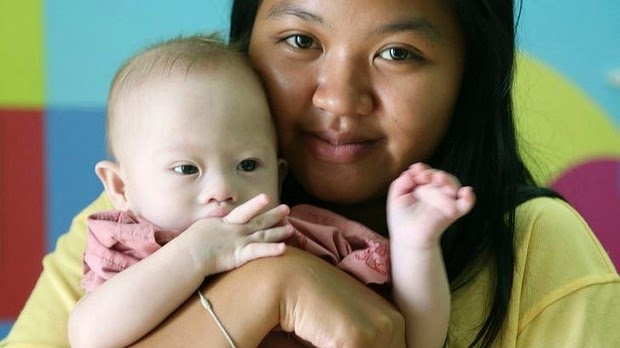
Meanwhile…a huge surrogacy scandal. One golden-hearted Australian couple – with the dad-to-be, a remorse-free, child sex offender – had twins through surrogacy. One of the kids has Down’s syndrome and was abandoned (see below). In response, Thailand plans to ban commercial surrogacy effective yesterday, and 200-odd aussie parents-to-be will be facing maximum pain (and monetary loss).

India is the only other nation widely open to surrogacy. Recent rules have been tightened here as well, this path is supposedly blocked for same sex couples or single parents-to-be. But knowing how the rules work in India, one can always find a way out, if you know what we mean. Unlike Thailand, you may even be able to dump the kid if you do not like her, pay off the agency a bit of hush money and no one would be wiser.

Here is the thing that is truly bothersome. Why is adoption such a headache? Leaving aside the fair-skinned child supply-demand mismatch, how is it fair that Non Resident Indians are finding the adoption process to be more cumbersome than Ethiopia? Why not have a fast-track process available for people who can afford it? NRIs have a lot of clout with Indian babu-dom, remittances from abroad is a precious lifeline for India.There should be a full-fledged effort to settle children as quickly as possible. Who knows, with the right incentives in place, people may fall in love with a dark-skinned child as well!!

If the new rules treat everyone at par, then that counts as progress. We are a bit scared of Shrimati Maneka (first animal lover, wife of Sanjay) Gandhi but we are rather pleased with her efforts in this direction.
……
Five
years after they submitted documents for adopting a child in India, Devi
and Joseph will finally get to see their six-year-old ‘daughter’ when
the non-resident Indian couple settled in Dallas in the United States
comes to Delhi next month to take her home.

……
It has been a long
wait filled with home studies, delays and court procedures. “The
adoption agency in Delhi has been regularly sending us pictures of
Siara, but we feel we have missed out a good part of her childhood,”
said Joseph, 43, who hails from Bangalore and works as software analyst
in the US. 

   “At one point, we had decided to adopt a child from China or
Ethiopia, where the delay is much less, but my wife was insistent our
child should at least look like us,” said Joseph, speaking over the
phone. Indian expatriates hoping to adopt a child from their home
country may soon have to submit to a much less gruelling experience than
Devi and Joseph.

NRI couples could be treated on a par with
their resident Indian counterparts following changes being made to
adoption rules by the Ministry of Women and Child Welfare.
As a result,
NRI couples could have equal opportunities for adopting a child in
India. This will spell a major change from the existing rules, under
which the first preference is given to India-based couples.

Maneka Gandhi, whose ministry is working towards finetuning the Juvenile
Justice (JJ) Act with an entire chapter on adoption for the first time,
has already written to adoption agencies in states, child welfare
committee heads and judges not to delay the processing of adoption
applications.

A few years ago adoption agencies were asked to
stick to a ratio of 80:20, with only a fifth of the eligible children
for adoption abroad, in a move introduced to curb overseas child
trafficking in the garb of adoption. This led to a fall in overseas
adoptions from 628 in 2010-11 to 430 in 2013-2014.

“What the
NRIs get is often the `rejects’ of the Indian parents. NRIs insist on
having fair-skinned, healthy children less than one year of age but such
children are to be first picked by couples here,” said a senior
official at Central Adoption Resource Authority (CARA), the body that
handles and monitors adoptions in India.

The official, who did
not wish to be identified, added, “The NRIs, even after waiting for many
months, are left to choose from children with medical issues, which is
why they choose to go to other countries or give up on the process.”

In the past ten years, over 8,000 NRI couples have applied for Indian
children but only a few have been shortlisted. “We screen the NRI
couples many times to keep the number very small because we know due to
the existing rules we don’t have many children to list for adoption. We
will expand the list once the new rules are notified,” the official
said.
 This should change as the company’s restructuring paves the way for growth
 .

 ……..

HUNDREDS of Australians with infants
newly born or being carried by pregnant Thai surrogates are in limbo
after Thailand moved to outlaw commercial ­surrogacy.

The National Council of Peace and Order interim military government
yesterday announced the drastic measure, aimed at shutting a burgeoning
industry mostly catering to foreign biological parents, in the wake of
the baby Gammy scandal.

Surrogacy Australia executive officer
Rachel Kunde estimated there were up to 200 Australian couples whose
surrogates were pregnant in Thailand or whose infants had been born in
recent days and weeks.

In Surrogacy Australia’s network, there were close to 100 ­couples in that situation. “We
are very concerned for those people and we hope that they can bring
their babies home without any trouble from Thai authorities,” Ms Kunde
said.

Last night an Australian woman whose surrogate is 30 weeks pregnant
in Bangkok said she was highly anxious about the prospect of the
surrogate “going underground” if she were pressured.

“I called the
nurse at the clinic this morning and she told me all the surrogates are
still coming in for their scans,” said the woman, who asked for
anonymity to protect her daughter, born to a Thai surrogate. “It is a
horrible wait for us. We are due to go there in eight weeks but we are
really worried about whether we will be able to leave with the baby.”

The
foreign surrogacy scandal was triggered a week ago by the revelation a
West Australian couple, Wendy and David Farnell, had left behind in
Thailand a Down syndrome baby with his birth mother.

The birth
mother, Pattaramon Janbua, 21, claims the couple refused to accept the
boy, Gammy, now seven months old, but returned home with his twin
sister.

The Farnells have denied this account but in a statement and through a friend have given varying accounts.

Ms
Pattaramon, on hearing Mr Farnell had in the past been convicted of
child sex offences, has demanded the girl be returned to her.

The
new law is currently in draft form — it has been proposed since 2012 but
the previous democratic government “sat on it” ­according to one of its
drafters — and could take several months to pass and implement.

In
the meantime, the government says it will strictly apply Thailand
Medical Council regulations that prohibit surrogacy except for blood
relatives and on condition there is no payment.

This effectively
prevents Thai fertility clinics and doctors from offering the service,
which has been used by an estimated 200 Australians — couples and
potential sole parents — a year in recent years.

However, serious
questions remain about the implementation of the law as it affects
foreign ­people’s children just born to Thai surrogates, or fetuses
still being carried to term by birth mothers.

NCPO spokesman
Colonel Winthai Suvaree said yesterday the law would allow infants who
have just been born to be suckled by their birth mothers for six months,
but then would allow the baby to be taken home by parents.

Health
Ministry general-secretary Samphan Komrit was very vague about how the
law would apply to the foreign biological parents of fetuses being
carried by Thai women for payment, however. He would only say those
cases would be dealt with “according to morality”.

Colonel Winthai
said: “Commercial surrogacy is illegal, according to the Medical
Council. We don’t know the whereabouts of the (currently pregnant)
surrogate mothers, so it is a difficult question to answer.” He
said the new law was aimed at protecting infants and Thai women,
although Ms Kunde said she was concerned also about the potential for
Thai surrogates to be harassed or persecuted.

The new law will punish doctors and fertility clinics carrying out the procedures, and surrogacy agents, from today onwards. Under
the current TMC regulations, enabling commercial surrogacy is
punishable by one to three years’ imprisonment and fines of 20,000 to
60,000 baht ($670-$2000).

Currently there is no law specifically
covering surrogacy, although Thai Medical Council regulations specify
any such pregnancy must be altruistic — not for payment — and the birth
mother must be a blood relative of the ­donors.

Police are
investigating the Bangkok clinic, agent and doctors involved in Ms
Pattaramon’s pregnancy with a view to laying charges under current TMC
­regulations.

The scandal escalated on Tuesday when police and
welfare officers found nine infants and a pregnant Thai woman,
accompanied by nannies, in several apartments at Latphrao, a northern
Bangkok condominium block. Police were yesterday still trying to establish the identities and parentage of the babies. They are planning DNA tests. 

A
lawyer acting for a Japanese man he claims is a wealthy businessman
said his client wanted the babies for himself and planned to raise them
in Thailand. He claimed the Japanese father was planning to pay about
one million baht for the 10 surrogacies.

However, a Japanese woman
interviewed at the scene on Tuesday claimed one of the children was
hers and several witnesses said most of the children appeared Western.

Yanee
Lertkrai, the director-general of the Department of Social Development
and Welfare, said: “The babies all look different and it is hard to
believe they share the same blood.
Personally, I think the surrogacy of the babies is illegal.”

Surrogacy Australia’s Ms Kunde yesterday blamed rogue operators for causing the crackdown.
 “The
people in our network have all used reputable clinics and they have
talked to other couples first — most people do the right thing,” she
said.

Yesterday, West Australian Child Protection Minister Helen
Morton declined to reveal whether her department was still considering
leaving the twin sister of baby Gammy with their Australian parents
following fresh details about the child sex offences of the husband,
Bunbury electrician David John Farnell.

His offending spanned a 10-year period and a magistrate found he had no remorse for his youngest victim.

….

Link (1): http://New-adoption-rules-NRIs-to-be-treated-on-par-with-Indians

Link (2):  http://thai-crackdown-strands-surrogacy-couples

…..

regards

What the West must do

The West needs to get over multi-culturalism and back to “Core” values (which transcend race & ethnicity) and I saw this as a Brit-Pak:
(1.) Immigration needs to be completely overhauled to be in the interest of the host society (intra-Western migration should be seamless, outside the West should be on a reciprocal basis, citizens allowed to immigrate should be from countries that won’t flood i.e Japan/Korea).
(2.) Race & ethnic quotas should be completely abolished. In the extraordinary case of US history proven descendants of slaves & Native Americans (at least quarter ancestry verifiable) should be eligible for some affirmative action but the system has gotten out of hand and is easily gamed.
(3.) Core Anglo-American values (or Western) should be emphasised. Sober historical assessments (sans jingoism or recrimination) reaffirm how lucky one is to be born or a citizen of the West.
Mind you this is what I would recommend for any country or civilisation. 
Brown Pundits