Bombay – the Billionaire’s playground

Vidhi & I were having a discussion whether Anand Piramal (Mukesh’s future son-in-law) was a Sindhi. We made the observation that while there are many Sindhi millionaires there just aren’t as many billionaires.

Sindhis are a “fast community”; they love to spend what they have. It might be because they are rootless cosmopolitans but that’s not the thrust of the post.

The peculiar pedigree of the business class

India’s particular nexus of politicians, cricketers, Bollywood and billionaire industrialists is creating an elite that’s unlike any other in the world. The American elite seems much more segregated (Zuck didn’t marry an actress) since it’s also divided into different cities (Manhattan, LA, SF etc).

Bombay is becoming a billionaires playground and all eyes on it as flit from funeral to wedding (within the same family – Anand Ahuja seems a fascinating character and an intriguing choice for Sonam Kapoor).

Stolen Loot in British Museum

Any artifacts out in the UK that should be returned.

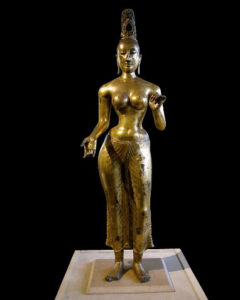
Gilded bronze statue of the Tara Bodhisattva, from the Anuradhapura period (8th century).

The Bodhisattva Tara. Gilded bronze, Sri Lanka, 8th century CE. With her right hand, the bodhisattva makes varadamudra, the gesture of charity or gift-giving, while her left hand may originally have held a lotus. The image is solid cast and would once have had semi-precious stone or crystal inlaid eyes. The niche in the head-dress would have contained a figure of a Dhyani Buddha. This sculpture was found on the east coast of Sri Lanka between Batticaloa and Trincomalee and is evidence of the presence of Mahayana Buddhism in the Anuradhapura period of Sri Lanka. These doctrines are generally more associated with the north of India. Given by Sir Robert Brownrigg.

I like the word “Given”.  Robert Brownrigg, was Governor of Ceylon who finally captured the Kandyan Kingdom

https://en.wikipedia.org/wiki/Buddhism_in_Sri_Lanka#/media/File:British_Museum_Asia_45_(cropped).jpg

Carbon Steel and Zinc in India

Inspired by a comment by bharata bharatavanshi.

Zinc: 
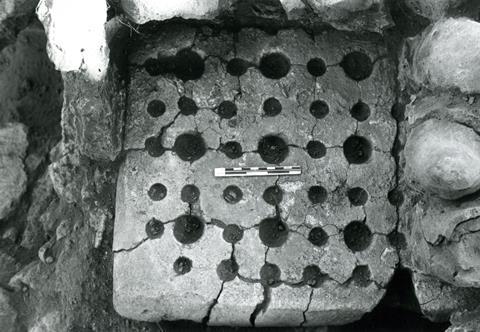
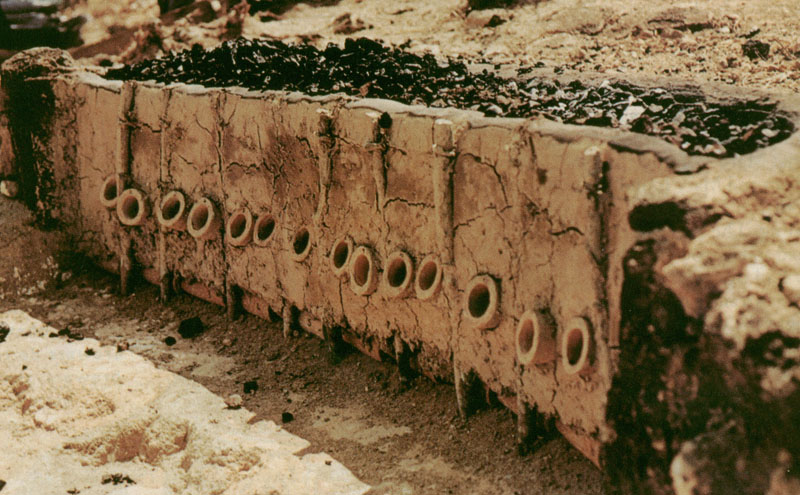
The production of zinc by conventional smelting methods presents considerable difficulties; instead of a liquid metal forming at the base of the furnace, zinc forms a highly reactive vapour (with a boiling point of 913°C) which exits the top of the furnace and promptly re-oxidises. Clearly, some method of containing and condensing the vapour out of contact with the air was needed
1217CW - Science in India - Plate 6.12
By the early second millennium AD, these descriptions had become more detailed. The retort was to be shaped like a brinjal, or aubergine, the condenser shaped like a datura, or thorn apple flower, and the zinc ore was shaped into small balls, still using the exotic organic ingredients.

Carbon Steel (Wootz)

The Carbon steel from India and Sri lanka are thought to be source for the famed Damascus Steel Swords, used by Saladin to defeat the Crusaders.

It is the pioneering steel alloy matrix developed in Southern India in the 6th century BC and exported globally. It was also known in the ancient world by many different names including Wootz, Ukku, Hindvi Steel, Hinduwani Steel, Teling Steel and Seric Iron.

Wootz steel originated in India. There are several ancient Tamil, Telugu, Greek, Chinese and Roman literary references to high carbon Indian steel since the time of Alexander’s India campaign. The crucible steel production process started in the 6th century BC,[citation needed] at production sites of Kodumanal in Tamil Nadu, Golconda in Telangana, Karnataka and Sri Lanka and exported globally; the Tamils of the Chera Dynasty (Kerala) producing what was termed the finest steel in the world, i.e. Seric Iron to the Romans, Egyptians, Chinese and Arabs by 500 BC. The steel was exported as cakes of steely iron that came to be known as “Wootz”. Wootz steel in India had high amount of carbon in it.

The Chinese and locals in Sri Lanka adopted the production methods of creating wootz steel from the Chera Tamils by the 5th century BC. In Sri Lanka, this early steel-making method employed a unique wind furnace, driven by the monsoon winds. Production sites from antiquity have emerged, in places such as Anuradhapura, Tissamaharama and Samanalawewa,

http://wilpattuhouse.com/MiscStuff/juleff-monsoon-steel.html

Steel

1900’s: Betrayal and change in China’s Perception of the West

To China: a few excerpts from a moonofalabama post.  Link is at bottom of post.  Short on words.  Read somewhere, Chinese appear to be rude and abrupt.  Apparently in China, it is rude to take up another’s time.  Once you know Chinese well they can be quite chatty. In Sri Lanka (and SA I assume) ask for direction, and they want have a long conversation on random stuff. Ahh, cultural differences.

I was under the impression the Chinese did not have westernized elite like South Asia (e.g Jinnah,Nehru, SWRDB). I had read about Sun Yat Sen, first President/Prime Minister and about his being kidnapped in the UK from one of my fathers book.  From the short article and little more digging, there was an Westernized Chinese elite.  However,  the west did not honor agreements (whats new) brokered by this Westernized Chinese elite.  I think as a result the influence of this Westernized Chinese elite was marginalized and repudiated.  Here are two examples of Westernized Chinese elite.  Wellington Koo, International law and diplomacy PhD (1912) from Columbia University. His wife Hui-Lan ‘Juliana’ Oei (Madame Koo) apparently was one of the first ladies to indulge in civilian flying and drove her own motor car about London
a little grey two-seater Rolls Royce.

http://www.moonofalabama.org/carlzha/cz02.jpg

To the excerpts
99 years ago, on May 4th 1919, the original Tiananmen student protest broke out. The students protested the Allied Powers’ betrayal at Versailles: The German Shangdong colony was given to Japan instead of returning it to China. This despite China’s sending of 140,000 men to work on the Western front.

Germany took the port city of Qingdao (Tsingtao) on the Shangdong Peninsula where they brought over beer tech giving birth to Tsingtao Beer.

In 1890 Germany played a leading role in attacking the Chinese capital Beijing to suppress the Boxer Rebellion together with the 8 Nation Alliance of Britain, France, United States, Germany, Italy, Russia, Japan and Austria-Hungary.

As World War I wore on longer than anybody expected, the Allied Powers faced acute labor shortages. Britain came up with a scheme to recruit Chinese labors. But China was neutral so she had to be persuaded to join the war.  China wanted to have the German Shangdong colony returned. Entered U.S. President Woodrow Wilson. Wilson asked China to join the war and promised support for China to gain Shangdong back after Germany’s defeat.

While the young republican China sees Britain and France as ruthless Imperial Powers, it has an enormous regard for the U.S. which it hopes to model itself after. Top Chinese diplomat was the American educated Wellington Koo. Madam Koo, an international style icon, popularized Cheongsam/Qipao dresses.

China did as Wilson asked, entered the war against Germany and send 340,000 men to help with the Allied war effort. 140,000 went to the Western Front, 200,000 went to Russia. Chinese comprised the largest non-European labor force on the Allied side during World War I. On the Western front, the 140,000 Chinese labor were know as the Chinese Labour Corp. They dug trenches, worked in timber yards, build steamers, repair railroads. 6,000 were even sent to Iraq to work in Basra.

Unbeknownst to China, while China joined the war on the allied side at the U.S. urging, hoping to gain back Shangdong province, the U.S. and Japan signed the secret Lansing-Ishii Agreement in 1917 where they recognized each other’s special ‘interests’ in China. Japan’s interest is the German colony Qingdao. Fully believing Woodrow Wilson’s promise of self-determination, the top Chinese diplomat Wellington Koo, who won the Columbia-Cornell Debating Medal in his American school days, argued passionately for the return of the Shangdong Peninsula at the Paris Peace Conference.

The Soviets saw a chance to draw China away from the West and into their camp. They leaked details of the secret U.S.-Japan Lansing-Ishii agreement to Eugene Chen in Paris, who then leaked it to the Chinese press. Furious Chinese students took to street to protest at this betrayal especially by the U.S.

Japan then threaten to veto the League of Nations, which would not work without Japan, unless … the U.S. agreed to give Germany’s former Shangdong colony to Japan. Wilson dutifully complied and decide to honor the Lansing-Ishii agreement, selling the Chinese down the river.

Disillusioned with the West and seeking for an alternative political model leads some to look to the newly found Soviet Union. Two leading intellectuals of the May 4th movement, Li Dazhao (left) and Chen Duxiu(right), co-founded the Chinese Communist Party. While heading the Peking University library, Chinese Communist Party co-founder Li Dazhao would influence a young student working there. His name was Mao Zedong.

http://www.moonofalabama.org/2018/05/the-historic-background-of-chinas-perception-of-the-west-by-carl-zha.html#more

Did Islam gain more from its contact with India or Did India gain from its contact with Islam.


This was done already, but I guess periodical reminders are important.

http://www.brownpundits.com/2018/03/08/no-mughals-didnt-loot-india-they-made-us-rich/#comment-5282

Well, all the knowledge on mughals is on display here already.

https://twitter.com/pseudoerasmus/status/874818240563863557
“Mughal India was probably one of the most extractive regimes in history ”

https://twitter.com/pseudoerasmus/status/890495958424973312

“Shocking # of people believe India’s global share of GDP in 1750 was an indicator of living standards! Contrast with ”

https://twitter.com/Parikramah/status/837077222091546624

1. During Mughal rule, Hindu peasants who could not afford the Islamic jiziya tax would be forced to sell a son into eunuch slavery.

https://twitter.com/Parikramah/status/837081691407667200

https://twitter.com/Parikramah/status/837079573913300992

Facts dont cease to exist just because you choose to ignore them.

”
Europe was well on its way ahead of India.

Leonardo da Vinci was contemporary of Babur
1452-1519, 1483 – 1530
Copernicus was contemporary of Humayun
1473-1543 , 1508- 1556
Galileo Galilei was contemporary of Akbar
1564-1642 ,1542-1605
Francis Bacon was contemporary of Jahangir
1561-1626,1569 – 1627
Descartes was contemporary of Shah Jahan
1596-1650, 1592 -1666
Newton was a contemporary of Aurangzeb
1643- 1727, 1618-1707

The only people who came close to working out the ideas of calculus was in kerala by Madhava and his school and the other place with something along lines of chemical industry was also in India.

https://www.chemistryworld.com/opinion/the-origins-of-chemical-industry/3008292.article

Madhava of Sangamagrama, https://en.wikipedia.org/wiki/Madhava_of_Sangamagrama

”

One oxford or Cambridge perhaps did more than entire Islamic contribution including mughals to India. We have gone down this route before already. Facts are clear. The only worthwhile contribution was in subjective fields like arts ,food,music, architecture. Here too one isnt sure how well would they match to wonders that did exist or would have existed.

https://www.firstpost.com/india/world-landmarks-taj-mahal-ranks-third-after-machu-picchu-angkor-wat-916635.html

https://timesofindia.indiatimes.com/india/taj-mahal-2nd-best-unesco-world-heritage-site-after-angkor-wat/articleshow/61946063.cms

A Hindu temple far away from India still ranks higher. As to food, It is India that was the land of spices, and it was spice race that got colonial empires interest in India to begin with. As for music, India already had an evolved music tradition and arts . It is safe to say, it was Islam which benefited from contact with India than the other way around. Harking back to Music, food ,arts, architecture of just one empire reveals incredible myopia. One would call this fanaticism .

Ever wondered Why not much is said about scientific contribution in India by left?. Because they have a lot to hide and deflect. So people write about jonardan ganeri and logic in bengal, or romila thapar questions why kerala mathematicians didnt make progress to physics like Newton. Logic is pathetic compared to science. And progress requires a large network of people to work and kerala school was small network. Indian muslims and mughal aficionados have been a pampered lot. Having been pampered by lies, truth seems shocking.It is not the questions that have been asked that reveal the truth where left is concerned, It is the questions that have never been allowed to be asked that reveals the truth.

I would claim that if one did a decent study on this it would reveal that India didnt gain much and in areas like science and freedom of thought, Islam;s contribution wasnt even zero. It was wholly negative and it took away precious space that could have been occupied by other belief systems. As it was the case in earlier India, whether in was Buddhism, ajivika, jainism, atheism among others. Infact there were many belief systems that were vying for more space before Islam came in. Many,egalitarian in their views. And it was they who ended up as the biggest losers in this cultural exchange.


You the Marathas, we the Mughals & Dalrymple the Coloniser

As an aside I wanted to say that Dalrymple is a joke and an appropriator. Even though I am a Mughalist I do not wish to be lectured on my history by a coloniser, who somehow claims distant Indian+Persian ancestry. If you coast on White Privilege then don’t expect to be an authority on Colored Topics. That’s appropriation simple as!

Now back to my original post. Bharata wrote:

“Right after british conquest, whose real victory was over marathas, it removed them, their soldiers had no employment, they became the thugee cult.”

I may not be an expert in Indian history but I think it is a bit of a stretch to claim the British won India from the Marathas or from Ranjit Singh.

Sometimes traditional history does make sense and while there is an element of “history being written by the conquerors” we must also avoid extreme revision.

I’m not personally invested either way; maybe the Mughal Empire had crumbled to that point of nothingness but to somehow constantly impugn it strikes me as somewhat undignified. If Indians/Hindus hate that aspect of their history so much, which we love so much; how can we really hope to bridge the divide.

In fact in that case it’s far easier for the two countries to look elsewhere because on the most basic existential issue we back different sides (we the Mughals, you the Marathas).

Somehow I don’t think history was that way; the Mughals had Hindu nobles and the Marathas had Muslim generals.

But I couldn’t give up on Akbar or even Aurangzeb; one can’t betray one’s ancestor and the Pakistani psychosis conditions us to see them as so regardless of the facts of the matter.

Unless there is true acceptance of the Mughals (look at the late 19th century butchery of the Urdu language) there will never ever be a United Subcontinent and the kernel of Muhajir Resistance (manifested in Pakistan – for what is Pakistan without the Muhajir but a collection of Muslim tribals on the Indus who have frankly and historically very little to do with Mughal majesty but with their own cute & folk traditions) will manifest itself somehow.

Black Pundits

At Brown Pundits; the three main focuses are:

(1) India-Pak

(2) Hindu/Muslim

(3) Arya/Dravid

I would if there was a Black Pundits (or white or Yellow or Red) what the main topics would be. I think that much as the Hindu-Muslim debate defines the Brown identity; I imagine the Black-White dichotomy does so for those two races.

For Olive Pundits it would most likely be the Israel-Palestine issue (Arab & Jews etc). I can’t for the life of me know what Yellow Pundits would be about; in their case their entire intellectual focus isn’t random intellectualising but simply how to get ahead.

Maybe Brown Pundit’s propensity to discuss rather irrelevant minutiae is a relic of those ancient Brahmins (or Islamic jurists) discoursing on the trivial points of the Vedas. This was of course Allama Iqbal’s point as to why Hinduism survived but Zoroastrianism could not; the Vedas are a complete set of doctrine exhaustively discussed and understood among their adherents. The idle theorising provided an intellectual resilience to foreign domination of a millennia whereas Zoroastrian magi probably couldn’t mount a defence against empowered Islamic clergy, jurists and philosophers (especially after Caliph Omar’s depredations).

Mass Psychology in the Age of Trump

Trump is not the first-ever Republican President with right-wing followers. However, he and his Presidency elicit a visceral response from liberals, both in the United States and abroad. This article in Democracy Journal takes a detailed look at why this happened.

Mass Psychology in the Age of Trump

Excerpts:

“What precisely is it about Trump that drives liberals to these cataclysmic views? The answer has to do as much with liberals as with Trump himself. First, there is the nature of liberal ideology itself, which—because of its peculiar characteristics and internal contradictions—contributes to the present situation. Second, there are psychological factors, the dispositional tendencies of those who are drawn to liberal ideology. These two elements are related because there is a close and reciprocal connection—what Max Weber called an “elective affinity”—between psychological needs on one hand and the philosophical contents of an ideology on the other.”

A mad social scientist could not have devised a character who is more antithetical to the liberal worldview than Donald Trump—even a staunch conservative with a more disciplined commitment to right-wing ideals. Trump is unique in his ability to provoke, upset, and irritate those with liberal sensibilities. No doubt this is part of his appeal to a certain segment of the population—the ones who have been told since Nixon that “liberal elites” were laughing at them.”

We are now equipped to answer the question: Why does Trump—even more than other conservatives—make liberal brains go haywire? It is because he makes it impossible, in practice, for liberals to be tolerant (egalitarian), rational, and optimistic about human nature—three things that are essential aspects of liberal ideology and liberal psychology. Trump makes it preposterous, in other words, for liberals to be “liberal” in the usual sense.

Like a spoiled, spiteful, indifferent king, he makes no pretense of listening to or representing us—half the nation—in any way. In this respect, he is worse—more personally contemptuous of liberal norms, traditions, and accomplishments—than Nixon, Reagan, and Bush. If Trump were more religious he would resemble a pre-Enlightenment figure; it would be difficult to find a less scientifically informed member of the upper class. And yet the whole country, it seems, is held hostage to his narcissistic wounds, authoritarian rants, and Twitterstorms.

“In a preface to The Mass Psychology of Fascism, Wilhelm Reich wrote that “‘fascism’ is only the organized political expression of the structure of the average man’s character.” The fact that authoritarian inclinations are so mundane and quotidian means that they are a constant danger—and a constant source of anxiety for the liberal. It would be foolish at this historical moment to suggest that fascism has come to America. It has not. But to many of us, it feels as if we are closer to it than we ever thought possible.”

The Philippines Genocide: 3 million Filipinos Killed

I guess “Holocaust Deniers” all over the world.

Just the excerpts from the reports during the period (Spanish American War 1898).20 dead filipinos

General Bell himself, who said “we estimated that we killed one-sixth of the population of the main island of Luzon—some 600,000 people.” (There is another Bell, George who also fought in the Philippines ).  Also see Gore Vidals reply on comment questioning the numbers.

The Philadelphia Ledger November 1901 their Manila correspondent wrote “The present war is no bloodless, opera bouffe engagement; our men have been relentless, have killed to exterminate men, women, children, prisoners and captives, active insurgents and suspected people from lads of ten up, the idea prevailing that the Filipino as such was little better than a dog


“Our soldiers have pumped salt water into men to make them talk, and have taken prisoners people who held up their hands and peacefully surrendered, and an hour later, without an atom of evidence to show that they were even insurrectos, stood them on a bridge and shot them down one by one, to drop into the water below and float down, as examples to those who found their bullet-loaded corpses.”

Another Marine officer described his testimony.

“The major said that General Smith instructed him to kill and burn, and said that the more he killed and burned the better pleased he would be; that it was no time to take prisoners, and that he was to make Samar a howling wilderness. Major Waller asked General Smith to define the age limit for killing, and he replied “everyone over ten.”


Mark Twain wrote

“
I have seen that we do not intend to free, but to subjugate the people of the philippines. we have gone to conquer, not to redeem
 and so i am an anti-imperialist. i am opposed to having the [american] eagle put its talons on any other land.”

On 15th of October 1900 Twain wrote the New York Times.

“We have pacified some thousands of the islanders and buried them; destroyed their fields; burned their villages, and turned their widows and orphans out-of-doors; furnished heartbreak by exile to some dozens of disagreeable patriots; subjugated the remaining ten millions by Benevolent Assimilation, which is the pious new name of the musket; we have acquired property in the three hundred concubines and other slaves of our business partner, the Sultan of Sulu, and hoisted our protecting flag over that swag. And so, by these providences of god — and the phrase is the government’s, not mine — we are a World Power.” — Mark Twain

 Please read the whole Post.  Interesting pictures.  Also President McKinley ‘s Christian reasons for the war.

https://britsinthephilippines.top/philippines-genocide-3-million-filipinos-killed/

Homoeroticism, Blasphemy, and Classical Muslim Society

The following stray thoughts on Islamicate homo-eroticism were penned by Irfan Muzammil on Twitter and I am posting them here for the sake of generating more discussion. My own “off the top of my head” comments are at the end in Italics.

A thread on homoeroticism, blasphemy, and classical Muslim society
By Irfan Muzammil 

In my class on Arabic literature today, we read an anecdote about one of the earliest and greatest of Arab poets, Abu Nuwas. Abu Nuwas lived during the height of Islamic civilization in the early Abbasid period, and rose to such esteem that he taught the sons of caliph Harun al-Rasheed. One of those sons al-Amin became the next caliph and Abu Nawas’ greatest patron. What’s most interesting is that his poetry is filled with eroticism of both homo and hetero kind, and with love for wine and for young boys. The anecdote we read was written by Abu Faraj, who was himself one of the descendants of Umayyad caliphs, and wrote one of the classics of Arab literature, Kitab al-Aghani (Book of Songs), a 20 volume collection of anecdotes on Arabs poets, singers, and musicians.

One of his anecdotes on Abu Nuwas, which we read in class, is about Abu Nuwas seducing a young boy but the conversation between Abu Nuwas and the boy is entirely in Quranic verses. I was frankly shocked, and told my professor that I’d be killed or jailed for even  posting this, much less writing it out in a book or teaching it in a class. But according to the professor, who is an Arab himself and an expert in Arabic and Islamic studies, this anecdote has often been quoted even in religious texts as a great example of Arab literature.  And it was only in 2001 that the Egyptian Ministry of Culture burned 6000 copies of Abu Nuwas’ books. The amount of homo-eroticism in both classical Persian and Arabic poetry is just staggering.

By the way, yesterday in my class on early Islamicate societies, we saw the naked women painted on the palaces of Umayyad caliphs. I wonder if the classical Muslim civilization was far more liberal than the modern one -unless you were a slave, or a non-elite woman, or a young boy or girl. But it does trash all those silly theories of Iqbal and Sayyid Qutb etc. about the downfall of Muslim civilization because of its moral lassitude. We were far more liberal, at least in terms of sexual mores and wine drinking, when we were at our mightiest, and our downfall began as our society became more severe and intolerant.

(I would be cautious about interpreting this in terms of liberal (then) vs intolerant (now). Times were different all round. And the elites frequently lived lives that did not concern themselves with the moral standards regarded as ideal for commoners or spouted by priests and theologians. Augustus promoted strict Roman virtue without feeling too closely bound by its strictures in his own private life. The Catholic church had a slew of libertine popes without any discernible change in the morality the church was trying to teach their followers. Every Ummayad caliph except Umar Bin Abdul Aziz was supposedly an alcoholic. As were most of the Delhi Sultans and Mughal Kings, but the religious texts in their times all had the same prohibitions they have today. And last but not the least, classical Islam developed within the womb of the Arab empire, it was not present fully formed when that empire rose to power. There is much more interesting stuff to be said about this, but perhaps another day.. meanwhile, I expect commentators will add value)

Brown Pundits