Since my center-left credentials are frequently questioned on BP, I am sharing this post here. Perhaps it can stand as a precedent post so that this debate can be put to rest once and for all.
I have been repeatedly accused on BP of not actually being “Center-Left”. A commenter has said “Pakistani liberal is an oxymoron”. I have been called an “Islamist” and “Islamofascist”. While it doesn’t particularly make a difference to my life what some random people (whom I am unlikely to ever meet in reality) think of me, I would like to take this opportunity to define what precisely being center-left means to me. I do not attempt to speak for other Pakistanis–though I believe there is a significant proportion of the population who share some of my beliefs– but only to describe my own personal background and ideology. This exercise will also hopefully help me to examine some of my own assumptions.
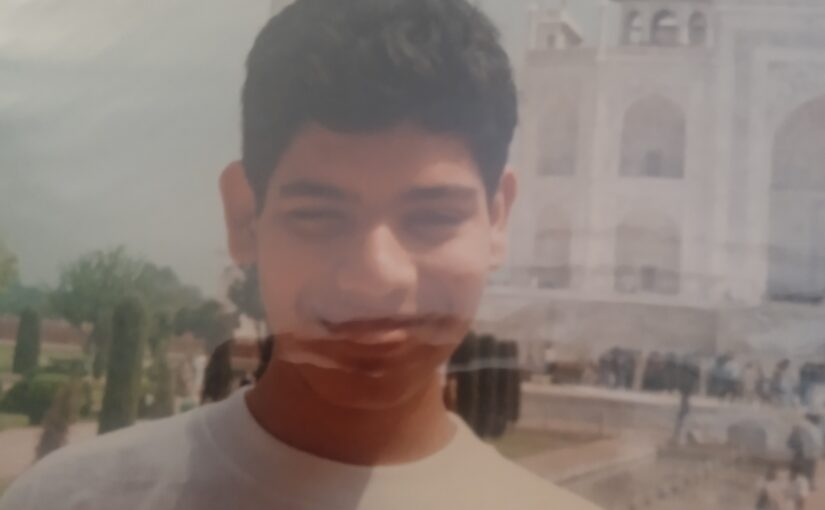
As I have previously mentioned in some comments, I come from a family that believes in Nehruvian Secularism and in the “idea of India”. This ideological influence comes primarily through my father. My paternal grandmother was from Agra and came to Pakistan only after her marriage to my grandfather (who was from Peshawar). My grandfather was an official in the Pakistan Railways and prior to the 1965 war, my father and his siblings used to travel by train to Agra every year to see their maternal grandparents and relatives. The war unfortunately put an end to that. While I never had an in-depth discussion with my grandmother about what exactly Pakistan meant to her, my father has told me that she was deeply saddened by the fact that she was separated from her parents and one of her brothers. Such tragedies were common in many Pakistani and Indian Muslim families. I was lucky enough to be able to visit India as a child and spend time in my dadi’s ancestral home. There are pictures of me in front of the Taj.
On my mother’s side, my maternal grandfather was born in Amritsar (though he was ethnically Kashmiri). In 1947, he was living in Sialkot and married to my nani (who was from West Punjab). However, his relatives came to Sialkot as refugees from Amritsar. For decades, they continued to carry the keys to their houses in Amritsar. In fact, when my mother spent time in Indian Punjab in the 1990s (while doing some international development work) people there were surprised to learn that she could describe Amritsar neighborhoods in great detail without ever having been there before.
It is also important to note that though I was born in Pakistan, I spent most of my formative years growing up in the United States. My parents had many Indian friends. Also, my entire family was deeply involved with Hindustani classical music and this naturally tends to be an Indian diaspora activity. My ustad was Bangladeshi-American but very few of his students were Muslim. While I was learning to sing khayal, I also learned bhajans and shabads in various ragas. Continue reading What Being a “Center-Left” Pakistani Means to Me