
Notes on the closing talks of “Divergent Voices of South Asia: Rethinking Partition, Reimagining Peace” – Mela Nordic, Filmcentrum Riks, Stockholm, 4 July 2026. First of two parts.
(Quotes are drawn from a rough live transcript and lightly edited for clarity; read them as close paraphrase rather than verbatim.)
There was something quietly apt about the calendar. On the Fourth of July, the day one republic celebrates the border it drew for itself, a room in Stockholm spent ten hours mourning a border drawn for someone else. Mela Nordic’s day-long commemoration of the 1947 Partition, Divergent Voices of South Asia: Rethinking Partition, Reimagining Peace, earned its title honestly. The programme ran from Sarah Gilley questioning the manufacture of “normalcy” in Kashmir, through Farooq Sulehria’s provocation “India as Media Subimperialism!”, to the launch of Amrita Ghosh’s India’s Imperial Formations: Race in South Asia, to Shaukat Ali Kashmiri of the United Kashmir Peoples National Party; a man whose politics manage the rare feat of being equally inconvenient to Islamabad and to Delhi. Divergent voices in the strict sense: nobody in that room agreed on everything, and the organisers plainly did not want them to.
The late afternoon saw two back-to-back talks by two of the subcontinent’s most stubborn journalists. Anuradha Bhasin, executive editor of the Kashmir Times, joined by video link for “Bridging the Noise: Media and the Art of Solidarity in South Asia.” Hers is the name on the Supreme Court petition that forced the January 2020 ruling that indefinite internet shutdowns are impermissible and that any shutdown must answer to proportionality and be published; a judgment that wrote the rules without lifting the blackout, which tells you most of what you need to know about the terrain she works. She was followed, in person, by Beena Sarwar, journalist, filmmaker, teacher, co-founder of the Southasia Peace Action Network, whose talk is the subject of Part II.
Heard in sequence, the two talks assembled themselves into something neither quite was alone: Bhasin supplied the blueprint, Sarwar the working prototype. This first part takes the blueprint, and holds it up against the graveyard of everyone who has tried to build it before.
The one story
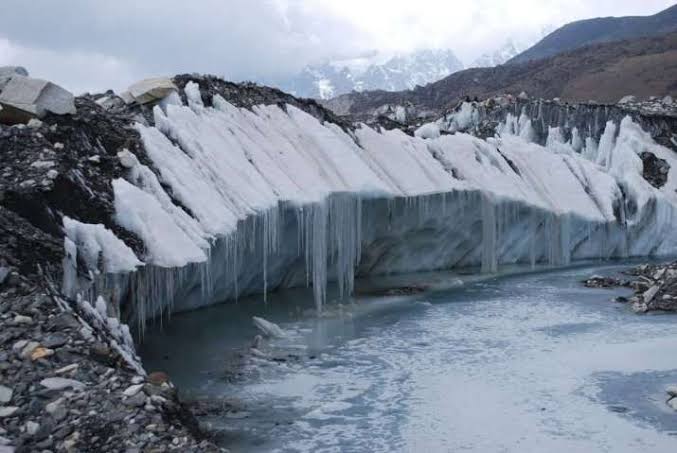
Bhasin’s talk built to a set of concrete proposals, and the sharpest of them was a reframing so simple it is astonishing how rarely one hears it. The single most important story in South Asia right now, she argued, is the melting of the Himalayan glaciers; and it is being covered entirely through national lenses. Pakistan’s floods. India’s heatwaves. Nepal’s vanishing ice. The poisoned politics of the Indus Waters Treaty. Four national stories, four national blame games. “These are not separate stories,” she said. “They are one story“; the story of a shared ecosystem under shared threat. The meltwater, after all, does not stop to have its papers checked at Wagah.
From that reframing flowed her first proposal: well-funded, editorially independent cross-border journalism collaborations; joint investigations, joint reporting on shared rivers and shared climate data, joint coverage of health crises, literacy, and what is actually happening inside each country’s universities and laboratories. Not from the nationalist angle, not from the blame angle, but from the angle of what is actually happening.
Her second was a collaborative digital archive of the subcontinent’s shared history, culture, and artistic heritage; pre-Partition history, the region as a single civilisational space, open not just to scholars but to journalists, artists, and ordinary citizens. She was blunt about why it is needed now: every country in the region writes its history with a thumb on the scale, and the thumbs are getting heavier. In India, entire textbook chapters are being rewritten and whole periods, the Mughal era above all, erased; in Pakistan, she added, the curriculum has been doing versions of this for far longer.
Third, journalism as myth-busting. The nationalist story, she argued, is always built on myths; chiefly that the other side is uniformly hostile, even evil, and that there is nothing to gain from engagement and everything to lose. These myths will not be toppled by any single dramatic act of journalism. They erode, if at all, through a thousand small acts of accurate, humanising reporting. Journalists in South Asia have to reclaim their function from nationalism; to insist that the job is to report the world as it is, in all its complexity, and not to serve the identity politics of whoever holds power.
Fourth, and briefly, what journalism cannot do. Cinema, theatre, literature, and music create empathy in a way reportage cannot; some of the most remarkable peace-building in post-conflict societies has come through joint theatrical productions putting actors and playwrights from opposing communities in one rehearsal room. She invoked the late Madeeha Gauhar, whose Ajoka Theatre was carrying Lahore productions across the border two decades ago; adding only that such groups need to be far more deliberate about their outreach. To this she attached a South Asian literary translation fund, making it economically viable to render contemporary books and poetry into every major language of the region, and collaborative fellowships and residencies across journalism and the arts.
She did not pretend any of this would be welcomed. Such collaborations, she said plainly, will be opposed by governments who profit from the status quo, by powers who profit from the current information ecosystem, by media houses whose business model runs on nationalist outrage, and by publics so long fed the enemy-image of the neighbour that any attempt to humanise him will feel like betrayal. Her answer was endurance: if the architecture of hostility was built brick by brick, it must be demolished brick by brick, and something else built in its place. “These are not soft tools,” she insisted; in today’s South Asia they may be among the most powerful available, and the people who wield them carry a responsibility to the shared future of a region facing a choice: find a way to know itself as a whole, or keep fracturing along lines that will eventually become impossible to hold.
What the graveyard teaches
It is worth saying, because the room contained people who lived it, that almost everything Bhasin proposed has been attempted before, and the manner of each attempt’s death is the most instructive thing about it.
The grandest experiment was Aman ki Asha, launched on the first day of 2010 by the two largest media houses of the two hostile states; Pakistan’s Jang Group and the Times of India, an event without real precedent: the mainstream press of two adversaries jointly campaigning against the adversarial frame itself. The campaign’s own commissioned surveys claimed measurable movement: threat perception down by over twenty percent in both countries within a year, two-thirds of respondents believing peace attainable in their lifetimes. Then it went quiet. After 2014 the initiative slid into dormancy under a pincer; in Delhi, a new government with no appetite for it; in Pakistan, the Jang Group under sustained assault from the military establishment in the wake of the Geo–Hamid Mir affair. Nobody banned Aman ki Asha. It was simply made unaffordable to continue.
The subtler death was Himal Southasian, the Kathmandu magazine that for twenty-nine years was the region’s only genuinely pan-regional analytical publication; the closest existing thing to Bhasin’s cross-border newsroom. In 2016 the Southasia Trust announced suspension, and its explanation deserves to be studied like a pathology report: Himal was silenced, the Trust said, not by attack or overt censorship but by “the use of the arms of bureaucracy to paralyse its functioning.” Approved grants sat unreleased for seven months without explanation. Work permits for non-Nepali editors became impossible to obtain. Payments to contributors were indefinitely delayed. No censor’s pen, no midnight knock; just paperwork, withheld. (Himal has since revived in leaner, digital-only form, which is its own lesson about where survivability lives.)
Read together, the two obituaries tell you the one thing Bhasin’s phrase “well-funded, editorially independent” glides past: funded by whom, and domiciled where? The kill mechanism for cross-border media in South Asia is administrative, not editorial; the grant-approval desk, the visa counter, the foreign-funding statute. Any such venture instantly attracts the “foreign-funded, anti-national” charge; India’s FCRA regime and Pakistan’s agencies have both perfected strangulation-by-compliance. Which means survivability is not a footnote to the proposal; it is the proposal. An endowment beyond the reach of any single ministry differs categorically from renewable grants; a diaspora-membership model differs from institutional philanthropy; a multi-jurisdiction digital domicile differs from a Kathmandu office with work permits to renew. The next Himal will be designed around its enemies’ paperwork or it will not last a decade.
One refinement to the archive proposal follows the same logic. Bhasin herself observed that the region’s national histories do not reconcile; which is precisely why a shared narrative is the wrong deliverable, and would merely open a new front in the textbook wars. A shared archive of primary sources; documents, images, manuscripts, objects; the same evidence available to everyone, the arguing left intact, is both more achievable and far harder to attack. Nobody has to agree about Aurangzeb to agree that his farmans should be scanned. And this is the stronger ground for her third proposal too: “myth-busting” as a banner risks sounding like counter-propaganda, which invites symmetrical dismissal; verifiable reporting that leaves the complexity standing, her own better formulation, “report the world as it is“, cannot be waved away so easily.
So the blueprint stands, annotated: right diagnosis, right instruments, and one unanswered engineering question about how the structure survives its first winter. As it happens, the woman who followed Bhasin to the podium is the living institutional memory of that graveyard; she ran the grandest of the dead experiments, watched how it died, and built its successor on the lessons.
That is Part II.
But it is the international coaching role which has brought the itinerant New Zealander to Pakistan. He appears to have a mandate till late 2027, when the ODI World Cup will take place, one that, whichever way it goes, will likely end up shaping his legacy in this country.
What he’s rebuffing is the notion of inexorable decline within Pakistan cricket, and the contention that his arrival may have failed to sufficiently stall it. “In the Asia Cup last year, for example, we won every game except against India,” Hesson tells Cricinfo. “The reality is every single team in the world is struggling to beat India at the moment. Every team, not just Pakistan. Rightly or wrongly, Pakistan are gauged by how they perform against India. And at the moment, India is not only the best team; they’re the best team by a mile.
https://africa.espn.com/cricket/story/_/id/49238380/mike-hesson-touts-pakistan-white-ball-improvement-looks-ahead-2027-odi-world-cup
Btw 20-30k Mirpuris in London demonstrating what’s happening in Pakistan administrated Kashmir.
I always end up being heavily skeptical of folks who argue for the existence and interference of extra national entities in the affairs of sovereign nations. There’s a good reason a lot of these folks end up getting the anti-national tag, because their agendas are quite literally antithetical to the agendas of nation states. If such entities were instituted and empowered they would lead to the same issues as any nation states would create, that is proliferating its own agendas, narratives, and opinions on issues. This isn’t an argument for unbiased news coverages, its just an argument for the creation of another front from someone who doesn’t want to say it out loud.
Unsaid in all of this is the fact that even Modi when first elected, made multiple non-trivial attempts at outreach to Pakistan in pursuit of ‘peace’. He invited Pakistani PM (along with rest of SAARC) for his swearing-in. When then Pakistani PM reciprocated, he doubled down on rapprochement by personally flying out to Pakistan, and continued these efforts even when Pakistani “non state actors” (laughable untruth at this point) carried out a terror attack in Pathankot.
Modi’s outreach to Pakistan continued in public and in private – folks forget his public speech where he urged Pakistan to enter a competition with India to reduce poverty and bring prosperity to the sub-continent.
But Pathankot was followed by the escalation at Uri, where soldiers families were massacred. And then the Pakistani ‘non state actor’ Pulwama bombing.
Fool me twice, thrice, dozens of times, and the message is loud and clear. Those who control Pakistan – their incentives are not aligned with India-Pakistan peace. And no amount of well-intentioned ‘aman ki asha’ conferences can change that. So if well meaning folks in India weaponize such ‘peace’ rhetoric against GoI and hold it responsible for Pakistani perfidies, then its just……silly.
Also, to your point – such ‘track 2’ activities have long been cynically used and penetrated by Pakistani ISI – cultivating a ‘peace’ constituency’ in India is used to dodge accountability for continued terrorist murders of Indians.
Indians are required to engage in performative ‘accommodation’ and pretend that decades of innocent bloodshed cynically unleashed by the Pakistani military, and stil ongoing!! – somehow doesn’t exist. Illusions of ‘parity’ and “respect” somehow shift the onus onto the victim of terrorism to make the supporters of such acts, “feel more comfortable” and respected. And refusal, or even hesitation to be part of such a charade, leads to inevitable accusations of “hindoootva”, “anti-Islam”, “anti-Pakistan” etc etc.
Its no surprise that the Government of India has simply ignored and disavowed such “Aman ki tamashas” for the useless noise they are, howsoever genuine the intentions of some of the participants.
Bottomline is blunt and bitter – Anyone who is honest and truly wants to work towards peace in the subcontinent, needs to first be honest about the primary obstacle – the Pakistani army and its malicious kleptocratic chokehold on the Pakistani nation-state. Until that feudal exploitative regime changes, or its blood-stained hositility calculus towards India changes, all such tamashas are just that.
Sounds like a great conference.
I admire Anuradha Bhasin a lot. She has faced a lot of persecution by the Indian government because of her reporting from Kashmir. I believe her books are banned in India-held Kashmir.
Himal Southasian is doing quite well. I’ve shared their content here quite a bit. They recently ran a “Fiction Fest” which this year focused on translation. I also like their “Southasia Review of Books”. I believe the organization is technically headquartered in Colombo now.
I wrote about Madeeha Gauhar when she passed away in 2018 (on my personal blog)
https://kabiraltaf.wordpress.com/2018/04/26/a-tribute-to-madeeha-gauhar-1956-2018/
I’ve also written about Shahid Nadeem’s plays.
Yes you would have loved it..
1) So as suspected ,no questions about the Hindu genocide in Kashmir valley , flight of pundits and their return. (remember right of return so vociferously demanded else where?? !!)
2) the realisation by some indian kashmiri Sunni elite, that Pakistan cannot give them anything,except hot air, in the current context, appears to be the main reason for peace. Many others simply wanted a way out of the problem, and indian government paved the way.
3) Very similar to peace ‘achieved’ in Northern Ireland after USA stopped aiding separatists.
The “India Pakistan Peace” theatre requires one to kowtow to Pakistani talking points – Indians and Hindus such as the Kashmiri Pandits – their blood, tears, suffering, have no “locus standi”.
Interesting all the conversation in the conference was about Pakistan Administered Kashmir (50k protestors in London apparently) and Baluchistan.
Very little focus on India..
I don’t know about the conference, but was responding to this…. inaccurate ‘both sides-ing’
>no questions about the Hindu genocide in Kashmir valley
Wait a minute, what Hindu genocide of Kashmir Valley?
Indian Home ministry records show 217 Hindu deaths over a 4 year period from 1988-1991
What genocide?
This is disingenuous pedantry. Ethnic cleansing is probably the more accurate word, but to deny horrific persecution and explicit targeting of Kashmiri Hindus in the 1980s and beyond, is despicable.
Unless you explicitly acknowledge this, you are essentially reducing your perspective on this topic as trash-worthy.
Do you deny that most Jammu Muslims were ethnically cleansed in 1946 with tens of thousands killed? Was that a genocide committed on the civilian population by Dogra forces (upto 100,000 killed?) and many Kashmiri Hindus aiding and abetting the Dogra forces in it? It was also mostly unrelated to partition since J&K was not partitioned.
If you don’t accept that, why do you expect others to accept what is not even a genocide.. Kashmiri Pandits left without any mass violence, and even with the protection of half a million troops. And now that apparently the situation is ‘peaceful’ (modi’s words) they refuse to return to their homeland
Man its really funny watching the state complicit in genocide of Bengali Muslims trying to take the moral high ground. I would argue that the Pakistani state is directly and indirectly responsible for more killing of Muslims than India ever could be with the number lying in the millions.
Very predictable, but even more predictable is your lack of knowledge that Bengalis commited a genocide of Urdu Speaking Bihari Muslims in 1971 for not supporting their seperatist agenda, with full support from India. Infact Operation Searchlight was in reply to Bengali seperatists massacring Bihari Muslims. India aided and abetted a terrorist organization (Mukti Bahini) and used the pretext to invade East Pakistan just like they used a similar pretext to invade Hyderabad.
The main cause of trouble in the region is basically India. If India was so magnaminous, all its neighbours would not hate it (including Bangladesh that literally owes its existence as an independent country to India)
whataboutery from you is predictable. You jumped from the question of hundreds of thousands of victims of ethnic cleansing, ostensibly to justify it using partition violence?
Problem with such rationalizing of terrorism is, that it may sound ‘reasonable’ to your own self, but it shines the spotlight and renders your bigotry quite naked.
“partition violence” when J&K wasn’t partitioned and the genocide started before any partition plan was drawn up.
interesting Jammu went from 30% to 7% Muslim..
Initiate ‘direct action’.
Weaponize it to justify ‘direct action’.
Recursion, TNT flavored.
[…] Part I of this essay took Anuradha Bhasin’s blueprint, cross-border journalism, a shared archive, the arts as empathy machines, and held it against the graveyard of prior attempts: Aman ki Asha, decapitated after 2014; Himal Southasian, strangled in 2016 by withheld paperwork. […]