A Christmas cake (for Dussehra)

Why not? This is India where all folks of all faiths meet in celebration (around this time the holy days just keep rolling one after the other…without a break, as far as we can see).

We are very fond of home-made recipes because they taste different from the commercial stuff and they are quite practical (unlike the cook-book stuff).

This is claimed to be an authentic Syrian Christian recipe for sponge cake. A resourceful “aunty” instructed us “live” and the result was not half bad (and very little effort). Let us know if someone likes it, we will pass on the message to aunty.
….

Recipe of Sponge Cake:

Ingredients:

Maida
(flour) – 110 gm

Sugar
– 110 gm

Butter
– 110 gm

Baking
powder – 1 full tea spoon.

Milk
powder – 2 table spoon

Essence
(Vanilla or Pineapple) – a little less than half tea spoon.

Elaichi
– 6 nos.

Clove
– 7 nos.

Eggs
– 4

Sugar
caramel – Put 2 table spoon sugar in a thick pan and heat it until the sugar
content turns dark brown. Then put the heater in the sim mode and pour 2 table
spoon water into it.  Immediately remove
the pan containing caramel from the heater.

Cashew
nut- – your choice

Kismis
– your choice

How to prepare?? 
Sift
the dry ingredients together.
The dry ingredients
are: flour, baking powder and milk powder. Simply place everything in a sifter
and shake it back and forth over a bowl to eliminate the clumps (do it thrice
at least). 

Mixing
ingredients in a mixer grinder (bigger jar).
Pour sugar, butter,
egg, essence, elaichi, clove, sugar caramel and flour in a bigger mixer jar.
Stir it well with a spoon and then switch on the grinder and grind it for 5
mnts.
 
Pour
the mixture into round pan.
Fit a greased paper (like butter
paper) in a round pan smoothing out the wrinkles or bubbles.  The grease paper will keep the mix from
sticking to the pan. After pouring each layer of the viscous fluid in the round
pan, put cashewnut and kismis.

 
Bake in oven at 350 deg
F for 30 mnts.  
Decide the time of
baking by taking the cake from the oven in the midst and poke it with a skewer.
If the skewer is dry, we can assure that the cake is baked.

….

regards

255, 261, 264, 350, 381

Five Indians in the Forbes USA Top-400 list. In one way it is nice, the percentage of  the ultimate high earners is in line with the expat Indian community strength in the USA. However the list is empty at the top (no one in Top 200).

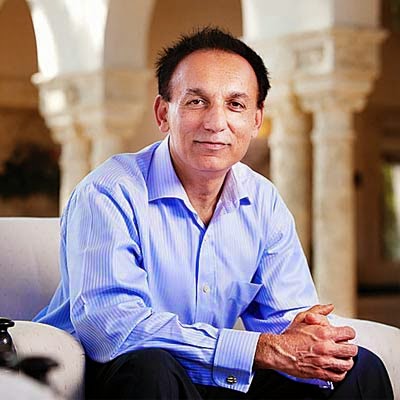
As expected, Bharat Desai, John Kapoor, Ramesh Wadhwani, Ram Shriram, and
Vinod Khosla
have either technology backgrounds or play in technology.
Specifically, Desai (IIT Bombay), Wadhwani (IIT Bombay) and Khosla (IIT Kharagpur) are Indian Institute of
Technology graduates and are committed to improve those institutions and create entrepreneurs (not just technology officers).
………

 ….
The Indian Institute of Technology (Bombay) in
Powai (Mumbai) received quite a windfall recently when billionaire alumnus
Bharat Desai, chairman of US-based company Syntel, donated $1 million to
his alma mater. The money will go toward starting a robust
entrepreneurship centre so that many more technicians come out as
entrepreneurs
rather than just as degree-holders.

……
Five Indian-Americans have been named among the 400 richest people in
the US by Forbes, a list topped by Microsoft co-founder Bill Gates for
the 21st year in a row with a net worth of USD 81 billion.


Founder of outsourcing firm Syntel Bharat Desai, entrepreneur John
Kapoor, Symphony Technology founder Romesh Wadhwani, Silicon Valley
angel investor Kavitark Ram Shriram and venture capitalist Vinod Khosla
are among The Richest People In America 2014 list by Forbes.


….

Forbes said 2014 was another record year for American wealth, when the
aggregate net worth of the richest 400 Americans was USD 2.29 trillion,
up USD 270 billion from a year ago. 


“Thanks to a buoyant stock market, the richest people in the US just keep getting richer,” Forbes said.


….

Gates is the richest American for the 21st year in a row, with a net
worth of US 81 billion. The Microsoft chairman’s stake in the software
company he cofounded accounts for just under 20 per cent of his total
net worth. His friend Warren Buffett, chief executive of Berkshire
Hathaway, occupies the number two spot on the 400, a rank he has held
since 2001 with a net worth of USD 67 billion.


Larry Ellison, who just announced that he was giving up the CEO role at
Oracle, the software firm he founded, comes in at number three, with a
net worth of 50 billion dollars.


Facebook co-founder and CEO Mark Zuckerberg is now the 11th richest
person in the US, and the biggest dollar gainer on the list. His fortune
soared to USD 34 billion, up USD 15 billion since last year, due to a
sharp rise in the price of the social network’s shares.


Desai and his family rank 255 on the list, followed by Kapoor who is ranked 261, Wadhwani (264), Shriram (350) and Khosla (381).

….

Desai, 61, and wife Neerja Sethi founded outsourcing firm Syntel in 1980
while studying at University of Michigan. The Indian Institute of
Technology alumnus has a networth of USD 2.5 billion.


Kapoor, 71, debuts on The Forbes 400 as a serial entrepreneur who has
founded two pharmaceutical companies that he has guided to exceptional
success.


The bulk of his wealth is concentrated in shares of Akorn
Pharmaceuticals, an Illinois-based generics manufacturer that Kapoor has
been involved with since the early 1990s, and INSYS Therapeutics, a
cancer-treatment maker that went public in May 2013.
Kapoor, whose net worth is USD 2.5 billion, also has a small chain of
fast-casual Indian restaurants in Arizona called Bombay Spice, as well
as Roka Akor Japanese eateries in Chicago, Scottsdale and San Francisco.


Wadhwani, 67, an Indian Institute of Technology Bombay alumnus has a net
worth of USD 2.5 billion. Forbes said over the last decade, his galaxy
of companies has expanded to 20 and is generating three billion dollars
in revenues with 18,000 employees worldwide.


He is the recipient of the 2013 Forbes India ‘Non-Resident
Philanthropist Award’ and sits on the boards of the Kennedy Center and
the Center for Strategic and International Studies. Wadhwani signed Bill
Gates’ and Warren Buffett’s Giving Pledge last year.


….

Shriram, 57, has a net worth of USD 1.87 billion. He was an early Google
backer and has been a Silicon Valley angel investor since 2000. Through
his Sherpalo Ventures, he has backed early-stage tech firms such as
Zazzle and Paperless Post, as well as the frozen yogurt retailer
Pinkberry.


Shriram made most of his fortune through Google and has been on its
board since the company was founded in 1998.
In June 2014, Shriram and
his wife donated $61 million to engineering initiatives at Stanford
University, which both of his daughters attended and where he is a board
trustee.


Khosla, 59, has a net worth of USD 1.67 Billion and has run his own
venture capital firm, Khosla Ventures, since 2004,
following nearly two
decades at VC firm Kleiner Perkins. His highest-profile investments have
lately been in clean tech: wood-based biofuel, new types of batteries
and water purification. 


All together, the 400 wealthiest Americans are worth a staggering USD 2.29 trillion, up USD 270 billion from a year ago.
The average net worth of list members is USD 5.7 billion, USD 700
million more than last year and a record high. An impressive 303 of the
400 saw the value of their fortunes rise compared to a year ago. Only 36
people from last year’s list had lower net worths this year. 


The list has 27 newcomers including Elizabeth Holmes the youngest woman
on the list, and the youngest self-made female billionaire in the world.
Just 30 years old, the Stanford University dropout has built blood
testing company Theranos into a firm that venture capitalists have
valued at USD 9 billion.

…..

Link (1): outlookindia.com

Link (2): dnaindia.com/bharat-desai-donates-1-million-to-iit-b

….

regards

“Kem Cho Mr PM”

Indians are known the world over for their lack of unity (this is only to be expected, a billion people marching in lock-step is possible only in Communist China, and even there we have our doubts). No one except the stoutest patriot believes in that hoary school-yard slogan “unity in diversity.”
……..

….
That said Indians are united about the need for diversity (and benefit of local control). This is simply a matter of accepting reality. In a country when there are so many languages, religions, cultures there is not much you can do to privilege any one “thing” over another (you can try and fail).   

In general, where there has been sustained complaints of “imposition” (one community over another), we have followed the example set by our (ex) British masters and granted partition. On November 1, 1966, there was a splitting of the pre-existing Punjabi Suba into majority Punjabi speaking (and Sikh by religion) Punjab, and Hindi speaking (Hindu) Haryana, and also Hindi/Pahari speaking (Hindu) Himachal Pradesh (25 January, 1971). The same policy was followed for Kerala (1956), Maharashtra (1960) and Nagaland (1963) and others.

In November 2000, Jharkhand was split from Bihar (and Chattisgarh from Madhya Pradesh) with an emphasis on (exclusive) tribal identities. We just experienced (2nd June, 2014) a bitter, yet mostly peaceful partition between Telugu speaking people in Telangana and Andhra. And in the future there may be a Gorkhaland for Nepalis who propose to be free of Bengali domination.

Even at the intra-state level, a new, muslim majority Malappuram district was created on 16 June 1969 (by the secular, communist government of EMS Namboodiripad) by segregating taluks of the erstwhile Kozhikode and Palakkad
districts.

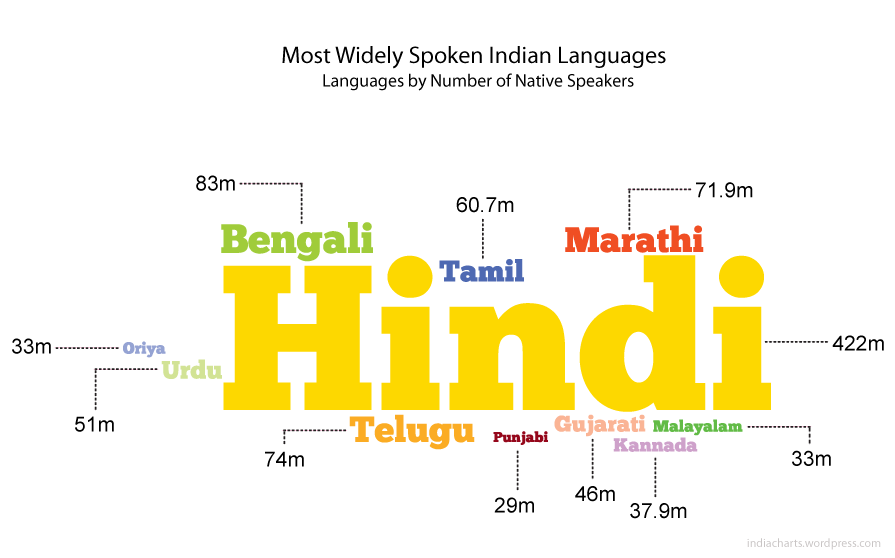
Thus when President Obama said: (Tame) Kem Cho (?) Mr Prime Minister we were quietly happy. There is no country on which has such diversity to the point that the Constitution notes 22 scheduled languages. Even that list ignores tens of millions of non-Hindi speaking people in the “Hindi” belt – Maithili from North Bihar is the sole exception – and the Tulu speaking community in (Mangalore) the south.
……
Since the time of independence elites have been fighting between themselves about the language to be imposed on the downtrodden (elites will always send their progeny to English speaking convent schools). But the eight schedule is serious business and if we really claim to love out country we should be able to speak at least one language that is not English and not our mother tongue.

For the Hindu-Hindi imperialists, we recommend learning any one of the four main southern languages; Telugu with a very large Sanskrit content will probably be the best bet. For the people of the south (who want to make a point by rejecting Hindi) we recommend Bengali (or Gujarati). However if you truly want to confound the Hindi speakers try Bhojpuri (or Maithili, the sweetest of them all).
…………

[ref. Wiki] The Eighth Schedule to the Indian Constitution contains a list of 22
scheduled languages. At the time the constitution was enacted, inclusion in
this list meant that the language was entitled to representation on the Official
Languages Commission….
….
The
list has since, however, acquired further significance. The Government of India
is now under an obligation to take measures for the development of these
languages,
such that “they grow rapidly in richness and become effective
means of communicating modern knowledge.”


Via the 92nd Constitutional amendment 2003, 4 new languages – Bodo, Maithili,
Dogri, and Santali – were added to the 8th Schedule of the Indian Constitution.


Even though English language is not included in Eighth Schedule (as it is a
foreign language), it is one of the official languages of Union of India.

How are you (?) in all 22 (less one) languages

1) Axomiya – Aapuni
kene aase?

2) Bangla – Aapni
kemon achen? 
(informal: Tumi kemon acho? most informal: Tui kemon achish?)

3) Bodo – Nungni khabora ma?

4) Dogri – Kiyaan oo ji?

5) Gujarati – Tame kem cho?

6) Hindi – Aap kaise hain?

7) Kannada – Neevu hengiddira?

8) Kashmiri – Tohy chivaa vaarai?

9) Konkani – Tum kosso
asai?

10) Maithili – Aahan
kehan chi?

11) Malayalam – Thaankalkk
sukhamaano? 
(informal: Engnganuntu ninakku?)

12) Manipuri – Nung
ngai biribra adombo?

13) Marathi – Aapan
kasha aahath?

14) Nepali – Tapaiilai
Kasto Cha?

15) Odia – Aapana kipari
achanti?

16) Punjabi –
Tuhada ki hal he?

17) Sanskrit –
Kathamasti bhawan?

18) Santali – Not known
(??)

19) Sindhi – Tawaan
keeyan aahiyo?

20) Tamizh – Eppadi
irukkindriigal?

21) Telugu – Meeru aelaa
unnaaru?

22) Urdu – Aap kaise hain?

…..

Link: www.omniglot.com/language/phrases/bengali.php

….

regards

An X-Y feminist

….Kale sends
around 2,000 kits each month – containing one mifepristone and four
misoprostol tablets – to women who live in nations where abortion is
either banned or restricted…..These are two of the 1,500 compounds that
Kale sells, generating an annual revenue of $4.5 million – but no profit
with an option for patients to donate 90 euros….And the need
is enormous. Nearly 40 percent of the world’s population lives in
nations where abortion is banned or restricted making it a major health
concern for women….

….
Can men be feminists? While the long form answer can get complicated the short form is simple enough. The answer is yes, if men are interested in complete equality between men and women. Setting reproduction aside, a woman should have the same rights (and responsibilities) as a man in all other functions and aspirations (yes we know that there are other genders out there, equality for them as well).

Then again if people feel that as per this definition humanism = feminism (and we agree) then it may be preferable to call ourselves (flawed) humanists.

How about reproduction and the specific question related to the medical termination of pregnancy (MTP aka abortion)? Again the long form answer is complicated (see below) but the short answer is that the final call is wholly the woman’s (to pull the trigger or not).
…..
Yes, abortion undoubtedly involves killing, but as a society we do sanction killing, all the time, unless we are Jains who keep mouths covered and feet uncovered (while eating organic Jain food). Yes, we should aim to kill less and minimize the pain while killing. This implies that abortion should be performed as early in the cycle as possible (we like the two doctor rule). Since we are not religious we are not concerned with the quality of life in the after-life, however we understand that other people may have principled objections on this matter.

Yes, any form of state control is odious. We consider the Chicom practice of kidnapping women and forcing abortions to be one of the purest forms of evil. Societal pressure causing women to abort girl child (and on rare occasions boys) is immoral. Men forcing women to have abortions because they enjoy sex (but not safe sex) is criminal (and this is why we advocate notification of authorities, usually parents but also teachers and care-givers, if the woman is under-age).

Yes on state subsidies for MTP – it is a simple enough procedure and poor people need it the most. If you feel that your tax dollars are being misused you can try to (non-violently) change society so that abortion becomes rare (while remaining safe and legal). Yes, there is a difference between killing unborn babies and killing people. But this also implies that birth control should be made available (subsidized) to all women.

This is the bottom-line, we do not like killing. We are also extremely fond of babies (of all types), hence killing of babies (even unborn ones) is problematic for us. But we live in an imperfect society and killing is part and parcel of it. If there exists an Almighty who has privileged women (and not men) to bring life to earth, it must be equally the privilege of women to terminate such a life.  
…….

A Nagpur-based businessman is helping women seeking abortions across
the world–and he’s doing it through mail. Now under the Maharashtra
Food and Drug Administration scanner, Mohan Kale has been running a
mail-ordered abortion service, where in, he mails medicines with
terminate pregnancies to women across the world who are unable to avail
it.

….

According to a report in The Times of India,
44-year old Kale was influenced by Physician and abortion rights
activist Rebecca Gomperts, who made headlines with her decision to set
sail and provide abortions to women in countries where it is illegal. 

….
“As a man, I can’t give birth to a baby but I do have autonomy over my
body. Why shouldn’t women?” the report quotes Kale as saying.

….

According to the New York Times
report, Kale and Gomperts met two years ago. At the time, Gomperts was
looking for a new supplier in India. As a supplier, Kale’s job is
simple: He is sent a prescription after a doctor approves an abortion
request, and he sends the ‘kit’ to the women in need. ….

Since the
medicines are legal in India, they can be purchased with a prescription.


Kale forms part of a much bigger telemedicine service that Gomperts
started in 2006. Five years before starting the telemedicine service,
Gomperts “did some legal and medical research and concluded that in a
Dutch-registered ship governed by Dutch law, she could sail into the
harbor of a country where abortion is illegal, take women on board,
bring them into international waters, give them the pills at sea and
send them home to miscarry. 

….
Calling the effort Women on Waves, she chose
Dublin as her first destination,” says the New York Times report.

In places like Ireland, women made a beeline to seek appointments with
Gomperts. Women on Waves has since transformed into an international
tele-medicine service, of which Kale forms a part.

Kale sends
around 2,000 kits each month – containing one mifepristone and four
misoprostol tablets – to women who live in nations where abortion is
either banned or restricted. These are two of the 1,500 compounds that
Kale sells, generating an annual revenue of $4.5 million – but no profit
with an option for patients to donate 90 euros.

And the need
is enormous. Nearly 40 percent of the world’s population lives in
nations where abortion is banned or restricted making it a major health
concern for women. 

The report in New York Times explains: “The
World Health Organization estimated in 2008 that 21.6 million unsafe
abortions took place that year worldwide, leading to about 47,000
deaths.
To reduce that number, WHO put mifepristone and misoprostol on
its Essential Medicines list.”

But even as both Kale and
Gompert walk a legal tight-rope, the service has enabled thousands of
women across the globe to assert their reproductive rights and attain
greater control of their bodies. New York Times cites a thank you note
from one of the women, which sums it up: “I used your service a few
months ago. Today I finally found out I was back to normal, whatever
that really means,
seems strange to say really, but I wanted to say a
HUGE thank you.”

…..

Link: firstpost.com

…..

regards

Lions and (are) Christians

….USCIRF

@USCIRF
Hindu Nationalist Group Seeking to Cleanse Christian Presence From #India Is Not Unlike ISIS, Watchdog Group Warns……David B. Cohen

@DavidBCohen1 “Watchdog” group likens BJP to ISIS, proving they’ve no moral compass. Moral equivalence is not moral, nor is @USCIRF……
….
The argument continues about the curious case that was the 2005 US VISA ban imposed on Narendra Modi as directed by the US Commission on Internal Religious Freedom (USCIRF, see tweet above). The ban was quite unique in its application (apart from Nelson Mandela* back in the day and more recently Prabowo Subianto of Indonesia, see link below for details). There have been (naturally) speculations as to how it came about, and what was the specific role of (american, expat) evangelical Christians 

Interestingly enough, American colonial policy makers have chosen to segregate India (under supervision of the US Pacific Command- PACOM) and Pakistan (US Central Command- CENTCOM). Why is that? Well, we think we know.   

The desired impact (of the ban) was to make Modi unacceptable to (and unelectable by) Indians. But that was not how the cookie crumbled. If left alone it was quite likely that Modi would have faded away, similar to how BJP lost in Uttar Pradesh under the pincer attack of Mulayam Yadav and Mayawati. But the humiliation imposed from outside led his own people to see him as a victim. It was Gujarati asmita that helped deliver three in a row victories to the state-house.
….
With these victories under his belt, Modi was able to sell the story (at the national level) of a successful executive who could deliver on growth. This became a major point of contention between rival camps of economists (Amartya Sen against, Jagadish Bhawati in favor). Other people pointed out the poor human development indices for Gujarat. It was noted (correctly) that for disadvantaged people, Tamil Nadu is a much better place to be than Gujarat.

Finally we should not under-estimate the passion of the volunteers of the Sangh Parivar. As late as early 2013 it was not clear that Modi will be getting the mandate (we had opined against this on BP). The elders had argued that the leadership issue be resolved after the election. But the rank and file forced their hand.

It was only with the great reluctance (fearing active American displeasure) that RSS and BJP agreed to go with Modi as chief. And now Modi has crushed all the people who spoke against him…..including  the original iron man Lal Krishna Advani.

Our feeling is that people went ahead with gut feeling. The true battleground was Uttar Pradesh and Bihar. Huge numbers of migrant workers from these states (and others) work in Gujarat. They are made welcome in a way (not a very good way admittedly) that they will not be in Tamil Nadu. As a result people accepted the Gujarat growth story at face value. It was going to be  vote for Modi (as opposed to a vote for the BJP).

Then there were the topical issues of (excessive) corruption and (zero) safety of women. Modi is clean in a way Tamil politicians are emphatically not. Chennai (and the South) is pretty safe for women but Ahmedabad ranks #1 in national surveys (and has done so consistently).

Eventually in the elections the DMK was wiped out…even the most solid forts crumbled. Corruption is not a killer under normal circumstances because people accept the fact that both sides are equally corrupt. However this election we believe was different (it felt different). People, uncommitted neutrals, not fire-breathing bigots were simply furious.  

We saw the evidence of this in the polling booth and (as we pointed out on these pages) it was the first time we were convinced that Modi will win in a big way. The VISA ban had backfired, badly.

………..
The question is then, who really intended to benefit from a ban on Modi. Rajeev Srinivasan is (ideologically) on the right but it does not mean that his analysis is wrong. RS claims that it was a push from US based evangelists which convinced the US political establishment. Is this a valid claim? 

There is a long background article (see below) by Zahir Janmohamed which substantiates Rajeev’s claim. The campaign for the VISA ban was led by a John Prabhudoss, an India-born, Evangelical Christian leader based in Washington DC.

The Saffron pogroms directed against the tribal Christians in Odisha (2008-2009)
has been indicative of how the battle of lions vs. Christians will be
fought in the tribal lands of Jharkhand and Chattisgarh. Strangely enough, it turned out
that the Christians (and their allied Maoist brigades) can also turn
into lions, when they murdered Swami Laxmana-nanda Saraswati
who had been deeply involved in tribal welfare in Odisha over three decades.

We now expect the frontal invasions to calm down for the moment (but the guerilla warfare will continue). This was confirmed when the US Commission on Internal Religious Freedom (USCIRF) fired a fresh new salvo.

USCIRF

@USCIR
F Hindu Nationalist Group Seeking to Cleanse Christian Presence From #India Is Not Unlike ISIS, Watchdog Group Warns http://bit.ly/1AqCYSh

The fire has been returned, not by Hindutva-vadis but Americans keen on building economic (and political) bridges with India 

David B. Cohen

@DavidBCohen1
“Watchdog” group likens BJP to ISIS, proving they’ve no moral compass. Moral equivalence is not moral, nor is @USCIRF

The US Christian Leadership knows that if it came to a competition between dollars and bibles, the Americans will always settle for dollars. If active persecution of Christians was bothersome to the USA, Americans would never do business with China, Egypt, and Pakistan.

We are not suggesting that persecution of Christians have to rise to Middle-Eastern (or Far-Eastern) levels for people in India to start taking action. The point is that USCIRF and the US Christian Leadership are picking a wrong battle to fight (and they will lose badly). If America turns its back on India today, China will be waiting with open arms (India has to hand over Arunachal Pradesh and the no-limit ATM will be turned on).

The uncomfortable reality is that you will catch more flies with honey than with vinegar. Comparing India to the Caliphate is not the way. The Bible advises us to turn the other cheek to violence. This implies it is moral courage and not brute force that will eventually win out. If the US Christian Leadership believes that God is on their side (and why not) then they will need to play the long game. They need to act like proper Christians and be patient and in due time the kingdom on this earth will be for them to enjoy (there is no heaven, they know).
….

In March 2005, the
United States denied a visa to Gujarat’s chief minister, Narendra Modi,
now the Bharatiya Janata Party’s prime ministerial candidate in next
year’s Indian elections. The visa was denied because of Mr. Modi’s
alleged role in the 2002 riots in Gujarat that left more than 1,000
dead, most of them Muslims. But it came about from a highly unusual
coalition made up of Indian-born activists, evangelical Christians,
Jewish leaders and Republican members of Congress concerned about
religious freedom around the globe.


I had a front-row seat
to these events as they unfolded. I worked in Washington. D.C., from
2003 to 2011, mostly at Amnesty International and in the United States
Congress, and I was a part of the campaign to deny Mr. Modi a visa.


In 1996, Nina Shea,
the director of the Center for Religious Freedom at the Hudson
Institute, a conservative think tank in Washington, organized a summit
sponsored by the National Association of Evangelicals, an umbrella group
that represents 42,000 Evangelical Churches. At the conclusion of the
event, the delegates pledged their
collective efforts to “take appropriate action to combat the
intolerable religious persecution now victimizing fellow believers and
those of other faiths.”


The timing was
perfect. Two years earlier, Republicans had taken a majority of seats in
the House of Representatives for the first time since 1952, and the new
batch of Republican Congress members were eager to see that protection
of Christians be a central part of United States foreign policy.


The result was the International Religious Freedom Act, which Representative Frank Wolf, a Republican from Virginia, introduced in March 1998 to wide, bipartisan support.


Though Mr. Wolf’s original vision called for sanctions on countries that violated religious freedom, that idea ran into resistance from corporations that worked in countries like Saudi Arabia and Nigeria.


In the new piece of
legislation, most of the language on sanctions was dumped. However, one
clause would carry over and would later prove fateful to Mr. Modi.

Section 604 of the new legislation read: “Any alien who, while serving
as a foreign official, was responsible or directly carried out, at any
time during the preceding 24-month period, particularly severe
violations of religious freedom, as defined in Section 3 of the
International Religious Freedom Act 1998 and the spouse and children, if
any, are inadmissible.”


Soon after the passage of the law, the United States Commission on International Religious Freedom, a government-funded agency, was created. Many
of the initial commissioners had strong evangelical leanings, but when
Felice D. Gaer, the director of the American Jewish Committee’s human
rights program, was selected as a commissioner in 2001, she decided to
widen the panel’s scope to other religions.


“I wanted to turn this
around, to make our focus broader,” Ms. Gaer said in an interview. This
chance came in February 2002 when she learned about the riots in
Gujarat, India. “We learned about the riots in real time. We had people
on staff who kept telling us we need to do something,” Ms. Gaer said.


Ms. Gaer tried to
arrange an official commission trip to India to survey the damage caused
by the 2002 riots but was denied permission to enter India.


Instead, the
commission decided to hold a hearing in Washington in June 2002. Ms.
Gaer was “shocked” by the findings at the hearing. “I can’t forget what I
heard that day,” Ms. Gaer said.
In the fall of 2002,
an Indian-born, Washington-based evangelical Christian named John
Prabhudoss led a delegation to riot-affected Ahmedabad that included two
Republican congressmen, Joe Pitts of Pennsylvania and Mr. Wolf. Another
person on the trip was Raju Rajagopal, an Indian-born retired health
professional based in Berkeley, Calif.


“It was unimaginable
what we saw in Gujarat,” Mr. Rajagopal said. “People in Gujarat told us
that Indian Americans were sending loads of money to groups like the
R.S.S. and the V.H.P.” that, he argued, had a role in fueling the
violence, Mr. Rajagopal said. He was referring to the Rashtriya
Swayamsevak Sangh and the Vishwa Hindu Parishad, two Hindu nationalist
groups founded in 1925 and 1964, respectively.


In a report on
violence against women during the 2002 Gujarat riots, written by a
collection of Gujarat-based nongovernmental organizations known as
Citizen Initiative, the authors found that the violence followed “an
escalation of tension and build-up by the V.H.P. and the Bajrang Dal,”
another Hindu nationalist group.


In a report in 2002, Human Rights Watch described a letter,
bearing the name and logo of the Vishwa Hindu Parishad, that called for
an economic boycott of Muslims in Gujarat, creating a climate of fear.
However, Human Rights Watch acknowledged that the letter could not be
traced and that the Vishwa Hindu Parishad denied authorship.


When Mr. Rajagopal
returned to California, he began to campaign against the American
support for Hindu nationalist groups in India like the Rashtriya
Swayamsevak Sangh and the Vishwa Hindu Parishad. He co-wrote a 91-page report  that alleged that the India Development and Relief Fund, which was based in the United States, had collected $4 million and sent some of the funds to right-wing Hindu groups.


Soon after the release
of the report, Silicon Valley companies with large numbers of
Indian-American employees promised to either stop or suspend donor
matching programs with the fund.
“It was a tremendous victory and it gave us momentum to keep fighting,” Mr. Rajagopal said.

The report also did
something else — it created a network of activists across the United
States who could be quickly mobilized when they learned of Mr. Modi’s
planned visit to the country in 2005.
“When we heard about
Modi’s visit, we were ready,” Mr. Rajagopal said. “Actually, we had been
ready and waiting for Modi’s visit for a few years.”

In early 2005, Mr. Prabhudoss learned that the Asian American Hotel Owners Association was
sponsoring a conference in south Florida in late March 2005 and had
invited then-Gov. Jeb Bush of Florida, the TV talk show host Chris
Matthews and Mr. Modi. The association was created in 1989 as a trade
group for hotel owners in the United States, and today there are 10,000
members representing 22,000 hotels. The group’s chairman, Nash Patel,
said at the time that 98 percent of the group’s members had roots in
Gujarat.


Soon after Mr. Modi’s United States visit was announced, 41 South Asian groups across the country came together to form the Coalition Against Genocide. On Feb. 24, 2005, a letter organized
by the group was signed by over 100 professors and sent to the hotel
association, asking them to rescind Mr. Modi’s invitation. Another
pressure group flooded Mr. Matthews with letters.


On March 8, 2005, Mr. Matthews backed out of the conference for “scheduling reasons.” On March 15, Amnesty International said it had written a letter to American Express asking it to withdraw its sponsorship of the conference.


Mr. Prabhudoss focused
on Washington. “If this was going to work, we had to make a legal and
not a political argument as to why the United States should deny a visa
to Modi,” he said. He zeroed in on the International Religious Freedom
Act of 1998, which stipulates that no person who has violated religious
freedom could enter the country.


He knew he could count
on Mr. Pitts, the Republican lawmaker who accompanied him on a visit to
Gujarat in 2002, but he had a tough time convincing Democrats to block
Mr. Modi’s visa.
“We needed a Democrat
so the White House could say there is bipartisan support against Modi,”
Mr. Prabhudoss said. He hired two professional Democratic lobbyists to
assist him with his efforts, for an amount Mr. Prabhudoss declined to
disclose.

Mr. Prabhudoss found
an ally in John Conyers Jr., a Democrat from Michigan who is the longest
serving African-American member of Congress and has a large Arab and
Muslim constituency.
On March 16, 2005, House Resolution 160
was introduced in Congress, condemning Mr. Modi “for his actions to
incite religious persecution.” On March 18, the State Department denied
Mr. Modi a visa. 
Three days later, the United States ambassador to
India, David C. Mulford, said,
“This decision applies to Mr. Narendra Modi only. It is based on the
fact that, as head of the state government in Gujarat between February
2002 and May 2002, he was responsible for the performance of state
institutions at that time.”
Mr. Modi called the
visa denial in 2005 “an attack on Indian sovereignty” and raised the
question, “Will India also consider what America has done in Iraq when
it processes visa applications of Americans coming to India?”


Despite the success in
denying Mr. Modi a United States visa, disillusionment quickly set in
for Mr. Rajagopal, the retired California businessman who accompanied
Mr. Prabhudoss to Gujarat in 2002.
“The frustrating thing
was that the visa denial was probably the only thing really dealt a
blow to Modi,” he said. “I just wish it had been brought about by a
large, secular coalition. I am not so sure that is true. The thing that
made a difference was the right-wing evangelical support.”

Mr. Prabhudoss
acknowledged that evangelical support played a big part
but said that
Mr. Modi was denied a visa for other reasons as well.
“Back then, we were
working without any opposition. It was incredible, really,” Mr.
Prabhudoss said. “The Modi supporters were there, but they sat that one
out. 
And back then, the Indian lobby was not powerful like they are
today. You could speak against Modi and there were no political
consequences. Today, it is a completely different story.”

Joseph Grieboski, the founder of the Institute on Religion and Public Policy in Virginia, who also was deeply involved in trying to block Mr. Modi’s visit, said that the mood has shifted now.

“When the U.S. denied
Mr. Modi a visa in 2005, it was like the U.S. denying a visa to the
governor of Iowa — no offense to Gujarat,” he said. “The U.S. did not
see it as a big deal. And back then, it seemed clear to everyone in this
town that Modi was involved in the riots. Now the picture is fuzzier,
and many are intrigued by Modi.”

But the American
government’s stance on Mr. Modi remains the same. Two days after Mr.
Modi was selected on Sept. 13, 2013 as the official prime ministerial
candidate to represent the B.J.P., the United States government
reiterated its policy on Mr. Modi’s visa.


“There’s no change in
our longstanding visa policy,” said Marie Harf, a State Department
spokeswoman.  “He is welcome to apply for a visa and await a review like
any other applicant.”


These days, however, religious freedom is no longer a foreign policy priority in Washington, and the strong evangelical Christian opposition to Mr. Modi has faded.


While Republicans led
the opposition to Mr. Modi’s visa in 2005, there are now Republicans
among Mr. Modi’s strongest supporters. When the Tea Party candidate Joe
Walsh campaigned in Illinois for Congress, he promised he would push the United States to grant Mr. Modi a visa. (He lost to his Democratic challenger, Tammy Duckworth.)


In March, three Republicans members of Congress visited
Mr. Modi in Gujarat, including Cathy McMorris Rodgers of Washington
state. The trip for Ms. McMorris Rodgers and her husband cost $15,000
and was paid for
by the co-founder of the National Indian American Public Policy
Institute, Shalli Kumar, a supporter of Mr. Modi based in Chicago.


But the opposition to
Mr. Modi continues to be led by Republicans as well, in particular by
Mr. Pitts and Mr. Wolf. In November, Mr. Pitts introduced House Resolution 417,
which urges the United States government to continue to deny Mr. Modi a
visa. Notably, the resolution has 28 co-sponsors, the majority of them
Democrats.


The resolution is not
expected to pass, partly because India is not seen as a priority in
American foreign policy at the moment. When I conducted research in
Washington this summer, many House and Senate aides said they had no
idea who Mr. Modi was. Those who did know told me they would make up
their minds about Mr. Modi when next year’s elections in India are
decided.


Despite his rising
profile in India, there is still little interest in Mr. Modi in
Washington. This may be a harder pill for Mr. Modi to swallow: It is not
that he is hated or loved in Washington; he is just not mentioned much.


What has shifted,
however, is that the Indian lobby is much more powerful today than it
previously was. “There is no Modi lobby,” said a former colleague of
mine from Amnesty International, who asked not to be identified
because of the sensitivity of the matter. “There is an Indian lobby, and
they do not want to hear any criticism of India, whether it be on the
Delhi rape case or on the Modi issue. They just want to hear good things
about India.”


Others I spoke with,
especially Indian Americans in the United States government, said they
are anxious to see how the issue plays out.
One of them, who was
appointed to a senior position by President Obama, agreed to meet me at a
cafe in Washington but asked to remain anonymous because this official
was not authorized to speak to the media.

“I know it is a
cliché,” the official said, “but our talking point on India has always
been, ‘India and the U.S. are both democracies that share the same
values.’ You cannot really apply that statement to Modi. If Modi becomes
prime minister, I guess we will have to come up with something new to
say.”
 

Link (1): firstpost.com/modis-us-visit-will-be-all-pomp-and-of-little-circumstance

Link (2): thejakartapost.com/us-backflip-modi-ban-a-fillip-prabowo

Link (3): nytimes.com/u-s-evangelicals-indian-expats-teamed-up-to-push-through-modi-visa-ban
….

regards

PS * No, we are not foolish enough to compare Modi with Mandela

Why democracy?

….PIO (Person of Indian Origin)…will get lifelong visas…thousands of cheering Indians at Madison
Square….”Happy?” he asked…chants of “Modi, Modi”…..”There is even more to come,” he said….
 
….
People often ask: what is the point of democracy? It is simple really, it confers legitimacy on the rulers as no other system would. Narendrabhai Damodardas Modi is Prime Minister for all of India (even if many Indians did not vote for him, they accept the system which elected him).

This is why as many as 50 senators and congressmen (names?) greeted Modi in the “Garden” on a Sabbath Sunday, while just one year ago he was not even allowed to set foot on American soil.

People will (rightly) complain that democracy is helping legitimize majoritarian rule (if not legitimizing crimes committed in their name). The answer is however not to abandon democracy but to fight for a country with better protection for minorities. In other words India needs to transition from an illiberal democracy to a liberal one. That is a work in progress, and it is true even for ancient regimes (for example, see Ferguson, Missouri, where a police officer was shot on Saturday night…a fallout over the race riots earlier).
……
A diverse country such as India would be (in our opinion) best served with a proportional representation system (plus a minimum threshold) as is prevalent in advanced democracies such as Germany (where a lot of authority is vested in the states just like in India).

Applying such a formula retroactively for the 2014 elections would not have changed the picture very much. Thus, for example, Mayawati would still be without a single seat. Congress would have been in a better position with 100 seats.  

The key point is Congress never fought for electoral reform when it was blessed with super-majorities (last time under Rajiv Gandhi in 1985). In those days the goal was to use the brute force of First Past the Post (FPTP) system to enforce dynasty rule. If you choose to live by the sword, it is fair to die by the sword as well.


India was once known
as a world of snake charmers, now the magic that its people have woven
“with the mouse” in the IT sphere is world-renowned, said Prime Minister
Narendra Modi here Sunday.


“I was in Taiwan some years ago, someone wanted to ask a question and
was hesitating. He asked if I won’t feel bad, I said go ahead. He said I
heard India is a land of black magic and snake charmers. I said no, our
forefathers maybe would play with snakes but we play with the
(computer) mouse,” he said in his address to a gathering of Indian
diaspora at the Madison Square Garden.


Getting rid of maze of laws

Taking
a swipe at the Congress-led UPA, Modi said the earlier governments
would keep harping on the number of laws they has come out with, but he
has made it his mission to get rid of the “maze” of “useless” ones.

Addressing
a gathering of thousands of the Indian diaspora at Madison Square
Garden, Modi said: “Earlier governments would keep harping that we have
made this ‘kanoon’ (law) and that ‘kanoon’.. I have started a new one –
the old ‘kanoon’, I have thrown away the ‘bekaar’ (useless) ones.”

“It
was like a ‘jaal’ (maze) of ‘kanoon’, if one gets in, then they cant
get out. I have set up a committee to examine them. If everyday, I can
end one law, then it will be an achievement,” he said to loud chants of
“Modi, Modi”.

He said good governance should be of easy ways for the people, to fulfil the people’s needs in an easy, lucid way.

PIO cardholders to get lifelong visa, announces Modi

PIO
card holders will get lifelong visas, Prime Minister Narendra Modi
announced Saturday to thousands of cheering Indian diaspora at Madison
Square Garden here.

“Happy?” he asked as the crowd cheered his announcement with chants of “Modi, Modi”. “There is even more to come,” he said smilingly. He
announced that NRIs staying in India for long had to visit the police
station, and “there is no need for them to do that anymore”.

Modi
said the government will join the People of Indian Origin (PIO) and
Overseas Citizenship of India (OCI) schemes for the diaspora and a new
scheme would be announced soon.

He also said the Indian missions
in the US would grant long term visas to US citizens and US tourists
would get visa on arrival in India.

….
50 US Senators, Congress greet Modi

Modi
was greeted by 50 US Senators and members of the US Congress at Madison
Square Garden as he arrived to address the Indian diaspora.

Indian singer Kavita Krisnamoorthy rendered the Indian national anthem, which Modi was seen mouthing along.

Chants of “Modi, Modi” rent the air as he began his speech.


….
‘India blessed with democracy, demographic dividend, demand’

At
an opportune cusp of circumstances, blessed with a vibrant democracy,
with 65 percent of its people under the age of 35, and a market of 1.25
billion people, India will scale new heights in the near future, the
prime minister said.

Addressing an around 20,000-strong gathering
cheering Indian diaspora at Madison Square Garden, Modi said India is
the youngest nation in the world and also the country with an ancient
civilisation.

He said 65 percent of the people are under the age
of 35 and with the IT ability of Indians “there is no need for such a
country to turn back and look”.

Modi said it is “important to recognise our strengths and mobilise them to go forward fast”.

Referring
to the elections, in which he led the Bharatiya Janata Party to power,
Modi said the 1.25 billion people of the country had given their
blessings to govern and it was akin to god’s own blessings.

He said democracy is India’s biggest strength and also its demographic dividend.

The
third advantage is the demand – “the entire world has its sights on
India and it knows that its 1.25 billion people is a huge market”, he
said.

“These three things are present in one country, this is not
there anywhere in the world. And on the basis of this India will cross
new heights – it is my belief,” said Modi to loud cheering and chants of
“Modi, Modi”.


Have not taken 15 minute vacation so far: Modi

Winning
elections is not for sitting on a seat but a responsibility, said Modi,
noting that he has not taken even a 15-minute vacation since taking
over the helm of the country.

To loud chants of “Modi, Modi”, the
prime minister, in his address to the Indian diaspora at Madison Square
Garden here, said the people of India and the diaspora have conveyed
the strength of democracy through the April-May elections, which saw the
Modi-led Bharatiya Janata Party sweep to power.

“I will not do
anything to make you lower your head. The government you have chosen
will not leave anything out,” he said to loud cheers from the huge
gathering.

Link: in.news.yahoo.com/indians-woven-magic-mouse-modi-madison-square

….

regards

“Vanguards of Khorasan”

…..Khorasan historical region….northeastern  Iran, southern Turkmenistan, northern  Afghanistan…. established by the Sasanian dynasty, the last Iranian empire before the rise of Islam, in the 3rd century….”The Land of the
Sun,” a reference to its eastern location…..

 …
These days people are engaged in branding exercises in order to foster some or other group identity.  
The trick is to build up a platform that has some basis in culture and in history and try to shoe-horn your agenda in a manner that makes it acceptable to a substantial fraction of elites and sub-alterns.

As an example consider the two principal sub-continental politico-social-cultural brands: Hindutva and Islam. For the record, we are not a fan of either brand because we consider religion to be a divisive force and that in our opinion it should be banished from the public square.

What is the Hindutva agenda and how is it helpful towards brand building? Take a specific example:  the movement to protect cows (and as an extension promote vegetarianism). The cow occupies a special place in the Hindu pantheon, especially the association with Krishna and the Yadava clan (even in modern day Mumbai the milk supply chain management in our colony as well as many others is a Yadava monopoly).

For the recent Lok Sabha polls Amit Shah deployed this save the cows strategy to weaken the Muslim-Yadava alliance in Bihar. Perhaps due to this (as well as many other factors), Lalu Yadav lost, big time (he is back on his feet again, having set up a grand alliance with Nitish Kumar and the Congress).
….
It is surprising (to us) how potent the humble cow is, as a symbol. The liberal-lefties sneer at such “backward sentimentality,” claiming (with some justification) that ancient Vedic people used to relish eating cows (and horses and many other animals).  

As is usual, in their arrogance, the liberals miss the wood for the trees. The point is that Hinduism has evolved, many violent practices like sacrificing bulls and goats is now frowned upon. This year, a major theme in Kolkata is a non-violent Durga. According to devotees, the slaying of the Mahish-asura is merely symbolic, what counts is the killing of the demons within us.

Such symbolism allows Hinduism to build bridges within the fold (with Vaishnavites) and without (with Jains) and this evolution contributes to the endurance of Hinduism as a philosophy even in the age of democracy.  

Shiva and Parvati are not Vedic gods, let alone the idol of the sub-alterns – Kali. Yet, they have been brought within the fold and now a majority are followers of the power couple (and their son Ganesha).

Not eating cows (and vegetarianism) is also frequency wise well matched with the modern day religion of environmentalism. There is yet no vegetarian culture as deep rooted and mass based anywhere else in the world. Without becoming as austere as the Jains (even roots and tubers are forbidden), Hinduism is the next best house for vegetarians.

Politically, also cow protection is good for branding because the main competitor (Islam) has little to say (doctrinally or otherwise) about vegetarianism (even though there are muslim vegetarians…in India). If we were a Hindutva brand manager we would run a high-profile campaign on pig protection as well – after all one of the ten avatars of Vishnu is the Varaha – but the situation here is a bit complicated.  Muslims do not eat pigs because they are sacred, the consideration is that pigs are “unclean” (and so are dogs).

Still a campaign on the basis of vegetarianism can help unite a large section of Hindus and non-Hindus, elites and the masses. Even committed irreligious, non-vegetarians like ourselves may not object to a less-meat and eventually meat-less society (from a sustainability standpoint). After all there is a proposal to have meat less Mondays in the USA (and being fiercely opposed by Big Food). There is every indication that vegetarianism will become mainstream in the next few decades in the West.

When it comes to Islam there is one solid advantage and one strong disadvantage. Islam dictates that we are all equal before Allah, hence no to caste system and it forbids idolatry, now enforced much more strictly than in the past. Unfortunately, muslims in South Asia have not been able to leave the bounds of caste, Ashrafs (like other elites) continue to impose the 80:20 rule. Also, Indians are strongly in favor of idolatry, this includes Sikhs and Buddhists (where idolatry is doctrinally forbidden). After six decades of partition it may be easier for Pakistanis (less so for Bangladeshis and even less for Indian muslims) to bury the vestiges of a culture replete with references to idolatry.

For these reasons above we feel that while Brown Muslim is a powerful brand, it will gain momentum in the sub-continent only when Pakistan and Bangladesh agree to create a social, economic and cultural union (political re-union may not be possible or necessary). The key compromise is that Bangla and Urdu are to be`placed on an equal footing. Our opinion is that it will take many decades before Punjabis agree to this (but we may be wrong).

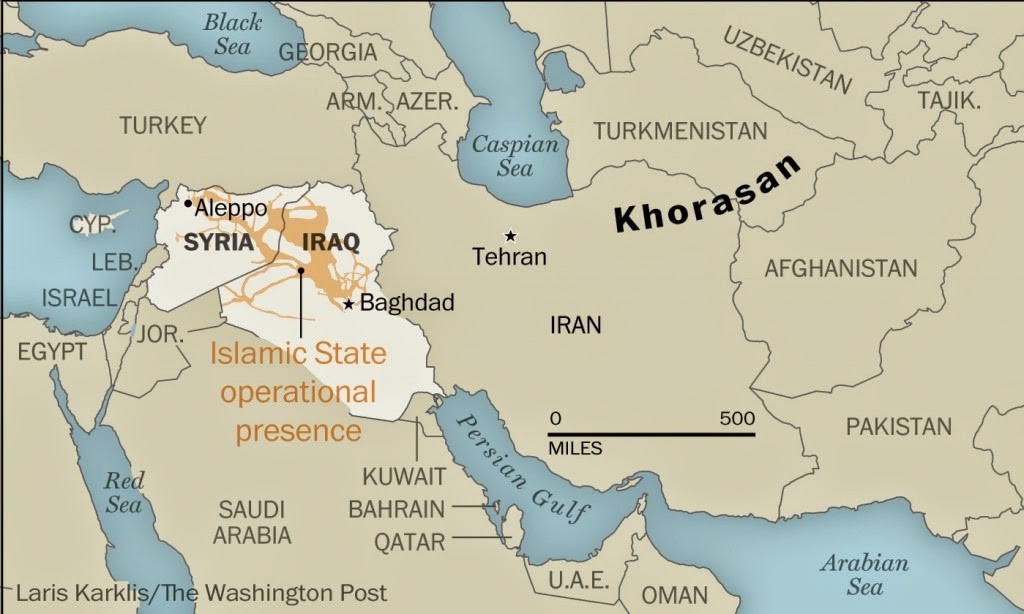
Moving away from South Asia we now focus on the age-old Khorasan brand and its implications for the Middle East. From the Washington Post we have this:

After the region was taken over in an Arab
conquest in the 7th century, Khorasan became a part of the Umayyad
Caliphate, and with that, part of early Islamic culture. Notably, a widely
discussed (though
disputed) Hadith speaks of how “black banners will come out of
Khorasan” in the end times. Will McCants of the Brookings Institute notes
that the prophecies derive from the 8th century Abbasid revolution,
a
revolution that began in Khorasan and saw the end of the privileging of
Arabs over non-Arabs in the Islamic empire

As an outsider we remain puzzled by this move. The Caliphate Brand has proven to be highly successful, people from the world over are joining the ranks of the Daesh. If anything the Khorasan brand will dilute the appeal of the Caliphate and will also highlight the reality of non-Arab cliques. Will the dominant Arabs tolerate such brand dilution?

OTOH it may well be the case that with a diversified brand (much like sister companies) there will be greater buy-in from the common people (who may not be all Arabs, now and in the future). Such a step may prove to be helpful in recruiting warrior men (and women devoted to such men) from Greater Khorasan. Only time will tell if  this is a net positive for the Islamist brand.
….

What’s in a name? When you’re an Islamist extremist group believed to
pose an existential threat to the Western world, everything. In the past few
months, we’ve seen the strange and somewhat revealing saga of what to call the
group alternatively referred to
as ISIS, ISIL, the Islamic State and Daesh.


Now, within a timeframe of just days, the Islamic State has been sidelined
by a new name in the world of Islamic extremism: “Khorasan.”
U.S. officials say that Khorasan, often referred to as “the Khorasan
group,” is a small al-Qaeda linked outfit operating in Syria.
They are portrayed as a more direct threat to U.S. interests than the Islamic
State, which is still largely focused on operations in Syria and Iraq.
U.S. officials say that their strikes against Khorasan appear to have been a
success, killing the group’s leader, Mushin al-Fadhli. 


However, some
analysts are perturbed by the lack of information about the group and why it
was targeted. Even an examination of one of the most basic elements of the
group – its name – paints a complicated and inconclusive picture of
what the group actually is, and why it is being targeted.


As most reports on the group have noted, Khorasan refers to a
historical region that encompassed northeastern Iran,
southern Turkmenistan and northern Afghanistan. It was established as
a region by
the Sasanian dynasty, the last Iranian empire before the rise of
Islam, at some point in the 3rd century. Its name literally means “The
Land of the Sun,” a reference to its eastern location.


After the region was taken over in an Arab conquest in the 7th century,
Khorasan became a part of the Umayyad Caliphate, and with that, part of
early Islamic culture. Notably, a widely discussed (though
disputed) Hadith speaks of how “black banners will come out of
Khorasan” in the end times.


Will McCants of the Brookings Institute notes
that the prophecies derive from the 8th century Abbasid revolution, a
revolution that began in Khorasan and saw the end of the privileging of
Arabs over non-Arabs in the Islamic empire.


Over the years, the Khorasan region had a fractious history, and
was eventually swallowed up by a variety of different states. A part of
Khorasan eventually became Khorasan state in modern Iran, and “Greater
Khorasan” is generally used to refer to the larger historical region.

In part due to its place in Islamic history, the term Khorasan is used by
modern Jihadist groups, especially those based outside Arab states. 


The
online magazine of al-Qaeda in Afghanistan is called “Vanguards of
Khorasan,” for example, and J.M. Berger, an independent terror analyst,
says that al-Qaeda has often signed its communiques as emanating from Khorasan
over the years.


“Jihadists deny the legitimacy of most modern nation states; they
prefer using historical terms, typically the ones that were used during the
time of the great Caliphates
(which is obviously what they want to go back
to),” Peter Neumann, director of the International Centre for the
Study of Radicalization, explained in an e-mail.

..
In particular, the hadith mention gives the reference added
power. “The symbology of this has been important for jihadis since
the so-called black banners being raised in Afghanistan, which is part of
Khorasan, in the ’80s against the Soviets until now,”
 Aaron Zelin of
the Washington Institute for Near East Policy
said, adding that Islamic apocalyptic literature has
become a central theme for some jihadist groups fighting in the Middle East.

….

Link: washingtonpost.com/khorasan

regards

Silk Sense

….concept of a historic Silk Road by which camel
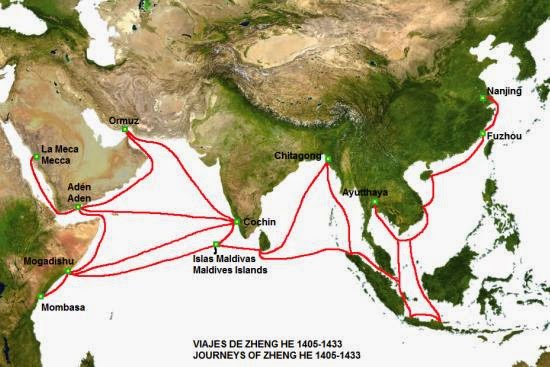
caravans wend among the mountains and deserts of Central Asia ….re-establishing maritime networks…Chinese Admiral Zheng He…naval armada across
the Indian Ocean…..China’s leaders promote ancient
trade routes…emphasize role as a harbinger of peace and prosperity.
….minor problem….history is distorted….
….
Who is Professor Sen?…Prof Amartya Kumar Sen of Shanti-niketan, Delhi School of Economics, Cambridge and Harvard represents the old guard in his (sincere) attempts to bring South Asian Hindus and Muslims together. Now is the age of Hindi-Chini shadow boxing, and the man who is best informed about the thought processes of our Chinese overlords is Prof Tansen Sen of Peking University, University of Pennsylvania and Baruch College.
….

…..
Tansen Sen is the author of Buddhism, Diplomacy, and Trade: The Realignment of Sino-Indian Relations, 600-1400 (University of Hawai’i Press, 2003) and co-author (with Victor H. Mair) of Traditional China in Asian and World History (Association for Asian Studies, 2012). 

He has edited Buddhism Across Asia: Networks of Material, Cultural and Intellectual Exchange (Institute of Southeast Asian Studies, 2014) and guest-edited special issues of China Report (“Kolkata
and China,” December 2007
; and “Studies on India-China Interactions
Dedicated to Ji Xianlin,” 2012).
With Wang Bangwei he has co-edited India and China: Interactions through Buddhism and Diplomacy: A Collection of Essays by Professor Prabodh Chandra Bagchi (Anthem Press, 2011).

….

While the scholarship is impressive, we confess to be charmed by the name Tansen Sen.  

We presume that the good prof is named after [ref. Wiki] Mian Tansen (born 1493 or 1506 as Ramtanu Pandey – died 1586 or
1589 as Tansen) a prominent Hindustani classical music composer,
musician and vocalist….He was among the Navaratnas (nine jewels) at the court of the Mughal Emperor Jalal ud-din Akbar. Akbar gave him the title Mian, an honorific, meaning learned man.…It was only after the age of 5 that Tansen showed any musical talent….he was a disciple of Swami Haridas, the legendary composer from Vrindavan and part of the stellar Gwalior court of Raja Man Singh Tomar (1486–1516 AD), specializing in the Dhrupad
style of singing. His talent was recognised early and it was the ruler
of Gwalior who conferred upon the maestro the honorific title ‘Tansen’.

……

The romantic concept of a historic Silk Road by which camel
caravans wend among the mountains and deserts of Central Asia is back in
the news. So is talk on re-establishing the maritime networks by
which the Chinese Admiral Zheng He steered his naval armada across
the Indian Ocean seven times. China’s leaders promote the ancient
trade routes, most recently during the Chinese President Xi Jinping’s
visits to countries in Central and South Asia, to emphasize the
nation’s historic role as a harbinger of peace and prosperity.


One minor problem in China’s history-based campaign— the history is distorted. In September 2013, less than a year after assuming the position of
general secretary of the Central Committee of the Communist Party of
China, Xi launched new foreign policy initiative known as the “Silk
Road Economic Belt.”  


In an address at Kazakhstan’s Nazarbayev
University, calling for cooperation and development of the Eurasian
region through this new Silk Road initiative, Xi presented five
specific goals: strengthening of economic collaboration, improvement
of road connectivity, promotion of trade and investment, facilitation
of currency conversion, and bolstering of people-to-people
exchanges.


….
A month later, at the 16th ASEAN-China Summit held in Brunei, Chinese
Premier Li Keqiang proposed the building of a 21st century “Maritime
Silk Road” to jointly foster maritime cooperation, connectivity,
scientific and environmental research, and fishery activities. A few
days later, in his address to the Indonesian Parliament Xi confirmed
this idea and stated that China would devote funds to “vigorously
develop maritime partnership in a joint effort to build the Maritime
Silk Road of the 21st century,” stretching from coastal China to the
Mediterranean Sea.


In both speeches, Xi underscored China’s historical linkages with the
respective regions and suggested that his proposals were intended to
reestablish ancient friendly ties in a modern, globalized world. In
Kazakhstan, Xi credited the Western Han envoy Zhang Qian with
“shouldering the mission of peace and friendship” and opening up the
door for east-west communication and establishing the “Silk Road.” In
Indonesia, he praised the Ming dynasty Admiral Zheng He for
bequeathing “nice stories of friendly exchanges between the Chinese
and Indonesian peoples.”


Not mentioned, however, are the backdrops of conflict and the push to
spread a Sinocentric world order. In trying to portray the past as a
utopian epoch, the purpose of Zhang Qian’s mission
to the so-called Western Regions was misrepresented. The Han emperor
dispatched Zhang to find an ally to fight the powerful Xiongnu
Confederacy, the leading adversary of the Western Han Empire. 

….
Because of
its expansionist policies, the Han Empire was responsible for
transforming the originally nomadic Xiongnu people into a semi-state
entity that offered resistance to the Han forces. In 138 BCE the
empire sent Zhang to Central Asia to locate the Yuezhi people,
previously routed by the Xiongnus. His mission was a failure,
however, as he was captured by the Xiongnu and forced to marry a
local woman. Escaping after 10 years of captivity, he found that the
Yuezhi were not interested in a military alliance. Zhang Qian’s only
contribution was to inform the Han court about the polities and
people in Central Asia. 


Similarly, the portrayal of Admiral Zheng He
as an agent of peace and friendship is problematic. In reality,
Zheng’s seven expeditions between 1405 and 1433 included use of military
force in what are present-day Indonesia, Malaysia, Sri Lanka and
India to install friendly rulers and control strategic chokepoints of
the Indian Ocean. He intervened in dynastic politics of Sri Lanka
and Indonesia and brought back prisoners to Nanjing, the Ming
capital. 


Ming Emperor Yongle originally dispatched Zheng to the
Western seas to look for his nephew whom he had deposed from the
throne and to promote the virtues of the Chinese civilization. In the
course of these expeditions, Zheng brought back many kings and
princes to kowtow to the emperor and exchange gifts. The voyages were
abandoned when it turned out to be too expensive and gave excessive
power, in the view of the Confucian court officials, to eunuchs such as
Zheng He.


….
The Han Empire used similar tactics in Central Asia, especially at
strategic locations of the trade routes. Thus neither the overland
route nor the maritime channels, termed collectively as the Silk
Routes, were peaceful or fostered friendly exchanges through Chinese
presence, as modern narratives would suggest.   


There is also a problem with the term “Silk Road” or “Silk Routes.”
German geographer Ferdinand von Richthofen coined the term in 1877 for
the ancient overland trade route through Central Asia.


Since then,
many routes that linked China to the outside world have been called
“Silk Roads” or “Silk Routes” despite the fact that silk was neither
the earliest nor the most commonly traded commodity on any of these
routes. Additionally, the term, enthusiastically employed by Chinese
scholars, places unwarranted emphasis on the role of China in
pre-modern intra-regional interactions. 


This comes at the expense of
neglecting external influence on Chinese societies and economies
throughout the past 2000 years.


Perhaps, like many Chinese, Xi’s views about the Silk Roads were
shaped by the PRC educational system that prevents critical analysis
and proper deconstruction of historical sources. It’s also possible
that Xi was genuinely influenced by the fact that his family hails
from near the ancient Chinese capital Xi’an, known in history as
Chang’an, a place recognized in history books as the starting point
of the overland Silk Road.
Either the president is unaware of the
negative reactions that use of Chinese cultural symbolism in the
arena of foreign policy induce among some foreign states or is
adamant about pushing these through with the economic muscle China has
toned over the past several decades.


Several countries are willing to accept these distorted historical narratives for economic reasons.

The Sri Lankan government, for example, last year received a
gold-plated statue of Zheng
as a gift from China’s International Tour
Management Association. The two sides declared that Zheng He and his
expeditions represented ancient commercial and peaceful relations
between China and Sri Lanka. Neglected were the details that Zheng
had instituted regime change in the region; abducted a local ruler,
Alaskawera; and brought him to Nanjing as a prisoner. Zheng also
carried off the famous Tooth Relic of the Buddha at Kandy, long a
symbol of Sri Lankan political sovereignty.


Military conflict also took place in Indonesia, where some local
newspapers applauded Xi’s proposals noting that they could bring
“enormous opportunities for regional development.” Not of concern was
the fact that in Sumatra, in 1407, Zheng had instituted a regime
change
by abducting a local ethnic Chinese leader named Chen Zuyi,
whom the Ming court portrayed as a pirate. After Chen was publicly
executed in Nanjing, he was replaced by a person representing the
Ming court’s interest in the region. In the same year, Zheng also
intervened in the internal affairs of the Majapahit polity in Java,
seemingly to weaken the main regional power in Southeast Asia. 


These military interventions like those in others regions that used
the pretext of ushering in a harmonious world order under the Chinese
Son of Heaven were objectives of the Zheng He expeditions. 


The Silk Roads initiative of the Chinese government, with substantial
influx of money and investment, could boost the economies of several
countries in Asia and Europe that are willing to claim ancient links
to the Middle Kingdom. For China, the success of the initiative will
open new avenues for investing its vast monetary reserves. 


It will
also mark a major step towards recreating the Chinese world order of
the ancient times known as tianxia, that is, all regions of
the known world that belonged to the heavenly-mandated emperor of
China. This new world order will not be simply rhetorical, but could
impose significant geopolitical implications.
        

….


Sources:

Nicola Di Cosmo, Ancient China and Its Enemies: The Rise of Nomadic Power in East Asian History. Cambridge: Cambridge University Press, 2002. 

Edward L. Dreyer, Zheng He: China and the Oceans in the Early Ming, 1405–1433. New York: Longman, 2007.

Étienne de la Vaissière, Sogdian Traders: A History. Leiden: Brill, 2005.

Louise Levathes, When China Ruled the Seas: The Treasure Fleet of the Dragon Throne, 1405-1433. New York: Oxford University Press, 1994.

Tansen Sen, “Changing Regimes: Two Episodes of Chinese Military
Interventions in Medieval South Asia.” In Upinder Singh and Parul P.
Dhar (Ed.), Asian Encounters: Exploring Connected Histories. New Delhi: Oxford University Press, forthcoming.


Geoff Wade, “Ming China’s Violence against Neighbouring Polities and
Its Representations in Chinese Historiography.” In Upinder Singh and
Parul P. Dhar (Ed.), Asian Encounters: Exploring Connected Histories. New Delhi: Oxford University Press, forthcoming.

….

Link: outlookindia.com

regards

The revolution eats her (girl) child

…Rs 66 crore disproportionate
assets case against J Jayalalithaa, N Sasikalaa, J Elavarasi, VN Sudhakaran….convicted for offences punishable under Section 120(B) of the IPC
(criminal conspiracy), 13(1) of the Prevention Corruption Act (criminal
misconduct by public servants) and 109 (abetment)…case was
registered by Tamil Nadu police in 1996, after Subramanian
Swamy moved courts and obtained necessary directions…..

….

 …
They say that the wheels of justice turn slowly (all of 18 years) but
they grind exceedingly fine- no less a fine than 100 crores and a jail
term of four years.
If the Supreme Court does not issue a stay
order (unlikely), Jayalalithaa Jayaram, will lose her status as an
Member of Legislative Assembly (MLA) and will be required to dissolve her
cabinet with immediate effect.
…….

….
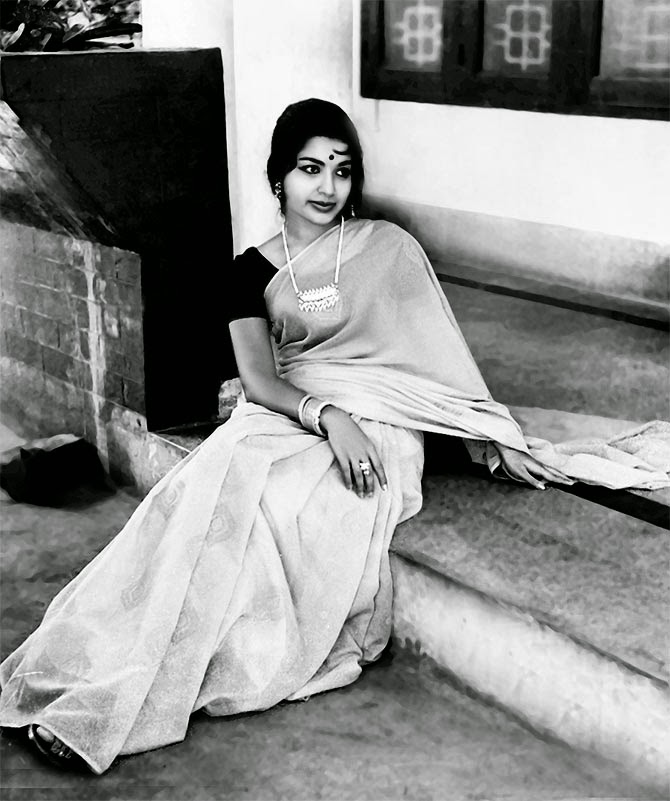
JJ famously added an “a” to her name on the advice of astrologers (we hope she gets her money back). Sad to say, she was a top-notch student who could have made an
outstanding contribution to society, perhaps as a Mars rocket-woman.
But
she got corrupted by her mentor MG Ramachandran (MGR) and then, in her role as Puratchi
Thalaivi (revolutionary leader of the Dravidas)
chose to make the whole society corrupt. Her rise and fall mirrors that of Lalu Yadav: first, a sub-altern captain in the army of Jay Prakash (JP) Narayan, then, a new-age Krishna for the Yadavas, and now instrumental in his own deep-dive into ignominy.
…….
This is to be expected when happens when you run a state as a personal fiefdom (both the Dravida parties are equally guilty of this). It was really the DMK led scandals that helped bring about the fall of the Congress.

And now all of Tamil Nadu is on fire. Hopefully not too many people will be killing themselves (as well as other people).

Amidst all the smoke and heat, a shout-out to the man who is a perennial thorn to people in power-  Subramaniam Swamy. It was Swami-ji who unearthed the damning letter from the PMO (Manmohan Singh) indicating that MMS knew about Coal-gate. Just as it was his single-handed efforts which ensured that the case against Jayalalitha was registered back in 1996.
…..

A trial court in
Bangalore Saturday held Tamil Nadu Chief Minister J. Jayalalithaa guilty
of amassing assets
disproportionate to known sources of her income
during 1991-96.
Special judge John Michael Cunha pronounced the
order in a special court set up in the central jail at Parapanna
Agrahara in the city’s southern suburb amid tight security. 
 …

Follow the live updates:


5:00 pm: Jayalalithaa has been sentenced to 4 years in jail. She has to pay a fine of Rs 100 crore as well.

4:15 pm: Nearly 20 buses were damaged in stone-pelting in Cuddalore district.
3: 45 pm: Appearing before the court four times,
Jayalalithaa has answered 1,339 questions in closed door hearings during
which she has maintained that the case was “politically motivated” and
“fabricated” at the instance of her rival DMK.

3:30 pm: The
Karnataka government has so far spent Rs 2.86 crore on playing host to
the case, according to documents obtained by an RTI activist. [CNN IBN]


3:20 pm: Violence erupts in Tamil Nadu following the verdict. Traffic halted in many places and a bus has been burnt in Kancheepuram.

3: 05 pm: The verdict was delivered at a makeshift
court in the Parappana Agrahara prison complex in Bangalore where
Jayalalithaa and the other accused were present.


3: 00 pm: The maximum jail term she could face is 7
years, while the minimum is one year. If she is sentenced for less than 3
years, she can apply for bail, else she will be sent to prison.


2: 55 pm: The case was transferred to Bangalore’s
Special Court in 2003 by the Supreme Court on a petition filed by DMK
leader K Anbazhagan who had expressed doubts over conduct of fair trial
with Jayalalithaa as chief minister.


2: 50 pm: Pronouncing the order, special Judge John
Michael Cunha held Jayalalithaa guilty of amassing wealth
disproportionate to known sources of her income under sections 109 and
120 (b) of the Indian Penal Code (IPC) and 13 of the Prevention of
Corruption Act, 1988, said Special Public Prosecutor G. Bhavani Singh.”The quantum of sentence will be decided by the judge later, which can range from two to seven years,” Singh added.


2:45 pm: According to reports, Jayalalithaa is likely to appoint a partyman as the chief minister of Tamil Nadu.

2: 43 pm: Following this judgement, Jayalalithaa
automatically stands disqualified as an MLA of the Tamil Nadu assembly
and will have to step down as the chief minister immediately.


2: 40 pm: Earlier on Friday, Jayalalithaa’s plea to
postpone the pronouncement of its verdict in the disproportionate assets
case was rejected by the Supreme Court.


2: 35 pm: Her former friend V K Sasikala, V N Sudhakaran and J Illavarasi are the co-accused in the case.


2: 26 pm: The AIADMK chief is accused of obtaining
assets worth almost Rs. 66 crore through dishonest means during her
first tenure as Chief Minister from 1991 to 1996.


2: 22 pm: All the four convicted in the 18-year-old corruption case. Sentencing and quantum of punishment to be made at 3 PM

2: 20 pm: Jayalalithaa is convicted under prevention of corruption act.

AIADMK supporters, police clash 
Earlier,
police in Bangalore had to resort to a lathi-charge to control dozens of
AIADMK supporters who were protesting against the conviction of
Jayalalithaa. Heavy security has been deployed in Bangalore to main
peace and order in the city.

………
The case: The
Rs 66.65-crore assets case dates back to Jayalalithaa’s first term as
the chief minister, from 1991 to 1996. It was filed before a special
court in Chennai in 1997 by the Tamil Nadu’s Department of Vigilance and
Anti Corruption.

The case was transferred to Bangalore’s Special
Court in 2003 by the Supreme Court on a petition filed by DMK leader K
Anbazhagan who had expressed doubts over conduct of fair trial with
Jayalalithaa as chief minister.

Jayalalithaa, who has seen
several ups and downs in her political career, in 2001 too had to quit
as Tamil Nadu chief minister following the Supreme Court declaring null
and void the action of the then Governor Fatima Beevi appointing her as
the chief minister as she had been sentenced to two years rigorous
imprisonment in a corruption case.

Thereafter, O Paneerselvan, a junior minister in her council of ministers, was appointed as the state’s chief minister. However, by 2002, she was cleared of all charges and sworn-in again as the chief minister.

Link: in.news.yahoo.com

….

regards

Geetu n Geeta go for (Oscar) gold

Gayathri “Geetu” Mohandas is a talented actor and director from Kerala (she started acting at the tender age of 5 years opposite superstar Mohanlal). She is married to another hot-shot Malayali director (also producer, cinematographer) Rajeev Ravi.
………


Geetanjali Thapa is an upcoming Nepali actor from Sikkim. She made her debut with Kamal K.M.’s “I.D.” and won the Best Actor award at the Los Angeles Film Festival as well as the
ImagineIndia International Film Festival. After “I.D.”, she has acted in
“Monsoon Shootout” that premiered at Cannes this year.
…..

 
Director Geetu has struck gold with her second film “Liar’s Dice” in 2013. Li-Di has received two National Film Awards including, Best Actress for Geetanjali and Best Cinematography for Rajeev. It is also selected to be India’s official entry for the Best Foreign Language Film for Oscars (Feb 22, 2015). Incidentally, Pakistan’s Oscar entry is also a superb, women-centered film: Dukhtar, by Aafia Nathaniel.
……..
In a remote village, far away from
Delhi, Kamala fails to hear back from her husband for five months. He is
in the city for work, toiling on the constructions sites that have
become the hallmark of the capital’s expansion. When his cell phone is
quiet for some time and when the village elders ask for more patience,
Kamala sets out to find her husband on her own.


Taking her 5-year old
daughter Manya and a lamb along for the long journey, she is a lone
woman on a long trek in an unknown territory. She meets Nawazuddin
(Nawazuddin Siddiqui), an army deserter. They are trapped together in
the only available option of a trip to the city. He is a drifter and she
is focused on a spot in the dark.


Nawazuddin and Kamala are both young. The context of their journey
does not allow for romantic interludes. Their culture permits even less.
The distrust among them writes their characters — him a stranger with
rash manners and dubious air and her, a vulnerable woman
given less to
trust than to suspicion of a stranger on the road. Telling the truth
comes secondary to them, both impulses drawn from a deep reservoir of a
desire to survive. 

….
Nawazuddin is a hustler, for he must be, as he sets
up his game of dice cups anywhere, from a train compartment to a busy
street.
Kamla is new to this game of survival. A man’s presence is a
must for her on a journey that is not used to seeing single women in
unfamiliar spaces. She brings a little stash of saved money and
Nawazuddin breaks out his dice cups when he needs a little dough.


Mohandas constructs their relationship in layers of cultural
permissibility and situational necessity. Their human warmth is hidden
inside the tough shells of distrust, suspicion and the fear of the
unknown on a road yet to be traveled. 


At times, the narrative appears
to belong completely to Kamala. As the more vulnerable of the two, with a
young child and a lamb as both responsibilities and emotional cushions,
she is careful, fearful but persistent. She begins the journey wearing
the pristine beauty of the landscape on her face, only to let it
withered away with the brute realities of the conditions away from the
village.


…….

Nawazuddin Siddiqui is a prodigious talent. If for Thapa, it is her
face that becomes the space on which the narrative writes its destiny,
for Siddiqui, it is his body. Limp and weary after an injury and harsh
travel, he is willing to help but on his own terms. He transforms
himself every time he sets up his dice cups, bristling with life as if
he is the instrument and the spectators, mere pawns, the dice that he
plays with. Confident but kind, he expresses as he withholds. When he
stumbles, he learns quickly. With Thapa next to him, we witness a rare
duel of memorable performances.


….
The film moves toward the resolution of finding Kamala’s husband. The
underlying connotation in her husband’s failure to stay in touch with
her is ominous.

Thapa, whose fine performance in I.D. won international
awards, plays the courageous if somewhat recklessly irresponsible Kamla,
a lovely lady from the high Himalayas and mother to the precocious
little Manya (Manya Gupta). It’s been five months since
she heard from her husband and she’s worried. He’s stopped writing and
doesn’t answer his cell phone – something’s wrong.


Dragging little Manya and, absurdly, her pet goat along, she slips
away in the freezing night and starts down a snowy mountain road. The
little party is almost immediately attacked by two passing truck drivers
and Kamla would almost certainly be raped, were it not for the prompt
intervention of a straggly-looking guy who intervenes.


This is Nawazuddin (Siddiqui, who played Faizal Khan in Gangs of Wasseypur and more recently charmed in a supporting role in The Lunchbox.)
He’s virtually unrecognizable with a dirty face and a rag around his
head, looking like a generic freedom fighter who sews up his own wounds
with a borrowed needle and thread. 


There are just too few cues (outside
the press book) to realize he’s an army deserter from the Border Guard,
and for most non-Indian viewers he will pass as some eccentric outcast
of society. As long as he’s gruff and silent, he seems like a strong
protector for the two women; but when he finds his voice a few scenes
along, surprise: it’s to whine for money.
Kamla shows no desire for his
company at all, but without him they can’t sneak their little goat on a
bus that takes them to the regional capital of Shimla.


Not much is seen of this exotic location, apart from a scary
night-time scene in which Kamla meets a woman from her village who
evasively refuses to give her info. Sensing a trap, she backs out and
agrees to give their “protector” her gold bangle if he’ll accompany them
to Delhi and check around the construction sites.


The talented actors – including wide-eyed, outgoing little Manya –
are interesting to watch as they struggle with their characters. Kamla
however seems too focused on her quest, to the point of sometimes
forgetting the young child at her side who she dragged into danger, and
her inability to accept the inevitable makes her seem a bit soft-headed.


Rajeev Ravi’s sensitive cinematography smooths out
the rough edges and highlights the film’s transition from the pristine
snowy village with its steep streets to the urban squalor of Delhi’s
alleyways. John Bosters’ music is soulful and low-key.

Venue: Mumbai Film Festival (India Gold), May 18, 2013.
Production companies: Jar Pictures in association with Unplugged
Cast: Nawazuddin Siddiqui, Geetanjali Thapa, Manya Gupta
Director: Geetu MohandasScreenwriter: Geeta Mohandas
Producers: Alan McAlex, Ajay G. RAi
Director of photography: Rajeev Favi

Production designer: Prakash Moorthy
Editor: B. Ajithkumar
Music: John Bosters
No rating, 104 minutes.

….

Link (1): hollywoodreporter.com/liars-dice

Link (2): dearcinema.com/liars-dice

….

regards

Brown Pundits