‘Aaj rapat jaye, toh humein na uthaiyyo!’

..In Bollywood’s rain songs….the heroine discovering herself…..The rain is a crossroads in a woman’s
life where she throws caution to the monsoon winds and locks hands with a
man she chooses….she defies elders…for her bit of bliss…
Against this backdrop, the current drought of Bollywood’s wet saris
is a matter of concern.


Srijana Mitra Das clearly has impeccable credentials, a PhD in Social Anthropology from Cambridge. And what do you know…the (in)famous rain songs in Bollywood….the heroines and their wet sarees…..a tradition of spotlighting male lust going all the way back to Kalidasa in the 5th century…..now we have a feminist (third wave?) deconstruction…all these are but symbols of “pure romance” and women’s liberation….
…….

…..
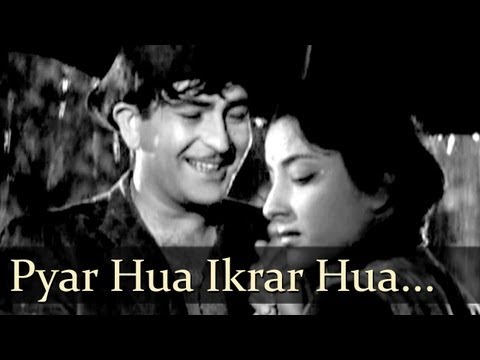
We are a fan of old Bollywood songs (the play-acting not so much) but the ones that Srijana talks of are indeed screen classics: Raj Kapoor and Nargis in Shree 420 (Pyar Hua Ikrar Hua) and Amitabh Bachhan and Smita Patil in Namak Halal (Aaj Rapat Jaye). And while we are not too familiar with Nargis as a free-thinker, Smita was a top-drawer feminist and her acting reflected this in full glory. Her millions of devotees were heart-broken when she died so young (see below for details).
…….

……
All this really proves is how far the world has moved ahead in depicting “industrial-quality sexiness” (her words). No wonder, feminists like Srijana have succumbed to the pull of nostalgia and finding love in all the wrong movies…..even Sharmila Thakur and Rajesh Khanna in Aradhana (Roop Tera Mastana).

…….
As the monsoon caresses India with seasonal darkness, it’s remarkable
how faint the rain song is in Bollywood today — a marked difference
from earlier times when the rain song was the apogee of filmi romance,
capturing love stories of heroes with heroines and heroines with
themselves. Ironically, Bollywood’s rain songs and wet saris were
considered fundamentals of voyeuristic thrills. But Bollywood’s singing
in the shower mirrored more than this — just like the drying-up of wet
saris now reflects romance growing parched.


….
But first, Bollywood began with salutations to the skies. When plots
revolved around rural protagonists, cinema acknowledged the monsoon’s
urgency to farmers, sunburnt by callous states looking everywhere but at
canals under their feet. Hence, Guide’s villagers beseeched, ‘Allah,
megh de, paani de’, Lagaan’s hamlet danced as badras rumbled with
promise.


These songs marked a despondent dependency but as films portrayed
more urban legends, monsoon showers became a link between once-agrarian
characters in cities of anonymous footpaths.


From there, Bollywood
focussed fully on the rain’s sensuality capturing Indian romance. From
the shy umbrella-twisting of Shree 420’s ‘Pyaar hua’ to Three Idiots’
exuberant ‘Zoobie, zoobie’, rain became the ultimate filmi metaphor for
an Indian couple’s love.


….
This slowly evolved from nervous fears to a full-on French kiss. In
newly independent India, choosing your own partner — and your own fate —
was an act of daring, sighs of apprehension shaking Nargis’s trembling,
‘Kehta hai dil, rasta mushkil, maloom nahin hai kahaan manzil’. 

….
Fears
frequently came true. A couple stepping outside social sanctions,
crossing class and caste barriers, was severely punished, censors rather
liking the rain as a metaphor for trespass. Hence, Aradhana’s ‘Roop
tera mastana’ climaxed in a rainy night, a young couple making love, the
hero later killed, the heroine doing penance as an unwed mother.


It took the swinging ’70s with Amitabh Bachchan and Smita Patil —
angry young actors, defiantly declaring while drenched, ‘Aaj rapat
jayein, toh humein na uthaiyyo!’ — to signal change. Alongside, in a
subtle replay of Raj Kapoor-Nargis, Bachchan and Moushumi Chatterjee
walked through a rain-soaked Bombay, humming ‘Rimjhim gire saawan’, the
couple’s umbrella missing, the unbothered pair holding hands as the
Arabian Sea rose to soak them.


….
This was a new India, more courageous, more confident of itself, its
ability to choose — its right to love. This defiance breezes through the
1990s too. In Kuch Kuch Hota Hai, Shah Rukh Khan and his see-through
shirt share a hot moment with Kajol — while she’s engaged to another
man. The hero filching another’s girl was a favourite SRK theme, the
rain presenting that crucial moment where a couple decides there’s no
one else they’d rather get soaked with.


….
This was an important juncture for heroines. Traditionally, the
soaked heroine was erotica for male eyes, conventions stylishly framed
by 5th century Sanskrit superstar Kalidasa. In Kumarsam-bhava, Daniell
Ingalls translates, Kalidasa describes rain gently drenching his
heroine, ‘‘With momentary pause, the first drops rest, upon the highland
of her breast, across the ladder of her waist, then slowly, at her
navel, come to rest.”
It’s clear where Yash Chopra got it from, placing
chiffon-clad heroines under swollen clouds, conveying what Roland
Barthes dryly terms ‘obvious symbolism’.


….
But Bollywood’s rain songs also offered Barthes’s ‘third meaning’, a
counter-narrative that escapes language, producing the ‘filmic’ — so
much more than the film. In Bollywood’s rain songs, the third meaning is
the heroine discovering herself. The rain is a crossroads in a woman’s
life where she throws caution to the monsoon winds and locks hands with a
man she chooses. In this, she defies elders — not necessarily betters —
for her bit of bliss. She doesn’t know if this will even last
post-rain. But she chooses the right to savour the second — and enjoy
herself.


….
And there is much to enjoy. With every drop naughtily running into
places no one but lovers know, the rain makes a woman come alive to
herself, her physical body, her soul that a cool breeze infuses with new
life. In a violently misogynistic land, this rain-fuelled renewal is a
marvellous thing, powerfully subversive in Bollywood, Mr India’s ‘Kaate
nahin kat te’ famous for an absent Mr India, Sridevi writhing in the
rain all on her own.


….
Against this backdrop, the current drought of Bollywood’s wet saris
is a matter of concern. It signifies romance growing more plastic,
increasingly complex — instead of a drenched couple intertwined on a
lonely lamp-lit street, ardour now involves motorbikes, brassy bras,
designer heels. But it also expresses marked trepidation around
tenderness.


While industrial-quality sexiness is expressed via assembly-line
‘items’, pure romance — which involves both confrontation and bliss — is
nervously sidestepped. The fear is understandable with even elected
representatives talking like khap captains about women’s deportment and
dress today. Hence, Bollywood heroines look oddly acquiescent now,
acceptably saucy, yet lacking the self-belief to lie back soaked in the
rain, a la Sridevi who cooed, ‘I love yoooou’ — to herself.


….
Yet, after every oppressive spell comes renewal, when creative winds
blow away the dust of dry, prohibiting minds. As civil society sticks
out its tongue at hypocritical diktats, Bollywood’s lovers will soon
defy more than their diet plans, leading ladies again learning to love
themselves the most.


Until then, preserve those wet saris — they have stories in their folds.
…..

Smita Patil (17 October 1955 – 13 December 1986) was an Indian actress of film, television and theatre. Regarded among the finest stage and film actresses of her times, Patil appeared in over 80 Hindi and Marathi films in a career that spanned just over a decade. During her career, she received two National Film Awards and a Filmfare Award. She was the recipient of the Padma Shri, India’s fourth-highest civilian honour in 1985.


….
Patil graduated from the Film and Television Institute of India in Pune and made her film debut with Shyam Benegal’s Charandas Chor (1975). She became one of the leading actresses of parallel cinema, a New Wave movement in India cinema, though she also appeared in several mainstream movies throughout her career. Her performances were often acclaimed, and her most notable roles include Manthan (1977), Bhumika (1977), Aakrosh (1980), Chakra (1981), Chidambaram (1985) and Mirch Masala (1985).


….
Apart from acting, Patil was an active feminist (in a distinctly
Indian context) and a member of the Women’s Centre in Mumbai. She was
deeply committed to the advancement of women’s issues, and gave her
endorsement to films which sought to explore the role of women in
traditional Indian society, their sexuality, and the changes facing the
middle-class woman in an urban milieu.


….
Patil was married to actor Raj Babbar.
She died on 13 December 1986 at the age of 31 due to childbirth
complications. Over ten of her films were released after her death. Her
son Prateik Babbar is a film actor who made his debut in 2008.

….

Link: blogs.timesofindia.indiatimes.com/unravelling-bollywoods-wet-sari

….

regards
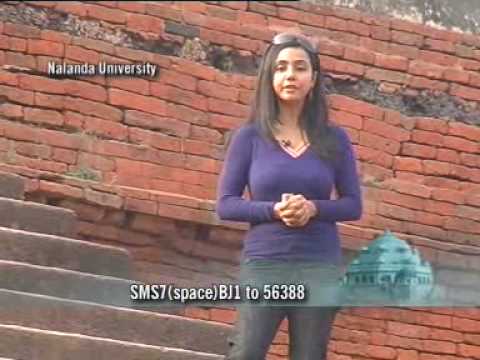
Open doors (after 817 years)

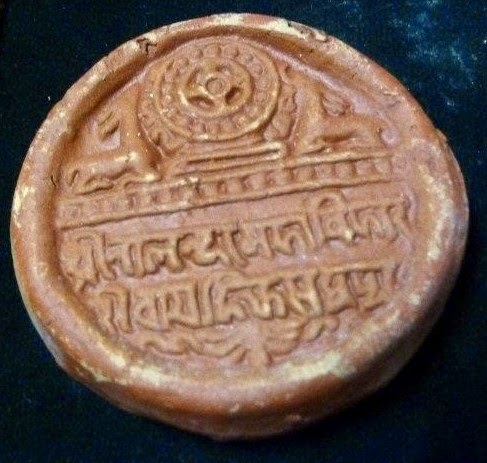
Nalanda University was born in the 5th century CE and was consumed by flames in the 12th. Eight hundred years later the doors are open once again (classes begin Sep 14). We are hopeful that the distinguished faculty led governing board and the international funding from China, Singapore and Japan will make for a good start. Hopefully this will also put Bihar on the map……as the poorest in Bihar prosper, so will the rest of India.

….
[ref. Wiki] The Governing Board of Nalanda University: Amartya Sen (Harvard), Sugata Bose (Harvard), Wang Bangwei (Peking University), Wang Gungwu  (National University of Singapore), Susumu Nakanishi (Kyoto City University of Arts), Meghnad Desai (London School of Economics), Prapod Assavavirulhakarn (Chulalongkorn University, Thailand), George Yeo (Former Minister for Foreign Affairs of Singapore), Tansen Sen (Baruch College, CUNY), Nand Kishore Singh (Member of Parliament – Rajya Sabha), Chandan Hareram Kharwar (Pune University). 
………..

…….
So what of the future? We remain sceptics as there is no visionary leader willing to lead the fight.  They should have paid top dollar and got a high priced CEO to be present on-site (in remote, law-less Bihar) and lead the effort from the front. Prof Sen (junior) seems to be just the right man (age, qualifications, plus the gift of a syncretic name like Tansen Sen) for the job.
……………

….
As rumors have it, things are being remote-controlled by warm bodies residing in Delhi, which does not exactly inspire confidence. We hope that for once Indians can rise above pettiness.

Also for people who are sitting on their hands, check out this profile of Chandan Hareram Kharwar: is this a hoax or what? Curious minds want to know (siliconindia.com/profiles/chandan-Hareram-Kharwar)
……

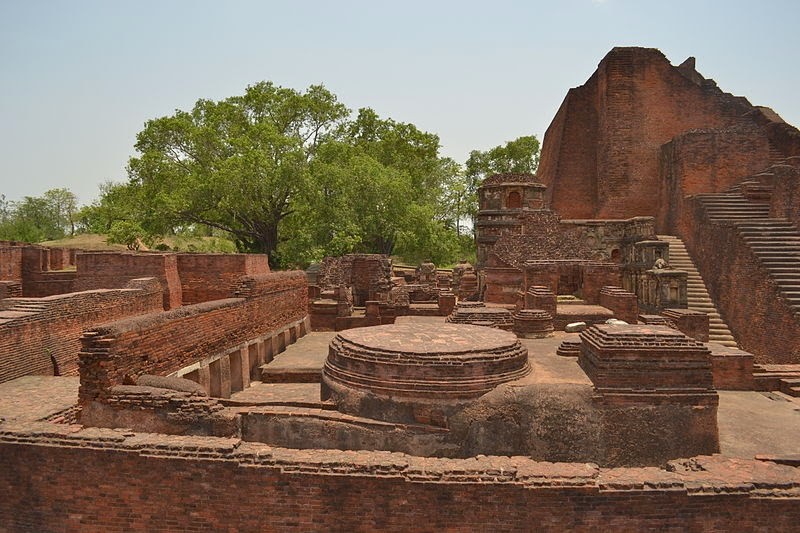
[ref. Wiki] Nālandā was an ancient higher-learning institution in Bihar, India. The site is located about 88 kilometres southeast of Patna, and was a religious centre of learning from the fifth century CE to 1197 CE. 
….
Nalanda flourished between the reign of Úakrāditya (whose identity is uncertain, who might have been either Kumaragupta I or Kumaragupta II) and 1197 CE, supported by patronage from the Gupta Empire as well as emperors like Harsha and later rulers from the Pala Empire.


The complex was built with red bricks and its ruins occupy an area of 14 hectares (488 by 244 metres). At its peak, the university attracted scholars and students from as far away as Tibet, China, Greece, and Greater Iran. 

Nalanda was ransacked and destroyed by an army of the Muslim Mamluk Dynasty under Bakhtiyar Khilji in 1193 CE. 
 …..
The Nalanda University in nearby Rajgir is an effort to revive and re-establish this ancient institution of learning.

Nalanda University was one of the world’s first residential university
as it had dormitories for students. It is also one of the most famous
universities. In its heyday, it accommodated over 10,000 students and
2,000 teachers The university was considered an architectural
masterpiece, and
was marked by a lofty wall and one gate. 

///
Nalanda had eight separate
compounds and ten temples, along with many other meditation halls and
classrooms.
On the grounds were lakes and parks. The library was located in a nine
storied building where meticulous copies of texts were produced.


The Tang Dynasty Chinese pilgrim and scholar Xuanzang studied, taught
and spent nearly 15 years at Nalanda University. He has left detailed
accounts
of the university in the 7th century. Yijing has also left information
about the other kingdoms lying on the route between China and the
Nālandā
university. He was responsible for the translation of a large number of
Buddhist scriptures from Sanskrit into Chinese.


///

According to records of history, Nalanda University was destroyed three times by invaders, but only rebuilt twice 

Library of Nalanda University which is reported to have burned for three
months after the invaders set fire to it, ransacked and destroyed the
monasteries, and drove the monks from the site.

Japan and Singapore are financing the construction work, with
contributions totalling around US$100 million. Gopa Sabharwal has been
appointed the
first Vice-Chancellor of this university in February 2011.


It has been estimated that US$500m will be required to build the new
facility, with a further US$500m
needed to sufficiently improve the
surrounding
infrastructure. The group is looking for donations from governments,
private individuals and religious groups.


The State Government of Bihar handed over 443 acres of sprawling land
acquired from local people, to the University, where construction work
has
begun. It is a dream project of the former Indian president APJ Abdul
Kalam.


..

For best architectural design, a global competition was held for
construction of an international state-of-the-art institution.Vastu
Shilpa
Consultants have been selected as the winner of the design competition
with dbHMS providing the triple net-zero energy, water and waste
strategic
plan  


Classes for the School of Ecology and Environmental Studies and the
School of Historical Studies. Right now there are 15
students and
11 faculty members at the campus. Sabharwal said there were two reasons
for starting on a small note as she wanted the students and teachers to
settle
down, and that Union external affairs minister Sushma Swaraj would be
visiting on September 14.


More than a thousand students from various countries across the globe
had applied for the seven schools on different subjects that will
function at
the university, of which only 15, including one each from Japan and
Bhutan, were selected.


….

The NU came into existence by the Nalanda University Act passed by
Parliament. Economist Amartya Sen is the Chairman of the Governing Body
of the
university, while renowned teachers from various countries are its
members

…..

Link:

…..

regards

Abolishing elite-selves

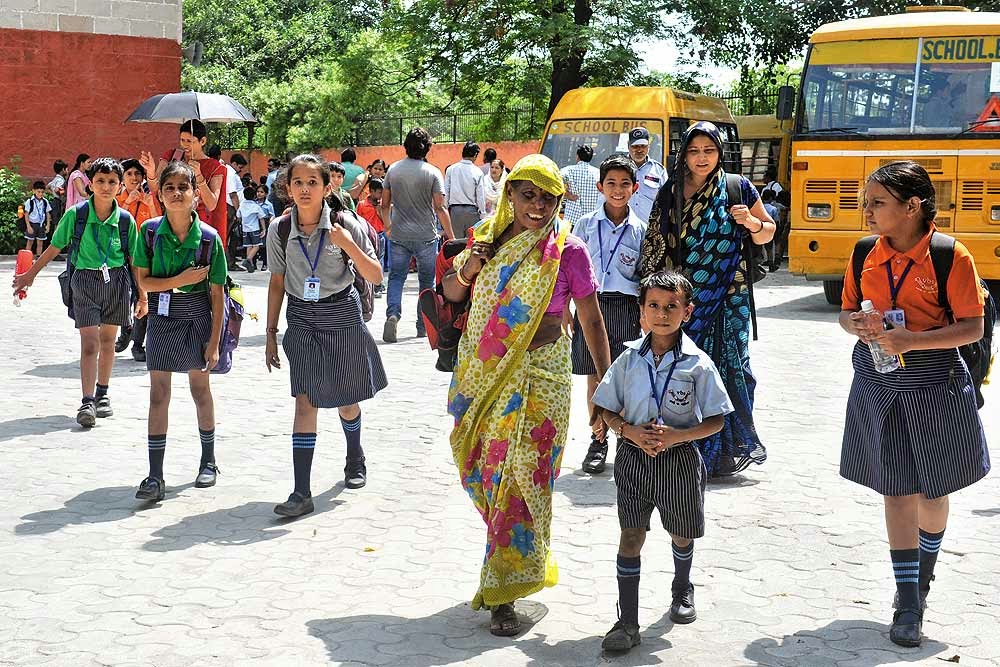
“When the activists first asked us to fill applications we thought they were mocking us….When they still didn’t leave, we ignored them….But they didn’t give up and today we are so glad”….says
Malik, a vegetable vendor…..“We couldn’t imagine stepping inside the school…..my daughter goes there every day to study and spe­aks such good
English, like they do on TV”

….


The title is derived from a famous quote from a wise man (which finally came true after 50 years, less 11 days, when the son of a tea-seller became PM on May 16, 2014):
…….
…..a description of Nehru by
the Australian diplomat Walter Crocker…..After Nehru died on May 27, 1964 ….Western press pondered whether India would fall apart…….As
Crocker put it in his biography of Nehru…”In propagating ideas of
equality, Nehru and the upper class Indian nationalists of English
education abolished themselves….Nehru destroyed the Nehrus”….. 

….
Then there is the NGO driven non-violent social justice movement (much better than the Maoist driven violent one) which ensured passage of the Right to Education (RTE) act that dictates that 25% of the elite school seats must go to the slum-kids in the vicinity. Ashok points out (and we agree) that credit must also be given to the UPA-II regime for this achievement, however it must be emphasized that without the enthusiasm of the NGOs such a law would never get implemented in reality.

As per the law, not only will the tuition for Economically Weak (EWS) students be free – presumably all this will be cross-subsidized by upper middle class parents – the students have a right to free books and uniforms as well. Naturally, the resistance is huge, the elite class will not easily abolish themselves. But make no mistake, this is the face of soft revolution.

There is a lot to be said both for and against reservations. But there is no doubt that the Indian policy of running the largest affirmative action program in the world is designed to do two things: it gives people at the bottom of the ladder hope (one day, their children can be Prime Minister just like the chai-wallah’s son). Secondly,  it reduces the resentment just a little bit and thereby increases the stake of the poor in the democratic order.

“My daughter speaks such good English, like they do on TV” is a phrase that will melt the heart of the harshest cynic. We hope.
……

In
2006, the school wouldn’t let them stand at their gate, watchmen would
shoo them away. When, after several protest dem­onstrations, they were
finally let in, they were curtly told seats for weaker sections had
already been filled. Not a single child from their slum, the only one in
the vicinity, had however been admitted.


The next academic year, hundreds of them gathered outside the school
on the first day the forms were distributed. “Ryan International was so
fed up that they asked us to write our children’s name on slips, place
them for the draw and pick them ourselves. This time all the seats meant
for weaker sections went to children from our slum,” recalls Sunita,
laughing. Her husband is an auto-rickshaw driver and her son now studies
in Class III at the school in the Vasant Kunj locality of southwest
Delhi.


“When the activists first asked us to fill applications in these
schools, we thought they were mocking us and we abused them roundly,
asking them to get lost. When they still didn’t leave, we ignored them.
But they didn’t give up and today we are so glad they didn’t,” says
Malik, a vegetable vendor.


“We couldn’t imagine stepping inside the school,” he goes on to say.
“But now my daughter goes there every day to study and spe­aks such good
English, like they do on TV.” His eight-year-old daughter studies in
Class II at the Vasant Valley school, in the same area.


Over 200 children from Rangpuri Pahari, the area Malik and others
live in, now go to the several private schools in and around here, among
them Ryan International, Bloom Public School, Vasant Valley and Delhi
Public School. The parents in the slum have come together to form the
Sajag Society, an association of EWS parents, to discuss their problems,
help each other and encourage more children from the slum to exercise
their right to education. Delhi today records the highest number of EWS
admissions in private schools across the country.


Yet it isn’t easy for the parents. They still have to pay through
their nose. “We don’t have to pay tuition fee, but we still spend about
Rs 8,000 a year. Books cost up to Rs 5,000 a year. The uniform does last
for over a year because the material is good, but they cost around Rs
1,500 for each set. Shoes again cost around Rs 800,” lists out Renu, who
works as a domestic help.


….
Even as the government has ordered schools to provide free (no fees)
education, including free books and uniforms, few schools pay heed to
the provision. And the centralised system, which ensures admissions
based on a lottery, doesn’t allow parents to select a school based on
affordability. Vasant Valley, parents say, is the only school in the
area which has provided free uniform for the first time this academic
year. dps, on the other hand, distributes books of senior students to
the poorer students, instead of giving them free books as per the law.

………..

Link (1): business-standard.com/rahul-jacob-nehru-then-modi-now

Link (2): outlookindia.com/printarticle.aspx?291803

….

regards

“Then be ready for the fire”

Ahmed Shahzad will not be the first person to worry that people who are outside the favored group will not be allowed into the Club in the Clouds. He is also correct that Islam frowns on apostasy, if your dad is a muslim you are automatically considered to be one. If you leave then it is hell fire for you.


There is a time and place for spouting religious doctrine, but the playing grounds should not become praying grounds. Moreover, TM Dilshan is too good a cricket player to be flustered by any of that nonsense (and the match was over anyway so there was no good reason to launch into Theology 101).

Shahzad would have been better off focusing on his game instead of focusing on a lost soul. May better sense prevail next time around (World Cup Cricket is only 150 days away).
………..
Pakistan today said it has set up a committee to look into a religious
spat between their opener Ahmed Shahzad and Sri Lankan counterpart
Tillakaratne Dilshan last month.


Television footage showed Shahzad passing a religious remark at Dilshan
after the third and final one-day international in Dambulla last week.


After Sri Lanka notched a seven-wicket win to take the series 2-1 and
the players were walking off the field, Shahzad can be heard on camera
saying to Dilshan: “If you are a non-Muslim and you turn Muslim, no
matter whatever you do in your life, straight to heaven.”

………

Dilshan replied he doesn’t want to go there, to which Shahzad replied: “Then be ready for the fire.”

The remarks stemmed from reports that 37-year-old Dilshan was born to a
Muslim father and a Buddhist mother and was originally named Tuwan
Mohamed Dilshan.

But once his parents separated he changed his religion and name to Tillakaratne Mudiyanselage Dilshan as a Buddhist.

The footage went viral on the Internet, prompting the Pakistan Cricket Board (PCB) to summon Shahzad on Wednesday.

A PCB spokesman said the matter will be investigated by an internal
committee headed by director of international cricket Zakir Khan. “We have formed an internal committee under Zakir and have also written
to Sri Lanka Cricket whether they have any complaint,” said spokesman
Agha Akbar.

Pakistan team manager Moin Khan said no official complaint was lodged after the match. “It happened on the last day of the tour but there as no official
complaint by match officials or Sri Lankan players so I think it must be
a general thing,” said Moin.

……..

Link: http://www.outlookindia.com/news/printitem.aspx?858420

……

regards

Every tweet tells a (Arab) story

….You might expect that supporters of the coup would be less
negative given Washington’s friendliness toward the Egyptian
military and hostility toward Muslim Brotherhood….But in fact “no matter which side of the domestic dispute an
individual was on, he or she was likely to be opposed to the United
States”…..
Despite U.S. attempts to stay neutral in the
conflict, both military and Muslim Brotherhood supporters believed the
U.S. was working on behalf of the other side…..

….
How do modern Arabs (approx 4mil on Twitter out of a total population of 400 million) feel about America (and Americans)? A careful analysis of tweets tells us a lot- they really hate Iran (much more than Israel AND America) and much more.

This leads us to a question that has always been a point of confusion for us: who are the Arabs and what are the major Arab communities? Just like India can be (imperfectly) divided by linguistic communities (and except for the South these communities are all loosely tied together through an ancestral Sanskrit bridge), we may get a better understanding of Arabic communities by observing the distribution of Arabic dialects [ref. Wiki-map below]. 
….

…..
Is anti-Americanism motivated by specific U.S. policies or a more
generalized antipathy to American culture? Do people who hate U.S.
foreign policy also hate Americans?
 

These are among the questions addressed in an innovative new study
of anti-American attitudes among Arab Twitter users, which was
presented at the American Political Science Association annual meeting
here in D.C. last week. 

….
The short version of the working paper’s
conclusion is that Arabic Twitter is generally anti-American (though to a
lesser extent than it is anti-Iranian) but that these attitudes are
motivated more by specific events than general hostility to American
culture. Unfortunately, these attitudes seem to be present on multiple
sides of the region’s political divides.


The authors, political scientists Amaney Jamal and Robert Keohane of
Princeton and David Romney and Dustin Tingley of Harvard, worked with
the analytics company Crimson Hexagon to analyze the sentiment of Arabic
Twitter in 2012 and 2013. 

….
Twitter users aren’t a perfect proxy for
public opinion—the population is likely weighted toward younger, more
educated people, and wealthier countries like Saudi Arabia and the
United Arab Emirates are overrepresented. The data, though, can give a
snapshot of what 3.7 million (the number of active users in Arab
countries) people are thinking and provide valuable information from a
number of countries that have restricted traditional public opinion
polling in the past.


Overall, the authors found that “the conversation on Twitter, in
Arabic, about the U.S. is especially negative towards U.S. policy; the
conversation about U.S. society is also mostly negative but much
smaller.” But that’s less interesting than how Arabic Twitter responded
to specific events.


The first test case is the 2013 overthrow of Egyptian President
Mohamed Morsi. Seventy-four percent of the tweets referencing the United
States around the time of Morsi’s fall were negative, and only 3
percent were positive. (The rest were neutral tweets noting some piece
of news.) 


You might expect that supporters of the coup would be less
negative given Washington’s traditional friendliness toward the Egyptian
military and hostility toward Morsi’s Muslim Brotherhood. But in fact,
the authors write, “no matter which side of the domestic dispute an
individual was on, he or she was likely to be opposed to the United
States.” This fits with what was observed in reporting from the time:
Despite U.S. attempts to stay (or at least appear) neutral in the
conflict, both military and Muslim Brotherhood supporters believed the
U.S. was working on behalf of the other side.


Next, they analyzed tweets about the conflict in Syria, particularly
following the chemical weapons attack in August 2013, when it appeared
likely the U.S. would launch a military intervention against Bashar
al-Assad’s government.


Again, there was little support for the United States—just about 2
percent of tweets, all of them from opponents of Assad. But while regime
supporters were more anti-American, “even for the anti-regime Tweeters
there were 250 percent more anti-U.S. tweets than pro-U.S. tweets before
the chemical weapons incident, and about 1,000 percent more after the
event.”


While on opposite sides of the Middle East’s bloodiest conflict in
decades, these Twitter users were fairly united in antipathy to the U.S.


But attitudes toward the U.S. are a bit more nuanced than you might think. Looking at the online response to the anti-Muhammad Innocence of Muslims video,
which prompted large and often violent demonstrations throughout the
Muslim world in the fall of 2012, the authors found that the majority of
Arabic tweets either urged followers to ignore the film or pushed for
individual action against it. Relatively few, however, could be
construed as “clear condemnation of American society in general.”


The authors write: “We did not find tweets with statements such as
‘This means that all Americans hate us’ or ‘All of American society and
people should be condemned.’ ”


They also looked at instances where Americans were the victims.
Following the 2013 Boston Marathon bombings, the largest number of
non-neutral tweets (20 percent) expressed the opinion that the attack
wasn’t a significant news event, followed by those expressing fears of a
backlash against Muslims in the U.S. Eight percent supported conspiracy
theories blaming the U.S. government for the attack.


Again, there’s evidence of anti-Americanism—only 5 percent of tweets
expressed sympathy for the victims—but in this case the authors didn’t
observe tweets celebrating the attack on U.S. society.


In the case of a non-political event, 2012’s Hurricane Sandy, there
were again a large number of users saying the storm wasn’t important.
Ten percent said the U.S. had it coming. But virtually the same number
of tweets rejected that view, and “25 percent of tweeters (almost
80,000) commented favorably on the U.S. government’s handling of the
disaster, often as a contrast to the incompetence of Arab governments.”
Overall, about a “third expressed views that can be interpreted as
generally favorable toward American society.”


If all this makes it seem as if Arab tweeters are knee-jerk
anti-Americans, you should see how they feel about Iranians. While
trailing the United States in total references, Iran got more mentions
on Arab Twitter than any other non-Arab country, ahead of Israel,
Turkey, and India. 


The authors found political sentiment toward Iran to
be “overwhelmingly negative,” with so few positive tweets that the
proportion was impossible to estimate. While attitudes toward America
itself, rather than American policy, often seem more ambivalent than
negative, views of Iran are starker. “In both the polling data and even
more in our Twitter data, one observes admiration for American popular
culture, helping to create such ambivalence. There is no such Arab
admiration for Iranian popular culture, and no discernible ambivalence,”
they write.


In terms of efforts to improve America’s image in the Arab world, the
paper contains both good and bad news. Arab Twitter users’ antipathy
toward America itself, or Americans, doesn’t appear to be exceptionally
hostile. But suspicion and opposition to U.S. foreign policy appear to
be so deep and so widely shared, even by those on opposite sides of
other contentious issues, that it’s hard to imagine how the U.S. could
begin to rebuild trust.


There may be a lesson here for the Obama administration’s foreign
policy. For understandable and sometimes admirable reasons, the
administration has often tried to avoid being identified with one side
or another in domestic disputes in the Arab world. The U.S. admonished
the Egyptian military’s crackdown on the Muslim Brotherhood, but eventually normalized relations. It provided aid to some of the rebels fighting Assad, but not enough to really turn the tide of the civil war.


Obama’s intention here may have been to combat the perception that
the U.S. meddles in the internal affairs of smaller states. But in some
cases, by refusing to take a side, the American government may have
deepened the suspicion that nobody should trust the United States.

….

Link: slate.com/whatever_america_does_arabic_twitter_will_hate_it.html

…..

regards

The Balmikis of Pakistan

….In Balochistan….an idol revered by Hindus and Muslims….Umerkot, birthplace of Akbar….“confluence” of Hindu god Shiva and an
important part of Mughal history……a stone shiv-ling, believed to be present during a
visit by Humayun, father of Akbar……shrine attracts many Muslims for
“curative purposes or to ask for a child”….

….
Reema Abbasi was born in Pakistan, went to school in England, college in Karachi, is a “spiritual Muslim” and “who has aspects of most religions in her home, such as an idol of Sai Baba, the cross and quranic verses” and who has now compiled a book on Hindu temples in Pakistan.

….
More than the temples, what is of interest is the life and precarious times of the Balmiki community (Dalits) who themselves seem to be highly spiritual (as in they appreciate all religions).
…..
Reema Abbasi, the book’s author, traveled the country to write this
narrative of about 40 old religious sites, including Hindu temples in
the jagged terrain of the western state of Balochistan. She also visited
the Thar desert and the Indus River valley in the state of Sindh, as
well as Karachi, Lahore, Punjab and dangerous stretches of Khyber Pakhtunkhwa, along the border with Afghanistan.

……………
Born a Pakistani in the Netherlands, she went to school in England,
college in Karachi, and then worked as a journalist. A self-described
“spiritual Muslim,” she has aspects of most religions in her home, such
as an idol of Sai Baba, the cross and quranic verses.


….
“In the last 10 years, I have been focusing on socio-political
[reporting] and then the whole hardliner issues here, and sectarianism.
Not in the cities, but in upper north where there are pockets of
extremists and terrorists. Given that climate, the kind of issues that
were arising at the time and what I was writing about – I think that was
the part towards this [book].


….
“[The shrines] were spellbinding. For me some of the structures were
imbued with so much energy. 
 These places continue to bring so much
together and serve multiple functions in their own capacity — their
shelters, their inscriptions, their half-way houses for travelers, they
provide relief to homeless. So in their very being they are doing so
much. I think that’s the beauty of all ancient faith. Mosques do that,
churches do that. 

That’s where all ancient faiths merge. It is very
important to celebrate that kind of unity in diversity, rather than deny
it,” Abbasi told India Insight in a telephone interview from Karachi.


“This book concentrates on Pakistan’s fraying social order and the
sad prospect of it bringing about its own destruction by documenting
Hindu places of worship, major festivals, prominent orders of
priesthood
,” she writes in the book’s introduction, which is dotted
with Urdu poetry on faith and identity.

Pakistan’s Hindus, Christians, Ahmadis and Shi’ite Muslims make up about less than 5 percent of the nation’s 180 million people. In a recent report, the U.S. Commission on Religious Freedom said the government failed to adequately protect minorities.


Parts of the book mirror this anxiety, like a visit to the Balmiki
Temple located in a nondescript street in Lahore, the capital of Punjab.


….
Hindus, Christians and Sikhs congregate at the shrine of Balmiki,
deity of the untouchable caste. The devotees come together in the belief
that renders their respective religions “irrelevant to humanity”.
Muslims also join them on important festivals. A cross is also seen
inside the temple.


The utopia turns out to be a facade when Abbasi writes that the Hindu
residents are expected to adopt Muslim names or Christianity to “avoid
upheaval”. Followers of Balmiki, the author adds, consume chicken and
fish to avoid being “conspicuous”.


….
In her travels, Abbasi stopped at shrines that faced backlash from
Muslims because of the destruction of the Babri Masjid in India by a
Hindu group.


….
She contrasts stories of desecration of temples, whether due to a
backlash or land disputes or commercial gain, with visits to shrines
that represent a fusion of faiths, untouched by social disturbances.


….
One of the reasons why minorities are worried is because of Pakistani blasphemy laws. The Ahmadis, for example, are not recognized as Muslims in Pakistan. The Supreme Court has ordered the government to look after the minorities, and its human rights panel says conditions are worsening.


….
In far-flung Balochistan rests an idol that is revered by Hindus and Muslims. Umerkot, the birthplace of Emperor Akbar,
becomes the symbol of a “confluence” of Hindu god Shiva and an
important part of Mughal history. In the central chamber of a colorful
temple is pictured a stone shiv-ling, believed to be present during a
visit by Humayun, father of Akbar. The shrine attracts many Muslims for
“curative purposes or to ask for a child”.

And close to Umerkot
is the only Ram temple in Pakistan, situated in a Hindu-majority town.
In a Sunni Muslim town, more than 200 km from Karachi, Dalit Hindus and
Muslims worship a Hindu saint who embraced Islam to embody Hindu-Muslim
brotherhood.


Such instances of the fluidity and opaqueness of faith abound in this
book. Particularly striking is the image of Muslim men in skull caps
worshipping Kali inside the Kalka cave in Sindh, which attracts Hindus,
Muslims and Christians from all over the subcontinent.

…..

Link: http://blogs.reuters.com/india/2014/09/01/reema-abbasi-and-a-glimpse-of-pakistans-hindu-past

…..

regards

No Mask, “Pure RSS”

…..receive calls from Modi when chief minister, but only once to complain….My paper had done a story…in many parts of Gujarat Muslims denied benefits……Modi said story was wrong…. “You criticize me over Hindutva, that is fair…But
I object if you say I am denying poor Muslims a
hundred rupees a day”…….Subsequent checks showed….incorrect facts….we readily made amends……

….
We admire Shekhar Gupta as a honest-to-God journalist (one of the few ones we have) who bows before no God. Another brave-heart is P Sainath of the Hindu.

What we see is the Modi doctrine taking shape in which the Hindutva forces carry a big stick and talk softly. For many reasons this may be enough for a significant number of minorities to start voting for the BJP.

After all there is no particular reason why a Christian, forward-caste (FC) would vote for a Congress party that will primarily depend on the Muslim and Other Backward Caste (OBC) vote to win. Indeed the #1 Sikh party and the #2 Dalit-Buddhist party is aligned with the so-called Manu-vadi alliance.

The Deputy Chief Minister of the BJP led ruling coalition in Goa, Francis D’Souza, a Catholic, has recently created waves by stating the following: “India is a Hindu country. It is Hindustan. All Indians in Hindustan are
Hindus, including I – I am a Christian Hindu”

Normally it is understood that such a polarization strategy will primarily target muslims (and all other minorities are fine with that approach). But muslims can read the writing on the wall as well as anybody. From the polls (India Today) and field reports (The Hindu in Kerala and West Bengal), the arrow clearly points to this direction.

The goal is to divide muslims into two categories: (1) Hindustan first-ers and (2) Ummah first-ers. If this plays well politically, it will be recognized as the RSS version of the two-nation theory where a muslim is subjected to a loyalty test but not Hindus.
………..
Answer this one honestly. In all your life, have you seen anybody
else, or specifically, any public figure who resembles his own mask as
much as Narendra Modi
does? 


You could possibly argue that computers have rendered mask-making
more accurate. Yet, we have never seen a real face and mask so like
each other as with Modi. Sometimes you’d even wonder which one is more
real. But why are we making such a big deal of it?

The mask has
been an essential metaphor in BJP politics ever since rebellious but
erudite K.N. Govindacharya mocked Atal Bihari Vajpayee as a mere
mukhauta (Hindi for mask) of the BJP while the real face was entirely
different. It was a diabolically clever description. 


What Govindacharya
meant was, RSS (and the Hindu Right it represented) was the real face of
the BJP. The liberal, secular, inclusive and middle-of-the-road
Vajpayee was just a mask to conceal it. Vajpayee was furious, but
admitted in a conversation with me a couple of months after losing power
in 2004 that this was indeed the reality. That what he represented was
not the real BJP and that Govindacharya was right.

Just about
three months since his ascent to power, you know that there is no such
confusion in Modi’s case. The mask and the real face are exactly the
same, physically as well as metaphorically. To that extent, Modi is
genuinely a leader of the nationalist Hindu Right and his government
India’s first genuinely right-of-centre one, socially and politically
for sure, and we wait to see if it turns out decisively that way
economically as well. 

….
Every major action and utterance of his, from
discontinuing the routine of 7 RCR iftars to his Independence Day speech
and now cancellation of foreign secretary-level talks with Pakistan,
underlines the same point. Americans would put it as, the man you see is
the man you get. In India, in BJP’s current context, it is, the man you
see on the mask is the man you get as your leader.

This
is a completely new phenomenon in Indian politics where
hypocrisy-signal left, turn right has been the norm. Barring some phases
of hard socialism, as under Indira Gandhi post-1969, all our leaders
have been a bit of this and a bit of that, pretending to be of the left,
but never quite true to it. That’s why India has always had a mixed
everything, from economy to social and foreign policies. 


Even economic
reformers like P.V. Narasimha Rao and Vajpayee have had to hide their
actions behind socialist camouflage, and L.K. Advani famously paid
homage to Mohammed Ali Jinnah at his mausoleum. In short, the mask has
been an essential equipment in the trick-box of India’s political class.
This is where Modi, and his BJP, I dare say, are different, and this
will be the hallmark of his tenure in power.

Unlike other
ideological leaders who, once they rise to the top, make course
corrections, usually moving to the centre, Modi has given every
indication that he will, as prime minister, be no different from the way
he was as chief minister of Gujarat. This reflects in the generally
underwhelming talent base of his Cabinet, reliance on trusted civil
servants, shutting out of the media and centralisation of power. He will
sound inclusive-as he has done in Gujarat consistently since his second
victory in December 2007-but will not reach out to any particular
community, whatever its sense of insecurity or hurt. 

And on issues of
national security, his actions as prime minister will be consistent with
his fundamental views and instincts. That’s why he would take no time
cancelling talks because Pakistan’s high commissioner meets Hurriyat
leaders while every other prime minister, including Vajpayee, had
ignored this as a mere side-show or tamasha. 

….
Read the text of his
Independence Day speech carefully. It is inclusive, conciliatory,
forward-looking and modern. But it is also pure RSS. Modi spoke as an
RSS pracharak would have, stressing family values, morality,
cleanliness, discipline and patriotism. But his tone was far from
threatening or overbearing, the choice of words careful, but with no
attempt to specially reach out to any particular section, minorities,
Dalits, OBCs, tribals. 

….
In the RSS worldview, all Indians are the same,
in fact in the purest ideological interpretation, as recently underlined
by Sarsanghchalak Mohan Bhagwat, they are all integral to a common
identity of Hindutva, although Modi has never gone that far since he
rose to public office for the first time in 2001.

And chances are,
he won’t. Because, like every other follower of a sharp ideology, he
has indeed made a course correction, but he did so much before he rose
to prime ministership. He did so post-2007. His discourse became so
benignly inclusive that in the 2014 campaign you couldn’t find one line
you could object to on grounds of communal insinuation or even lack of
civility. But there was never a special approach to Muslims, and that is
how he is going to be as prime minister. His Independence Day speech
highlighted the same Modi.

What are the other clues from his past
and recent conduct that give you an insight into his mind? He ruled his
state for 13 years without a Muslim legislator in his party. Yet he did
not allow VHP and RSS a free run in the one state they would have hoped
to be able to call their own. You ask Pravin Togadia who is the one
fellow Indian whose guts he hates, and if he is honest, the answer will
be Modi. Alright, no VHP people were put away in encounters, but some
had cases of sedition filed against them. How he subdued these groups
was in contrast, for example, with the pampering they enjoyed in
neighbouring Madhya Pradesh. 

As time passes, expect more of the same
from him in Delhi as well. He may not have responded or contradicted
publicly to some of the recent utterances from RSS, etc, but you have
seen the static levels go down. Of course, disciplining the
sarsanghchalak is a different challenge altogether. Modi’s method,
therefore, is likely to be more in the nature of very soft Hindutva, and
very pronounced nationalism. 

….
You will be surprised if he allows his
Government to be distracted by the Ram temple, a common personal law or
the repeal of Article 370. Modi believes in employing his political
capital to further his ideology, but he will do this very, very
cautiously. As the India Today Group-Hansa Research Mood of the Nation
opinion poll shows, this seems to be already working: a surprisingly
large number of Muslims now say they will vote for Modi.

These are
early days yet, but could it be that Modi is now refining an innovative
ideology of the Right? Very nationalist, very moralistic,
self-righteous, uncompromising, yet non-threatening to minorities. He
and his Government show many other traits of the instinctive Right:
their penchant for giganticism, for example. Sardar Patel’s statue has
to be two and a half times the Statue of Liberty, and a country where
top speeds of passenger trains have remained the same in decades has to
suddenly leapfrog to bullet trains. More such traits will surface as the
months pass. India’s first genuinely right-wing government will unfold
into a fascinating political story.

Postscript: I did receive a few
calls from Modi when he was chief minister, but only once to complain.
My paper then had done a story saying that in many parts of Gujarat poor
Muslims were being denied NREGA benefits. Modi said the story was
factually wrong. “You criticise or question me over Hindutva, that is
fair and it is your right, because I believe in Hindutva,” he said. “But
I strongly object if you say that I am denying my poor Muslims a
hundred rupees a day.” I said I would have the reporter recheck his
facts. “What you people in Delhi will not understand is, in my Gujarat,
my Muslims are not so poor that they will work for NREGA. They are
mostly doing very well and will not waste their time in unproductive
work,” he said. Subsequent checks indeed showed the story to be based on
incorrect facts and surmises, and we readily made amends.

In
retrospect now, does this tell us something about Modi’s mind as it has
evolved through his long tenure as chief minister? That he will not
specially reach out to the minorities, but would so strongly resent it
if accused of being unfair to them as a ruler. We may, in fact, be
dealing with a leader who does believe in rajdharma, but would define it
for himself in his very own way.

……

Link: http://indiatoday.intoday.in/story/shekhar-gupta-narendra-modi-unapologetic-about-being-of-the-social-and-political-right

…..

regards

The price of (right to) protest

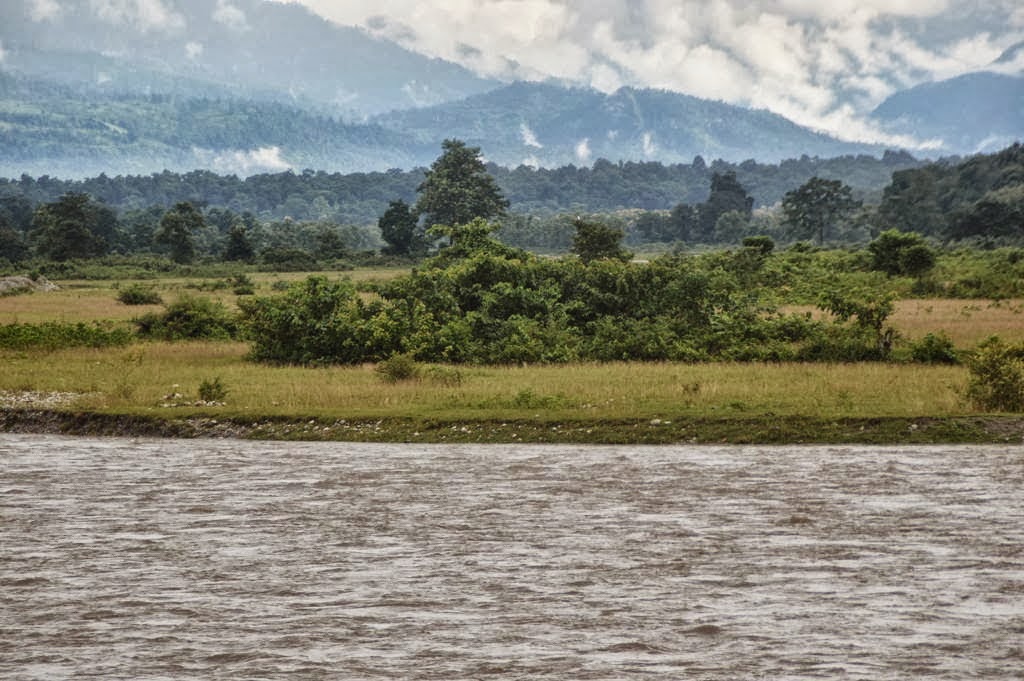
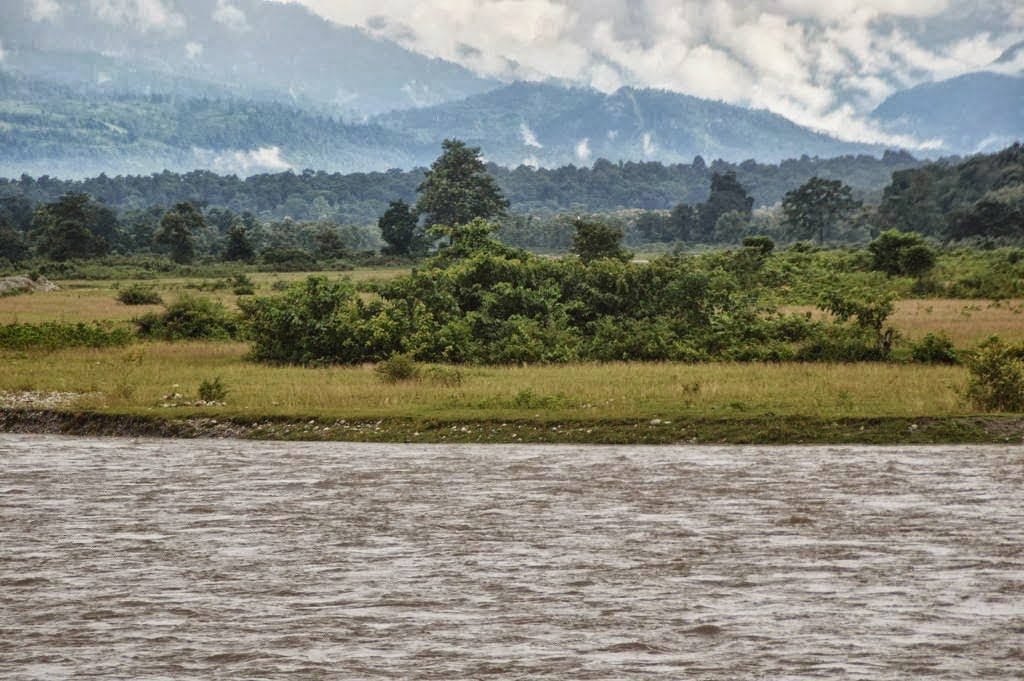
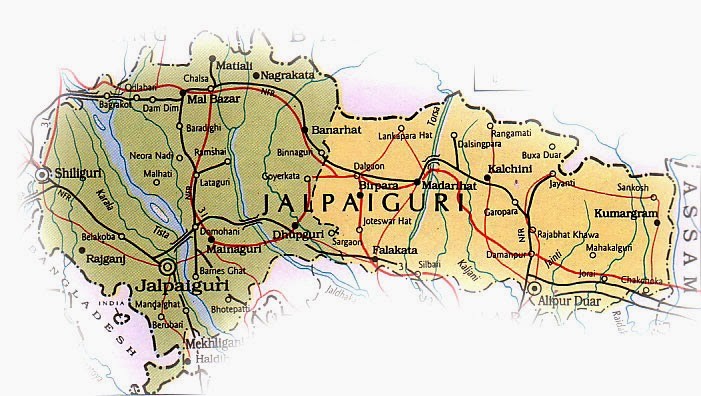
Dhupguri in Jalpaiguri district of (North) West Bengal is a beautiful place in a narrow tract of land sandwiched between Bhutan and Bangladesh. It is not far from the serene Jaldhaka river as it flows down from the Himalayas into the Dooars (plains). But all the serenity and natural beauty cannot hide the ugliness of mankind.


Backstory: The victim and her family are tribal people who have been reliable voters for the Communists (CPI-M), currently in opposition. The power-brokers are aligned with the ruling Trinamool Congress led by a woman: Mamata Banerjee. The thugs apparently want to grab the land of the tribals, hence the kangaroo court. The man was asked to lick his own spit off the ground. His teenage daughter desperately tried to save him from being humiliated (and beaten up). In retaliation, she was raped and murdered in broad daylight.

….
Political parties in India of all colors (affiliations) are always ready to shed copious crocodile tears on behalf of the poor. They each claim that they represent the sarbo-hara (the people who have nothing). In reality it is the poor who have to use all the tools that democracy gives them in order to claim for and fight for their rights. This can be the right of education for poor children in posh city schools (the law mandates up to 25%), the right to have a bank account (under the Jan Dhan Yojana instituted by the Govt)….and even the right to have a life with dignity.

India (and Indians) will have to learn how to ensure a life with dignity for all brothers and sisters. Part of that surely is the right to protest when the heavy boot of the local thug lands on your shoulder. Specifically, a daughter must be able to protect her father from public humiliation without getting killed.

The only reason the tribals of Dhupguri (not far from Naxal-bari) do not form a gang of their own and burn down the homes of the well-off (with the people inside) is that they are basically kind people. Even when buried under poverty and stress, they will not behead you and upload the video on the net. The elites should be grateful for this but not take things for granted. Else, the day of reckoning will surely come and the price in blood will be paid with full interest.
………….
(September 03- Wednesday)
The naked body of a girl, who tried to save her father from being beaten
up at a village kangaroo court for failing to pay for a rented tractor,
was found near the railway tracks at Dhupguri in Jalpaiguri district,
police said today.


The ‘Salishi Sabha’ (self-appointed village court) was convened at
Dhupguri on Monday night and the girl’s body was found yesterday,
Jalpaiguri Additional Superintendent of Police James Kujur said.


After identifying the body, the victim’s father lodged an FIR against 13
persons at the Dhupguri Police Station for “rape, murder and
kidnapping” of his daughter.


Trouble began at the ‘Sabha’ when the farmer’s request for some more
time to make the payment was turned down, the police said adding local
Trinamool Congress councillor Namita Roy and her husband were present at
the meeting.


The girl rushed out of her house pleading with the villagers not to beat
her father, but a person known to her took her away from the meeting
and she went missing since then, the police said.


The councillor was not available for comment.


District TMC president Sourav Chakrabarty, however, said the police were
investigating the incident and there was no need to give “political
color” to it.


Jalpaiguri Superintendent of Police Kunal Agarwal and the ASP rushed to the spot last night. Kujur said the Government Railway Police would probe the matter as the girl’s body was found near the rail tracks.


Two persons were initially detained in this connection, but were released later. A juvenile, aged about 14-15 years, was apprehended today in connection
with the incident, Superintendent Railway Police (Siliguri) Debashis
Sarkar said.


Meanwhile, West Bengal Governor K N Tripathi assured a Left Front
Parliamentary team during the day that he would seek a report from the
state government on the incident.
“We have expressed our concern about the incident and the Governor has
said he will seek a report from the state administration on the
incident,” CPI(M) MLA Anisur Rehman said.
 
…..
The Left Parliamentary team, which for the first time met Tripathi after
he assumed office, also expressed deep anguish over the “lawless”
situation in the state.
A delegation of the LF women’s wing also met Tripathi and complained
about rising incidents of rape and molestation in the state.
SFI and DYFI, the student and youth wings of the CPI(M), observed a
students strike and ‘Black Day’ in Dhupguri block today demanding
punishment of the culprits and also put up road blockades on NH 31.


BJP activists had staged a demonstration in front of the Dhupguri Police Station yesterday, the police said.

…….

Link: http://www.outlookindia.com/news/printitem.aspx?858186

….

regards

Gandhi mukt (free) Congress

….Of course there will be chaos…..Blood will be shed….real
change, does not come easily and those in power never give it up easy…..And the Gandhis, you must remember, have enormous power, influence,
resources at their command….. Modi has only 31%
of the 66% who came out to vote…..This means barely a fifth of the nation
behind him….So the battle will not be easy…..


The Grand Old Party of India needs a thorough house-cleaning before the youth agree to vote for it (the vote for BJP was actually a vote for Modi as the “decider”). And the best way for this to happen is that the Gandhis decide to (voluntary) step down and arrange for a democratic vote for creation of a “privy council” which will rule with the express consent of the party workers.

Such a Gandhi-free Congress will be powered by the Muslim-Dalit vote while the BJP under Modi will be the natural choice of Forward Caste (FC) – Other Backward Caste (OBC) – Scheduled Tribe (ST) combine. Ultimately, driven by pure electoral logic, India will be ruled by OBCs, as has been the case for most of its history (however this does not mean that OBCs will be dominant everywhere).

It is difficult for us to vote for either party in present form, we would like to support (ideally) a center-left, secular organization. If the Aam Admi Party becomes a nationwide political force, a bit like an United Party of NGOs, then this would be close to such an ideal. But at the very least we would welcome a Gandhi-free Congress, which in our opinion will be able to take up its proper role as a natural ruling party (in some areas) and a loyal opposition (in other areas).

In the long run there are only two acceptable paths of change from the present, unsatisfactory, First Past The Post (FPTP) model: India may decide to switch to a two-party + presidential system (PS) following the United States. Alternatively, India can opt for a proportional representation (PR, with 5% threshold vote) as in Germany. We prefer the PR over the PS model, however both models will require (and enforce) umbrella alliances, similar to the NDA and UPA set-ups that we have now.
……….
Manmohan Singh lost because of the Gandhis. Narendra Modi won because
of the Gandhis. Can we finally get a politics without the Gandhis
please?


One of the first things everyone agrees upon in private and denies in
public is that the Congress party has reached such a sorry state
because of the Gandhis who currently run it. Even Congressmen now admit
to it. But as they fear the wrath of the dynasty, they avoid saying it
in the open. It remains but an unspoken verity.


Very early in her life, Indira Gandhi learnt how to grab power and
consolidate it. She did it with amazing dexterity and ease to begin with
but then, as the years went by, her insecurities made her more and more
ruthless. The Emergency brought it all out finally. In her son Sanjay
she got the perfect fall guy though. He was seen as the architect of her
fall. But anyone who knew her will tell you that the Emergency was a
natural outcome of her own true instincts.


Her son Rajiv and his wife were both schooled in politics under her
tutelage. So it’s not exactly surprising that they share the same
insecurities. Rajiv concealed it with his charm and wit but it 

sometimes
came out in the open.


From the way he berated an incumbent chief minister who had come all
the way to the airport receive him, then just a party general secretary,
to being churlish when crossed by Prabhakaran, Rajiv was exactly the
kind of prime minister India so wanted and yet was so disappointed with.
You have to read Natwar Singh’s autobiography to figure how Rajiv
single handed got India into such an awful mess in Sri Lanka, and Natwar
(you must remember) was as ardent a Rajiv fan as you will get. Till
ofcourse Sonia managed to rile him.


….
Natwar’s book tells you as much about the Camelot years as it does
about Sonia and the fall of the Congress. It is the first stone. More
will be cast I am sure. By others.


Till now all the fault lines in the party were blamed on others.
Manmohan Singh got the brunt of it. He was for Sonia what Sanjay was to
Indira. The perfect fall guy, the man everyone came to hate. It was a
deliberate strategy to show him up as a wimp who ran away from the
battlefield. As the man who let the party down. 

Short of calling him
corrupt, a charge that few would buy into, every other insult was
directed at him through a pliant party apparatus and a submissive media
looking for someone to target in a season of endless scams where
billions were purloined. It was legerdemain of the highest order and
poor ….

…..
Manmohan never looked as if he could preside over such an enormous
heist.


….
Since the media was too scared to take on the Gandhis, they chose the
safer option. They targeted Manmohan and, like a fool, he allowed
himself to be led to slaughter. From there began the rise of Narendra
Modi, the man the nation chose to throw the Gandhis out. 

Modi was
charismatic. He was seen as powerful, decisive. So the electorate
decided he could do the job the media and the Congress party had failed
to. From that choice came Modi’s real power. Not from the BJP or the
RSS. Not from Hindutva. Modi was the man, India decided, who could
rescue our politics from the grip of the Gandhis. He had an equal
reputation for ruthlessness. It was steel for steel. Modi versus the
Gandhis.


….
The BJP and Congress were only observers.


….
Now that the battle’s over, and a hundred days too, the nation waits
with bated breath to see how Modi will take on the Gandhis. Neither side
is showing its hand. Both are playing blind. Manmohan has retreated
into oblivion. The Congress is rudderless. The Gandhis only take credit
for victory. Not responsibility for defeat, whatever the clichés they
may resort to.


But this time there’s opportunity. A real opportunity for change.
Narendra Modi may be the pretext. But the opportunity lies in taking the
party that once fought for India’s freedom and give it a spine to fight
for its own freedom. Freedom from the Gandhis.


Of course there will be chaos. Blood will be shed. Change, real
change, does not come easily and those in power never give it up easiy.
And the Gandhis, you must remember, have enormous power, influence,
resources at their command. Modi has only 31% of the vote. That is, 31%
of the 66% who came out to vote. This means barely a fifth of the nation
behind him. So the battle will not be easy. He’s smart enough to know
that.


That’s why he is so cautious. He’s taking one step at a time. And he
has left the Gandhis alone for now. But he knows that sooner or later he
has to deal with them if he wants to consolidate his power. They can’t
be ignored. Or maybe he’s hoping that they will follow a scorched earth
policy and destroy the Congress before riding into the sunset. That
could also suit him.


But that will mean the end of a great party and the death of a real
Opposition. It will be a tragedy for Indian politics and hurt Modi as
well. For who will then deal with the lunatic fringe in his own party?
India needs the Congress. But it needs it without the Gandhis. Can that
happen?

…..

Link: timesofindia.indiatimes.com/extraordinaryissue/a-congress-without-the-gandhis

…..

regards

“The Prophet would be anonymous”

….“Everything around the Prophet’s mosque
has already been destroyed….. It is surrounded by bulldozers…..Once
they’ve removed everything they can move towards the mosque….. The imam is
likely to say there is a need to expand the mosque and do it that way,
while the world’s eyes are on Iraq and Syria….. The Prophet Mohamed’s
grave is venerated by the mainstream Sunni, who would never do it. It is
just as important for the Shia too, who venerate the Prophet’s
daughter, Fatima…..

This may create a major crisis on top of everything else that is going on in the middle-east.
….

The controversial proposals are part of a consultation document by a
leading Saudi academic which has been circulated among the supervisors
of al-Masjid al-Nabawi mosque in Medina, where the remains of the
Prophet are housed under the Green Dome, visited by millions of pilgrims
and venerated as Islam’s second-holiest site. The formal custodian of
the mosque is Saudi Arabia’s ageing monarch King Abdullah.


The
plans, brought to light by another Saudi academic who has exposed and
criticised the destruction of holy places and artefacts in Mecca – the
holiest site in the Muslim world – call for the destruction of chambers
around the Prophet’s grave which are particularly venerated by Shia
Muslims.


The
61-page document also calls for the removal of Mohamed’s remains to the
nearby al-Baqi cemetery, where they would be interred anonymously. There
is no suggestion that any decision has been taken to act upon the
plans. The Saudi government has in the past insisted that it treats any
changes to Islam’s holiest sites with “the utmost seriousness”.

But
such is the importance of the mosque to both Sunni and Shia Muslims
that Dr Irfan al-Alawi warned that any attempt to carry out the work
could spark unrest. It also runs the risk of inflaming sectarian
tensions between the two branches of Islam, already running perilously
high due to the conflicts in Syria and Iraq.

Hardline Saudi
clerics have long preached that the country’s strict Wahhabi
interpretation of Islam – an offshoot of the Sunni tradition – prohibits
the worship of any object or “saint”, a practice considered “shirq” or
idolatrous.

Dr Alawi, director of the Islamic Heritage Research
Foundation, told The Independent: “People visit the chambers, which are
the rooms where the Prophet’s family lived, and turn towards the burial
chamber to pray.

“Now they want to prevent pilgrims from attending
and venerating the tomb because they believe this is shirq, or
idolatry. But the only way they can stop people visiting the Prophet is
to get him out and into the cemetery.”

For centuries Muslim
pilgrims have made their way to Mecca in order to visit the Kaaba – a
black granite cubed building said to be built by Abraham, around which
al-Masjid al-Haram, or the Grand Mosque, is built, and towards which
every Muslim faces when they pray.

This pilgrimage, or hajj, is a religious duty that has to be carried out at least once in a lifetime.
Many go on to make their way to the nearby city of Medina to pay their respects at the Prophet’s tomb.

Al-Nabawi
mosque around the tomb has been expanded by generations of Arabian
rulers, particularly the Ottomans. It includes hand-painted calligraphy
documenting details of the Prophet’s life and his family. Dr Alawi said
the plans also call for these to be destroyed as well as the Green Dome
which covers the Prophet’s tomb.

The Prophet is venerated by both
branches of Islam, Sunni and Shia. The strict Wahhabi sect is a branch
of the Sunni faith, however, and removing the Prophet could further
inflame tensions between the two groups .

The current  crisis in
Iraq has been blamed on the Shia former Prime Minister Nouri al-Maliki’s
sectarianism, which alienated the Sunni, leading to the uprising. Isis,
also known as Islamic State, which holds swathes of Iraq and Syria, and
which murdered the American journalist James Foley, is a Sunni
organisation.

Mainstream Sunni Muslims would be just as aghast at any desecration of the tomb as the Shia, Dr Alawi said. The
Independent has previously revealed how the multibillion-pound
expansion of the Grand Mosque has, according to the Washington-based
Gulf Institute, led to the destruction of up to 95 per cent of Mecca’s
millennium-old buildings. They have been replaced with luxury  hotels,
apartments and  shopping malls.

King Abdullah has appointed the
prominent Wahhabi cleric and imam of the Grand Mosque, Abdul Rahman
al-Sudais, to oversee the expansion project – necessary to cope with the
huge number of pilgrims who now visit each year.

Dr Alawi says
the consultation document for the al-Nabawi mosque in Medina, by the
leading Saudi academic Dr Ali bin Abdulaziz al-Shabal of Imam Muhammad
ibn Saud Islamic University in Riyadh, has been circulated to the
Committee of the Presidency of the Two Mosques.

Several pages of
the consultation document have just been published in the presidency’s
journal. They call for the destruction of the rooms surrounding the tomb
– used by the Prophet’s wives and daughters, and venerated by the Shia
because of their association with his youngest daughter, Fatima.

The
document also calls for the Green Dome, which covers the tomb and these
living quarters, to be removed, and the ultimate removal of the
Prophet’s body to a nearby cemetery.

The al-Baqi cemetery already
contains the bodies of many of the Prophet’s family, including his
father who was removed there in the 1970s, Dr Alawi said. In 1924 all
the grave markers were removed, so pilgrims would not know who was
buried there, and so be unable to pray to them.

“The Prophet would
be anonymous,” Dr  Alawi added. “Everything around the Prophet’s mosque
has already been destroyed. It is surrounded by bulldozers. Once
they’ve removed everything they can move towards the mosque. The imam is
likely to say there is a need to expand the mosque and do it that way,
while the world’s eyes are on Iraq and Syria. The Prophet Mohamed’s
grave is venerated by the mainstream Sunni, who would never do it. It is
just as important for the Shia too, who venerate the Prophet’s
daughter, Fatima.

“I’m sure there will be shock across the Muslim world at these revelations. It will cause outrage.”

The
Independent was unable to contact the Saudi Arabian embassy, but it
said in a statement last year: “The development of the Holy Mosque of
Makkah al-Mukarramah [Mecca] is an extremely important subject and one
which the Kingdom of Saudi Arabia, in its capacity as custodian of the
two holy mosques, takes with the utmost seriousness. This role is at the
heart of the principles upon which Saudi Arabia is founded.”

….

Link: independent.co.uk/saudis-risk-new-muslim-division-with-proposal-to-move-mohameds-tomb

….

regards

Brown Pundits