Partition Tales (silent)

I checked the date….only a
few months since they had shifted from Mymensingh in Bangladesh to
Calcutta….My
grandmother was pregnant with my mother….ailing with an infected appendix….She could not make the crossover to
India — passing away in Rangpur, on the Indo-Bangladesh border when my
mother was just about 10 months old…….That was 1948…..

………………….
Who knows how many such diaries – veritable treasures all of them – may be floating around. The dead tell no tales, it is the job of the new generation to ferret out the stories behind all the (inevitable) dislocations and humanize the events beyond TNT and all the one-upmanship political crap.

The new generation is reputed to be shallow and self-centered. Not really, just the youth are puzzled by us oldie-foggies and our particular fights and resentments. They are also not too impressed by ideology and propaganda dressed up as history. They want to know the truth for themselves. Sometimes they see the truth openly laid out while the (willfully blind) oldies remain content by farting at the general direction of their (imagined) enemies.

This bangal girl sure has lots of initiative and spunk. We are thankful (and grateful), but we still hope that she goes the last mile to see the diary published. It will be a sensation for sure!!! 
……..
Recently, I went on a whirlwind trip to see my ailing parents. Once
there, I heard that my aunt, who lives alone since my uncle passed away,
is unwell too. I dropped by to see her with some sundry stuff – and
since I cannot keep my brain from working overtime – imagined myself a
grown-up Little Red Riding Hood out to do some good.


………

Anyway. Once there, we talked about old things. The new things were
more attractive though — a pair of kittens managed to make themselves
comfortable on her porch sofa — including their mother. I also
remembered to check the electrical main switch down by her staircase –
it had been sputtering during the rains, and she had had to call for
help to put it right.


Checking done, I thought of looking over the heap of old books in
there. And what should I find, but an old rusty iron suitcase that
belonged to my grandfather! I wasn’t allowed to touch it as a kid — for
they feared my mischief-making prowess. However, I knew it housed a
diary apart from numerous other papers – and the diary had priceless
details about his life — his concerns over finances, his daughters’
education, new-fangled medical theories and drugs
. I had — without
anyone’s knowledge — already read parts of the diary when in high school
— under the pretext of cleaning the mess that was her staircase.


Now, of course, my aunt readily handed the suitcase over to me. She
does not see very well, and rued that I didn’t have enough time to read
the letters aloud to her.


Nevertheless, I did open a letter and read it aloud. It was a
resignation letter. My grandfather was quitting his school in
Lalmonihaat (now in Bangladesh) owing to some personal tragedies and
other factors. He had already worked in the school for 28 years, and was
requesting for 4 months’ bonus as a full and final settlement.


I checked the date — It was dated 1948. I remembered, and my aunt
confirmed that it was the year of her mother’s death. It had been only a
few months since they had shifted from Mymensingh in Bangladesh to
Calcutta owing to communal tensions during India’s bloody partition. My
grandmother was pregnant with my mother before that, and was already
ailing with an infected appendix. She could not make the crossover to
India — passing away in Rangpur, on the Indo-Bangladesh border when my
mother was just about 10 months old. That was 1948.


What must have been my grandfather’s thoughts, with four young
children, and none to advise or confer on the next course of action? My
grandfather was the oldest amongst his siblings — and everyone looked up
to him for guidance. What would this man have endured during those
crucial months when survival was at stake?


As I thought these over, I fingered a newspaper cut-out beneath the
letter. As I opened it — I saw a map of undivided Bengal plotted and
marked according to communal lines. Areas with a majority of Hindus were
shaded black. These were the western and northern parts of Bengal.
Those with a Muslim majority were shaded grey — and a few areas were
checquered indicating a rapidly increasing Muslim population.


A strange sensation overwhelmed me as I stared at that map. I could
feel the turmoil that my grandfather had possibly felt as he had cut it
out of the newspaper after careful study. Perhaps he had thought that
someone would have the time to reflect on it in better times.


And a reflection it is — of us and the institutionalised brainwashing
that characterises our education and nationalist propaganda. I have
studied in one of the best schools and colleges in my country. My
country is India and I have never felt myself as anything beyond an
Indian. I know all that is told to us about our freedom struggle. I also
know about the blood-bath that marked the partition of India. I knew it
all from the comfortable nonchalance of a third-person perspective.
Nothing in life prepared me to face the plight that marked the life of
my grandfather — a generation that lived and breathed in an undivided
Bengal.


My grandfather was a professor of Sanskrit. He had studied at a
Sanskrit school in Mulajor on the western (now Indian) side of undivided
Bengal. From what I heard from my mother and aunts, he was highly
energetic, and pursued several interests that included reading, music,
playing at cards and cricket. He had many friends in Calcutta, and was
no doubt, a very sociable and resourceful man. He was a favourite with
his mother-in-law; the friendship lasted till the end — and the two
passed away in quick succession, within a span of a single day.


Had he lived today, my grandfather would probably not have understood
the pejorative undertones we associate with a theocratic Bangladesh. He
would have probably shaken his head at the dogma fed to our
impressionable minds about India being surrounded with enemy states.


On another note, it is possible that he would have understood every
bit of this. After all, it is but a basic tenet of statecraft to
organise and motivate a gullible public by giving them a collective
dream to nurture and protect. The flip side of this mass movement is of
course the extremism that blighted the hopes of millions as Hindu and
Muslim blood flowed on the streets of India.


What would have been the experiences of a man forced to leave the
country of his birth and seek employment in a land that suddenly
regarded him “foreign”? It would have been the early days of the slang
“Bangal” attributed to those who migrated from Bangladesh — and largely
held responsible for over-populating West Bengal and skewing
its economy. It doesn’t mean much to us today — descendants of “Bangals”
who brought about a social reformation in Bengal through their modern
outlook and work culture. Necessity forced “Bangal” women to step out of
their homes and earn a living — and I thank them for that.


Stories such as theirs have been conveniently tucked within the
cracks of history. It is not surprising, though, because  what
distinguishes the likes of my grandfather is their inability to turn
blind in the face of a collective tomfoolery. In his having to leave the
land of his birth resides the sordid story of our national leaders —
who sought to further personal ambitions by feeding off the mass
hysteria generated by India’s independence.


I’m not writing this simply to indict our leaders on an issue
analysed and talked about ad nauseam. There are enough contemporary
issues to do that. I’m writing this as part of my self-appraisal — as I
continue to live my life and evaluate the factors that shaped me. My
grandfather’s suitcase gives me that window through which I can
contextualize and understand the thoughts and motivations of scores of
people — relatives — that I hardly knew and understood less.


I cannot help wonder how life would have been had the fell swoop of
partition not puckered and tainted the seams of thought that bind me to
the past.

…..

Link: http://halfastory.wordpress.com/2011/07/09/my-grandfathers-suitcase/

…..

regards
No home but Rome

He would start off with – Bandhu! kaimun acchen? After the usual Bhalo and Ami-o Bhalo, there would be the usual bari kothaye and questions about Italy….Some would be arrogant and say their bari is Rome and dont know any other bari (bari = home)….dad would nod his head disappointingly and mutter – arrogant bastard, forgetting his roots.
……
We are especially fond of quoting Tariq Ali Sahab but this comment can come from any South Asian (non-Indian, non-Hindu) blogger.

Why they ask – when India has such a brutal record as certified by the Goddess of Aymanam (you just got to love Malayalam word-mixtures – Ay is Tamil for five, Vanam is Sanskrit for forests, Aymanam is the land of five forests- ref. Wiki) – why does India get such nothing to see here just move on press, while other countries in South Asia (mainly Pakistan) get such bad press?

We were curious about this as well. While the international press certainly played up the liberals think Modi/RSS is the devil incarnate theme, they were also (in our opinion) receptive to the Vikaas Purush (god of development) image that Modi was selling (toilets before temples etc). They liked the fact that he comes from a humble back-ground. They really really liked the fact that he is a lower caste Shudra. We may have imagined it but there was tacit appreciation of the fact that India does need a strong leader to make its way in the world….

…..That said we feel there is something more than all the above…..


That elusive factor (in our opinion) is that the West (politicians, press, public to some extent) do not simply see Hindus as a threat. They see Hindus integrating into Western society in fairly large numbers and doing well. Their interactions with India (business, sports-IPL, medical tourism) may be frustrating but manageable. They see India well integrated into the Western-Westminister model. They may even feel that India is doing a good job of keeping 1.3 bil people calm and peaceful (relatively). To the extent they think that BJP is going to keep muslims down, they may even approve of this (in small doses). Common enemies and all that.

OTOH the West is scared shit of muslims (also Chicoms). They really think that the Taliban may one fine day capture the nuclear arsenal. A muslim man is automatically considered a terrorist (unless proven innocent). You want sharia laws, you keep women in burqas, your mosques are taking over ancient pubs, you want to even islamize schools. You want to join  the jihadis in Syria, fine, just go and dont come back. BTW did you know that muslim snitches are highly valued by MI6/FBI/CIA, you can make some serious money by acting funny in the mosque? Deal??

The point is that (we imagine) the societal pressure on a South Asian immigrant from muslim background will be much more intense (as opposed to non-muslims). If asked (even by fellow browns) they may be forced to say something like Rome is our home not Rangpur. That is sad and even a bit pathetic. Or maybe it is all our imagination. Sorry to have wasted your time.
…………
Amar

I think I have been witnessing, in little visual
sightings over 4 years, the rise of the Bangladeshi community in Italy.
 

In the early years, they were selling umbrellas and knick knacks on
street corners, carrying everything they sold. Then I started seeing
them behind the counter in semi-permanent and corner shops, and in
restaurants, as waiters and chefs.

Then I saw that some of them
had their own small shops, and I even found a place with Bangladeshi
candidates for rival parties competing in local elections.

This
year, for the first time, I saw that women had followed the men, and I
saw families together – man, woman, and little children. These families
were not selling products, they were checking out things like normal
family on weekend,
and then to cap it all, I even saw overly ghettoised
Bangladeshi teens, in expensive sneakers wandering on their own.

I feel like I have seen community evolution in high speed.

Akbar

My
father just picked on any Bengali vendor whenever i was busy looking
for a street on the map – one of his ways to keep himself entertained.

He would start off with – Bandhu! kaimun acchen? After the usual Bhalo and Ami-o Bhalo, there would be the usual bari kothaye and questions about Italy and waghiara waghaira, and directions – which bus to take etc.

Some would be arrogant and say their bari is Rome and dont know any other bari (bari = home), and dad would nod his head disappointingly and mutter – arrogant bastard, forgetting his roots.

Near the colloseum, dad combined an old Pakistani film dialogue into his own – Yeh woh jaga hai jahan Rome kay zaleel kuttay kharey hokar tamasha dekhtay tey. I responded – Ab Bengali kharey hotay hain!!

We bought coconut slices and fruit salad from a Bengali vendor. In the heat the taste was heavenly.

……

Link: http://www.amar-akbar-anthony.blogspot.in/2008/10/a-on-italys-deshis.html

…..

regards

Liaquat Ali Khan defies Amrika (and dies)

…..the US demanded Pakistan use its influence in Tehran and persuade it to
transfer control of its oil fields to the US….Liaquat Ali Khan declined to accede to the
request…..The US then threatened to annul the secret pact on Kashmir. Liaquat replied that Pakistan has annexed
half of Kashmir without American support and would be able to take the
other half too…..Liaquat also
demanded that the US vacate air bases in Pakistan….Liaquat’s demand was a bombshell for Washington…..

…………..
It is wonderful what we can learn from declassified documents- incontrovertible proof that American and Pakistan have been frenemies from birth. 

Apart from L.A.K. we also have (Tariq Ali) claims that ZA Bhutto was killed on instructions from the CIA. Osama-ji was definitely killed by the Great Satan (or was he?). And the show goes on……
……………
Declassified US document discusses the possible reason for the
disenchantment of the US and the UK governments with the Pakistan prime
minister and his government. Liaquat was not ready to toe the US line,
the newspaper pointed out and hence the US wanted him eliminated.


…….

While the UK was pressing Pakistan for support on the issue of Iran,
the US demanded Pakistan use its influence in Tehran and persuade it to
transfer control of its oil fields to the US (oil apparently has
remained a major issue with the Americans ever since, especially while
Mohammad Mosaddeq was in power in Tehran then).


According to the article, Liaquat Ali Khan declined to accede to the
request. “The US then threatened to annul the secret pact on Kashmir
(between Pakistan and the US). Liaquat replied that Pakistan has annexed
half of Kashmir without American support and would be able to take the
other half too.” Not only that, Prime Minister Liaquat Ali Khan also
demanded that the US vacate air bases in Pakistan.


“Liaquat’s demand was a bombshell for Washington. Americans who had been
dreaming of conquering Soviet Russia from Pakistan air bases were
flabbergasted,” the article emphasized. And hence the plot to kill
Liaquat was hatched, says the article.


However, “the US wanted a Muslim assassin, so as to obviate
international complications. The US could not find a traitor in Pakistan
(apparently for the reason that the new country was then brimming with
nationalistic pride and hope for future),” the article added.


The US then turned to Kabul. “Washington contacted the US Embassy in
Kabul. They in turn got in touch with Pashtoonistan leaders, pointing to
Liaquat as their only hurdle and assuring them that if some of them
could kill Liaquat, the US would undertake the task of establishing
Pashtoonistan by 1952.”


At this the “Pashtoon leaders induced Akbar to take the job and also
made arrangements for him to be killed immediately after so as to
conceal the conspiracy. The Pakistani currency recovered from the
assassin’s body also reveal that others were also involved. Due to
already strained relations between Pakistan and Afghanistan no currency
exchange was then taking place between the two countries. Hence only the
“American Embassy (in Kabul) could have supplied the Pakistani currency
notes to the assassin,” the summary argued.
 

The article also mentioned that the cartridges recovered from the body
of the assassinated Pakistani premier were US made. The type of bullet
used to kill the Pakistani prime minister were in “use by high-ranking
American officers”, and were “not usually available in the market”. The
rest is for us to deduce.


The article then summarized that all these facts prove that the real
culprit behind the killing was the US, which had committed similar acts
in the Middle East as well.
 

There are many parallels between then and now. And all this could not be
just a matter of chance. Oil, assassinations, dollars, Iran, air bases,
all these sound familiar even today. Fifty years have passed, yet
things may not have really changed.

…….

Link: http://defence.pk/threads/which-foreign-agency-killed-liaqat-ali-khan.234612/

…….

regards

Homeopathy

“My mom said she didn’t want such an expensive treatment”……The family then consulted a homeopathic doctor…..Within a matter of days she caught an infection and passed away…..
………..
Homeopathy for curing blood cancer? Really??

Yes, really, when a poor-rich middle class family is unable to afford a 10 lakh medical bill, even a shaman can help…at least something was done for Ma, na?

India is a poor country hosting too many people without work. Normally this would be a ripe situation for launching revolutions and that may yet happen. We need further de-centralization of powers and more use of power with a sense of purpose (not just for distributing gifts to supporters).

The main problem in the coming days will be a rapid degradation in environment and the impact on health of the aam admi. The situation in India (also China) is simply alarming, you have reports of rich people ready to move out of their country for safer (healthier) pastures. In the meantime all of us who will be left behind will have to struggle with antibiotic resistance, tuberculosis and of course that familiar malady- cancer. The relatively well-off will also have to deal with obesity- diabetes which is spreading like wildfire and problems in conceiving children.

Punjab has benefited from being at the cutting edge of green revolution and is stereotyped as the home of the prosperous farmer which survives on slave labor imported from the East and North-East (also Bangladesh). Now a counter-revolution is required when the country-side is being swallowed alive by the drug menace. Not to mention that familiar malady- cancer (again).

NGOs are trying to help out in focused areas, especially the high cost of drugs that are driving poor and middle-class people to desperation. But we need much more help in cleaning up of the environment and to improve awareness amongst people about the need to use (and re-use) environmentally friendly goods.

Why not a specific initiative on the use of jute instead of plastic? Yes, previous efforts have not succeeded but perhaps we can do a better job this time. It will help impoverished jute-growers in the East, reduce our oil bill and reduce the rate of poisoning of  the ground-water. Most importantly we need a sense of urgency amongst the ruling class. In the words of Tagore, when the city burns, the temple will not be spared.
………………
Three days after her mother died, Rajinder Kaur sat quietly on the
edge of a rope cot, staring at her sandaled feet as the buzz of her
friends and family filled the courtyard of her village home in Sher
Singh Wala in rural Punjab.

The 20-year-old nursing student, with a girlish frame and long black
braid, listlessly recounted the details of her mother’s last 40 days –
from a sudden diagnosis of blood cancer to the unaffordable treatment
that left Kaur with few options but to watch the pillar of the family
suffer in the hospital until she passed away.


….
Kaur’s mother, who died in May, is among the latest casualties in
India’s northern state of Punjab, home to the highest rate of cancer in
India. Here, in the country’s breadbasket, 18 people succumb to the
disease every day, according to a recent report published by the state
government. There are ninety cancer patients per 100,000 people compared
to the national average of eighty. And the Malwa region, where Kaur’s
family lives, has been dubbed “the cancer belt” of the state because of
its particularly high incidence of the disease.


“We need to strike at the root,” said J.S. Thakur, professor and
researcher at the Postgraduate Institute of Medical Education and
Research, who has conducted extensive studies on cancer in Punjab.


..
While the causes of cancer are complicated and still unknown, Thakur
and his team found that contaminated water from rapid industrialization
and excessive use of chemical fertilizers for high-yielding crops are
contributing to the steep rates in the state. Just miles away from the
Kaur family’s home are colossal industrial plants that have polluted the
irrigation system in the area.


Malkit Singh, a member of the panchayat, or village council, in Sher
Singh Wala, said cancer deaths affect almost every other home in his
2,000-person village. Including his: Singh lost his brother and two
cousins to cancer in the past decade.


Costly treatment is an undeniable burden for most people in this
agriculturally rich but poverty stricken region. For them, the
government assistance under the Chief Minister’s Cancer Relief Fund
scheme is only a temporary solution. When medicines cost almost 20,000
rupees ($400) per month, families are often left to make difficult
decisions.


Part of that price tag comes from lack of regulation and oversight.
Some pharmacies in the region were charging more than ten times the
original price for certain cancer-related drugs, according to a private
investigation by the Bhai Ghaniya Cancer Roko Sewa Society, a local
nongovernmental organization.


“We focus on poor patients,” said Kultar Singh, vice president of the
group. “We started this NGO because people were being overcharged and
we were fed up with the politics.”


Their efforts have proven fruitful. Last year the team wrote a letter
to the chief justice of Punjab’s high court, prompting them to hold the
National Pharmaceutical Pricing Authority accountable for 46
anti-cancer drugs that are supposed to be affordable. In May, the Punjab
government rolled out a plan to provide subsidized medicines to cancer
patients at public hospitals.


Without that support, money can prove a harsh limitation.


Heeding a relative’s suggestion, Kaur said her family first visited a
private hospital in Ludhiana, where they were quoted approximately
$20,000 for her mother’s blood cancer treatment – a large amount for the
middle class farming family.


“My mom said she didn’t want such an expensive treatment,” Kaur said
of her mother’s decision. “They told us there was a 35 percent chance
she would stay alive.”


The family then consulted a homeopathic doctor, who prescribed a
range of natural medicines. But Kaur said her mother’s health quickly
deteriorated and they were forced to admit her to a
government-subsidized local hospital without regular cancer specialists.
Within a matter of days she caught an infection and passed away before
she could receive further treatment – leaving Kaur and her younger
brother, 15-year-old Manjinder, without one parent.


Kultar Singh said many families who are fighting cancer also lack the
education and awareness they need to protect themselves. His NGO is
trying to educate communities at the grassroots level.


“People fear the word cancer and it’s like a taboo,” he said.
“There’s a myth in the village that with this disease you’re bound to
die. At first, instead of going to doctors, they go to shamans and
traditional healers.”


….
Meanwhile, Thakur, the lead researcher, said any real solution to the
problem with require accessible clean water and a change in industrial
practices, rather than simply treating the symptoms of what has become a
toxic environment.


……

Link: http://www.dailynews.com/general-news/20140717/heres-why-punjab-state-has-indias-worst-cancer-crisis

……

regards

Caliphate orders 4 mil mutilations

While we fret over Christians being exiled for good from their native lands, we forget that life is no less a challenge for the Sunnis who do live under the ever-merciful gaze of the neo-Caliph.
 

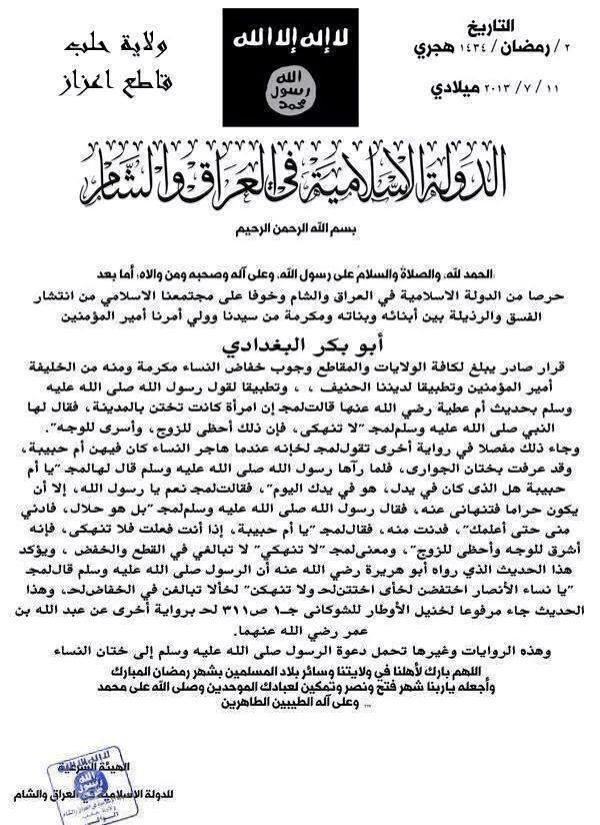
Translation of fatwa: “Out of fear for the Islamic State in Iraq and Syria and our
Islamic society, as a result of the spread of immorality and vice
between sons and daughters of Allah. For the honor of our lord and for
the faithful “A resolution is issued to all states that female circumcision is
honorable in itself and for the Caliphate, emir of the believers
”

The UN is claiming that the Caliphate has issued a fatwa ordering all women to be subjected to genital mutilation: A top UN official quoted from a statement saying that Isis wanted all
females aged between 11 and 46 in the northern city of Mosul to undergo the
procedure. Jacqueline Badcock said the decree was of grave concern.

Yet, some experts are expressing scepticism. They claim that other groups may be using a fake fatwa to discredit the (otherwise highly creditable and credible) Caliphate.

In its own way this experiment (if attempted in earnest) would resemble something that happened in India in 1975 (when Indira Gandhi declared Emergency). Her distinguished younger son Sanjay led a mass castration program in North India (called nash-bandi). 

The idea was that poor people were breeding in huge numbers and destroying the fabric of the nation. Tens of thousands of people terrorized by real-life and fictitious accounts of nash-bandi deserted their homes. It was most unfortunate that  Sanjay was claimed by an accident, else India would have had resembled China in form and in function (with Sanjay in the role of Mao).

But the really impressive thing about the Emergency was that the trains ran on time (really), the postal service became lightning fast, and civil servants did not demand large bribes (really).

We feel that if the Indian middle class was asked to bring back that golden age, they would all heartily agree!!!
…………………..


The al-Qaeda-Inspired Islamic State of Iraq and Syria (ISIS) has
ordered all girls and women between the ages of 11 and 46 in and around
Iraq’s northern city of Mosul to undergo female genital mutilation, the
United Nations said on Thursday.


“It is a fatwa (or religious
edict) of ISIS, we learnt this this morning,” said Jacqueline Badcock,
the number two U.N. official in Iraq.

The “fatwa” would potentially affect 4 million women and girls, Badcock told reporters in Geneva by videolink from Arbil.

“This is something very new for Iraq, particularly in this area, and is
of grave concern and does need to be addressed,” she said, according to
Reuters.

“This is not the will of Iraqi people, or the women of Iraq in these vulnerable areas covered by the terrorists,” she added.
…….

Link: http://english.alarabiya.net/en/News/middle-east/2014/07/24/-ISIS-order-female-genital-mutilation-in-Iraq.html

…..

regards

Air Algerie plane blows up over Mali

Well folks, the storm is truly landing. This is not global warming, this is global lunacy. We have had already one crash in Europe, one in Asia yesterday (Taiwan) and today in Africa (Mali). If the pattern holds, it may be the turn of the Americas next. Please take care and do not fly if you would rather not.

The Taiwanese plane that went down in the storm yesterday was a turbo-prop ATR 72. Today it was a (fairly ancient) MD-83 (or DC-10, source not clear). Mali is partly islamist territory and they may have the resources to blow up the plane. Else it just collided into mountains. Either way we will know soon enough.
……

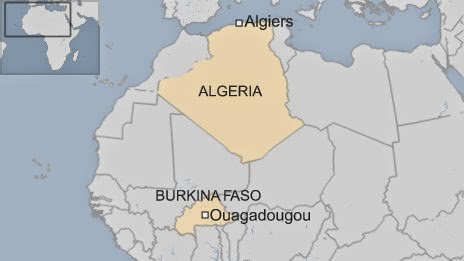
Air
Algerie said it lost contact with one of its passenger aircraft nearly
an hour after take-off from Burkina Faso on Thursday bound for Algiers.


A company source told AFP that the missing aircraft was a DC-10 (other reports say MD-83) and that
some 110 passengers of various nationalities and six crew members are
listed as being on board the flight.

……

The source said contact with the flight was lost while it was still in Malian airspace approaching the border with Algeria.

“The plane was not far from the Algerian frontier when the crew was
asked to make a detour because of poor visibility and to prevent the
risk of collision with another aircraft on the Algiers-Bamako route,”
the source said.

“Contact was lost after the change of course.”
The airline announced that the plane had gone missing in a brief
statement carried by national news agency APS.

“Air navigation
services have lost contact with an Air Algerie plane on Thursday flying
from Ouagadougou to Algiers, 50 minutes after take-off,” the statement
said.

It added that the company initiated an “emergency plan”
in the search for flight AH5017, which flies the four-hour passenger
route four times a week.

One of Algeria’s worst air disasters
occurred in February this year, when a C-130 military aircraft carrying
78 people crashed in the mountainous northeast, killing more than 70
people.

Tamanrasset in the deep south was the site of the country’s worst ever civilian air disaster, in March 2003. In that accident, all but one of 103 people on board were killed when
an Air Algerie passenger plane crashed on take-off after one of its
engines caught fire

….


A passenger plane has crashed after a failed emergency landing in Taiwan, killing more than 40 people, local officials say.


The domestic flight crashed near Magong airport on the outlying Penghu island, reports said.


There were a total of 54 passengers and four crew on board, Taiwan’s CNA news agency reported.

Aviation officials said flight GE222 aborted its initial landing and then crashed, local media reported.

Transport minister Yeh Kuang-Shih said that 47 people were killed and 11 were injured, CNA reported. The agency previously said that 51 were feared killed, citing fire department officials.


“It was thunderstorm conditions during the crash,” said Hsi Wen-guang, Penghu County Government Fire Bureau spokesman. “From the crash site we sent 11 people to hospital with
injuries. A few empty apartment buildings adjacent to the runway caught
fire, but no-one was inside at the time and the fire was extinguished.”


The ATR 72 turboprop aircraft departed from the southern
municipality of Kaohsiung at 17:43 local time (09:43 GMT), but lost
contact with controllers at 19:06, CNA said, citing the Civil
Aeronautics Administration.


The plane was found at Penghu island’s Xixi village in flames, local media reported.


Earlier on Wednesday, Taiwan was battered by strong winds and rain from a tropical storm, Typhoon Matmo. However, an official at the Civil Aeronautics Administration
told Reuters that bad weather at the time of the crash did not exceed
international regulations for landing.


Typhoon Matmo had caused many flights to be cancelled but the
land warning was lifted around 17:30 local time, around the time the
plane took off, the BBC’s Cindy Sui in Taipei reports.

…..

Link (1): http://www.bbc.com/news/world-africa-28460625

Link (2):  http://www.bbc.com/news/world-asia-28448763

…..

regards

Palestine and Israel…no end in sight

Slate columnist William Saletan has a piece about a possible solution to the conflict in Gaza (How to Save Gaza). It is worth a read. It will probably seem overly liberal to many Israeli supporters and will seem totally unfair to many Palestinian supporters. And it does sound a little utopian. Well, a lot utopian. It seems unlikely that it could be attempted and very unlikely that it would work if attempted.
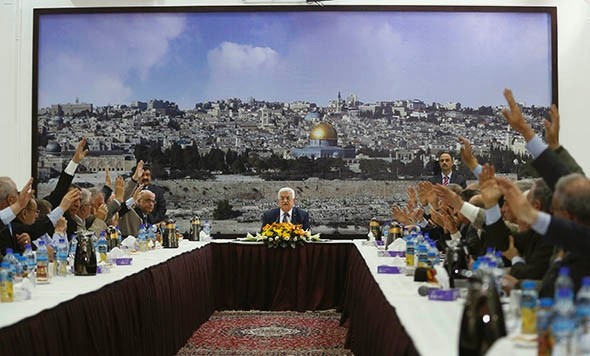
Palestinian leaders vote for international conventions as Palestinian president Mahmoud Abbas.
Anyway, it reminded me of a comment I wrote on Facebook. I am not optimistic…

This is a Greek tragedy. Both sides have lost many opportunities to compromise and they will surely manage to lose more in the days to come. When those in power in Israel clearly want to keep all or most of the occupied West Bank (building new settlements is hardly a signal they are leaving) and avoid every opportunity to make a deal, then they are not laying the foundation for durable peace. When those in power in Gaza seem to believe ALL Jewish presence in Palestine should be “reversed” (“Palestine will be free; from the river to sea”), they are not laying such a foundation either.

If Likudniks think Palestinians are incorrigible terrorists and barbarians who can never be trusted, this is a self-fulfilling prophecy. If Hamas (and even more so, their millions of outside cheerleaders with nothing to lose) say the Israelis are worse than Nazis and are committing history’s greatest genocide, then what sane Israeli would consider them a negotiating partner that wants to make peace? Its a lose-lose situation.
Sad.
I am not making some kind of moral judgement. And I am not making any claim about “both parties” being equally guilty (or unequally guilty). I am just saying: here we are, with millions of Israelis and Palestinians, and not enough middle ground. Whatever the moral standing of either group, the facts on the ground are that Israel is the stronger power, but appears unwilling to trade that stronger position to get a deal the other party can also live with…Likud’s minimum demands seem more than the Palestinians can reasonably concede. Meanwhile, Hamas is the weaker power, but (perhaps misled by periodic outbursts of vocal support from hundreds of millions of distant people with “no skin in the game”; or perhaps just mis-led) their strategy of defeating the stronger power really makes no sense …unless their plan is to accept another 30-40 years of suffering and dying in the belief that eventually Israel can be worn down to where its friends will abandon it, its best minds will emigrate, and the remaining “middle-eastern” level country will eventually be unable to sustain itself amidst a hostile Arab nation….this is not inconceivable, but I dont think it is as likely as many of my friends seem to think. …and if this is NOT likely, then the strategy of endless confrontation is mindless and self-defeating (though it is undoubtedly attractive to faraway supporters who want to admire heroes not compromisers).
It is probably not going to end well, no matter what. Too many factors are working against a good outcome. Israel is currently so much stronger that it is hard to imagine human beings resisting the impulse to “crush enemies” when said enemies seem so much weaker. Meanwhile, some Palestinians may have been beaten into a “reasonable” position but there are just enough fanatics and just enough “leaders” around to pursue dreams of the “mother of all battles” and other Arab fantasies…and to provide Israel with the excuses it needs to avoid peace…and last (and probably the least), the enchantment of wide public support in the Muslim world (and in the third world in general) is not helping the common Palestinian people, who have to play hero for this admiring audience and get beaten up on the head for their pains….
And I have not even touched the issues of 2000 year old promises from God, anti-Semitism, the holocaust, religious fanaticism or plain old land grabs..
It is hard to imagine human beings, left to their default settings, reaching some happy compromise in these circumstances. Very exceptional leadership would be needed, and very exceptional is exceptionally rare.
It is not going to end well.
When I am not this pessimistic, I follow the lead of the American Task Force on Palestine. I think Hussein Ibish and his friends are trying something truly heroic: they are trying to forge a compromise that is reachable within this world…and where almost everyone can live in peace, even if everyone does not get what they want. Their path is not easy. Hardliners on every side hate them and want them dead…and those outsiders who want the Palestinians to die glorious flaming deaths for their sacred honor probably call them pussies too…in spite of all that, they are trying real hard to be the shepherd…
Check them out here…. 

ATFP’s mission is to articulate and educate about
a) The United States national interest in the creation of a Palestinian state alongside Israel.
b) The United States national interest in strengthening Palestinian-American relations.
c) The United States national interest in supporting the Palestinian economy, living standards and good governance.
d) The United States national interest in recognizing that its goals regarding Palestine, and all major policy objectives in the region, are inextricably interconnected.
e) The United States national interest in framing its values and interests as complementary rather than contradictory throughout the region as it pertains to Palestine.

A motorway crash in Wales

Tariq Ali writes on his London Review of Books (LRB) blog:
….

On Wednesday I received four calls from the BBC’s Good Morning Wales.


First morning call: was I available to be interviewed about Gaza tomorrow morning? I said yes.


First afternoon call: could I tell them what I would say? I said (a)
Israel was a rogue state, pampered and cosseted by the US and its
vassals.
 
(b) Targeting and killing Palestinian children (especially
boys) and blaming the victims was an old Israeli custom. 

(c) The BBC
coverage of Palestine was appalling and if they didn’t cut me off I
would explain how and why.


Second afternoon call: was I prepared to debate a pro-Israeli? I said yes.

 
Afternoon message left on my phone: terribly sorry. There’s been a motorway crash in Wales, so we’ve decided to drop your item.

…..

An alert reader takes the hint and responds:
………………..

Seems like Israel is expanding its ground operations while the world’s attentions are diverted elsewhere

………….

Link: http://www.lrb.co.uk/blog/2014/07/18/tariq-ali/motorway-accident-in-wales/

……

regards

Mountain polo (by moonlight)

Polo…origin in Central Asia….6th century BC….Persian national game in
the 6th century AD……
In 1935 UK administrator for Gilgit-Baltistan, A.H. Cobb ordered….make a huge polo ground in Shandur….named “Mas Junali”…..‘Mas’ is Moon and Junali is pologround, as Cobb
was found of playing polo in moon night….

…….

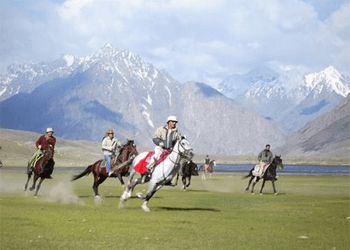
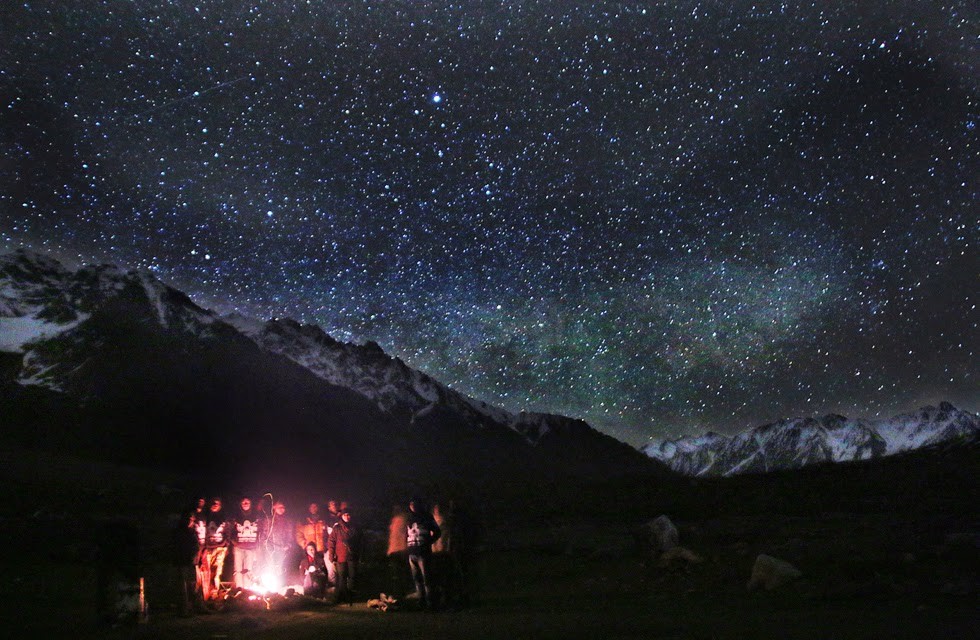
Shandur, Gilgit and Baltistan. The nicest part of it all is the gorgeous night sky.

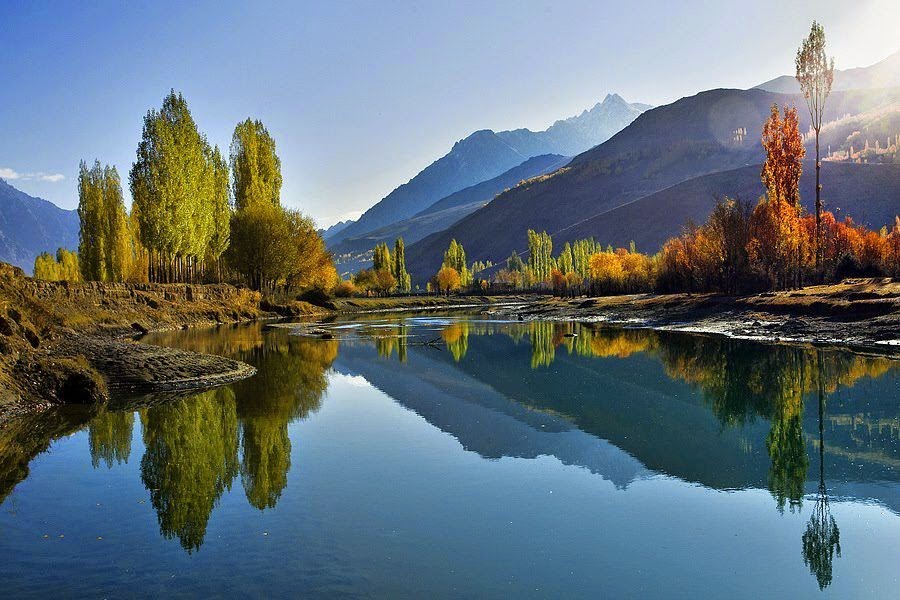
Beautiful place to play polo no doubt. But it also has a gorgeous lake to go with it. Why not advertise this as the coolest place in the world to play water polo? Just as nice as ice fishing in the Great Lakes.

……
[ref. Wiki] Shandur invites visitors to experience a traditional polo tournament which since 1936 has been held annually in the first week of July between the local teams of Chitral and Ghizer.
The tournament is held on Shandur Top, the highest polo ground in the
world at 3,700 meters (the pass itself is at 3,800 meters). The festival
also includes Folk music, dancing and a camping village is set up. The polo tournament is featured in the first episode of Himalaya with Michael Palin.


……….
Various teams of Gilgit-Baltistan and Chitral have always played the
game of polo closest to its original form. During the early 20th
century, the British in neighboring India were the patrons of the game.


….
Free-styled mountain polo is arguably polo in its purest form. This
version of the game played at Shandur-Top has attained legendary status
and is of great interest to international and domestic adventure
tourists alike. There are no umpires and there are no holds barred. 

The
rules are: There are no rules! In “The Roof of the World”
Amin/Willets/Tetley write: “by comparison, an American Wild West rodeo
might pass for choir practice.” As one player once mentioned: “You can
ride head-on into the opponent, if you dare.”


….
In order to decide the final teams to play at the Shandur Polo Festival preliminary matches are played both in Gilgit and Chitral
in which the best horses and players are chosen for the final games by
the local juries. The festival begins on the 7th of July with a polo
match between the local teams of CHITRAL KPK with the guest teams coming
from GHIZER, GILGIT BALTISTAN. During the course of the tournament A,
B, C and D teams of Gilgit and Chitral
battle it out on the polo field. 

Each team has six members with 2-4
reserve players in case of injury etc. The match duration is usually one
hour. It is divided into two halves, with a 10 minutes interval. During
intervals the locals enthrall the audiences with traditional and
cultural performances. The game decided in favour of the team scoring
nine goals. The final is held on 9 July.


….
The field measures about 200 meters by 56 meters (normal polo field
is about 270m by 150m), with 60 cm high stone walls running the length
of the field on both sides instead of boards. As six players make up one
side, the field can get fairly crowded. This has the advantage of
slightly slowing down the pace, which, all things considered, is
probably somewhat safety-enhancing. Players rarely wear helmets, The
horses’ legs often have no bandages, and mallets often have no grips or
straps.


….
In 1935 UK Administrator for Gilgit-Baltistan A.H. Cobb ordered Niat Qabool Hayat Kakakhail
to make a huge pologround in Shandur, soon he made a pologround by his
people and named that polo ground as “Mas Junali”. In Khowar language,
‘Mas’ is spoken for Moon and Junali is spoken for Pologround, as Cobb
was found of Playing polo in moon night. 

Cobb impressed by his great
service and wished to give him a prize for his unreachable service, but
he didn’t want to get any prize of his works. Niat Qabool Hayat Kakakhail
presented his prize for collect benefit and said to Cobb to bring trout
fishes. Cobb brought trout fishes in short time from London and dropped
them into the River Ghizer. Due to this little service, Directorate of
Fisheries had been established and hundreds of people got employed. Now
the weight of those fishes in Hundarap Lake cross 24 kg and in Baha Lake
Khukush Nallah, their weight crossed 40 kg.


….
So Mas Junali became a source of relation between the people of
Gilgit-Baltistan and Chitral. The Shandur Polo Festival opens a door
step to the people of the world to enjoy their selves. Many of the
people from entire world come here to watch polo match played between
Chitral and Ghizer. 

Polo is an equestrian sport with its origin embedded
in Central Asia dating back to 6th century BC. At first it was a training game for cavalry units for the King’s Guards or other Elite troops.
To the warlike tribesmen who played polo with as many as 100 players to
a side, it was a miniature battle. It became a Persian national game in
the 6th century AD. From Persia, the game spread to Arabia, then to Tibet, China and Japan. In China, in the year 910, death of a favourite relative in a game prompted Emperor Apaochi to order beheading of all players.


Historically, polo being the king of games was played between small
kingdoms, villages and rival groups of Gilgit Agency. From 1936 onwards
polo tournaments were held annually at Shandur (then part of autonomous
princely state of Kashmir) at the patronage of the British from
neighboring India. The three day Shandur Polo Festival has developed
steadily in recent years into the massive celebration of mountain polo
that it is today.

….

Link: http://www.dawn.com/news/1119821/herald-exclusive-what-is-pakistans-most-attractive-destination

…….

regards

Brown Pundits