X.T.M
X.T.M is a writer, editor, and investor working between Cambridge and the Persian Gulf. He is a co-founder of Brown Pundits, Senior Partner at BRAHM Collection, a platform for Indian handmade art and heritage, and Principal at Raef Capital.
He writes longform essays on civilisation and power, with a focus on the Persianate and South Asian worlds, and has shaped Brown Pundits since its early years. His work explores the intersection of history, identity, and state formation, particularly the unresolved cultural consequences of Partition.
His interests include Bahá’í philosophy, Iranian and Mughal history, and the long arc of civilisational continuity across Eurasia.
He writes under the X.T.M byline and can be found on X at @XerxestheMagian.
Most popular · Most recent
-
The Hindu Liberal test
Answering a reader who says India honours Muslim heritage, the author proposes a ‘Babri test’ of whether a Hindutva supporter values liberalism or Hinduism: whether the Babri Masjid should be…
-
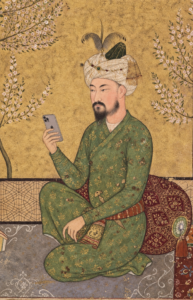
The iPhone, Babur & are sons sold in shops?
A Dalit with an iPhone 16 has purchasing power, not the end of caste. And a Turkic sword at the birth of Indo-Islam is not a claim over South Asian…
-
Vantara, Caste, and the Fragile Commons
The author defends Anant Ambani’s Vantara wildlife refuge as a possible expression of Indian civilisational ethos, and argues that caste, also present in Pakistan, must be openly examined on Brown…
-
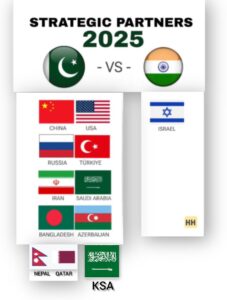
Pakistan as India’s Ukraine?
X.T.M asks whether Pakistan’s strategic patrons will ever lift its human development, and offers the analogy of India and Pakistan as Russia and Ukraine, with Ukraine imagined as nuclear-armed. He…
-
why Afghanistan & Pakistan must unite under a Constitutional monarchy
The author proposes that Pakistan resolve its identity dilemma through a Persian-speaking, Sunni constitutional monarchy united with Afghanistan, modelled on England and Scotland’s Union of the Crowns, arguing it is…
-
PewDiePie is Coloniser Trash
Zach attacks PewDiePie’s remarks after losing the YouTube subscriber race to T-Series as colonial condescension towards Indians, objecting to calling Bangladesh Indian and to jokes about open defecation. The tone…
-
Pakistani Perfidy & The Nehruvian Deep State
Zach cites a Pakistani Christian’s account of a Hindu family barred from buying a flat to argue that Pakistani minorities face everyday discrimination, and presses liberal Pakistanis to explain it.…
-
Iran as a modern Zoroastrian nation
A speculative satire imagining Iranians returning to Zoroastrianism after a counter-revolution: Isfahan’s square torn down, Persepolis rebuilt, Muslim heritage neglected, the Persian language purged of Arabic words, and the Muslim…
-
Question of the Day?
X.T.M asks readers why Partition is seen as a bad idea but Indian independence a good one, why Jinnah is a villain but Gandhi and Nehru are not, and whether…
-
FlyDie on South India
X.T.M reposts FlyDie’s comments on South India. FlyDie argues that Tamil Nadu’s elite traces to Telugu country through the Vijayanagara Nayaks, that pre-colonial empires ran on a shared elite culture,…
-
Sanam Saeed at Cannes, Alia Bhatt Out of Frame?
The post reads Sanam Saeed’s Hussain Rehar couture at Cannes 2026, set against Alia Bhatt’s L’Oréal appearance, as an apparent civilisational reversal that is not one: Pakistan and Iran inherit…
-
How India own-goaled itself on Kashmir
After a Kashmiri Pandit’s story of exile, the author asks what India’s end-goal in the Valley was, then wanders to the Deoband-Barelvi divide, Brexit and the class and skin-colour divisions…
-
Pakistan: The Realpolitik State
The author argues that Pakistani society leans on hierarchy, patronage and deference and, as a state forged through separation, has little distinct culture beyond India and Iran. He grants that…
-
Indian Muslim podcast
Reports recording a podcast with an Indian Muslim guest who describes feeling fear in India for the first time, and argues that Pakistan has a moral obligation to open its…
-
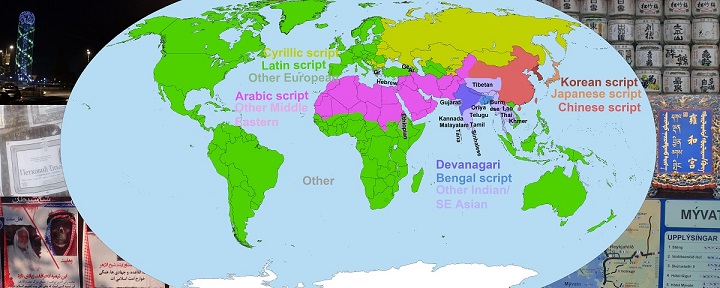
Map of Civilizations
Prompted by a world map labelling countries in local scripts, the author finds Huntington’s equation of civilisations with religions too blunt and cites Mises on how language and dialect, as…
-
Is Pakistan primitive?
An intolerant minority sets the menu for everyone, in a comment thread and in a country. For two months we moderated so carefully against Islamophobia that we let the confinement…
-
Why it is very sad that racism arose in the US but not India-
The author argues caste is best seen as an institution that ring-fenced ancestry, so that low AASI rather than high ANI marks higher rank, and speculates on how class structure…
-
Smash the Brahmanical Patriarchy
A satirical take on the Indian Twitter row involving Jack Dorsey and Lewis Hamilton, mimicking demands for bans and public shaming, while the author argues the British had a keen…
-
3 Graphs of Karnataka
X.T.M observes from three graphs of Karnataka that many South Indian Muslims seem to be “Urdufying”, and wonders whether East Bengal might have followed a linguistic path to Urdu and…
-
At Negombo, the Indian subcontinent meets where it still can
Writing about a Bahá’í gathering at Negombo on 11 May 2026 attended by friends from Pakistan, Tamil Nadu and Sri Lanka, the post argues that Sri Lanka is now where…
-
The Hindification of East India
Bihar, Odisha, Assam, and now Bengal: the old Bengal Presidency votes as a single saffron block. A century after the bhadralok forced Curzon to reunite Bengal, their grandchildren have completed…
-
Brown Pundits Is Not a Cesspit. Keep It That Way.
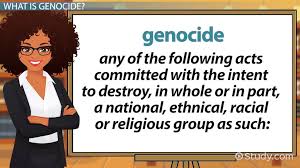
X.T.M announces that all four authors are moved to commentator status until each commits to evidence-based comments. The post sets out how “genocide” is defined and contested for 1971, and…
-
BJP slips on Hindi; Tamil Nadu stands firm
Quoting Garga Chatterjee on how Hindi was pushed against Urdu in nineteenth-century Uttar Pradesh, the author argues that imposing Hindi is a bad idea and that Hindu nationalism, a many-headed…
-
South India funds India?
X.T.M comments on a chart suggesting the southern states and the old Punjab subsidise the rest of India, links the south’s position to Partition’s contest over rich regions, and compares…
-
The Stans
X.T.M shares a chart from @DailyTurkic of Pew data on adults who pray five times a day in the “Stan” countries. He notes that Persianate Tajikistan and Afghanistan are more…
-
A Deleted Tweet Just Moved the Oil Price 17%. Welcome to the New World.
X.T.M uses the oil price shock after the closure of the Strait of Hormuz, including a deleted US Energy Secretary tweet that moved prices 17 percent, to argue the global…
-
Comment of the Day:
A reader comment promoted to a post: it likens Dalits to Black Americans in the segregated South, and argues that Indian nationalism prizes territory over people while Pakistan is rooted…
-
Why I hate the Hijab
The author argues the hijab belongs to the Middle Eastern cultural matrix and is out of place for Desi Muslims, and criticises Western hijabi activists for ignoring Iranian women who…
-
What the f*ck is Pakistan/PTI doing
Reacting angrily to a Facebook post about the PTI government’s agenda for Pakistani television drama, the poster calls it self-destructive and says a culture that defames martyrs to freedom such…
-
They Blinded the Attackers in 72 Hours. No One Is Saying It.
X.T.M, crediting Richard Medhurst’s satellite analysis, argues Iran destroyed key US early-warning radars in the Gulf within 72 hours. He reads this as a “legibility event” exposing the hollowness of…
-
South Asia Is an Ugly Postcolonial Euphemism
X.T.M argues that South Asia is a bureaucratic euphemism from American area studies, not a neutral term. He holds that India is the old name for the whole subcontinent and…
-
The Five Great Brahmin Castes and their proclivities
Zach muses on Brahmin sub-castes, saying north-western communities such as Sindhis and Punjabis pursue different professions, and speculates that exposure to Islamicate ways reduced inclination for science. He also defends…
-
3 questions about BP readers
X.T.M asks readers and commenters about gender, education, ethnic origin, caste background and privilege, prompted by a commenter’s bio.
-
Paki Pundits
X.T.M answers a reader’s concern that the blog fixates on Pakistan and Islam, arguing that blaming Islam for the subcontinent’s problems is bunk, citing Kerala, Sri Lanka and Indonesia, and…
-
Plus ça change, plus c’est la même chose
Comparing the 2020 and 2026 open-thread arguments over Mughlai food, the post says the debate is a ritual re-enactment of Partition, while diaspora restaurants, constrained by no pork, no beef…
-
Why Zia, Munir, Ayub, and Even Modi, Are Jinnah’s Children
X.T.M argues that Zia-ul-Haq, Asim Munir, Ayub Khan and Narendra Modi are Jinnah’s true heirs, because Jinnah’s communal mobilisation built a state of permanent insecurity, military guardianship and Islamic legitimacy.…
-
The Self-Confident Hindu
X.T.M asks whether a self-confident Hindu majority is a bad thing, arguing that India is a source rather than an appropriator of culture and that a confident majority held to…
-
India’s Guest. America’s Kill.
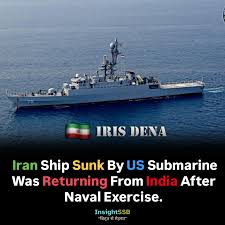
X.T.M argues that the US submarine sinking of the Iranian frigate IRIS Dena, days after it left India’s MILAN fleet review as a guest, shows the cost of Modi’s diplomacy.…
-
Zia-Era Pakistan & Today’s India
Commenting on a reader’s dismissal of comparing Zia-era Pakistan with Modi’s India, X.T.M notes both pair economic growth with cultural conservatism, and asks whether right-wing politics is how societies answer…
-
The Bahá’í Position on Palestine: A Note for the Record
The author sets out what the Bahá’í position on Palestine is, quoting Shoghi Effendi’s 1947 reply to the UN. The World Centre in Haifa and Akka is there for theological,…
-
Is Hormuz, Israel’s Suez but Pakistan’s Second Act?
X.T.M asks whether the Iran war is Israel’s Suez, with Iran gaining leverage over Hormuz. The post argues Pakistan’s offer to host US-Iran talks is its second act, though it…
-
Pakistan and the Act of Union
X.T.M argues the only useful analogy for Pakistan ‘rejoining’ India is the 1707 Act of Union, an elite exit driven by insolvency and security, not affection, and says Pakistan’s debt…
-
“Mimicstan”: the burden of Purity from Pagan origins
X.T.M argues that Pakistan’s Anglo-Urdu elite is a ‘mimic elite’ that imposed a post-colonial ideology of rupture from the subcontinent, suppressing Pashtun, Baloch and Bengali identities, and contrasts it with…
-
Is BP the alternative Brownosphere?
The author asks where Brown Pundits sits in the ‘Brownosphere’, suggesting it is neither mainstream Desi nor typical diaspora, mildly anti-Islam and ambivalent about the Hindu Right, and describes the…
-
Why India looks West not East
Answering Razib’s question on why India does not look towards China, the author offers three reasons: Sindhi diaspora ties, lingering colonial institutions, and the claim that India’s high culture was…
-
On Safety and Hinduphobia
Announcing a ten-day suspension of a commenter who posted another commenter’s personal details, the authors affirm privacy as a house standard. They then argue Hinduphobia is real, theological in form…
-
The Partition of Elites: India, Pakistan, and the Unfinished Trauma of 1947
X.T.M argues that India’s central trauma is Partition rather than diversity, framing it as a failure of two elites to share power. He says most Muslims stayed after the League’s…
-
Complete Victory For Imran Khan
Zach hails Pakistan’s offer to return the captured Indian pilot as a complete victory for Imran Khan and a humiliation for India, claiming it dooms Modi, unites Pakistanis and revives…
-
Zohran Mamdani and the Question of Civilizational Belonging
X.T.M answers Kabir’s comment on Zohran Mamdani, arguing that speaking Hindi-Urdu and quoting Bollywood are surface markers, that Indian identity is anchored in Dharma, and that Mamdani therefore reads as…
-
2 Hindus and grandmother of Hindus are the face of the Modern Left
Noting two Hindu-heritage candidates in the Democratic presidential field, the author asks what a Hindu is, favours a maximalist definition, and argues that upper castes should not monopolise what Hindu…
-
The Veil We Will Not Wear
A Bahá’í response to the ‘saffron and crescent’ post, arguing that the Bahá’í position is a distinct civilisational stance that begins with Táhirih unveiling at Badasht in 1848, and that…
-
Venezuela as Pakistan: A Template, Not an Accident
X.T.M argues that Venezuela is being remade into a ‘Pakistan’: a regime form kept unstable, securitised and dependent, but intact enough to sign contracts and serve as leverage, reached through…
-
Is Bollywood “whitening” Indian beauty standards?
Prompted by a young actress said to look Spanish or Italian, the author asks whether Bollywood is whitening Indian beauty standards, argues India is in an ‘importing stage’, and criticises…
-
Alliance with Pakistan matters more to China than terrorism
An extract arguing that China’s veto at the UN on designating Masood Azhar shows its alliance with Pakistan outweighs terrorism concerns. China treats Pakistan as a low-cost secondary deterrent that…
-
Assam register: Four million risk losing India citizenship
Reproduces extracts of a report that four million people in Assam risk losing Indian citizenship under the NRC, with the poster’s comment that India is being too draconian on the…
-
The Myth of the British-Made India
Rebuts Francis Pike’s Spectator claim that the British created India and Nehru and Gandhi invented its unity. The author argues India is a civilisational unit older than the Raj, that…
-
How Islamicate culture will die?
Zach argues that Islamicate culture is squeezed in India for being Islamic and in Pakistan for not being Islamic enough, claiming that Islam is suffocating the Islamicate cultural complex there.…
-
Why India must become the Hindu Israel!
The author argues India should be a Hindu state in the way Israel is a Jewish one, a ‘Hindu Israel’ that is civic, well ordered and magnanimous toward Pakistan, and…
-
Wild natives and the white Man’s burden
X.T.M recounts two remarks by white academics that he calls microaggressions, and argues that elites churn only enough to keep their power, that the model-minority Asian is too busy succeeding…
-
Indus Water Treaty Arbitration
-
Is Kabir Right?
X.T.M tests Kabir’s claim that many Hindu-nationalist readers come to BP to litigate Pakistan and Muslims. The essay argues that blaming outsiders gives India a permanent excuse, since caste, corruption…
-
Various Thoughts on Iran & Islam
A string of thoughts on Iran and Islam: the author sees Dubai as a despotic trading hub for Asians, argues geography shapes Iranian ethno-linguistic fault lines, stresses Khorasan’s importance to…
-
Semitised Iran, Aryanised India
X.T.M argues that modern Persian identity owes more to Safavid and Islamic-era figures such as Sa’adi, Ferdowsi and Hafez than to Achaemenid or Sasanian pride, and that Persian has wrapped…
-
Notre Dame & Babri Masjid
After the Notre-Dame fire, the author argues European care for old monuments is a mark of high civilisation, that comparisons with the Babri Mosque’s demolition are fair, and that rebuilding…
-
Twitter trouble..
A link post sharing a tweet by Richard Harris calling Pakistan an Islamic republic and India a Hindu state masquerading as a secular democracy, with a one-word comment.
-
Arab Fathers are not fabrications (entirely)
Answering BB’s claim that Pakistanis invent foreign fathers, the author argues South Asian Muslims are not one block: Pashtuns, Baloch, Hazaras and Sayyids carry foreign ancestry the genetic record supports,…
-
philhaal is guftagu se thak gaye hain hum.
Reviewing Kalank, the author praises the performances, especially Madhuri Dixit, but finds Karan Johar’s ‘more is more’ style and unrealistic Heera Mandi make it farcical, contrasting Bollywood with Pakistani dramas…
-
Tweet of the Day
Reacting to a tweet, the author argues that everyone is tribal to some degree, that the secular Western left has adopted a policing of thought, and that the East is…
-
Iran Zamin Open Thread
Open thread for the latest Iran war news, with a preface mourning all lives lost, civilian and military, on every side.
-
Who Is Reading Brown Pundits? (And Why Pakistan Just Became Our Biggest Audience)
X.T.M reports February traffic steady at 41,000 views, with Pakistan now 28 percent of readership and the top source. The post discusses the commentariat’s recovery after last autumn’s split and…
-
Racism Is Wrong. So Is Calling People Sub-Human.
X.T.M rejects racism but also the idea that calling a racist sub-human is a moral duty, arguing that dehumanising opponents repeats their logic.
-
Noorie Abbas / We SHOULD Have Confidence in Modi’s Government
https://www.youtube.com/watch?v=DxIWkzugGDs
-
Pakistan Punches Above Its Weight. Blame Aligarh.
X.T.M asks how Pakistan produces so much culture for its income, crediting Lucknow and Aligarh rather than Bollywood. In his account the Urdu-speaking salariat carried that culture west in 1947,…
-
Why Hasn’t Pakistan Collapsed Yet?
X.T.M argues Pakistan has held together because it anchors a self-image drawn from the Lucknow-Delhi Indo-Muslim tradition, and that ownership of that legacy follows continuity among people, not territory, census…
-
Ghosts of 1947
A Pakistani woman shares her grandmother’s memories of Partition in 1947, which took her nearly seventy years to speak about.
-
Good luck Pakistan-
Shares a tweet linking Disney’s Aladdin remake to Pakistan’s World Cup match against New Zealand, and jokes that Pakistan plays cricket like the author plays pool.
-
What India must do to Kashmir-
Zach sets out a provocative list of measures India should take in Kashmir, including stripping protesters of citizenship, encouraging Hindu settlement and Kashmiri Pandit population growth, and withdrawing to defensible…
-
Pakistan Wins in the Sikh Punjab under Imran’s Captaincy
The author, a self-described critic of Pakistan, calls the Kartarpur Corridor a big win for Pakistan and Imran Khan despite quibbles over his English, and recounts a Delhi Khatri Sikh’s…
-
Amartya Sen calls demonetisation despotic
X.T.M cites Amartya Sen’s attack on demonetisation, calling it a tax on the upper middle classes that India’s ultra-rich could avoid. He sees an oligarchic elite that adapts to every…
-
Is Erdogan the Turkish Modi?
Prompted by a question about why Indian Muslims dislike Modi but admire Erdogan, X.T.M quotes a comparison of the two leaders’ humble origins and religiously infused nationalism, and sees Turkey…
-
Swara Bhaskar’s comments on Pakistan the Failing State
X.T.M links Swara Bhaskar’s interview repeating that Indians should not care what Pakistan’s failing state does, says Pakistan was wrong to ban Veere di Wedding, and opens a moderated thread…
-
Asians & Aryans
X.T.M reads a map of Asia’s great rivers: Tibet matters because its rivers feed half the world, continents are arbitrary, South Asian rivers share a source, and the Aryans are…
-
South Asia is Latin America minus 2,000years
The author argues that Latin America’s racial hierarchy of Europeans, mestizos and Indians is the best analogy for caste, claiming genetic evidence links Aryan-related ancestry to caste rank and that…
-
The unsex appeal of Asian Men..
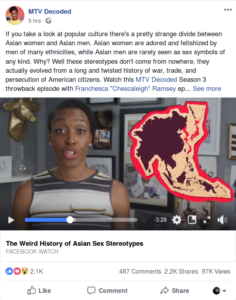
Reacting to a video arguing white people fetishise Asian women and de-masculinise Asian men, the poster says much Asian male dissatisfaction is really about the ‘white’ dating market, and adds…
-
Italian belittles India (and no it’s not Sonia Gandhi)
Reacting to criticism of an Italian photographer’s work on India as poverty porn, the poster satirically calls for lifetime bans for him and Slumdog Millionaire’s makers and the return of…
-
Final word
X.T.M announces he is leaving the blog and has deleted his account after a comment he had removed was excerpted in a post, which he calls a violation of his…
-
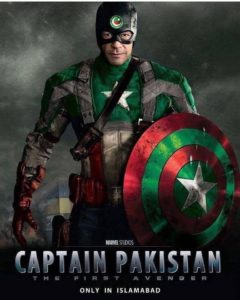
Captain Pakistan and the Faustian Pact
In seven points on Pakistan’s 2018 election, the author argues Imran Khan has made a Faustian bargain with the army, grants vote fudging but welcomes democracy taking seed and the…
-
Caste in America
The author argues that Brahmins are the civilisational custodians of the subcontinent and that anti-Brahmin undercurrents in some Dalit-justice coalitions risk cultural erasure, while supporting Dalit rights. He also revisits…
-
Samosas vs. Pakoras
Prompted by a joke about Islamicate samosas versus indigenous pakoras, the author notes that core desi food is heavy on carbohydrate and light on protein, prefers Mughlai cooking to Arabic…
-
Will Indians become white, will India become Western?
Zach wonders whether India will become Western, citing Alia Bhatt’s Filmfare dress, and argues Pakistan is sailing out of South Asia. He suggests Hindutva is the Abrahamification of Hinduism while…
-
Open Trade: Peace Deal Reached
A one-line note on the oil price falling after Pakistan announced a US-Iran deal, asking who won, lost or drew, with peace reached on Trump’s 80th birthday.
-
She carried an entire civilization in her hands
Sharing a Hindu American Foundation Mother’s Day note, the authors argue that Hinduism resists imperial pressure by evolving rather than hardening as they say Islam does, and that a civilisation…
-
The Myth of the “Average Pakistani”
X.T.M rebuts a commenter’s praise of a ‘liberal’ Shia couple from Baltistan as unlike the ‘average Pakistani’, calling the framing patronising and a colonial hangover, and arguing that Pakistanis prize…
-
When Brownz don’t stand together; the Coloniser wins
After a World Cup without a South Asian finalist, the author argues that India’s wish to be ‘Western’ and its fixation on Pakistan hurt the subcontinent, and that peace needs…
-
No such thing as South India
Responding to Rajmohan Gandhi’s article and a tweet denying that ‘South India’ exists, the author suggests caste and creed have dramatically weakened regional identities in India, and that South India…
-
Suno Punjab
Watching the Pakistani drama Suno Chanda, the author hears Punjabi at length for the first time and asks why it is treated as a rustic Urdu, then explores the Lahnda-Eastern…
-
my 7,000th comment on Brown Pundits
X.T.M marks his 7,000th comment on the blog, notes he is 65 posts from his 1,000th, and says Omar’s take on whether the Mughals were colonisers follows.
-
The Arrogance That Binds: Post-Colonial Delusions in the English speaking Pakistani Mind
X.T.M argues that the English-speaking Pakistani elite suffers from ‘Post-Colonial Derangement’, denying India’s civilisational place in Pakistan’s past, and says patriotism lets one belong while nationalism forces a choice, pointing…