Clarifications on my views about the Burqa

Given the responses I received from my previous post, I feel a detailed clarification explaining my stance and reasoning behind it is due.

First of all, as I do not advocate any ban due to my instinctive gut feelings. I like most humans, feel strong instinctive visceral reactions for a range of things from ugly tattoos to plastic surgeries to the latest Hollywood fashions. But no one in their right mind would advocate any regulations on clothing, lifestyle, or anything else for mere aesthetics or reactions, no matter how strong the reaction is.

By Burqa here I mean the combination of the Burqa + Niqab and not just the Burqa in isolation

History of Indian law and the Greater Good:

Currently, in India, there exist a number of laws (and their application) aimed at social justice where the burden of proof at times lays on the accused not the accuser. Examples of these being the SC/ST atrocity act, Dowry law, Domestic violence laws, etc. Not getting into the legalities of these laws, it is fair to note that the system is rigged against the accused to prove his/her innocence, unlike most other cases. But weighing the pros and cons, considering the state Indian society finds itself in, these laws are generally accepted across the board.

Till now (2021) it is fair to assume that significantly more cases under these laws have been Unreported than the cases where these laws are abused (though it may not always remain so).

Why should the benefit of the doubt be given to the women in case of Dowry/Domestic abuse cases & Scheduled castes/tribes in case of Atrocity-related conflicts? We all know why. I am extending the same argument here.

UCC and Burqa:

Generally in the world, we have accepted that legal polygamy is not an acceptable practice. In India with Muslim personal law, there continues to be legal polygamy for Muslims. But looking at the numbers, the practice is not even followed by a very small fraction of the Muslim population (as opposed to the practice of Burqa which is ubiquitous). Yet most nativists (Hindutvavadis) in India & *true liberals acknowledge the need for a Uniform Civil code. There are multiple valid reasons for the UCC, but one of them certainly is that Muslim personal law creates a feeling of separation among the Muslim community which is bad for a cohesive society. The same argument along with a few others can be made much more convincing against the Burqa than for UCC in my view.

Arguments against the Burqa:

  1. Burqa – as a black overall creates a distinct separation between the Muslim women and society on whole. Here is a fine piece by Jaggi on it. Jaggi in this piece has relied heavily on BR Ambedkar’s scathing remarks about women in Islam in Pakistan and Partition. Some of Ambedkar’s quotes                          “These burka women walking in the streets is one of the most hideous sights one can witness in India. Such seclusion cannot but have its deteriorating effects upon the physical constitution of Muslim women
.”.“Purdah deprives Muslim women of mental and moral nourishment. Being deprived of healthy social life, the process of moral degeneration must and does set in. Being completely secluded from the outer world, they engage their minds in petty family quarrels, with the result that they become narrow and restricted in their outlook.”                                                                                                                                                   It is important to note that BR Ambedkar had similarly scathing criticisms of Hindu practices and the Hindu code bill was directly aimed at addressing those ills. Even though the single Hindu code bill failed to pass in the Indian parliament the content eventually got passed under various laws.
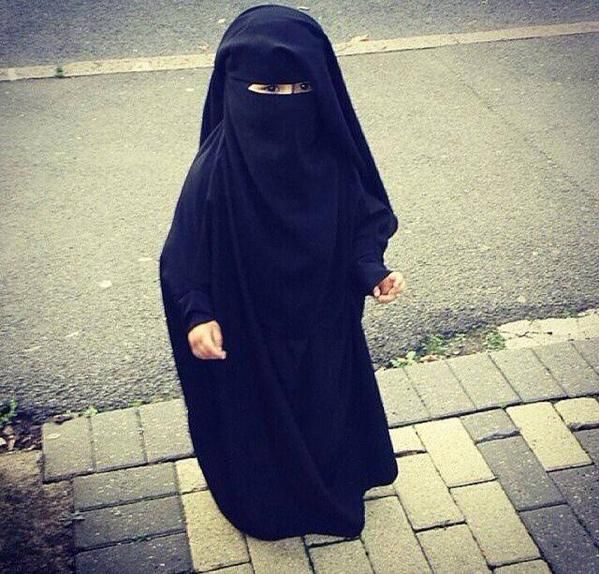
  2. One might argue that wearing a Burqa is a personal choice of an adult woman and denying so is an infringement of her fundamental rights – and that point is certainly not without merit. Once a practice like Burqa is accepted in a society it is automatically imposed on girls as young as five years old. One cannot even begin to imagine the effect that would have on the psyche of a child. A discussion on this topic on BBC Radio: link. I am not supporting something as extreme as Dawkin’s stance that children be raised devoid of indoctrination, but just that we curtail to the extent to which we indoctrinate under the guise of religion.
  3. As in the case of the Atrocity Act or other pro-women laws, it is fair to start with the assumption that women don’t have faculty (especially compared to men) in these societies (Indian in general, Muslim in particular). Therein the question of assumption of personal choice of the woman becomes difficult to justify.
  4. Another issue that is often missed in these discussions is the impact this might have on the Men’s psyche. Jaggi has made the point with reference to the Love Jihad issue so I won’t go into that in detail (read his piece). An example of what some MAN in UP said about it – here
  5. The lack of a visible face, especially in public places hinders equality in interactions. We communicate a lot non verbally (most of it facially). Burqa not only restricts expression for the wearer (it may be down to choice) but also restricts the communicator from gauging the non-verbal communication.
  6. The public security issues which arise from  garments thought often exaggerated in right-wing circles are non-trivial.

The Other side:

Some of the defenses of Burqa  which find some purchase in my mind are:

  1. In the hyper-sexualized and judgemental world with immense peer pressure to Go out – Look good – be sexy, a Burqa might appear as a welcome respite for a certain type of personality.
  2. If the person wearing the Burqa feels closer to Allah due to the act of wearing it, how can the state or society come in between her spiritual fulfillment?

Out of these two, I empathize to an extent with argument 1, yet it doesn’t tip the scale in my mind.

Closing thoughts:

I see the point made by many that such a law is counter-effective to the aim of reform. While I concede this point to a degree, I don’t think it needs to be counter-effective in all cases. The same can be argued for most reforms.

The views I hold here may appear extreme in some respects, but it’s anything but a mere reflexive extension of my gut feeling, it’s an internally reasoned and argued position. I don’t advocate bans, especially in the current state of Indian affairs, but I do rejoice when I hear this happening in Sri Lanka, Denmark, or France.

Post Script: 

My views on the Sabrimala controversy and menstruation taboos are also in concurrence with the Supreme court judgment. Not stating it to engage in monkey balancing, but merely stating it for context. You can find my piece which covers some of these topics here – What is “Brahmanical” in Indian Patriarchy?


Koneswaran, Tenavaram Temples and God Upulvan

This posted started off as a reply to Siddarth’s comment and his visit to two temples in Sri Lanka.

First, three old Sinhala words out of many. Gokkana, DeviNuwara, Upulvan

Gokkana. The old Sinhala name for Trincomalee. Trincomallee is Derived from the recent name, Tri-Kona-Malaya. Malaya (=Malai in Tamil) is an old word used for hill/mountain. eg the Hill country is Malaya Desaya and first ref to that term that I know around 1BC. I suspect that word is from Pali. The common sinhalese word is Kanda for mountain. eg Kanda-Uda-Rata-Nuwara Hill-Top-Country-City. Now in English Kandy and in Sinhala Nuwara. Is Kanda Tamil or really old Sinhala? Who knows,

Dondara: Devapura and Devanagara. In Sinhalese it has been referred to as Devundara and Devinuwara, meaning City of Gods and Devundara is Southern most point in Sri Lanka
Until the late 16th century a historic temple port town complex housed merchants from around Asia. . A multi-religious site, its primary deity was the Buddhist god Upulvan and at its zenith was one of the most celebrated religious sites of the island, containing a thousand statues of the various sects of Hinduism and Buddhism.

Upulvan*  Upul=Dark Blue Van=Vanna (pali)=Varna. Sinhala: උඎුග්වන් â€à¶Żà·™à·€à·’à¶șෝ, Pali: Uppalavanna; Sanskrit: Utpalvarna. Now used to mean Vishnu. First mentioned in Mahavamsa as Vijaya (500 BC) being blessed by god Upulvan (see foot note 2) on arrival in Sri Lanka. Upulvan is considered the god whom the Buddha entrusted with the guardianship of Sri Lanka and Buddhism in the country. At the end of the 15th century, god Upulvan was identified with god Vishnu of Hinduism. Thereafter images of Upulvan as Vishnu were set beside the images of Buddha

So now to the Temples Tenavaram in Dondra/Devundara and Koneswaram in Trinco/Gokkana

Koneswaram in Gokkana
Apparently King Mahasen (277-304 AD) destroyed the Hindu Temple.  According to the Mahavamsa to quote
and founded three viharas, destroying temples of the (brahmanical) gods: the Gokanna (vihara), (and another vihara) in Erakavilla, (and a third) in the village of the Brahman Kalanda;13

King Mahasen, initially a Mahayanist and later went back to Theravada. Built 16 reservoirs including Minneriya. Minneriya reservoir is now the site of the largest gathering of Elephants. Mahasen was regarded as a god or deity, and was called Minneri Deviyo (God of Minneriya).
In that same chapter “At the place of the yakkha Kalavela14 he built a thupa”, which reiterates the claim the Yakkas were real people.

The deep ocean where Portuguese are reputed to topple the Temple, there are Buddhist and Hindu ruins
Just a few years later in 1956, the famous Arthur C Clarke uncovered underwater masonry, architectural and idol images of the original temple. In his 1957 book ‘the Reefs of Taprobane’, Clarke identified at least 3 Hindu temples as having been build on or around Swami rock over the millennia. At that time, he said they were probably the most photographed underwater ruins in the world.
Arthur C Clarke description of first sights underwater.
https://www.penn.museum/sites/expedition/ceylon-and-the-underwater-archaeologist/
Recent Dive clip
https://www.youtube.com/watch?v=yRIhTEHThwc


Tenavaram in Dondra/Devundara/DeviNuwara.
DeviNuwara is dotted with many temples, Buddhist and Hindu. Pothgul and Galge are the lesser known but ancient buildings.
Devundara is multi-religious complex, the Buddhist temple and the Upulvan devale (shrine) was started by King Dappula II in the 7th century AD.
https://i0.wp.com/amazinglanka.com/wp/wp-content/uploads/2013/11/83139.jpg?ssl=1

*I suspect a lot of merging of pre Buddhist gods with Hindu Gods. Much like the dynamics in the Caribbean African Gods being merged with Catholic Saints.  See Link below for synopsis.
https://scholar.library.miami.edu/emancipation/religion1.htm

Fringe Harbingers of Enlightenment – Literary Experiment of Ibn Tufayl

Being among the earliest readers and admirers of Brown Pundits, it was an honor when Omar Sahib invited me to write here few months ago. Since I blog about diverse topics (like most of you), I hesitated that something might come across as irrelevant.  I’ll keep sharing my thoughts on various topics from time to time. Just starting with a piece on Ibn Tufayl’s Hayy Ibn Yaqzan.

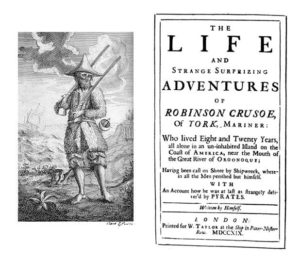
It is hard to imagine a young kid finishing high school without ever coming across The Life and Adventures of Robinson Crusoe?  Written in 1719 by Daniel Dafoe, it is among the claimants of the auspicious stature of first English novel, and widely believed as a true travelogue upon its inception.  However, there is seldom a casual reader who can trace the legend back to the 17th century roots of literary tradition with an autodidact character at its center; and few are aware about the Arab-Spanish mentor of this optimism in human reason and contemplation, Ibn Tufayl (d. 1185).

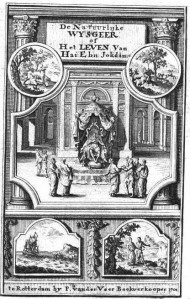
Almost six hundred years between Dafoe and him, we know very little about the life of Ibn Tufayl, except that he was a polymath, serving as a physician and adviser of Sultan Abu Yaqub Yusuf (d. 1184) of the Almohad dynasty ruling Morocco and Spain. It is unfortunate that his complete interdisciplinary work is lost, except his philosophical experiment involving an isolated autodidact, named Hayy Ibn Yaqzan; literally translated as Alive, Son of the Awake.

It is the story of a boy, the nature of whose existence is shadowy to an extent that there are two completely rivaling accounts of his origins. One account ascribes his origin to spontaneous generation from matter; the other is necessarily a legendary human drama in which a royal infant somehow grows up away from society and culture. Being isolated from all intelligent life, he gradually becomes conscious, thereby discovering shame, jealousy, aspiration, desire, eagerness to possess and practical reasoning. He experiences love through affection of his foster doe, and death, as it ultimately departs.

To know is necessarily an obligation for Hayy Ibn Yaqzan. Desperately seeking meaning, his search guides him to explore various disciplines such as anatomy, physiology, metaphysics and spirituality. He deduces the presence of God through contemplating  the unity of cosmos and its boundedness; and in his ascetic code of conduct, he seeks satisfaction and salvation.

After thirty-five years of isolation, he finally meets Absal, a hermit refugee from a land of conventional religious believers. In Absal, Ibn Tufayl modeled a religious divine who has learnt many languages to gain mastery of scriptural exegesis. Absal’s first reaction is a deep sense of fear for his faith as he encounters an exotic being. As they interact well, Absal endeavors to teach Hayy to speak and communicate, in order to make him aware of knowledge and religion.

However Absal soon discovers that Hayy is already aware of the truth, to envision which, Absal’s own intellect bears nothing except revealed symbols.

Judging Absal’s good intentions and the veracity of his message, Hayy proselytize to this religion and Absal introduces Hayy to his people. As Hayy gets familiarized with civilization, two basic questions continue to puzzle him in great deal. First, why people must need symbols to assimilate and express the knowledge of the ultimate truth; and why can’t they just experience the reality more intimately? Second, being completely oblivious to practical religion, he continued to wonder why there is an obligation to indulge oneself in rituals of prayer and purity.

He keeps on wondering why these people consume more than their body needs, possess and nurture property diligently, neglect truth by purposefully indulging in pass-times and fall an easy prey to their desires. He finally decides to accompany Absal to his land, thinking that it might be through him that people encompass the true vision and experience truth rather than believing it with their seemingly narrow vision.

What follows is a tale of a neophyte philosopher teaching ordinary people to rise above their literalism and open another eye towards reality. His interlocutors on the other hand, recoil in their apprehensions and being intellectual slaves to their prejudices, close their ears. He consequently realizes that these people are unable to go beyond their usual appetites. He also grasps that masses of the world are only capable to receive through symbols and regulatory laws rather than being receptive to unstained and plain truth. Both men eventually return back to their isolated world but this time Hayy as the teacher and Absal as his disciple. They continue searching their ecstasies until they met their ends.

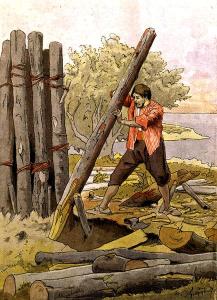
CHT167325 Robinson Crusoe Building his First Dwelling, 1930 (colour litho) by Myrbach-Rheinfeld, Felicien baron de (1853-1940); colour lithograph; Private Collection; (add. info.: Robinson Crusoe construit sa maison); Archives Charmet; German, in copyright until 2011

Ibn Tufayl’s singularly survived legacy extends in diverse dimensions and its canvas is vast. Its theological and philosophical themes were employed and transformed throughout the various phases of European enlightenment.

It isn’t just one curious aspect that many centuries later, the metaphysically preoccupied Hayy Ibn Yaqzan is transformed into a shipwrecked sailor, predominantly occupying himself with inventions and utilitarian exploration of nature. As Malik Bennabi – an acute observer of modern condition – observes, the genius of both the narratives lies in characterizing the solitude of their respective protagonists. In this respect, time for Robinson Crusoe is essentially a concrete cyclic happening of acts, such as work, food, sleep and work again.

Nov. 4. This morning I began to order my times of work, of going out with my gun, time of diversion, viz., every morning I walked out with my gun for two or three hours, if it did not rain; then employed myself to work till about eleven o’clock; then eat what I had to live on; and from twelve to two I lay down to sleep, the weather being excessive hot; and then in the evening to work again. The working parts of this day and of the next were wholly employed in making my table; for I was yet but a complete natural mechanic soon after, as I believe it would do anyone else.[1]

This is pretty much the condition of a modern individual where the void of solitude is filled with work, each of us occupied mechanically with the object at the centre of our world of ideas, diligently busy in constructing our own proverbial tables.

On the other hand, what fills Hayy’s solitude is an overwhelming amazement, the adventure starting by experiencing wonder in the ultimate nature of life and death of his beloved foster-mother, the gazelle.

When she (the gazelle) grew old and feeble, he used to lead her where there was the best pasture, and pluck the sweetest fruits for her, and give her them to eat. Notwithstanding this, she grew lean and continued a while in a languishing condition, till at last she died, and then all her motions and actions ceased. When the boy perceived her in this condition, he was ready to die for grief He called her with the same voice, which she used to answer to, and made what noise he could, but there was no motion, no alteration. Then he began to peep into her ears and eyes, but could perceive no visible defect in either; in like manner he examined all the parts of her body, and found nothing amiss, but everything as it should be. He had a vehement desire to find that part where the defect was, that he may remove it, and she return to her former state. But he was altogether at a loss how to compass his design, nor could he possibly bring it about.[2]

Thus, it is ultimately in the nature of failure to identify this defective part where Ibn Tufayl tries to locate an ineffable reality beyond the material.  

Ibn Tufayl’s philosophical romance has been regarded as one of the pioneer autodidactic works surviving from medieval scholastic tradition [3]. But besides being an influential narrative  — with rich literary possibilities and themes such as those transformed by a modernist like Dafoe — it was a precursor to important medieval interactions between the schools of Thomas Aquinas and Averroists, and invited modern appraisals from mathematician rationalists like Gottfried Leibniz [4].

Voltaire and Quakers admired it for its appeal to reason, and Bacon, Newton and Locke were possibly influenced by it to various degrees too. Traces of Ibn Tufayl’s original literary pointers are also found in Rousseau’s Emile, Kant’s Ground of Proof for a Demonstration of God’s Existence, Jonathan Swift’s Gulliver’s Travels and Darwin’s Origin of Species among others.

Especially in the context of Muslim tradition, its contemporary value lies in rich possibilities to bridge gaps between reason and revelation. It lays down a perpetually self evolving construct where reason and reflection are the essential keys to the doors of  timeless revelation. Ibn Tufayl’s voice still echoes loud, struggling to tell us that rejecting either would imply rejecting a part of truth.

_________________________________________

  1. Daniel Dafoe, Robinson Crusoe, Penguin Classics 2003
  2. Lenn Evan Goodman, Ibn Tufayl’s Hayy ibn Yaqzan: a philosophical tale, 1972.
  3. There have been attributions to an earlier work involving similar but limited themes to Avicenna.
  4. Samar Attar, The Vital Roots of European Enlightenment: Ibn Tufayl’s Influence on Modern Western Thought, 2010

To the victors go the glory!

I have written an introductory post (it’s free), Entering Steppelandia: pop. 7.7 billion, to a series of posts (mostly paid) that I will write about the Eurasian steppe. So I’m thinking and reading a lot about this topic. This is relevant to “Brown Pundits” because we subcontinental people have been stamped by the steppe.

First, there were the Indo-Aryans. About 15% of the ancestry of modern South Asians comes from these people (averaged across region and caste). Then there were the Iron Age Iranian pastoralists, Scythians, and assorted other related groups. There is no strong evidence right now of a major genetic impact, but I think the statistical power is not such that I can definitively ignore this possibility.

Finally, there are the Muslims. They had the least impact. But they are most reviled. Why?

They lost.  The lesson is to not lose. The rest is commentary.

Brown Pundits Podcast with teacher Michelle Kerr

https://brownpundits.libsyn.com/teaching-in-the-time-of-covid-19

https://podcasts.apple.com/us/podcast/teaching-in-the-time-of-covid-19/id1439007022?i=1000512866865

https://www.stitcher.com/show/brown-pundits-podcast/episode/teaching-in-the-time-of-covid-19-82364378

COVID-19 is wreaking havoc on the lives of young children, students, and youth. The disruption of societies and economies caused by the pandemic is aggravating the pre-existing global education crisis and is impacting education in unprecedented ways.

Brown Pundits- Shahada, a UK College Lecturer, discusses COVID-19 with Michelle Kerr, a Maths Teacher from  California. They  compare their experiences, concerns  and impact.

Covid-19 has impacted on Education on so many levels and there are many parallels with society in general:

COVID-19 is having a negative impact on young people’s mental health. We are concerned that, with most young people not currently attending school and many young people not having access to resources and materials with which to learn, there will be a subsequent detrimental effect on both academic attainment and wellbeing. Exams have been cancelled in many states and here in the UK. This is having a negative impact on attendance and motivation.

The COVID-19 crisis is likely to have a long-lasting impact on young people’s mental health and the services that support them, including schools and children’s services. The Government must consider this throughout its emergency response and policies to recover from the crisis. Has COVID-19 highlighted pre-existing decline in mental health?

The impact, particularly on groups who are already disadvantaged, is likely to widen existing inequalities and to contribute to a rise in young people looking for mental health support. Is this a reflection and consequence of inequality in education?

Discussions  touched upon the existence of hierarchy in education and its parallels in greater society? For instance, will deprived students disproportionately be disadvantaged? Ultimately is this a reflection of class privilege?

A controversial point discussed was weather Teachers have a professional responsibility to physically go into the classroom. Both expressed very different perspectives!

Its been argued that Standardised tests are not an accurate representation of a student’s abilities and they lack reliability. We touched upon the controversial issue of removing standardised testing in education. Weather standardised testing should be formally put to an end. Has the removal of standardised testing been accelerated as a consequence of COVID-19?  Will this result in a lowering of standards and skills?  And again which group will be disadvantaged and advantaged?

Time will tell, the true long term impact of COVID-19 on Education

.

Beards, Bigotry and Burqas

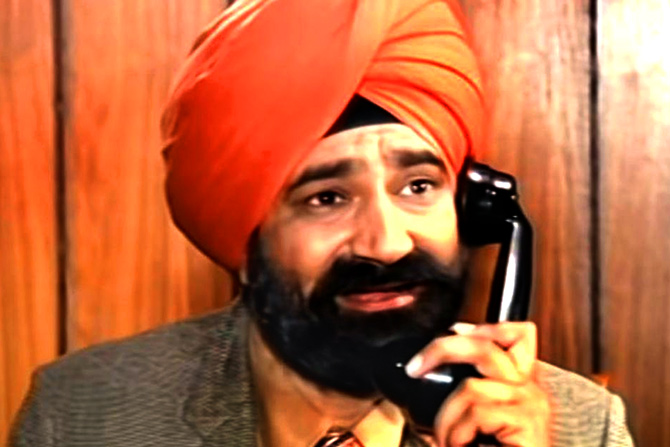
Growing up in 90s India, one couldn’t avoid the jovial Sardar caricature in the Entertainment industry. Most Sardars one saw on television we either Jaspal Bhatti/Navjot Siddhu or Jaspal Bhatti/ Navjot Sidhu on steroids. It’s been decades since these caricatures made an impression on my mind, but still, the moment I see a Sardar, I tend to start assuming him to be a jovial, funny, and extroverted person – and in my experience, that stereotype has mostly held up in my eyes. So when I read news articles of Sikhs being targetted in the United States in wake of the 9/11 attacks as an 11-year-old, I was extremely confused. In my eyes how someone could confuse a full and rich bearded and turbaned Sardar with a moustacheless Muslim extremist stereotype.

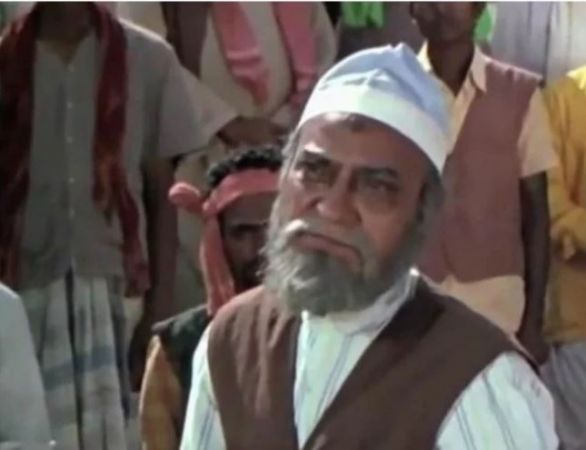
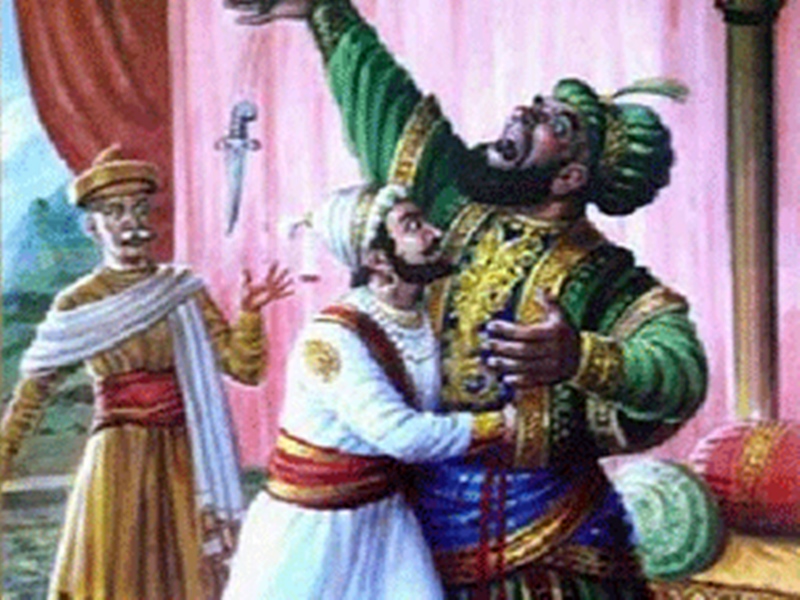
Similarly, the honest Muslim Chacha was surely aimed at creating a positive image for bearded and capped Muslims who had humble professions. But for someone like me who was initially inoculated with even more powerful imagery of the bearded Muslim (as illustrated below), the Bollywood Muslim stereotype wasn’t enough to leave an impact on my subconscious mind.

The image I am talking about is shown below :

Around 1 km from where I stay, an entire wall is painted with this image with the title – “This is how terrorism ought to be tackled” in Marathi. Growing up in Maharashtra, every Ganesh festival, half the pandals (decorations made for celebration ) are about Shivaji – and a significant number of them have either bearded & mustache-less Afzal Khan, Shaista Khan, Aurangzeb. The strong impact this imagery made on my psyche wasn’t countered enough by the various Bollywood chacha’s I grew up seeing.

As a result even at age of 25, I held on to a tiny bit of the initial instinctive negative reaction when encountering bearded moustacheless individuals. Some years ago, I had convinced myself that my reaction was due to the aesthetics of certain styles of facial hair which I do not find appealing. Later reading a novel in which the daughter/son (Thousand splendid suns or Kite Runner or Not without my daughter) was playing with her Abbu’s mustache less beard made me realize the error in my ways. Since then I have made a conscious effort to curtail that initial reaction and have been largely successful Was this reaction bigotry on my part? or something else?

Coming to the recent controversy where the radical atheist author Taslima Nasreen made an off-hand and poor tweet about England cricketer Moeen Ali. Taslima Nasreen is known to fly off the handle – especially with poorly worded tweets – was instantly attacked by Moeen’s England teammates. Irish England captain Eoin Morgan made special mentions after the 2019 world cup of the multicultural atmosphere of the English team – which means bearded (conservative?) Muslims like Moeen Ali and Adil Rashid (or Monty Panesar) don’t stick out like a sore thumb and that is progress of a kind in my opinion.

Similarly, at the age of 16-21 as a radical atheist (when I assume I was a lot more immature than I am today), even the Hindu Tilak invoked a strong reaction in me. But today, like the beards, skull caps (the *out of tribe* symbols of identity/belief) I do not have any reaction to the Hindu religious symbols. It’s a sign of shedding some of my atheistic/judgemental roots. But still, an image remains, even the sight of which troubles me to an unreasonable and illogical extent.

From beards and turbans, we come to the Burqa. Arguably the most controversial garment in the world, no matter how much I try, I cannot empathize or humanize the Burqa. I have observed over the years that whenever I travel (outside my ghetto Pune urban life) – especially in the summers – I grow more Islamophobic. The appearance of the Burqa in the sweltering heat of India sends such a strong and negative emotion in me, I cannot humanize it no matter how much I try. In the end, I feel it’s only the French who have got this issue sorted the way it should be. Of course, it infringes on the freedom of choice but I concede I am not that libertarian. As a wannabee male feminist, I do cringe when I see the North Indian (even Maharashtrian) Purdah or the hijab, but Burqa is definitely a line I believe I can never cross in the 21st century. Does this make me bigoted? I personally don’t think so but I could see the wokesters calling me so.

I have read the passionate defense by Khatija ( AR Rahman’s daughter ) of her choice to wear the Burqa. Having seen an iota of merit in that argument, I still feel for the greater good Burqas ought to be banned. (I don’t see it getting banned anytime soon anywhere in India). However, I have to acknowledge that whenever someone uses the *For the Greater Good* as part of their argument, maybe the argument isn’t watertight.

Post Script:

I understand this is a highly politically incorrect blog post to write. I have wanted to express these thoughts for months now, but something held me back. I have tried to be as honest and rounded in my thoughts as I could. 

Please be constructive and respectful in feedback.

Monkeys and the Indo-Europeans – Revised & Enlarged

??????? ??? ??? ????-????????? – Revised & Enlarged
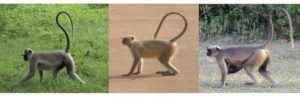

(In view of Ugra’s very useful comment, I had to look deeper and found that the post itself needed revision. So here it is.)

??? ?????????? ????????


??????????? ??? ??????, ??? ????? ????????? ??????? ???? ??? ?????? ?????? ?????, ???? ??? ???? ? ????? ???? ?? ??? ????? ?? ???????, ????? ???? ???????? ??? ???????? ???????? ?????? ??? ??? ??????? ?? ????-?????????. ???? ???? ??????? ????????? ?? ??????? ????? ??????. ???? ?? ????? ????????? ???????????? ?????? ??????? ?? ?????? ???????? ??? ?????-????-????????. ??? ???? ???????? ??? ????? ???????? ???? ??? ?????-????-????????? ???? ????? ?? ??? ?????? ?????? ???? ????????? ?.?. ???? ???? ?? ??? ?????? ?? ????? ????????.

?? ??? ?? ?? ????? ??? ????? –

?????? ??????????? ??????? ????? ??? ‘??????, ???’ ?? ??? ??????? ????-???????? ???????? ???? ?? ???????? ?? ????? ? ????-??????? ????????? ?? ??? ?????-????-???????? ???? ?????. ??? ???????? ???? ???? ??? ?????? ????, ??? ???? ??????? ?- ??? ??? ??????? ??. ???. ????- ‘??????’ … ??. ????? – ????? ‘????-?????? ??????’… ?????. ???, ?? ??? (????. ???), ??? ???? (???. ????), ?????? ???????… ?????. ????? (??????), ????? ‘??????, ???’… ????. ????? (?5?? ???????), ??. ?????, ?????. ??????, ?????. ???, ?????-??. ?????. ??????? ?????.

?? ????????, ?? ???? ????  ??? ???????? ????? ??? ?????? ??????? ?????. ?? ?? ???? ??? ??????? ???? ??? ?????? ?? ????????, ?????, ???????, ????????, ????????, ?????? ??? ?????? ????????? ?? ????-????????.

??????????? & ??????, ?????? ??????? ???? ??? ???? ??? ?????? ??? ??????? ????? ?? ??? ????-????????? ?? ????? ????????, ?????? ???? ???? ???? ??? ???? ???? ??? ????-???????? ????????? ??????? ????? ??????? ???? ????????? ????? ?? ???? ??????? ?????????. ???? ???? ???????? ?????, ?????? ???, ??????? ????, ??? ???????? ??? – ‘??????, ???’ ?? ??? ????? ???????? ?? ??? ???? ??????? ?????????.

?? ????????, ????? ?????? ?? ??????? ???? ??? ?????? ???. ??????? ???? ???????????, ??? ?????? ???????? ???? ??? ?????? ?? ??? ???? ???? ????? ???? ??? ??? ?????????? ??, ???? ??? ???????? ???????? ??? ???? ????, ????????? ?? ?????, ??? ?????????? ?? ?????. ?? ???? ??????? ???? ??? ???? ??? ?????? ?????? ?? ? ???????? ?????? ??? ??????????? ???? ??????? ????????? ?? ??? ????-????????, ???????? & ??????? ????????? ??? ???? ??? ??????? ?? ???? ???? ??? ?????? ???. ??????????????, ??? ???? ?????? ?????? ?? ???? ??????????? ?? ????????? ???? ?? ??? ???? ????.

????? ?? ???? ???? ?? ??? ??? ?????????? ???, ??? ???? ???? ??? ????????? ?? ??????? ??? ????-???????? ?????????, ??? ???? ??? ?????? ?? ????????, ???? ??????? ???? ????, ?? ??? ??? ?????????? ??? ????? ??? ?????????.

???, ??? ??????? ???? ??????? ??????? ?? ???? ???? ?? ??? ??????? ?? ???? ??????? ????????? ?? ???? ??????? ??? ??? ?????? ?? ??? ????? ?? ??? ???? ????. ??? ???????? ?????? ?? ??? ??? ???? ???? ?? ?? ?????? ??????? ??????? ???? ??? ????????? ?? ??? ????????? ???? ??? ???? ??????? ?????????????  ?f ???????????, ????????, ?????? ??? ??? ?????? ???? ?? ???? ?? ??? ???????. ?????????, ?? ?? ?????? ???? ??? ???????? ?? ???? ??? ???????? ???????? ???? ??? ???? ??? ?????? ?? ????-???????? ??? ????? ???? ??????? ????????? ?????? ??????.

T?? ???????? ???? ?? ????? ????????? ??? ????? ???????? ?? ???? ???? ??? ?????? ???? ??? ??? ????? ????????? ??? ?? ?????????? ???????? ??? ???? ???? ?? ??? ???????? ?? ??????? ???? ? ????????????. ???? ???????????, ?? ??? ??????? ???? ???? ?? ?????, ??? ?????? ??? ???? ???? ???? ??????? ??? ??? ?????? ???????? ??? ??? ???? ?? ??????, ????????? ?? ?????. ??? ???????, ?? ?? ??? ?????? ????? ?? ???? ??????????? ??????? ?? ??? ?????? ??????????? ?? ??????? ?????, ??? ????? ????? ??  ??????? ??? ??? ??????? ?????.
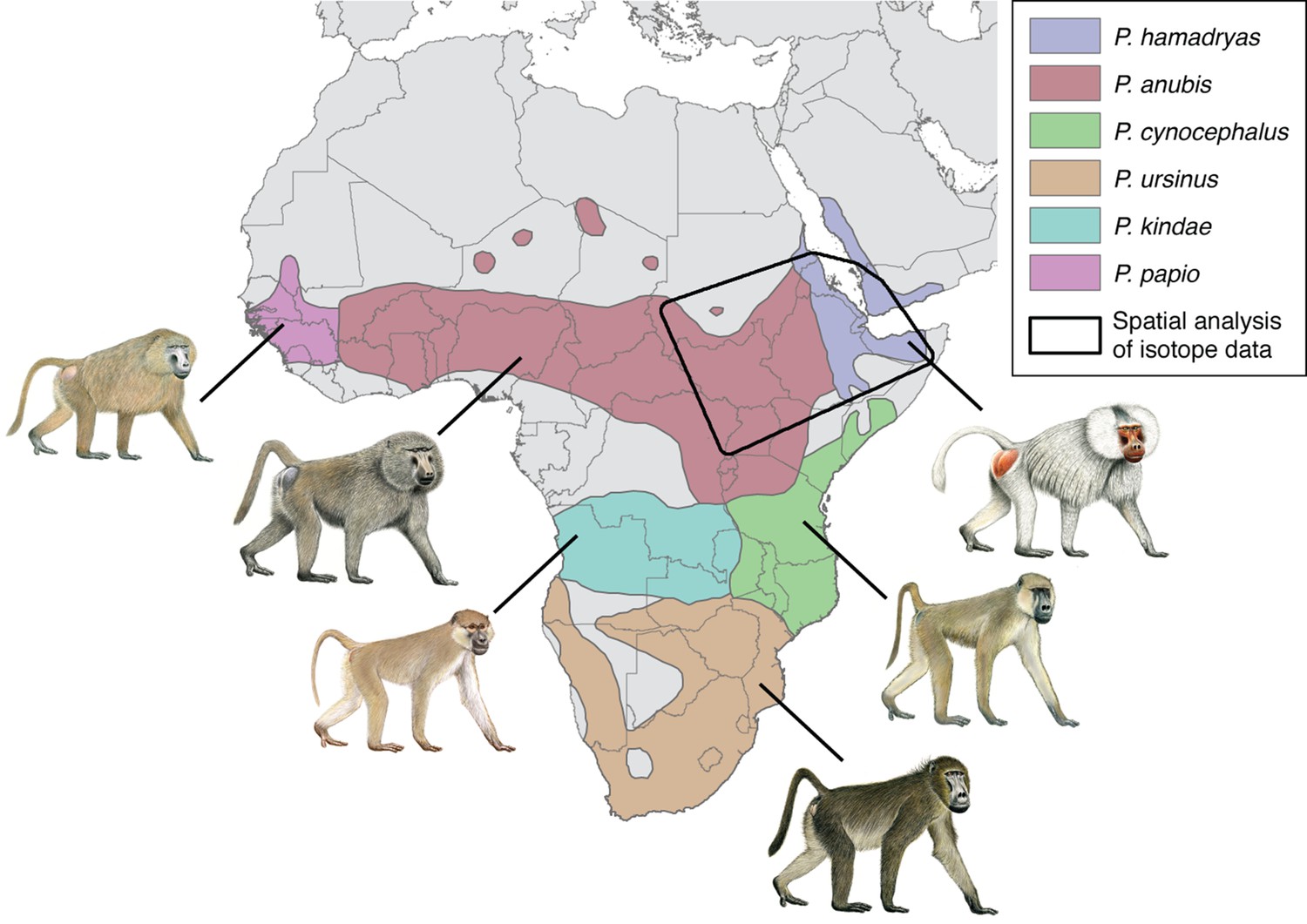
??? ?????????? ???????????? ?? ??? ?????? ??????, ??????? ?????? ?????? ?? ???????? ??????????? ?? ???? ??????.

???? ?????? ?? ???? ??? ???????? ?? ????????? ?????? ????????????, ????? ?? ??? ???? ?????? ??? ???????????? ????? ????????? ?????? ?????????? ???? ??? ??????? ??????? ?? ???????. ?? ?????????????, ?? ????? ?????? ???? ??? ???? ??? ?????? ???? ?????? ?????? ???? ??? ????-???????? ??? ??? ???? ??????? ????????? ???? ??? ???????? ???????? ?? ?????????, ???????? ?? ?? ???? ??? ???? ????.

??????? ???? ??? ?????????? ?????? ?? ????, ?? ???? ???? ?? ??? ??? ????????? ???????? ??????? ??????????, ??? ???? ????, ??????? ????????? ?? ‘??????’ ??? ???? ???? ?? ‘????????’, ??? ‘???’, ‘?????? ???????’, ‘???????’, ? ‘??????? ?? ??? ??????? ????’ ???. ????????? ????? ‘?????’, ???????? ????? ‘???????’, ??????/?????? ????? ‘?????, ???????? ?? ???????’ ??????, ?????? ?? ? ‘????’ ?? ‘??????????’, ?????? ?? ? ‘??????’ ??? ?? ??. ?? ??? ??? ???????? ???????????? ??????????, ??? ???? ???? ?? ???? ?? ?????? ???? ??? ???? ???? *???? ????? ????? ‘?? ???????’ ?? ‘?????’. ? ?????????? ???? ?????? ????? ‘?????????’ ?? ‘??????’ ??? ???? ‘???????’, ‘?????’ & ‘?????’. ? ?????? ?????????? ?? *???? ?? ??? ????? ????? ‘?? ????’. ????????? ????, ?? ??? ??????? ?? ? ??????, ??? ????????? ???? ‘??? ??? ????? ???????’, ?? ??? ???????????.

??????? ??? ??? ?????-????-???????? ??????????? ?? ???? ????, ?? ???? ?????? ? ???? *??? ?? *????, ??????? ?? ‘????? ?? ????? ?? ????’. ???????? ??????????? ?? ???? ???? ??????? ????? ?????? – ‘?????’, ???? – ‘????,??????’, ????? – ‘??????, ???????’, ????? ?????? – ‘????????, ??????, ?????’. ?? ?? ???? ???? ?? ?? ??? ???? ??? ??? ??????? ????? ‘????’ ??? ‘???????’ ????? ???? ??????.

????? ??? ?????-????-???????? ???? ??? ??? ??????? ???? ?? ?????????? ??????? ??? ??? ?????? ????????? ???? ?? ????? ??? ??????? ????? ??? ???? ?? ??????? ?? ?????????, ??? ??? ??????? ?? ?? ????? ????????. ???? ??? ???? ?? ??????? ???? ??? ???? *??? – ‘?? ?????, ????’ ?? ???? ?? ??? ??? ?????? ?? ??? ?????. ???????, ????? ???????? ????? ???????, ???? ??? ??????? ?? ????? ?????? ?? ??????? ???? ????? ????????? ??? ???? ????? ??? ???? ???? ????????? ?? ??? ??????? ??????. ???? ??? ???? ??????? ??? ???? ?? ???? ??? ???????? ????? ?? ??? ???? ????? ???? ??? ?????, ?? ???? ??? ???? ?? ??????? ???? ?? ????? ????? ??? ???? ?? ??? ????? ??????.

?? ??? ????????? ?? ?????? ???? ??? ?????-????-???????? ???? ??? ??????, ?? ?????? ?? ??????????? ??? ??????, ?? ??? ? ???? ???? ???? ??? ???? ??????? ???????? ??? ??????? ???? ? ????? ??? ????. ?? ??? ????? ????, ?? ????? ????????? ?????? ??? ??? ???? ?? ??? ??????? ?? ???????? ?????????. ???? ????? ???? ???? ?? ?? ???? ??? ????-???????? ????????? ???? ??? ???? ??? ?????? ?????? ???? ??? ???? ??????? ?????????.

?? ??????? ????? ??????? ???? ??? ???? ??? ?????? ?? ??? ???? ???? ??? ???? ???? ? ???????? ???? ??? ????????(?) ?? ???????? ?? ????????? ?????? ???????????? ??? ??? ?? ??? ??? ???? ???? ???? ?? ???? ?????? ?? ????-???????? ??????. ???? ???? ????, ???? ????-???????? ????????? ??? ???? ???? ?????? ?? ??? ????????? ?????? ???????????? ?

??? A????????????? E???????


??????? ?? ??? ?????????????? ????????, ??????? ???? ???????? ?? ???????? ??? ????? ??? ???????, ??????????? ???? ????? ????????? ?? ??? ????? ?? ??????? ????? ???? ??? ?????? ???. ??? ??????????? ??? ???? ?? ???? ??????? ??? ?? ??????? ?????????? ?? ???? ???? ???? ?????? ??????? ????? ?? ??? ?????????.

???, ?? ??? ??? ?????? ???????????? ?????, ?? ???? ?????? ????? ?????, ???? ??????? ?? ??????? ???? ??? ?????? ?? ????? ?????? ??? ??? ??????? ????????? ?????????? ???????? ????? ??????? ???? ???? ??????? ????? ??? ????, ?????? ???? ??? ?????? ???? ?? ????, ????? ?? ??? ??????? ??????? ?????, ??? ???? ????? ????????????, ??????? ?? ???????? ?????? ???? ??????? ?????.

?? ??? ????? ????, ??????? ???? ??? ???????? ?? ????????? ?????? ?????? ???? ?????? ?????????? ???????? ??????? ?? ??? ??? ?????????? ???.  ?????? ???????? ???? ???? ????? ?????? ?? ??? ???? ?? ?????-?-?????? ?? ????, ??? ???? ???? ??? ?????? ????????. ?????-?-?????? ?? ??? ???? ???? ????? ??? ???????? ?? ???????? ‘???????’ ??????? ???? ????????? ?? ?????????? ?? ??. ????, ???????? ??????? ????? ???? ???? ???? ?????????? ???? ????????? ???? ????? ????? ???????.

????? ??? ????? ????????? ?? ???????? ???????? ???? ??????????? ??? ???? ??? ?????? ????????? ???? ?? ??? ?????? ?????? ?? ? ??? ????????? ???? ??? ????? ???????? ?? ?? ?????? ?? ???? ?? ?? ??? ?????? ????????? ???? ???? ?????? ????-???? ??.
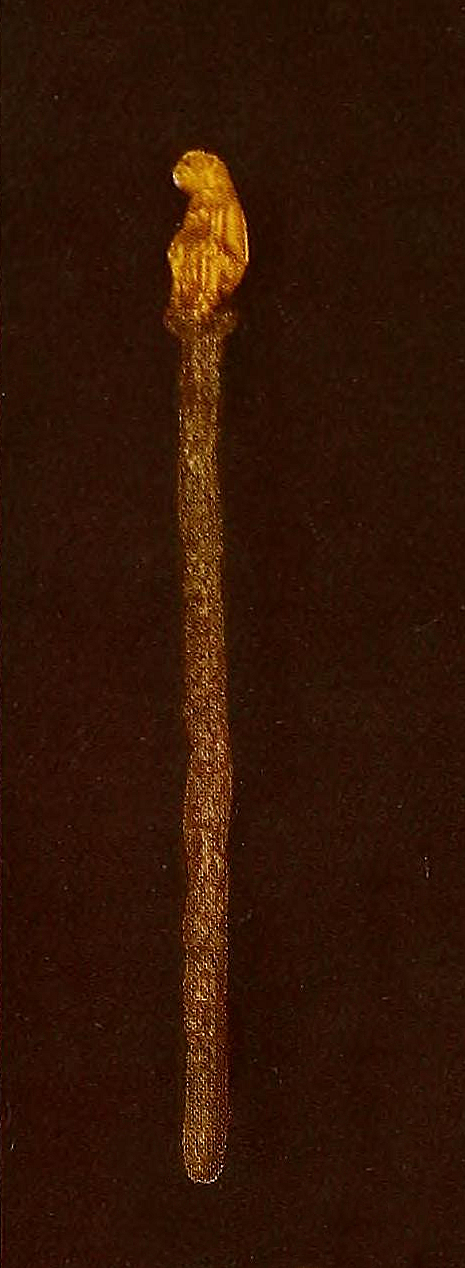
?? ???? ???? ? ?????????? ??????? ???? ?? ?????? ?? ??? ??? ?? ??? ??? ?????????? ????? ?????? ?? ???????????/?????????, ??????? ???? ?????, ??????? ? ?????? ?? ? ????? ??? ??????. ????????? ?? ?????? ?????????,

???? ?? ?????? ???? ?? ???? ?? ????? ??????? ?? ?? ?????? ????????? ??????? ?? ??, ???????? ?? ??? ??? ?? ??? 3?? ?????????? ?.?., ??????? ???? ??? ?????? ?????????? ?? ? ?????? ?????? ??? ????? ?? ????? ???? ???? ???? ???????, ???????????? ?? ?????????.

????????? ?? ?????,

??? ???????????? ???????? ???? ????????? ???? ????? ?? ?? ??? ????? ??? ?????? ?????????? ??????? ???? ???????? ???? ??? ????, ???????? ???? ??? ????? ??????…  ?? ??? ????? ?????????? ? ????? ?????? ?? ???? ???????? ?????? ???? ?? ?????? ?????? ???? ????? ??? ??? ?? ??????? ??????. ???? ?? ????????? ????? ??? ?? ??? ?????????? ????????. ???? ?? ??? ??? ?? ??? ?????? ??? ?????? ?? ???????? ?? ?? “?????????? ???? ??? ????????, “???? ??, ???????? ?????? ???? ??? ????... ??? ??? ???-???????? ?????? ????? ?? ??????? ???????? ?? ???? ?? ??????? ???? ?????…

???? ?? ????? ???????????? ???? ?? ??? ???? ???? ?? ??? ??????? ?????? ???? ??? ???????? ???? ??? ?????? ????? ?? ????? ????????, ??? ??????? ?????? ?? ???? ???? ?????? ???? ??? ???? ??? ???? ?????????? ???? ??? ???????? ?? ??? ?????? ????????? ????????????. ???? ????? ???? ???? ??? ???????? ???? ??? ?????? ????? ?????????? ??????? ???? ? ???? ???? ??? ???????? ????????, ??????? ??? ?? ??????? ???????????? ????. ???? ??????? ??????????? ??? ???????? ???? ??? ????-???????? ??? ???? ??????? ???? ??? ?????? ??? ? ???????? ??????.

????? ???????, ?????? ??? ???????? ????? ???? ??? ????? ???????? ?? ??, ??????????? ??? ???? ????, ???? (??????? ????), ????? ??????? ??? ???????? ?? ? ??????? ??????? ??????? ? ?????. ???? ?? ????? ??????? ???? ? ??????? ???????? ????, ?? ????? ???????? ???? ?????????? ???? ?? ??? ?????? ??????? ??????.
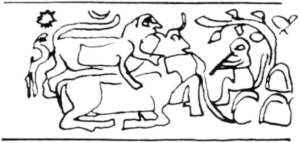
?????? ?????????, ???????? ???? ??? ????????? ?? ???? ?? ??? ???? ???????????? ,?????? ??? ?? ?????????????? ???????? ?? ????-????????? ????????? ?? ??? ???? ????????????. ?? ???????? ??? ???? ???????????? ?? ?? ????-??????? ???????? ??? ????????? ??????????? ??? ????????? ????-????????? ????????? ?? ???? ?? ????? ?? ????-??????? ?????????? ???? ??? ???? ??????? ?????? ???? ??????? ????. ??? ???? ???? ?????? ???? ?????? ??? ??????? ????-???????? ?????? ???? ?? ??? ???????, ???????? ??? ?????????? ?????????? ??? ?????????.

????????? ??????????? ??? ????????? ?? ??????? ?? ???? ????? ?? ??? ??????? ???????? ?? ????????? ???? ??? ???? ??????? ????-?????????.

?? ??? ?????????,

?????????? ?? ??????? ??? ????? ?? ????? ???? ???????, ????? ???? ?????????? ??? ? ?????? ????????????…?? ?? ????? ???? ?? ???? ???????? ??? ??????? ??????? ?????? ??? ???? ?? ??????? ?????????? ?? ????????? ?????????? ????????? ?????????. ??????? ???? ??????? ?? ????? ????? ??? ???????? ?? ??? ???? ?? ????????, ?????, ??????????? ??? ????? ??? ?????? ??? ???????? ??? ?????????? ?????? ?? ????? ???? ????? ?? ??????? ?? ????????? ?????????? ?????????? ??? ?????? ?? ????? ?????? ?? ??? ???? ?? ??????? ??? ??????? ????????.

????????? ?????? ???? ???? ?? ????? ????????? ?? ??? ???? ???? ????? ?? ????? ?? ??????? ???? ??? ????????? ?? ??? ??? ?????????? ??. ?? ???????? ?? ? ????? ?????????? ?? ??? ???? ???????????? ??? ????????? ????? ??????? ??? ?? ????? ?? ???? ??????. ????????????, ?? ??? ???? ???? ??? ???? ???????????? ????? ?? ????? ?? ???? ??? ?.?. ???????? ?? ????? ?????? ??? ????-????????? ????? ??????? ?? ?? ??? ???? ???? ??? ?? ???? ???, ?? ??? ??????? ?????. ?? ??? ???????? ?? ???? ??????? ????-????????? ??????????? ??? ??????? ????? ?????? ??? ???? ???????? ???? ?? ??????? ?????????, ????? ?????? ????????.
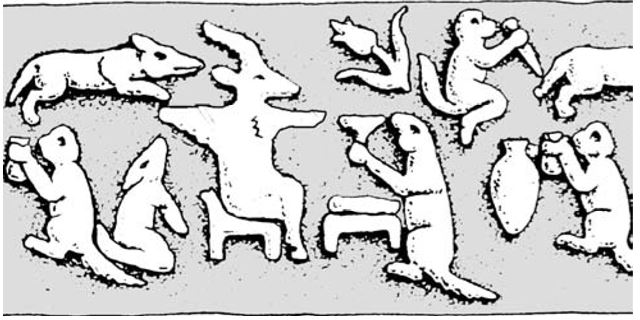
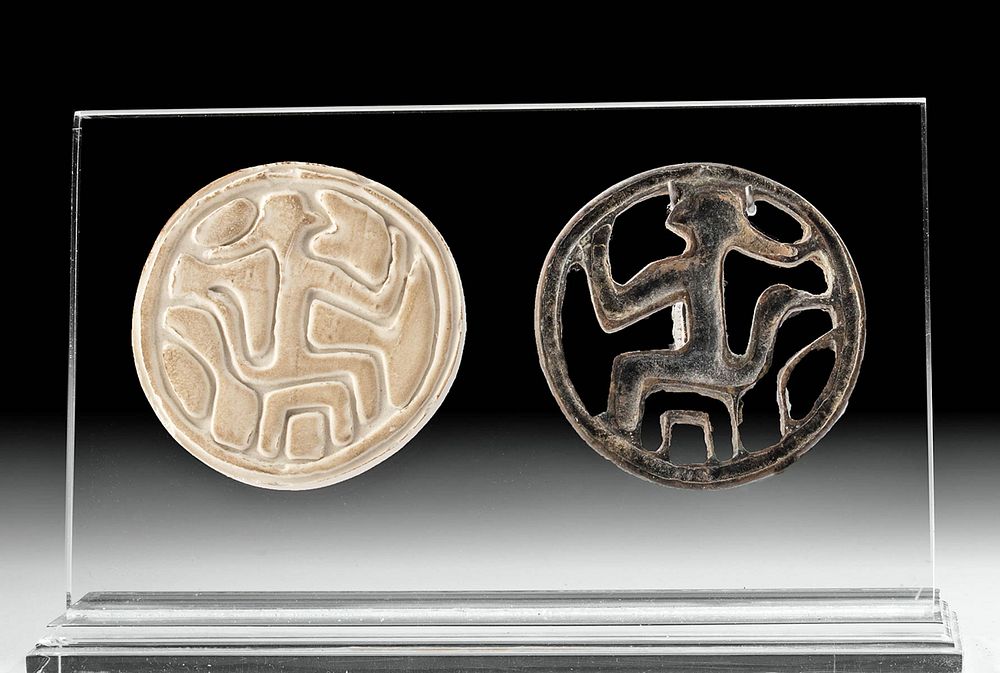
??? ?? ?? ???? ?? ???? ???? ??? ????????? ????????? ????? ??????? ??? ??????? ?? ??? ???? ??? ??? ??? ????????? ?? ?? ?????? ?? ?????, ???????? ??? ??? ??????, ?? ???? ?? ?????? – ????? ???? ??? ?? ??????? ?? ???????? ?? ???? ????????? ?? ??? ?? ?????? ?? ??? ???? ???? ? ??? ?? ??, ????? ???? ???? ???? ??? ????-????????? ?? ??? ???? ???? ??????? ??? ???? ????????? ???? ??? ?????? ? ??? ???? ?????? ?? ????? ????-???????? ???????????? ?

?? ???? ???????, ??? ?????? ??????????? ???? ??????? ????????????. ??? ???? ??????? ????-????????? ?????? ??????????? ?? ???????? ?? ???? ?????????? ??? ???????? ??????????? ?? ???? ????? ??? ???? ????? ???? ?? ??????? ?????? ??? ???? ???????, ??? ???? ??? ?????????? ????? ?? ??? ????????? ?????? ???????????? ????? ??????? ???? ????? ?? ????? ??????? ??????? ??? ?? ?? ??? ???????, ?????? ??? ?????? ???????? ???? ??? ????????? ?????? ???????????? ?? ???? ??? ???????????, ?? ?? ????????? ?? ???? ???? ??? ????????? ????? ???? ??????? ?????? ???? ????????? ??? ??? ????? ?????????? ???? ???????? ?????? ?? ? ????? ??????.

?????????, ?? ?? ???? ?????? ???? ??? ??????? ???? ?? ????????? ??? ???? ???? ?? ???? ??? ???? ??? ?????? ??????????? ?? ??? ???? ?????????? ??? ????-???????? ?????? ?? ??? ??? ?????????? ??? ???? ????. ???? ????????? ?? ???? ?? ???? ??????? ?? ???? ??? ??????? ???? ???????? ?? ????????? ??? ?????? ??????? ???? ?? ??? ???? ??? ?? ??? ????-???????? ???? ???? ????? ???????????? ??? ?????????? ???? ??????? ???? ??? ????.

???? ????????, ?????????????? ?? ??? ?????? ?????? ???, ??????? ?? ??????? ? ?????-???????????? ????? ?? ??? ?????? ???????? ????? ???????? ? ???? ?? ?????????????? ??? ???? ?????????? ????????? ?? ???? ???? ??? ??-?????? ???? ??????? ??????? ???????? ?? ???? ?? ????? ???????? ???? ??????? ??????? ?? ?????? ??????.

?? ??? ??????,

??? ???? ????????, ???????????, ??? ???? ??? ??? ???? ????????? ?????????? ???? ???? ??? ??????? ?????? ???? ???????. ???????? ??????? ???? ?? ????? ????? ????? ???????, ???? ??? ??? ?? ??? ???? ???????? ???? ?? ??? ??? (???. 9), ??????? ???? ???????? ??? ????? ????? ?? ? ?????????????? ?- ?? ?-????? (???. 10). ??? ??????? ???????? ??????????? ?? ??? ???????’ ????? ??? ????? ???? ??????? ???????? ????? ?? ??????? ???? ???????, ?? ????. ??????? ??? ???? ???????????? ?????? ???? ???-????? ???????.

??? ????????? ?? ???? ?? ??? ??????? ?? ?????? ???????? ?? ???????? ????? ?? ?????? ?? ???????????? ?????? ??? ???????? ???? ?????? ?? ?? ????? ???? ??? ?????? ?????? ???? ???? ???? ???? ??????? ???????. ?? ??? ??????,

…?? ????? ???? ??? ???? ??????? ???? ???????? ???????? ?? ???? ?????, ?? ???? ????? ???????? ??????? ????? ?? ?????????? ???????? ?? ????? ?? ?????? ??? ???? ????????. ?????? ??? ?????? ?????? ?? ???? ????: ???? ??? ???? ?????? ???????? ??? ????????? ??? ???? ????????? ????! ????? ??????? ??? ???????? ?? ???????????, ?????? ???? ?? ? ?????? ??? ???????? ????? ???? ?? ????? ?? ????????? ??? ???? ?? “??????” (?? ?? ????? ?? ???????? ???????). ?? ???? ????? ???? ????? ??????????? ???? ????????? ?????? ?? ??????? ???? ??????? ????????? ???? ????.

???????????, ??? ??????? ????? ??????? ?? ????????? ???? ?? ?? ?????? ?????? ???????? ??????????? ?? ??? ????????????? ?? ?????? ????????? ??????? ??? ?????????, ??? ???? ???? ???? ??? ??????? ???????. ?? ???? ??????, ? ?????? ????????? ?? ????? ?????? ? ?????? ?? ??? ??????? ?????? ??? ?? ???? ?? ????? ?????? ?? ?? ? ?????? ???????.

?????? ?? ?? ???? ???? ?????? ??????? ??? ???? ???????? ?? ???? ????? ??????? ????? ????? ??? ??????? ???? ?? ? ???? ???? ???? ?????????, ? ????? ?? ???????? ?????? ??? ???? ?? ????? ????? ???? ???? ? ??????? ???????? ????? ??? ??????? ?????. ??? ????? ??? ??????? ????? ??????????? ????? ??????? ?? ??? ????????? ?????? ?????? ??? ???? ????????????? ?? ??? ????, ???? ???????????, ?????, ??????, ???????? ??? ?????? ??? ??????.  ??? ?????? ??????? ?? ?? ??????? ??????? ??? ???? ?? ???????? ???? ??????? ????? ????? ???? ???? ????? ???????, ????? ??? ?????? ??????? ??? ????? ??????? ?? ???? ?????????.
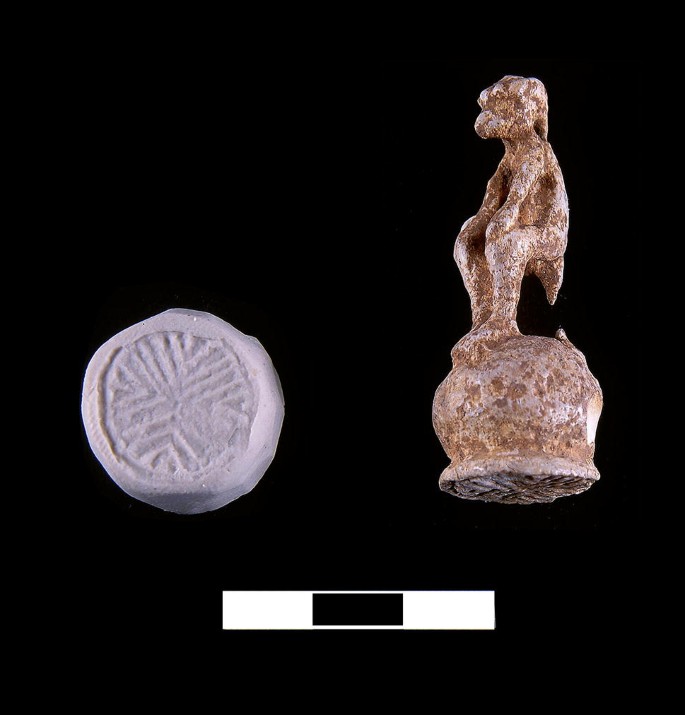
?? ??? ???? ??? ???? ??????? ???? ????????? ?????? ???????????? ???? ?? ?? ?????? ????????? ??????? ?? ?????? ??? ????????? ??????????? ?? ??? ???? ???????????? ??? ?????? ?? ??????? ???? ??? ???????????? ?? ??? ??????, ????????? ??? ?????? ????? ?? ??? ??? ?????????? ???, ?? ? ?????? ???? ???? ?????? ??? ????????? ?? ??????? ????-???????? ??????. ?? ?? ???? ? ?????? ????????????, ???? ??????? ??? ??????? ?? ???????? ??????, ???? ?? ??? ?????? ???? ??????, ??? ???????, ??? ????????, ?????? ???. ???????????? ?????? ?? ??? ??????.

??????????


?? ???? ???? ???? ??? ????-????????? ???? ?? ??? ?????? ?? ????? ???????? ??? ??? ? ???? ??? ?? ???????? ??????? ???? ? ?????-????-???????? ???? ??? ??? ???????? ???? ??????? ???????? ?????. ???? ????? ???? ???? ??? ?????-????-???????? ???????? ??? ?????? ???????? ???? ??? ??????? ??? ??? ????????? ??? ? ???-????-???????? ?????. ???? ????? ????? ??? ???????? ?? ??????? ?? ?????-????-???????? ????????. ??? ???? ?????? ??? ???????????? ????? ????????? ???????? ???? ??? ??????? ??????? ?? ??????? ??? ??? ????????? ?????? ?? ??? ???????? ???????????? ??? ?? ?? ????????? ???? ?????? ???? ??? ???? ??? ?????? ????? ???? ???? ????????? ???? ??? ???????? ???????? ???? ??? ???? ????? ??? ???? ??????? ?????????.

?? ??? ???? ??? ???? ??? ??????? ???? ??? ????????? ?????? ???????????? ?????? ???????? ??? ?????? ?? ????????? ???? ?? ??? ????????? ??? ?????? ??????? ?? ??? ???? ???????????? ??? ??? ???? ??????? ?????????????, ??????? ?? ????? ???? ????-????????? ???? ?? ??? ???????, ???????? ??? ??? ??????????.

?????????, ????? ?? ?????? ???????? ???? ?? ?? ???? ??? ????????? ?????? ???????????? ???? ??? ??????? ??? ??? ???? ?? ?? ?????? ????? ?? ??? ?????? ??? ???? ????. ??? ?????? ???? ?? ??????? ?? ???? ?????? ?? ???? ??? ??? ???? ???? ??????? ???? ??? ?????????. ?? ?????? ????????, ? ???????? ??????? ??????? ???? ??? ?????? ??? ???????????? ?? ?????????, ??????? ???????? ?? ???? ? ?????? ????????????.

????? ???? ???? ??? ?????? ?? ??????? ?? ????-???????? ??????, ??? ???? ??? ??????? ?? ?? ??? ????-???????? ???????? ??? ??? ???? ???? ??? ????????? ?? ??? ????????? ?????? ???????????? ?

Hindoo History: An Introduction


Greetings, Brown Pundits readers! For those of you have been following @HindooHistory on Twitter and Instagram, you may have seen that I now have a Substack where I’ll be posting longer pieces from time to time. I wanted to go ahead and post the introductory piece here for the benefit of the BP audience. Enjoy! 

Welcome, readers! Alas, despite my best efforts I could no longer resist joining the newsletter bandwagon. In the course of my day-to-day research for Hindoo History, I often come across characters and stories that warrant more than an instagram caption or a tweet thread. I’ll be using this newsletter to explore those topics in greater detail. To start, however I wanted to elucidate the idea behind Hindoo History. After all, to this day the most frequent question I get is some variation of “Why ‘Hindoo’ and not ‘Hindu'”? There is a superficial answer— simply that this is how “Hindu” was rendered by colonial-era missionaries and journalists, but there is also a deeper response that goes to the root of the project.

When I started collecting newspaper clips, I didn’t really have an overarching intellectual framework in mind— I would just collect and sort clips that I found interesting. I did however have a general sense that newspapers (as opposed to, say, works of scholarship) offer a more robust sense of what the “average American” thought at the time. Enter Professor Michael Altman. Dr. Altman is a professor of religion at the University of Alabama, and his book “Heathen, Hindoo, Hindu: American Representations of India, 1721-1893” was and is instrumental in providing the scaffolding for the collected data.

Dr. Altman’s key insight is that the American conversation about Hinduism long pre-dated the arrival of Hindus and Hinduism to American shores. So, rather than asking how Hinduism arrived in America, Dr. Altman asks how “Hinduism became conceivable in America.” This idea of “conceivability” is a key methodological pivot because it shifts the focus away from Hinduism per se, and towards the “genealogy” of a particular set of ideas, themes, and attitudes that shaped the American conception of Hinduism. Dr. Altman defines “genealogy” as follows:

“For my purposes, genealogy means an attention to the powers, identities, forces, constraints, agents, and discourses that form a particular category. It means paying attention to the connection between categories, the ways they overlap, include, and exclude one another. It traces how the formation of one category draws on others and produces yet more”

Whereas the traditional narrative marks Swami Vivekananda’s speech at the World Parliament as the beginning of the story of Hinduism in America, Dr. Altman notes that when Vivekananda entered the stage, “Hinduism as a world religion emerged in the midst of various representations of religion” and although these representations made Hinduism “conceivable” to the average American, “they were not its direct antecedents.” So what’s the take-away here? Many of the newspaper clips I post involve descriptions of Hindoos engaging in widow burning, infant sacrifice, and all sorts of other pagan bloodletting. It is not my intent to analyze the “accuracy” of these claims vis-a-vis the historical practice of Hindus in India, because that’s not what “Hindoo History” is concerned with. Whether these claims were true or not, they were for the most part the only data regarding the “Hindoo” the average American had access to.

This leads us to another key methodological contribution of Dr. Altman’s book, that I rely on in my own posts: The resulting conception was formed against the backdrop of an on-going debate in America regarding what “religion” was, and as a result the debates around Hinduism in America are drawn into broader sociological and theological disputes raging in America contemporaneously. Dr. Altman eloquently observes that “when Americans talked about religion in India, they were not really talking about religion in India. They were talking about themselves.” Focusing on newspaper clips and tracing themes chronologically helps illuminate not just how the American conception of the “Hindoo” changed over time, but also the shifting socio-cultural fabric of the country as a whole.

Brown Pundits