
What’s going on? Lots of “brown” chat on Clubhouse.
Musings of a Shinto Rishi
I came across this wonderful interview with Florian Wiltschko, an Austrian Shinto negi (priest) based in Japan courtesy Akshay Alladi. I was struck by some of the similarities in Wiltschoko’s worldview and my own sanskaras- the approach to life I was taught by my elders, particularly my mother.
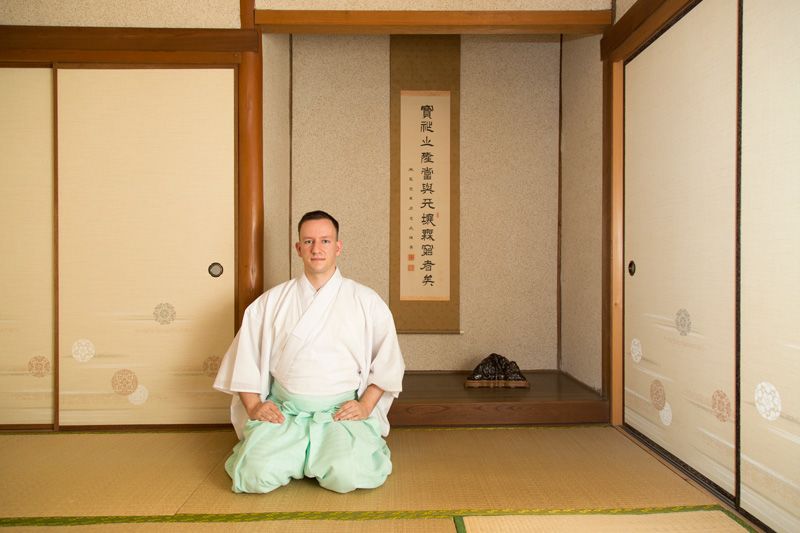
“[Japan] is rich and the seasons colour the natural landscape in beautiful ways. Maybe that’s why a monotheistic belief system did not evolve here,” he says. “The bounties of nature, on the other hand, were seen as being the workings of divine forces that needed to be respected and cared for.” This struck a chord. It’s a very Dharmic sensibility and worldview.
There’s also the challenge of adaptation and change, without losing the essence. Incorporating good ideas, discarding the bad ones, but all the while maintaining the core spirit. Wiltschko’s observations are based on the interactions between Shinto and Buddhism, but the same would seem to apply to modern Hinduism, which has over the centuries blended Vedantic and Shramanic metaphysics with folk tales and traditions. It’s a complex mélange and trying to describe it precisely to non-Indians reminds me of the parable of the blind men and an elephant.
What is noteworthy about Wiltschko is that he is a priest by profession. In my compartmentalised mind, there are gurus/yogis and then there are pujaris/purohits/archakas. The former are philosophers and the latter are pedants. There is some experiential basis for this, but perhaps some of it is also a function of my own biases. I “lost” religion in my teenage years through my twenties and identified as an agnostic classical liberal, only to “rediscover” it in my thirties. The religion that interests me is still quite rationalistic: a Vendantic Monism based principally on the Upanishads and the Bhagavad Gita, with an interest in Buddhism, Kashmiri Shaivism and Yoga. It is certainly not ritualistic. Temple visits are only to admire the architecture. The privileging, as it were, of jnana marga (the path of knowledge) over bhakti marga (the path of devotion).
But perhaps there is wisdom in customs and rituals too. There need not be a neat bifurcation between the high philosophy and the riti-riwaj. Jnana marga and bhakti marga are not mutually exclusive.
“It’s very important to maintain a positive inner spirit,” Wiltschko signs off. “You might say that it’s my mission or my calling to contribute to maintaining this spirit.” The words of a modern Rishi.
[The writer tweets @paragsayta]
Caste in America!?!?! Don’t believe the hype
Everyone is talking about this piece from Bloomberg, How Big Tech Is Importing India’s Caste Legacy to Silicon Valley Graduates from the Indian Institutes of Technology are highly sought after by employers. They can also bring problems from home. If you are not a Bloomberg subscriber using “incognito mode” in your browser should allow you to read it. Two comments:
– The piece is mostly about India. Not the USA or Silicon Valley. To me, this indicates there wasn’t much real material in Silicon Valley to report on
– It seems that the American press is recycling the same incidents and quoting the same experts. There’s no deep scholarly analysis, just anecdotes and assertions
Overall, I think there really isn’t much of an issue around “caste” in the USA. Part of it is the fact that Americans of Indian origin are not representative of the demographics of India. 25% are Brahmin, but for the other groups, there is no variation in income education and income (or not much). I’ve seen the data that consulting firms use that is not widely shared. The selective sieve is strong. There are very few self-identified Dalits. About 1%. It could be these Dalits are on the receiving end of prejudice, but there aren’t that many of them for this to be pervasive.
This is not to deny that there aren’t issues with the Indian American community, which is mostly immigrant and dates to after the year 2000. But it’s not a simple and easy morality story that the media and social justice activists want. So they are manufacturing this, and that really angers me, because I dislike lying and propaganda.
Open Thread – 03/13/2021 – Brown Pundits
A long (paid) piece on Substack, They came, they saw, they left no trace…
except for all of Western Civilization. This is about the genetics of Italy.
My usual 7 PM PDT Friday night chat on Clubhouse will be about the genetics of Italy (Saturday morning India time). this link should work (if you are on an iPhone click it).
What Can Biden’s Plan Do for Poverty? Look to Bangladesh. The usual Nicholas Kristof thing. That being said it is interesting that when there is talk about Bangladesh’s economic success (relative), a fair number of Indians point out major issues (reliance on the single sector for export). This is all fine…but honestly, it feels l ike sour grapes. In 2020, a horrible year, Bangladesh was #3 in growth in the world (and the fastest large nation).
Going to do an interview with a linguist who studies Proto-Indo-European for my podcast. Interesting how his papers suggest Indo-Iranian and Balto-Slavic are a clade. R1a FTW!
Update: Someone on the Subreddit found the archives of the original BP site from 2011/2012 (I have the archives in MySQL but haven’t loaded them; we suffered intense hacks from Hindutva in 2012/2013 so moved to blogspot for a while).
Also, BP got a Clubhouse Club! So we’ll do chats there soon.
Capsule Review: Mythos by Stephen Fry
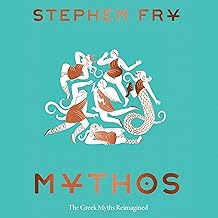
I read this (or rather, heard this) as an audiobook and loved it. The audiobook is read by Stephen himself and as you may expect, is very nicely read. It is also very nicely written, covering a lot of the Greek myths (this is apparently volume 1, many of the myths and legends that have been left out of this one are likely to be in the second volume titled “Heroes”). Stephen does an especially nice job of outlining the successive layers of Chaos, Gaia, Titans and Gods and makes the exuberant (and confusing) mass of origin stories into a coherent overall narrative. His retelling of the myths is full of humor and shows off his vast erudition with a very light touch. Since polytheism is having a bit of a recovery moment thanks to the intellectual (but not demographic) decline of the big four monotheisms (Judeo-Christian-Islamic and Marxist), this retelling is also timely and likely to strike a chord with some people.
Stephen is clearly a fan and this is a great introduction to these stories. And while his style is humorous and light, he is faithful to the sources and this is not some sort of modern “re-telling” that changes stories and characters to make them more contemporary, though being gay himself, he is more than a little eager to point out that the Greeks and their stories include a lot of same sex stuff. But do note that these are only SOME of the Greek myths and many of the most famous stories are not in this book. Fry tries to impose a semi-chronological order on the world of Greek mythology (from primal chaos to Gaia and Ouranos mating, to Titans, to Gods, to humans, with a minimal detour into the war of the Giants) so this volume mostly deals with the early universe and the first adventures of the Gods and the humans they created. Later stories (such as the ones in the Odyssey and Iliad) will presumably show up in volume 2.
He does make the mistake in the epilogue of claiming that we should read these myths because they are so unique (“no where else in the world“), which is not really true. The ancient Greeks were not uniquely gifted in this matter (Indians in particular will find it surprising to learn that this cultural package and its multifarious many-sidedness seems so unique to Stephen), but of course they ARE the myths that were best known and most influential in Western Europe, and via that, are the best known and most influential for many modern people. And because, via Greek and Latin and the heritage of Rome, they are so central to the literary traditions of such dominant languages as English, French and Spanish, they will remain relevant for all people who use these languages, whatever their ethnic or geographical origin. So while I am woke enough to point out to Stephen that his beloved Greeks may not be as unique (in the matter of creating and using such stories to illustrate human nature and the nature of the world at large) as he thinks, I am not in the camp of those who think these should be “decentered” or even thrown away “because Whiteness”. For people from Europe and people who mainly read and write in European origin languages (so really, all of us), these remain must-read literature.
I look forward to volume 2.
Brigadier FB Ali; the Man Who Removed Yahya Khan
From Dr Hamid Hussain. Brigadier FB Ali had an important role in two big events: the coup against Yahya Khan in Dec 1971 and a planned/imagined coup against Bhutto in 1973.. Details below..
Obituary of an officer & gentleman of a bygone era.
Brigadier Furrukh Bakht Ali
Hamid Hussain
Brigadier F. B. Ali (February 1929 – February 2021) passed away in Canada. He was one of the last of the generation of Pakistan army officers commissioned right after the independence in 1947. He was a highly respected officer of Pakistan army. Continue reading Brigadier FB Ali; the Man Who Removed Yahya Khan
Political correctness is “just politeness” (for your friends)
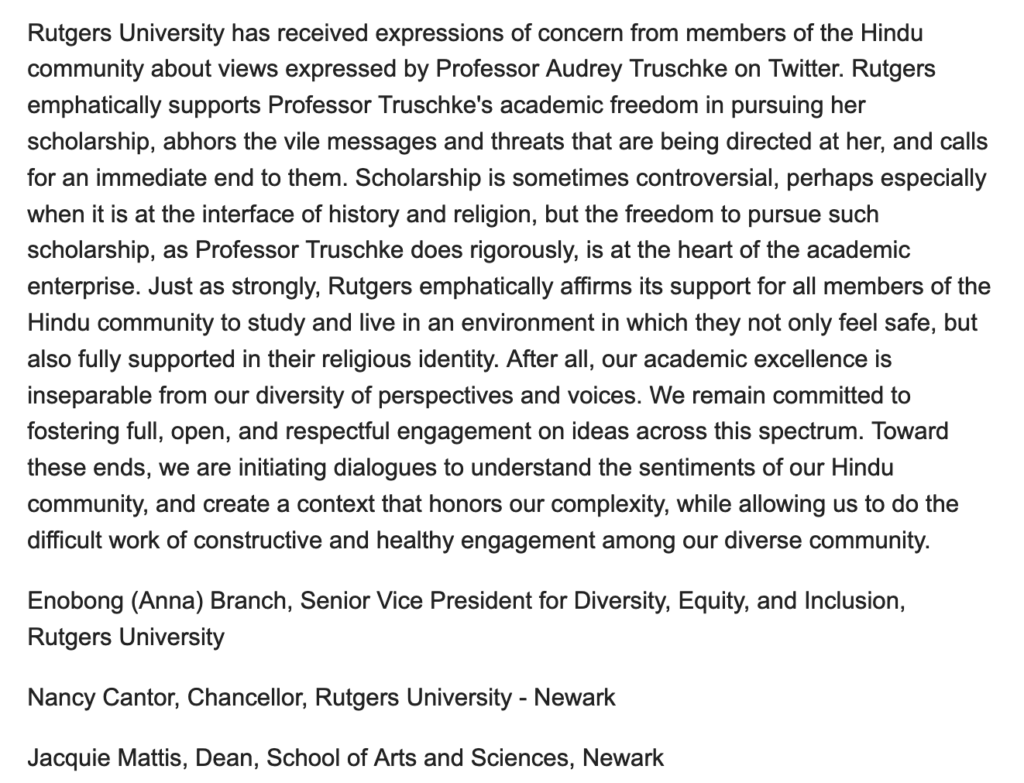
Audrey Truschke is mixing it up again with the vilest dregs of “Hindu Twitter”. In response, I tweeted “For my friends everything, for my enemies the law.” What did I mean here? Rutger’s unequivocal defense of academic freedom, even unto trolling, shows their hand in terms of whose feelings they value.
You can go to the FIRE website, but if you know modern American academia you know that the administration does not care about academic freedom when push comes to shove. The regnant ideology in modern left cultural discourse is that “the feelings of marginalized people/communities” trump “objectivity” and “truth.” Rutgers’ general statement is one I agree with, but I’m a 20th century “liberal.” Rutgers is not a place for 20th century liberals, nor is academia in general.
What this illustrates is that the American left does not think it needs to be “polite” to Hindus. Their feelings don’t matter. Perhaps the Central Committee of the Inner Party has a list of marginalized communities, and Hindus were left off. I don’t know.
Suffice it to say this is total hypocrisy. If Truschke’s career involved wrestling with Muslim trolls online they’d find something more ambivalent to say. Even with tenure universities can fire professors on pretexts as well. They choose not to. They choose the law. Because Hindus are not their friends.
Addendum: The fact that many “internet Hindus” behave like vile cretins with subnormal IQs does not help. But I don’t think this is the main cause. First, many people who are “against” “internet Hindus” who are Indian are quite vile and exhibit subnormal IQ online (my experience with Jat Sikh anti-Hindutva racists is the exact same as with Hindutva trolls; Indians online tend toward troll behavior more than other groups). Also, Truschke offends many more conventional and humane Hindus, but their feelings do not warrant obsequious submission.
West Asian ancestry in South Asian Muslims
Recently a Bohra Patel emailed me to express some exasperation that people are quoting me saying that the ancestry of South Asian Muslims is almost all from Hindus (or non-Muslims). Basically, I say things like this “99% of the ancestry of South Asian Muslims is indigenous.” This means some people are going to be 75% indigenous, but the majority probably have no West Asian segments of DNA. This does not mean they don’t have a genealogical line of descent. I myself am ~100% South Asian if you look at my genes…but my maternal grandmother’s father was from a lineage that had migrated to Bengal in the 19th century from Delhi. Before they were in Delhi they had left Persia in the 17th century with the forced conversion of the whole religious class to Shia Islam. This is validated through a Koran with all direct male line descendants listened. I am not one of those descendants (my maternal grandmother is not “in the book”), but I’m pretty sure my distant cousins who are paternal descendants no longer have any detectable Iranian ancestry either. Why?
The reason is that eight generations back there is only a 50% chance that you will any segment of identifiable DNA from an ancestor. Another way to say this is that 200 years ago you had many ancestors, but there’s only a 1 out of 2 probability that you will have identifiable DNA passed down through the generations from that person. Since my Iranian lineage (a man who left Iran, settled in South Asia, and married into the South Asian Muslim community) dates back 350 years, it’s totally unsurprising that there’s no evidence that isn’t documentary at this point.
In any case, I’m looking more closely at the assertion I made above. I ran a supervised analysis on some samples. You can see the results below. I’ll probably do f-stats too…but that takes a while to run. I may ‘update’ my estimate from 1% to closer to 5%, though I’m not convinced. The Bohra Patel is in the sample, it’s clear they are enriched for “Yemenite Jewish” ancestry. But, even with 200,000 markers, there are Hindu individuals that are 1-2% (Tamil Brahmin) because of the way the model is set up.
Really what’s needed are huge Y chromosome panels. Since that’s an unbroken lineage, and the gene flow is mostly through men from everything we know.
But the real problem is Iranian ancestry because there is something of a “cline” in the northwest of the subcontinent. How exactly are we supposed to detect Iranian ancestry in Punjabis that is recent? Ultimately it’s going to have to be IBD segments in large panels.
That being said, there is an indirect way to detect Muslim West Asian ancestry: look for Turkic and African segments. These come from Muslims, and so can serve as a tracer that is much more distinct from the Indian genetic landscape.
Finally, the flip side of these comments about the minimal impact of West Asians on the genes of South Asian Muslims is that it should make us more skeptical of the arguments of some Hindu nationalists and Muslim fundamentalists about how brutal the Turks were. I’m sure they were brutal…but they didn’t leave much of a genetic impact on Muslims, let alone Hindus. Most people were likely pretty insulated from the predations, probably because cities were demographic sinks anyhow.
Open Thread – 03/06/2021 – Brown Pundits
A Muslim Indian is kind of annoyed that I say “Muslims in the subcontinent are descended from Hindus.” By this, I mean 99% of the ancestry.
Of course, it can be hard to see the impact of Iranian ancestry. I’m going to look more closely to update my estimate.
I recently got contacted by a British research group. They sample thousands of Bangladeshis, and unlike the Pakistanis, they saw no internal structure aside from some individuals who seem to be a Tibeto-Burman tribal people. Like I said: the Bangladeshis might be called Hindus by Pakistanis, but the Pakistanis marry like they’re Hindus, the Bangladeshis don’t.
AIT vs OIT survey
Since the readership is now plural majority Indian (going by IPs) I should probably ask this question… (JR’s OIT posts are now shared routinely hundreds, even thousands, of times on Facebook)