Ramayana, Mahabharata true accounts, not myths

…If Ayodhya is not the place of Ram, where did he live? Looking at the
present structures in Ayodhya, we can see people still living the way
that finds a mention in the Ramayana. Historians can only give their
opinion to enlighten people.
….

The problem with left-liberal academicians (DN Jha, Sumit Sarkar and others) is that the secular fan-base in India is microscopic and there is not much love from minority communities (who are to be sure appreciative of the majority bashing).

Conservative Muslims are least interested in the “secular” record of Akbar, they hate him for his out-reach (and the plan to kick-off a new religion). 

Conservative Sikhs are repulsed by praise for “marxist-atheist” Bhagat Singh, they believe that Sardar Singh was a faithful follower of the Panth. 

The Dalits dislike the liberals intensely since the ideologues are primarily drawn from the super-caste community- red/pink Bengal has remarkably seen only Brahmin Chief Ministers for the past two decades. Even Navayana – the pro-Dalit megaphone – is led by the non-Dalit firebrand S Anand.

There are now dark clouds on the horizon, the new govt will be sympathetic towards Hindutva scholarship and will be headed by people like Rao who are convinced that “folklore is history.” Going forward, any book considered anti-saffron will not be publishable in India. That leaves only the West and the public forums afforded by the New York Times and the Guardian (and others). That will be one crowded space already occupied by super-stars.
……………………………………………………..
The media describes him as an RSS man and the author of the
Mahabharata Project, but very little is known about the mild-mannered
historian from Telangana in academic circles. 
Yellapragada Sudershan Rao,
the new chairman of the Indian Council of Historical Research (ICHR),
describes himself as a colonial historian and argues that faith and
reason can go hand in hand in the writing of history.


………
You have lashed out against Marxist historians and their
interpretation of history. Why is the writing of history a Right vs Left
debate?


I think it is time to think about India’s history from an Indian
perspective. 

For the last 60 years, our writing and understanding of
history has been influenced by the West. Indian research has been far
too dependent on the West to write its own history. We are dependent on
their translations and interpretation. And, these are my personal views,
history writing in India is Euro-centric and imperialistic. The ICHR, I
understand, is in the process of acquiring digital records from centres
of history in the US and Europe. This will not only give us access to
our own records but will also aid us in writing history from our
perspective.


You have been appointed by the BJP government. Don’t you think institutions such as the ICHR should be free of politics? 
The MoU (memorandum of understanding) prepared by the founding fathers
of ICHR gave the powers to the government to appoint heads of social and
historical institutes. I have no qualms in admitting that these
appointments are political. 

Have previous heads of social institutes
been questioned about their appointments? Why are these questions asked
only about me? The government has been formed by a democratic process.
It has been elected by the people. To question that is to question
democracy itself. Unlike other social institutes, the ICHR attracts a
lot of attention because history is an important subject. But history
belongs to the people. We have not shown or written a comprehensive
history of India to the people of India. History is by the people, for
the people and of the people.


….
You are the author of the Mahabharata project? What is the project about?

There is a certain view that the Mahabharata or the Ramayana are
myths. I don’t see them as myths because they were written at a certain
point of time in history. They are important sources of information in
the way we write history. What we write today may become an important
source of information for the fut­ure in the future. 

When analysed, of
course, they could be declared to be true or false. History is not
static. It belongs to the people, it’s made by the people. Similarly,
the Ram­ayana is true for people…it’s in the collective memory of
generations of Indians. We can’t say the Ramayana or the Mahabharata are
myths. Myths are from a western perspective.


What does that mean?

For us, the Ramayana and the Mahabharata are true accounts of the periods in which they were written.


….
But shouldn’t the writing of history be rooted in historical evidence and research?

Western schools of thought look at material evidence of history. We
can’t produce material evidence for everything. India is a continuing
civilisation. To look for evidence would mean digging right though the
hearts of villages and displacing people. We only have to look at the
people to figure out the similarities in their lives and the depiction
in the Ramayana and the Mahabharata. 

For instance, the Ramayana mentions
that Rama had traveled to Bhad­ra­chalam (in Andhra Pradesh). A look
at the people and the fact that his having lived there for a while is in
the collective memory of the people cannot be discounted in the search
for material evidence. In continuing civilisations such as ours, the
writing of history cannot depend only on archaeological evidence. We
have to depend on folklore too.


….
Are you for correcting the writing of history?

I won’t put it that way. But real history has to come through. I am a
follower of truth. The ICHR should encourage research about India and
Greater India—from Southeast Asia all the way to Afghanistan, Iraq and
Iran. There is enough archaeological evidence to show the connect of our
civilisation there.


….
What is your view on Ayodhya?

Is it not a fact that mosques as structures came to be in India in
1000 AD? Is it not a fact that the mosque was built by a lieutenant of
Babur? A historian can only enlighten people on the facts of history.
Historians can at best say evidence of earlier remains of a Hindu
structure are there. Conflicting views are created by political leaders. 

If Ayodhya is not the place of Ram, where did he live? Looking at the
present structures in Ayodhya, we can see people still living the way
that finds a mention in the Ramayana. Historians can only give their
opinion to enlighten people.


…..
Doesn’t correcting history pose a problem? Why only cast it
in the context of two communities? How about Dalits and untouchability?


The question of untouchability is relatively recent, as recent as
3,000 years. And it has its basis in the economy. It was not based on
social status. Did we hear of untouchability before this period of 3,000
years? Let me give you an example. Sage Vishwamitra went to a Dalit hut
and asked for dog’s meat as he was hungry. The Ramayana and Mahabharata
are replete with instances of different castes, did we find a mention
of untouchability there?


…..
As a historian, are you trying to give a religious interpretation to history? 
I am a Hindu and a Brahmin. To be a Hindu isn’t a religion. In my
personal practices, I can adopt religious practices of the community to
which I belong—as a Shaivite or a Vaishnavite. But that is not what
being a Hindu is about. 

Reli­gi­ons are recent manifestations. I feel
the­re’s only Sanatana Dharma. There was no conflict between communities
or on religious lines as there was only one sanatana dharma. Now there
are several reasons for conflict to take place. 

Besides, Muslims are the
only ones who have retained their distinct culture. Can Christians or
Muslims say all religions are one? A Hindu can say that. There was no
conflict when there was sanatana dharma, Conflict or contests came about
when temples were destroyed and mosques built on the sites in medieval
times.


….
Didn’t Hindus destroy Buddhist monuments?

I agree. But Buddhism was on the wane then, in decline. But were
thousands of people killed as they were in the raids to the Somnath
temple? I won’t use the word corrections here. But the real history has
to come up.

…..

Link: http://www.outlookindia.com/printarticle.aspx?291363

……

regards
The Lion Queen

“I punched the men but they wouldn’t
apologize till the crowd forced them to”
…the woman then took off a boot,
filled it with muck and water, and emptied everything into the car

”I did this five to six times till the seat,
gearbox, steering, backseat and their phone were soaked in muck”
.

Remember it is the lioness who hunts, not the lion. She is feared universally for her strength. 

India is a jungle that desperately needs more lion queens who have the courage to throw mud on the face of drive-by cowards. Lal salaam, madam!!!
…………..
A
27-year-old woman’s online post on how she taught two men a lesson after
they “deliberately” splashed muck on her while passing by in a car, has
gone viral on social media. 
 

While most netizens have come out in her
support, some have questioned how she could “go to such limits”. The
woman is also being trolled and threatened by a few netizens.

The incident occurred around 8pm on Wednesday when the woman was walking
home after work. She had reached Shardashram Vidyamandir in Dadar
(West) when two men arrived in a car.

“As the footpath was
water-logged, I was forced to walk on the street. The stretch was dimly
lit but safe. I heard the Honda City accelerate before it splashed muck
on me. The car swerved just in time and could have hit me. I was shocked
and fuming,”.

The motorist left without offering
an apology. “I have been robbed at knife-point and even groped in the
past, but had remained quiet then. This time, I decided I wasn’t going
to be a coward. I ran after them for nearly 700 metres or so till the
car halted at a traffic signal at Kabutarkhana.  I then went and knocked
on the front door (passenger side). The motorist’s co-passenger opened
it and realized I was the same girl they had harassed. The motorist
tried to drive away, dragging me along as I had caught hold of his
friend’s shirt collar by then,” she said.

Hearing the
commotion, cops at the junction came up to check what had happened and a
crowd of bystanders gathered. “I punched the men but they wouldn’t
apologize till the crowd forced them to,” she added. Upset at what she
had to go through and the unwanted drama, the woman then took off a
boot, filled it with muck and water, and emptied everything into the
car.

“I did this five to six times till the seat, gearbox,
steering, backseat and their phone were soaked in muck. My arm is sore
from being dragged. But I hope my act prevents the men from repeating
what they did to me with any other girl,” she added.

Her online post was ‘liked’ by nearly 3,000 people and shared numerous times on Twitter and Facebook.

…….

……..

Link: http://timesofindia.indiatimes.com/city/mumbai/Mumbai-womans-post-on-harassers-goes-viral/articleshow/38222068.cms

…..

regards

“The whole world should become ahimsak”

..They demand a “hinsa,
kasaai, vyasan mukt Palitana”—sanitised of violence, butchery and vice……..Each of the 68 butchers in town has
been identified by name……
not just Muslim butchers; the
Sikligar Sikhs, who breed pigs are also under the scanner…

They are the neo-Brahmins.  Also it is the Bharatiya Jain Party (BJP).

Generally the Brahmin class has provided teachers, doctors, lawyers….people who fight with words not swords (that was reserved for Kshatriyas or Khatris). Brahmins are also not noted to be in the top economic bracket (money is in the hands of the Vaishyas or Baniyas).

Brahmins have not been either numerous or durable as rulers (there have been probably more and more long lasting Shudra rulers). Jawaharlal Nehru, who had immense contempt for religion (specifically Hinduism) nevertheless was probably the longest reigning Brahmin.

Meet Amit Shah – a Jain – the newly minted president of BJP. Jains were recently declared to be a minority by the past Congress-UPA regime (as a last-ditch vote-catching measure). Shah is expected to continue the tradition whereby India has been specially alert to the sensitivities of minorities. It is another matter that what is nectar to one community is poison to the others (see below).

As far as policies go Jains are as strict as any of the famous sons of Abraham. They also have immense wealth and they have the ear of the political establishment. Amit Shah is credited with the BJP victories in Uttar Pradesh and Bihar – critical for Mission 272 (parliamentary majority). It was Shah who memorably told the Jats of Muzaffarnagar that “this election is a fight for honor and revenge.”

In Europe there has been considerable tensions of late between the left-liberals (aligned with animal rights groups) and Jews/Muslims over kosher/halal rituals. The fight is over stunning animals before they are gored. The multi-culturalists say (with some justification) that only people who are perfect vegetarians can proclaim their moral authority on this matter, everyone else is a hypocrite and an Islamaphobe (also anti-semite).  

By this logic, Jains who introduced the concept of ahimsa to the world, have all the moral authority to over-ride objections of the filthy meat eaters….

Interestingly enough, vegetarianism is one area in which the Dharmic religions can all agree to put up an united front against the Desert religions. All our Sikh friends choose to eat vegetarian when dining out since they are actually forbidden to consume halal food.  

The only Hindus who will have serious objections to veg-only strictures are the denizens of un-India (TM)- Kerala, Bengal and Tamil Nadu. Perhaps they should be labeled apostates and barred from visiting Varanasi and Palitana.

Welcome to the land of vegetarian Iftars. Hope you enjoy the experience.
…………
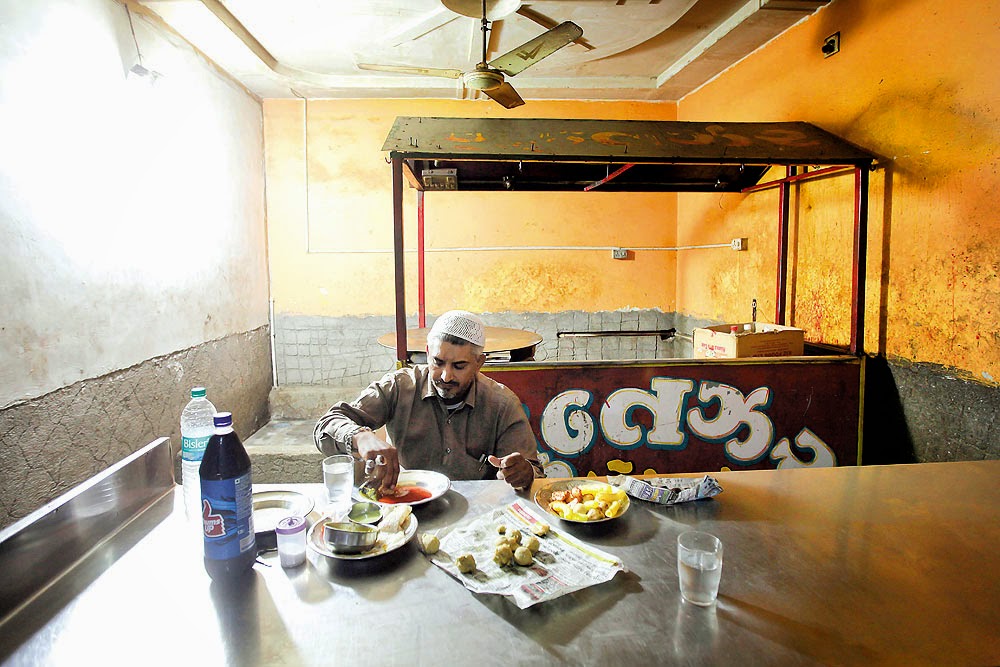
Parimal, a nondescript neighbourhood in Palitana, near Bhavnagar, in
Gujarat, is much sought after for the Jain pilgrimage town’s few
Muslim-run non-vegetarian eateries. But it’s eerily deserted on what
should have been a bustling, cheerful iftaar evening.
 

Kababs and chicken
lollipops are displayed promisingly on the menus of the stalls but the
kitchens that roll them out have been shut down since the Gujarat
government promised to look at Jain leaders’ demand that the pilgrimage
town be made a vegeta­rian-only zone. 

The stall-owners are suspicious,
reluctant to talk, and refuse to give their names. A seething resentment
fills the air. “There’s nothing for us to celebrate this Ramzan,” says
Haji Ghulam Ali, offering us goodies from the vegetarian entree to his
humble iftaar meal. He’s the only one willing to be quoted. “Our
business is hit, we’re on the verge of bankruptcy, and we can’t even eat
our regular food!”


The government notification hasn’t yet come into effect. But in
Palitana, it’s already futile—and generally has been difficult—to find
non-veg food. The carts that used to sell omelettes and boiled or
scrambled eggs around the town’s mosque and cemetery, on the outskirts,
have vanished. 

Interestingly, this region is predominantly meat-eating.
“As high as 55-60 per cent of the population are non-vegetarians—not
just Muslims, but Kolis, Sindhis and Dalits also,” says Pravin Mishra,
an Ahmedabad-based filmmaker, artist and columnist. The Jain presence is
in a few thousands, largely a floating population of pilgrims and
ascetic, peripatetic monks and nuns. In contrast, Muslims constitute 25
per cent of the resident population. It will be worst hit if
vegetarianism is enforced.

But the monks spearheading the movement say it’s not a matter of
numbers. “Palitana is like the Mecca or Kashi of Jains,” says Virag
Sagar Maharaj, a leading monk. He invokes Jain lore. Palitana has been
visited by all 24 Jain tirthankars. The Shat­runjaya hills are clustered
with 3,000 temples and 27,000 statues. There’s the symbolic ord­eal of
3,600 steps, a 3.5 km climb that takes two to three hours. 

Jains come
here to pray for moksha. 

The sentiment runs in laity too. “It’s the
centre of our faith,” says Shireesh Kotari, international president of
the Jain Social Groups Inter­national Federation. And Janki Shah, owner
of a textiles company in Ahme­d­abad, says, “It’s one of our holiest
shri­nes—our shashwata tirtha. We believe that, whatever happens,
Palitana will never vanish from the earth. It is eternal.”


They draw on the concept of ahimsa, a central tenet of Jainism: you
are not meant to hurt anything, not even a fly. “It’s not merely about
preventing people from eating non-veg food. Our movement is based on the
concept of Jeevdaya and is primarily against animal slaughter,” says
Virag Sagar Maharaj. 

Although he does not justify it, sociologist
Gaurang Jani says the demand for a no-meat zone in Palitana is linked to
the strict vegetarianism Jains practise. And Vidyut Joshi, former
vice-chancellor of Bhavnagar University, says, “I guess some ethos of
the Jain religion has to be maintained at its biggest pilgrimage
centre.”


The posters outside the ashram of Jambudweep, a subsect of the
Shwet­ambar Jains, talk of 2,000 animals butchered every day in
Palitana, 60,000 monthly and 7 lakh annually. They demand a “hinsa,
kasaai, vyasan mukt Palitana”—sanitised of violence, butchery and vice,
that is. It’s an organised effort. Each of the 68 butchers in town has
been identified by name—and the kind of animals he slaughters. 

The
Jambudweep group claims this is the first step in their rehabilitation.
It offers butchers  a compensation of Rs 9 lakh and eatery owners Rs 5
lakh. So far, 15 butchers—the campaigners have agreeme­nts on notarised
stamp papers as proof—have agreed to give up their profession.

But Muslim residents of the Parimal area say the promises aren’t being
made good.  And, compensation or not, it’s difficult to uproot oneself
from a place or give up a trade. In Gujarat, there are hardly any
non-Muslim butchers, so the demand for vegetarianism will mostly hit one
community. Mishra says it’s a case of religion being used as a
political and electoral tool. 

But it’s not just Muslim butchers; the
Sikligar Sikhs, who breed pigs and trade in them, are also under the
Jains’ scanner. Palitana looks like a starting point. Virag Sagar
Maharaj wants to take the movement forward in all of Gujarat, and later,
Maharashtra, Rajasthan, Madhya Pradesh and Uttar Pradesh. “The whole
world,” he resolutely says, “should become ahimsak.”


What is unfolding right now is clearly a clash of faiths and opposing
ways of life. “It seems all about ‘My faith is bigger than yours’,
which defies the spirit of secularism and acceptance,” says Mishra.
Ironically, the temples atop the sacred Shatrunjaya hills tell a
different story. They reflect a history of peace and togetherness, of
cultures and religions in harmony. At one of the holiest Jain sites
here, there’s the Muslim shrine to Angar Pir, at which childless couples
of every religion—including Jains—have been seeking  blessings since
time immemorial.


All is not well within the Jain sect itself. There has been dissent
amongst Jain monks too. One group accuses the other of being taken in
too easily by the promises made by the administration. Monks are even
being accused of having pocketed money meant for rehabilitating
butchers. “It’s a stunt,” says Divya Shek­har Maharaj, a monk who has
distanced himself from the movement, though he himself practises a very
rigorous form of vegetarianism. “They have promised a lot but nothing
has happened.”

 The proposal has led to sharp criticism from civil society. “Ritual
slaughter is as much an act of faith for Muslims and Hindus as animal
protection is for the Jains,” says Aakar Patel, a columnist. “To ask
another faith to change to what you think is right is an imposition and
fundamental intolerance.” 

According to education consultant Manisha
Modha Patel, no group can treat a town as its private pro­­perty. At
best, proscription of non-veg food can be applied at temple complexes.
Already, since 1999, non-veg food is not allowed within 250 metres of
Taleti, the point from which the climb up Shatru­njaya hills begins. The
road leading to the Shatrunjaya river, too, is a vegetarian zone. Now,
they want vegetarianism imposed in a 9 km radius. “Tomorrow,” says
Manisha, “they may seek a ban on onion and garlic. What if Ajmer decides
to declare itself a meat-only zone?” But Virag Sagar Maharaj counters
by drawing on the example of Haridwar and Vaishno Devi, both vegetarian
zones.


What the Palitana movement does prove is the influence of Jains in
Gujarat. They form less than one per cent of the state’s population but
dominate the economic space, and through it wield disproportionate
influence on the social, cultural and political space. Many say the
ascendancy in the ruling BJP of Amit Shah, Modi’s right-hand man, now
slotted to be party president, is adding to their clout. Shah is a Jain.


Their dominance has also been creating the misperception that
Gujaratis are vegetarian. Actually, 68 per cent of the population,
according to the last census, eats meat—this includes tribals, obcs,
Muslims, Christians, Parsis and Jews.


Meanwhile, Bhavnagar collector P.K. Solanki says that, at the moment,
the Palitana municipality is inviting objections to the proposed move
and has received 1,980 so far. Legal opinion is also being sought. The
board of the municpality is likely to decide on July 30. The decision
will be forwarded to the state government for appropriate action. Till
then, Palitana remains in suspended animation. And iftaars will remain
dhokla-khakhra affairs.

Eggless, Meatless…


  • Haridwar, Uttarakhand. No meat, no eggs, no fishing allowed in the Ganga, no alcohol.
  • Badrinath, Kedarnath, Gangotri, Yamunotri,
    Uttarakhand. All hotels, guest houses, restaurants and eateries serve
    only vegetarian fare. There are no bars.
  • Jagannath Temple, Puri, Orissa. No sale or preparation of meat, fish, poultry, eggs in all restaurants in specific areas around the temple
  • Ujjain, Madhya Pradesh. No meat, fish, eggs or liquor except in certain parts of the city.
  • Vrindavan, Uttar Pradesh. No non-vegetarian food, smoking, drinking, no leather objects in the temple vicinity.
  • Golden Temple, Amritsar. No meat in the temple complex. No smoking in the city.
  • Katra, Jammu. Only pure vegetarian food, not even onion and garlic allowed.
  • Rameshwaram, Tamil Nadu. Only vegetarian food in the town though it is a major exporter of seafood.

………

Link: http://www.outlookindia.com/printarticle.aspx?291371

……..

regards

Taliban Academy

…one of the five suicide bombing facilities….owned
and operated by the Haqqani Network in Serai Darpakhel…
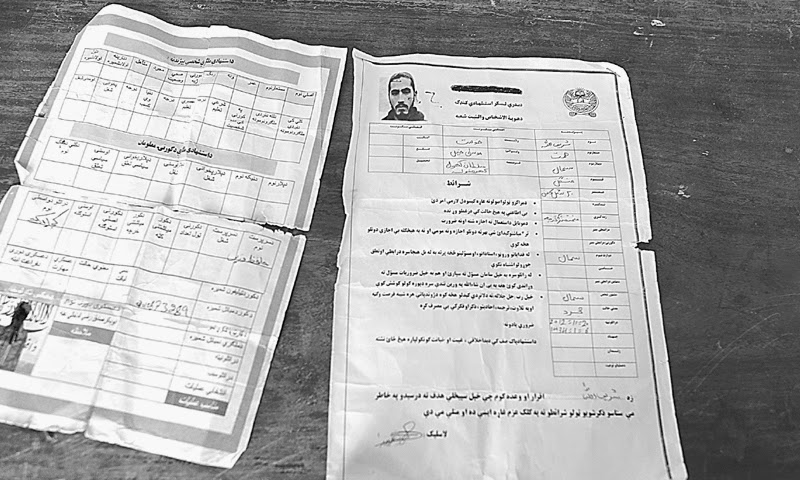
…The undertaking or affidavit ‘esteshahadi’ … picture of would-be bomber, his name, his father’s name….family occupation, father’s political
affiliation….experience, if any, in militant activities.

Announcing graduate studies in “how to be a suicide bomber.” The Unique Selling Point: campus recruitment is 100%, they would like many more students!!!
…….
It was one of the many non-descript buildings around, located at the
dead-end of a small street inside Serai Darpakhel. “Go straight and
there is the door on the left”, we were told by a guard outside the
street. But even then it was hard to find the iron door, opposite
a power transformer and a heavy generator to ensure uninterrupted power
supply. 

For the unsuspecting outsiders, there was nothing
unusual about this place, except that it was known to all those who
lived nearby. It was a facility to indoctrinate and train suicide
bombers.


Step inside and there is a courtyard with big columns, mats spread out, bedrolling piled up in one corner.
Nothing unusual. Stairs lead to the upper portion painted in light cream and brown colours.

Plastered on one of the walls is a white banner inscribed with kalma and beneath it ‘the Islamic Emirate of Afghanistan’.

This
was one of the five suicide bombing facilities, locals now say, owned
and operated by the Haqqani Network in Serai Darpakhel, frequented by
would- be-bombers in their teens and twenties; Afghans and Mehsuds
mostly but boys from Mohmand and Orakzai too would turn up.


Rarely were the religious indoctrinators, mentors or those running
the centres seen outside the iron gate that shielded the dead-end house
from passersby.

No -one living in Serai Darpakhel knew who they were, except that it was a centre for suicide bombers.

Even
those brought or enrolled at the centre for ‘esteshahadi’ or martyrdom
were not allowed to step outside till the completion of his mandatory
two-month stay inside the centre.

The undertaking or affidavit all ‘esteshahadi’ friends were required to sign was elaborate.

It
had a printed colour picture of the would-be bomber, his name, assumed
name, his father’s name, age, address, education, personal contact
number, family contact number, family occupation, names of
friends and acquaintances, father’s past and present political
affiliation, the number of members in the family and their monthly
income and experience, if any, in militant activities.

And the
seven rules the ‘esteshahadi friend’ were required to live by were
pretty stringent too. The use of cell phones were neither allowed nor
considered necessary, the undertaking said. For two months, neither
would the enroller be allowed to go outside nor was he allowed to go out
without permission, it read.

He was also required to make no
attempt to befriend anyone else except his other ‘fidayi brothers’
teachers and mentors. He was supposed to hand-over his personal
belongings to the centre in-charge and ask for things he might need from
him. 

Other than that, things inside the centre were kept tight with a
strict regimen of praying, spiritual and religious indoctrination and
cooking, locals say.

Even a man, who came looking for his son, was
turned away by the centre’s administrator, feigning ignorance about his
whereabouts, a local resident recalls. It was only after a lot of
contacts here and there, that the centre reluctantly let the boy go.

Not
very far from Serai Darpakhel, drive to the main Miramshah bazaar. And
there is the two-storey building of what once was the Government Girls
Higher Secondary School. When militants first moved in and started
bombing schools, this too was soon abandoned and later occupied and
converted by militants of all hue and origin into a facility for
training and distribution of dead bodies on their arrival from
battlefield or of those killed in drone strikes.

The 450 to 500
girls were later shifted to continue their studies at a degree college
inside the military cantonment in Miramshah. The militants,
surprisingly, had no objection to that.

……

Link: http://www.dawn.com/news/1118706/startling-facts-about-suicide-bombers-training-den

……

regards

The Caliphate turns radioactive (literally)

This is so much fun. Just like we have nuclear India and Pakistan ready to wipe out each other (and the world), we can look forward to a nuclear Shia-stan and Sunni-stan ready to annihilate the other. And if this was not fun inducing enough we have Gaza rockets targeting the Israeli nuclear reactor.

At this point we would just like to consult with a state-of-the-art crystal ball to know how things will be in a decade or so. The World survived the World Wars I and II, do we really have the ability to survive WWIII?
…….
Insurgents in Iraq have seized nuclear materials used for scientific
research at a university in the country’s north, Iraq told the United
Nations in a letter appealing for help to “stave off the threat of their
use by terrorists in Iraq or abroad.”

Nearly 40 kilograms (88 pounds) of uranium compounds were kept at
Mosul University, Iraq’s U.N. Ambassador Mohamed Ali Alhakim told U.N.
Secretary-General Ban Ki-moon in the July 8 letter obtained by Reuters
on Wednesday.


“Terrorist groups have seized control of nuclear material at the
sites that came out of the control of the state,” Alhakim wrote, adding
that such materials “can be used in manufacturing weapons of mass
destruction.”


“These nuclear materials, despite the limited amounts mentioned, can
enable terrorist groups, with the availability of the required
expertise, to use it separate or in combination with other materials in
its terrorist acts,” said Alhakim.


He warned that they could also be smuggled out of Iraq.


A U.S. government source familiar with the matter said the materials
were not believed to be enriched uranium and therefore would be
difficult to use to manufacture into a weapon. Another U.S. official
familiar with security matters said he was unaware of this development
raising any alarm among U.S. authorities.


…..


Link: http://www.reuters.com/assets/print?aid=USKBN0FE2KT20140709

…..

regards

Hindu Brotherhood: a seat at the high table

….Obama’s desire to strengthen economic relations…..
cooperate in enhancing energy security; deepen security cooperation,
including in maritime security, counter-terrorism and intelligence
exchange; expand consultation and coordination on Afghanistan; and, work
more broadly for security and prosperity in Asia.

What is with all the letter writing in the age of the internet?

It is a grand photo-op with a most optimistic goal: South Asia must remain part of the far-West (and not drift into a dalliance with Russia, China etc..).

It was inevitable, in the age of the trader or the Vaishya (or in the insult mode: baniya). America and India would like to do business first – ensure a bit of shared prosperity in exchange for a docile land-mass (aka security). 

We feel this is a sensible move, considering that China is scaring the shit out of everybody and the Middle East and Africa and East Europe are…scaring the shit out of everybody.

Then again it must be remembered that islanding does not work in the long term. South Asians will need to learn to live with each other, to stick their necks out of the bloody (literally) enclaves, stop the stupid bickering and get on with good governance for everyone. Only then we can have true progress.
……………..
Extending a formal invitation to Prime Minister Narendra Modi for a
visit to the US, President Barack Obama has expressed keenness to work
closely with him to make the bilateral relations a “defining
partnership” in the 21st century.


Thanking Obama for the invitation, Modi said he looks forward to a
result-oriented visit in September with “concrete outcomes” that impart
“new momentum and energy” to the strategic partnership.


Obama’s letter of invitation was handed over to Modi by Deputy Secretary of State William Burns when he called on him here.

In his letter, Obama reiterated his invitation to Modi to visit
Washington in September and to work closely with him to make India-US
relations a “defining partnership” for the 21st century, a PMO statement
said today.


While receiving the letter, Modi said he looked forward to a
“result-oriented visit with concrete outcomes that impart new momentum
and energy to India-US strategic partnership”, the statement said.


The Prime Minister was of the view that re-energising the partnership
between India and the US would send an important message to the region
and beyond.


Articulating his vision for India-US relations, Modi said that the
relationship between the world’s oldest and largest democracies should
not only be for the benefit of the two countries, but “should emerge as a
powerful force of good for peace, stability and prosperity in the
world”.


Burns conveyed Obama’s desire to strengthen economic relations,
including in next-generation technologies and manufacturing sector;
cooperate in enhancing energy security; deepen security cooperation,
including in maritime security, counter-terrorism and intelligence
exchange; expand consultation and coordination on Afghanistan; and, work
more broadly for security and prosperity in Asia.


Modi saw immense opportunities for deepening cooperation across the full
spectrum of the relationship and laid special emphasis on involving
youth in creating new avenues of promoting cooperation between the two
countries.


The Prime Minister reiterated his desire to strengthen relations with all neighbours, the statement said.


Modi recalled Obama’s telephone call soon after he became the Prime
Minister in May and expressed his appreciation for the President’s
detailed and thoughtful letter.


National Security Adviser Ajit Doval, Foreign Secretary Sujatha Singh,
US Charge d’Affaires Kathleen Stephens and Assistant Secretary of State
for South and Central Asian Affairs Nisha Biswal were also present in
the meeting.

……..


Link: http://www.outlookindia.com/news/printitem.aspx?849274

…….

regards

‘Master Licensed Locksmith Since 1968’

Young kids today have a hard time talking to a person. They
don’t look you in the eye. They are constantly on their phones, on
their iPads, on the internet…..They work at jobs they don’t really like. They
only get an identity when they buy a home they can’t afford, …..a thousand dollar suit…two hundred dollar sneakers… Can all this
shit give you an identity? 

A grand old man who is an immigrant, a family man, a liberal, a rebel who struck out on his own, one who does not want the US to be globo-cop. His advice for ambitious but challenged youngsters would be to learn something useful to do with their hands. In our opinion he represents most faithfully the American spirit and sense of purpose.
…..
I pass a tiny shop in Greenwich Village with a no-nonsense signboard
above that says ‘Greenwich Locksmiths’.
Just below this, an additional
tag-line reveals ‘Master Licensed Locksmith Since 1968’


Saeed Akhtar Mirza: Let’s start with your family. Tell me about your parents.
Philip Mortillaro: My father came as an immigrant from Italy
and my mother was from here. My father had a good job and my mother was
a seamstress. Both of them worked really hard to raise a family.


S: How did you get into the lock business?
P: I was in high school and it all started out when I was looking for
a summer job when I was 14 years old. All kids look for a summer job,
you know. Someone told me there was a hardware store and they were
looking for someone to help them move. It turned out it was not a
hardware store
 they were locksmiths. I kind of offered to help them
move, and worked there all summer long. When the summer was over, they
asked if I wanted to go back to school or work with them and learn a
life-long trade. I chose the life-long trade.


S: Why?
P: I got to like what I had learned, so I started out as an
apprentice at 14th and 2nd Avenue. By the time I was 18, I opened my
own shop, and worked there till I was 20—till 1970. Then someone
offered to buy my shop
it was an open air space that had a license for
10 years. He gave me 25,000 dollars for it. That was a lot of money…a
lot of money! So I decided to travel
I bought a car and I travelled
all over the country … to San Francisco, Seattle, Idaho, Wisconsin
… then I came back here and bought another shop
the one right here.


S: What did your father think about your move to quit school and learn a trade?
P: He didn’t like it. He expected more from me.
S: Why?
P: It’s tough convincing the mindset of the poor immigrant. He works
with his hands and he expects his children to go to college—work with
their minds. My father never once visited my shop till the day he died.

S: That’s a pity.


P: Yeah. He couldn’t believe I could be proud of my work. Liking your
work is one thing, to be proud of it is another. Let me tell you a
story. I was about 21 years old and I got this call from a Japanese
gentleman. He had a problem with a door that had come apart. Now to fix
that sounds simple but it was not. The door had the lock and hinge in
the middle—most door have it on the side. It was a complicated job
but I
fixed it. The Japanese guy was surprised and smiled. You know what he
said? He said ‘Yankee Ingenuity’. Can you believe it? ‘Yankee
Ingenuity’! I felt so proud for a job well done. And we Yankees did have
ingenuity. We could make things. Fix things. Look at us now—we can’t
do a damn thing with our hands, we’ve lost our respect for it.


S: When you say America has lost respect for people who work their hands, is there a price being paid for that?
P: Of course there is. No one wants to work hard with their hands
anymore. We’ve let the Chinese, Japanese, Koreans make things for
us—and they do a damn good job of it. There is such an emphasis on kids
getting a college education—a finance degree or study to be lawyer or a
doctor. By the time they do so, many of them are up to their necks in
debt. They become adults in trouble rather than children in trouble.
Most of them don’t get the jobs they want and end up in the mail room
or some such hell-hole.

(He took a deep breath and then continued)


P: Let me tell you another story. I know this one lady, her daughter
didn’t go to college and became a beautician because she wanted to. She
worked hard and five years ago she bought her own shop. She did what
she wanted to and now has her own shop. She’s doing great and is
earning more than most college graduates, who start out in life with a
debt on their heads.

S: Are you saying a college degree has no value?
P: No. What I’m saying is that it isn’t everything. Can every kid
with a college degree get a job that he really wants? It isn’t
possible. So many of them are miserable—jumping out of windows, getting
into drugs. They think money is the answer. If only they have more
money! For me work has to come first. Not the money. When I look at a
job I try to figure out how am I going to do it—What’s the best way?
How to get it right? Kids today think differently: they want to know
how much does it pay? They don’t ask themselves what they’d really like
to do, just how much will they earn.


S: How did all of this money mania happen?
P: Through the government and the media—they sold a dream. And
everybody got sucked in. (Shakes his head) It’s entered our blood
stream.
Young kids today have a hard time talking to a person. They
don’t look you in the eye. They are constantly on their phones, on
their iPads, on the internet. They are scared. They can’t meet people.
They don’t meet people. They work at jobs they don’t really like. They
only get an identity when they buy a home they can’t afford, when they
wear a thousand dollar suit—two hundred dollar sneakers or shoes, most
of it on credit.
That’s the dream being sold by the media. Can all this
shit give you an identity? Look at me. I have an identity in this old
tee-shirt and this old pair of jeans. Everybody in the neighborhood
knows me. They know Philip, the locksmith.


S: Is Philip, the locksmith, happy?
P: You bet I am! I earn more than a hundred thousand bucks. I have
had three wives, two mistresses, I have five children, two
grandchildren. Isn’t that a life of a happy man? I’m better-off than
most guys with degrees.

S: Do you always compare yourself with them?
P: Not really. But sometimes I do because I worry where kids are
heading today. Not just kids, adults too. I worry about what we’ve done
to ourselves. Ever seen people on the streets? When they see a work of
art or a piece of architecture that they like, they don’t soak the
experience in: they just take pictures and move on. They are in such a
terrible hurry—fucking pictures. Can you believe it?

(I smile)
S: They have no time to stand and stare.
P: Yeah. I hope they have time to see the pictures they’ve taken.
S: How long do you think that people like you, who work with their hands—how long do you think they are going to last?
P: Depends on the part of the county. In other parts of the country
it will last for a little longer, over here I don’t know. I don’t even
know if any of my kids would take over from me.


S: What kind of an America would you like to see?
 P: Let me think. There were some things in the 60s that I didn’t
like. I didn’t like the Vietnam War. I didn’t like the racism. If you
were black in this country, you were fucked. You had to face a lot of
shit. It’s much better now. But the wars are still happening—we are
into too many wars. 


S: Why?
 P: I don’t know—we are a violent country. Look at our movies,
television, video games. There’s a lot of violence out there. When we
had the draft during the Vietnam War people questioned why their kids
were being sent. We questioned the war. 


We don’t have the draft
anymore. It was scrapped. So now we have an army that can’t question
and many of our soldiers are new immigrants. So we promise them a Green
Card after their stint. We promise them some kind of college
education, so now they do four years in the army just so that when they
get out, they can get to go to college or get a Green Card. So they go
to fight, they have no choice. 

…….

Link: http://www.outlookindia.com/printarticle.aspx?291329

…..

regards

Bobby Jasoos

We are a die-hard Vidya Balan fan (she is married to a sid…roy kapoor), also this movie by Samar Shaikh celebrates Hyderabad in all its glory (ancient city, dainty customs). Strongly recommended for those who are fan of wholesome family movies.

………………….
Balan is at a career zenith and her roles don’t always warrant a
high-priced leading man. Like the modern woman, she can do quite well by
herself.
Her Bilquis, though grounded in traditional values –
some overbearing, most of them strictly necessary – is an independent
minded, brilliant mix of the brave and the bold, so much like Balan’s
on-screen radiance, it’s impossible to not fall for her. 


The
screenplay by Sanyuktha Chawla Shaikh, directed with good eye for
subtleness by debutant Samar Shaikh, has Bobby in Moghalpura, Hyderabad,
in a family of six – two sisters, a brusque aunt (Tanvi Azmi), a
temperate mother (Supriya Pathak), and a tetchy dad (Rajendra Gupta). 

…Bobby is an amateur
detective – a fiction-inspired ‘jasoos’, fascinated by the idea of
stealth and disguise.

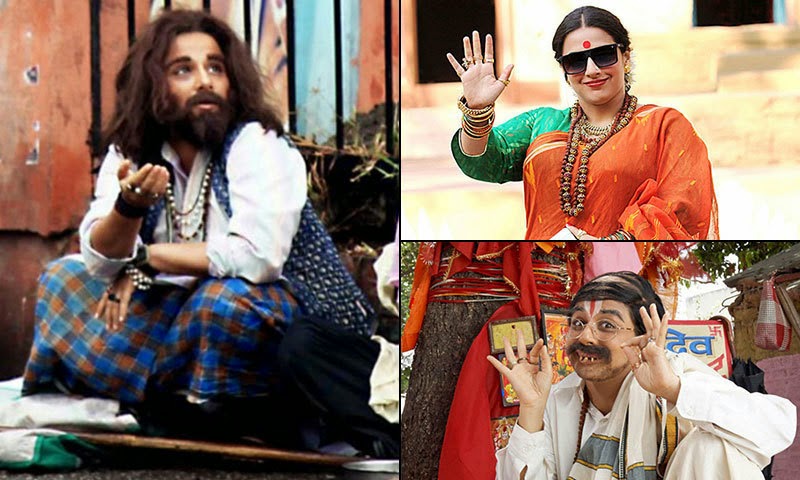
Balan plays dress-up in most of her locality-bound cases. An imam
with a hunchbacked posture, a balding, bucktoothed palmist, a ‘quite
ordinary’ orderly, a television producer with impossible bosoms, and
several low-key burqas help her in nailing down culprits like sons who
smoke, adulterous spouses or snooping facts on eligible marriage
proposals. 

Until one day, she is hired by Anees Khan (Kiran Kumar), a
shady character who wants her to track a girl named Nilofer, with only
the age and a birthmark in her hand as a lead….

The songs – there are three, with music by Shantanu Moitra – and the
cinematography by Vishal Sinha stay out of the way; they are
inconspicuous, but do their job well.

The other show-stealer, apart from Bobby, is the production design and the sensibility of the Hyderabadi lifestyle.

Samar Shaikh, who graduated from Assistant Directing (Dhoom, Badmaa$h Company) and storyboarding (Chakde! India, Dhoom 3), has a gift of keeping things in check without letting clichĂ© step in – and that is a feat by itself.

……….

 Link: http://www.dawn.com/news/1118574/movie-review-bobby-jasoos-a-must-watch

…….

regards

Indians for motorcycle maintenance (Harley)

….Matloff, agreed that age plays into it — because older
workers require higher pay…Temporary workers….don’t require
long-term health care for dependents….aren’t around long enough to
get significant raises….

….
The temps are also more docile, so it is easy on the managers.

The largest growth centers of many American companies (Apple is an exception) is in India. While the pain for US job-seekers is real, hiring Indians is reducing world-wide inequality. It can also be argued that by integrating India into the world economy the US is helping stabilize almost 20% of the world population at very little cost.

Still it is a very brave man who can/will attempt to counter the I was hired to train an Indian and then fired anecdotes. It is clear that the companies want to hire cheap, young  temps (foreigners) instead of expensive, aged natives who will stay put.

The future is even more terrifying…when all the jobs will be performed by robots. It seems that capitalism will require to re-invent itself in order to keep revolutions at bay.
………….
Kelly
Parker was thrilled when she landed her dream job in 2012 providing tech
support for Harley-Davidson’s Tomahawk, Wisconsin, plants. The divorced
mother of three hoped it was the beginning of a new career with the
motorcycle company.

The dream didn’t last long. Parker claims
she was laid off one year later after she trained her replacement, a
newly arrived worker from India. Now she has joined a federal lawsuit
alleging the global staffing firm that ran Harley-Davidson’s tech
support discriminated against American workers — in part by replacing
them with temporary workers from South Asia.


….


The firm,
India-based Infosys, denies wrongdoing and contends, as many companies
do, that it has faced a shortage of talent and specialized skill sets in
the US. Like other firms, Infosys wants Congress to allow even more of
these temporary workers.

But amid calls for expanding the
nation’s so-called H-1B visa programme, there is growing push-back from
Americans who argue the programme has been hijacked by staffing
companies that import cheaper, lower-level workers to replace more
expensive US employees — or keep them from getting hired in the first
place.

“It’s
getting pretty frustrating when you can’t compete on salary for a
skilled job,” said Rich Hajinlian, a veteran computer programmer from
the Boston area. “You hear references all the time that these big
companies … can’t find skilled workers. I am a skilled worker.”Hajinlian, 56, who develops his own web applications on the side, said
he applied for a job in April through a headhunter and that the
potential client appeared interested, scheduling a longer interview.
Then, said Hajinlian, the headhunter called back and said the client had
gone with an H-1B worker whose annual salary was about $10,000 less.
“I didn’t even get a chance to negotiate down,” he said.

The H-1B programme allows employers to temporarily hire workers in
specialty occupations. The government issues up to 85,000 H-1B visas to
businesses every year, and recipients can stay up to six years. Although
no one tracks exactly how many H-1B holders are in the US, experts
estimate there are at least 600,000 at any one time. Skilled guest
workers can also come in on other types of visas.

An
immigration bill passed in the US Senate last year would have increased
the number of annually available H-1B visas to 180,000 while raising
fees and increasing oversight, although language was removed that would
have required all companies to consider qualified US workers before
foreign workers are hired.

The House of Representatives never
acted on the measure. With immigration reform considered dead this year
in Congress, President Barack Obama last week declared he will use
executive actions to address some changes. It is not known whether the
H-1B programme will be on the agenda.

Facebook CEO Mark
Zuckerberg is among the high-profile executives pushing for more H-1Bs.
The argument has long been that there aren’t enough qualified American
workers to fill certain jobs, especially in science, engineering and
technology. Advocates also assert that some visa holders will stay and
become entrepreneurs.

Critics say there is no across-the-board
shortage of American tech workers, and that if there were, wages would
be rising rapidly. Instead, wage gains for software developers have been
modest, while wages have fallen for programmers.

The liberal
Economic Policy Institute reported last year that only half of US
college graduates in science, engineering and technology found jobs in
those fields and that at least one third of IT jobs were going to
foreign guest workers.

The top users of H-1B visas aren’t even
tech companies like Google and Facebook. Eight of the 10 biggest H-1B
users last year were outsourcing firms that hire out thousands of mostly
lower- and mid-level tech workers to corporate clients, according to an
analysis of federal data by Ron Hira, an associate professor of public
policy at Rochester Institute of Technology. The top 10 firms accounted
for about a third of the H-1Bs allotted last year.

The debate
over whether foreign workers are taking jobs isn’t new, but for years it
centered on low-wage sectors like agriculture and construction. The
high-skilled visas have thrust a new sector of American workers into the
fray: the middle class.

Last month, three tech advocacy groups
launched a labor boycott against Infosys, IBM and the global staffing
and consulting company Manpower Group, citing a “pattern of excluding US
workers from job openings on US soil.”

They say Manpower, for example, last year posted US job openings in India but not in the United States.

“We
have a shortage in the industry all right — a shortage of fair and
ethical recruiting and hiring,” said Donna Conroy, director of Bright
Future Jobs, a group of tech professionals fighting to end what it calls
“discriminatory hiring that is blocking us … from competing for jobs
we are qualified to do.”

“US workers should have the freedom to compete first for job openings,” Conroy said.

Infosys spokesman Paul de Lara responded that the firm encourages
“diversity recruitment,” while spokesman Doug Shelton said IBM considers
all qualified candidates “without regard to citizenship and immigration
status.” Manpower issued a statement saying it “adopts the highest
ethical standards and complies with all applicable laws and regulations
when hiring individuals.”

Much of the backlash against the H-1B
and other visa programmes can be traced to whistleblower Jay Palmer, a
former Infosys employee. In 2011, Palmer supplied federal investigators
with information that helped lead to Infosys paying a record $34 million
settlement last year. Prosecutors had accused the company of
circumventing the law by bringing in lower-paid workers on short-term
executive business visas instead of using H-1B visas.

Last
year, IBM paid $44,000 to the US Justice Department to settle
allegations its job postings expressed a preference for foreign workers.
And a September trial is set against executives at the staffing company
Dibon Solutions, accused of illegally bringing in foreign workers on
H-1B visas without having jobs for them — a practice known as
“benching.”

In court papers, Parker claims that she was given
positive reviews by supervisors, including at Infosys, which she
maintains oversaw her work and the decision to let her go. The only
complaint: Her desk was messy and she’d once been late.
Neither Parker nor other workers involved in similar lawsuits and contacted by The Associated Press would discuss their cases.
Parker’s attorney, Dan Kotchen, noted that the case centers on
discrimination based on national origin but said that “hiring visa
workers is part of how they obtain their discriminatory objectives.”

Infosys is seeking a dismissal, in part on grounds that it never hired
or fired Parker. Parker was hired by a different subcontractor and kept
on, initially, after Infosys began working with Harley-Davidson.

A company spokeswoman said Infosys has about 17,000 employees in the
US, about 25% US hires. In filings to the US Securities and Exchange
Commission, the company said it has more than 22,000 employees with
valid temporary work visas, some not in the US.

Stanford
University Law School fellow Vivek Wadwha, a startup adviser, said firms
are so starved for talent they are buying up other companies to obtain
skilled employees. If there’s a bias against Americans, he said, it’s an
age bias based on the fact that older workers may not have the latest
skills. More than 70% of H-1B petitions approved in 2012 were for
workers between the ages of 25 and 34.
“If workers don’t constantly retrain themselves, their skills become obsolete,” he said.

Norm Matloff, a computer science professor at the University of
California, Davis, agreed that age plays into it — not because older
workers are less skilled but because they typically require higher pay.
Temporary workers also tend to be cheaper because they don’t require
long-term health care for dependents and aren’t around long enough to
get significant raises, he said.

Because they can be deported
if they lose their jobs, these employees are often loath to complain
about working conditions. And even half the standard systems analyst
salary in the US is above what an H-1B holder would earn back home.

Such circumstances concern Americans searching for work in a still recovering economy.

Jennifer Wedel of Fort Worth, Texas, publicly challenged Obama on the
visa issue in 2012, making headlines when she asked him via a public
online chat about the number of foreign workers being hired — given that
her husband, a semiconductor engineer, couldn’t find work.

Wedel said her husband eventually found a job in the health care industry, taking a $40,000 pay cut.
“It’s a slap in the face t
o every American who worked hard to get their
experience and degrees and has 10 or 15 years of experience,” she said,
adding that firms want that experience but don’t want to pay for it.
To her, the issue isn’t about a shortage of workers who have the right skills. Put simply, she said: “It’s the money.”

………

……

Link: http://timesofindia.indiatimes.com/tech/tech-news/Backlash-stirs-in-US-against-H-1B-visas/articleshow/37946545.cms

………

regards

Now we know (who you are)

The world of BPeeps (as we imagine it) is pretty pish-posh. An insight into the life-style that we would love to follow (if we had the money). For now we can only find release in idle envy and non-lethal barbs (no occupy movement for us).

The propaganda is intended to be soft (focused on women) but ends up looking a bit silly (in our opinion).
……

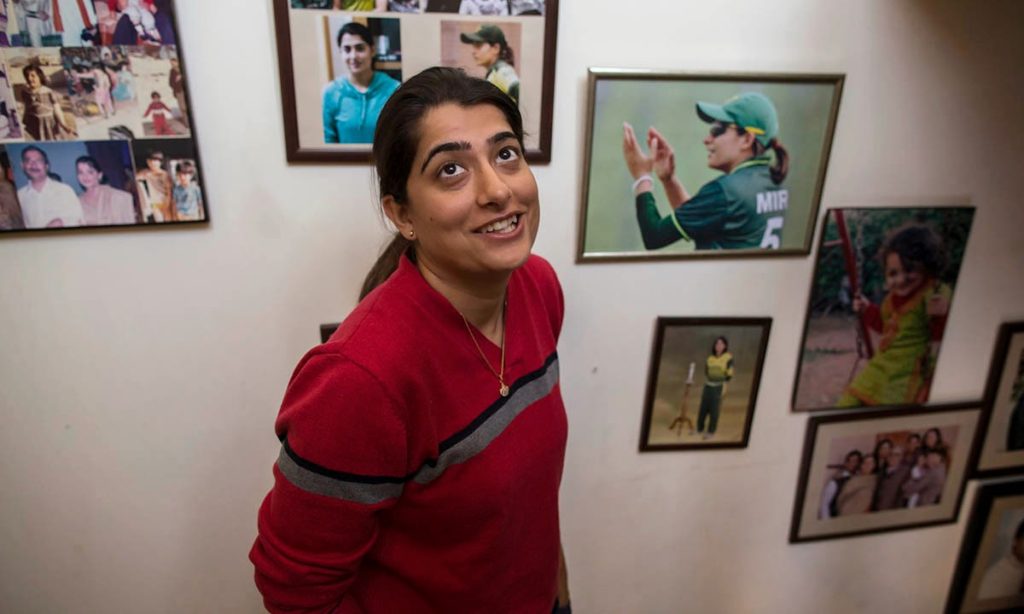
Nice pix, gonad busting (slightly scary) lady.

Genuinely likeable case #1. Sana Mir is a role model for all of us.

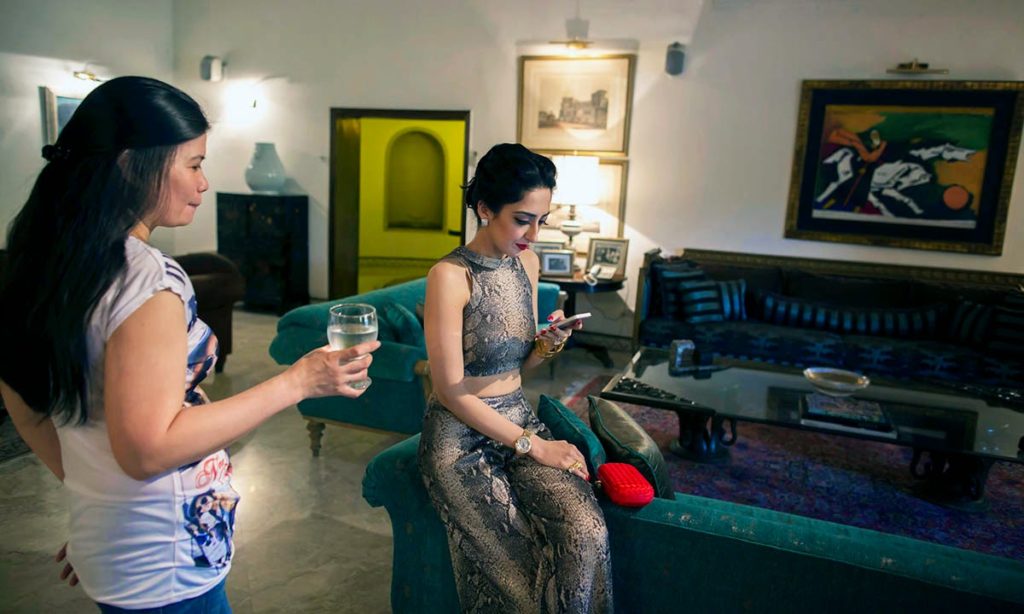
We are not sure of the propaganda value of this picture. It used to be that rich people would employ domestics from the village (gaon). Now they have upgraded to imported labor from the Philippines. Also, what is an educationalist??

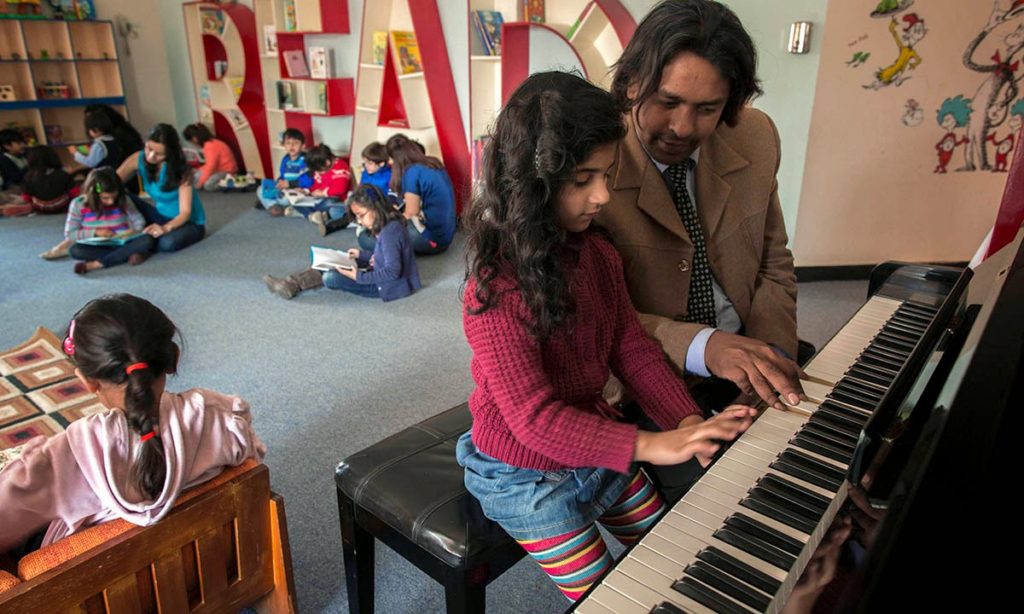
This is the place where the super-rich will send their kids to learn about the nice things of life. The music instructor plays the sophisticated piano (not the ridiculous harmonium) and he is dressed appropriately in a suit and a tie.

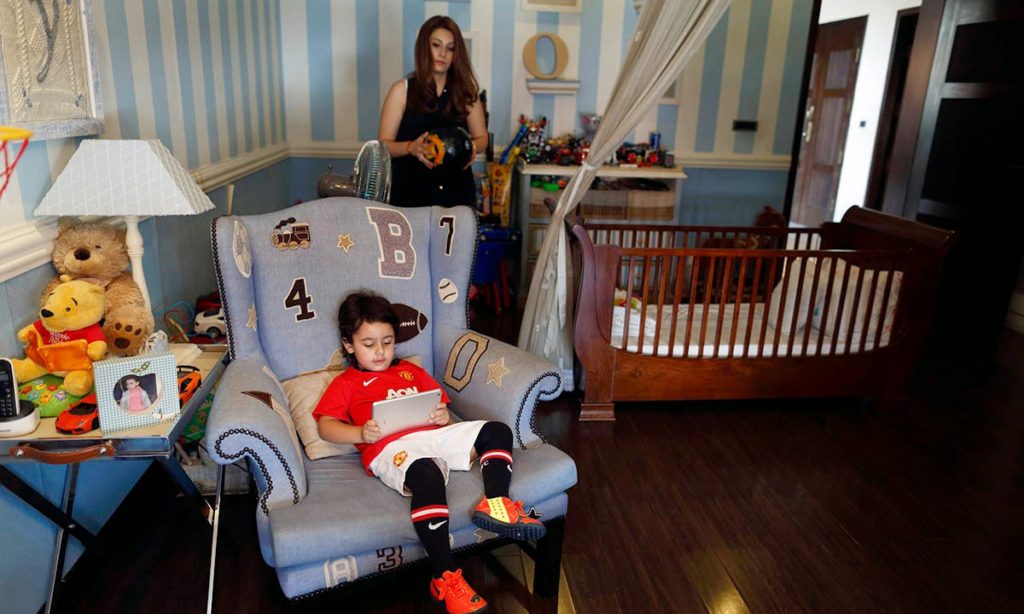
A cozy throne for the little emperor.

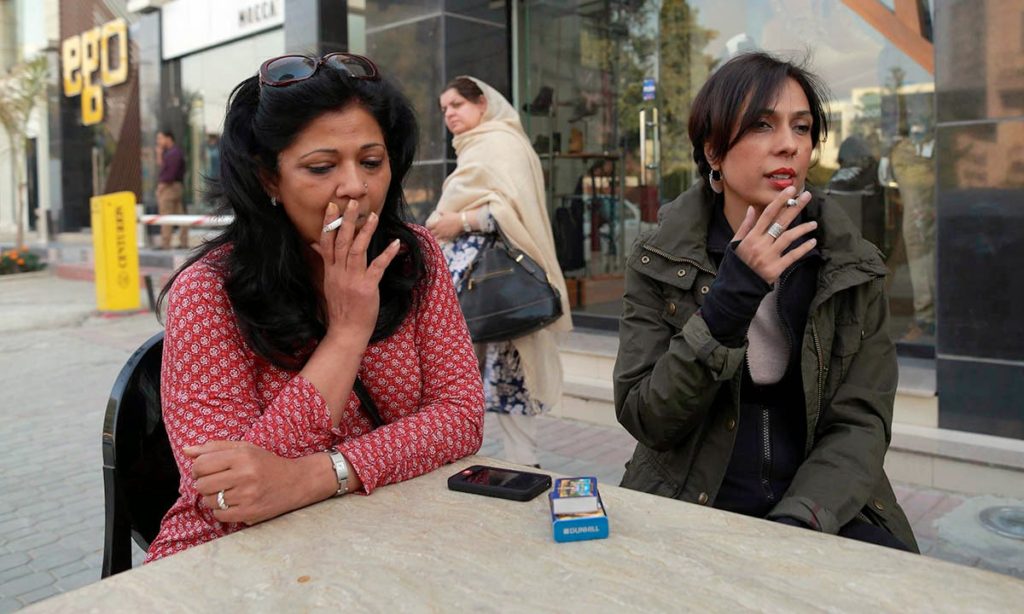
She is a health-specialist and she smokes? We really dig the rebellious spirit….if we were a cool teenage girl that is.

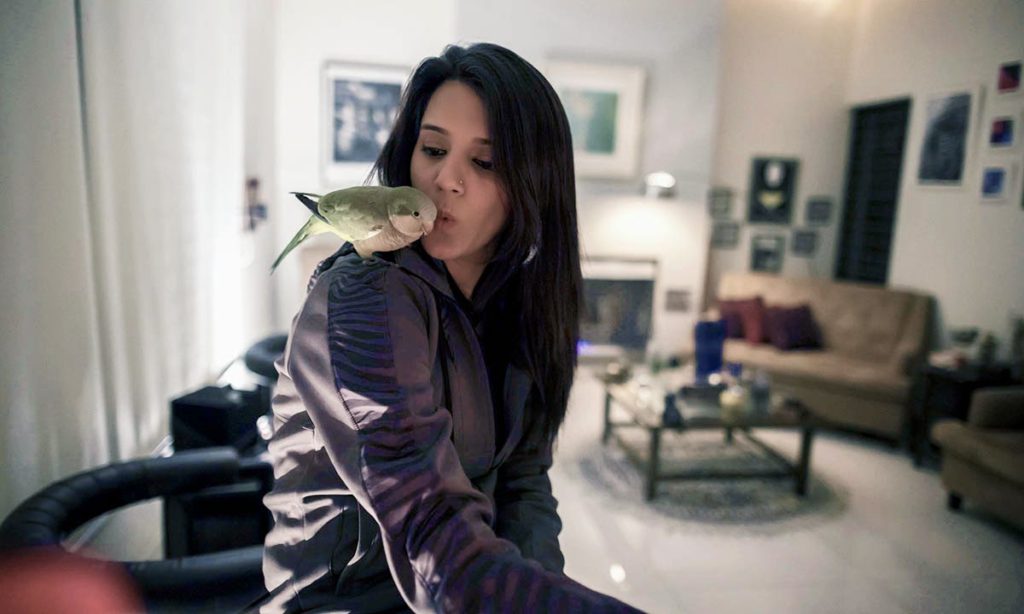
Looks like a villain in a Bond movie (why not females?).

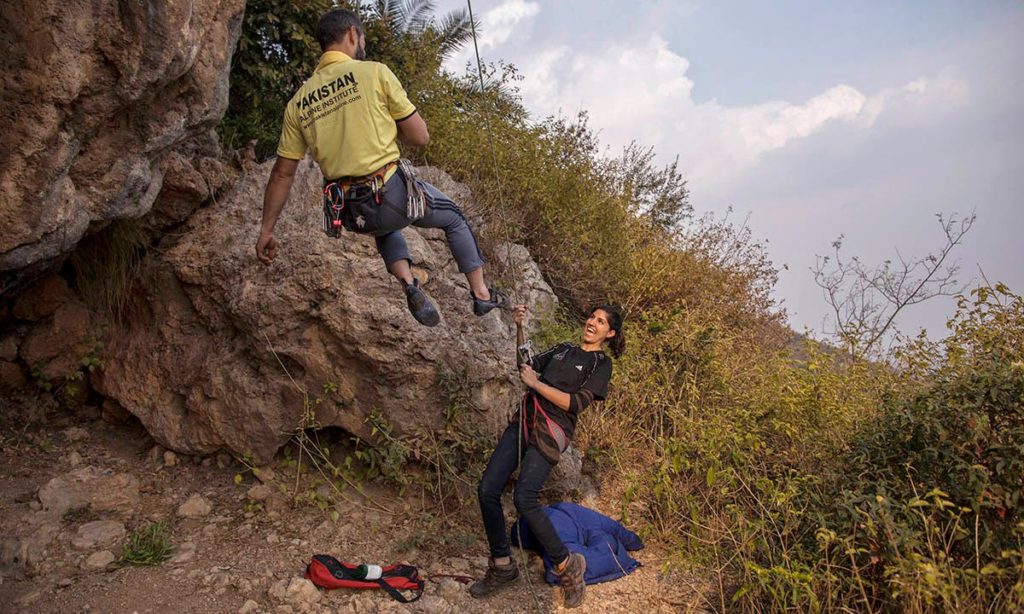
Genuinely likeable case #2

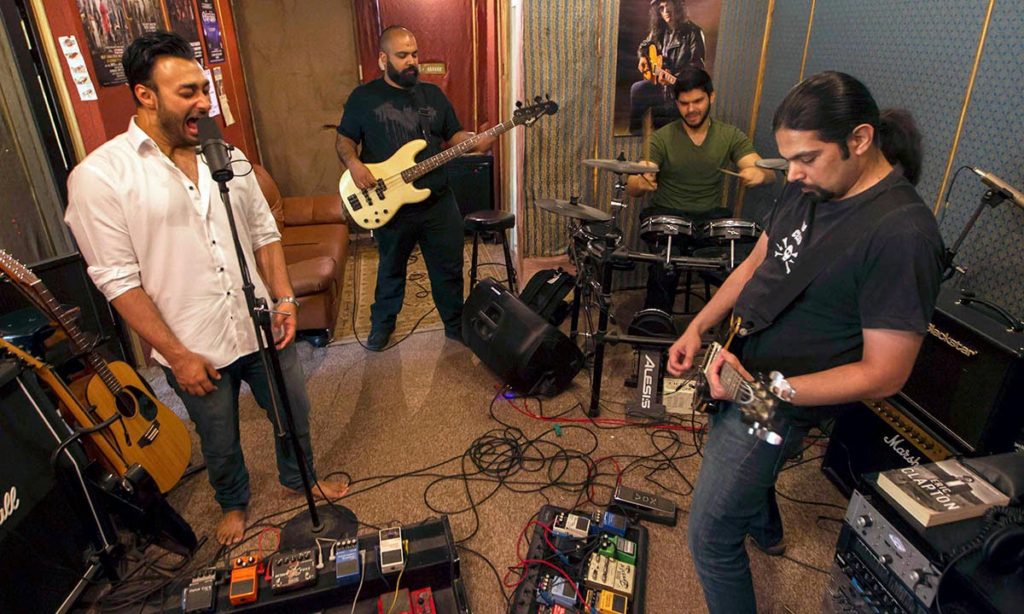
The inevitable band of brothers, much better than smoking hookah together.

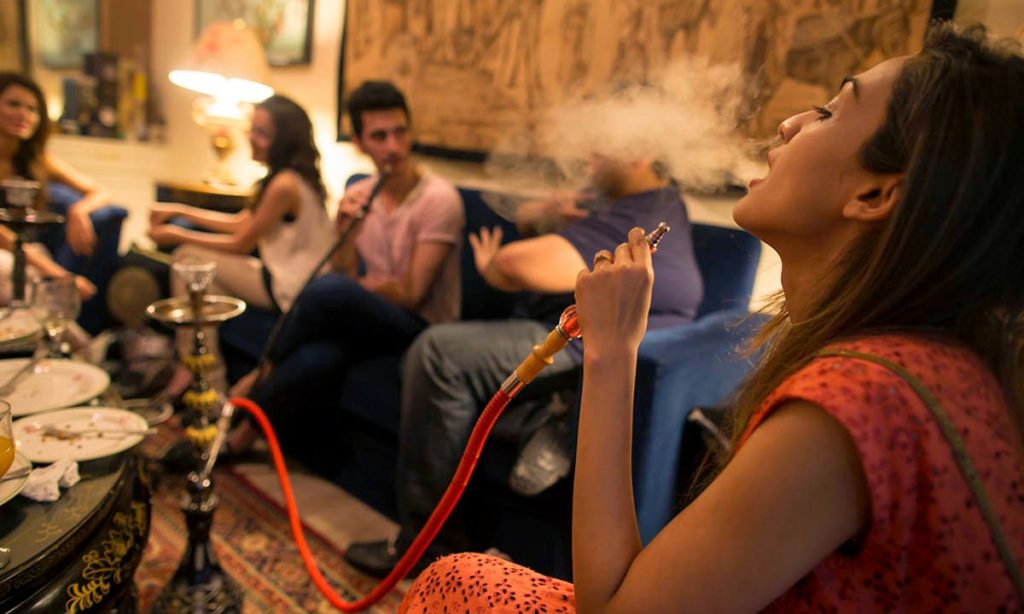
Artists smoking the hookah (this is also alarmingly popular amongst rebellious youth in the USA)

…..

Link: http://www.dawn.com/news/1118136/the-other-pakistan

…..

regards

Brown Pundits