Not yet ready for (online) purple fingers

The Supremes have decided: no online voting for NRIs 

Still, the issue merits careful attention. We depend on NRIs to keep our economy afloat, politicians are raising huge amount of money in the West, it is only fair that these poor rich people get a way to vote without incurring too much hardship.

And if NRIs are able to vote online what is the big deal in permitting residents to vote online too?


Hopes
of NRIs of casting votes in the ongoing elections through the internet
were dashed on Friday with the Supreme Court saying any interim relief
at this stage may open a Pandora’s box.


 The court took into
consideration the Election Commission’s submission that grant of interim
relief at this stage would be beyond the scope and relief claimed by
the petitioners when voting has already taken place for 104 LS seats.
“Will it not open a Pandora’s box? If some consideration is given,
practical difficulty will arise,” the apex court said. 


Here is the backstory
……
The Election Commission (EC) informed the Supreme Court Monday that
it was exploring the means of enabling Non-Resident Indians (NRIs) to
vote online but expressed its inability to facilitate voting in foreign
locations or provide any other alternative for the upcoming general
elections.


The Bench, however, asked the EC to try its best to do something in
this election. “You still have some time left” said the Bench, asking
the EC whether around 12,000 NRIs, who are registered NRI voters, could
be allowed to use their franchise through postal ballot in this
election.

The court was hearing a PIL filed by NRI, Shamsheer VP, who contended
that the existing provision which mandates NRI voter to be physically
present in the constituency to exercise his vote was discriminatory and
violative of fundamental rights.

…..

While the Court did not address the matter there is also the tricky question of migrants voting. It seems reasonable that they would be incentivized to vote, especially in such a crucial election. Our (controversial) suggestion is to give these folks citizenship and bring them out of the shadows (of the shadow economy).  

If the BJP feels aggrieved that there are too many muslims from Bangladesh, they should arrange for re-balancing (on the backs of Tibetans, Pak-Hindus, and Bangla-Hindus). Just like the USA first amendment debates (speech must be countered by more speech), votes should be countered by more votes!!!

regards

Not in our name (not quite good enough)

This letter is indeed one on which we would like to attach our name but for an important caveat. The Hindu pilgrims on the train who got burnt to death should have been mentioned (not as a justification for the riots). Leftists are so cute when they feel that others (including neutrals) will not notice their acts of omission even when they are the first people to find (micro level) fault with others.

Bottom-line murdering people is bad. Murdering people with state power backing is evil. This has been the bane of India since ever (starting from the Hindu era), but in the modern times one particular event stands out for its culpability: Direct Action Day declared by the Muslim League in 1946. Short term policies of might is right might have helped gain Pakistan (this is not to question the validity of the Pakistan movement as a flowering of muslim nationalism in SAsia) but then it went sour right away when people died for the cause of Bengali in 1952.

And now the sword (of criminals patronized by  the state) has fallen on 40 million Shias (even though the founder father of Pakistan was a Shia). Following the same logic espoused in 1940 they should be demanding partition (Indian muslim leaders have already warned about another partition- should Modi become head of Hindu-stan). Yet Shia voices in Pakistan stay silent. Why?
…..


Without questioning the validity of India’s democratic election process, it is crucial to remember the role played by the Modi government in the horrifying events that took place in Gujarat in 2002.
The Muslim minority were overwhelmingly the victims of pillage, murder
and terror, resulting in the deaths of more than 2,000 men, women and
children. Women, in particular, were subjected to brutal acts of
violence and were left largely unprotected by the security forces. 


Although some members of Narendra Modi’s government are now facing
trial, Modi himself repeatedly refuses to accept any responsibility or
to render an apology. Such a failure of moral character and political
ethics on the part of Modi is incompatible with India’s secular
constitution, which, in advance of many constitutions across the world,
is founded on pluralist principles and seeks fair and full
representation for minorities. Were he to be elected prime minister, it
would bode ill for India’s future as a country that cherishes the ideals
of inclusion and protection for all its peoples and communities.

Anish Kapoor, artist
Homi K Bhabha, professor of the humanities, Harvard University
Salman Rushdie, novelist
Deepa Mehta, film director
Dayanita Singh, artist
Vivan Sundaram, artist
Dame Helena Kennedy, barrister
Imran Khan, solicitor
Mike Wood, British Member of Parliament
John McDonnell, British Member of Parliament
Fiona Mactaggart, British Member of Parliament
Jacqueline Bhabha, director of research, François-Xavier Bagnoud Center for Health and Human Rights, Harvard University
Kumar Shahani, film director
Geeta Kapur, art historian
Pragna Patel, director of the Southall Black Sisters
Sashi Kumar, film producer
Jayati Ghosh, economist
Prabhat Patnaik, economist
MK Raina, actor/film director
Ram Rahman, artist
Saeed Mirza, screenwriter
Anuradha Kapur, National School of Drama in Delhi
Kumkum Sangari, professor of English and the humanities, University of Wisconsin
Gautam Appa, emeritus professor, London School of Economics
Chetan Bhatt, professor of sociology, London School of Economics
Suresh Grover, director, Southall Monitoring Group

…..

regards

An orphan for life

Jashodaben Narendrabhai Modi was quite the orphan growing up (lost her mom when just two, lost her papa in Class X). And then she had to face adult-hood all alone (her brothers did support her). 

She is also the ideal Hindu woman -pati-brata bharatiya nari – who wishes her husband the best – “I just wish that he  progresses in whatever he does. I know
he will become PM one day”
–  even though he treated her the worst.
This is the generation which is on its way out. The youthful girls of today will no longer stand by their man in such a manner. They will demand respect…and if they dont get it…simply walk away. Regardless of the dust storm of atrocities that are blinding us right now, the sun is setting on patriarchy in India.
…..
The man she claims is still her “husband” is the BJP’s prime
ministerial candidate and is considered the frontrunner for the top job
this year.  But Jashodaben, 62, a retired school teacher who was married
to Gujarat Chief Minister Narendra Modi when she was 17 — and separated
after about three years — is far removed from the rough and tumble of
politics.


She gets a monthly pension of Rs 14,000, lives mostly with a brother
and spends much of her time in prayer. In Ahmedabad to visit her
extended family, she agreed to be interviewed by The Indian Express but
refused to be photographed. Excerpts from her first interview since Modi
was named PM candidate:


For how long were you married and what is the status of the marriage?

We married when I was 17… I had quit studies once I went to his place
and remember him saying he wanted me to pursue my education. He would
mostly talk to me about completing my education. Initially he took
interest in talking to me and even in the affairs of the kitchen.


Do you feel burdened by the relationship, especially when the
media asks you about your strained relationship? Are you instructed to
remain low profile?


We have never been in touch and we parted on good terms as there were
never any fights between us. I will not make up things that are not
true. In three years, we may have been together for all of three months.
There has been no communication from his end to this day.


Do you track the news about Narendra Modi?

Yes, I read everything that I can get my hands on. I read all the
newspaper articles and also watch news on the television and like to
read about him.


If he becomes the next Prime Minister and moves to Delhi,
would you like to go back to him, if he calls you back? Will you try and
meet him?


I have never gone to meet him and we have never been in touch. I
don’t think he will ever call me. In whatever I say, I do not want it to
harm him. I just wish that he  progresses in whatever he does. I know
he will become PM one day!


Did he ever tell you he was leaving you or quitting the marriage?

He told me once that “I will be traveling across the country and
will go as and where I please; what will you do following me?” When I
came to Vadnagar to live with his family, he told me “why did you come
to your in-laws’ house when you are still so young, you must instead
focus on pursuing your studies”. The decision to leave was my own and
there was never any conflict between us. He never spoke to me about the
RSS or about his political leanings. 

When he told me he would be
moving around the country as he wished, I told him I would like to join
him.
However, on many occasions when I went to my in-laws’ place, he
would not be present and he stopped coming there. He used to spend a lot
of time in RSS shakhas. So I too stopped going there after a point and I
went back to my father’s house.


Are you still legally Modi’s wife?

Every time people take his name, I am also mentioned somewhere, even
though in the background. Did you not come all the way and look all
over, to find me and come and speak to me? If I was not his wife, would
you have come to speak to me?


Do you feel slighted that your status as a wife has not been acknowledged by him in all these years?

No. I don’t feel bad, because I know that he is doing so due to
destiny and bad times. In such situations he has to say such things and
also has to lie. I don’t see my situation as being bad because I feel,
in a way, my luck has improved too.


Why have you never remarried?

After this experience, I don’t think I want to. My heart is not into it.

How did you support yourself after you moved back to your parents’ house?

My in-laws treated me well, but would never speak about the marriage.
My father paid the fees for my studies and I also got some financial
assistance from my brothers to continue my education. 

I had lost my
mother when I was two years old and I lost my father two years after I
started studying again and was in class 10. However, once I started my
studies, I started to enjoy learning and did my SSC in 1974, and went on
to complete my teachers training in 1976 and became a teacher in 1978.


How do you spend your retired days?

I enjoyed teaching and taught classes from the first to fifth grade
and taught all subjects. Nowadays, I mostly start my day by 4 am and
begin with prayers to Ambe Ma (Goddess Durga). I spend all my time in
Bhakti (prayer). I mostly live with my elder brother Ashok Modi who
lives in Unjha but I keep visiting the home of my other brother who
lives in Brahman Vada near Unjha whenever I feel like. I feel I have got
good brothers who have supported me.

…..
regards

The anti anti-rape backlash

The patriarchy has been badly embarrassed by the atrocities committed on Indian women. It was a question of something must be done to wake up a society deep in slumber and sick up to the neck. The anti-rape ordinance that has been passed and may be considered a harsh response to a deadly virus that was sweeping through communities. Another thing good happened, women were no longer willing to take things lying down.

The two most vile cases have been fast-tracked (along with others) and now we have a number of “boys” sentenced to death. While in the Nirbhaya case (Delhi) boys were hindus, in the Shakti Mills case (Mumbai) boys were muslims.

Now the backlash has started and the politicians are finding a way to exploit anxieties about boys getting harsh punishment because of bad behavior. With Mullah Mulayam it is another way to win the hearts of muslim families (as if muslims dont care about what happens to girls). 
…..
Samajwadi Party leader Abu Azmi has said that any woman who has sex outside marriage should be hanged, including rape victims. According to a report published in Mid-Day,
Azmi said, “Rape is punishable by hanging in Islam. But here, nothing
happens to women, only to men. Even the woman is guilty.”


….
The
Samajwadi Party leader further added, “In India, if you have sex with a
person with consent, it’s fine. But if that same person complains, it’s a
problem. Nowadays, we see a lot of such cases. Girls complain when
someone touches them, and even when someone doesn’t touch them. It
becomes a problem then, and the man’s honour is ruined in this. If rape
happens with or without consent, it should be punished as prescribed in
Islam.”

When asked for a solution to the problem of rapes, Azmi
had this to say: “Solution is this: any woman if, whether married or
unmarried, goes along with a man, with or without her consent, should be
hanged. Both should be hanged. It shouldn’t be allowed even if a woman
goes by consent.” 
Samjawadi
Party chief Mulayam Singh Yadav on Thursday opposed the new anti-rape
law and said that his party would change the law that entails death for
rape.

Addressing a rally in Moradabad, Mulayam said, “rape accused should not be hanged. Men make mistakes.”

The SP chief further said he will support provision for legal action against those who misuse the rape act.

Citing the recent example of a court sentencing three men found guilty
of gang-raping two women in the abandoned Shakti Mills in Mumbai last
year, he said there was a need to change the new rape law which provides
for death sentence to repeat rape offenders.

“Efforts will be
made to change such a law, so that those misusing it are punished. Those
filing false reports will also be taken to task,” he said.

Mulayam said boys and girls fall in love but due to differences they
fall apart later on. “When their friendship ends, the girl complains she
has been raped,” he said, stressing the need for changes in the
anti-rape law. ………. 

regards

A new capital for Hindu-stan

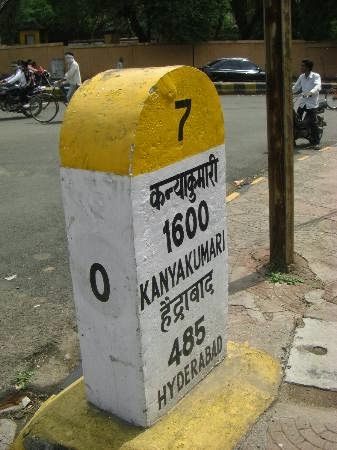
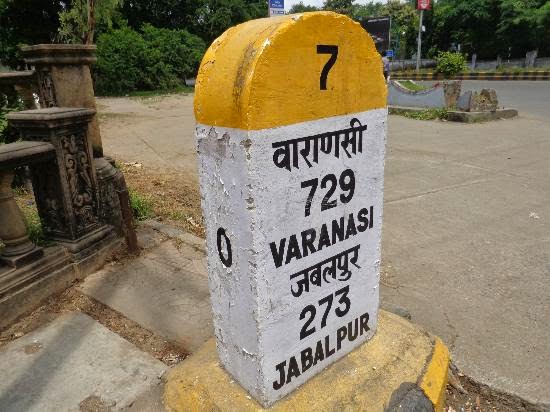
If our leaders had any sense they would re-locate the capital from Delhi to Nagpur. This is the famous city of Oranges, and it has a zero mile marker indicating the centre-point of India. For now it is the capital of Vidarbha (and winter capital of Maharashtra) and a fully cosmopolitan city (more North Indian flavor than Marathi). 

Nagpur is well connected to rest of India and is closer to most of
India than Delhi. Most important, it is proximate to the Adivasi/Maoist
belt. The capital re-location would ensure that the heartlands (which
presently suffer from sever neglect) get a bit more TLC.

Nagpur
is also the home of the RSS and knowledgeable observers of India know
of this and are looking ahead (see below). If the BJP comes to power it
can shake things up by moving house. If nothing else the people of the
Deccan Plateau (South-Central and Southern India) would welcome such a
move and may even develop a soft corner for a (primarily) Hindi-belt
party. This fellow feeling would be critical for BJP to nurture and
develop in order to challenge Congress in those impregnable southern
forts.

….
British
high commissioner Sir James David Bevan today visited Nagpur to witness
the polling process in Naxal-hit Vidarbha region during the first phase
of Lok Sabha elections in Maharashtra. 

“I am here to observe
the wonderful experience of polling in the world’s largest democracy and
enjoying it,” the senior diplomat told PTI, adding Britain is also
keenly following Indian elections.

On why he chose to come to
Nagpur when he lived in Delhi, where seven LS seats went to polls on
Thursday, James said he wanted to visit other places in the country to
keenly watch the democratic process.

James arrived here this
morning from Delhi and drove straight to the residence of former BJP
national president Nitin Gadkari who is contesting his first Lok Sabha
election this time from here. He spent nearly half-an-hour with the 56-year-old stalwart at ‘Gadkariwada’ in Mahal. Later, James visited some of the polling booths. Gadkari, accompanied
by his wife Kanchan and the family, cast his vote in Town Hall polling
centre amid media glare.

Ten Lok Sabha constituencies in Vidarbha where polling is underway
since 7 AM are Nagpur, Ramtek, Bhandara-Gondia, Gadchiroli,
Chandrapur,Akola, Amravati, Buldana, Wardha and Yavatmal-Washim.


regards

(mis)marriage for Mrs Modi

What is wrong with marriage? An ordinary man may become distracted and lose focus, but a Great Man should have no such misgivings.

What is wrong with having a good woman by your side? Usually it is the Ceasar’s in-laws that create most of the problems. Look at the first dynasty and the mad mango man (son-in-law).

Who is the ideal man? We expect a man to always stand by his wife. For life. Even the most perfect man (Ram) had erred grievously when he abandoned his wife (Sita). It is acknowledged that the man (as a minor) did not have a say in the nuptials (but neither did the woman) however once you have said the vows you have no choice but to honor them. 

If you treat your wife dishonorably how will you treat (Mother) India?
…..
Married
at 17 to a bride about his age, BJP’s PM candidate Narendra Modi has
admitted for the first time under oath that he has a wife.


In
his nomination form for the Vadodara Lok Sabha seat, which he filed amid
much fanfare on Wednesday, he entered the name of Jashodaben as his
wife. She is a retired school teacher in Brahmanwada, a village about
35km from Modi’s hometown, Vadnagar.

Now 63, the former RSS
pracharak had left the column blank in the last four state assembly
elections in 2001, 2002, 2007 and 2012. This was first openly challenged
in pamphlets distributed by Congress in January 2001 when Modi
contested the by-election to the Rajkot-2 assembly seat, three months
after becoming Gujarat CM.

His opponents hope that this
disclosure will dent his popularity among women who might empathize with
Jashodaben, whom he never returned to after two weeks of their
nuptials.

The declaration is reported to have come after strict
legal advice that he come clean on the marriage which, his family
members say, was never consummated.

As per the Representation
of the People Act, 1951, every candidate is required to declare even
assets held in the name of the spouse. In his nomination form, Modi has
said he has no information about Jashodaben’s income, IT returns and PAN
details.

The Supreme Court in November last year had refused
to entertain a PIL accusing Modi of leaving the column on marital status
blank in the nomination papers for the Maninagar assembly seat in 2012.

….
regards

Muslim Brahmin axis rides high (on elephant back)

Brahmins (210), Muslims (19), SCs (17)!!!

One group has ruled India for a few centuries. The other group has been the social leaders for many more centuries.

Now the (dalit) Rani riding high on her elephant is graciously offering them (more than a fair share) a seat at the high table, provided she is made the high priest. The pyramid is inverted and a giant leap for social evolution!!!

This rainbow coalition must be driving the caste-hustlers nuts.
This
Lok Sabha election, the elephant will seek to trample the opposition
with the power of Muslim-Brahmin combination. In a tactical shift,
Bahujan Samaj Party (BSP) supremo Mayawati on Thursday decided to give a
larger chunk of seats to Brahmins (21) and Muslims (19) in comparison
to what she did in 2009 Lok Sabha election, when 20 Brahmins and 14
Muslims got the BSP ticket.
The higher allocation of seats to the two
communities has thus decreased the number of OBCs, who are ostensibly
being wooed by both Samajwadi Party and the Bharatiya Janata Party.

The move to give more seats to Muslims is seen as an attempt to woo the
community in the wake of west UP riots that claimed the lives of around
60 people, ostensibly from the minority. The lesser number of seats
allocated to OBCs is seen also as a shrewd move of Mayawati given the
fact that the community is already divided between SP and BJP. The BSP
chief also decided to field 17 SCs, eight Thakurs and seven women
candidates.

….
regards

Poor or Backward? (that is the question)

Option one: Reservations for everybody (already many political parties have floated the concept of reservations for economically lagging forward castes) as per political calculations (which are by necessity big tent- you cant win on the back of any one community, while simultaneously polarizing others) and held to strict scrutiny by the Courts.

Option two: Reservations for low income (low wealth). This way only poor people benefit from reservations. It will be difficult to argue that poor people of all classes are not equally deserving. After all, this is a principle which is already accepted in Option One.

The difference between the two is not expected to be significant, except the caste factor will be blunted in the second case. It may be also a clear cut way of introducing reservations for Muslims. 

Instead what we have is a bloody mess involving various communities fighting amongst themselves to prove how backward and how deserving they are. This only sharpens the caste factor and amplifies grievance and puts people in various (permanent) boxes. For greedy, grubby politicians- what is not to like?
….

The
Supreme Court on Wednesday rejected a plea to stay Centre’s poll-eve
notification to include the Jat community in the OBC list for providing
the benefits of reservation, saying there are prima facie material for
taking the decision.


Senior advocate K K Venugopal, appearing for OBC Reservation Raksha
Samiti — an organisation of members of communities which are included in
the central list of Backward Classes, alleged that the March 4
notification was issued a day before the model code of conduct (MCC)
came into force and it was done by the party in power to garner votes.

However, the bench said it cannot come in the way of the government taking a decision a day before the MCC came into force. “Government is a government. We can’t say, you can’t do. Till one day
before (the MCC), they can take a decision,” the bench said.

Venugopal submitted the party in power took the decision for private gain.

On April 1, the apex court had asked the Centre why it allegedly
ignored the advice of the National Commission for Backward Classes
(NCBC) to keep the Jat community away from reservation benefits.

The court had also said that “the matter is serious” and had directed
the ministry of social justice and empowerment to place before it all
the material, records and files pertaining to the decision, to see
“whether there was application of mind or not” while issuing the March 4
notification.

The notification included Jat community in OBC
list in Bihar, Gujarat, Haryana, Himachal Pradesh, Madhya Pradesh,
Delhi, Rajasthan (two districts of Bharatpur and Dholpur), Uttar
Pradesh, and Uttarakhand.

OBC Reservation Raksha Samiti in its
plea had contended that as a result of the notification, Jats will be
like a “creamy layer” in the OBC list and will take away the seats and
posts in schools, colleges and government jobs from other community.

The petitioners,
referring to several empirical studies and survey, have contended that
Jat community being a socially forward caste will consume substantive
portion of the quota of OBC reservation which will deprive the deserving
people of other backward classes of the benefit of reservation.

They submitted that people of Jat community have performed much better
than those of other castes and the number of those who have been
selected in the prestigious civil services exam of UPSC is much higher
than the number proportionate to their population.

….
regards

Seeking Jaziyah from muslims

Here is a living glowing consequence of the 2-nation theory. The basic premise is simple: If muslims deserve a separate homeland why should hindus not have one as well? The only thing that stands between this vision (demand) and reality is an unified muslim block vote for the Congress or its substitutes.

As Shahid Siddiqui points out such block-voting has come at a great expense of economic and social backwardness- which suits both the political masters and community leaders just fine. And ironically it has not even helped in making muslims feel secure (which is the rationale for Jaziyah).

But things may change. The worm will eventually turn. Muslims will reject the false choice of security and progress. They will demand both which they are fully entitled to, as citizens of India, regardless of caste and creed. That will hopefully be the beginning of a new India.
….


Jaziyah is the protection tax that non-Muslim citizens of an Islamic
state have to pay to the Islamic government for their safety and
well-being. In independent India minorities, especially Muslims, have to
pay Jaziyah of a different kind. This Jaziyah is in the form of votes,
paid to so-called secular parties, especially to Congress for ensuring
protection to them, for not letting India become a Hindu nation and
keeping it secular.


Since Independence this game has been
played both covertly and overtly. Media and intellectuals have,
knowingly or unknowingly, helped these parties in extracting this
‘electoral Jaziyah’ from insecure minorities. After partition, Muslims
who remained in India were told both by Muslim and ‘secular’ leadership
that if they wanted to survive in Hindu India it was their duty to
protect secularism, which in real terms meant voting for one party,
which in return would keep India secular.

In India’s political
lexicon, thereafter, ‘secularism’ became synonymous with ‘Muslim vote
bank’. The Sangh Parivar parties used it conversely to mean ‘appeasement
of Muslims’. Indian ‘secularism’ therefore was neither ‘sarva dharma
samabhava’ (equal respect for all religions) nor the European concept of
state above religion. It meant protecting minorities from possible
violence and discrimination. In practical terms it meant verbal
appeasement of Muslims, especially before elections.

The
socio-economic condition of Muslims deteriorated after Independence,
riot after riot made them more insecure, their representation in
government and private services declined, they became economically more
vulnerable. They went into a shell and their sense of victimhood made
them withdraw into a social and political ghetto.

Congress,
which claimed to be secular, took the service of maulanas, political
ulemas and other conservative elements instead of educated liberals to
garner Muslim votes. In other words communal leadership was imposed on
Muslims by ‘secular’ parties.

Liberal Muslim leaders demanded
economic and social rights while religious leaders were more concerned
with Muslim personal law or protection of madrassas or perceived notions
of ‘Islam in danger’. From Jawaharlal Nehru to Sonia and Rahul Gandhi,
‘appeasement’ of Muslim communal leadership, at a heavy cost to the
educational and economic growth of the community, took place.

Other ‘secular’ parties followed the same path of appeasing the
religious/communal leadership to garner the Muslim vote. ‘Secular’
leaders made a beeline to get political fatwas from Madanis of Deoband,
Ali Mian of Nadwatul Ulema, Shahi Imam Bukhari of Delhi’s Jama Masjid to
Arshadul Qadri and Tauseef Raza of Barelvi school, so that Muslims were
herded like sheep to vote for saving secularism.

Realising
that these ‘secular’ parties only cared for and promoted narrow
religious leaders, even educated liberal and secular Muslim leaders
started speaking the same language. Those like Azam Khan, Syed
Shahabuddin and the Owaisis replaced others like Dr Faridi, Karim
Chhagla, Fakhruddin Ali Ahmad or Arif Mohammad Khan.

Muslims
have been carrying this cross of secularism on their feeble shoulders
for the last 67 years. From my student days when we campaigned for
Subhadra Joshi and D R Goyal, great crusaders for secularism, we saw
that all meetings for ‘secular democracy’ were organised only in Muslim
localities, as if only Muslims were required to be educated about
‘secular India’.

Later we realised that it was not to educate
Muslims about secularism but to create the fear of Jan Sangh and Balraj
Madhok, making Muslims vote for Congress unquestioningly. The same game
has been played over and over again and gullible Muslims as well as
their intelligentsia have carried this cross as an honour and privilege
since Independence.

As chairman of Congress’ Minority Cell in
1996, I was surprised to discover that all its meetings began with
recitation of Quran. I stopped this practice as I considered it a
religious activity not suitable for a secular party. However, this was
held against me by my secular colleagues in the party. Whenever i spoke
about socio-economic and educational problems faced by the community, i
was told by Congress’ highest leadership that Muslims voted out of fear
and not for development.

The same attitude prevails in other
‘secular’ parties like SP or BSP. They believe in taking the Muslim vote
for granted. Muslims had no ‘option’ but to vote for these parties if
they wanted India to remain secular.

Any group or community
without an option in a democracy is a bonded slave of certain parties
and politics. There are regional alternatives like SP, Trinamool
Congress, RJD and so on — but their attitude is the same. They all
expect Muslims to pay protection money in the form of their votes, the
secular ‘Jaziyah’ of modern democratic India.

How long and for
how many more elections will this continue? When will secularism be the
need for a modern state which treats its citizens equally, rather than a
burden to be carried by minorities of this great nation? The enemies of
secularism are not those who have opposed it but those who have
manipulated it for their electoral benefit, looking to get Muslim votes
out of fear rather than from conviction.

The writer is a former MP and editor, Nai Duniya.


regards

Bangladesh war hero is history

It is true enough that those who do not learn from history are condemned to a repeat performance. However in order to learn from history one must first appreciate the importance of history. Indians have never ever written a proper history book (as opposed to propaganda), all the write-ups from the past have been composed by foreigners. Since there is so little evidence on record, there are broad possibilities for manufacturing new evidence (interpretations) by marxists and westerners,which are then subject to furious condemnation by the Hindutva brigade (as insult to hindus and hindusim). But it is clear that the origin of the problem lies not in our stars but in ourselves.

If our leaders had any sense (and shame), INS Vikraant would be converted into a museum and the history of the Bangladesh war should be re-told with a focus on the victims (all of them) not victors. While all groups suffered it was primarily the Hindus who were exterminated or driven out of the country to lead life as refugees in India (where they would face extreme prejudice in Dandakaranya and elsewhere). Hindu homes even had charming yellow stars painted on them. People were shot on the spot depending on whether they were circumcised or not. The powers that be kept quiet at that time because they wanted to focus on bangla nationalism (and punjabi racism) and not the hindu-muslim divide. But why the silence after such a long time?

To be sure all this is not conspiracy just incompetence on a grand, incomprehensible scale.
The
decommissioned aircraft carrier of the Indian Navy, INS Vikrant, which
played an important role in the 1971 Indo-Pak war, has been sold for Rs
60 crore. “The auction process of INS Vikrant was completed
last week and a company named IB Commercial Pvt Ltd won the bid,” said a
defence source here tonight.

Earlier, the Maharashtra
government had expressed its inability to maintain Vikrant, the Indian
Navy’s first aircraft carrier which was commissioned in 1961. It was
decommissioned in January 1997.

In January 2014, during the hearing of
a public interest litigation which opposed the plan to scrap the ship,
the Union ministry of defence told the Bombay high court that it had
completed its operational life.
 While the Maharashtra government stated that to preserve it as a museum would not be viable financially. The high court subsequently dismissed the PIL.  The Majestic-class
aircraft carrier, purchased from Britain in 1957, played a key role in
enforcing the naval blockade of East Pakistan during the Indo-Pakistan
War of 1971.

….
regards

Brown Pundits