Ugly duckling hopes to be a swan

Many many people question the value of democracy in a country like India filled with poor, illiterate, low information people. This thinking can be logically extended to the necessity of a popular ballot. After all the elections will consume of the order of $5 Bil. Why do it?


One answer to the above question is that it demonstrates at least one area where the Indian state does a gargantuan job reasonably well (also getting better with time with further scope for improvement). Heavy-weight candidates lose elections by a 1000 votes and accept the result without comment. This is such a remarkable fact…that it is ignored for the most part. 

The Economist is inspired by the election process (if not the headline candidates) and inspects the functional parts of the Indian state and considers how to improve the non-functional parts. Excellent advice for the most part.

One thing that did not merit a few bytes is the importance of (appearance of) non-partiality. The reason the Election Commission is so widely respected because it calls out ALL the bandits in equal measure. Thus both Azam Khan (muslims won Kargil war) and Amit Shah (hindus should consider taking revenge) have attracted the maximum penalty. In a country like India it is essential that the government is fair and seen to be fair. Nothing else will do.


On the face of it, such a triumph is puzzling. Ask Indians about the
capacity of their state, and the typical reaction is dismissive. Much else
organized by public officials is notably shoddy: try making use of state-run
schools or hospitals, getting help from a policeman, or relying on food-subsidy
schemes. Corruption, waste, delays and mismanagement are depressingly common….

How can India get the electoral process to work so well, when much else is done
so badly?

One answer is that elections are narrowly focused tasks of limited duration
that are regularly repeated.
Where similar conditions hold, bureaucrats prove
similarly successful.

A second answer is that state employees respond
well when given tasks of great prestige and put under careful public scrutiny.

Thus India’s space agency last year launched a spaceship to Mars which
continues on course, for a remarkably small budget. Similarly, public-health
officials recently announced that India had eradicated polio. 

A third answer is
that bureaucrats succeed when free from political meddling and corruption.


The electoral process may hold lessons that could be applied elsewhere. One
is the value of setting a simple, well-defined target. How about next telling
officials to reduce by ten places a year India’s rotten ranking of 134th (out
of 189) on the World Bank’s “ease of doing business” index? 

Another lesson is
the importance of transparency.
It is harder for politicians to meddle and
steal when bureaucrats, like election officials, are under intense public
scrutiny. Extending the country’s right-to-information law, however
embarrassing the rot that has been exposed, has proved immensely valuable. 

Last, bureaucrats become more efficient, and less corrupt, when they lose
discretionary powers.

…..

regards

The
contrast with bloody elections experienced by the neighbours—Pakistan,
Bangladesh, Sri Lanka, Nepal and even the Maldives—could not be more
stark.
On the face of it, such a triumph is puzzling. Ask
Indians about the capacity of their state, and the typical reaction is
dismissive. Much else organised by public officials is notably shoddy:
try making use of state-run schools or hospitals, getting help from a
policeman, or relying on food-subsidy schemes. Corruption, waste, delays
and mismanagement are depressingly common. Notice, too, the
embarrassing failures of India’s navy, plagued by fatal accidents in the
past year, the prolonged lack of investment in the national railways,
or the state’s failure to build enough roads, power lines or ports. How
can India get the electoral process to work so well, when much else is
done so badly?
One answer is that
elections are narrowly focused tasks of limited duration that are
regularly repeated. Where similar conditions hold, bureaucrats prove
similarly successful. One example is the ten-yearly national census;
a newer success is a scheme to build the world’s largest biometric
database, which has enrolled some 600m people, scanning their eyes,
fingerprints and more. (Whether this data will be put to good use is
another matter. It is worth noting, too, that much work was done by
private contractors overseen by public officials.) A second answer is
that state employees respond well when given tasks of great prestige and
put under careful public scrutiny. Thus India’s space agency last year
launched a spaceship to Mars which continues on course, for a remarkably
small budget. Similarly, public-health officials recently announced
that India had eradicated polio. A third answer is that bureaucrats
succeed when free from political meddling and corruption. The Election
Commission, like the central bank, is independent. And whereas policemen
spend much of their time collecting bribes to pay to their superiors,
election officials have neither big budgets to divert, nor much
opportunity to extract bribes.
The electoral process may
hold lessons that could be applied elsewhere. One is the value of
setting a simple, well-defined target. How about next telling officials
to reduce by ten places a year India’s rotten ranking of 134th (out of
189) on the World Bank’s “ease of doing business” index? Another lesson
is the importance of transparency. It is harder for politicians to
meddle and steal when bureaucrats, like election officials, are under
intense public scrutiny. Extending the country’s right-to-information
law, however embarrassing the rot that has been exposed, has proved
immensely valuable. Last, bureaucrats become more efficient, and less
corrupt, when they lose discretionary powers. Those who organise
elections have no discretion to decide who is allowed to vote or where;
they are only supposed to ensure it all works efficiently, leaving
little incentive for people to bribe or bully them. Whoever wins this
year’s election could do worse than look at the electoral process itself
as a model of how to sharpen up India’s bureaucracy.
– See more at: http://www.economist.com/blogs/economist-explains/2014/04/economist-explains-1#sthash.B7JUWtsd.dpuf
Vijay-anna ki Pulitzer vijay

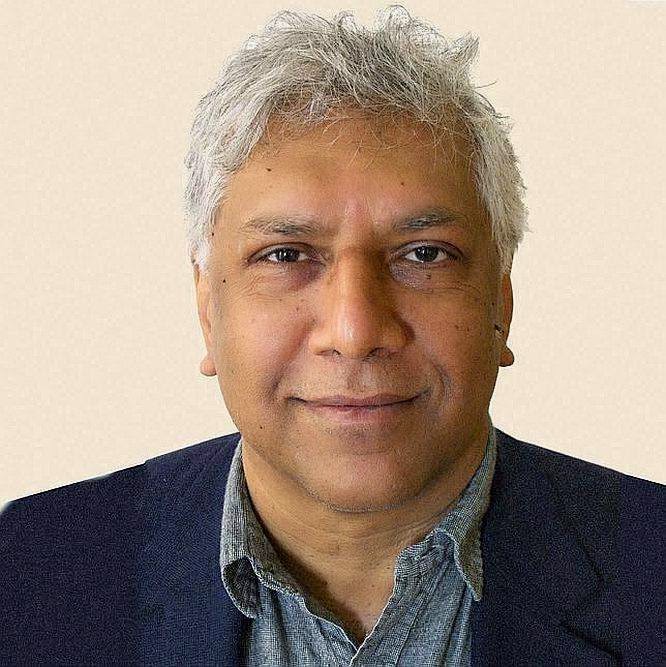
Congratulations are in order for (one more) distinguished Tam-Brahm. We fully expect that dear Anna (elder brother in Tamil) will be enjoying a long, productive life and reaching even higher levels of glory (next step Nobel?). 

Why not question him on his views of the impact of Indian elections at home and abroad, and how it is creating cracks in the house of creators, to the point where a publishing house which owes its living to the First Amendment will black-list its own star author for the crime of holding politically incorrect opinions.

We discovered a 2005 link from Sepia Mutiny (which died 2 years ago this April) and a separate link from Amardeep Singh (one of  the mutineers). VS is referred to as a 2nd gen (1.9 gen) gent because he migrated to the USA at an early age.


….
Bangalore-born Vijay Seshadri, who moved to America at the age of five in 1959, has won the 2014 Pulitzer prize for poetry for his collection of poems 3 Sections (Graywolf Press), which was described by the jury as “a
compelling collection of poems that examine human consciousness, from
birth to dementia, in a voice that is by turns witty and grave,
compassionate and remorseless.”


Seshadri has received grants from the New York Foundation for the
Arts and the National Endowment for the Arts, and has been awarded the Paris Review’s Bernard F. Conners Long Poem Prize and the MacDowell Colony’s Fellowship for Distinguished Poetic Achievement.


He holds an A.B. degree from Oberlin College and an M.F.A. from
Columbia University. He currently teaches poetry and nonfiction writing
at Sarah Lawrence College, and lives in Brooklyn with his wife and son.


His collections of poems include James Laughlin Award winner The Long Meadow (Graywolf Press, 2004) and Wild Kingdom (1996).


His poems, essays, and reviews have appeared in AGNI, the
American Scholar, Antaeus, Bomb, Boulevard, Lumina, the Nation, the New
Yorker, the Paris Review, Shenandoah,Southwest Review, Threepenny
Review, Verse, Western Humanities Review, Yale Review, the Times Book
Review, the Philadelphia Enquirer, Bomb, San Diego Reader, and TriQuarterly, and in many anthologies, including Under 35: The New Generation of American Poets, Contours of the Heart, Staying Alive: Real Poems for Unreal Times, and The Best American Poetry 1997 and 2003.

….

regards

Coastal Leader for a prosperous India

So far Indian leaders have been almost always from up north (as far north as Kashmir), far away from the coast and with little understanding of coastal people and their lives (and livelihoods). Even PV Narasimha Rao was a Brahmin from Karimnagar, Telengana, which does not have a coastal (read: trader) ethos.

Joe D’Cruz is by some estimates, the greatest Shudra author in modern times and
he is on-record with his heart-felt love (scroll to the bottom) for
the tallest Shudra Leader today: Shri Narendrabhai Damodardas Modi-ji.
As a Coastal Leader first and foremost, Joe is sure that NaMo will wield his magic wand and restore the reputation and fortunes of Coastal India. And all of India will benefit from this rising tide.

In the old days famous poets used to sing the praise of mighty kings – prashasti in Sanskrit-
which would be inscribed on rock-tablets for posterity. In 21c. we are
(unfortunately) lacking in omnipotent men as well as master poets. Now
at long last, the wait is over. Look on these glorious words below, ye BPites….and you will be filled with either despair or delight.

The liberals are (naturally) outraged and have declared Joe to be an out-caste (untouchable).

Just like the historic divisions between Shias and Sunnis will not remain buried under anti-idolatry passions (non-Sunni muslims may even vote for the BJP as a protest vote against Sunni-led acts of discrimination), similarly the divisions between the Middle Castes (Shudras) and Lower Castes (Dalits) will also sharpen as both communities come out of the shadow of the upper castes and take their rightful place under the sun.  

In that sense the General Elections 2014 will be a reality show that will show-case the puzzle that is Indian society and how it re-arranges itself along and across caste lines. The exercise (and the execution) is nothing but fascinating to observe at a close distance and in real time, and is also the closest that India can get to a social (often violent but at low level) revolution without completely breaking up into so many Pakistans.

India is Shudra nation- this is a simple numbers game. But what is interesting now is that Dravida pride is cutting across all pre-existing bonds of religion, language and community that would normally separate one Indian fom the other. No wonder Narendra Modi is portraying himself as an OBC tea-seller with Hindutva loyalties against the aristocratic Brahmin first family (backed strongly by Dalits and minorities). The same pattern repeats in UP where Mayawati would like to stitch together a Brahmin-Muslim-Dalit front, and has made her strategy explicit in the form of the candidate composition for the General Elections 2014.

The coming together of the Dravidas as the dominant race (jati) in India is what Meena Kandasamy wrote about after a Dravida girl dared to fall in love with a Dalit boy:

Though Tamil Nadu comes at the bottom of the all India list on
inter-caste marriages, with less than two per cent of marriages taking
place between Dalits and non-Dalits, the state faring marginally better
than J&K and Rajasthan, Doctor Ayya was quick to launch his war on
the global terror named Inter-caste Love.
Although he was arrested for
challenging the Jayalalitha government and daring the police to prove if
it was possible to imprison him, his hate speech did not subside.….His concept of (Dalit) men on the prowl might have
unintentionally advertised their desirability—smooth/ suave/ sexy—but
his plan paid dividends.  

Untouchability, outlawed under the
Constitution, was back in business. It has burnt villages, killed young
people and recently cobbled up a non-Dalit (read anti-Dalit) caucus of
intermediary castes like Gounders, Kallars, Udayars, Yadavas, Mudaliars,
Naidus, Nadars and Reddys to work alongside the Vanniyars. Their two
common demands—ban on ­inter-caste marriages and an abrogation of the
Prevention of Atrocities Against sc/st Act—gave away their true agenda
of upholding untouchability.

The only piece of the puzzle that will not be re-arranged so easily are the Muslim (Sunni) Shudras. So far their religion has proved to be a greater bond (common cause with the upper-caste Ashrafs) than caste pride. If and when that happens, the Dravida alliance in India will be complete (and dominant forever).

Gautam Bhatia has properly denounced Navayan’s censorship of JDC as an author (even though they have the right to do so) because they dont agree with his politics. Making some-one an out-caste is not something that Navayan should stand for. They should be ashamed of themselves.
 
…..
Navayana had signed up to publish a translation of Aazhi Soozh Ulagu (Ocean Ringed World), the 2005 debut novel of Joe D’Cruz, who subsequently won the Sahitya Akademi award in 2013 for his second novel Korkai.
The translation was done by V. Geetha, feminist writer and translator,
and the English edition was due in late 2014.  

In the light of D’Cruz
publicly endorsing
Narendra Modi’s candidacy for prime-ministership, both Navayana and
Geetha have decided to cancel the agreement signed with D’Cruz and
withdraw the book.


S. Anand, publisher, Navayana, said: “It is both appalling and
disturbing that D’Cruz, who captured the rich and unique history of the
seafaring community of Tamil Nadu in an epic tale spanning three
generations, should call a fascist like Modi a ‘dynamic visionary’.
Initially, I did not believe this till Joe told me over the phone that
this was indeed his stand and that his decision was personal. 

However,
there cannot be a place for such an author in a political publishing
house like Navayana. Navayana is more sad about Joe’s decision than
about having to withdraw from this publication. But we are glad we came
to know Joe’s stand before the novel was published.”


Geetha, in a statement, said: “I was terribly distressed when I read
Joe D’Cruz’s statement of support for Modi. He is entitled to his
political opinion, but I don’t want to be associated with anyone or
anything linked to Modi. Modi in my opinion is not only a political
disaster, but downright evil.
We can’t forget Gujarat 2002—no one must
be allowed to, either.
I still stand by his novel, which I think is a
fantastic saga of fisher life, and I am sorry Joe has decided to trade
his considerable gifts as a novelist for a politics that is fascist and
dangerous. I have therefore decided to withdraw my translation.” 

……
What follows is Joe D’Cruz’s statement in support of Modi:

Why do I want Mr.Narendra Modi to be the Prime Minister of India? Being a
proud son of our great nation, I want my Mother India to be strong and
prosperous among the world nations… Who can do that? 

A person who knows the problems of ordinary persons like you and me and a
billion others! 

Like you and me he was born in humble surroundings … son of a tea vendor …
working in the railway platform even in his school days and today he
represents the heart and hope of India because he personifies honesty,
integrity, determination and patriotism…

He is a leader who has evolved from the bottom of the pyramid to become the
Himalayas…

Today he is a seasoned politician, with passion for development, who takes
responsibility for his actions and who is a determined servant of the nation.


He is a dynamic visionary, a quick decision maker, who knows the pulse of
every rural and urban citizen of the nation.


He has delivered efficient governance and able administration. He is an
established statesman who respects the strengths of our human resources.

He respects our culture. His 5 ‘T’s are set to transform India: he has
understood the innate strength of the nation: talent, tradition, technology,
tourism and trade.

A revolutionary, bold and committed visionary who thinks not for the next
election but the next generation… solar revolution over the Narmada river – the
first of its kind in the world, the education for the girl children… all these
are schemes not for the next election but for the next generation… for the
children of you and me….


He has shown himself to be above politics and hence he is the need of the
hour for India. Envied by global policy makers, even before he has become the
PM the world nations have started taking India seriously.


Here is a leader who spoke through his actions than his words. Here is a
leader who can make India great once again through his sweat and sacrifice.

And here is the leader who understands the life of Coastal India.

I am sure he will lead the country to unprecedented zenith and regain our
pride and a glory greater than our past. We want our children to be proud of
our rightful choice. We want generations to thank us for giving India her best
PM. Hence I want Mr.Narendra Modi to become the Prime Minister of India.


Let us think different and come together to commit our support for this
great visionary-doer to come to power.

…..
regards

$70 Bil (from coolies) for Motherland

Kaushik Basu (Senior Vice President and Chief Economist, World Bank) is mighty pleased that India tops the global remittances list. It is remarkable that this $70 Bil grant exceeds India’s software exports figure ($65 Bil).

It is indeed the single best possible anti-dote to poverty that our socialist rulers can envisage. Why not create better opportunities for these folks at home who are essentially slaves abroad? That is a bridge too far for our visionaries.

“Billions from Coolies” is a life-line for other SAsian countries as well (Pak #7, Bangla #8 on the list). 

What appears to be a bit sinister is that Bangladesh’s receipts declined year on year. It is possible that the lovely GCC nations are punishing Bangla via excessive deportations etc. in response to Awami League’s war against the Jamaatis. Since the strangulation of BNP/Jamaat is probably supported (instigated) by India, the least India can do is to try and make up for this loss of “revenue.”

Having received $70 billion in 2013, India has topped the list of countries receiving remittances from overseas workers, the World Bank said today.

The World Bank’s latest issue of the Migration and Development Brief,
said international migrants from developing countries are expected to
send $436 billion in remittances to their home countries this year
(2014).

In 2014, remittance flows to developing countries will see an
increase of 7.8 per cent over the 2013 volume of $404 billion, rising to
$516 billion in 2016.

Global remittances,
including those to high-income countries, are estimated at $581 billion
this year, from $542 billion in 2013, rising to $681 billion in 2016.

“Remittances have become a major component of the balance of payments
of nations. India led the chart of remittance flows, receiving $70
billion last year (2013), followed by China with $60 billion and the Philippines with $25 billion,” said Kaushik Basu, Senior Vice President and Chief Economist of the World Bank.

India had received $69 billion in remittances in 2012. Basu said there
was no doubt that these flows act as an antidote to poverty and promote
prosperity. In
India, remittances during 2013 were $70 billion, more than the $65
billion earned from the country’s flagship software services exports,
the World Bank said.

The depreciation of the Indian rupee during 2013 appears to have
attracted inflows through a surge in the deposits of non-resident
Indians rather than remittances, the World Bank said.

The bank
said growth in remittances to the South Asia region has slowed, rising
by a modest 2.3 per cent to USD 111 billion in 2013, compared with an
average annual increase of more than 13 per cent during the previous
three years.

The slowdown was driven by a marginal increase in
India of 1.7 percent in 2013, and a decline in Bangladesh of 2.4
percent, the bank said.”In Bangladesh, the fall in remittances stems
from a combination of factors, including fewer migrants finding jobs in
the GCC countries, more migrants returning from GCC countries due to
departures and deportations, and the appreciation of the Bangladeshi
taka against the US dollar,” the bank said.

Still, some rebound
is projected in the coming years, with remittances across the region
forecast to grow to USD 136 billion in 2016, the World Bank said.

In
addition to the top three, India, China and the Philippines, other main
receivers of remittances were Mexico (USD 22 billion), Nigeria (USD 21
billion), Egypt (USD 17 billion), Pakistan (USD 15 billion), Bangladesh
(USD 14 billion), Vietnam (USD 11 billion) and Ukraine (USD 10 billion).


In
terms of remittances as a share of GDP, the top recipients were
Tajikistan (52 percent), Kyrgyz Republic (31 percent), Nepal and Moldova
(both 25 percent), Samoa and Lesotho (both 23 percent), Armenia and
Haiti (both 21 percent), Liberia (20 percent) and Kosovo (17 percent).

….

regards

Sikhs (15th Ludhiana infantry) save Sahibs

In all the talk we hear about how advantageous it was for India to have been a British colony (no one doubts that) we never hear how Britain benefited enormously from having an Indian colony- as it marched to victory in the World Wars on the back of Indian soldiers. There will be no reparations but even a few words of gratitude (and a few paragraphs in British history books) is still better than nothing.

….

An
Indian soldier, immortalized by his act of selfless heroism and valor
while fighting for the British armed forces in World War I has come in
for heavy praise from UK Prime Minister David Cameron.

Cameron
has also floated the proposal that British children must be taught “in
the years to come about the role that the 1.2 million soldiers from the
Indian subcontinent played in World War I”.


The soldier Cameron
was referring to was Manta Singh, who served with the 15th Ludhiana
Sikhs, an infantry regiment of the Indian Army who was seriously injured
during the Battle of Neuve Chapelle in March 1915 – one that saw a
large number of casualties for the Indian Army – over 4000 in just three
days.

During the battle, Manta Singh witnessed an English
comrade Captain Henderson who had suffered. Singh himself was hit by
machine gunfire in his left leg but that didn’t stop him from rescuing
his fellow officer Captain Henderson. Manta pushed him to safety in a
wheelbarrow he found in no-man’s land.

Singh and his wounded
comrades were later shipped to Brighton’s Royal Pavilion which was
turned into a hospital for Indian soldiers. Here, his wounds
became infected with gangrene. He was told his legs would have to be
amputated to save his life, a thought which filled him with despair. He died from blood poisoning a few weeks later.

Remembering the soldier, Cameron said “This year, as we commemorate the
100th anniversary of WW1, it is also perhaps worth saying something
specific about how British Sikhs have served in our armed forces with so
much devotion, bravery and courage over so many years”.

Cameron added “Stories like that of Manta Singh, who fought at The
Battle of Neuve Chapelle, that massive battle on the Western Front in
1915, and when his English colleague was wounded alongside him, he
picked him up, carried him, took him to the dressing station while being
wounded himself, and then sadly, tragically died afterwards. Stories of
heroism, stories of valor – the Sikhs have always had this
extraordinary courage and bravery, and it’s been demonstrated so often
in the British Armed Forces”.

Interestingly Manta Singh and the
injured man he rescued, Captain Henderson, had become firm friends as
well as brothers in arms.

When Manta Singh died, Henderson
ensured that Singh’s son Assa, was taken care of. He encouraged him to
join the Sikh Regiment too. Throughout the Second World War, Assa Singh
and Henderson’s son, Robert served together, in France, Italy and North
Africa.

To this day, the Singh and Henderson families remain close friends.

Assa and Robert have passed away but their sons Jaimal and Ian are in regular contact.

Singh was born in 1870 near Jalandhar and as soon as he left school he joined the 15th Ludhiana Sikhs.

At the start of WW1, the regiment was sent to reinforce the British
Expeditionary Force fighting in France. By late autumn of 1914, one in
every three soldiers under British command in France was from India.
After long months of trench warfare, in March 1915, Manta Singh’s
regiment prepared to engage in the first major British offensive on the
Western Front, the Battle of Neuve-Chapelle. Half of the Commonwealth fighting force, 20,000 men were Indian Army soldiers.

General John French, commander-in-chief of the BEF in France at this
time, planned to take the village of Neuve-Chapelle, which formed a
German salient (bulge) in the British line.

On March 10, four
divisions, comprising 40,000 men, gathered on a sector of the front
which was only three kilometres wide. The infantry attack was preceded
by heavy but concentrated shelling from 342 guns. In 35 minutes, the
bombardment consumed more shells than the British Army used in the whole
of the Boer War 15 years earlier.

While the British and the
Indian Corps advanced rapidly through the lightly-defended village, the
Garhwal Rifles suffered heavy losses as they attacked a part of the
German line left untouched by the bombardment.

After an initial
success, in a matter of hours, the British became paralyzed by poor
communications and a lack of munitions, and their advance ground to a
halt.

It was in this chaotic field of battle that the 15th Ludhiana Sikhs fought.

Records say “Fighting ceased on March 13 with British gains limited to
an area two kilometres deep and three kilometres wide for a loss of
7,000 British and 4,200 Indian soldiers, either killed or wounded. The
Germans suffered similar losses and 1,700 of their soldiers had been
taken prisoner”.

….

regards

Modi-Mao: may a thousand shakhas bloom

Forget the elections, this is the true Modi effect: 2000 shakhas in 3 months!!!

As we have noted before, polarization is not good for the country and never good for the Aam Aadmi.
The zealots who presumably suffer from Islam-envy seem all too ready to commit us to a Taliban asylum.
….. For
the last three months, Ravi Tewari, a 22-year-old engineering student,
has been waking up at 5am, putting on his white shirt and khaki shorts
and rushing to a nearby park for the morning shakha of Rashtriya
Swayamsevak Sangh (RSS).

.

His family is surprised. No one in the Tewari
clan has ever been with RSS. So, the family can’t quite figure what is
driving Ravi to adopt this punishing morning drill.


.

“I believe
in Hindutva,” says Ravi. “The country needs reforms. Who other than
Narendra Modi can make it happen? The youth needs something to look
forward to. They also need to take up more responsibilities to change
things and the shakha is the best place to learn how to do it.”

Ravi speaks with a sense of purpose that only a new convert can have.
He had never dabbled in politics before he joined ABVP, BJP’s student
wing, a few months ago. And there are thousands like him, he says,
neo-converts who have breathed new life into RSS after Modi was named
the BJP’s PM candidate on September 13 last year.

Suddenly, the
organization which was becoming moribund and seen to be out of tune
with the times, is growing. In less than three months, more than 2,000
shakhas have sprouted across the country. By the end of 2013, there were
44,982 shakhas in India, of which 8,417 were in UP alone.

The
numbers had peaked in 2004, when there were around 51,000 functioning
shakhas. They shrunk during the UPA tenure, hitting a low of 39,283
shakhas in 2010. But as scams broke out, and UPA 2 went from one low to
another, there was again a renewed, interest in shakhas, with a sudden
burst in post-Modi months.

……
regards

The “hospital of death”

Bidhan Chandra Roy (BC Roy) was a legendary doctor and politician (the first Chief Minister of Bengal after independence). It is beyond shocking that the modern state is unable to honour his memory by doing its level best to save infants, yet as the article explores, the rot in Bengal is as deep and wide as the Bay of Bengal.

….
The route to B.C. Roy
Memorial Hospital for Children in Kolkata is a pilgrimage nobody wants
to make.
 

The overburdened government hospital is West Bengal’s largest
pediatric care center, and after a series of high-profile deaths in
recent years, it has become a public symbol of India’s ongoing struggle
with infant mortality. But the story of B.C. Roy often portrayed in the
national media paints an incomplete picture. In fact, the hospital’s
case points to a larger system that is failing India’s newborns. 


The story of B.C. Roy, according to newspaper accounts, begins in
June 2011, when 18 babies died at the hospital over the course of two
days. The news was first reported locally, but the outrage spread beyond
Kolkata’s city limits. On national television, newscasters labeled B.C.
Roy a “hospital of death.”


Hoping to blunt a politically poisonous scandal before it spun out of
control, Mamata Banerjee, the state’s chief minister, or head of
government, who doubles as minister of home, health and family welfare,
established an inquiry into the infant deaths. Heading the inquiry was
Dr. Tridib Banerjee, a private practice pediatrician (who is of no
relation to Mamata Banerjee), and is known as the pediatrician to the
state’s wealthy and elite.


Dr. Banerjee created the High Level Task Force, comprised of a group
of health care professionals, to recommend things like the allocation of
new equipment, the hiring of new doctors, and anything else that might
prevent future incidents of infant mortality at the state’s many
government hospitals. As a result, the intensive care unit at B.C. Roy
was expanded, and carefully vetted hires were made.

But the worst was yet to come. In September, two years after adding
modern equipment that Banerjee assured me was “as good anyone would find
in the best American hospitals,” an astounding 41 babies died in the
span of six days. 

But the chances of another headline-grabbing story coming from B.C.
Roy are high. According to Dr. Banerjee, the shocking rate of infant
deaths experienced in September only represents an increase of about 20
percent over the regular rate at the hospital. In fact, it’s not
uncommon for B.C. Roy to lose four or five babies on consecutive days.


I visited B.C. Roy in February and spoke to parents of ailing babies.
One father, Sujiauddin Saji, a 23-year-old house painter, first took
his 4-month-old son Suraj to the local hospital in a district 30 miles
north of Kolkata to treat illnesses related to malnourishment.
The boy
developed severe hypothermia while at the local hospital, and the family
traveled to Kolkata looking for help. Members of the Saji family,
including Sujiauddin, camped out on the B.C. Roy lawn for five days,
waiting for the boy to be nursed back to health.


According to Dr. Banerjee, the hospital conditions in Saji’s
district, where his son caught hypothermia, are not even the worst in
the state. Banerjee toured the state’s peripheral hospitals in 2011, as a
response to the original media firestorm. The worst conditions he found
were at Burdwan University Medical Center, a place he called “worse
than a roadside toilet.”
He and other government officials have tried to
rescue Burdwan by recommending new equipment and more hospital beds.


Dr. B. Biswas, 34, an assistant professor at the medical college who
works in the hospital’s newborn intensive care unit, explained that
sometimes he has no choice but to advise parents to make the trip to
Kolkata and visit B.C. Roy. “Our patient loads are impossibly high,” he
explained. “We don’t have the space or the manpower to treat everyone
here who needs our help.”

“It’s better than nothing of course, but we have doctors working
24-hour shifts,” Biswas said. “A few machines can’t help us double or
triple our manpower.” Biswas explained that the bulk of his patient load
comes from primary health centers that are supposed to function as a
first response in villages here but are often unequipped to meet that
challenge.


One such place is Block Primary Health Center in Barsul, a 15-minute
drive from Burdwan, where there are only two doctors serving a
population of roughly 150,000 people. Electricity at the Block Primary
Health Center goes out every few hours. That would theoretically be a
problem for performing complex surgeries, but the center’s lone
operating room has been boarded up for several months, sitting empty and
abandoned, collecting dust. But electricity issues are a problem for
delivering babies, and according to the doctor on duty that day, 350
babies are born per year at Block.


The hallways and toilets in Block are filthy, and most of the metal
beds in the maternity room are slanted or broken. Many of the babies
born here arrive malnourished or premature, making them immediately
susceptible to disease. When such babies are born, if one of the two
rented ambulances in the area is available to take them, they are then
dispatched to Burdwan in the hope that they can be saved. If Burdwan
can’t help, the babies are eventually sent to Kolkata for a last-ditch
effort to save a life. Too often, those efforts fail.

…..

regards

Mere paas Bhagwan hai!!

Dravida (Tamil) Nadu is all set for the mother of all battles. The D-day is 24 April, 2014.

The aged Napolean, MK Karunanidhi is waging his last campaign against the axis of evil-  the foreigner/brahmin Jayalalitha (has cunningly managed to hoodwink the Dravida masses), the ex-communicated son Alagiri (has vowed to create mischief in Madurai), and the Hindu-Hindi party (has attracted a few Vibhisanas- the infamous Ravana brother who collaborated with Ram to bring about the downfall of the Lankan kingdom).

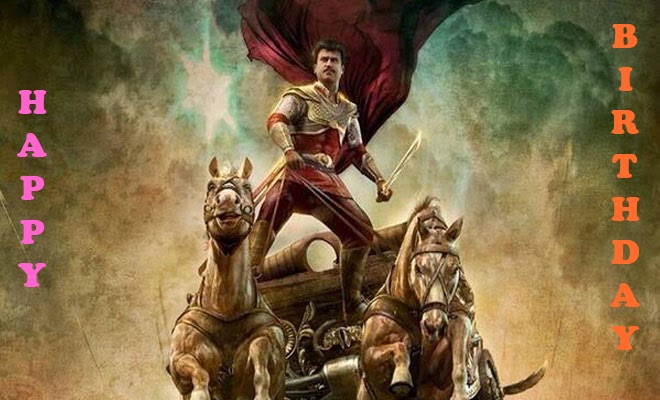
The Met Office is predicting a final day thunder strike, a direct hit from Bhagwan Rajnikanth riding high on His mighty chariot. The coup-de-grace finagled on behalf of the Hindu Great Man (HGM) seems to be unduly cruel. The common man will now be voting with the assurance that victory (Delhi) is for the man who has God on his side.


Conducted in Month(s)
Polling Organisation/Agency
Aug–Oct 2013
1
0
28
5
Dec 2013-Jan 2014
India
Today
-CVoter
0
29
5
Jan-Feb 2014
1
0
27
5
March 2014
0
0
27
10
March–April 2014
CNN-IBN-Lokniti-CSDS
0
6 – 10
(In alliance)
15 – 21
10 – 16
(In alliance)

            Narendra
Modi, who is scheduled to address a public rally in Chennai on Sunday,
is expected to meet the actor earlier in the evening on arrival from
Hubli either in the airport lounge or at Rajnikanth’s residence at Poes
Garden.

The encounter could impact the fortunes of the BJP-led
NDA alliance in Tamil Nadu. Though a senior BJP functionary described
the meeting as a “courtesy call”, the photo-op may seem an endorsement
to legions of Rajnikanth fans–the intersection between cinema and
politics in the state goes a long way back.

Before the 2004
election, Rajnikanth had issued a statement in support of AIADMK and
BJP, which was probably the only occasion when the normally reticent and
politically non-committal actor spoke up.

….

regards

Kabhi Khushi Bahut Gham

Sanjaya Baru the journalist who was also PM Man Mohan Singh’s Man Friday has published his tell-all book and it is damning in the extreme. His claims (if true) can be best illustrated by a (fictional) UPA-II theme song:


To summarize the claims: MMS was expected to just smile softly and shake a leg to the tune set by the Queen Bee while ignoring the thugs running away with the ATM in the background.

BTW this really was no surprise. The first family considers India to be a fully family owned and operated business (and so do an overwhelming number of Indian intellectuals as well as the entire foreign press and the Western diplomatic establishment). 
….
Entitled
“The Accidental Prime Minister — The Making and Unmaking of Manmohan
Singh,” the book is by academic and journalist Sanjaya Baru, a former
media advisor to the current prime minister, who left his post in 2008.


Traditionally,
the president of India’s ruling party is also premier. But Gandhi, who
led Congress to power in 2004 and 2009, turned down the job, fearing her
Italian birth would become an explosive political issue as Hindu
nationalists said her foreign origin made her unfit to rule India.

She
handpicked Singh for the job but Baru said Gandhi’s much hailed
“renunciation of power” was more a “political tactic than a response to a
higher calling”.

Baru said Singh decided early on to “surrender”
to Gandhi and quotes the premier as saying he had “to accept the party
president (Gandhi) is the centre of power”.

Critics have long
charged Gandhi held the reins of power in the Singh administration but
Baru’s book is the first by a close advisor to the prime minister to
make that claim.

In a strong criticism of the soft-spoken premier,
he said Singh “averted his eyes from corruption” to ensure his
scandal-tainted government’s “longevity”.

While Singh, 81, who
retires after this election, maintained the “highest standards of
probity in public life”, he “turned a blind eye to the misdeeds of his
ministers”.

Singh thought he could choose cabinet ministers but “he was defanged” as “Sonia nipped that hope in the bud”.

Baru
said Singh had little authority over his cabinet and a senior
bureaucrat would seek Gandhi’s “instructions on the important files to
be cleared by the PM”.

….

regards

A rose by any other name…

Bollywood (re)naming ritual has a long history. Hemanta Kumar Mukhopadhyay (Hemant Kumar), Abhash Kumar Gangopadhyay (Kishore Kumar), Mahjabeen Bano (Meena Kumari), Mumtaz Jehan Begum Dehlavi (Madhubala), Fatima Rashid (Nargis Dutt)….. in most cases a simple sounding Hindi (Hindu) name will have done the trick.

Then came the next generation, pre-loaded with suitable (mononymous) names: Kajol (Mukherjee), Sonam (Kapoor), Rani (Mukherji) etc. For the rare outsider like Vidya (Balan) – our favorite lady – who has succeeded in gate crashing the (nepotism) fortress, the yukt-akshar (joined letters) does not roll easily off the tongue.

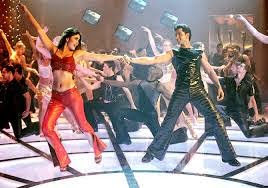
So far so good. But what is needed for an (very fair) English girl to turn into an Indian girl next door? Ayesha Shroff (Mrs Jackie Shroff) explains the transformation of a Turquotte into a (Ek Tha) Tiger:


Jackie Shroff’s wife Ayesha Shroff,
who produced Katrina’s debut film Boom, in a shocking interview to
Mumbai Mirror in 2011 was quoted saying, 

“Her passport says Turquotte.
We created an identity for her. She was this pretty young English girl,
and we gave her the Kashmiri father and thought of calling her Katrina
Kazi.
We thought we’d give her some kind of Indian ancestry, to connect
with the audience. Those times were different, now people are more
accepting. 

But then we thought that Kazi sounded too… religious? We were
to introduce her to the press and at that time, Mohammad Kaif was at
the top, and so we said, Katrina Kaif sounds really great. In fact, the
brochures for the press say Katrina Kazi. We passed that off saying, ‘Oh
that’s a printing mistake.”

regards

Brown Pundits