Dhurandhar, Politics of Bollywood & India Pakistan

I had avoided the Dhurandhar hype for the last four months. I finally watched the first movie on Netflix and then read XTM’s review and watched the 2nd part in theatre. I profoundly disagreed with it—especially the line:

“By routing this grief through an anti-Pakistan narrative, the film asks Hamza to deny his Sikhness in order to become fully Indian, and frames that erasure as redemption.”

I’m not writing a formal review of the movie, but I will try to respond to a few generic questions raised on this forum and across social media regarding Dhurandhar.


Is the villain missing?

I agree with XTM that a central villain is missing in Part 1, but perhaps we should see Dhurandhar as a 7‑hour film split into two parts, rather than a standalone first installment.


Part 1 vs Part 2

Personally, I felt Part 1 was more tightly written and better dramatized. While some reviewers saw the love story as a needless distraction, I viewed it as a way to explore Hamza’s humanity despite his profession.


Is Dhurandhar Anti‑Islam?

On the contrary, I felt the filmmakers went out of their way to separate the issue of anti‑India terrorism from Islam—despite the fact that some terror groups do draw on fundamentalist interpretations of religion.
The villains are not portrayed as devout Muslims; they are not shown praying before missions. Rehman Dakait’s wife lighting his cigarette as a good‑luck gesture is a good example.

One could even argue that Dhurandhar focuses almost entirely on political motivations within Pakistan, while ignoring any potential religious motivations behind the Indo‑Pak conflict. I don’t know exactly how the ISI thinks, but I would wager that at least some religious motivations do exist—it cannot be purely political.


Is Dhurandhar Anti‑Pakistan?

Obviously, it is—but I disagree with XTM’s assertion that it dehumanizes Pakistani Muslims.
I didn’t enjoy the montage of political killings by “unknown gunmen”; it felt shallow. But it wasn’t the sort of random, gleeful violence we saw with Gaitonde in Sacred Games during the 1993 riots.

The film definitely leans dark, but I would still call it shades of grey, especially because of Hamza’s conversations with his wife.

I also believe that Major Iqbal’s character is humanized. He carries the burden of his father’s sins, and the mental torture he undergoes—while still maintaining a link to his wife and child—would break almost anyone. We can see why Major Iqbal becomes who he is. Ironically, this humanization also makes him a less effective villain than Rehman Dakait, as many reviewers have noted.


Is Dhurandhar pro‑Modi propaganda?

I may be wrong, but I felt the film used real politics—like demonetization—to weave its plot. Using real events increases impact, and I think that’s what the filmmakers were aiming for.

Does this mean it has no propaganda effect? Of course not. But compared to the list of A‑list Bollywood movies I’ve seen over the years, this is nothing unusual. We will probably see Hollywood films justifying the Iran war in a decade or so—that has always been the pattern.

If you pay attention, the film also touches upon how previous governments—Indira Gandhi’s as well as Manmohan Singh’s—played roles in shaping certain outcomes. It is not a “Modi or bust” narrative.
However, it would be blind to deny that the film does portray the Modi government’s actions toward Pakistan and terrorism in a positive light.


Jaskirat’s Arc

While I found certain aspects of the film underwhelming, I thoroughly enjoyed Jaskirat’s arc. Here, I completely disagree with XTM. The movie does not celebrate Jaskirat’s transformation into a killer—it shows the cost he pays at every step. It also explicitly shows how he is used by the establishment.

Jaskirat doesn’t become an intelligence operative because Pakistan “earned his hatred.” He becomes one because it was the best choice available to him. The film wants viewers to see the price soldiers pay for their “jobs.”

Also i absolutely do not understand why XTM thinks Jaskirat’s Sikhness is erased in the movie. Rather Jaskirat choses to travel back to Pathankot as a tired  Sikh in full Pagdi not macho silky muscly Hamza. I think going beyond this straightforward narrative into the alleged drugs, land dispute, Khalistan angle while thinking erasure of Sikhness or History is something i absolutely do not get.


On Hatred Being ‘Installed’

XTM claims:

“The hatred is not earned. It is installed.”

I disagree. You do see Hamza’s transformation through Lyari’s horrific violence, the betrayal of the Baloch by Rehman, and 26/11. You can see a monster being born in Lyari, but even then he retains his humanity—which becomes evident again when he reacts to killing his friend.

The movie does not end with a “happily ever after” for either Hamza or Jaskirat. It wants you to examine that, not ignore it.


My Take

I enjoyed both movies. Like XTM and many others, I agree that Part 2 has more flaws while Part 1 is far more seamless. Still, Jaskirat Singh Rangi’s arc in Part 2 is the highlight of the entire seven hours.


On India–Pakistan

Contrary to what social media suggests, India as a whole has moved on from Pakistan. You can see this from the declining obsession with India–Pakistan cricket matches compared to the 1990s and 2000s.

Yet, a significant number of Indians derive a kind of sadistic pleasure from Pakistan’s struggles. You see this reflected in reactions to news, such as Pakistan mediating in the Iran crisis—where both the Hindu right wing and the opposition twist the narrative for political ends.

If you once hated your neighbour in the slum you grew up in, would you still mock his poverty after moving into a middle‑class apartment? Or should you aspire to grow on your own terms?

This attitude towards Pakistan is self‑defeating. I honestly pity it.
My message to fellow Indians: Grow up and move on. Look East.

What if Pakistan successfully mediates in the Iran crisis? What if Pakistan continues to punch above its weight diplomatically?

If their mediation helps solve an energy crisis—unlikely, but possible—shouldn’t I, as an energy‑deficient Indian, be happy? If Pakistan’s rise ever poses a genuine risk to India, I will worry about it then. Until that point, I prefer to leave it to the agencies and the government. If Pakistan becomes richer and doesn’t support terrorism against India why would that be a bad thing ? I am not being naive but i think there is a marginal chance of Ind- Bangladesh level relations with Pakistan in 20 years if not 10. Inshallah
On Dhurandhar, Decorum, and Where BP Draws the Line

The review of Dhurandhar 2 has now been posted. Read it if you haven’t. The comment thread on the Ikkis post, which ran in parallel, illustrated the review’s central argument more vividly than any film still could.

A film that educates audiences to hate will eventually produce hateful audiences.

We have been moderating this site long enough to know that comment threads are a pressure gauge, not a debating society. What happened over the last 48 hours was not debate. It was escalation; predictable, cyclical, and ultimately ending where it always ends when people get sufficiently worked up: in the language of violence.

BB was on a Dhurandhar high. We understand this. There is something in the film’s rhythm, the josh of it, as he put it himself, that makes a certain kind of Punjabi Muslim-hating Bollywood patriot feel ten feet tall. We are not without understanding. He had just watched a four-hour film designed specifically to produce this effect. But understanding the cause does not excuse the consequence.

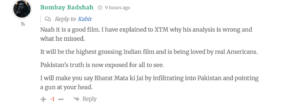
The line was crossed when he repeated, almost verbatim, dialogue from the film, the “ghar mein ghusega bhi, marega bhi” register, and directed it as a personal threat at Kair. Saying one will infiltrate Pakistan and hold a gun to someone’s head to make them chant a slogan is not josh. It is a threat. That it is practically unenforceable is beside the point. The language normalises exactly what we argued Dhurandhar 2 normalises: the idea that the other must be humiliated into submission, not merely defeated.

BB’s commentating rights are suspended until Thursday, 2nd April. Every comment he attempts in that period will be deleted. When the suspension ends, reinstatement of authorship will depend on whether the Saffroniate faction of our commentariat, can reason with him collectively that certain red lines exist even in the heat of subcontinental rivalry. Those lines are not about Pakistan. They are about the difference between argument and menace.

Kabir and Sbarrkum retain their authorship. Kabir was asked to stop and did not, and we say so plainly. But nothing in his conduct approached the violent register BB eventually reached. We are also honest about the asymmetry here: Brown Pundits tilts toward Bharat, that is India; everyone who reads this site regularly knows this. That soft tilt means Kabir, Sbarrkum and Qureshi operate in a forum that is structurally not neutral. The least we owe them is consistent application of the rules.

We want to say something about the Punjabi dimension behind all of this, because it is analytically interesting and not merely polemical.

Continue reading On Dhurandhar, Decorum, and Where BP Draws the Line

Dhurandhar 2: When the Villain Disappears, So Does the Film

We wrote in December that Dhurandhar perfected Bollywood’s new formula: the fetishisation of Pakistan as the subcontinent’s most glamorous disaster. Dangerous, broken, desirable, and always in reach. Three months later, the world has changed more than the franchise has. Iran has seized the Strait of Hormuz. Pakistan is psychologically vacating South Asia. And Dhurandhar 2 arrives as a cinematic relic of a paradigm already dissolving.

It is not good.

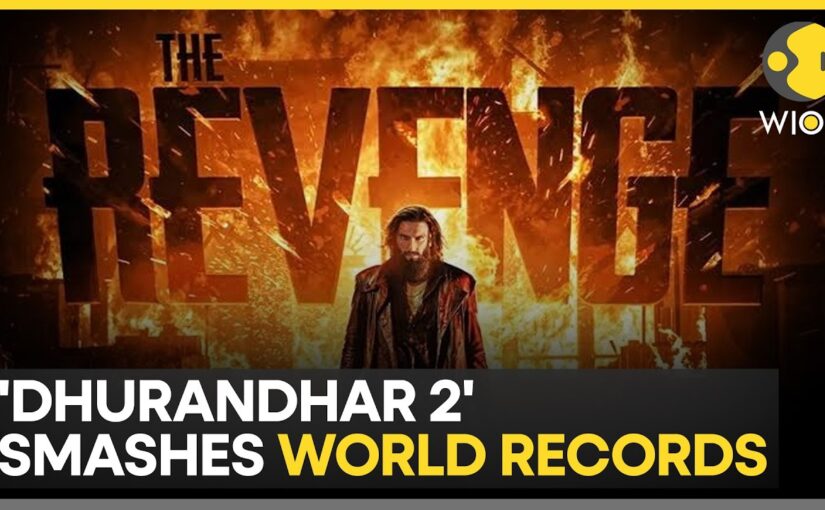
The first film worked because the villain was the gravitational centre. Akshaye Khanna’s Rehman Dakait, Baloch, charismatic, smouldering, made Ranveer Singh’s Hamza credible by giving him something worth the deception. A spy story lives or dies by its antagonist. Remove the antagonist, and you don’t get a hero. You get a man punching air for four hours. That is Dhurandhar 2. Angrier, louder, emptier; and at 3 hours 55 minutes, a film that confuses scale with depth.

The structural collapse is ideological as much as narrative. Dhurandhar 1 had grey. Hamza was a man genuinely lost between two worlds; the film understood that proximity to Pakistan produces desire, not only contempt. That complexity, that slippage between intimacy and danger, was what made it aesthetically serious. Dhurandhar 2 closes that gap entirely. The Pakistani Muslim is now simply a target, and the film is at pains to multiply them faster than they can be eliminated. This is the Hydra error; the same mistake Mossad has made in Gaza. Cut off the head and ten more appear, until the only logical conclusion the audience is being nudged toward is collective punishment. You cannot make a film that glorifies this logic and then claim it is merely entertainment.

The Hindutva-Zionism convergence is now visible at the level of cinematic grammar. Both traditions have arrived at the same endpoint: the innocents cannot be separated from the combatants, therefore the innocents must go too. It is a short distance from that premise to a football scene with a severed head, which Dhurandhar 2 includes without irony. This is not complexity. This is an audience being educated to hate, and that is far more dangerous than any amount of bad plotting.

Bollywood has always used Pakistan as its erotic shadow; familiar enough to feel intimate, foreign enough to feel forbidden. That formula depended on the Pakistani figure retaining some glamour, some interiority, some capacity to make the Indian hero sweat. Dhurandhar 2 strips all of that away. What remains is a shooting gallery. The irony is that by dehumanising its villains, the film also destroys its hero. Hamza becomes less interesting the more Pakistan becomes merely a backdrop for his competence.

The music, which in the first film gave us a Persian Gulf aesthetic that became genuinely anthemic, is a significant step down. The background score intrudes rather than elevates. And Ranveer Singh, who is a serious actor, is given a character arc built almost entirely around rage; which is a waste of an instrument that can do much more.

There is a deeper geopolitical irony the filmmakers did not intend. Dhurandhar 2 is a film about Indian dominance of the AfPak axis at precisely the moment that axis is reorienting toward Iran. Pakistan is stepping into its role as a Muslim power, mediating with Tehran, psychologically decoupling from the subcontinent. The Baloch and Pashtuns are the eastern Iranians; Punjab’s future is as a lowland frontier of a broader Persianate world, not as the last redoubt of a subcontinent fixation. Dhurandhar 2 is the cinematic expression of an India that has not yet noticed.

What Dhurandhar 1 understood, and Dhurandhar 2 has forgotten, is that the most dangerous person in any room is the one you cannot stop watching. Rehman Dakait was that person. His absence is not a plot problem. It is the film’s entire problem.

The sequels that matter are the ones that deepen what came before. Dhurandhar 2 only amplifies it, and amplification without depth is just noise.

⚠️ SPOILERS BELOW – Read only if you have seen the film Continue reading Dhurandhar 2: When the Villain Disappears, So Does the Film

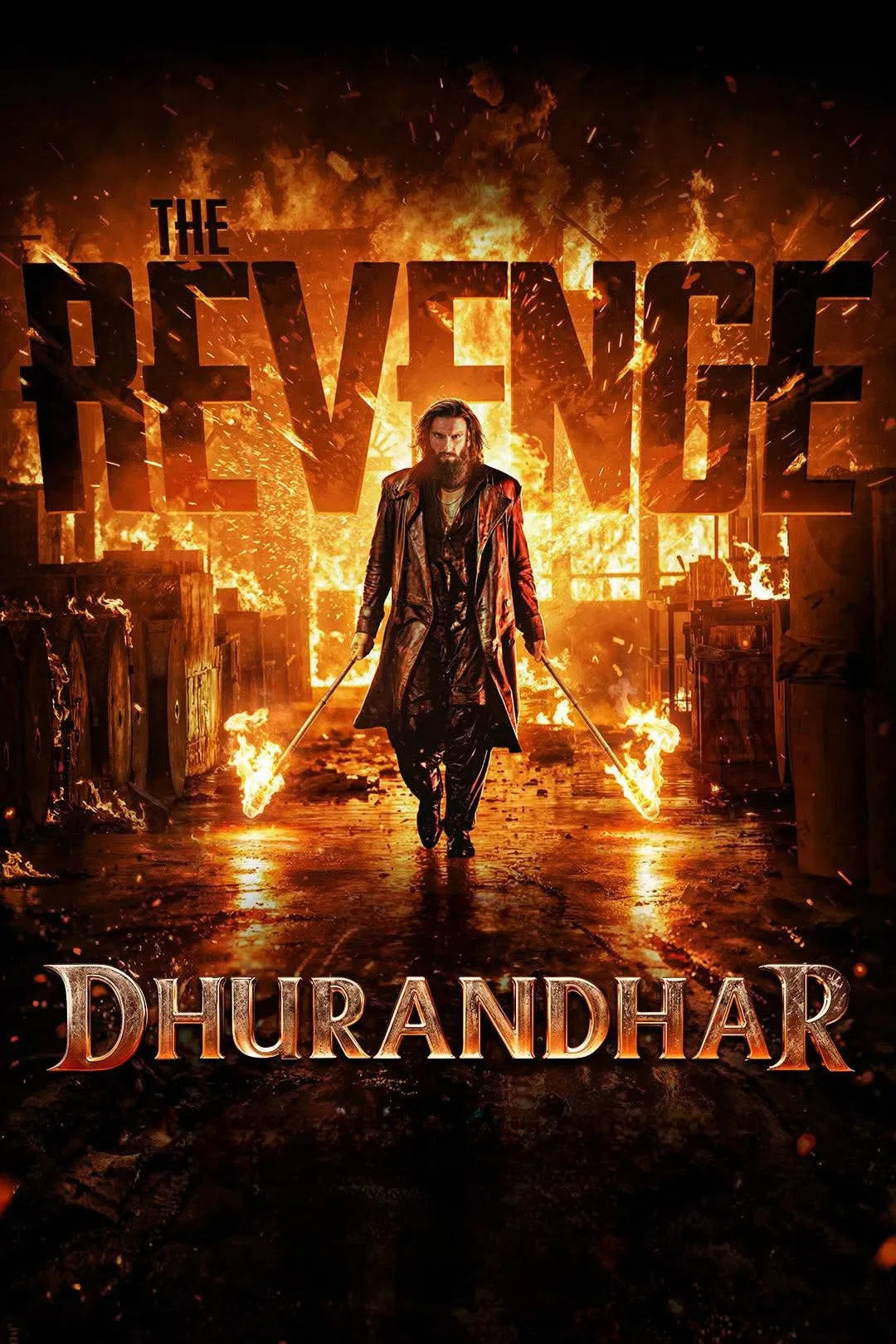
Dhurandhar The Revenge – The Wrath of Bharat

Writing this review now as I came home at 5 am and slept the whole day.

Will keep it spoiler-free as much as possible.

First of all, if some people had issues with the politics of the first movie, they are going to hate this one as it takes it way way beyond, shifting the overton window so far to the right.

The movie is great, super fun and keeps you engaged throughout. It is a bit looser than the first one, not having the razor sharp focus of the espionage drama that it was, instead transforming into more of an action movie.

The action setpieces are way more brutal and better choreographed and more in number compared to the first one.

The movie starts with one of the setpieces barely a few minutes in and then keeps going for a while before slowing down a bit leading to the interval (which is the best part of the movie) before building up steam and not letting go till the end.

Music, as always is a banger with a variety of remixes of old songs and some interesting needledrops.

Already on it’s way to be the highest grossing Indian movie of all time with massive crowds even in South India.

Anyways, highly highly recommended.

Ya naya Hindustan ka naya cinema hai.

The ‘Hindutva’ attack protocol

A tweet reposted by Azad Essa, attacking Priyanka Chopra as “Hindutva-fascist”, asserting that she is somehow ‘uncomfortable’ standing next to Javier Bardem while he delivered remarks in support of Palestine. This, in spite of the fact that Priyanka Chopra has publicly supported Palestine – signing letters demanding ceasefires, tweeting on Rafah and so on.

Azad Essa, is an author that was recently spotlighted on Brown Pundits itself, via his propaganda work on comparing Palestine to the Kashmir valley. This is a particular echo chamber driven by a very explicit agenda, that seeks to weaponize and co-opt the language of the left, in pursuit of demonizing India and Hindus. Facts do not matter, its Priyanka’s ethnicity that matters, and the fact that she dares to be publicly proud of her heritage, her religion and her nationality.

This is but an anecdotal example, but one that quite neatly spotlights the suspect credibility of aspiring ‘academics’ like Mr Essa. The question is how does the ecosystem of academia defend itself against such explicit bad actors that misuse concepts of ‘academic freedom’ and ‘journalism’ to peddle insidious agendas.

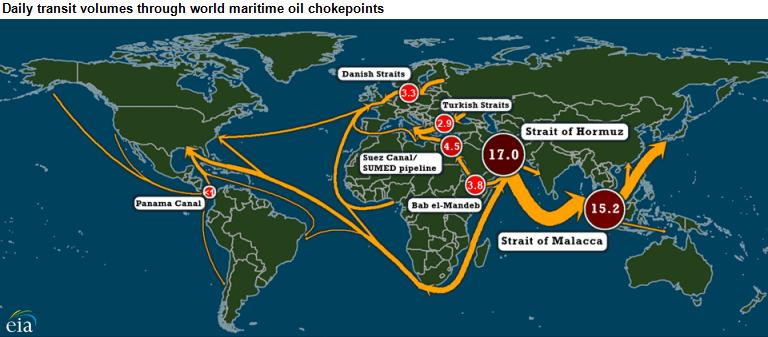
A Deleted Tweet Just Moved the Oil Price 17%. Welcome to the New World.

The Graph Nobody Is Talking About

Oil Prices

BP Admin Note

September 2025 – Brown Pundits
Punditji

Before the oil, a brief note on Brown Pundits itself. Over recent months we have tried to move the comment threads toward a simple goal: remove noise while preserving disagreement. This is not a place for ideological conformity. It is a place where arguments should challenge substance rather than inflame style.

The density of comments has fallen slightly but the quality of disagreement has improved.

What the threads also reveal is a persistent misunderstanding about the relationship between civilisation and crisis. The caricature, that certain societies simply “fail to modernise“, misses the deeper negotiation underway.

Every tradition older than industrial modernity faces the same question: how to carry inherited principles into a world not built around them. That is not a uniquely Muslim or Persian problem. It is the defining problem of our age.

With that said, to the oil!

Oil Tanker Routes at Kimberly Clifton blog
SoH > SoM

The Only Number That Matters

Continue reading A Deleted Tweet Just Moved the Oil Price 17%. Welcome to the New World.

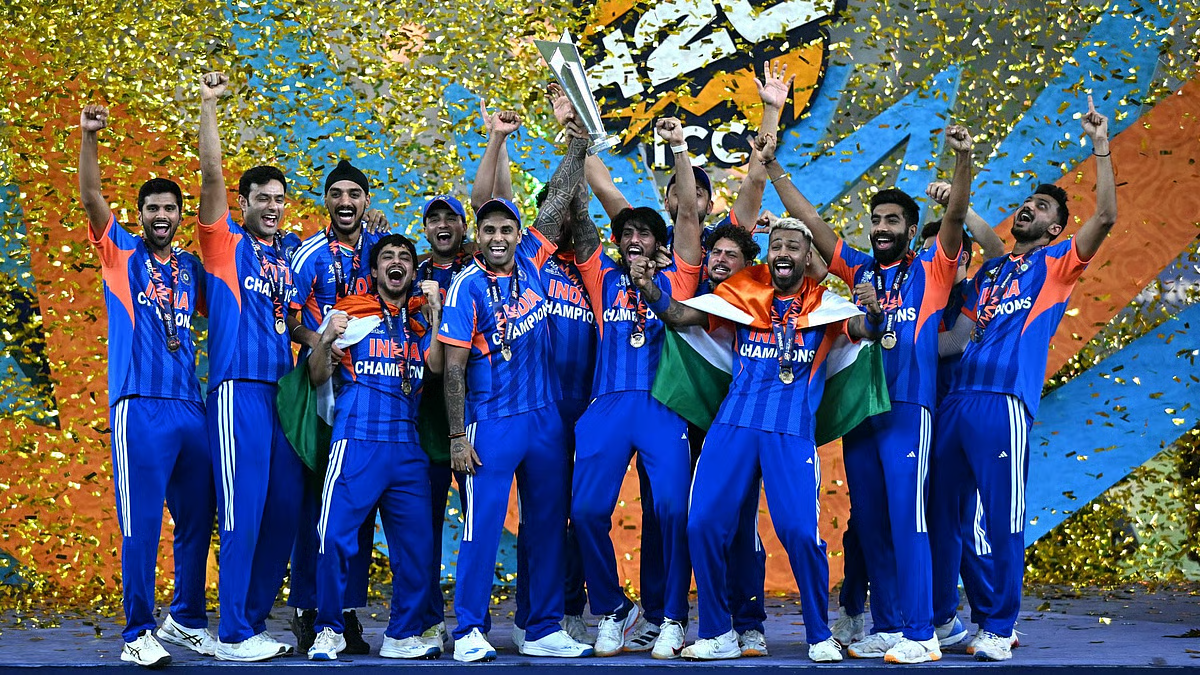
India wins the T20 World Cup – The Golden Age is here and it’s permanent

India won the T20WC yesterday becoming the first team to

  • Win it thrice
  • Win it at home
  • Win it back to back
  • Win 3 ICC trophies back to back to back

I always knew this day was coming.

India is a cricket mad country of 1.4 billion+. That means India should have dominated all of cricket. Issue was India was a dirt poor country with most of the population barely surviving.

After the economic reforms, as India kept getting richer bit by bit, the team also kept improving bit by bit.

So I always knew this inflection point would come eventually.

But it is still surreal to watch it live.

Countries like Bangladesh, Pakistan, SL, WI etc are no longer able to compete against India.

SENA maybe can give competition for a decade due to being rich countries.

But in 10-15 year’s time India will basically be what USA is to basketball.

Who Is Reading Brown Pundits? (And Why Pakistan Just Became Our Biggest Audience)

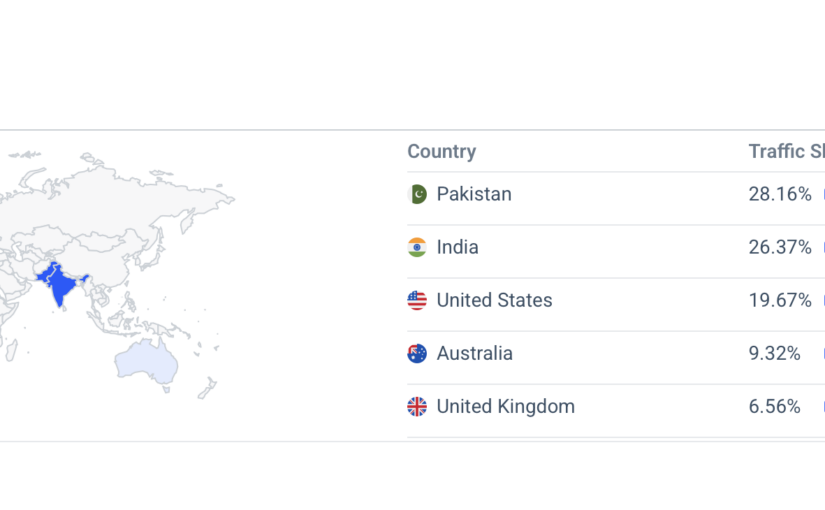
We have been running this blog long enough to know that readership numbers are a vanity metric, until they aren’t. February held steady at 41,000 views, which we are quietly proud of. But what genuinely surprised us, and we mean genuinely, not in the performative way, is that Pakistan now constitutes 28% of our readership.

A thousand visits a day, give or take a bit more. The old 1% rule says one in a hundred will actually say something; which means for every BB, RNJ, Kabir or Sbarr in the comments, there are ninety-nine people reading in silence and agreeing with “either camp”. We find that thought rather beautiful.

Prior to February, Pakistan had never cracked the top five. Now it’s sitting at number one.

Bharatstan, indeed.

Bharatstan Anthem 2025🇮🇳#Bharatstan #IndianArmy #ProudIndian #JaiHind #DeshBhakti #subscribe - YouTube

Commentariat = Saffroniate? Continue reading Who Is Reading Brown Pundits? (And Why Pakistan Just Became Our Biggest Audience)

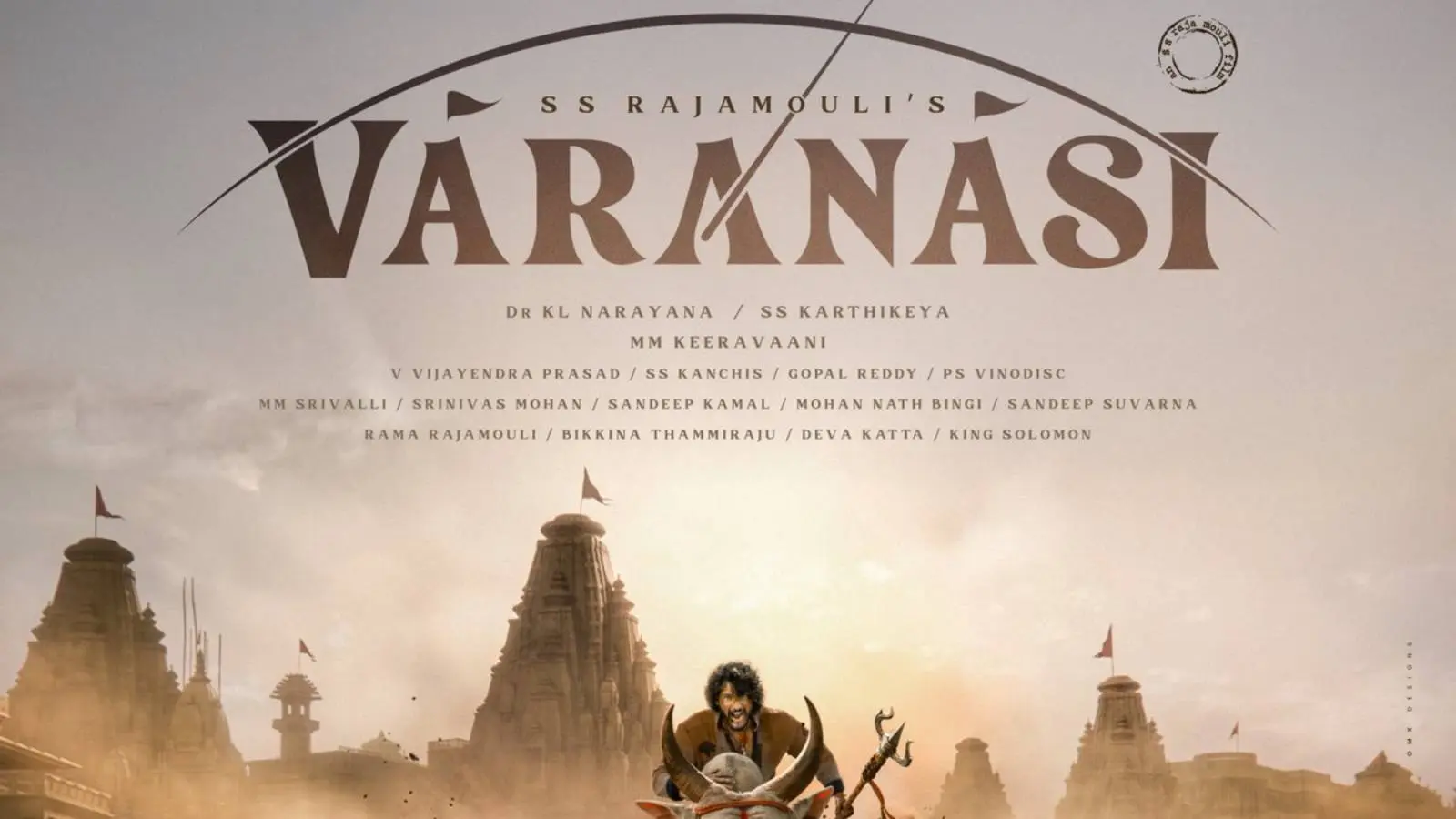
SS Rajamouli’s Varanasi – The next phase of the Indian wave?

One of the interesting things about the Asian countries as they got rich was that they followed a pattern.

0.65-0.75 HDI – Building public infrastructure (metros/bullet trains etc), systems.

0.75-0.85 HDI – Companies becoming global players. Japanese companies in the 80s. Korean in the late 90s-early 2000s. Chinese from the mid 2010s onward.

0.85 HDI+ – Pop culture becomes mainstream. Soft power. Anime/video games in the 90s for Japan. Hallyu in the 2000s for Korea. Chinese video games and C-dramas are also picking up pace now internationally (Will be a deluge by the early 2030s).

India is currently in the first phase (alongside Indonesia, Vietnam, Philippines etc).

China is in the second (alongside Malaysia, Thailand).

Japan, South Korea in the third (alongside Taiwan, Hong Kong etc).

Judging by current timelines India enters phase 2 around 2030 and phase 3 around 2050.

But it doesn’t have to be exact and some green shoots can happen before.

Rajamouli’s RRR was very well received globally (Japan as well as the west) and audiences loved the over the top earnest action in a time of crossover saturated mainstream Hollywood movies. It even won an Oscar.

His next project is the one of the most expensive Indian films ever and is getting a lot of traction from international media as well as movie tech companies(Dolby, IMAX).

Here is the official IMAX channel launching the trailer.

Interview with Collider.

The movie seems to have a very interesting premise with a Indiana Jones style globe trotting adventure with time travel shenanigans. I assume judging from the trailer the adventure will take them through the Ramayana as well.

Can be a game changer for Indian cinema and what takes India to the next level. India is already the third biggest box office in the world (behind USA+Canada and China) and the only one who will be capable beside these two to make big budget VFX-heavy epics.

A lot of VFX work is already done in India so this will hold India in good stead in the future (DNEG which does VFX for lots of Hollywood movies like Dune etc is an Indian owned company and is handling the Ramayana movie as well which is another movie getting a big international push).

According to BAFTA, ‘Free Palestine’ is the slur. Not the N-word.

The Man, Not the Scandal

John Davidson has Tourette’s. He did not mean it. His tics are involuntary — the condition is neurological, not moral. The audience was warned before the ceremony began. Davidson left the room when he realised what was happening. He has spent his life teaching the public what Tourette’s actually is. None of what happened Sunday night was his fault.

Now the second thing. The BBC broadcast it anyway.

The Edit Suite Had Two Hours Continue reading According to BAFTA, ‘Free Palestine’ is the slur. Not the N-word.

Brown Pundits