Pakistan’s Hybrid Government and the Aasia Bibi Fiasco..

Aasia bibi is a poor Christian woman from a village in Punjab who was arrested for blasphemy in 2009. She got into an argument with some other women from the village while working in the fields (purportedly over her drinking from a cup of water and hence “polluting” it) and in the course of the argument she allegedly said something  “blasphemous” about the holy prophet of Islam. The details of the case are murky and no one seems to know for sure what blasphemous statement she actually made that day (the most commonly reported one is that she said something along the lines of “Jesus died for the sins of the world, what has your prophet done for humanity”; other versions exist; the investigating police officer claims that she said much more, but even quoting it wud be blasphemy, so look it up on wikipedia) but whatever the details, a case was registered under Pakistan’s uniquely harsh blasphemy law (a death sentence is mandatory in case guilt is proven) and she has been in prison ever since.

Related image

As usually happens in blasphemy cases, she was sentenced to death by the local court (local judges usually feel it safest to convict any and all accused blasphemers, expecting that the most egregiously wrong verdicts will be reversed by higher courts that have better security). Meanwhile her case had come to national attention and the governor of Punjab, Salman Taseer, visited her in prison and spoke of her getting a presidential pardon. He was attacked in the media as a supporter of blasphemers and one of his own body guards shot him dead. The body guard was arrested and eventually hanged, but his grave has become a religious shrine and several ministers (including some in the current Imran Khan government as well as the opposition PMLN) have visited the grave to pay respects to this “hero”. Continue reading Pakistan’s Hybrid Government and the Aasia Bibi Fiasco..

Pakistan and the Great War

From Dr Hamid Hussain

2018 is centenary of the end of the Great War. This piece was written for a magazine published in England about Indian military history. I tried to highlight participation of areas and units of future Pakistan army in that epic struggle to honor countless who served all over the globe.

Hamid

Pakistan and the Great War

Hamid Hussain

“We know that it was not strategy nor tactics nor leadership that really gained us the victory, but the spirit of sacrifice”. General Sir William Birdwood’s address on unveiling of the Punjab Frontier Force (PIFFER) Memorial at Kohat October 23, 1924.

It is impossible to narrate the story of the Indian Army in the Great War on ethnic or religious lines as some modern observers are tempted to do. It is equally futile to attempt a “revisionist” narrative through the nationalist lens of modern India and Pakistan. What were then Indian soldiers of many different religious and ethnic backgrounds fought in the Great War under their regimental standards as imperial British subjects of the Indian Empire on a global battlefield.

In 1947, British India and its armed forces were divided between the two new nations of India and Pakistan. Punjab Province, which had provided the bulk of the old regular Indian Army, was carved up with a few strokes of the cartographer’s pen. Ambala and Jullundur divisions and Amritsar and Gurdaspur of the Lahore division became part of India. Punjabi Muslims, Muslim Rajputs and Pathans of the North West Frontier Province (NWFP) became Pakistani citizens while Sikhs, Jats, Dogra and Rajput Hindus became Indian citizens. All of this cut across the traditional structures and allegiances of the old Indian Army, and the Great War experiences of men such as Subedar Major Parbhat Chand, a Hindu Dogra, who won a Military Cross fighting under the colours of the 59th Scinde Rifles, which would later become the 1st Frontier Force Regt. of the Pakistani Army, the many Punjabi Muslim sepoys who served under the colours of the 125th Napier’s Rifles and 101st Grenadiers which were allotted to India in 1947, and medical officers Capt. Indrajit Singh of the 57th Rifles and Major Atal of the 129th Baluchistan Infantry who died alongside their Punjabi Muslim and Pathan comrades. While these and other factors discourage any attempt to interpret the conflict in light of the later partition of the subcontinent, there is no reason why the war-time experience of what is now Pakistan, especially the Punjab, should not be studied in the same way that, for example, the impact of the war on the north of England and regiments raised there are examined for insights. Continue reading Pakistan and the Great War

Book Review: Pakistan Adrift by Asad Durrani

Book review by Dr Hamid Hussain

Former Director General Inter-Services Intelligence (DGISI) Lieutenant General ® Asad Durrani’ s memoirs Pakistan Adrift will be released in Pakistan in the second week of October 2018. It is a memoir of a former DGISI and ambassador and his perspective about events of the last two decades.

Durrani is considered a cerebral officer by his peers and had a good career profile. Like most officers in the business of intelligence, the most controversial part of his career was his stint as head of Military Intelligence (MI) and ISI. This book is his perspective about the events but provides the reader an insight into the dynamics of power at the higher echelons. He is candid in accepting his own mistakes especially role in distributing money to politicians. Supreme Court of Pakistan is hearing this case.

Two segments about his stint as ambassador to Germany and Saudi Arabia are his views about these two societies. The most interesting segment is the chapter on terrorism when he seriously discusses the subject, its various shades and the use of this term by various states to pursue their own interests. He also elaborates on the consequences of recent destructive policy of United States of dismantling fragile states that has unleashed new demons. Very little academic and policy discussion has been devoted to this crucial subject that has made world more dangerous, violent and unstable.

Durrani devoted a significant segment towards the issue of Afghanistan. His own personal experience as DGISI and observations on later events where he had some contact in the form of ‘track two’ parleys accurately reflects thought process of majority of Pakistani officers. This view is based on a genuine national security interest of Pakistan about its western neighbor as country bears the fallout directly. As these officers interact with Afghans in official capacities therefore they sometimes get blindsided. Pakistan has influence over some Afghan clients, but Afghans are very good at playing one against the other. They survived as an independent nation based on mastering this art. Amir Dost Muhammad Khan’s letters to Czar of Russia, Shah of Persia and British Viceroy of India in nineteenth century sums up the foreign policy of the country. A good friend of former Afghan President Hamid Karzai told me in 2002 what Afghans thought about the new phase? Many key Afghan players were of the view that ‘in the previous round, neighbors played their game and we ran away from the country. This time around, we are staying put and if neighbors don’t behave, we have sworn that we will make sure that the winds of chaos will not stay in Afghanistan but blow in the other direction’. Afghan and Pakistan liaisons with Americans in Kabul share a space. At prayer time, Afghans always insist that Pakistani counterpart lead the prayer. A Pakistani can be seriously mistaken by this gesture. When with Americans, Afghans are unanimous in their view that real problem is not Afghanistan but Pakistan. Like any other intelligence agency, ISI is a large bureaucratic organization and not monolithic. Mid-level officers of the organization may have a unique perspective about an event and in some cases not in agreement with policies adopted by the high command. My own work on the subject to get opinion of the boss and his subordinate about a given event or policy provided some limited insight about many shades of grey.

In this work, Durrani is confident in claiming that ‘since leaving service, I have spilled a few beans, so to speak, but not once have I been cautioned or charged with indiscretion’. This claim was severely tested recently. Three months ago, his informal conversations with former Indian intelligence chief about diverse topics were published in a book ‘The Spy Chronicles’ that caused an uproar in Pakistan. He was severely criticized and, in some cases, abused by his uniformed colleagues. Pakistan army headquarters summoned him for explanation and an inquiry was initiated. Hopefully this work will help in understanding his views and not add more indiscretions to his charge sheet.

Durrani’ s book provides a useful insight into the thought process of senior brass. Shaky civil-military relations with deep mistrust on both sides is explained by Durrani with many anecdotes. Recent events have shown that this Achilles heel of Pakistan has not shown any sign of improvement. In view of the recent events of Pakistan and in the neighborhood, it looks that Pakistan’s policy has been consistent about what it views as its core interests. This book should be on the reading list of those interested in Pakistan.

Asad Durrani. Pakistan Adrift: Navigating Troubled Waters (London: Hurst & Company), 2018, pp. 273

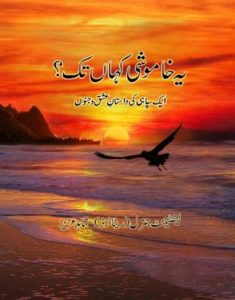
Review: General Shahid Aziz’s Memoir Yeh Khamoshi Kahan Tak

Shahid Aziz retired from the Pakistan army after a long and successful career, reaching the rank of Lieutenant General (3 star general) and serving as DG analysis wing of the ISI, DGMO (director general military operations), CGS (chief of general staff) and corps commander (commanding 4 corps in Lahore). After retirement, he served as chairman of the powerful National Accountability Bureau (NAB), the main anti-corruption watchdog in Pakistan. In spite of having been one of General Musharraf’s closest associates (and related to him by marriage; the daughter of one of Shahid Aziz’s cousins is married to Musharraf’s son) he became increasingly critical of Musharraf after retirement and in 2013 he wrote a book that was highly critical of Musharraf and of Pakistan’s supposedly pro-US policies at that time.

In May 2018 there were several news reports claiming that General Shahid Aziz had left his home last year (or even earlier) to join the Jihad against the West and had been killed, either in Syria or in Afghanistan (General Musharraf was the one who claimed he was killed in Syria, most other reports said Afghanistan). While his family has denied these reports, they have not been able to produce any explanation about where he is if he has not actually died on Jihad. So I decided to read the book. Having read it, I think the combination of naive idealism and PMA-level Islamism found in his book makes it very likely that these reports are true. My review follows (please also read this review by Abdul Majeed Abid as a complementary piece) Continue reading Review: General Shahid Aziz’s Memoir Yeh Khamoshi Kahan Tak

Pakistan General Elections 2018 – The Silver Linings:

A friend of mine posted this to Facebook and I’m reproducing it below. It’s interesting that Pakistan has a FPTP, like the UK, US, India & Canada. That means that there’s an inbuilt bias for a 2-Party system. At any rate the below is an interesting read. Apparently a Shi’ite lady (PTI) beat a sectarian outfit.

-An absolutely brilliant and inspiring election campaign by Mohammad Jibran Nasir, where he refused to bow down to extremist pressure (ZackNote: he is a Shi’ite and has a bold stance on the Ahmediyya) and never once indulged in condemnation of any community or mud-slinging against any party. It won him 6,462 and 6,109 votes from NA-247 and PS-111 respectively, which in today’s political climate is a huge achievement.

-The first Hindu to be elected to the National Assembly on a general seat: PPP candidate Dr Mahesh Kumar Malani from Tharparkar (NA-222).

-Two leaders of the Pashtun Tahafuz Movement – Ali Wazir and Mohsin Dawar – winning National Assembly seats from South Waziristan and being able to represent the PTM in Parliament.

-Rana Sanaullah, Chaudhry Nisar and Maulana Fazal ur Rehman types being voted out. Just go now, bye.

-The overall underwhelming performance of religious parties such as Tehreek Labaik Pakistan despite all the pre-election hype they had created.

-An over 50% voter turnout despite the targeted attacks that killed three candidates in the election run-up and a suicide attack outside a polling station in Quetta on election day.

-Avoiding a hung Parliament, which would have meant further instability and focus away from governance in Pakistan.

A stellar victory speech by Imran Khan, hitting all the right notes. Much cause for holding on to hope and a reminder of all the crucial work that is to be done.

Now onwards and upwards Pakistan ??

FM

Pakistan Elections 2018

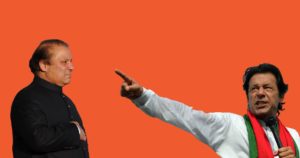
Pakistan heads to the polls on July 25th. I happen to be in the middle of a move, so I have not been posting much but a short note on the election is certainly due. Back in 2013 Pakistan had its first peaceful democratic transfer of power and it looked like some sort of democracy was finally taking root, with the military still exercising disproportionate influence but with an elected government running most of the country according to its own priorities. Unfortunately, the trend line has since reversed and done so in spectacular fashion. There are many theories about why this particular reversal happened, with some people blaming the party in power (the nominally right of center PMLN) and others the overweening ambitions of GHQ (*General Headquarters. The army). Whatever the triggers, it seems that at some point the army high command decided that it could not coexist with Mian Nawaz Sharif and his politically ambitious daughter (Maryam Nawaz Sharif) and for the last year and a half the army, primarily acting through its intelligence agencies (for the rough stuff) and ISPR (the PR wing of the army, now expanded into a vast public relations operation with a serving general in charge) has been on a crusade against the PMLN in general and Mian Nawaz Sharif (MNS) and his daughter in particular.

The operation has not gone according to plan; it seems clear that the army expected that MNS would give up the fight easily and the PMLN (a party once put together with the help of the army and including many professional turncoats) in any case will get the hint and push him out and replace him with his more cooperative younger brother (Mian Shahbaz Sharif, MSS). But MNS has refused to back down and most of the party has chosen to stand by him. The army has been forced to resort to more and more blatant attempts at political engineering but every escalation has been met by even more stubborn and public resistance from MNS, culminating in his return to the country after being sentenced to a long prison term in a corruption case where legal norms were openly flouted and the fairness of the judiciary was seriously compromised. Multiple national and international observers have already commented on the kind of tactics being used to corner the PMLN and to give an unfair advantage to Imran Khan’s PTI and I won’t go into those details (see links for more on that), but this level of blatant military intervention has also stiffened the resistance of the PMLN and seems to have energized their supporters. At the same time, the combination of 24/7 one-sided propaganda in the Pakistani media and the behind the scenes pressures applied by intelligence agencies has not been without effect, with several candidates disqualified, others induced to switch sides and all facing the possibility of more engineering on election day. The end result is that there is great uncertainty on the eve of the election. Polls generally indicate a close contest, but the unknown unknowns make any guess hazardous.

That said, it is the job of pundits to make predictions, so I will make mine. We will see how it turns out tomorrow. Continue reading Pakistan Elections 2018

A Profile in Courage

I am not adding anything extra with this short news item, I think the news speaks eloquently and voluminously by itself. I just want to add that I feel utterly humble when I consider how much courage and determination people like  Jibran Nasir possess to do what he is doing day after day in a place like Pakistan.

Rare secular candidate in Pakistan hounded by angry mob

Labaik spokesman Ejaz Ashrafi said his party “did not send anyone to do this”, adding that people running in elections should declare their faith.

Nasir gained nationwide prominence in 2014 after staging protests against the Red Mosque, the Islamabad center of a militant network with links to Pakistani Taliban strongholds in the northwest and in neighboring Afghanistan.

The mosque was the site of a military standoff in 2007, but within two years its chief cleric was freed from detention and was once again calling for strict Islamic rule across Pakistan.

The mosque campaign earned Nasir a phone call and death threats from a high-ranking Taliban commander.

“We are doing it for the millions of Pakistanis … who right now are forced to choose amongst the lesser of evils, who are willing to embrace different political leaders with all their biases and religious bigotry,” he said.

“Every day I am carrying on with my mission, they are making a fool of themselves.”

https://www.reuters.com/article/us-pakistan-election-independent/rare-secular-candidate-in-pakistan-hounded-by-angry-mobs-idUSKBN1KD1L7

Forbidden Fruit: Military and Politics in Pakistan (and beyond)

From Dr Hamid Hussain

While browsing through some old material, found an old piece written in 2003 when General Pervez Mussharraf had just completed the political engineering project. It is lengthy and indulges in some theories but gives some context to what is happening now. While pondering over it, I found words of Amjad Islam Amjad as best description;

Hum loog;

dairoon mein chalte hein

dairoon mein chalnen se

daire to barhtey hein

fasley nahin ghatey

aarzoen chalti hein

jis taraf ko jate hein

manzilein tammana ki

saath saath chalti hein

gard urhti rehti hey

dard barhta rehta hey

rastey nahin ghatey

subhe dam sitaroon ki

tez jhilmilahat ko

roshni ki amad ka

pesh baab kehtey hein

ik kiran jo milti hey

aftab kehte hein

daira badalne ko

inqilab kehtey hein

Enjoy if you have some extra time on hand.

Hamid

Forbidden Fruit – Military & Politics

Hamid Hussain

2003

Introduction

Politics and profession of soldiering has nothing in common. They are totally different but essential elements of any society. Politicians and soldiers have an interesting relationship in all societies. In societies where civilians are in control, military officers act in accepted boundaries though ready to defend their turf against civilian encroachment. In societies where political institutions are weak and there is lack of consensus on legitimate course of succession, soldiers gradually expand their area of influence. They gradually restrict the role of civilians in various areas and sometimes directly take over the state replacing the civilians. This generally accepted model does not mean that military as an institution has no relevance to the important policy decisions. Even in countries where the tradition of civilian supremacy is well established, military has a political role relating to national security, albeit a different one. One commentator has correctly pointed that “the military’s political role is a question not of whether but of how much and what kind”. [1]

This article will evaluate soldier’s attitude towards political activity and how it develops. This will be followed by the details of Pakistani experience of politicization of officer’s corps and how repeated and prolonged military rules have militarized the politics. In the end, the complex relationship between soldiers and politicians will be summarized. Continue reading Forbidden Fruit: Military and Politics in Pakistan (and beyond)

Political Engineering in Pakistan Part II

From Dr Hamid Hussain.

June 12, 2018

Following piece is mainly the result of questions form non-Pakistanis to explain the context.  It may not be very interesting for Pakistanis as they are already well informed and it seems lengthy and a bit boring.  The noise is at a very high pitch making reasonable discourse very hard.  Reminds me tenth century Arab poet Mutanabbi’s words, “With so much noise, you need ten fingers to plug your ears”.   

 Summary could be single sentence quotes;

Political Leaders: Reminds me Liddelhart’s words “The prophets must be stoned; That is their lot, and the test of their fulfillment.  But a leader who is stoned may merely prove that he has failed in his function through a deficiency of wisdom, or through confusing his function with that of a prophet”.

Generals: The Times, April 6, 1961 issue statement that “it is difficult to envisage some thirty or forty generals and a smaller number of admirals and air force commanders appointed solely by Providence to be the sole judges of what the nation needs”.

Judiciary: Jorge Ubico of Guatemala’s words that “My justice is God’s”.

Enjoy.

Hamid

Political Engineering – Modus Operandi

Hamid Hussain

“The establishments in the US, Pakistan and India are usually working for their own good rather than for the good of their public.  Shaking them might not be a bad idea”.  Former Director General of Inter Service Intelligence (ISI) Lieutenant General (R) Asad Durrani quoted in Spy Chronicles

Pakistanis will be voting for general elections on 25 July 2018.  Events of the last one year have raised many questions about the process. The gulf between important institutions is widening by the day.  Attitudes have hardened and everyone is rallying behind their respective wagons.  Pakistan’s power stool is three-legged and at one time known as ‘troika’.  In the past, President, Prime Minister and Chief of Army of Staff were the three legs of this stool.  Change of President to a ceremonial role by taking most of his powers removed this leg. In due course, this leg was replaced by Judiciary. The three legs are uneven with executive as shortest, followed in size by Judiciary and then army.  There is an inherent element of instability in this arrangement.   Continue reading Political Engineering in Pakistan Part II

Book Review: Ye Khamoshi Kahan Tak (Silent no more?) by Lt Gen (Rtd) Shahid Aziz

The late great Asma Jahangir once described Pakistan’s generals as ‘duffers’ on national TV. While it would be disingenuous to generalize a whole group as duffers, one can infer that within a strictly hierarchical structure as the army, loyalty to the force and to the commanders is considered a greater asset than intelligence or aptitude. A better experiment would be to take a look at the books written by various retired generals through the decades and reach a conclusion. It can also help us understand what type of characters are highly valued by the institution and thus given promotions. Many of the earliest officers in Pakistan Army wrote their memoirs including (but not limited to) General Ayub, General Sher Ali Khan, Air Marshal Asghar Khan and General Gul Hasan.  General Sher Ali Khan was an ‘ideologue’ of the elusive ‘Ideology of Pakistan’ while Ayub Khan and Asghar Khan had slightly more pragmatist views in that regard. Lt Gen Shahid Aziz belonged to the former category. According to his account, he was an honest officer who always put the interest of institution before any other interests.

He described himself in the following words in his book:

“Why am I full of contradiction? Why can’t I be balanced? Then I console myself with the thought that a pendulum has a balance too; what use is a balance that is static and frozen? Real balance is in movement. One should be flying back and forth on a swing.” (Translation: Khaled Ahmad)

Reading the book, one gets the impression that he was slightly more PakNationalist than the average military Joe and his levels of self-righteousness were high enough to prompt him writing that book. He knew exactly what he was doing and was a man of his (however flawed) convictions. He was the kind of guy who refused to vote for Zia in the sham referendum held in 1984, despite being asked by his superiors in the military, the type of officer who wouldn’t display a star and Pakistan’s flag on his staff car.  Musharraf obviously was wily enough to see through Shahid Aziz’s simplistic stupidity and didn’t promote him as the Vice-Chief of Army Staff. You can see his cognitive dissonance in the book that he has no shame (or self-awareness) appropriating Faiz’s work (the book is littered with poems by Faiz and Ahmad Faraz, both of whom were harsh critics of despotism and military rule in Pakistan and left the country rather than stay under a military dictatorship).

I think he’s the ultimate Nasim Hijazi character (Man on a white horse), someone who imbibed the whole PakNationalist Muslim narrative and decided to live accordingly. By PakNationalist Muslim narrative, I mean believing wholeheartedly in the ‘Two Nation Theory’, believing in conspiracy theories that the US-Israel-India nexus is constantly working to undermine the sovereignty of Pakistani state, holding the military at a higher pedestal than politicians and believing that Pakistani Islam is supposed to save the rest of Muslim world. Throughout the book, he refers to Taliban (of any variety) as ‘Mujahideen’, without any shame or remorse. His view about Pakistani Taliban (TTP) is the following:

“The bombs that kill innocent Pakistanis in bazaars and mosques are planted by friends of America, and this terrorism is done to persuade Pakistan to embrace America more closely, allow the government to pursue pro-America policies, and to alienate Pakistan from the mujahideen. But this trend of support to the killers of Muslims is an open rebellion against Allah.”

In the book, he mentioned two instances during his training in the US when he was approached by people who wanted him to leave Pakistan army and join the US army in the same position that he held in Pakistan. This sounds preposterous because you need to be a green-card holder or a national to enlist as an officer and you can’t be inducted straight as a commanding officer.

One of the more interesting (but not completely unsurprising) aspects of his book was the discussion of nepotism and corruption within the ranks of the army (especially corruption during weapons procurement and the way DHA scams people). Such things, if ever pointed out by civilians, would constitute heresy and treason. Another aspect that intrigued me was his criticism of war tactics during 1971 (he fought along the Kashmir border) and during Kargil (when he was part of ISI).

The most useful part of the book is when he discusses his role as a first-hand observer of Musharraf’s coup and its aftermath. He was also part of the team that selected people for running different ministries under Musharraf and he spilled the beans on how Ministers of Finance, Commerce, Trade, Industry, and Petroleum were ‘pre-selected’ and Shaukat Aziz never even appeared before the interview panel. He was initially optimistic about the monitoring mechanism put in place to hold the relevant ministers accountable but things didn’t work as smoothly or ideally as he wished. He laid the blame squarely at Bureaucracy’s feet.

His thoughts post-9/11 were:
“After 9/11 the bitter reality of a unipolar world was exposed. This incident happened under suspicious circumstances. A lot of American experts claim that this incident was orchestrated by American Intelligence Agencies and Jewish terrorists”.

He was bitter about the fact that Musharraf allowed US forces to use some of our Airbases (Shamsi, Zhob, Dalbandin, Jacobabad). He also mentioned how Indians sneaked into Afghanistan right after the organisedUS-led operation and took over TV stations in Kabul. According to his account, American forces didn’t keep Pakistan informed regarding their hunt for Al-Qaeda militants and knowingly pushed then towards Pakistan. About the first encounters between SSG unit and Al-Qaeda militants, he was full of praise for the militants and commented: ‘how can you compare a salaried individual with a guy who is looking to be martyred?’

Regarding the Indian Parliament attack in December 2001, he had this to say: “After The Delhi bomb attacks, Pakistan was accused in the world as a terrorist haven. This was a ridiculous claim. By that time, Pakistan had ceased help to Kashmiri Mujahideen. ISI was strictly acting upon the new policy. Obviously, Kashmiri Mujahideen were not an organized group, they were nothing more than a ragtag army who were fighting in the way of Allah, not listening to anyone. However, the government wasn’t involved.”

There were tensions within the top brass in 2002-03, which have been highlighted by the author. There were turf disputes between ISI and Army, involving some captured Al-Qaeda militants, close coordination between Army and CENTCOM,  and development of a Quick Response Force and a Special Operation Task Force within SSG. There were two assassination attempts on Musharraf in the period 2003-4 which were orchestrated by people within the military.  He, however, voted for Musharraf in the 2001 Referendum. (Just an aside, I was an ‘observer’ for the Referendum near a village in Mansehra and saw how people brought NICs of dead people to the voting station so that those people’s vote could be counted).

His reflections on becoming CGS (Chief of General Staff):
“My tenure as CGS was really hard for me. Everything that could go wrong, went wrong. In Afghanistan, we collaborated with the U.S. while waving the flag of non-partisanship and were equally responsible for massacre of fellow muslims, a dictator who came to the fore promising change became President for five years based on a sham election, Incapable and corrupt politicians were promoted by the army to run the country, compromises were made on Kashmir under American pressure, separatism in Balochistan was promoted, commercial TV channels were allowed to manipulate our nation’s narrative, ‘Pakistan First’ was used as a slogan and there were efforts to reform Islam under the auspices of ‘Enlightened Moderation’. He argued with Musharraf in favor of keeping the Kashmiri ‘Mujahideen’ as proxies against India.

He rails against both secular people and religious people because they don’t follow what he thinks is the righteous path. According to his plan, religious education in regular schools should be updated and secular education in religious schools should be updated so that in a decade, students of both systems are on par with each other. He sparred with Musharraf and his friends over this at dinner parties. The more alarming insight from the book is that such view and such officers were popular in the army. He also had a romantic view of the ascetic life, free of the burdens of money, job and retirement.

Brown Pundits