
Month: April 2018
Debt Cancellation, the Bible and Jesus
An interesting article, very pertinent for the current economic mess in the world. Maybe Zachary can weigh in.
Excerpts
Michael about his Forthcoming book Forgive Them Their Debts: Credit and Redemption that comes with an astounding re-reading of the Bible and the true meaning of the life and persecution of Jesus. Based on scholarly breakthroughs in decoding ancient languages, it places a debt cancellation message inherited from Babylonian times at the center of Mosaic law and the Jewish Bible. And when it comes to Jesus, his message is revealed to be a social justice message. Through the lens of this reinterpretation, Jesus was actually an activist advocating for debt cancellation. He died not for the sins of the people but for their debts.
In Sumer, and Babylonia, around 2500 B.C., and every new ruler, when they would take the throne, would start his reign by canceling the debts. In Sumer, the word for that was amargi, in Babylonian the word during Hammurabi’s dynasty was andurarum.
Hebrew deror, is a cognate to Babylonian andurarum, and the Jubilee year was word-for-word exactly the same debt cancellation and freeing of the bond servants and restoration of land that you had occured for 1,000 years in the Near East, and was still occurring in the first millennium BC.
What I realized is that when Luke 4 reports the first speech of Jesus, when he goes to the temple and gives a speech, his first sermon, he unrolls the Scroll of Isaiah, and said he has come to essentially proclaim the Jubilee year …. The word he used, and that Isaiah used, the deror, was this Babylonian, Near Eastern long tradition that was common throughout the whole Near East.
Business debts were not forgiven. The debts that were forgiven were personal debts, agrarian debts, and the idea was to liberate the bond servants so that they could be available to perform the corvée labor, which was the main kind of taxation in the Bronze Age, and serve in the army. If you were a debtor and you were a bond servant to a creditor, you wouldn’t be available for corvée labor, you’d be working (for) the creditor, you wouldn’t be available for the army.
The Romans were the first society not to cancel the debts, and there was civil war over that. A century of civil war from 133 BC, when the Gracchi Brothers were killed by supporting the population, to 29 BC when Augustus was crowned. There was a civil war where the advocates of debt cancellation were put to death. Just as Cleomenes in Sparta, in the late third century, was put to death, and Agis, his predecessor earlier in the third century BC, were put to death for advocating debt cancellation. So there was three centuries of constant civil war over this, and ultimately the creditors won, largely by political assassination of the advocates of debt cancellation, who almost all came from the upper class. They were upper class reformers, they were not lower-class particularly. They were the scholars, just as Jesus was a rabbi.
Most debts did not occur from lending money. It’s easier today to figure if you have a debt, you must have borrowed it. But three quarters of the debts in Babylonia, for instance, where we have records because they were on clay, cuneiform records that were baked and have survived, most debts were simply unpaid bills. The debts were unpaid taxes, unpaid debts, unpaid rent, and unpaid obligation for services that had been supplied.
And so Judaism took the debt cancellation out of the hand of kings, where it had been in the Near East, and put in the very center of their religion. In Leviticus 25, again and again the prophets would say, “We’ve freed you from bondage, and if you’re going to maintain Judaism, you have to respect the debt cancellation.” And the Biblical prophets warned, if you don’t cancel the debts, you’re gonna be canceled. By Assyria, by Babylonia. And they blamed the capture and destruction of Judea and Israel on the fact that they had veered away from the law of God and did not cancel the debts.
Tribes: When does the concept of a general debt cancellation disappear historically?
Michael: I guess in about the second or third century AD, that was downplayed in the Bible. And you had, after Jesus died, you had first of all St Paul taking over, and basically Christianity was created by one of the most evil men in history, the anti-Semite Cyril of Alexandria. Who decided to gain power by murdering his rivals, the Nestorians, by convening a congress of bishops and killing all of his enemies. Cyril was really the Stalin figure of Christianity, killing everybody who was an enemy, organizing pogroms against the Jews in Alexandria where he ruled.
And it was Cyril that really introduced into Christianity the whole idea of the Trinity. That’s what the whole fight was about in the third and fourth centuries AD. Was Jesus a human, was he a god? And essentially you had the Isis-Osiris, ISIS figure from Egypt, put into Christianity … The Christians were still trying to drive the Jews out of Christianity. And Cyril knew the one thing the Jewish population were not going to accept would be the Isis figure and the Mariolatry that the church became. And as soon as the Christian church became the establishment rulership church, the last thing it wanted in the West was debt cancellation.
Tribes: Has any modern society declared a Jubilee without a revolt of the creditor class?
Michael: Yes. There was a wonderful debt cancellation, the major debt cancellation of the modern era was in 1947 and 48, the German monetary reform, called the German economic miracle. The Allies canceled all German debts, except for debts owed by employers to their employees for the previous month, and except for minimum bank balances. It was easy for the Allies to cancel the debts, because in Germany most of the debts were owed to people who had been Nazis, and you were canceling the debts owed to the Nazis, the Nazis were the creditors at that time. And that freeing Germany from debt was the root of its economic miracle. So that is the prime example of a debt cancellation in modern times that worked.
More at https://www.nakedcapitalism.com/2018/04/michael-hudson-bronze-age-redux.html
Bi Kidude, Sri Lankan Baila and Traditional Drums
 Cross posted from blog.
Recently saw a music video by Bi Kidude (Little Granny) from Zanzibar. I was struck by the similarities to Sri Lankan Kaffiringha or Manja music and old traditional music as in Panama Vannam and Yak (as in Yakkha) Thovil. (Panama is pronounced Paanaama, its a small village on the SE coast at the edges of the jungle).
Bi Kidude (Little Granny)
Fatma Baraka Khamis was Taarab singer from Zanzibar who was born around 1910. Bi Kidude won several awards including a WOMEX
 Award for her role in the culture of the Zanzibar Island. The iconic artist sadly passed away on April 17th, 2013. She very well might have been a century old. (see more here and video documentary“As old as my tongue – The Myth and Life of Bi Kidude” by director Andy Jones). In Bi Kidude’s words, I smoke, drink and sing. Not bad for a life to a hundred years.
So here is one music video by Bi Kidude. A few other links, Dancing, Traditional Drums, and her Voice range (Alminadura).
Manja Music of Sri Lanka
Its the music of the Kaffirs (not a derogatory word in Sri Lanka). They were brought mainly by the Portuguese from Angola and Mozambique. The Tabbowa/Sirambiadi community in the west coast is a mix of African descendants and Sinhalese. Their music is now very much part of the Sri Lankan tradition. Below the group Ceylon African Manja performing in their village. This is youtube clip of the same group in a more formal setting.
Portuguese Burgers (Creoles) of Batticoloa (East Coast)
The Portuguese Burgers too sing and dance Kaffiringha music. Its is unknown if they have African roots.
Sri Lankan Traditional Music
A gravel voice and rhythms (as against melody) define traditional music. Immediate below women playing the rabane, a instrument played by women at village events, specially Sinhalese New Year. This particular video is from a five star hotel !!.
Second below the traditional Gajaba Wannama (dance of the King’s Tuske) with a modern dance ensemble. More Wannamas here.
Unheard of a couple of decades back, upper middle class girls/women playing the drums, or for that matter a traditional instruments. Now we have and all girl/women traditional drumming (watch it is good, their website http://www.thuryaa.lk/). The times are a changing.
note: Traditionally (at least the last century) dance for festivals, processions (perahera, eg. the Kandy Perahera) was done almost exclusively by men. One rarely saw women dancing, unless it was associated with Hindu Kavadi also part of the Perahera procession
Also see
http://sbarrkum.blogspot.com/2013/03/music-papare-video-angola-or-brasil.html
http://sbarrkum.blogspot.com/2011/01/galle-heliwela-exorcism-and-yak-natum.html
Thanks Mohamed Rizwan for linking the Bi Kidude video, Anton James for identifying Bi Kidude.
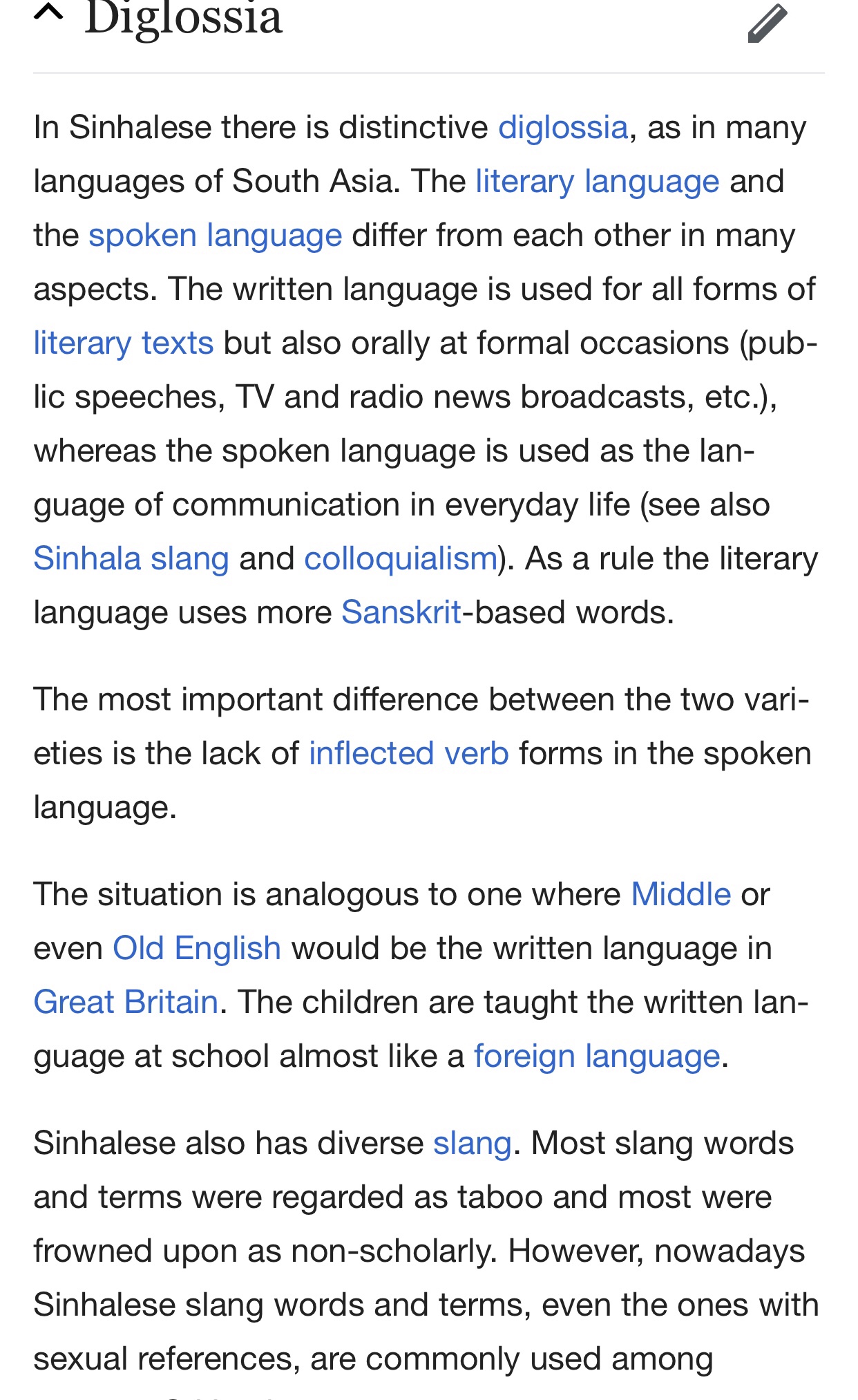
Dioglossia in Sinhala
Picking up from sbarrakum’s comment on Sinhalese.
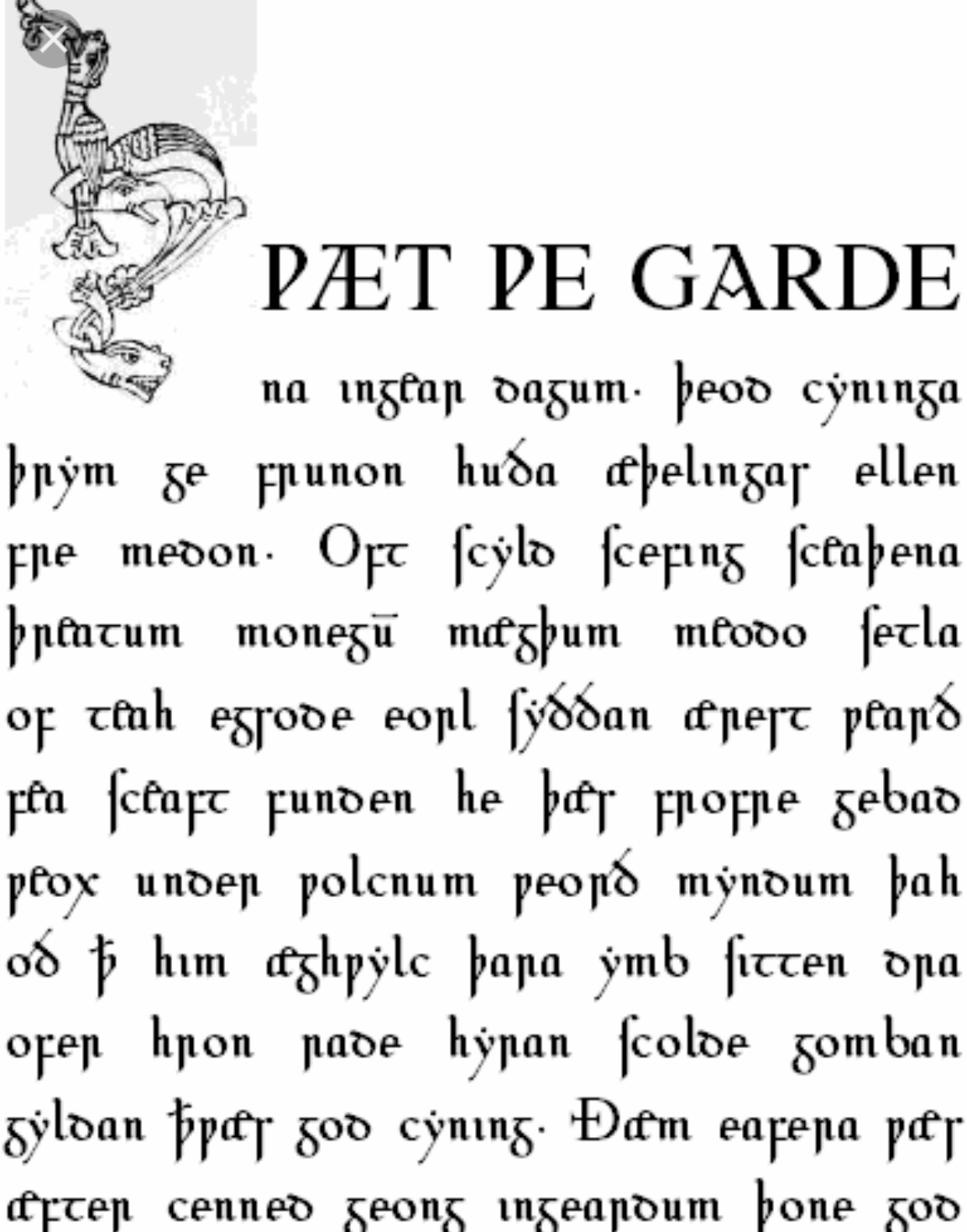
First page of Beowulf in Old English
Why does the Liberal Left applaud America haters
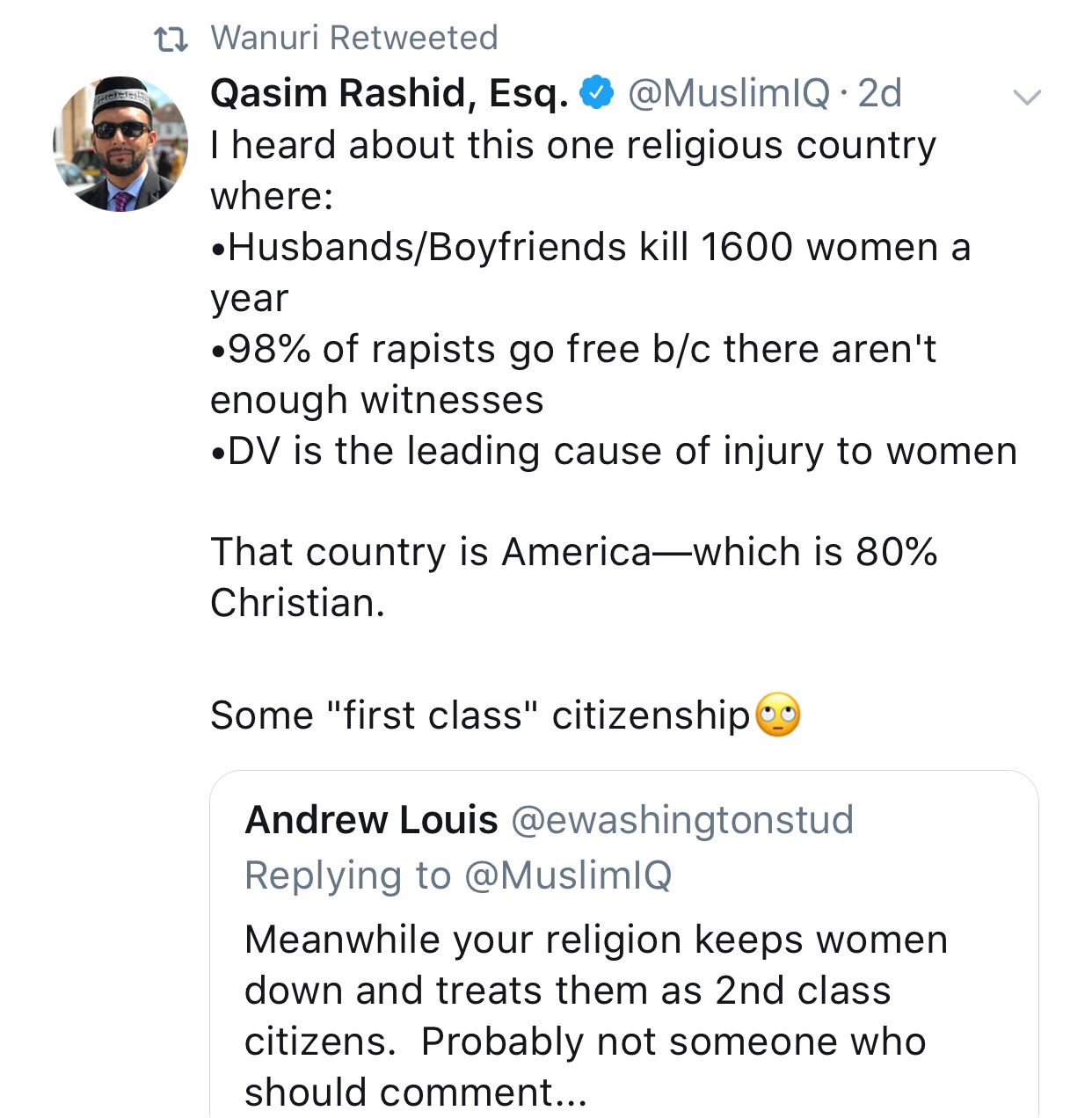
This guy, Qasim Rashid, is actually an “American citizen” but like Ms. Hoda Kateb brimes with bile about the US.
I feel we are in the decadent stage of the Roman Empire where traitors are applauded in the midst.
I decry colonialism but I would never disrespect Britain (I am British after all) the way Hoda and Qasim so gleefully do to the US when Islam/Muslims are attacked.
I’ve seen this time and time again and it almost does prompt the question then if the US/UK is so bad then why don’t you go back to where you came from.
These people don’t love America; you can’t attack something or write it in that tone and claim to be a patriot.
There is also a fundamental difference between a Native American or an African American (descendant of slaves) and an immigrant American. The former two are part of the American narrative from get-go and have an unimaginable historical experience.
Immigrant Americans have either chosen to come to the US or their parents have for the most part post 1960 (if they are non-white). It is in bad taste to hate the country that gives one freedom, opportunity and refuge.
Is there anything intrinsically attractive about Western Civ
I was reading the article Vijay posted about the Search for Buddha:
In the 1680s, King Narai of Siam became interested in Christianity, and even more interested in European science, especially astronomy. Louis XIV dispatched two embassies to Siam, in 1685 and 1687, including a strong contingent of Jesuit scientists. Dolu was part of the 1687 group.
The rest of the article reads like a chick-lit detective story. However the above passage struck me.
End of History
The end of the Cold War, Star Trek, Francis Fuyukama assured us in the 90’s that History was coming to an end and very soon we would become an English speaking multi-racial world with a generic Americanised culture.
Of course Samuel Huntington saw things quite differently and he’s been proven right. All over the world there are these (last gasp?) rightist/populist push backs against globalisation.
Greco-Roman world
The last parallels I can think of is the Greco-Roman cultural ambit under initially the Macedonian (who brought Hellenism to the East) and the Romans (who later evolved into the Byzantines).
Ultimately a good marker to assess cultural hegemony is via language because language guides us in how we process the world and culture arounds us. I also see that language diffusion and adoption is usually a result of political hegemony rather than coolness factors.
Christianity & Latin
Western Europe became Latin speaking simply because it was under the Romans for as long as it was. There is no region in Europe that adopted a Vulgar Latin language that wasn’t under sustained Roman control (it never grafted onto Britain). The same goes for Christianity where it’s spread usually mirrored political control as well both in late antiquity and in the colonial era.
To fast forward there wasn’t a spontaneous adoption of Christianity in the colonial era when there were sophisticated local religious hierarchies. Christianity failed to make significant headway into Asia with the notable exception of Philippines.
Cultural Diffusion
So hard power usually precedes soft power. The third great diffuser of a civilisation beyond language and religion is culture. In yesteryear it was Shakespeare now it is Hollywood.
Bactria & Hollywood
An example of a good model of cultural diffusion vis a vis Hollywood in Asia is the spread of Hellenistic sculptural traditions into East via Bactria. The Sleeping Buddha statues are direct but unrecognisable descendants of the Classical Greek sculptures we see in the Louvre and other museums.
Hollywood is akin to this. Many good romantic and star cast films are mined for their ideas and remade in Bollywood possibly in other Asian, Arab and African cinemas (I can’t be certain). It’s interesting to see that Hollywood, as the leading hegemonic global Cinema, is moving away from “star power” to franchises (like the Avengers).
People around the world will watch Hollywood for movies like the Avengers but will watch their own cinemas for great romantic films (which ultimately is more relatable when it has local films). So Hollywood isn’t Anglicising/Americanising the world inasmuch as providing a generic platform to watch expensive action blockbusters.
What will the world look like in a millennia
Of course predicting tomorrow is hard enough but a millennia ago most of the great world civilisations were already set in place. When a culture or civilisation has planted roots into a particular geography it’s only an Act of God or sustained brutality that can evict it. Soft power has a role in blurring the boundaries between cultures but in never erasing those cultures.
Do we become American when use Facebook
We are of course all products (to varying degrees) of values of the Western Enlightenment but that in itself is now decoupling from being Western/Westernised as time wears itself on. A similar example would be that we all use Roman legal codes (to some extent) but that doesn’t make us Romanised. A more contemporary example would be that using Facebook doesn’t make us American.
Going back to the initial passage in 1680 King Narai was flirting with Christianity; in 2018 Thailand remains a staunchly Buddhist monarchy with an almost virulent (?) nationalist tradition.
You don’t sound American
https://www.facebook.com/JeremyMcLellanComedy/videos/1860109164030250/
Iranian-American Muslim fashion blogger Hoda Katebi was invited on the news to talk about her new fashion book. Naturally, they ask her about nuclear weapons and tell her she “doesn’t sound American.” I don’t think they were prepared for her answer.
Hoda is a doppelgänger for a Hijabj BritPak friend of a friend (that girl unfriended me on Facebook after my Facebook Lives last year). Ms. Katebi comes much more as Muslim American than Iranian American (she even calls herself a Muslim Iranian).
The above incident happened in Feb this year but I just learnt about it now (as always I’m slow on the uptake).
I just find the idea of an Iranian American defining themselves as Muslim (she defines herself as Muslim Iranian in America) to be a bit jarring; I’m very used to the Bahá’í or Jewish Iranian American communities being visibly and overtly religious. For the mainstream Iranian American community being Shiite and American is almost a contradiction when their two nations have had such strained relations for the past 3 decades.
Also Hoda doesn’t have an American accent; as the ethnic populations in the West grow larger, their interaction with the mainstream becomes more limited.
Even in lily-white Cambridge one gets the feeling is that there are simply less and less English people about every year. In the 80’s moving to the West meant assimilation into WASPY framework; these days moving to the West is swimming in one’s own sizeable ethnic diaspora. I miss California because one of the best Pakistani restaurants (Zareens); it’s like never leaving home.
Brown Roundup
* Tripura CM mocks Lisa Hayden because she doesn’t conform to Indian beauty standards.
* CBI wins a victory against Vijay Mallya.. His barrister, Clare Montgomery, is interesting as she belongs to Matrix Chambers, whom Cherie (Blair) Booth used to belong. Her previous client includes Augustine Pinochet and she seems eminently capable (smacks of Oxbridge even though she didn’t seem to have gone there).
* Initially I really liked the new name Prince Louis but I’ve now realised they’ve named him after Lord Mountbatten. That’s in incredible poor taste to the British Asian population; as Lord Mountbottom was as bad as Churchill when it came to India. Partition is ultimately in his conscience, speeding the division of India was probably one of the greatest human disasters in history. A very poor showing by the Royal Family and a complete insensitivity to their Asian citizen-subjects.
Word
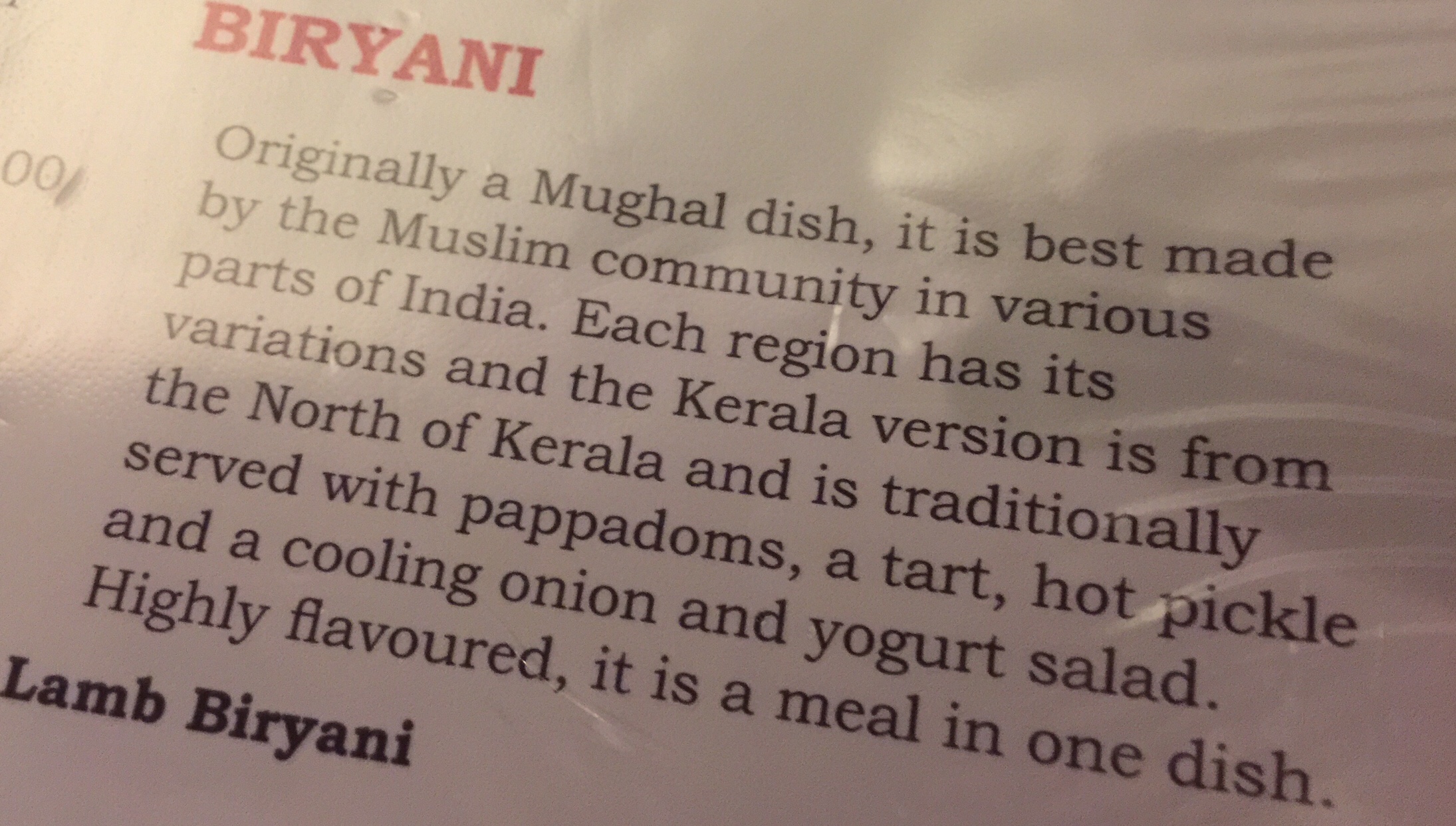
Forgive my obligatory Mughalophilia but I haven’t indulged Pak psychosis in a while on this blog. Too busy getting worked up over my black/AASI heritage. I have a habit from flitting/flirting with causes; my personality type is apparently ENFP the “Activist” so forgive my armchair activism..
Speaking of Pak psychosis I have a small WhatsApp group of the Pakistani Literati. For our first London meeting when I selected an IndoPak restaurant there wasn’t really much uptake, as soon as I selected a trendy Persian place everyone got into it. The Pak psych is a thing of wonder though Persianate halflings like me probably contribute it with our excessive partiality for Hijaz & Shiraz!
Are the AASI black?
The whole thing about genetics has been very oriented around “whiteness.” Just as we had the historical supposition that most cultures were created by vigorous Northern races that degenerated after mixture with decadent Southern ones (which conveniently was appropriated by Euro-colonialists).
I do think in simple language. While the AASI seem to be related to the initial Negrito coastal waves that spread across Yemen, Southern Indo-Pak, parts of Malaysia, Melanesia, Papua New Guinea and the Aboriginals (hints of these genes are said to be in the Amazon); it’s important to realise that we are “brown” because of these ancestors.
The Aryans were fair & lovely; the Eastern Anatolian/ Elamitic (Iranian farmers is a misnomer) were probably olive & tanned (related to J2 population sort of look like modern day Caucasians; fair skinned but darkish colourings) but it was the AASI (the Dalit/untouchable) who gave us our swarthier complexions.
Maybe the race movement/ black lives movement in the US is needed in South Asia so that we can love our black ancestors.
It’s interesting Hollywood has an amazing and vibrant black Afram entertainment community. None of the cinemas in Latam and/or South Asian put darker skinned/Dalits front and centre.