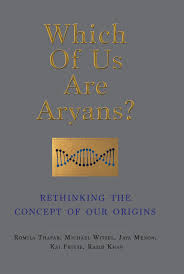
 Last year I contributed a chapter to a book soon to be published in India, Which of Us are Aryans? In answer to the question, the straightforward answer is that almost all of us are Aryans. That is, the thin but persistent layer of Indo-Aryan (“steppe”) ancestry is present across the subcontinent. In higher fractions among Brahmins and Kshatriyas than in Dalits, in the northwest than the southeast, and among Indo-European speakers than Dravidians. But this ancestral component and its cultural correlates are found across southern Asia.
Secondarily, there has been some discussion about the negative valence in the West about the term “Aryans.” In particular, its “cultural appropriation” by German Nazis by way of Theosophy and various spiritual and quasi-spiritual movements in the early 20th century.
As an American to see the word “Aryan” bandied about like this is strange and a bit uncomfortable. But there are now more than 1 billion Indians, so I don’t believe we in the West are a position dictate in terms of the lexicon that we borrowed from Indians in the first place, often without clear attribution (most Americans and Europeans would be surprised that “Aryan” is an Indian and Iranian term).