A short introduction to the work of Muzaffar Ghaffar, who has published 30 volumes of classical punjabi poetry with detailed explanations and translation. Written by Punjabi writer Nadir Ali (who happens to be my father)
Muzaffar Ghaffar on Guru Nanak
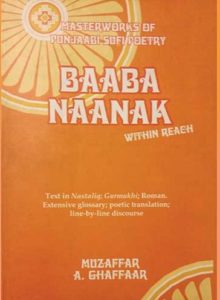
BAABA NAANAK Within Reach – in MUZAFFAR GHAFFAR’S series “Masterworks of Punjabi Sufi Poetry”
Publisher :Ferozsons (Pvt) LTD Pages : 435 Price : Rs 1095
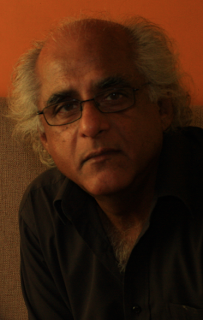
In the cultural wasteland that is our homeland these days, to be a man of culture doesn’t take much effort; you do some literary chit chat or somehow get your name printed with some work people assume as cultural or creative and you become a cultural or literary figure! Having known Muzaffar Ghaffar for over thirty years, he is an honourable and notable exception to this superficial trend. He came to Pakistan with his savings and a couple of books in print, a book of English verse which has had a couple of editions published and a book On How a Government is Run . In my involvement with Punjabi we came together in the weekly “Sangat” in readings of Punjabi classic poetry held at the residence of Najm Hosain Syed and Samina Hassan Syed and I have had the pleasure of knowing him for over 30 years now.
A digression first: Najm Sahib is already famous in Punjabi literary circles in both East and West Punjab. To give you some idea I often quote a well-known Sikh scholar of Punjabi who was Head of Punjabi Department at Guru Nanak University, Amritsar. He said, “There are two categories of Punjabis – those who have studied Mr. Najm Hosain Syed and those who have not; those who have not read him do not know much about Punjabi language or literature!” To those not familiar with Mr. Najm Hosain Syed’s work, this may sound like an exaggeration. But having attended weekly meetings at his house for nearly forty years and having read his poetry and books on literary criticism, plays and poetry, I venture to share this remark. There are almost forty books of verse and landmark works of literary criticism and four books combining half a dozen plays in Punjabi to his credit. He keeps his books small so that the price remains within reach of Punjabi readers. “Recurrent Patterns in Punjabi Poetry” is his masterwork and the full text is online at apnaorg.com.
Najm is Muzaffar’s guide and inspiration for the thirty volumes of the “Within Reach” series on Punjabi Classical poetry that are available to date, all in English. But neither in the US, nor in England and rest of English speaking world abroad have I seen these books in the market, although Punjabi literature is taught in many places in institutes of repute in these countries, with considerable Punjabi speaking public. Nor do I know of anyone abroad who talks of these books. In particular the worth and value of this remarkable volume “Baaba Naanak Within Reach” on Baba Nanak’s poetry is incalculable, and it is our enormous loss that this work of M. Ghaffar remains largely unknown. Continue reading Baba Nanak Within Reach, by Muzaffar Ghaffar