
A Factual Account of Recent Developments
Overview:
The region of Ladakh has seen a sharp escalation in political tension and civil unrest over the past 10 days. On September 24, 2025, four civilians were killed in Leh in police firing following public protests. This marks a significant turn in the trajectory of Ladakh’s relationship with the Union government of India, which had previously promised administrative empowerment and constitutional safeguards following the region’s bifurcation from Jammu & Kashmir in 2019.
Timeline of Key Events:
- August 5, 2019: Article 370 is abrogated; Jammu & Kashmir is bifurcated into two union territories: Jammu & Kashmir and Ladakh. Ladakh is granted Union Territory status without a legislature.
- Post-2019: Initial optimism among Ladakhis regarding direct governance from Delhi. Perception that Srinagar had previously marginalized the region.
- 2020–2023: Peaceful protests and coordinated civil society efforts begin, seeking Sixth Schedule protection (constitutional safeguards primarily concerning land, culture, and employment).
- 2021: The Leh Apex Body and the Kargil Democratic Alliance, traditionally divided, unite around common demands: Sixth Schedule protection, job reservations, and domicile requirements.
- June 2025: Centre promises limited concessions — 15-year domicile requirement and job reservations — but withholds Sixth Schedule and statehood.
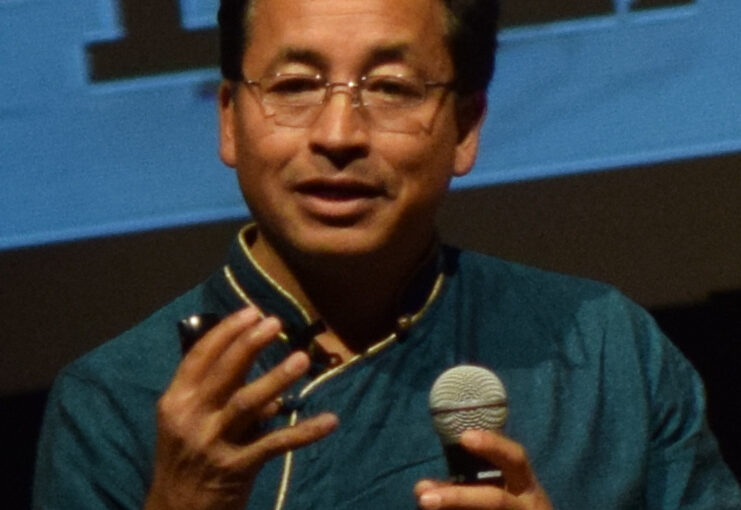
- September 2025: Following activist Sonam Wangchuk’s hunger strike, tensions rise. On September 24, police fire on protestors in Leh. Four are killed, including a retired soldier.
Key Demands from Ladakhi Civil Society:
- Inclusion under the Sixth Schedule of the Indian Constitution (currently operational in tribal areas of four northeastern states). This provides:
- Protection of land rights.
- Cultural and linguistic preservation.
- Local self-governance.
- Domicile protections: Job and land reservation for long-term residents (30-year demand; government offered 15).
- Statehood: Legislative powers and elected representation.
- Protection of environment and traditional livelihoods: Resistance to extractive industries and unregulated mining of critical minerals.
Demographic and Geopolitical Context:
- Ladakh comprises two districts: Leh (majority Buddhist) and Kargil (majority Muslim), each with roughly 150,000 residents.
- The region is strategically sensitive, bordering both Pakistan and China.
- Chinese military presence in the Depsang and Demchok sectors remains unresolved post-2020 standoff.
- Civil society perceives increasing centralization, land access to corporate actors, and declining local agency.
Constitutional & Legal Aspects:
- Sixth Schedule is part of the Constitution and has been promised by BJP in 2019.
- The removal of Article 370 and 35A eliminated prior domicile protections.
- Mining and land use reforms are being enacted without public consultation (e.g., Environment Ministry memorandum removing mandatory hearings for critical mineral projects).
Recent Escalations:
- September 24, 2025: Police open fire on protestors in Leh. 4 civilians killed.
- Post-September 24: Sonam Wangchuk detained under the National Security Act.
- Allegations from civil society that peaceful protestors are being branded as “anti-national.”
Key Voices:
- Prof. Siddiq Wahid (Scholar of Ladakh & Central Asia):
- Criticized lack of elected representation and centralized decision-making.
- Stressed unity between Leh and Kargil as unprecedented and critical.
- Warned against conflating cultural assertion with anti-national activity.
- Emphasized risks of environmental degradation and demographic shifts due to unregulated tourism and extractive projects.
- Sonam Wangchuk (Activist):
- Leading hunger strikes and awareness campaigns.
- Advocating for peaceful resolution and constitutional protections.
Conclusion:
The situation in Ladakh is a product of long-standing demands for dignity, representation, and protection of cultural and environmental integrity. The Centre’s response, from policy delays to use of the NSA, has inflamed tensions. Civil society remains united and largely peaceful, urging constitutional negotiation over repression.
The Ladakhis have an electorally selected representative – independent MP Haji Mohamad Haneefa Jan.
Where this man is, and what he is doing is a mystery. Reporting around these issues is really a media circus of competing narratives. Interview that peoples rep. What is the point of elections if policy is to be made by hunger strikes and burning down buildings?