
When Bahá’u’lláh wrote that every word of the Qur’ān bears meaning and intention, he was reminding us that revelation, properly read, resists reduction. Scripture, like language itself, is alive; it breathes, it hesitates, it renews. Yet somewhere between the living word and the legislated code, the hijab became a symbol, of modesty, of defiance, of cultural siege, of theological purity, until its nuance was lost to politics.
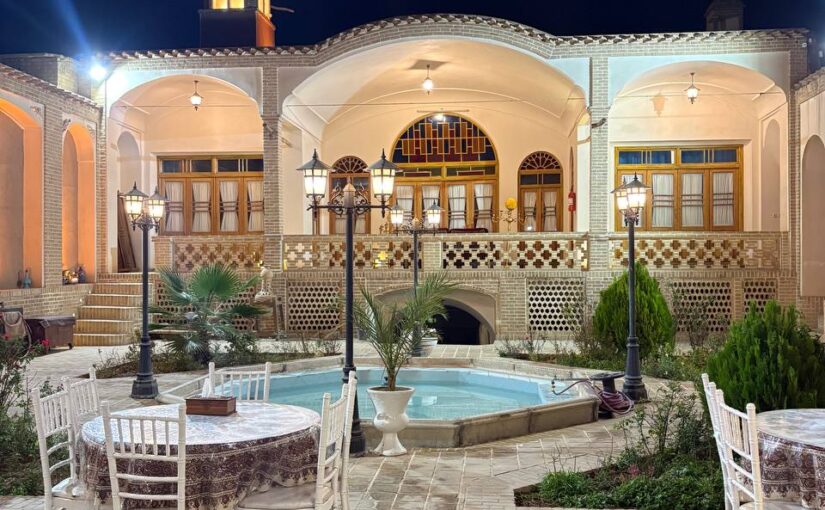
My friend is in Kashan, a city of gardens and scholars, and perhaps among the most traditional pockets of Iran. She forgot her hijab back in her home city and now cannot step out of her hotel. The irony is sharp: the veil that once signified spiritual privacy has become an enclosure of space. Kashan’s cobbled lanes whisper poetry, but they also enforce silence.
Meanwhile, the liberal axis of Iran, Shiraz, Tehran, Gilan, Mazandaran, Semnan, walks the tightrope between revelation and rebellion. The North dresses as Europe, the Centre prays as Qom. Mahsa Amini’s martyrdom was Kurdish, and therefore doubly liminal: ethnically marginal, religiously symbolic (the Kurds are very secular as a rule of thumb; more Zoroastrian than the Persians). Her death reopened a question the Qur’ān itself leaves open — what, after all, does ḥijāb mean?
1. The Qur’ānic Vocabulary of Modesty
Contrary to centuries of clerical condensation, the Qur’ān never commands a specific garment called “hijab” for ordinary women.
The term ḥijāb (حجاب) appears seven times; always meaning “barrier,” “curtain,” or “partition,” never a headscarf.
For instance:
“And when you ask [the Prophet’s wives] for something, ask them from behind a ḥijāb; that is purer for your hearts and theirs.”
— Surah al-Aḥzāb 33:53
Here, hijab refers to the physical screen separating the Prophet’s private quarters from visitors — a protocol of privacy in the Prophet’s house, not a general mandate.
When the Qur’ān addresses clothing and modesty, it uses different words:
-
Khimār (خمار) — a cloth that covers the head or bosom
“Tell the believing women to draw their khimār over their bosoms…”
— Surah an-Nūr 24:31
This verse focuses on concealing the chest, not mandating a head covering; it presupposes existing cultural attire and redirects its use toward modesty.
-
Jilbāb (جلابيب) — an outer wrap or cloak
“O Prophet, tell your wives, daughters, and the women of the believers to draw their jilbāb around themselves; that is better so that they may be recognized and not harassed.”
— Surah al-Aḥzāb 33:59
The context is protection from street harassment; a social precaution, not a metaphysical uniform. In every instance, modesty is relational, moral, situational; not textile.
2. From Verse to Veil
By the early Abbasid period, the ḥijāb evolved from a spatial divider (marking the Prophet’s household) into a status marker for elite women. Byzantine, Persian, and Arab court cultures fused to produce the “seclusion aesthetic”; veils, curtains, courtyards. What had been moral counsel became social choreography.
Centuries later, jurists re-codified these norms as fiqh, freezing fluid guidance into permanent injunctions. Thus, by the time modernity arrived, colonialism, nationalism, and theocratic reform, the veil was already burdened with multiple pasts: Arab, Persian, Hellenic, clerical.
3. The Paradox of Modern Piety
Today, the hijab stands at an impossible intersection:
-
For Muslim feminists, it can signify agency — I choose to define my boundaries.
-
For state clerics, it is obligation — You must display obedience.
-
For liberal societies, it oscillates between tolerance and unease — Is it freedom, or refusal of assimilation?
The result is a garment both sacred and politicized. A symbol that must simultaneously express faith, resist Western voyeurism, and survive patriarchal enforcement. The Qur’ān, however, places the emphasis elsewhere:
“O children of Adam, We have sent down to you clothing to cover your nakedness and as adornment; but the clothing of piety — that is best.”
— Surah al-A‘rāf 7:26
Here lies the heart of revelation: piety as the true veil. Outer coverings are contingent; inner modesty is the essence.
4. Between Kashan and Cambridge
The question of hijab is not simply East versus West, faith versus freedom. It is how intellectual rigor meets inherited form.
The niqab and hijab, like the habits of Catholic nuns or the Ghoonghat of Marwari women, presumably began as devotional practices; acts of humility before God. Yet when repeated without reflection, they risk becoming cultural artefacts detached from their moral origin.
Standing in Cambridge, Massachusetts, debating rent control, oligarchy, and social justice, I often notice the same tension: the difference between principle and performance. One woman wears hijab, another niqab; both perhaps seek dignity. But when ritual outpaces reason, meaning falters. Bahá’u’lláh’s reminder returns: every word has intention. The word ḥijāb intended separation of sacred space from worldly intrusion; not gender apartheid.
5. The Future of Modesty
In a post-oligarchic world, one I still dream of, liberation will not mean the erasure of faith, but its deep reading. The challenge for Islamic civilization is not to discard the veil, but to recover its first intention: moral consciousness, not enforced costume.
A woman stepping into Kashan without a scarf should not feel trapped; she should feel contextualized, a guest in a culture still learning to separate faith from fear. Likewise, the West must learn that unveiling a woman by law is perhaps as coercive as veiling her by decree.
6. Qurratu’l-ʿAyn: The Woman Who Removed the Veil
No discussion of the veil’s meanings can end without Qurratu’l-ʿAyn, also known as Ṭáhirih — the 19th-century Persian Bábí poetess, scholar, and revolutionary who stood at the threshold between Islam and the new Bahá’í revelation. In 1848, at the Conference of Badasht, she did the unthinkable: she unveiled herself before an assembly of men, declaring the dawn of a new spiritual age.
Those who witnessed it were stunned. Some fled the gathering in horror, others wept; yet for her followers it was a moment of apocalypse in the truest sense; a revelation, an unveiling. Ṭáhirih was not rejecting the Qur’ān; she was reading it forward; insisting that the ḥijāb of the age was now to be lifted, that the curtain between the seen and unseen, between woman and man, between scripture and interpretation, had been torn away by history itself.
Her act was theological, not theatrical. She embodied Bahá’u’lláh’s insight that every word of the Qur’ān carries intention and that when intention matures, form must yield. The unveiling was not a rebellion against Islam but the fulfillment of its inner symmetry: the shift from law to spirit, from partition to presence.
In Bahá’í memory, Ṭáhirih became a martyr of consciousness — strangled in Tehran in 1852, her final words recorded as:
“You can kill me as soon as you like, but you cannot stop the emancipation of women.”
Her life still radiates through Persian and global feminist thought; many later of the literati, from Allama Iqbal to Qurratulain Hyder, drew upon her courage. Ṭáhirih stands as the curtain-breaker of her age: unveiling not just her face, but the intellect of the divine feminine long veiled by fear.
Conclusion
The Qur’an offers a theology of modesty, not a uniform code. The hijab began as a metaphor, a veil between the sacred and the profane, and only later descended into fabric. Its resurrection lies not in cloth or compulsion, but in conscience.
“The clothing of piety — that is best.” (7:26)
Between Kashan’s walls and Cambridge Mass’s freedoms, that remains the hardest garment to wear.
Among those present was the poetess Tahirih. The conference was electrified by her explicit clarifications of the implications of the Báb’s message. He was, she announced, the long-awaited Manifestation of God, and the founder of a new and independent religious dispensation. To demonstrate this, she appeared on one occasion without the veil required by Muslim tradition. Her action proved to be a severe test of faith for some of the Bábís, and news of the event further aroused the antagonism of the Muslim clergy.
In contrast to Iran, Pakistan has no laws mandating women’s dress. There are conservative areas where you see women in burqas. Most commonly, the dupatta is part of the shalwar kameez–whether worn over the head or just used to cover the chest. In posh areas of Karachi or Lahore, women go around in Western clothing completely uncovered. In my gym, women work out even during “men’s times” (effectively mixed times) wearing normal workout clothing. No one is bothered. The gym also has dedicated “ladies timings” for those women who don’t want to work out in the presence of men.
The Quran enjoins modesty for women. One can debate what that actually means in practice. I certainly see no reason why the traditional dupatta would not be considered modest enough. But too often people forget that the Quran also enjoins believing men to “lower their gaze”.
Benazir always wore her dupatta over her head. So does Maryam Nawaz. Obviously, as political leaders they are/were conscious that they are operating in a conservative Muslim majority country.
Uzair Younus famously went viral for his youtube podcast on his India visit. One of the notable points he made in it, was contrasting the public presence of women in India – urban AND rural, in stark contrast to Pakistan.
So please, just because in some gated community in Lahore you have a gym where women are able to wear “workout clothing” is not somehow representative of Pakistan overall.
Why are you bringing in India? I was contrasting Pakistan and Iran. India is not a Muslim-majority country and therefore not germane to this discussion.
I never claimed that a gym in a posh area of Lahore is “representative of Pakistan overall”.
The point remains that Pakistan doesn’t have laws mandating women dress a certain way. We do have certain cultural norms: the dupatta is considered essential when wearing shalwar kameez. Women are meant to cover their chests at all times.
But again, upper-class women often wear Western clothing and there is no dupatta in sight. No one in those circles is bothered.
Kabir, a genuine word of advice. This is an online anonymous message board, be careful about what you write. If you use your parents as examples, it opens them up to abuse from insalubrious corners of the internet. No one wants to see this happen, I’m editing out that last line (in a departure from my non-editing rules). If it is unwelcome advice, pls feel free to type it out again.
I don’t think this is an anonymous messaging board; if Kabir & Sbarrkum want to open up about their personal lives, the Commentariat *must* be respectful.
The Core Commntariat (u, me, Nivedita, Kabir, Sbarrkum, Honey Badshah, Dave, Brown and the others) are now familiarised to one another.
It is natural for people to express themselves? I’m only disagreeing with the principle but not the action (I am glad you are finally exercising your vast moderation powers 🙂
It was relevant to the point.
My mother wears saris with sleeveless blouses. She can do so because there is no law in Pakistan mandating women’s dress.
Good for her, and your point about contrasting Iran with Pak is fair. However, my comment was to question your characterization of Pakistan and the social ‘norms’ around women’s clothing. With or without dragging India into it – and you are right, it was an unnecessary comparison – my point still holds, no?
too true
There is no one Islam. There are only interpretations of it.
As XTM delineates in this post, the Quran enjoins women (and men) to dress modestly. What modesty means in practice is up to cultural interpretation. Most Pakistani women dress in shalwar kameez and dupatta and no one is particularly bothered by that. The idea is that the chest must be covered. Also the head if the family is more conservative.
In more conservative parts of India, women use their sari pallu to cover their heads in the presence of unrelated men. It’s the same phenomenon here.
In the more elite parts of Pakistani society, the dupatta entirely disappears. And no one in that milieu is bothered by that. Those are the norms of that social group.
In the same way I mentioned to you there is no one Ramayan, only different versions of it with a common construct. Keep this in mind when you discuss it.
I disregard anything Kabir has to say about Dharma & Dharmic civilisation.
That’s why I see the Indian Subcontinent as the Land of Dharma; those who disagree can secede (migrate out).
LOL! I am an intellectual. I have the right to discuss anything I please.
You are free to “disregard” whatever you please of course.
That’s why I see the Indian Subcontinent as the Land of Dharma; those who disagree can secede (migrate out).
You mean like Israel, where non Jews can migrate out of be exterminated.
And please leave us Sri Lankans out of the Land of the Dharma which idolizes (sic) Evil, Killing and Bloodletting but its Gods
Buddhism is Dharmic?
Buddhism is Agnostic and a Philosophy.
Not a “Divine” religion.
The Buddha to is a man who made no claim of “the Divine”
Yes, the Buddhists use the word “Dharma”, but not in the sense of “Divine”
Hindus and Buddhists assign the same traditional meaning to the word Dharma. However Sanskrit does not have a word for divine religions so Hindus sometimes use Dharma as a substitute. Also the claim that Buddhism is a philosophy is debatable. The doctrine of reincarnation is a central tenet of Buddhism and it’s entirely faith based.
Also Buddhism has far more bloody and terrifying guardians of Buddha. Nothing strange about it. It’s just another thing he’s wrong about (cultural biases are so ingrained, the British left long ago, but the mental scars linger).
https://en.wikipedia.org/wiki/Wrathful_deities
Happily his favourite source has a whole chapter dedicated to it.
I would never advocate genocide or ethnic displacement; if you do that again and infer what I wrote, I will remove 5 of your comments as a consequence
I’m not interested in further discussing “The Ramayana”. I’m entitled to my views on that piece of fiction.
what’s your take on the fiction about riding horses to the moon?
You can call the Holy Quran fiction. That doesn’t offend me.
Non Muslims do consider the Quran as a piece of Arabic Literature. Obviously, they don’t believe it is the divine word of God.
It doesn’t matter when you are offended or not but next time that sort of Hinduphobia, unnecessarily, will cause 5 comments of yours to be removed..
I don’t like antics
This isn’t really true. Unlike Islam, Hindu society is not at odds with accepting the Koran or Bible or any other holy book as a revelation of God made to a prophet or guru.
Everyone has their own revelations. No disrespect need occur.
Most of human history pre printing press is fiction anyway. We know so much about Ashoka because he went around carving everything on stone all over India. Hardly anything is known about the Gupta period and the reversion to Vedic/Brahmin Hinduism because they weren’t big chisellers.
When writing was limited to a scribe class, they really just narrated their own versions, throwing in lots of fantasy, aggrandizement and wish fulfilment.
For that matter, lots of fiction still going around, we just call it narrative control now.
There needs to be a learning curve Kabir. Vanara /= Monkey.
Ramayana is not ‘literature’ simply because there is no one version of it, it is an epic to illustrate morality by example.
The fantastical elements are not an integral part of the story.
The Valmiki Ramayan you can put down as literature if you like.
Why do you argue these things? Almost all your points are wrong. So many figures have no documentary evidence Ibrahim, Suleiman etc…
Anyway, going to leave it here, there’s no point, you’re pretty entrenched in your “intellectual” cocoon. Nice demonstration of ziddi though.
I have removed Kabir’s comments
The only upsetting bit here is your ability to misunderstand the point.
Hindu philosophy does not deny the existence of other paths or holy books or prophets. Your religious text are not denigrated as fiction or fantasy. Whatever revelation to each individual and their choice of following it is onto them.
Your views are your own. Don’t believe that we have the exact equal and opposing thought.
Anyway at this point I believe you to be too stubborn to understand this and will hop around with your fixation on the mythical aspects of Hindu stories.
Rather I leave you with the opposite thought of all paths are valid.
Truth is a pathless land. Man cannot come to it through any organization, through any creed, through any dogma, priest or ritual, not through any philosophical knowledge or psychological technique.
This too is a Dharmic thought. (By a western educated J.Krishnamurti)
We know so much about Ashoka because he went around carving everything on stone all over India.
India now knows about Asoka because he was written about in the Mahavamsa
No one in India upto Brit times did not know about Asoka till two Brits collaborated and Identified from translating the Mahavamsa
Hardly. Tons of written carvings all across India. Ashoka is the one who left behind the most permanent archeological remnants. Rediscovering Indian history was started by the Europeans and much credit to them, but they also got a lot of stuff wrong. I’m sure the Mahavamsa is an excellent source for Sri Lankan affairs and good corroborative evidence for South Indian and Buddhist affairs.
Having seen Ashokas edicts etched forever in stone, where they cannot be revised or edited I’m going to go with that as the better source material.
Hardly. Tons of written carvings all across India
No question and no one knew who created or wrote those Edicts.
where they cannot be revised or edited I’m going to go with that as the better source material
I hope you know that the Edicts are written in Pali and Indians by that time could not read Pali
Why dont you give a pre 15th Century reference that links the Edict to Asoka.
Even better a write up about Asoka pre 15th Century.
I am giving hard references, why dont you.
I quoted my Uni batch mates article on Prinsep and Cunnigham and Charles Allen has two books ‘The Buddha and the Sahibs’ and ‘Ashoka’—The Search for India’s Lost Emperor.in a 2018 post
https://www.brownpundits.com/2018/06/01/lanka-and-kalinga/
No point. You tend to ignore sources and push your viewpoint anyway. Besides I’ve seen the edicts with my own eyes. You’ll probably be able to google translate them now. Will be there forever.
LOL
Besides I’ve seen the edicts with my own eyes.
So you saw it in your own eyes. But did not know what language it was written in.i.e. Pali
You’ll probably be able to google translate them now. Will be there forever
Let me know when you can write Pali Text on a computer.
Why dont you look up Google Translate. There is no option to Translate Pali.
Ye of Little knowledge. Good for the faithful i.e.other Indians who read this blog.
Nice try. Everyone knows what Pali is. When you visit there is a handy pamphlet with a translation. Keep in mind Ashoka is very much an Indian Emperor. This is Indian History and he forms the symbols of our state and flag.
I get that you’re desperate to be relevant to the conversation but you can lay off the insults.
I’ve already exposed your fake oppression narrative and your mistaken identification with the antagonists of the Rig veda.
Also exposed your unwillingness to look at scientific papers when they don’t match your made up viewpoints.
Going to ignore you now. Enjoy.
LOL
So no pre 15th Century Indian documents that have lot about Asoka.
Keep in mind Ashoka is very much an Indian Emperor. This is Indian History
Who is denying that. An Indian Emperor erased from Indian History because he was not an Vedic Indo Aryan,
Identified and dated by the Brits using a Sri Lankan history
This line by Indo captures the irony: “Keep in mind Ashoka is very much an Indian Emperor. This is Indian History and he forms the symbols of our state and flag.”…even those who abuse today’s India have only Indian history refer to :)….this will never change..for better or for worse…Bharat is the crucible
“Keep in mind Ashoka is very much an Indian Emperor. This is Indian History and he forms the symbols of our state and flag.”
Asoka was erased from Indian history by the Vedic Indo Aryan Brahmins.
Yes Asoka’s edicts were there all over India.That includes the Buddhist Stupa in Sanchi.
But no one knew who had created those edicts or built the Stupa. Had to be Identified by the Brit using the Sri Lankan Mahavamsa.
Let us see if you Archer can get a long reference to Asoka or the builder of the Sanchi Stupa in pre 15th century Indian text.
The IRONY is that India had erased the memory of Asoka for 2,000 years and had to be Identified and dated using the Sri Lankan Mahavamsa. No different from what happened in Egypt. The memory of the Builders of the Pyramids were erased and had to be found by the British
Different narratives exist. Also Chanakya was very much in the Indian consciousness pre-european arrival.
Parishishtaparvan – Jain texts listing both Ashoka and establishment of Mauryan empire.
Kathāsaritsāgara – Collection of folk tales and history.
Mudrārākshasa – Play on the ascent of Chandragupta Maurya.
Ashokavandana – Sanskrit text on life & times of Ashoka.
Sorry about bursting your little bubble.
Why don you quote the texts.
Parishishtaparvan – Jain texts listing both Ashoka and establishment of Mauryan empire.
Jains would have no issue in naming Asoka. Non Vedic religion. I am sure if Indian Buddhist text survived they too would have mentioned Asoka
The others are fictional plays about Chandragupta (no Asoka)
Good web search though
.
Exposed your BS again didn’t I. If sources are given and you are comprehensively proved wrong you will cherry pick and nitpick no end.
https://ia801503.us.archive.org/17/items/in.ernet.dli.2015.424424/2015.424424.asokavadana.pdf
Unfortunately for you, I do know how to use the internet and not make random assertions challenging people.
For what really? I don’t even understand what point you really are trying to make here? Just random belligerence, trying to call people ignorant while exposing your own shortcomings.
Thank you Sri Lankans for your contribution towards Indian History :)..keep at it…
Lol
Thanks.
The Buddhist monks try to be factual without recourse to divine beliefs.
Seems like the Jains too are factual as they have recorded Asoka
so……..your point is that non vedic Dharmics > Vedic Dharmics?
The chip on the shoulder is understandable, when you have a culture/country/continent be so dominant. The smaller countries will naturally carry a bit of ‘big brother’ syndrome. Resentment is …kinda petty and irrational, but very understandable.
A little more detail on Asoka for Archer and Indosauraus
Asoka has been revered for over 2000+ years by every Sinhalese Buddhist man woman and child,
Why. because Asoka sent his son Mahinda and daughter Sangamitta to give the message of The Buddha to Sri Lanka
For over 2000+ the monks remind the Sinhalese Buddhist of the Gift of Buddhism by Asoka, Mahinda and Sangamitta
The place where Mahinda is supposed to have preached the message of The Buddha is still sacred and the site of the first recorded wildlife refuge in the World.(Mihintale)
A whole chapter of the Mahavamsa is devoted to Mahindas arrival.
————
Devas without number were converted to the doctrine and many nägas and supannas
Devas, Nagas, Yakkas and Suppanas were tribes in Sri Lanka that mixed and became the Sinhalese
On Mahinda Preaching the doctrine to King Tissa
https://mahavamsa.org/mahavamsa/original-version/14-entry-capital/
Thank you for sharing this
theology(of religion or beliefs) of Indian origin
https://www.collinsdictionary.com/dictionary/english/dharmic
A little more detail from my Uni Batch mates newspaper post
Prinsep worked to decipher the lettering on the pillar known as the ‘Feroz Shah’s Lat’ or ‘Delhi No 1’ for four years. His breakthrough came when he examined two dozen brief inscriptions of the same lettering at the Great Stupa at Sanchi. Prinsep guessed that these short inscriptions could only be records of donations. He was struck by the fact that almost all short transcripts ended with the same word with two characters; a snake-like squiggle and an inverted T followed by a single dot.
Here, he observed that the language was not Sanskrit, but a vernacular modification of it, which had been fortunately preserved in Pali scriptures of Ceylon and Ava, a nineteenth century Burmese kingdom.
Both in Sanskrit and in Pali, the verb ‘to give’ was ‘dana’ and the noun ‘gift’or ‘donation’ was ‘danaṁ’ sharing the same Indo-European root as the Latin ‘donare’ (to give) and ‘donus’ (gift).
https://www.dailymirror.lk/news-features/The-Buddha-and-the-Sahibs/131-158316
And this sort of Hinduphobia is meant to endear you?
The thing is your standards for what is “Hinduphobia” are much much higher than your standards for what is Islamophobia. You can delete this comment if you want. I don’t really care. But there is definitely a double standard.
“The Ramayana” is fiction. This is an objective fact. There is absolutely no proof that any of it ever happened.
As for being “endeared”, I honestly do not give a damn what randoms on the internet think of me.
In more conservative parts of India, women use their sari pallu to cover their heads in the presence of unrelated men. It’s the same phenomenon here.
this is a north indian phenomena, virtually non existent in south india where there was no muslim rule. our women don’t cover their heads even in temples, in their weddings etc.
pratibha patil (maratha) a former president of india, who wears a pallu on her head got into trouble when she said that this practice started when muslims came as invaders and was useful to protect hindu women to some extent.
if this practice was ancient, then, how come that the images of our female deities like lakshmi and saraswati , kali, durga have no pallus on their heads?
Is it correlation or causation; what was the apparel circa 1000AD.
Also the North has had many invasions prior to the Muslim one.
Is it correlation or causation; what was the apparel circa 1000AD.
South India and Sri Lanka women went topless. See 5th century AD frescoes in Ajanta and Sigiriya.
Also the North has had many invasions prior to the Muslim one.
Plenty in the South too pre 15th Century. Even invasions from Java Sumatra.
With European invasion in the 15th Century came the concepts of Abrahamic “modesty”. All common to Judaism, Christianity, Islam and Bahai.
Many married Jewish women cover their heads as a religious and cultural custom, a practice rooted in principles of modesty and a sign of their married status
Catholic nuns too covered their faces. A couple of decades ago even Sri Lankan Catholic women covered their head went they went ti church. All derived from Mid Eastern forced modesty to women.
The ladies of the frescoes have been the subject of speculation for nearly one thousand six hundred years. They, in turn, have remained silent, smiling enigmatically, their secret intact for over 1,600 years
https://lakpura.com/pages/sigiriya-frescoes
Good comment
but all non muslim invaders like jats, greeks, kushans, got absorbed and got co-opted into hinduism.
the detente achieved by the process of negotiating the muslim rule by hindus is now celebrated as ganga jamuni tehzeeb!!!
Ur comments are going to spam
Tbf it is a fairly rich and complex culture; Urdu, biryani, Taj, Kathak, MF Husain..
“Bahá’u’lláh wrote that every word of the Qur’ān bears meaning and intention,..”
Could you share the source for this quote, please?
Oh welcome – it’s in Stories of Bahá’u’lláh. I can send you the Book; it’s a very interesting encounter.
If you have the book I will send the page #
I have the book, by Ali-Akbar Furutan, but I did not find that quote.
book and title
book and title.
here
second part
[…] sbarrkum on Hijab: Between Revelation and Regulation […]
Important
Maria Corina Machado Npbel Peace Prize winner.
Critics pointed out that Machado supported Israel and its bombing of Gaza and that she had also called for foreign intervention to overthrow the government in her country.
Critics are sharing Machado’s older posts expressing support for Israel and Benjamin Netanyahu’s Likud party, to target her for supporting the “genocide” in Gaza.
While she had shown solidarity with Israel after the October 7, 2023, surprise Hamas attack, she never discreetly voiced her support for the killing of Palestinians.
But her posts over the years confirm she is an ally of Netanyahu. Among those being flagged by her critics is where she had said, “The struggle of Venezuela is the struggle of Israel.” Two years later, she had called Israel a “genuine ally of freedom.” Machado had even promised to move the Venezuelan embassy to Jerusalem from Tel Aviv if she came to power.
https://www.ndtv.com/world-news/why-nobel-peace-prize-winner-maria-corina-machado-is-facing-criticism-9436325
This is true for all religions with varying degrees of repression.
Not Buddhism as in Theravada Buddhism.
Maybe you can find some text that condones women’s repression in the DhammaPada. The core words of the Buddha.
As you well know the DhammaPada is not Divine Revelation and does not claim to be.
I still dream of, liberation will not mean the erasure of faith, but its deep reading
Liberation is when most are wealthy and reject faith or religion.
Like Korea (50% no religion) or places in Western Europe
The US is the odd one out with only 21% Unaffiliated
China is officially an Atheist state. Probably why it is doing so well, concentrating on Science, Technology and material development. Does not waste resources on the “Divine”
As Marx said, religion is the Opium of the Masses
a new hijab fight has started in kerala. a catholic school is objecting to a muslim girl wearing a hijab. there are other 118 muslim students who are not wearing hijab. this is how the issue started in karnataka, when some radical muslim elements started a fire.
obviously, the ‘secular’ crowd is speech less, as two ‘minority’ groups are involved.
https://www.newindianexpress.com/states/kerala/2025/Oct/13/kerala-catholic-school-shut-for-two-days-after-row-over-student-wearing-hijab
https://www.newindianexpress.com/states/kerala/2025/Oct/15/hijab-row-general-education-minister-v-sivankutty-holds-school-guilty