
Month: November 2025
📊 Estimated Audience Size & Profile
-
-
WordPress dashboard data noted roughly 20,000 monthly readers circa mid-2020 .
-
Updated trends confirm continued modest growth, with India-based IPs making up a rising share .Monthly Unique Users
-
-
Comment Engagement
-
Recent posts regularly attract 100+ comments, indicating strong reader engagement and active discourse.
-
An average reading time on site is 4+ minutes, suggesting high dwell and thoughtful consumption .
-
-
Reader Geography (2018 Data)
-
Estimated by mid-2018:
-
United States: ~35%
-
India: ~29%
-
Followed by UK, Canada, Pakistan, and others .
-
-
Likely similar or more skewed toward India today, given recent commentary.
-
🔎 Summary Table
|
Metric |
Estimate / Insight |
|---|---|
|
Monthly Readers |
~20,000 (unique visitors) |
|
Engagement per Post |
~100+ comments; high dwell time (~4 min+) |
|
Geographic Spread |
USA ~35%, India ~29%, UK ~6%, Pakistan ~5% |
|
Engagement Quality |
Active discussions, reflections, back-and-forth |
|
Growth Trend |
Steady rise; India traffic accelerating |
✅ Takeaway
-
Readership is modest in scale (~20K/month), but engagement is high, with active comments and deep platform dwell.
-
Most traction likely comes from Indian-origin and South Asia-adjacent readers, especially online communities aligned with diaspora and intellectual South Asian discourse.
-
This audience profile aligns with Brown Pundits’ ethos — curated intellectual conversation, not mass media reach.
Enough with the
Eid Diwali
War of the Aryans
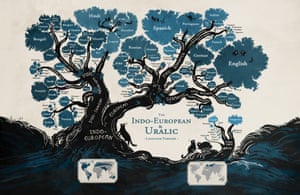
since Sbarrkum writes on Dravidians, Dalits & Aryans; I wanted to leave a short comment (for now)
What is
Vedam
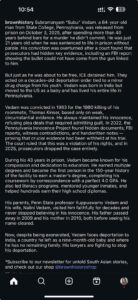
A fellow TamBram writes about it; https://nereview.com/article/the-trials-of-subu-vedam.
The word Brahmin is mentioned 4 times in the non-paywall foreword.
Subu’s father was an academic, a physics professor and materials scientist at Penn State, who would have blended seamlessly with my parents’ friends in North Carolina, who were all vegetarian and spoke Brahminical Tamil with its idiosyncratic conjugations and vocabulary.
Dr. V
Wag the dog?
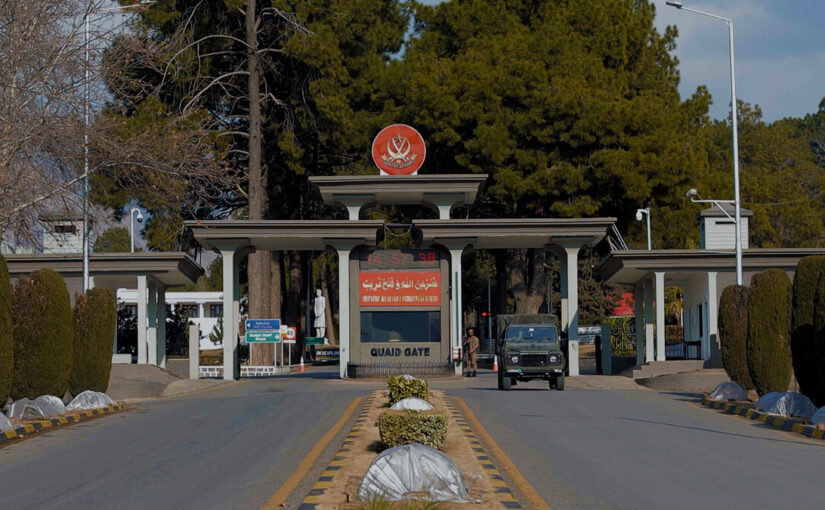
This idea came to me randomly when two people, separately, asked why they should pay taxes if half the budget supposedly goes to the army—a claim that is factually untrue. I am here trying to play devil’s advocate. While writing this, I consulted people to understand why the proposition, “The establishment is the root cause of every Pakistani problem,” is so widely taken for granted, especially after Imran Khan’s exit.
By “establishment,” I am specifically referring to the military, the way it is colloquially understood nowadays, not the “elite” in the class or socioeconomic sense. I presented sector-wise facts to them, and most had no answer. That prompted me to pen this piece. Since mainstream discourse now often takes an anti-establishment position, I decided to challenge that perspective.
https://www.thenews.com.pk/latest/1354698-wag-the-dog
Co-Founders Confer
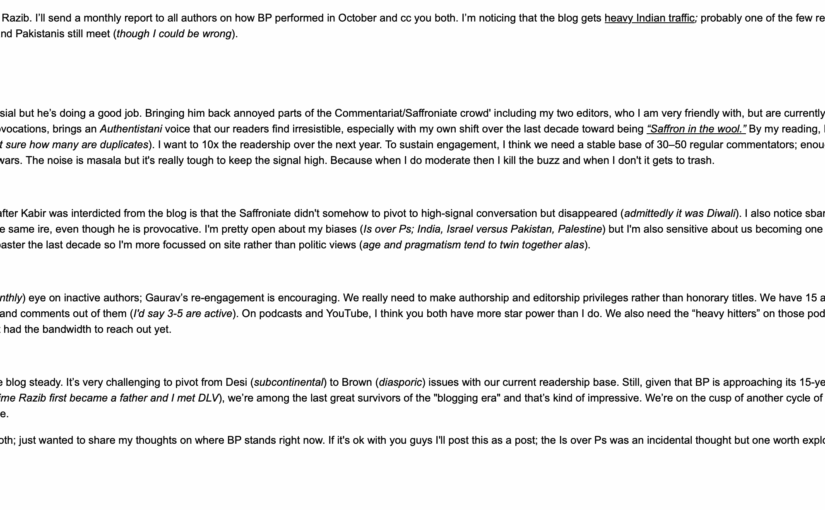
I sent this email to the CoFounders of the Blog (Omar | Razib) and tomorrow I will send through the Monthly Author Report.
Genetics open thread
On popular request — or curiosity. Two recent studies are making the rounds:
-
Kashmiris and Central Asians: Nature – February 2025
-
Sri Lankans and South Indians: Nature India – February 2025
I’m generally skeptical of population genetics papers, what is their point exactly? But presumably this will awaken the Commentariat, who have been quieter lately.
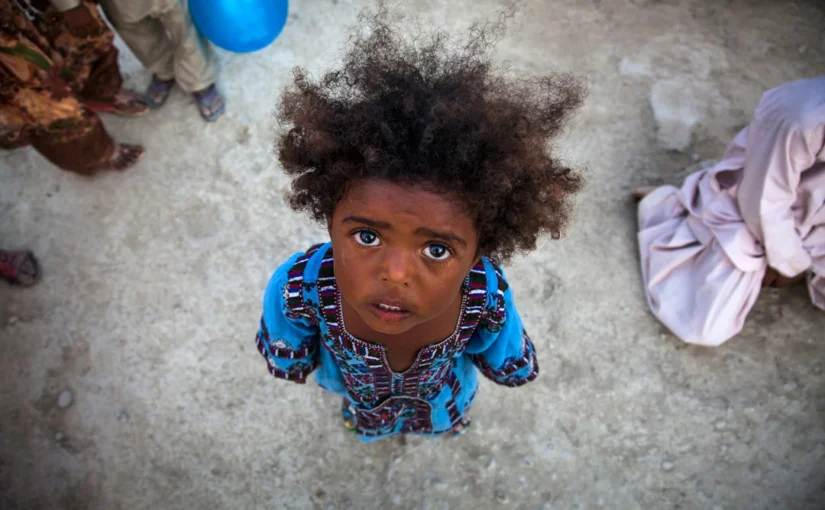
If nothing else, consider it intellectual cake; open to everyone, rich in speculation. As an aside the young girl featured is a Baloch.
The Earth’s Lost Industrial Heart
After our discussion on industrialisation in India, I began to wonder: if the Earth were one country, one government, one infrastructure grid, one economy, where would its industrial heart lie?
Geographically, the answer is obvious. The natural centre of the world, for energy, labour, and trade routes, isn’t London, New York, or Beijing. It’s the triangle between the Persian Gulf, the Indo-Gangetic plain, and the Red Sea.
Deserts rich in hydrocarbons. River basins dense with labour, water, and grain. Seas that touch every continent. If the world were united, this belt, Arabia to India to the Nile, would be the Ruhr, the Great Lakes, and the Pearl River Delta combined.
The Natural Order of Geography
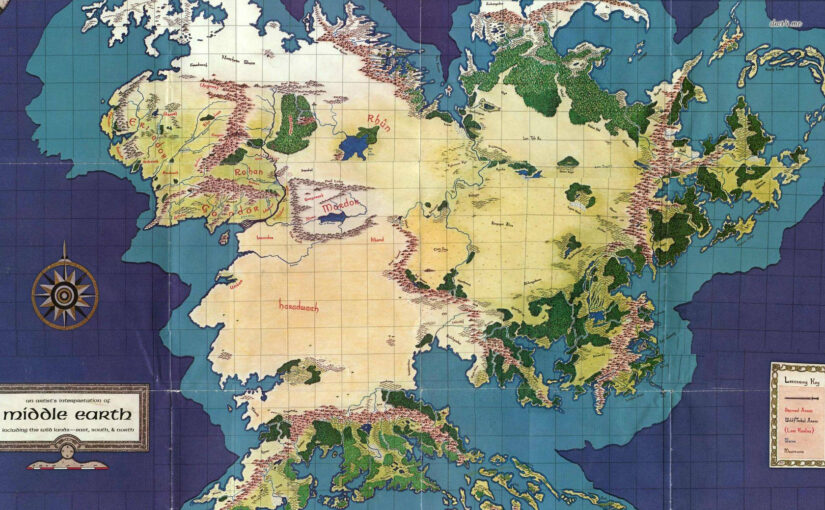
Before empire, this region was the planet’s connective tissue. Spices, silk, horses, and steel moved from India to Arabia to Africa. Energy, grain, and knowledge flowed through the Red Sea and the Persian Gulf like the arteries of the Earth. It was not the “Middle East”; it was Middle Earth. Continue reading The Earth’s Lost Industrial Heart
Kabir: