
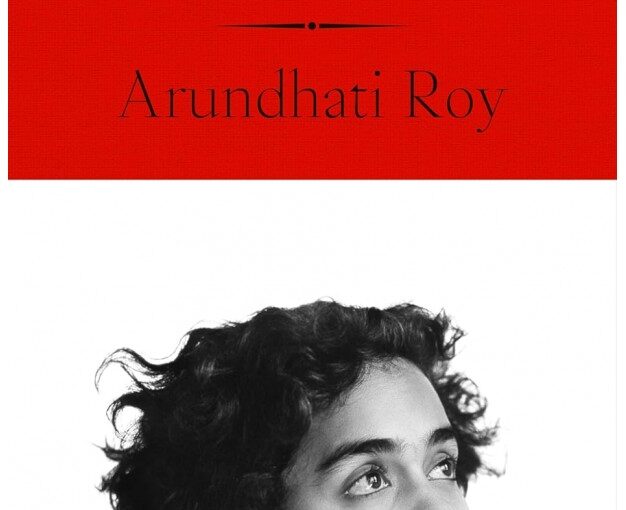
Arundhati Roy is an Indian writer and public intellectual best known for her Booker prize winning novel The God of Small Things. In 2017, she published her second novel The Ministry of Utmost Happiness (which I have previously reviewed).
I eagerly looked forward to reading Roy’s recently published memoir Mother Mary Comes to Me (Scribner 2025). Though it is ostensibly about her contentious relationship with her mother, Mary Roy, the book is really about Roy’s own development as a writer and a thinker. It will particularly appeal to those who are already familiar with Roy’s novels, especially The God of Small Things. Many of the sections describing Roy’s family background and childhood clearly have parallels to that novel.
The memoir also details the evolution of Roy’s political views. Many of these will also be familiar to those who have read her non-fiction (or indeed The Ministry of Utmost Happiness which includes topics such as the Kashmir conflict, rising Hindutva, and Dalit assertion against upper-caste violence).
Some other reviewers have criticized the memoir for focusing too much on politics. In their opinion, the strongest sections are those that revolve around Roy’s relationship with her mother. However, Roy is an intensely political writer and I believe that it is impossible to understand her works without appreciating her political commitments–if not necessarily agreeing with them.
One of the things that has gotten Roy in the most trouble in India–she is often labelled an “anti-national”– is her views on Kashmir. In 2008–following massive demonstrations that broke out in Indian-administered Kashmir– she expressed her support for Kashmir’s independence from India. In 2010, she was charged with sedition after her speech at a convention on Kashmir.
In her memoir, Roy writes:
To visit Kashmir as an Indian citizen who has even a sliver of conscience is to be unhomed. Because after encountering Kashmir, you cannot return to old conversations, old jokes, harmless fun. Most Indians’ deliberate, cultivated, amoral innocence about what is happening there, what is being done there in their name, becomes hard to bear. Almost without my being aware, my circle of close friends changed. I changed. My humor changed. It became a little Kashmiri–bleaker and blacker (260).
Roy has consistently taken a stand against Hindu nationalism. She describes her experiences while writing The Ministry of Utmost Happiness:
We were well into the dark years of Hindu nationalist hell: public lynchings of Muslims, videos of public lynching, public floggings, videos of public floggings, mass murder, videos of mass murder and sword-wielding mobs marching through our streets calling openly for the genocide of Muslims. A group of students in Jawaharlal Nehru University in Delhi decided to hold a protest to mark the third anniversary of the hanging of Azfal Guru. It was another of those moments of mainstream media hysteria. Screaming anchors on television channels aired doctored videos with fake soundtracks. They singled out students one by one, hounded them, lied about them, and called them Pakistani agents. They reserved a special brand of hysterics for Muslims, particularly Kashmiris. The police entered the campus and made arrests. One anchor took to addressing me directly on his prime-time news show, looking straight into the camera: “Arundhati Roy, we think you are disgusting.” Night after night he would rave, “Why has she not been arrested? Why is she free?” (296-97).
As a Pakistani, I would be remiss not to note that despite her strong criticisms of Indian governments (both Congress and BJP), Roy has been largely free to live her life and write her books. Her Pakistani counterparts would probably not be so lucky. Despite its flaws, India still has a higher tolerance for dissent than Pakistan does.
In conclusion, I would highly recommend Mother Mary Comes to Me to those who are fans of Roy’s novels. It can also serve as a useful introduction for those not yet familiar with her work.
