The once and future “Brown Pundits”

Country Users Rank % Rank
 China 746,662,194 1 53.20% 109
 India 391,292,631 2 29.55% 143
 United States 245,436,423 3 76.18% 54
 Brazil 123,927,230 4 59.68% 90
 Japan 117,528,631 5 92.00% 15
 Russia 110,003,284 6 76.41% 53

The “Brown Pundits” blog was formed on a lark about 7 years ago. The Sepia Munity weblog was clearly winding down, and people like Zach and I didn’t feel too well represented. What I mean is that weblog in its latter years reflected a certain activist Left-wing South Asian American perspective which naturally didn’t include all Diaspora South Asians. In some ways this was a shift away from its original years, when it was more politically eclectic, with some center-Right and libertarian voices, to go along with conventional center-Left viewpoints.

Two of the co-founders I knew personally before the blog was founded, and we had a small e-list where we discussed cultural and social issues. To a great extent, I think the Sepia Mutiny blog reflected a decade in transition for South Asian brown Americans. Most of the contributors were of an age where they would be routinely asked where “they were really from,” and all of us understood that we were seen to be a novel and exotic contribution to the American landscape.

Things have changed a lot since then. Most particularly in 2008, Barack Hussein Obama was elected president of the United States. Where black Americans rejoined in the election of a black man, I suspect many Americans of Asian background noted his exotic background and name. If a man with such a foreign name could become head of state of the United States could we be such aliens after all?

I do understand that some people feel that the election of Donald J. Trump has rendered us aliens in our own land again. Overall, I disagree. In a Spenglerian sense, I see the election of Trump as a crying in the wilderness of an old America which is feeling less at the center of our culture, as well as the more general atavisms triggered by globalization.

South Asian Americans, which mostly means Indian Americans, have a place and a role in American culture that can’t be denied. Most Indian Americans have followed a “Jewish model”, aligning with the political and social Left, especially a small activist class.

A framework to understand the trajectory of young 2nd and later generation South Asian Americans that I outlined over 10 years ago I think is a useful model. Roughly, there are three broad classes of South Asian Americans (with overlap):

  • Assimilators. Unlike some groups, South Asian Americans are physically distinct enough that assimilation doesn’t involve “passing” into another identity. Rather, assimilation involves intermarriage and socialization with a broad set of Americans and a very loose attachment to distinctively South Asian cultural markers ad community institutions. Most of the children of assimilators will be mixed, and so will not have a singular South Asian identity in an authentic way.
  • South Asian Americans. This group is perhaps equivalent to Indian identities in the West Indies, which have become distinct from Old World self-conceptions while retaining a sense of South Asianness. In some ways, I think this was a core group for the Sepia Mutiny blog. These are the sort of people who might marry other Indian Americans, but these marriages are often cross-regional, cross-caste, and even cross-religion. To give a concrete example, I know that two of the original Sepia Mutiny bloggers married and had children with someone whose family was from a different ethnoreligious tradition from their own. The sort of marriage which would raise eyebrows in South Asia, but wouldn’t be viewed that strange in the American context.
  • Finally, traditionalists. There are American-born and raised Patels who marry other Patels. There are Dawoodi Bohra Muslims who marry other Dawoodi Bohra Muslims. This group would be most recognizable to people from South Asia.

But to me, that’s the past. I think it’s done. I don’t see Brown Pundits contributing to that discussion or cultural space, for various reasons (the primary one being most that none of the contributors are of the second class). Rather, I’ve started to get interested in Brown Pundits in large part because it seems that Asia, including South Asia, is getting to be a bigger and bigger part of the discussion. There are now more Indians browsing the internet than Americans!

Yes, it’s mostly on mobile phones, but most Americans were on dial-up until the mid-2000s.
Brown Pundits 2018 Reader Survey

I created a SurveyMonkey poll. Check it out….

(after you are done, you can check out the results)

Create your own user feedback survey

Books on Indian history without recency bias

One of the problems with Indian history is that a lot of the books are strongly biased toward the Muslim and colonial periods. There are numerous reasons for this. People are interested in the Muslim and colonial periods for nationalist and anti-nationalist reasons, if that makes any sense.

But some of it is simply source availability of. When I am curious about the period between the Han dynasty and the Sui-Tang I’ll pick up a book like China between Empires: The Northern and Southern Dynasties. In contrast The Gupta Empire is an out of print monograph.

Because at some point the Rakhigarhi DNA results will be coming out I want to do some more reading on ancient and medieval (using those epochs loosely in the South Asian context) history, but so much of it is archaeological because of the thin historiographical tradition in South Asia.

Do readers have suggestions?

(Please calibrate to my level of knowledge. I’ve already read Early India)

When writing about India is actually just writing about America

The web magazine Slate posted a piece, Friends From India which I had initially thought was a parody. Its subtitle is: “I grew up watching the show in Mumbai. I worry about the damage its gender stereotypes still do there.”

It’s really bizarre. The author is Indian, and supposedly is making a comment about India. But the piece isn’t about India at all, but the worries and concerns of a liberal person in the West. Friends isn’t that important in driving social views in India, and gender relations and attitudes toward homosexuality in India have little to do with Friends. But, today Friends seems retrograde to many American liberals, because of its attitude toward gender relations and gayness, which were mainstream in the 1990s.

So it seems here that to get another piece on Friends and social justice into Slate, they just commissioned a piece that was officially about India, but quite obviously wasn’t.

This gets to a major dynamic in American society today which worries me somewhat: foreign affairs being filtered through purely American concerns and perceptions. Americans care so little about the rest of the world that they turn the rest of the world into the United States in substance, if not exterior styles.

The problem is that we are living through a great transition in the world. America is no longer as much the center, and economic, social, and political, power will rebalance toward Asia. In such a multipolar world pandering to purely American preoccupations will lead to gross misunderstandings and likely catastrophe.

India as the hydra against Islam

In some versions of the legend of the Hydra, every time you cut off one of the heads of the monster two more grow in its place.

I have been thinking about why and how India remained predominantly non-Muslim despite most of the subcontinent being under Muslim ruling for 500 years (dating from 1250 to 1750 approximately). The contrast here would be most stark with Iran and Turan. While the zone of the Islamic Empire between Mesopotamia and the Maghreb was dominated by a Christian populace which spoke an Afro-Asiatic language, Iran and Turan retained their language and their cultural distinctiveness, as evidenced in the nationalism clear in the Shahnameh.

There was a comment on this weblog that implied India was unique because of violent resistance to Islamicization. This is patently false. To give a concrete example, the region of Tabaristan in northern Iran was dominated by warlords and dynasties which adhered to the Zoroastrian region until the 9th century, 200 years after the Arab defeat of the Sassanians. Despite the inroads of Islam in the 9th century, after more thorough integration into the Abbassid Caliphate, Tabaristan was still throwing up Zoroastrian anti-Muslim warlords into the 10th century.

But most attempts to infer the religious demographics of Iran, which are to a great extent guesswork, suggest that it was in the 10th century the region became majority Muslim. One indication of this that this is so is that this period correlates with a more muscular and resurgent Iranian high culture and reemergence of political non-Arab political power. As Zoroastrianism was no longer seen as a threat to Islam, Persian cultural identity could reassert itself without a non-Islamic connotation (there is in the 10th century a shift away from ostentatiously Arab names by Persian Muslim elites).

Basically, it seems that it took about 300 years for Iran to become majority Muslim. I’ve seen similar numbers for Egypt and the Maghreb, though in the latter region indigenous Christianity became extinct by the medieval period.

There are two related issues that I want to suggest for South Asia: scale and complexity. Though the Indian subcontinent is geographically smaller than the Arab Caliphates as their height on paper, the reality is much of the Near  East and North Africa are empty of people. Islamic rule really consisted of a string of cities and fortifications interlaced over broad swaths of the territory occupied by pastoralists, as well as a few regions of dense cultivation.

Iran, Turkey, and the Arab world consist of between 400 and 500 million people. The Indian subcontinent has 1.7 billion people. The population in the past may have been different, but I think it gives one a rough sense of the differences in magnitude over the long-term.

Second, the social complexity of South Asia is astounding. I say this as a geneticist: the differences between different castes in the same region are hard to believe. Though there is a great deal of ethno-religious diversity in the Middle East, they are not surprising. Arabs engage in a consanguinity. Ethno-religious minorities such as Copts or Assyrians have less cosmopolitan ancestry than their Muslim neighbors. This is all to be expected.

In contrast, any analysis of ethnic “Telugus” has to take into account local structure because it is so extreme. Dalits are different from middle castes are different from Brahmins. Some of this is due to genetic drift, but much of it is due to continental-scale differences in genetic admixture.

The genetic differences tell us something us deep about the nature of South Asian social relations. Defection to Islam occurred on the individual scale, but generally, quantity could only be had by mass conversions. Even when groups of people of the same community are of different religions it was probably through mass conversion of particular subsegments.

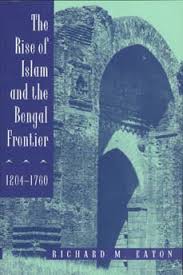
Which brings me to Bengalis. The Rise of Islam and the Bengal Frontier was written many years ago, and I read it long before I ever knew much about the genetics of South Asians. In it the author explains that the dominance of Islam on the eastern march of Bengal was due to the fact that it was a frontier society that emerged during the period of Islamic rule. Meanwhile, western Bengal was a culture which was in a stationary state.

The ability of Islam to penetrate into the Bengali-speaking peasantry was due to its fluid and unordered character. In contrast in western Bengal, a more traditional South Asiab society with well-delineated caste boundaries had already crystallized by the time of the Muslim conquest.

So here’s the thing that genetics adds: the topology of genetic variation of Bangladeshis is totally different than what you see in other South Asians. There’s very little structure. Basically aside from a few half-Brahmins and a small community of Dalits, the 1000 Genomes sample from Bangladesh shows none of the genetic variation partitioned by the community you see in most Indian samples. Or, that you see in the Indian Telugus, Gujuratis and Pakistani Punjabis (the Tamils from Sri Lanka are somewhat less structured, but still have more than the Bangladeshis).

To me, this confirms the thesis of The Rise of Islam and the Bengal Frontier. As a frontier society, eastern Bengal was mixed in a way where the structure socially and genetically that was the norm in most of South Asia by the time the Muslims arrived simply wasn’t present. Without the powerful collective substructure, Islam was able to swallow up the rural society in toto. Perhaps the best analogy might be to Indian communities in Trinidad, where caste has mostly disappeared, and Christianity has made extensive inroads.

So why didn’t India become Muslim? What is this “India” of which you speak?

Note: I moderate comments, please don’t stupid spam me.

Diaspora culture are often more conservative

Zach made a comment below about conservatism and Diaspora cultures. There are two trends one has to highlight here. One the one hand Diaspora cultures often exhibit synthesis with host cultures and can be quite novel and innovative.

But there is another trend which is a cultural universal: Diaspora cultures often exhibit archaism and crystallize old-fashioned norms and practices. To give a concrete example foot-binding persisted the longest, down to the 1970s, in the Chinese communities of Borneo. The French of Quebec is peculiar in part because it preserves characteristics of older French dialects. The same is true of some Anglo-American English dialects.

Closing the genetic chapter

Indus Valley People Did Not Have Genetic Contribution From The Steppes: Head Of Ancient DNA Lab Testing Rakhigarhi Samples:

In other words, the preprint observes that the migration from the steppes to South Asia was the source of the Indo-European languages in the subcontinent. Commenting on this, Rai said, “any model of migration of Indo-Europeans from South Asia simply cannot fit the data that is now available.”

Some more comments at my other weblog.

At this point, we need to move to other things. I think the broad genetic framework is pretty clear.

1) The Indus Valley Civilization (IVC) people were a mix of eastern West Asian (from modern Iran) people and native South Asian peoples (~80% of South Asian mtDNA are haplogroup M).

2) ~1500 BC a major incursion from the steppe occurred and overlaid upon #1 to various extents as a function of region, language, and caste.

3) ~0 to 500 AD the strong endogamy that characterizes modern South Asians seems to have established itself.

Beyond cultural parochialism

A major personal peeve of mine is that the past few centuries of Western colonialism have overshadowed so much that moderns are often unequipped to understand the vast tapestry of human historical and geographical diversity. If you are a modern Indian or Chinese or African person you know your own culture and its history…and its relationship to the modern West. This is a shadow of a bygone age which is down in its terminal stage.

Presuming that the audience of this weblog is mostly South Asian, here are some very broad surveys which I think the audience might find interesting:

The Classical World: An Epic History from Homer to Hadrian

China: A History

Africa: A Biography of the Continent

The Russian Moment in World History

Strange Parallels…Southeast Asia in Global Context, c.800-1830

History of Japan

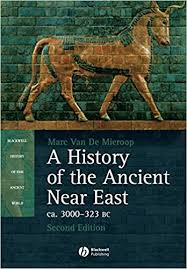
A History of the Ancient Near East, ca. 3000-323 BC

When Baghdad Ruled the Muslim World: The Rise and Fall of Islam’s Greatest Dynasty

The Great Sea: A Human History of the Mediterranean

A History of Iran: Empire of the Mind

Aboriginal Australians: A History Since 1788

If anyone can recommend a good survey of Latin American history, I’m game.

Why do Indians care about OIT/AIT

From my blog:

Razib: I follow your super feed and read your postings here and on Brown Pundits. The subject of the ancestry of South Asians comes up frequently. It seems to have a political valence that I, as an outsider, do not understand.

Can you explain it? or point us to an explanation?

My response is “British colonialism and modern-day culture wars.” I could say more, but honestly, I don’t care that much. The science is more interesting to me, and it’s a lot to keep track of. Can readers comment?

(Related: there are some Pakistanis who try and pretend as if they are descended from Persians, Turks, or even Arabs. The explanation is pretty straightforwardly summarized as “self-hatred”, though we could all elaborate on that).

The water rises and Canute drowns

The Genetic History of Indians: Are We What We Think We Are?. The answer is that people of all races have always been what they always were. What we think about what we were…well, that changes.

“I KNOW PEOPLE won’t be happy to hear this,” geneticist Niraj Rai says over the phone from Lucknow. “But I don’t think we can refute it anymore. A migration into [ancient] India did happen.” As head of the Ancient DNA Lab at Lucknow’s Birbal Sahni Institute of Palaeosciences (BSIP), he earlier worked at the CCMB in Hyderabad and has been part of several studies that employed genetics to examine lineages. “It is clear now more than ever before,” he says, “that people from Central Asia came here and mingled with [local residents]. Most of us, in varying degrees, are all descendants of those people.”

Some researchers, even those associated with the current study like Shinde, aren’t quite convinced that an ancient influx of people into the subcontinent from the northwest has finally been established by the latest findings. Shinde does not like the word ‘migration’. “It is better to say movement,” he says, implying a two-way pattern. “Everyone back then was moving to and fro. Some people were moving here and some were moving out. There was contact, yes. There was trade. But local people were involved in the development of several things. So I am not very sure of the interpretation.”

As Rai points out, the analysis of the DNA sample they will present will be of a period before the Steppe people supposedly arrived in India. If R1a is absent in the Indus Valley sample, it suggests that it was brought into South Asia, perhaps by a proto-Indo- European speaking group, from elsewhere. “How do I say it? See, I am a nationalist,” Rai says over the phone. “People will be upset. But that’s how it is. All the studies are showing that people came here from elsewhere.”

I’ve been hearing from Indian journalists that some of these researchers have only “evolved” over the last few months. First, it’s a credit to them if they changed their views on the new data. If the above is correct they got usable DNA from one Rakhigarhi sample. I predict it will be like “Indus Periphery”, but with more AASI. It seems rather clear they’re going to submit a preprint within a month or so (that’s the plan, but it’s been the plan for a year!), but the results are being written up now.

Meanwhile, the ancient DNA tsunami is going to come in further waves in the near future. Various groups have huge data sets from Central Eurasia that are going to surface. Unfortunately, samples are going to be thin on the ground from India, but we have enough now that in broad sketches most people are now falling in line with what happened demographically from the northwest. The “AASI” ancestry is deeply rooted in South Asia, and it doesn’t look like there’s much of an impact of this outside of the subcontinent aside from nearby regions.

The real action is now in understanding the cultural and archaeological processes involved in the perturbation in the years after 2000 BCE. I’ve talked to a few of the geneticists working in this area over the past month or so, and they agree.

Brown Pundits