 A major personal peeve of mine is that the past few centuries of Western colonialism have overshadowed so much that moderns are often unequipped to understand the vast tapestry of human historical and geographical diversity. If you are a modern Indian or Chinese or African person you know your own culture and its history…and its relationship to the modern West. This is a shadow of a bygone age which is down in its terminal stage.
Presuming that the audience of this weblog is mostly South Asian, here are some very broad surveys which I think the audience might find interesting:
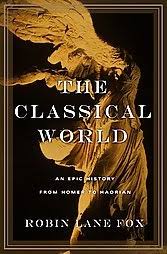
– The Classical World: An Epic History from Homer to Hadrian
– Africa: A Biography of the Continent
– The Russian Moment in World History
– Strange Parallels…Southeast Asia in Global Context, c.800-1830
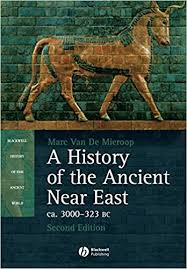 – A History of the Ancient Near East, ca. 3000-323 BC
– When Baghdad Ruled the Muslim World: The Rise and Fall of Islam’s Greatest Dynasty
– The Great Sea: A Human History of the Mediterranean
– A History of Iran: Empire of the Mind
– Aboriginal Australians: A History Since 1788
If anyone can recommend a good survey of Latin American history, I’m game.
Could you write your perspectives on some of these books?
Most people in almost every country are very parochial. I have always found this very puzzling since I have always thought in very global terms since a young age (maybe because I read so many books). Most people are also not interested in interdisciplinary perspectives (combining deep understanding in multiple different disciplines of study).
Anan, if you check out Razib’s main blog, he does a lot of book reviews, including a number of the above mentioned.
Thanks girmit. Will try to find Razib’s reviews of these books.
Thanks for this post, Razib.
Of the books you have mentioned, I have read “The Great Sea: A Human History of the Mediterranean” which I found very interesting. I was quite fascinated by Nice, Genoa and all of that.
I am unable to understand your argument of possibility of caste like structure in IVC or it pre originating vedic groups. What is the evidence and what confidence do you have that the evidence will continue to hold up in future as well. A separate article on this speculation if you please. It just seems unnecessary speculation to me. speculation that might drive another wild goose chase. Thank you.
It seems like Charles C. Mann’s 1491 (and 1493) might fit on this list.