World War 2’s impact on the racial balance of the world

This clip was interesting in WW2’s effect on the racial demographics of the West and white supremacy (that all Western powers including the Allies were keen to maintain).

Much as we lionise the role of Britain in this country for both World Wars; there is a feeling we are living in the aftermath of a massive decompression (lingering on because the Sovereign is still a living link to that period).

The hubris of Empire ultimately culminated in a reality where white people had to share the world and more importantly power. Unless there is a string of right-wing authoritarianism, genocide and/or ethnic cleansing the West is now perpetually multi-racial and multi-ethnic.

As the commentator above makes the point the first coloured migrants were “invited” to help rebuild society in the wake of post-war. It’s an important to remember that it’s rather churlish to invite a generation, then try to somehow disenfranchise them and then tell their children to go “back home.”

The Crime of Being a Dalit

RAJKOT: A 23-year-old youth was bludgeoned to death near Palara Central Jail in Bhuj on Tuesday night. Police said the murder was the result of a love affair. Police said the victim, identified as Jaideep Garwa, a Dalit resident of Kotai village of Bhuj taluka was in love with a woman from the Muslim community.

Youth murdered over love affair

For the sake of balance. South Asia is a complex and crazy place perhaps it would be better at BP if we all (including myself) took a breather and assess a broader positive outlook.

The Crime of being a Muslim

Last week a Sikh police officer in India saved a Muslim man from being lynched by a mob, merely for standing near a temple with a Hindu girl.

This is a poignant illustration on that, by student Umar Khalid.

He wrote: “Salute, Gagandeep. You stood up against not just some local hooligans. You were effectively standing up against the forces of hate who are right now ruling our country, and ripping apart its social fabric!”

Sunny Hundal

Economic Modernization in Late British India: Hindu-Muslim Differences

I. The Question of Why India’s Muslims Are Poorer than Its Hindus India’s Muslim minority—as of the early twenty-first century, around 12% of its ethnically and religiously diverse population—lags behind the country’s Hindu majority economically. The average household income for Muslims is 76.6%, and per capita income 72.4%, of the corresponding figure for Hindus. In rural areas, the typical Muslim-owned farm is only 41.1% as large as the typical Hindu-owned farm. Muslims have relatively lower labor participation rates and higher unemployment rates in both cities and the countryside ðShariff and Azam 2004, vii; figs. 12, 15, 16, 18; tables 6, 7Þ. The 2011 Forbes list of the 100 richest Indians includes just three Muslims.1 The underperformance of Muslims is particularly striking in the management of its private companies. Shortly after India gained independence from Britain in 1947, only one of India’s 80 largest publicly traded companies had a Muslim at its helm ðGovernment of India 1955Þ. A half century later, in 1997, just one of India’s 50 largest business groups was headed by a Muslim ðTripathi and Mehta 1990, 340–42Þ. 2 In describing the economic performance of Muslims in independent India, Omar Khalidi ð2006, 88Þ infers from such statistics that Muslims “lack the ability to organize and plan enterprises on modern lines.”

My reading of the paper is that Muslim inheritance law (which divides the estates more or less equally) prevented capital accumulation to the same extent as Hindu family law. Essentially the Hindu joint family concept was very similar (structurally) to the joint-stock corporation; allowing mercantile Hindu families (especially in Western India) to rapidly accumulate capital and also move on to professional management sectors (as Sereno mentions in the previous post; privilege encompasses both financial, educational and social capital).

Furthermore Islam’s prohibition on credit made the waqf’s (essentially Islamic family trusts) less liquid and unable to allow Muslim families to fully take advantage of the assets that they controlled.

After the jump I’ve excerpted two paragraphs from the paper that touch on both the above points.

The four non-conforming Muslim castes (Khojas, Memons, Bohras and Ghiarasis – the last I had never heard of) were the only ones who maintained their pre-conversion Hindu family practises (Dina Wadia argued that the Quaid’s family estate should be divided as per Hindu law owing to his Khoja origins).

Continue reading Economic Modernization in Late British India: Hindu-Muslim Differences

3 questions about BP readers

I liked sbakkurum’s bio and it set me wondering about our readers/regular handles..

(1.) are you male or female?

(1b.) Do we have female commentators or do we have female readers?

(2.) is Kabir the only commentator with a liberal arts education?

(2b.) is anyone not a STEMMIE?

(3.) are you desi?

(3b.) what is ur ethnic origin?

(3c.) if you are Hindu; are you Upper Caste?

(3d.) If not are you Dalit or identify as a historically backward/oppressed caste?

(Bonus) how are you privileged in a South Asian context? How are you privileged (or not) in a Western context? How do you check your privilege?

Comment of the Day

Since BP in general lacks positively-inclined Pak-nuanced voices; I thought this was an important comment to highlight.

There was more than Jinnah involved in the ‘Pakistan Movement’ even if it was a one man show when it came to actual negotiations with the British.

Maulana Shabbir Ahmad Usmani was instrumental in mass mobilization (using Islam khatray mein heh! naturally) and countering Congress’s anti-Jinnah propaganda campaign orchestrated by Maulana Husain Ahmad Madani of the JUH. This was the so called Muttahida Qaumiat movement that held that Jinnah and Aligarh Islamic Modernism was more dangerous than an independent India dominated by the Hindus.

In a nutshell, the insurmountable problem was simply this. Jinnah and some others (non-caste Hindus) wanted absolute safeguards for minorities before independence; Congress and caste-Hindus wanted independence first and then would decide whatever safeguards the minorities would get. As a part of this, Jinnah and others wanted a weak Centre and power devolution to the provinces/groupings while Congress (Nehru and Patel but not Gandhi, who was a hopeless romantic when it came to actual politics anyway) wanted a strong Centre and the provinces to have whatever powers the Centre didn’t want.

If you look at the Cabinet Mission Plan, that is EXACTLY what is being offered: a weak Centre. Of course Congress rejected it and Jinnah embraced it.

What must always be remembered is that the Pakistan Movement meant many different things to many different people.

Mein Kashmiri Brahmin hoon

His accent is obviously spot on; the fact that he’s Australian and has an American accent is a good example.

I find the Coloniser privilege in this video to be a bit OTT. Imagine if it was a black man speaking perfect Hindustani; there’d really be no interest. All a white man has to do is master the accent and then he can pass off as Kashmiri Brahmin; one of the “highest” stratas in Indian society.

It’s interesting that with Prince Harry marrying Meghan Markle; British society is really going the other way. The Royal Family, which is emblematic of privilege, is now connecting across the races and generations towards a new identity. It may very well be that the King George’s future Royal Cousins wouldn’t even be able to pass for Kashmiri Brahmins (they would be upto 25% Afram so who knows what they’d look like).

How many Desi parents would accept Meghan Markle for a Bahu?

Jinnah the actor & Quaid the Performer

Tomorrow is the Royal Wedding and the rumour is that Priyanka Chopra may be a bridesmaid, which would be huge.

At any rate on our Pakistani Literati group this was circulated around and I found the initial bit about Quaid e Azam (personally using Jinnah is like using Holy Prophet without the PBUH; there is a sliver of me that is a parochial Paki) about wanting to be an actor is fascinating.

I find the trope of QeA not wanting Partition to be a tiring; then why didn’t the Master Negotiator back down from his demands if he found them so unreasonable. If QeA and his ilk hadn’t messed it up; the HM the Queen’s Bahu would have probably been a desi and Harry would have been short for Harinder!

How Pakistan ended up trapping Muhammad Ali Jinnah

Jinnah’s close friend Kanji Dwarkadas agreed that Jinnah was not in earnest in his demand for Pakistan. After a 90-minute talk with Jinnah on August 28, 1942, Kanji wrote: “Jinnah was not thinking in terms of Pakistan. Nor did he think of becoming the head of a new state of Pakistan. In fact, Jinnah never imagined that Pakistan would ever come into being.”

When Kanji asked Jinnah about Pakistan, the latter replied: “My dear Kanji, one gesture, one friendly gesture was all that I was asking for and it was not forthcoming from the Congress. If the Congress would make this gesture, the whole problem would not be difficult to solve.”

Feeling trapped into accepting a Pakistan he had no intention of creating, Jinnah was yet too proud to call it off. Instead, he put up a brave front, as he told a Hindu friend in Karachi, Hashoo Kewal Ramani, an industrialist: “Look here, I never wanted this damn Partition! It was forced upon me by Sardar Patel. And now they want me to eat humble pie and raise my hands in defeat.”

The Quaid-i-Azam was the role of a lifetime that Jinnah found hard to turn down. But once he took on and played the part so convincingly, the “mad mullahs and extremists”, as Jinnah disdainfully called them, made sure he would never slip out of it again, keeping him a “virtual prisoner in his palace” and censoring all lines that went contrary to the script they had in mind.

10 Questions on South Asia

(1.) Raazi question: if India had not gotten involved in 1971, would there still be an East Pakistan?

(2.) the Karnataka question: What would a (Indian) Hindu Republic actually look like? Will Rahul G ever be PM?

(3.) the Muslim question: who will inherit the throne from SRK?

(4.) the Ramazan question: is the Indo-Persian culture dying among British Pakistanis (Sadiq Khan wishes everyone a Happy Ramadan)

(5.) the Western question: when/if will K-Jo come out?

(6.) the Academic question: will global philanthropy ever focus IIT/IIM funding?

(7.) the Vidhi question; will there ever be a Pakistani CEO of a Silicon Valley company (Pakistani not Muslim)?

(7b.) Vidhi bonus question; will Pakistanis be allowed to play in IPL? Will Pakistan win the Cricket World Cup again? Will Fawad Khan be allowed to come back to india? Would Pakistan ever get out of POK (she initially slipped Azad Kashmir but then made me change it to POK 🙁

(8.) Fun Z question: will Ranbir choose Alia or Mahira?

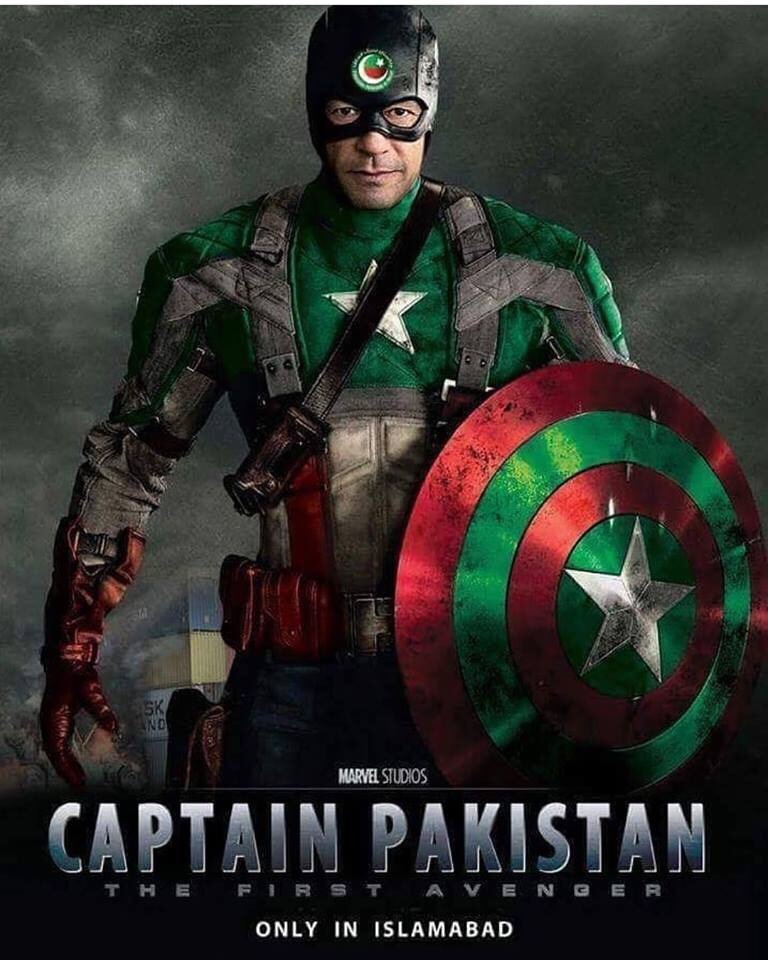
(9.) the Deadpool question; why do South Asians allow themselves to be demeaned in Hollywood as cab drivers and nerds. Will there ever be an Indian superhero (a Muslim one is coming; Kamala Khan)?

(10.) final question: who will be the next person to publicly resign from BP?

Brown Pundits