rights group has obtained summons…
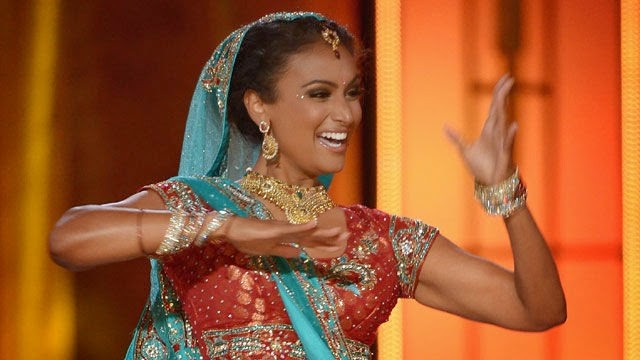
from the US Federal Court for the Southern District of New York….open letter addressed to Miss America 2014 Nina Davuluri… one of the emcees in
Madison Square Gardens…..“Modi is a lifelong member of the RSS….Hindu nationalist
organization that has praised Hitler…disheartening to know that you will be speaking”…
…
…
A summons from the US Federal Court for the Southern District of New York…that sure rings a bell. The US Attorney for the Southern District is Preet Bharara, the cowboy lawyer who
(allegedly) ordered a top-to-bottom cavity search on Devyani
Khobragade. What is the chance that he and his marshals will NOT attempt to arrest
the “Hitler loving” Modi??
Then again, if Hitler-praise counts as a global standard thought crime (GSTC), Madhav Sadashiv “Guruji” Golwalkar of the RSS has nothing on Haj Mohammed Effendi Amin el-Husseini, the Grand Mufti of Jerusalem. The latter was not just a Fuhrer fan, he actually collaborated with the Third Reich (another collaborator/admirer was “Netaji” Subhas Chandra Bose, grand-uncle of Prof Sugata Bose of Harvard and a hero to millions of secular Bengalis).
…..
The Mufti’s people, the Palestinian nationalists and their brothers in the Ummah, in the internationalist Left and in the nationalist Right, recently marched in Germany while chanting “Hamas, Hamas…Jews to the gas.” This is most remarkable: a rainbow coalition expressing robust admiration for the Final Solution in its very place of origin. Hitler would be justly proud.
Now as it happens, the Hindu Nationalists also have their own “Hitler” list…Yamīn-ud-Dawla Abul-Qāsim Mahmūd ibn Sebüktegīn (Mahmud of Ghazni), Mu’izz al-Din Muhammad (of Ghor), and many others…..who continue to receive undiluted admiration amongst the Ummah (and in school textbooks) for their unyielding endeavors in infidel crushing. This is the fundamental pillar of the two nation theory: our Ghazis are their villains. Are some Hitlers then superior to other Hitlers?
…….
Taking a step back now to the good old days when Indian monks used to travel to the USA to preach the message of goodwill to all. The story of Narendra-I aka Narendra Nath Dutta aka Swami Vivekananda who visited the United States in 1892 as representative of the Hindus is relatively well known.
What is not as well known is the story of Virchand Raghavji Gandhi who represented Jainism in the Parliament of Religions in Chicago in 1893 (his statue is displayed in the Chicago Jain temple).
….
[ref. Wiki] Jain monk Acharya Vijayanandsuri, also known as Acharya Atmaram, had initially been invited to represent Jainism
at the Parliament, but as Jain monks do not travel overseas, could not
attend. He recommended Gandhi to go in his stead and serve as the
emissary for the religion.
.
Atmaram and his disciple Vallabhsuri trained Gandhi for six months. At the Parliament he said:
“It is an astonishing fact that
foreigners have been constantly attacking India and in the face of all
this aggression the soul of India has stood vital and watchful. Her
conduct and religion are safe and the whole world looks at India with a
steady gaze.”
….
With adequate qualifications one may still say of India today that “her conduct and religion are safe.” The Jains are of course at the top of the social, economic and political ladder: Amitbhai Anilchandra Shah is the first Jain President of the Bharatiya Janata Party (BJP), he famously won the “man of the match” award (by Modi) in the campaign to crush a 50 year old dynasty. Another high-flying Jain (and a bosom friend of Modi) is Gautam Adani.
….
A sharp 152% jump in his
wealth saw Adani Group chairman Gautam Adani break into the list of 10
richest Indians even as Mukesh Ambani retained the pole position,
according to a latest report….Adani blazed into the top league
riding on the runaway share prices of his companies in recent past,
pegging his wealth at Rs 44,000 crore, said Hurun Report, published by a
China-based luxury publishing and events group, tracking the uber rich.
……
It is also the case that with the advent of the second republic in May 2014, the world “looks at India with a steady gaze” (and so presumably does Preet Bharara). In light of this our best wishes (meant sincerely) to Narendra-II as he prepares to make his entry on to the world stage. It is on rare occasions that the Madison Square Garden is sold out…..certainly not for (brown) leaders.
Truth be told, this is a coming out party for the Hindu-Americans spear-headed by the majority Gujarati-American community. And as a wise american once said with great eloquence: “elections have consequences” and “I won” ….this is true in India as well.
If you do not like the results (and we do not), then you still have a choice to fight for your rights (and for the votes of the people). But merely invoking Hitler will not stop Hindus from electing Hindu nationalists. Indeed what all this drama-bazi does is to permit Hindutva-vadis to wear the victim mask while doing nothing for the actual victims.
It is clear (from the track record of the past ten years) that Modi cannot be defeated using law-fare. The Islamists have also tried guerilla war-fare with limited success– simply more victims have been created. The only way is to defeat the Hindutva-vadis through elections. That should not be too difficult- the BJP got only 31% of the national vote share (the NDA alliance as a whole got 40%).
All that needs to be done is for a “secular alliance” to ensure that the balance 60% is not wasted through ego clashes. Indeed such a grand alliance (Congress + Nitish Kumar + Lalu Yadav) recently crushed the BJP in the Bihar by-polls. It will be hard work to achieve such unanimity on an all-India basis (not to mention, how to rule, once elected, with a sense of purpose). But this will be the only way.
….
It is a rock ‘n’ roller’s dream to “sell out The Garden,” but for a
foreign politician to pack New York City’s most famous sports and
entertainment arena is another thing entirely.
…
Prime Minister Narendra Modi, on his first trip to New York as leader
of the world’s most populous democracy, will draw perhaps the largest
crowd ever by a foreign leader on U.S. soil when he takes the stage on
Sunday in Madison Square Garden before a crowd forecast to total more
than 18,000 people.
…
Thousands more are expected to pack New York’s Times Square to watch
his address in Hindi on big screens as well as smaller viewing parties
around the country and on TV in India.
The Indian diaspora hopes this visit by a leader who was until
recently barred from the United States will signify India’s importance
not only on these shores but in the wider world too.
The event is being emceed by prominent members of the Indian American
community, Nina Davuluri, who has just relinquished her crown as Miss
America 2014, and TV journalist Hari Sreenivasan.
…
“Indian citizens and diaspora over the world are hopeful that this
(Modi) administration will cut bureaucracy and focus on people,” said
Dr. Dinesh Patel, chief of arthroscopic surgery at Massachusetts General
Hospital in Boston, who arrived in the United States more than 50 years
ago.
…
Patel, who says he was given an award for work in education by Modi, a
fellow Gujarati, added: “People are passionate to see the new leader.
Another Narendra is coming to this country to let the USA know what
India is about.”
…
The first Narendra was Swami Vivekananda, a 19th-century philosopher
and monk who propagated the Hindu faith in the United States. Modi often
cites a speech by Vivekananda, born Narendra Nath Datta, to the
Parliament of Religions in Chicago in 1893, as a source of inspiration.
…
“Let us remember the words of Swami Vivekananda and dedicate
ourselves to furthering the cause of unity, brotherhood and world
peace,” Modi wrote Sept. 11 to his 6.5 million followers on Twitter. India’s economy, the third largest in Asia, has struggled to recover
from sub-par growth, shackled by layers of bureaucracy anathema to the
diaspora. Modi’s general election triumph in May was driven in large
part by his entrepreneurial mantra.
…
On the eve of his U.S. visit, tensions remain between the Washington and New Delhi over trade and spying. The 64-year-old former chief minister of Gujarat was denied a U.S.
visa in 2005 over sectarian rioting that killed more than 1,000 people,
mainly Muslims, three years before. Modi, who denies wrongdoing, has
been exonerated by a Supreme Court probe.
..
Washington was late to warm to Modi. Its ambassador to India only met
him in February, when opinion polls already put his nationalists on
course for a big election win.
India’s U.S. diaspora is a highly educated population of nearly 3.2
million, making up about 1 percent of the U.S. population, according to
latest U.S. Census Bureau data.
….
As a group, they are more likely to be hooked to the internet than
their fellow Americans, far more likely to have a college or
professional degree and twice as well off with an average household
income of more than $100,000.
…
“Indians are generally very ambitious and entrepreneurs,” said Mike
Narula, the founder, president and chief executive officer of Long
Island, New York-based Reliance Communications, a distributor of mobile
telecom devices and accessories.
…
Narula, who came to the United States 17 years ago, first working in
the garment industry, now has his own company with more than, 200
employees. He’s part of the host committee for Modi’s visit to
Washington, where the prime minister will meet with President Barack
Obama on Monday and Tuesday. “We attempted to do business in India. I hope Modi will look into
streamlining issues such as VAT, the role of FDI (foreign direct
investment) and find a way for American businesses to not have to go
through 19 red tape bureaucracies,” he said.
…
While Indian Americans are well represented in America’s professional
class, they are less visible in the military. Some 0.1 percent serve in
the armed forces compared to 0.4 percent of Americans as a whole. “The diaspora does very well on entrepreneurship, but not as much on
the physical sacrifices. It is not just enough to be a citizen and
taxpayer,” said Raj Bhandari, a 48 year old Mumbai-born banker from New
Jersey. “As a larger community I would like it to be more engaged on the
front lines.”
………………..
A day
before Prime Minister Narendra Modi’s landmark visit to the US, a human
rights group has obtained summons against him for his alleged role in
the 2002 Gujarat riots as state chief minister. New York based American Justice Centre (AJC) obtained the summons
from the US Federal Court for the Southern District of New York in a
suit filed with two survivors of what it called the “horrific and
organized violence of Gujarat 2002.”
…
Filed under the Alien Tort Claims Act (ATCA) and the Torture
Victim Protection Act (TVPA), the 28-page complaint charges Modi with
“committing crimes against humanity, extra-judicial killings, torture
and inflicting mental and physical trauma on the victims, mostly from
the Muslim community.”
…
AJC said it is providing legal support and advice to the
survivors in their effort to hold “Modi accountable for his complicity
in the violence.
…
“The survivors are suing Modi for the loss of lives and trauma in
their families, and caused emotional, financial and psychological
devastation in their lives.
“The Tort Case against Prime Minister Modi is an unequivocal
message to human rights abusers everywhere,” said John Bradley, an AJC
director.
…
“Time and place and the trappings of power will not be an impediment to justice.” The Alien Tort Claims Act, also known as Alien Tort Statute
(ATS), is a US federal law first adopted in 1789 that gives the federal
courts jurisdiction to hear lawsuits filed by US residents for acts
committed in violation of international law outside the US, AJC said.
…..
Link (2): hindustantimes.com/us-rights-group-gets-court-summons-against-modi
…
regards