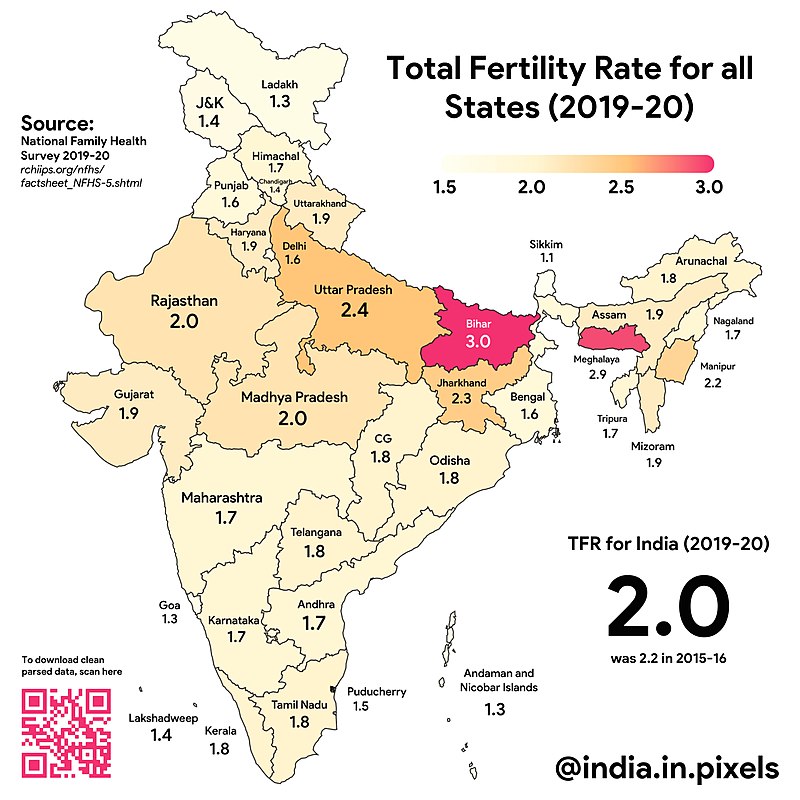
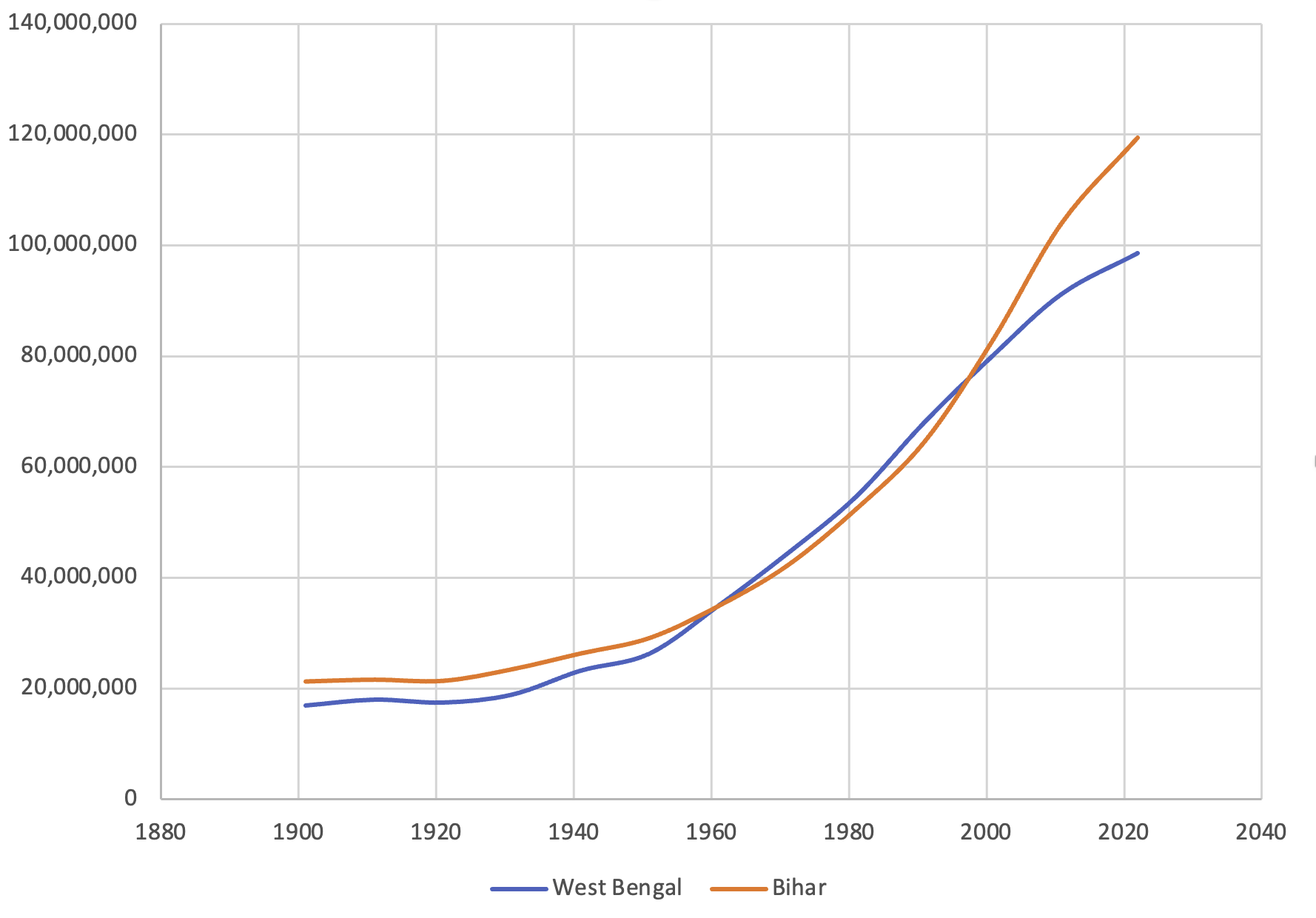
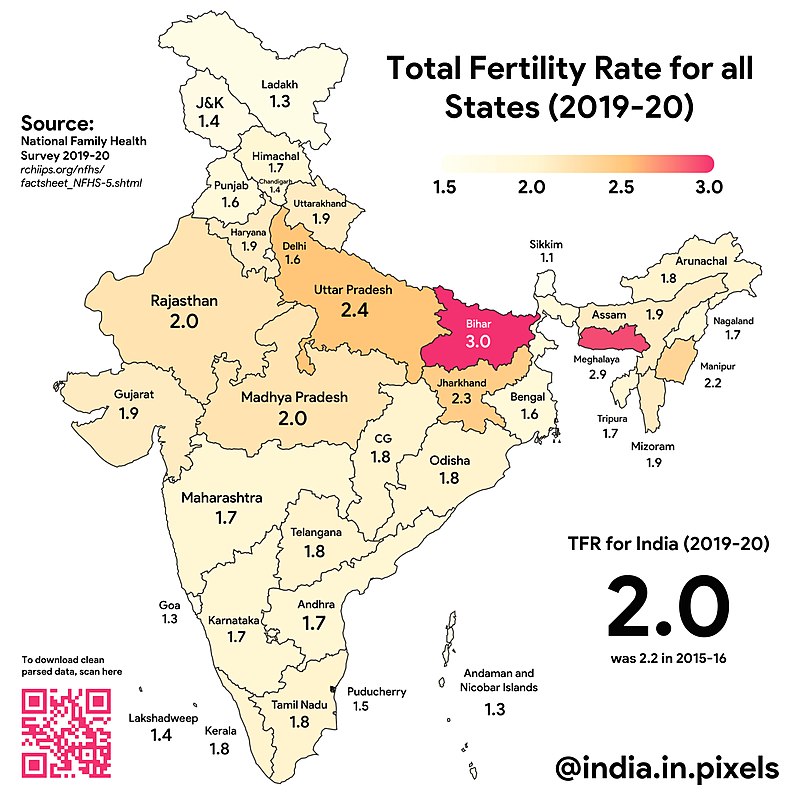
I’ve fascinated by regions that border each other and have very different fertilities. For example, Saudi Arabia has a TFR of 2.2 and Yemen one of 4. Today it looks like Bihar has a fertility of around 3.0 and West Bengal 1.6. Bihar surpassed West Bengal in the late 1990’s, and is still more populous even without Jharkhand. But the data below suggest to me that West Bengal experienced a “windfall” population growth with the arrival of Hindus from East Pakistan and Bangladesh in the decades after partition, and we’re sort of reverting back to the mean…
interestingly (or not?) these guys are from kerala, while the other guy is from tamil nadu. is track and field stuff just more popular in south india? https://t.co/KwRTTpQvLv
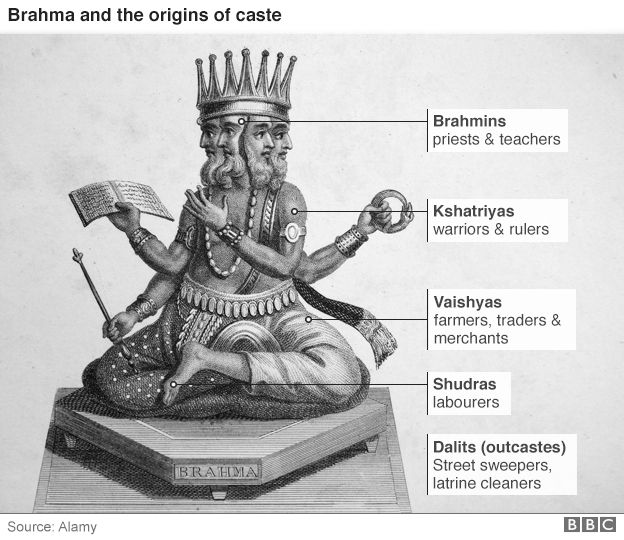
Caste is the basic building block of Indian society and democracy. It decentralizes India and creates a fractal overlay across society enveloping every facet of life. Much can be said about its origins and heterodoxies, but today I want to explore how it influences politics and modern society. While caste’s impact on Indian society is mixed, I believe caste politics is the single most corrosive and destructive element in Indian democracy today. So many policy problems can be traced to the dizzying devilry that results from the lunacy of caste tribalism.
But why is caste so important to Indians in the first place? Caste serves multiple functions. Caste is a community. A sense of belonging and asabiyyah when times get tough. When the riots hit, it is your caste kin who will take and throw punches for you. It gives you your rituals, your traditions, your ways of worship, and so much more. Many castes have a divine origin story or a tale where their caste bravely overcame injustices from that caste. Caste is a polity. When election time comes, the candidate from your caste ensures your castemen will occupy government positions, be forgiven of crimes, and have a seat at the roundtable of power, perhaps even the throne itself. Caste is an economy. It can be a financial safety net, a business network, or a source of credit and capital. It can be the cornering of a market or government seats. Caste is all-encompassing, as real and essential as air and water for so many Indians.
So what separates run-of-the-mill 1990s Mandal-type caste politics from Jatitva? Jatitva is the political expression of Critical Caste Theory. Jatitva is Mandalism taken to its logical conclusions. It is the view that the Indian state should exist to be beholden to one’s caste. If Hindutva means a Hindu Rashtra, Jatitva means Jati Rashtras, where one’s caste must be the most powerful demographic group in their locale; if this isn’t achieved, then India must be decentralized heavily or even break. Jatitva means caste should define India. It claims one’s caste is more important than an overarching Hinduism, if not the rejection of mainstream Hinduism itself. Jatitva presents Hinduism as a societal ruse of ruin, Hindutva as a political conspiracy, and the Indian state as an economic oppressor.
Interestingly, we found an unexpected excess of smaller chunks sharing between Marāṭhā and Sinhala (>16%) than the Marāṭhā and STU, thus supporting the linguistic hypothesis of Geiger, Turner and van Driem. To confirm the excess sharing, we looked for the population which was sharing maximum IBD with Sinhala and STU.
Looks like confirmation of Sinhala western Indian origins rather than eastern Indian origins.
In neighboring Bangladesh, female workers have played a crucial role in helping develop the garment industry—although the country’s factories have drawn charges of safety issues and worker exploitation. Bangladesh had a female labor-force participation rate of 38% last year, up from 28% in 2000. Its GDP per capita has surpassed India’s since 2019.
Economists say compared with India, Bangladesh has looser labor laws that have allowed factories to expand quickly and doesn’t have as many strong caste rules that encourage social conformity.
Reading about what has happened in urban Bangladesh due to the employment of young women in textiles is like reading about New England towns in the early 19th century. It’s basically history repeating itself. As I was reading the article I did wonder about caste and communalism; in many nations worries about who young women would meet at factories in particular was and is a massive concern. Could this really be an issue?
YFull has amassed an extensive database of modern and ancient Y-DNA samples and computed time estimates for the formation of various branches. This post will outline some important observations from looking at the page for R1a-Z93, which arose in the steppe and became the dominant Y haplogroup in Fatyanovo culture and its descendant Abashevo and then the Sintashta culture, from which steppe ancestry in India and Iran ultimately originates.
Indic Lineages
Examining lineages with samples found almost exclusively in South Asia is instructive, especially when we look at formation dates of the lineages.
Dates
Consider the famous R1a-L657. The estimated formation date and TMRCA for it is ~2100 BCE.
That could of course be a fluke defined by some sort of later founding effects. But we can consider the other major subclade of R1a-Z93, namely R1a-Z2124. This is sometimes assumed to be an Iranic clade, but it contains Indic sub-branches as well, such as R-YP523 with a formation time of ~2100 BCE and TMRCA of ~1700 BCE, and R-Y46 and R-Y43743 both with formation time and TMRCA of ~1800 BCE. A little messier but also likely originally Indic is R-Y37 with a formation time of ~2500 BCE and a TMRCA time of ~2000 BCE.
Based on these, we can estimate that the main steppe migrants into India branched off from the rest of the steppe ~2100-1800 BCE. A plausible scenario is that at the same time that many Sintashta clans were spreading out and establishing the cultures of the Andronovo horizon as well as related cultures like Tazabagyab, one or more clans chose to travel past them into the Hindu Kush and the Indian subcontinent, contributing the bulk of steppe ancestry seen in modern day Indians. This is backed up by the fact that the Indian lineages seem to split off close to the time of expansion of R1a-Z93 into star like phylogeny, which is a tell-tale sign of rapid population expansion and migration of the kind observed archeologically in the Andronovo horizon.
Indic Samples in Arabia
What’s interesting is when we take a look at sublineages of these that have ended up in the Arabian peninsula, where modern Arabs have apparently been enthusiastic adopters of genetic testing services. There are some lineages from recent centuries (especially related to Pakistani lineages), but also many that go back significantly further.
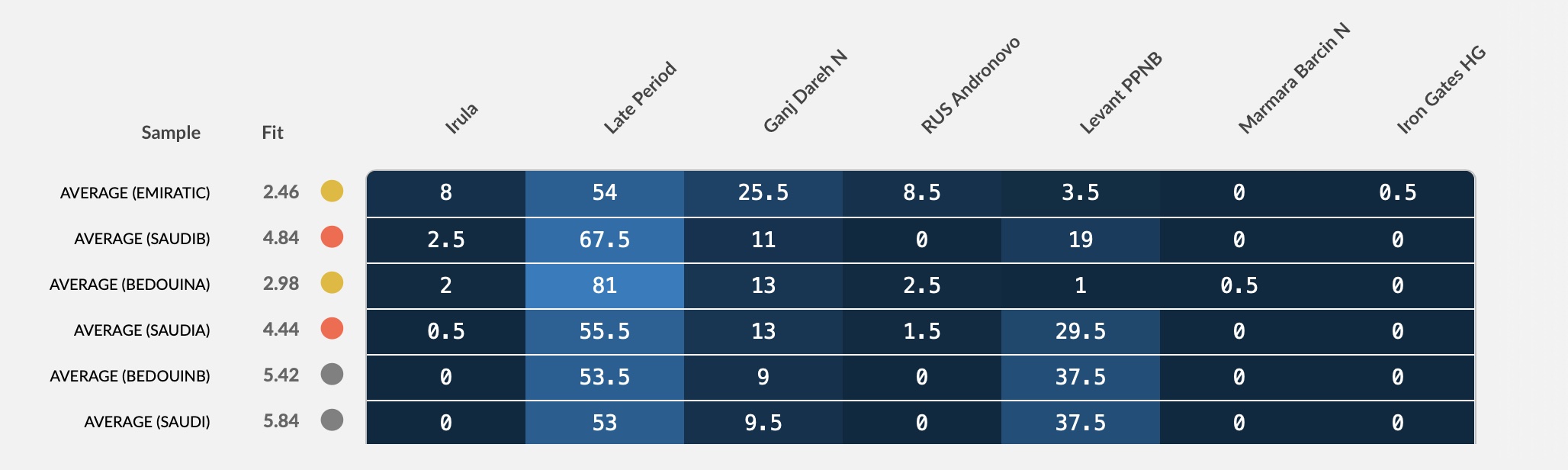
Likely all of these (or at the very least the first two) entered the Arabian peninsula via medieval, early historic, and protohistoric Indian Ocean traders. These samples are found across Arabia, including in Qatar, Bahrain, Oman, and western Saudi Arabia. In fact, we can see that there is some AASI admixture (using Irula as a proxy) in some modern populations in the Arabian peninsula.
Iranic Lineages
Russians
Unfortunately, very few samples from Iran are available, and they do not allow us to make meaningful conclusions. Fortunately, we have many samples available in Russia that are surviving descendants of Sintashta / Andronovo lineages, both in Z2124 and R1a-Y3 (from which L657 descends on the Indian side).
Both R-Y75187 and R-S23592 exhibit a mix of old (dating as far back as Andronovo) and modern samples in the Central Steppe in Turkic-speaking places like Bashkorstan, Tatarstan, Kazakhstan, and Kyrgyzstan. Another that shows modern samples in Russia (as well as an Azeri Iranian sample) is R-Y38987.
It should be noted that these R1a lineages are cannot be from any outflux from India – both their ancient and modern samples remain in the steppe, and no samples in these lineages are found in India. Additionally, the lineages were not spread by Buddhism, as the various Kipchak Turks such as Bashkirs and Tatars that settled this region of Russia practice Tengrism (or previously practiced Tengrism for those that have since adopted Islam), and never practiced Buddhism, unlike Turks and Mongols further to their east who adopted Buddhism.
Iranic Lineages in Arabs
What about Iranian influence in and near the Arabian peninsula? Well, R-BY149647 has both an Andronovo and modern Russian steppe sample as well as descendants in Arab countries. R-F1417 shows a lineage in Russia, another lineage in Arabs, as well as a sample in an Iranic tribe in ancient Kyrgyzstan.
Notably though, nearly all these samples are located in Kuwait or Ash Sharqiyah Province of Saudi Arabia. These likely originate with Iranian settlement and rule of modern day Kuwait under the Persian Empires. As such, though we don’t have many direct samples from Iran, neighboring Kuwait provides a useful source of data for Iranian lineages. Iran was not historically known as a major participant in the Indian Ocean trade, and this distribution of Iranic lineages appears to reflect that.
Conclusion
In summary, we’ve found that Indian R1a lineages from the steppe date to the early 2nd millennium BCE, consistent with a migration into India simultaneous with the Andronovo horizon. We’ve also found that we can observe surviving Iranic lineages in the Central Steppe in Russia, and that Iranian lineages to Kuwait and Ash Sharqiyah by land, while Indian lineages appear in the entire Arabian peninsula via ancient and medieval sea trade.
The 100th Browncast! Razib and Mukunda talk to Pushpita Prasad and Sudha Jagannathan of the Coalition of the Hindus of North America to talk about where we stand on the “caste question” in the US today. There are lots of different opinions here between the four guests, and platform of Dalits and Bahujan.
I watched a few episodes of Ertugrul and it’s pretty good. I would prefer less of a Marvel-comics style character…Ertugrul and his alps basically are just killing machines who never get injured while taking down dozens of Christian knights. But it is good for what it intends to be, a dramatic rendering of the origins of the Ottoman mythology.
What’s the Indian equivalent? I assume a Shijavi TV series, but is there something with good production values?