Food between cultures


Recently I read a piece on Indian cuisine from a “woke” perspective, Reclaiming Indian Food from the White Gaze: The same food I was teased for as a kid has become trendy and divorced from its cultural origins. Now, I’m using my cookbook to change the narrative. Obviously I disagree with the ideology interlaced throughout the piece, but the author is a pretty good writer, and a lot of the illustrations and experiences “ring true” to me. You could strip out a lot of the jargon like cultural appropriation and gaze, and the piece would be a fine read.

For example, the point that white women cooking “exotic” food is “trendy” and marketable in a way it isn’t when immigrants or nonwhite people do seems likely, and something I’d rather like explored more.

That being said, the implicit idea that people “own” culture and that the boundaries are sharp and strict seems to me wrong-headed ultimately. Synthesis is as old as human-kind…my family’s cuisine includes red chilis, potatoes, and tomatoes.  Just to give one example.

I’d be curious what Indian readers think, as the piece is obviously inflected by an Indian American lens.

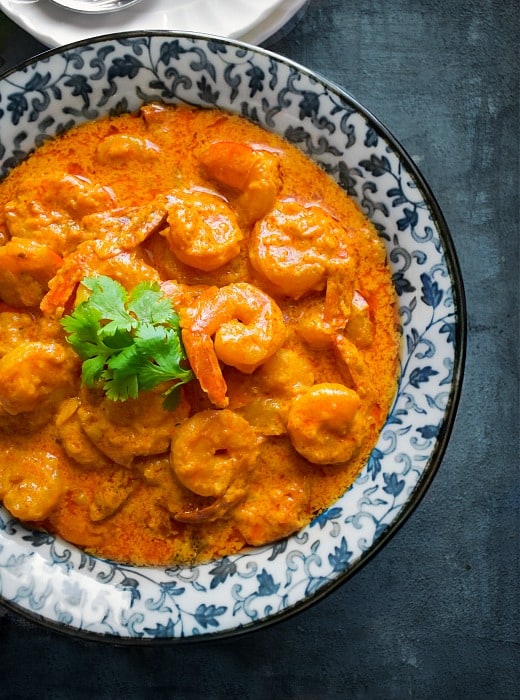
Addendum: I’m from the far east of Bengal, but shrimp is my favorite food.

Open Thread – 07/25/2020 – Brown Pundits

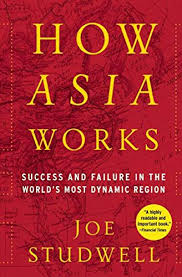
So How Asia Works is very discounted on Kindle in the USA. If you haven’t read it, I recommend it.

In light of the increased comment activity on this weblog, I ask commenters to shy away from too many stupid comments. If you think you may say something stupid, please be cautious, because I may just delete it. My role as a moderator is basically to periodically engage in some ‘natural selection’ and apply some pressure. This is not something that is up for debate.

There is no schedule for the podcasts, but another will be dropping within the next few hours, and more stuff is going to be recorded tomorrow, and I just recorded something today on foreign policy with Richard Hanania.

Browncast Episode 111: Rob Henderson, from redneck to turtleneck

Another BP Podcast is up. You can listen on LibsynAppleSpotify,  and Stitcher (and a variety of other platforms). Probably the easiest way to keep up the podcast since we don’t have a regular schedule is to subscribe to one of the links above!

You can also support the podcast as a patron. The primary benefit now is that you get the podcasts considerably earlier than everyone else. This website isn’t about shaking the cup, but I have noticed that the number of patrons plateaued a long time ago.

I would though appreciate more positive reviews! Alton Brown’s “Browncast” has 30 reviews on Stitcher alone! Help make us the biggest browncast! At least at some point.

In this episode, I talk to Rob Henderson, a Ph.D. student in psychology at Cambridge, a graduate of Yale, and a former member of the United States military. Rob was born to a drug-addicted Korean mother. He does not know who his biological father is, and spent his early years in the working-class town of Red Bluff, bouncing around foster homes before he was finally adopted, albeit into a very unstable family situation.

After a stint in the military, Rob decided to pursue his intellectual interests and received admission into Yale. I got to know Rob first through his op-ed in The New York Times, Why Being a Foster Child Made Me a Conservative. Rob’s current plan is to continue being a writer and return to the United States.

I’m pretty pessimistic on the United States in many ways, but Rob’s life is a testament to what makes this country great, even today.

What do we call the Ancient Ancestral North Indians?

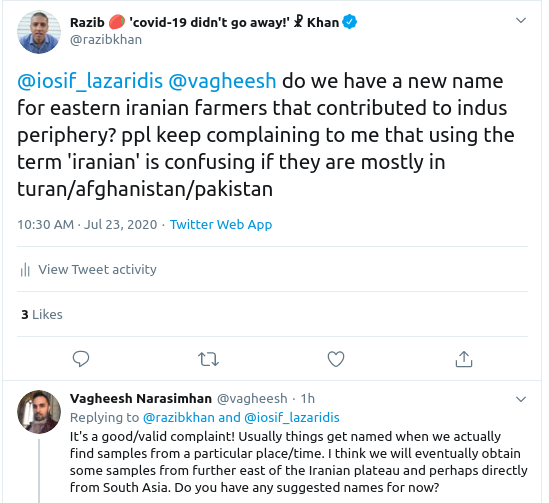
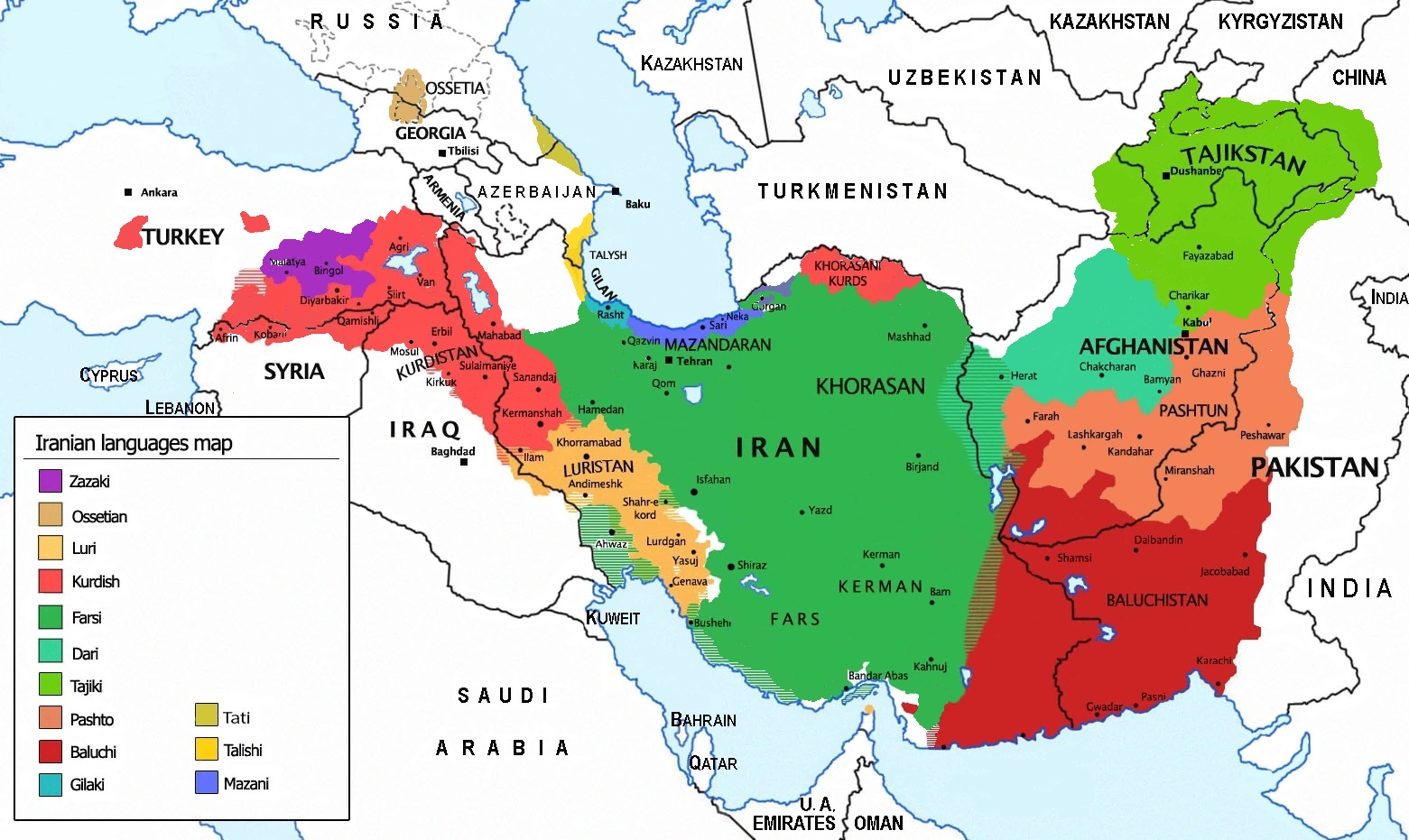
Commenters on this weblog have expressed dissatisfaction with the nomenclature of the “eastern Iranian farmers” who were the dominant genetic contributors to the Indus Valley People. The author of The formation of human populations in South and Central Asia agrees that this is a problem.

To review: the dominant ancestry component, called Iranian-related or eastern Iranian farmer, has two components. About 5-10% is related to “West Siberian Hunter-Gatherers”, who mostly descend from “Ancient North Eurasian” Paleo-Siberian groups (this group contributed ancestry to eastern European hunter-gatherers and Native Americans). The remainder of the ancestry is related to farming populations that are termed “Iranian” from samples in the Zagros in the early Holocene. But the genetics indicates that the separation of the Indian ancestry component dates to before farming, probably between 10-15,000 years ago. Without ancient DNA that is older, we can’t be sure of its geographic range, but it is reasonable to infer that this was an eastern expansion of hunter-gatherers out of the Zagros (seeing as how the WSHG ancestry is not found in the west, and the broader Iranian farmer clade seems to form a clade with Anatolian farmers and Levantine farmers).

But obviously the use of the term “Iranian” confuses with the nation-state of Iran.  This has come up when I use terms like “Iranian-speaking people,” and people get confused because they don’t assume that I’m talking about people who live in Russia (Ossetes), or ancient people who flourished in Xinjiang and Ukraine.

Historically modern Iran was called “Persia”, and Iran was actually more of an archaic civilizational term. But in the 20th-century the Pahlavi’s resurrected this ancient term for the nation-state, so here we are.

The question this: what is a better term for the “Iranian-related farmers”? I have often used the awkward “NW South Asia”, since it seems plausible this group was present in modern-day Pakistan by the early Holocene, and probably earlier. Thoughts?

I’m basically asking for terms and why you think those terms are good. I may adopt a term in the comments for usage on my blogs.

Note: We can’t call them “Ancient Ancestral North Indians” (AANI) since the ANI turn out to be a compound of Indus Periphery and Steppe.

The Brahui, total genetic replacement?

An Ethnolinguistic and Genetic Perspective on the Origins of the Dravidian-Speaking Brahui in Pakistan:

In this report we reexamine the genetic origins of the Brahuis, and compare them with diverse populations from India, including several Dravidian-speaking groups, and present a genetic perspective on ethnolinguistic groups in present-day Pakistan. Given the high affinity of Brahui to the other Indo-European Pakistani populations and the absence of population admixture with any of the examined Indian Dravidian groups, we conclude that Brahui are an example of cultural (linguistic) retention following a major population replacement.

It was clear 10 years ago when I looked at the HGDP Brahui that they are no different from the HGDP Baloch. This is important because there is as a hypothesis that these Dravidian speakers are migrants from peninsular India. If so, there is no genetic evidence. Admixture must have resulted in total homogenization with the Baloch. This is frankly not plausible for a South Asian group, which tends toward structure.

The second option is that the Brahui Dravidian language is indigenous to the region, and the genetic similar to the Baloch is due to the latter’s reciprocal admixture with the Brahui

The myth of Brahmin supremacy!

It seems in this globalized world many intellectual movements deploy the same abstractions. For example, the terms “Brahmin privilege” and “Brahmin supremacy” are clearly constructed as perfect analogs to “white privilege” and “white supremacy.” Brahmins cannot have their own independent history, but operationalize a general model of power relations predicated on the white-black dynamic in the United States that developed in the 19th-century (nevermind that Brahmins were in existence long before this).

This piece, Anti-Blackness Goes Back To Ancient Times, has this passage which I know to be promoting ideas which are false:

Other scholars, such as Harvard’s Suraj Yengde, whose research focuses on the solidarity between Dalits and blacks, say that it wasn’t just outsiders — India gave birth to the original color-based social class system that dates back to the ancient Rig Veda texts, to around 1200 B.C. “The Varna system literally means ‘color’ system, so it’s not surprising that Indians in America have maintained these racist dogmas,” he said. Dalits and the black American experience have strong ties because they are the most disenfranchised people in their communities. “This whole situation is having a global ripple effect. I don’t know if it will bring about much change, but people are definitely talking about it.”

Yengde adds that the caste system and skin color are very much linked. “Oftentimes, we’ll see Brahmins push ideas of colorism, racism, casteism on British and Muslim invaders,” he said. That’s why Yengde doesn’t see the inherent bias of some South Asians going away anytime soon.

Within the piece itself, the author notes that there are early Hadith that express racism against dark-skinned people, presumed to be descended from African slaves. Racial attitudes were an issue in the early Islamic period, with a Turkic scholar making the case for the value of his own people, and Arab commentaries on Indians refers somewhat negatively upon their “black” complexion. This persists down to the period of Turkic rule when prestigious “white” Muslims (often born in Central Asia) were distinguished from local “black” Muslims (often descended from converts). Modern colloquial color categories in the Gangetic plain date to this period.

As far as the British, their ideas of race, color, and caste, were shaped by the Atlantic trade and slavery, as well as contacts with Native Americans, long before the rise of the Raj. There was a history of the British Empire long before intense engagement with Indian Brahmins.

I do knot know Yengde’s work, but he seems of a type of modern scholar, taking a meta-narrative, and fitting all of history into that meta-narrative, no matter how absurd. Ultimately this is not a scholarship, but a form of polemic and propaganda.

I stand against this. I will always will.

Addendum: I should note, though there are poor Brahmins, all across India Brahmins tend to be placed nearer the top of the social scale. In a literal sense “Brahmin privilege” is real. But this phenomenon should be explored in the context of Indian history, not a meta-narrative derived from the American context.

The East Asian ancestry in Bengalis is probably not Munda

There has been some debate about the East Asian ancestry in Bengalis for decades. To me, the most parsimonious explanation 10 years ago is that it was mostly Munda. These are the Austro-Asiatic people of the highlands to the south and west of Bengal. There is also one Austro-Asiatic group to the north of Bangladesh, the Khasi.

I no longer believe this. I’ve looked at the genome-wide data and the signals into the Bangladeshis are much more like a donor population which is Tibeto-Burman. The Khasi in fact have more in common with their Tibeto-Burman neighbors than the Munda. At least genetically. This is one reason I am now leaning to the Munda maritime hypothesis, whereby the Munda actually landed on the coast of Odisha.

But there is a better smoking gun than genome-wide data. With a sample size of 700+ this 2011 paper did not identify any clearly Southeast Asian maternal haplogroups. This is probably an underestimate due to unresolved assignments, but it gives you a flavor. The majority of the Munda Y chromosomes are clearly Southeast Asian. The branch of O associated with Austro-Asiatic people. This 2018 paper using 240 Bangladeshis, with the largest samples coming from the Rangpur area in the northwest of the country, indicates a bit over 10% Southeast Asian haplogroups. This is in the range of the genome-wide admixture estimates.

It could be that in parts of West Bengal, to the south and west, the East Asian ancestry is Munda. But I am pretty skeptical, though willing to be proven wrong.

I do wish I had more non-Brahmin West Bengal samples though.

Note: I think the East Asian ancestry is probably a mix of various groups by the way. In the north clearly more Tibetan. In the southeast more Burman. The Khasi are clear vectors across much of Bangladesh.

Indian Matchmaking


The Juggernaut has the usual predictable take. Racist, classist, colorist, heterosexist, etc.

Myself, I don’t take these shows as illustrations of how the world should be, but how it is. Anthropology.

When I was younger I was very opposed to an arranged marriage. My parents had an arranged marriage, and I found it to be regressive and backward. Now that I’m older, and married with 3 children, I have more moderate views. Many of my friends have not settled down, and they are not happy about it. Finding a partner can be hard. The dating scene can be Darwinian and brutal. It’s not really that edifying.

I don’t come with any answers. Rather, I think we should give people more grace whatever path they take.

The Western romantic vision of a nuclear family where the parents are an island in the world is the path I took. But I’m far less self-righteous about it than I used to be. If there are negative things about arranged marriages, and there are, we should focus on those things, rather than the whole institution. In some ways, dating apps are now becoming the new matchmakers in any case.

Hindu atheist vs. Secular Jihadists


Just listened to a long podcast between Jarin Jove and the guys who host the Secular Jihadist podcast. Going in I had an open mind, as I myself differ on a lot of priors from the two co-hosts (unlike Ali I am not a Left-liberal, and unlike Armin, I don’t think people should adhere to hyper-rationalism in all cases).

Though I think Jove made some good points (i.e., I think “Hindu nationalism” is now such a big category that it is hard to generalize and extrapolate from simply the views of Sarvakar, for example), on the whole, I found many of his points sophistic and reminded me of the sort of style of argumentation I encounter from American “social justice warriors.” In particular, his objections to international comparisons through some assertion of incommensurability is the exact same tack that I’ve been frustrated with for the past 20 years. There are objective facts. There is a real world. We can disagree about the details, but asserting objective facts is not ipso facto evidence of bias or bigotry. Many beg to differ, and this is a deep chasm of values that I don’t think can ever be bridged.

The intersection between postcolonialism and critical theory and Hindu nationalism that I see in some of Jove’s assertions (e.g., he asserts that rape is a greater problem in the United States than India) is perplexing to me, but it seems surprisingly common. This is not to say that Jove would agree that his views were postcolonial or critical theorist, but the alignment is objectively true.

I would caution all people in non-Western societies to be wary of the temptation to use the critical theorist cudgel to win a particular argument because it is useful at the moment. Critical theory is a cultural acid, and any true civilization will have difficulty putting the genie back in the bottle as it eats into everything you think is precious and valuable.


Chandraseniya Kayastha Prabhu are very similar to Maharashtra Brahmins

I periodically get inquiries on various issues relating to the genetic position/relatedness of various “communities” in the Indian subcontinent. Thanks to the South Asian Genotype Project I’ve got a rather large database to query such questions.

A reader asked about his own community, the Chandraseniya Kayastha Prabhu of Maharashtra. They are Kayasthas. The actress Kajol Mukherjee is also half CKP (on her mother’s side, obviously).

The PCA plots below should make it clear that the CKP is very close to the Maharashtra Brahmins I have in my samples. This is in contrast to the SKP, who are closer to Gujurati Patels.

Also, the generic Maharashtra Brahmin is closer to the CKP (there are two of these, but they are so close you can’t distinguish them) than it is the Maharashtra Sarswati Brahmin. And, these groups are a bit less “North Indian” than Tamil Brahmins.

Finally, I compared to other Kayastha and Brahmin groups. As is easy to predict, Kayasthas are genetically heterogeneous. I have two Bengali Kayastha. One of them is basically like a generic Bangladeshi. The other is between the Bangladeshis and the Bengali Brahmins on the PCA (both have lots of East Asian admixture). The UP Kayastha individual is close to the SKP, not the CKP.

Also, Guju Brahmins are very North Indian. As North Indian, or more so, than UP Brahmins.

Continue reading Chandraseniya Kayastha Prabhu are very similar to Maharashtra Brahmins

Brown Pundits