The Twitter Trap

I deleted Twitter. Not as a gimmick, but as a necessity.

Fasting

I’m fasting and traveling, which makes March the perfect month to reset. Every year, this is when we rebase our Trans-Atlantic geography—shift locations, rethink habits, and take stock. The Bahá’í Fast has turned Naw-Rúz (Persian-Bahá’í New Year) into a household signifier—a time for reflection and goal-setting. September is the other critical point in the year, marking the start of the academic calendar, when the intellectual reset happens.

But even though I’m technically exempt from fasting while traveling, skipping it feels like cheating the day. There’s something about the discipline of fasting that forces a mental reset—one that I’ve realized Twitter was actively working against.

Politics, and the Return of Old Ideas

The Trump election caught me by surprise. Not in its inevitability, but in how much it reawakened political instincts I had in my youth—beliefs I had let atrophy in my petty bourgeois years of professional and marital stability. Ideas I thought I had outgrown came roaring back.

There’s something about this election cycle that feels like the politics of passionate young men mellowing in their 40s. J.D. Vance is four months older than me, and his transformation from progressive skeptic to ideological warriorreflects something deeper happening on the Right.

But back to my main topic—why I’ve left Twitter.
India at a Crossroads: Superpower or Spectator?

The Moment That Demands Clarity

Nivedita’s comment on my Yalta post sparked this discussion, and it’s refreshing to see Brown Pundits alive with debate again. Overnight, the blog saw 15+ comments—a sign that there’s still energy here, still an appetite for deeper discussion.

Like any good Dharmic construct, the blog incarnates multiple times. And right now, we’re living through an inflection point in history—one that demands clarity. I’ve only felt this politically awake a few times in my life:

• 9/11, which jolted me into awareness of global power politics.

• Brexit, which shattered illusions about liberal internationalism.

• Trump 2.0, where we are living through a period of extreme history. There’s no going back.

The West’s Political Reset & India’s Place in It

In the U.S., power dynamics are shifting. Gavin Newsom’s sudden cultural pivot to the right signals something bigger: the Democratic Party is recalibrating in real time. They see where the wind is blowing.

And let’s be blunt—white men are back. Not just in America, but across the West. Is this their last gasp of power, or a genuine ideological correction?

As Western politics enters a new phase of identity reassertion, the global order is shifting. India must decide whether it navigates this realignment passively or actively shapes its role.

The Global Chessboard: India Among the Five Great Powers Continue reading India at a Crossroads: Superpower or Spectator?

The Mirage of Exoticism & The Curse of the Almighty Dollar

I was drafting an email to the author of a fascinating piece on Terra Nullius, “Lost in Google Translation,” but as I fleshed out my thoughts, I realized I had more to say—so here we are.

There’s something fascinating about how Japan represents the pinnacle of exoticism for many Westerners. A country deeply integrated into the global system, yet still cloaked in an aura of mystery and cultural otherness. But when I think of places that feel genuinely distinct, my mind doesn’t go to Japan—it goes to the Persianate world.

Iran, Afghanistan, and Pakistan share a cultural continuum that, despite centuries of globalization, still retains an unmistakable distinctiveness. In many ways, these places remind me of Cuba, Venezuela, and North Korea—not in their governance, but in how they have remained insulated from Western homogenization.

Commodification vs. Authenticity Continue reading The Mirage of Exoticism & The Curse of the Almighty Dollar

“I’m not white, I’m Pakistani.”


She has strikingly European features—reminiscent of the last Tocharians. But what’s more interesting is how deeply assimilated Muslims in the English-speaking world are—everyone immediately understood the Daywalker joke.

Presumably, she’s Pathan (or mixed), and if she had been Afghan instead of Pakistani, she’d likely have actively identified as white. But in Pakistan, “whiteness” is too remote as a social identity to be meaningfully claimed—Urdu writes like Dari/Farsi but speaks like Hindi, reinforcing its deep Desi-ness.

I once knew a Hindu Punjabi boy who looked entirely white—not even remotely South Asian. His entire social world reflected that. Whether we acknowledge it or not, racial presentation subtly shapes everything—from friendships to careers to dating.

Yalta vs. Helsinki – Sir Alex Younger and the New Global Intelligence Order

As I prepare to head back to the USA, it’s intriguing to be crossing the Atlantic at a time when the Special Relationship feels strained. This video offers key insights, and I wanted to share my thoughts on it.

The Battle Between Yalta and Helsinki, the Return of Intelligence-Led Warfare, and What It Means for the World

The world is in flux. The unipolar moment of U.S. dominance that followed the Cold War is over, replaced by a multipolar contest where power is contested, alliances shift, and intelligence warfare has overtaken traditional military confrontations. In this new era, Sir Alex Younger, former head of MI6 (2014-2020), argues that the most decisive battles will not be fought on the battlefield but in the realms of cyber warfare, disinformation, economic leverage, and intelligence operations.

At stake is nothing less than the future of the global order. Sir Alex frames the contest as a battle between two competing models:

1. The Yalta Model – Named after the 1945 conference where the world was divided into spheres of influence, this model promotes the idea that great powers dictate regional politics. Russia, China, and other revisionist states advocate this vision.

2. The Helsinki Model – Based on the 1975 Helsinki Accords, this vision defends national sovereignty, democracy, and a rules-based international order, championed by NATO, the EU, and Western democracies.

The Ukraine war is the most explicit manifestation of this ideological war—Russia seeks to reassert its sphere of influence, while the West’s military, economic, and intelligence support to Kyiv is meant to preserve a rules-based world order. But this is only one front in a much larger, more complex intelligence-driven geopolitical war.

Continue reading Yalta vs. Helsinki – Sir Alex Younger and the New Global Intelligence Order

Modi’s Sufi Gambit: Is Hindu India the True Heir to Urdu Culture?

I’m deeply impressed by Prime Minister Modi’s patronage of Jahan-e-Khusrau, a festival celebrating the syncretic and refined traditions of Urdu culture. Given the backdrop of Babri Masjid’s destruction and the Gujarat riots, both of which left lasting scars, Modi the Wise’s pivot towards fostering a secular, aesthetic Urdu culture is both unexpected and strategic.

In doing so, Hindu-defined India may be poised to accomplish for Urdu culture what the Pahlavis did for Persian—modernizing it, making it sophisticated and aspirational, and removing the excesses of exclusivist religious overtones.

If Pakistan has long seen itself as the custodian of Urdu, Modi is now positioning India as its true inheritor—one that can mainstream it, integrate it, and make it a cultural powerhouse beyond sectarian confines.

How precision farming in Rajasthan’s desert is turning farmers into millionaires

In the vast aridity of Rajasthan, winter brings relief from the scorching heat, but also an eerie stillness. Life here moves to the rhythm of sand and shrub.

On early mornings of late December, Jaipur, like any large city in north India, quivers in a silvery film of pollution. As you drive past the city’s last high-rises and elevated roads, the atmosphere is an emulsion of dust and smoke. Every movement lifts the earth into the air.

Dawn comes, but not day. The dim, silver sun in an aluminum sky offers little heat or light. The fields are a naked beige after the monsoon groundnut crop has been dug up. The first green shoots of winter wheat and bajra have barely broken through the soil.

In a census of lifeforms here, trees would be an inconsequential minority. Among the trees, neem and khejri (also known as shami in most of north India and vanni, banni and jammi in the south) dominate. When I say dominate, they average two-or-three an acre.

The shami is considered a symbol of kshatriya valour. Legend says the Pandavas hid their weapons in a shami tree. Now, these trees, pruned and sheared for the season, resemble charred limbs raised in silent prayer. By summer, the khejri would yield nutritious pods called sangri used in the Rajasthani dish ker-sangri.

A wonder in the desert

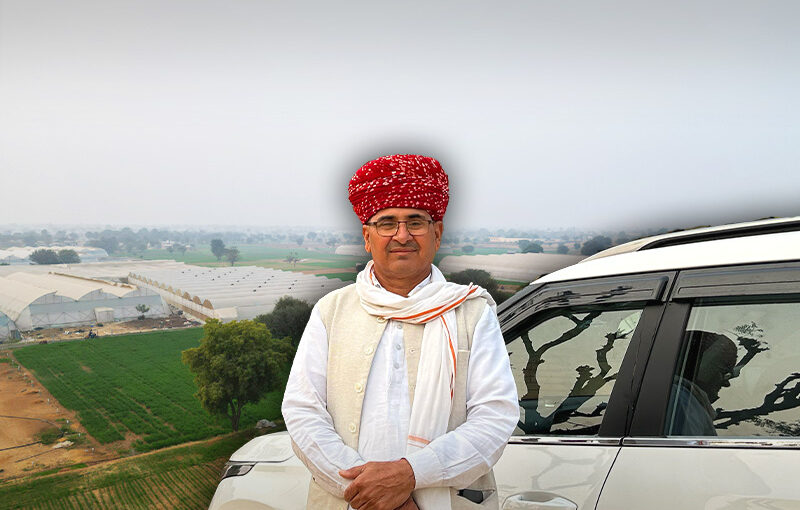
Once we reach Gurha Kumawatan, a village 40km to the west of Jaipur, the transformation is startling. The fields are suddenly green and scurry with life. The raw sting of the air carries the red-wattled lapwings’ shrill and quirky ‘did-he-do-it’ call.  Towering above the farmland, giant semi-circular enclosures—like Amazon warehouses—dot the landscape.

These are polyhouses, industrial-scale farms that allow farmers to produce up to ten times more food than in open fields. Using a technique called protected farming, they require only a fraction of the water, fertilizers, and chemicals needed in traditional agriculture even on poor soil and climate that’s oppressively extreme.

Read the full story https://theplate.in/how-polyhouse-farming-in-rajasthans-desert-is-turning-farmers-into-millionaires/

Watch the video here: https://youtu.be/0ClJa5ICJpY?si=ouZZtPtl-bU9thQL

J.E.M (Jeff, Elon & Mark); The Billionaire Glow-Up

How Money, Power, and Aesthetics Reshape Identity, Masculinity & Race

Chamath Palihapitiya’s transformation is more than just an upgrade in tailoring—it’s a case study in how extreme wealth reshapes identity, optics, and even racial presentation. A simple side-by-side comparison of Chamath in his early career versus today reveals something deeper: his facial features appear sharper, his skin tone subtly lighter, and his overall aesthetic more racially ambiguous. This isn’t just aging—it’s the billionaire glow-up in action.

Chamath, on the right, in the 90’s

The billionaire transformation isn’t just about wealth; it’s about recalibrating masculinity, refining racial ambiguity, and aligning with the aesthetics of power. And Chamath is just one example.

Chamath now

From Ethnic to “Global”: The Billionaire Morph

As non-Western elites ascend into America’s upper echelons, they undergo subtle but undeniable aesthetic shifts—moves that position them as more palatable to the global elite. The process is shaped by multiple factors:

Continue reading J.E.M (Jeff, Elon & Mark); The Billionaire Glow-Up

A Brown Pundit visits the Mahakumbh


Another Browncast is up. You can listen on Libsyn, Apple, Spotify (and a variety of other platforms). Probably the easiest way to keep up the podcast since we don’t have a regular schedule is to subscribe to one of the links above!

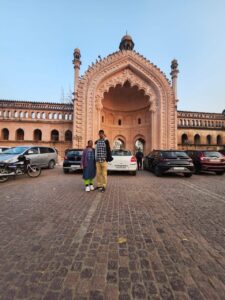
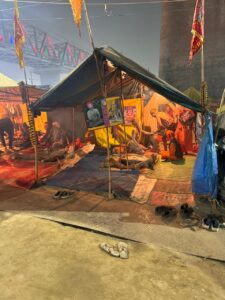
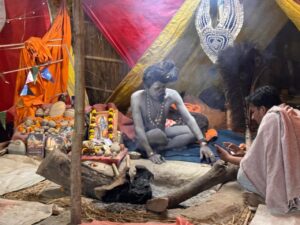
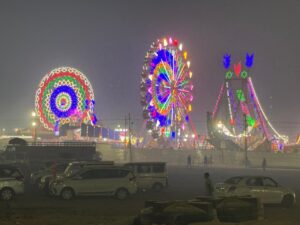
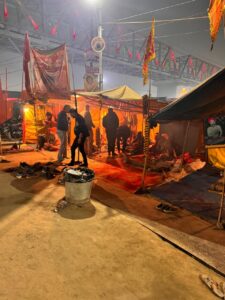
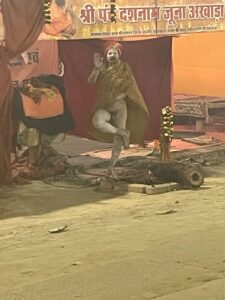
KJ took a dip at the Triveni Sangam, here he is in  conversation with Dr Omar Ali and Maneesh on what was the experience like. His travels across Lucknow and Varanasi make an appearance too. We conclude the episode with a hat tip to the greatest Indian Dessert.


Varanasi


Lucknow

Prayagraj


Baloch, Aboriginal, and Beyond: Tracing Forgotten Lineages & Evolving Identities

I recently came across a fascinating family history article by Sabah Rind, a writer of Baloch and Australian Aboriginal descent. Her lineage is remarkably complex—she is at least a quarter Iranian, predominantly Baloch (5/8), with the remainder Malay (1/16) and Aboriginal (1/16) heritage. Yet, despite generations of intermarriage, her roots remain deeply embedded in the Global South and the Islamicate world.

Sabah Rind, the authoress, a “Baluch descendant”

Her father is Baloch, but her grandfather was half Baloch, a quarter Aboriginal, and a quarter Malay—a lineage shaped by centuries of Indian Ocean migration, trade, and cultural fusion.

dr umber rind
Dr. Umber Rind- a “Pakistani descendant”

Among the 400 descendants of the original Badoola-Marium pairing, Sabah remains one of the most ethnically Baloch, while many others have assimilated or drifted toward new identities over time. Her cousin, Dr. Umber Rind (they seem to share the same grandfather, Numrose, and it’s a bit confusing since they discuss different ancestries) writes on being a proud Indigenous Muslim woman descended from the cameleers.

gulam
Gulam and Mariam’s four children (l-r): Nurdin, Mirdost, Nora, Numrose

Continue reading Baloch, Aboriginal, and Beyond: Tracing Forgotten Lineages & Evolving Identities

Brown Pundits