Book Review: The Wellington Experience

Book Review – The Wellington Experience: A Study of Attitudes and Values Within the Indian Army by Colonel ¼ David O. Smith

 Hamid Hussain

David Smith’s book The Wellington Experience is a detailed study of Indian army’s prestigious Command & Staff College that trains armed forces officers for higher ranks. This book is based on interviews of American army officers who attended Command and Staff College at Wellington in India spanning over four decades. Foreign Area Officers (FAO) of US army spent a year at Staff College.

Colonel David Smith is familiar with Indian and Pakistan armies in view of his professional background.  He has been a South Asia hand at Pentagon and Defence Intelligence Agency (DIA) for over two decades. In his professional career, he interacted with number of Indian officers and familiar with the terrain.

This study looks at functioning of Staff College and evolution of its curriculum to train Indian armed forces officers for higher ranks. It also looks at professional and social attitudes and threat perceptions of Indian officers.

The major conclusions of the study are conventional thinking, adhering to staff college solutions to problems, lackluster attention to joint operations and ambiguity about China. However, the most crucial finding is lack of understanding of nuclear dimension of future conflicts with Pakistan. This factor has been noted by other observers of Indian army.  In the aftermath of devastating terrorist attack in Mumbai in 2008 by Pakistan based militant group Lashkar-e-Taiba (LeT), the shocked Prime Minister Manmohan Singh asked his National Security Advisory Board for options. Ministry of Defence (MOD) Simulation and Wargaming Center suggested a surgical strike on training camps of LeT in Pakistan controlled Kashmir. Prime Minister asked what was the probability of a Pakistani response? The army officer said around 75-80%. Prime Minister then asked what is the probability that these attack-counterattack dynamics leading to Pakistan escalating to nuclear counter-strike? The officer replied about 30%.  Political leadership stopped right there as it was too high a risk.

Smith’s work provides an outside perspective of training of Indian army officers at mid-career level and attitudes of officers.  It is perspective of a little over two dozen American officers who spent only a year at one institution.  It is supplemented with input from US government officials and US Defence AttachĂ©s in Delhi.  This is main limitation of the study.  US officials and officers view India and its neighborhood through American security interests while India has a different take on security challenges of its neighborhood.  Despite such limitations, it is a very methodical and in depth evaluation of existing instructional norms and pointing to areas of improvement for training of officers for higher ranks.

This study confirms what many observers of Indian army know that conventional thinking is the bedrock of Indian army culture.  Unorthodox thinking and critical evaluation of existing doctrines is discouraged, and curriculum and training encourage conformism.  It provides a window to otherwise opaque world of Indian military officer corps training.  This study can be valuable if Indian high command sees it as a friendly criticism of weaknesses of an eminent teaching institution.  Dynamic institutions improve by introspection and course correction.

David O. Smith.  The Wellington Experience: A Study of Attitudes and Values Within the Indian Army (Washington D.C: Stimson Center), 2020

Acknowledgements: Author thanks input from many informed individuals well informed about the subject matter. 


Hamid Hussain

coeusconsultant@optonline.net

24 January 2021


Defence Journal, February 2021
Forgotten Masters: Indian artists during the Raj

Earlier this week, I had the opportunity to e-attend (over Zoom) a lecture organised by London’s Royal School of Drawing on Indian artists during the Raj. Titled Reflections on Forgotten Masters, the talk by William Dalrymple (the famous Scottish historian) and Xavier Bray (the director of the Wallace Collection) followed the eponymous exhibition organised by the Wallace Collection and co-curated by William Dalrymple last year.

The Wallace Collection is not as well known as other London museums such as the British Museum or the Victoria & Albert Museum. Originally built around the private collections of the nineteenth century British aristocrat Sir Richard Wallace, they have a wide repertoire and organise a number of interesting exhibitions, including on themes related to the subcontinent. I had previously attended their exhibition on Indian medicine titled Ayurvedic Man, which was excellent. Unfortunately the coronavirus pandemic and the ensuing lockdown last year meant that I couldn’t physically visit the Reflection on Forgotten Masters exhibition, and had to view it online.

Continue reading Forgotten Masters: Indian artists during the Raj

Browncast: Keerthik Sasidharan, author of The Dharma Forest

Another BP Podcast is up. You can listen on Libsyn, iTunes, Spotify,  and Stitcher. Probably the easiest way to keep up the podcast since we don’t have a regular schedule is to subscribe at one of the links above.

Would appreciate more positive reviews!

In this episode I talk to Keerthik Sasidharan, an author and columnist whose debut book “The Dharma Forest” just came out in India in December 2020. Release in the US is awaited. We talk about his book, the Mahabharata, Indian tradition and whatever comes to mind.. Image result for keerthik sasidharan

The Dharma Forest

India Stack: The Art of Digital Alchemy

India isn’t exactly known for efficiency. The chaos that slams your senses as you step off the plane into the Land of Dharma stands in contrast to the sense of stillness that India’s old wisdom brings. Today’s India is in constant churn. Still shackling off the chains of colonialism and bureaucracy, India can appear to move at the cumbersome pace of an elephant; but sometimes, that elephant charges.

FinTech is an arena of speed and nimbleness. Firms move at the pace of a nimbus cloud as startups rise and fall in an increasingly competitive space that promises to transform a world moving from analog to digital. Security is also placed at a premium, as conflict transitions from firing mortars and metal to acquiring capital and computer power. But above all, what is needed in FinTech is efficiency.

A STACK OF INDIAN RUPEE NOTES AND COINS THAT WILL SOON TRANSMUTE TO CYBERSPACE BY DIGITAL ALCHEMY

A country known for a fetish for over-administration would be assumed to be one of the last places to find quite possibly the most advanced and successful FinTech “stack” on the planet. Cause and effect enjoy playing coy and serendipitous games with each other, and it is in India where we find the confluence of separate information streams merge into the exceptional India Stack.

Continue reading India Stack: The Art of Digital Alchemy

Re-finding lost love of Cricket

15th February 2015 brought home a realization. India’s ICC- Cricket World-cup campaign had begun with a bang with a convincing victory against the arch rivals. While the social media in India made fun of Rameez Raja and chanted “mauka mauka mauka”, I began contemplating what had changed in me since the moment MS Dhoni hit Nuwan Kulsekara for a 6 to clinch the world cup nearly 4 years ago.

My earliest memory of cricket is a world cup memory – India vs Kenya 1996. Sachin scored a century, Jadeja had added a fifty and India comfortably won the game. I was just under 6 when this game was played. I must have watched cricket before this game as I remember being a Sachin fan. I have some cricket memories before this game, but I cannot be sure whether I remember those games from following them live or just as a collection of memories fused with highlights seen in the coming 15 years as a cricket fanatic. Memory being a tricky concept isn’t just what you remember about a time in the past, but it also encompasses the broader emotional and informative thinking about that “time in the past”. So I assume that memories of me watching matches like “Hero cup final 94” are fabrications because I don’t remember my emotions during this game, unlike the WC-96 Ind-Ken game.

Being a cricket fanatic didn’t just mean being glued to television sets when the match was being broadcast. For me, it also meant learning to read Marathi well. -we didn’t subscribe to English newspapers in my childhood. It also meant the ebb and surge of emotions as a function of Indian-Cricket. The 1 or 2 months of cricket free time seemed to stretch like years. Even trailing 2–0 in a test series didn’t deter me from following through with the same vigor. Waking up at 4 am to watch India beaten in New Zealand in 2002 in 3days or remaining awake till 2 am to watch India’s famous win @ Port of Spain. The sad loss in WCFinal-2003 on my birthday didn’t dampen cricket for me though it saddened my day. The same can be said of India’s loss to Srilanka on the same day in 2007 which included Sachin being bamboozled by a 150+k MPs Dilhara Fernando ball for 0 and India crashing out of WC2007. The cycle of the game went on. The heartbreak @ Chennai against Pakistan where Indian tail fell like a pack of dominos after Sachin’s wicket was reduced greatly by the heroic 10Wicket-match-winning haul by Jumbo @ Delhi in the following match. The spell Indian cricket enjoyed from 2001–2004 under Ganguly and 2007–08–2011 under Kumble and Dhoni was the crowning achievement of Indian Cricket till then. India began winning test matches overseas. Nothing pleased me more than 5 idyllic days of watching dukes ball cricket from 330 to 1030 in the Home of cricket (The duke’s ball is used for Test cricket in England; In India, we use the S.G ball, Australian Kookaburra ball is used in all other countries. I believe that the best contest between bat and ball happens with the Duke’s ball). I still remember the India-England test series 2002 and 2007 and Ashes 2005 with utmost nostalgia.

If the 2007 world-cup disaster was the nadir of the Indian cricket fan, then things could only improve from then on and they did. India won a Test series in England under Dravid. India won the Inaugural T20WC in September in SA. That was followed by the Perth victory and winning the CB series. Sachin who had been criticized (justly) since the 2000s for failing in finals, led the team in both finals to silence his critics. Indian cricket had never reached such consistent high plateaus. If anything this was the foreshadowing of even better things to come. India beat Australia twice in India in tests and drew 3 Test series with the Proteas. (Sadly India played only 2 and 3 test series with them). Indian cricket team also began to chase 200+ run totals successfully in test matches with the most memorable chase (of 387) coming in Chennai against England with Sachin scoring a fourth inning hundred. We even wrestled the No-1 spot in both rankings. Meanwhile, the once written of Sachin was in his purplest patch since the 97–98 season. Scoring runs in Tests ODIs and IPL, he kept pleasing his gigantic fan base. Sachin and Gambhir facing the incredible spells of fast bowling of Steyn and Morkel @ Capetown with elan to set up an incredible series win (Which wasn’t to be; due to Kallis and Boucher)with the series poised @ 1–1 were extremely fulfilling. The natural course for this buildup of performance was bound toward the WorldCup dream which was realized in early April 2011.

The post WorldCup party lasted for days. But fortunately or unfortunately within days, the focus was on IPL, thanks to the advertisers and organizers who were quick to exploit the euphoria of World-cup win. Never a huge fan of the 20 over format, I had nonetheless followed previous IPLs. But if anything was overkill, it was the IPL in 2011. The somewhat scripted drama, the page 3 news, the frequent controversies, all conspired to dampen the spark caused by pure cricket. Then began the sudden fall of Indian cricket with consecutive 4–0 drubbings in the 2011–12 season.

A few days after the comfortable win against Pakistan, I sat contemplating why don’t I feel any longing, connection, or zeal toward Indian cricket (even cricket in general). The answer is multi-faced. Maybe the ambition of the Indian cricket fan was completed emphatically with Dhoni’s 6. The abysmal performance in England and Australia, (my 2 favorite cricketing locations) once a regular occurrence now felt unworthy of world champions. Having supported this very team after numerous debacles, suddenly I found the rapid fall from the cricket zenith too much. Engaging in a more active social life, I found following Test cricket which I never missed, difficult. Excess of 300+ scores in 1Day games has also made the contest between bat and ball-less appealing. Cricket (At least the one Indian cricket team played) since 2011, seemed to focus on economy rate instead of strike rate. All these reasons combined made cricket much less appealing for the most part of the previous decade.

But then things again began to change for me and Cricket over the last couple of years. I have followed the 2018 India England series, 2018 India Australia series, and 2019 Ashes and 2019-WC somewhat sincerely but never reaching the pre-2011 levels of interest. Then came the 2020-21 Border Gavaskar series.

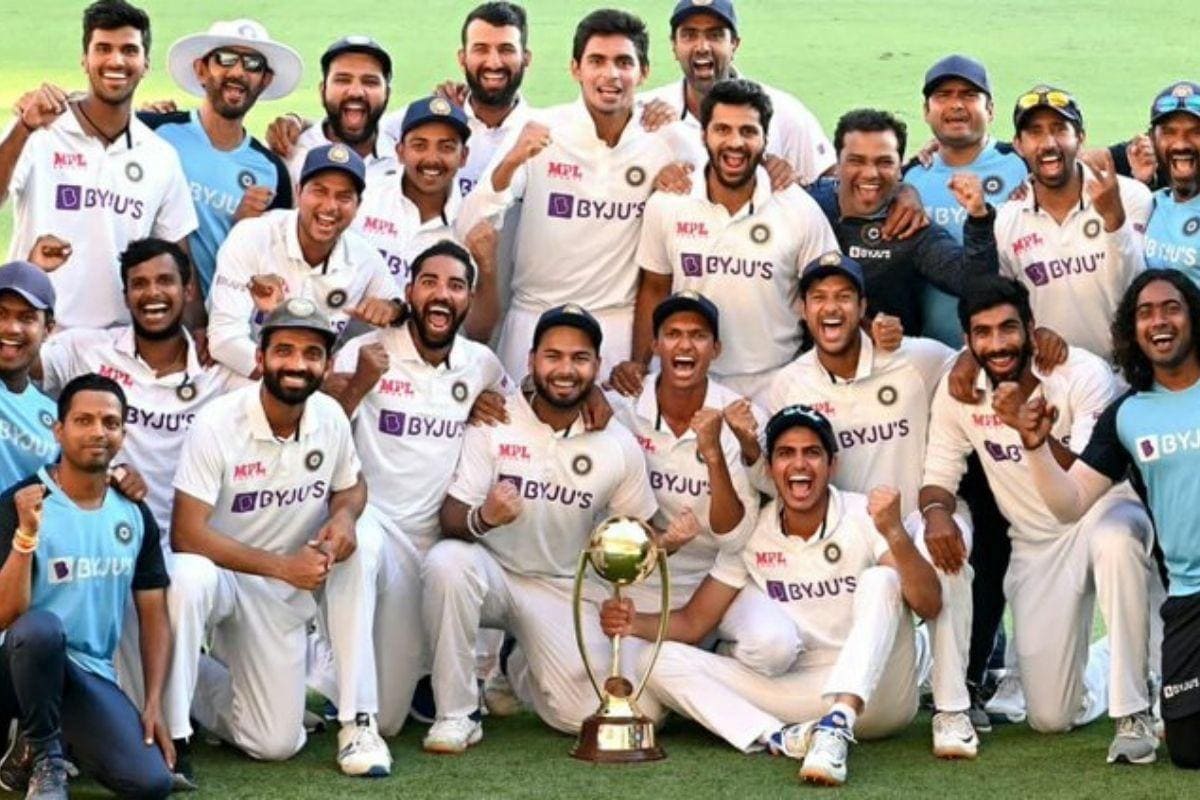
Having taken a break from social media (Twitter, Instagram, Facebook) and reading and writing (history, politics, literature) & still following social distancing norms, I started following the cricket between India and Australia more and more as the tour went on. Surprisingly the 36 all out at Adelaide did not turn me off from the rekindling of my lost passion. I continued following the series which turned out to be as good a series as any I have followed (up there with 2001 India Aus and 2005 ashes). The finale at Brisbane was well and truly beyond the wildest dreams of any Indian fan from before 90’s and 2000’s. I will not be adding to the already exhaustive coverage of the recent series here but just note that this series was truly remarkable as test series go.

With completion of the this extraordinary series, not only is my interest back but also the adrenaline and tension. With 2 India England series and Ashes to follow, 2021 looks like a promising year.

Continue reading Re-finding lost love of Cricket

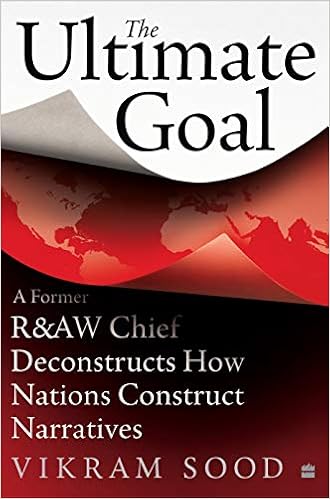
Capsule Review: The Ultimate Goal by Vikram Sood

Sood, Vikram. The Ultimate Goal: A Former R&AW Chief Deconstructs How Nations and Intelligence Agencies Construct Narratives (p. 22). HarperCollins Publishers India. Kindle Edition.

The author is an intelligence professional who was the chief of RAW, but the book has nothing to do with RAW; it is mostly a description of how great powers generate and propagate their national narratives and why India can and should do the same. Fans of Noam Chomsky will be pleasantly surprised to find many familiar themes when discussing Western narrative building, though I assume most leftists will react less positively to the Indian portion, labeling it as at least mildly “sanghi”. In any case the book is always interesting because it is chock full of interesting anecdotes and nuggets of information (for which the author provides appropriate footnotes). Whether you agree with the somewhat Machiavellian (for lack of a better word) analysis, you will still get to read some fascinating stories. it is also well written and professionally edited. Well worth a read.

For a flavor of the book, see the following excerpts:

That message must be indigenous and not borrowed. India, too, as it becomes a bigger player on the world stage and given its civilizational history, must have its own narrative, its own version of history and values. Respect comes from not only the way a country wields its strength, tackling both the stronger and the weaker, but also from how it tells its story.

when Nixon and Kissinger were making overtures to Mao Zedong, and Rockefeller wanted to get Chase Manhattan an entrĂ©e into China. Rockefeller sought Kissinger’s advice, who suggested that the former get in touch with Huang Hua, China’s permanent representative at the UN, to get permission to enter China. Eventually, one fine day, a Rockefeller representative handed over a bag containing US$ 50,000 in cash at the Roosevelt Hotel to Huang Hua. No receipts were necessary and, soon after that, the Chinese mission opened an account with Chase Manhattan. Rockefeller was able to make several trips to China,

There would inevitably be conspiracy theories about these groups, but the fact is that the rich and powerful need a common and exclusive shelter for safety and networking. The CFR and TC, as well as others, fulfil this role. The superclass and these organizations draw strength from each other, and this need not be conspiratorial beyond the obvious of protecting and enhancing their turfs. The rich and the elite give these organizations an aura, where they mingle with the high and mighty from the government and being a member of these organizations enhances the exclusivity of the superclass. This is also where the power of the ‘revolving door’, which enables lateral movement from crucial departments of administration and the legislature to appropriate corporate slots and vice versa, during changes of government, is apparent.

The Trilateral Commission was more an exclusive elite club of powerful men and women who ran the world and were citizens of the United States, Europe and Japan. They were politicians, corporate heads, former and would-be presidents of the US, senior cabinet ministers, heads of intelligence, World Bank governors, strategic thinkers, media heads backed by the might of those like David Rockefeller and his favourite strategic thinker of the day, Zbigniew Brzezinski.

Soon after the fall of Baghdad, Rumsfeld rushed there as a conqueror to congratulate and thank the troops. He praised the armed forces as photographs appeared of rapturous Iraqi crowds pulling down Saddam’s statue in Firdos Square in celebration of their ‘liberation’. The truth was that the US army’s psychological warfare unit had hired some Iraqis to remove the statue.

The story of Russia’s political warfare unfolds with Donald Trump’s announcement on 16 June 2015 from Trump Tower, New York, that he would be contesting the next presidential elections. Many Americans received this news with misgivings and others with derision. One newspaper even ran with the headline ‘Clown Runs for Prez’.23 His countrywide rating was abysmal, and he had to pay audiences to show up at his rallies. No one really gave him a chance at making it even to the nomination as a Republican candidate. That day in 2015 was probably also the day that the final phase of Russian active measures moved from a low gear to full throttle.

Sood, Vikram. The Ultimate Goal: A Former R&AW Chief Deconstructs How Nations andIntelligence Agencies Construct Narratives (p. 131). HarperCollins Publishers India. Kindle Edition.

Open Thread – 01/29/2021 – Brown Pundits

“Razib Khan’s two part essay on Indian history is brilliant. While it’s long for a blog post, you’ll learn more about India than you would in many full length books.”

-Scott Sumner

From The Money Illusion. I think this is obviously hyperbolic, but I’m actually rather proud of these two pieces of writing, which come in about 10,000 words. The two essays:

Stark Truth About Aryans: a story of India
Stark Truth About Humans: a story of India

Also, for an “Indian face,” Ramesh Ponnuru on the pro-life movement in America.

I understand my Substack is spendy for Indians. I’m thinking of doing a “special offer” for Indian readers. And yet, as it is, I would estimate that 25% of the people who subscribed have South Asian names! (I will tell you I have more than 500 subscribers as of now)

What’s going on with the protests and the farm stuff? Too much stuff in the US for me to track India. Any articles you recommend?

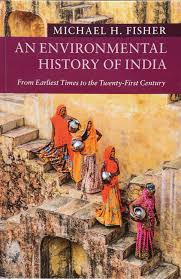
Reading An Environmental History of India. I would recommend it, it’s pretty decent as an introduction to someone who has no background in this field or topic.

Hinduism is not false consciousness , it is “Planet X”

The Caravan has a piece up intended to inflame, The Hindu Hoax – How upper castes invented a Hindu majority. If you are a sudra or an avanra who believes in the Hindu religion the piece seems geared to denying you all agency or independence. You are a dupe, the victim of “false consciousness.” The Brahmins control you!

That is fine as far as it goes. I am not a Hindu or from a Hindu background. Instead of being offended, mostly I just roll my eyes. And yet I have to admit that twenty years ago I would have been interested in, perhaps even attracted to, the idea that “Hindu identity” or “Hindu religion” was “invented” in the past few centuries. It’s one of those counterintuitive “Freakonomics-style” facts that you can deploy for fun and rhetorical profit. “Actually, did you know….”

But after reading and thinking about this for a few decades, I think this is wrong. I don’t think this is wrong because of what I know about Hinduism, as such. I think this is wrong because of what I know about the spread of religion over history.

For many decades astronomers have been arguing about the existence of “planet X”, which is an undiscovered planet-sized object in the outer solar system which may need to exist to explain the orbits of the planets we can see. That is, we don’t have any evidence of this planet itself, but, we have evidence of its impacts on the other planets. Whether “planet X” exists is irrelevant. Every time I check the consensus seems to change. The point is your model of something can allow you to infer facts through deduction.

As many of you know, one of the mysteries and miracles of human history is how India maintained its religious uniqueness despite 500 years of predominant Islamic rule. In Iran, the best data suggests Muslims were a majority after 300 years. Egypt, it probably took a little longer, but 400 years seems right. I’ve written extensively on hypotheses why India was different. This post isn’t about that. Rather, the very persistence of a non-Muslim majority is indirect evidence of the religious character and identity of the people under Muslim rule.

The stylized fact that I see bandied around is that non-Brahmins, at more modestly Hindus who were not twice-born, had their own non-Hindu religious traditions. These local and indigenous traditions were bracketed into and assimilated as Hindu only within the last few centuries. Before that, it’s best to think of them as not Hindu at all. A conspiratorial and unflattering model is that Brahmins and their allies engaged in a massive re-identification and implicit conversion campaign against the pagan masses, who were as distinct from Brahmanical Hinduism as Muslims were.

The fundamental problem with this is in other areas the pagan and marginal people invariably defect and convert to an alien and novel new religion first. This is the Iran and Kashmir, model. Most of the non-Muslims remaining are of the priestly caste (this is the origin of the Parsis). The core of the old religion. But people on the margins or who were always outside of the boundary of pre-Islamic elite identity quickly switched to becoming Muslim. Turan, north of Iran proper, Islamicized more rapidly than Iran, because it was multireligious, to begin with. In the Roman Empire, nobles from the frontier provinces converted to Christianity faster from the inner core zone. The Roman and Iranian example actually has resonances to the Indian subcontinent, as one argument for early and pervasive Islamicization in the northwest and northeast (Punjab and Bengal) is that its Hindu matrix was weak to nonexistent at the time of the Muslim conquest.

Where am I going with this? If I was a believing Hindu, perhaps I would contend that the persistence of Hinduism in the face of Muslim domination is a function of the power of God and the gods protecting their people. It is a literal miracle. But I’m not a believer in religion. Another hypothesis is that India is the exception to the rule universal elsewhere. A mass of pagan people without any religious connection to a priestly caste (Brahmins) somehow maintained their identity and practices in the face of a dominating “higher religion” (Islam). Then, the cunning Brahmins during the colonial people convinced these non-Hindu pagans that they were actually Hindu!

Both scenarios are implausible to me. First, because there is probably no God in the first case. Second, because I’ve met Brahmins, and they aren’t that incredibly persuasive and Machiavellian. Rather, like “planet X”, I default to the thesis that there’s an identity, a self-conception, a set of beliefs and practices, which suffused itself through the matrix of indigenous Indian groups. Though there was some defection, for various reasons, the cultural matrix was strong enough to maintain itself down the modern period, when information technology and modern identity formation created something much more coherent. That cultural matrix is the precursor to Hinduism today. It wasn’t a conspiracy. Just a natural evolution.

Why Scythians, Sakas, and Kushanas, are NOT the source of “steppe” ancestry

This is a common question/assertion in the comments pretty much every other week: why couldn’t the documented incursions of nomadic people in the first millennium A.D. be responsible for the steppe ancestry? There is actually a good explanation in The formation of human populations in South and Central Asia, so I’ll quote it:

By the Late Bronze Age, ESHG-related admixture became ubiquitous, as documented by our time transect from Kazakhstan
and ancient DNA data from the Iron Age and from later periods in Turan and the Central Steppe, including Scythians, Sarmatians, Kushans, and Huns (29, 52). Thus, these first millennium BCE to first millennium CE archaeological cultures with documented cultural and political impacts on South Asia cannot be important sources for the Steppe pastoralist–related ancestry widespread in South Asia today (because present-day South Asians have too little East Asian–related ancestry to be consistent with deriving from these groups), providing an example of how genetic data can rule out scenarios that are plausible on the basis of the archaeological and historical evidence alone (13) (fig. S52). Instead, our analysis shows that the only plausible source for the Steppe ancestry is Steppe Middle to Late Bronze Age groups, who not only fit as a source for South Asia but who we also document as having spread into Turan and mixed with BMAC-related individuals at sites in Kazakhstan in this period. Taken together, these results identify a narrow time window (first half of the second millennium BCE) when the Steppe ancestry that is widespread today in South Asia must have arrived.

There is now a large database of Scythian, etc., ancient DNA, thanks to the preservation conditions on the Eurasian steppe. Most of their ancestry derives from the same broad group as the Andronovo horizon of which the Sintashta were part. But, unlike the earlier steppe populations, these groups are highly variable in ancestry, as well as usually having substantial minority East Asian components. The Indian groups with a lot of steppes, such as Jatts and Northern Brahmins, lack this.

There are two objections. The weaker one is that they didn’t have statistical power to detect the admixture. I haven’t run simulations, but I’m sure they have. If you have Jatts who are perhaps more than 30% steppe they would have detected trace East Asian (as you can find in many Muslim individuals from Pakistan).

The stronger objection is that there is unsampled structure on the steppe, and groups without East Asian admixture that are direct descendants of the Sintashta without dilution. This is not entirely unreasonable or implausible, though at this point I’d say this is unlikely for two reasons:

  1. Central Eurasia is pretty well sampled due to interest and conditions
  2. The steppe ancestry in South Asia is pretty widespread. Hard to imagine it percolating so far in 1,500 years

Also, the statistical tests I’ve done show Bengalis got East Asian admixture 1,500 years ago. 10-20% of the ancestry. The steppe percentage in Bengalis is 10-15%. But I never get any hits using older less sensitive methods of admixture. That means that it has to be way older a mix than 500 AD.

Brown Pundits