 An individual, who I have come to conclude is a troll after further comments (they are banned), mentioned offhand that Hinduism and/or Hindu identity is reactive Islam and the British, and that its origins are in the 19th century. This is a common assertion and presented recently by one of our podcast guests. I myself have entertained it in the past. It’s not prima facie crazy.
But I have come to conclude that this is not the right way to think about it. Or, more precisely, it misleads people on the nature of the dynamic of Indian religious identity and its deep origins. This is why I think Hindus themselves self-labeling ‘polytheists’ or ‘pagan’ can mislead people. Not because these are offensive terms. People can refer to themselves however they want. But these terms have particular relational resonances with other groups, periods, and peoples.
One can point to al-Biruni’s external observations about Indian religion, or Shijavi’s personal opinions in his correspondence, to make a case for Hinduism and Hindu identity (using both terms to avoid troll-semantic ripostes) being older than the 19th century. But this is not the argument that is strongest to me. I have spent many years and books reading about the cross-cultural emergence of religious identity, and its change, in places as diverse as Classical Rome, post-Arab conquest Iran, and 7th century Japan, to name a few places. Many of these places and times had local religious cults and practices. In all of these places, they were assimilated and absorbed into the intrusive “meta-ethnic” religion. In Rome, Tibet, and Japan, the religion had major initial setbacks, but eventually, the meta-ethnic “higher religion” came back and captured the elite.
In the modern world, we see massive Christianization, and to a lesser extent Islamicization, in Sub-Saharan African. The traditional religions persist, in particular in West Africa, but history is clearly against them. Importantly, most of the religious change occurred after the end of colonialization.
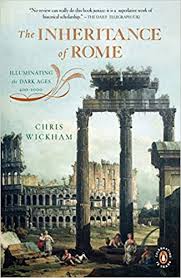
 The relevance of this is clear. The Indian subcontinent would be an exception for all these above cases if the vast majority of people were unintegrated animists with only local religious cults. The precedent from Europe and the world of Islam is that Brahmins and a few other pan-Indian groups (e.g., Jains) would persist as religious minorities, while the vast majority converted to the newly introduced meta-ethnic religion.
Continue reading Why Hinduism is not inchoate paganism



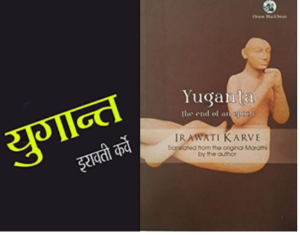 Yugant confronts various versions of Mahabharat analytically and tries to make sense of character arcs and motivations. Intelligently analyzed without religious respect but with literary respect. The motivations of Pandavas for marrying Draupadi as the Royal Queen are very well explained. The literary accounts of chats between Dhritarashtra and Gandhari & those of Draupadi’s death are very well written and move your heart. Krishna (Vasudeva) stands out not only because of the brilliance of his character but the wonderful analysis and the crisp unraveling of his motivations. The Arya (Kshatriya) Dharma is explained in Krishna and Yugant chapters. The author enthralls with deep and intelligent writing in the final chapter that resonates wonderfully even in the 21st-century internet age. The sincere and irreligious comparisons of Mahabharat Era – Arya Dharma to contemporary Hindu religion and other Prophetic Faiths are interesting. Throughout the book, the author refrains from applying current Zeitgeist as a yardstick – something which is refreshing in 21st century polarized analysis and debates which always have political undertones. Even without a direct running story arc – the arrangement of essays offers a wonderful climax – especially Krishna and Yugant chapters. With recent elevation of Heroic Karna in Indian literature and thought, a look back of the character of Karna as seen in 1950s-60s is a pleasant change.