Ancient India, archaeology, etc.

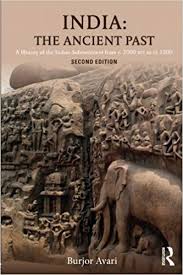
I think I have asked before, but I’m soliciting suggestions about a book on Indian prehistory, with a focus on the period between 10 and 2 thousand years ago. India: The Ancient Past: A History of the Indian Subcontinent from c. 7000 BCE to CE 1200 looks decent, but I don’t have an ability to evaluate this stuff.

The reason is pretty simple. I’ve been asked to write a book chapter on the genetics of India. The draft is written, and I think we’re 80-90% done with the genetic “big picture.” The real work is going to be in synthesizing with archaeology. To be entirely frank I’m not sure how open Indian archaeologists are going to be to the new genetics, which is not stopping at any time in the near future. So I think perhaps I should see what I can snap together myself.

Anyway, suggestions appreciated. Though keep in mind that I don’t know much archaeology and don’t care that much about ancient village plans….

Assam register: Four million risk losing India citizenship

The National Register of Citizens (NRC) is a list of people who can prove they came to the state by 24 March 1971, a day before neighbouring Bangladesh declared independence.

India says the process is needed to identify illegal Bangladeshi migrants.

But it has sparked fears of a witch hunt against Assam’s ethnic minorities.

Assam register: Four million risk losing India citizenship

Activists say the NRC is now being used as a pretext for a two-pronged attack – by Hindu nationalists and Assamese hardliners – on the state’s Bengali community, a large portion of whom are Muslims.

Like Hasitun, many Bengalis live in the wetlands dotted along the Bramaputra river, moving around when water levels rise. Their paperwork, if it exists, is often inaccurate.

Officials claim illegal Bangladeshis are enmeshed in the Bengali population, often hiding in plain sight with forged papers – and a thorough examination of all documents is the only way to find them.

“They are openly threatening to get rid of Muslims, and what happened to the Rohingya in Myanmar, could happen to us here.”

This is wrong; very wrong. Magnanimity is an important part of any country’s policy and I do think that India is becoming far too draconian about the Muslim Question..

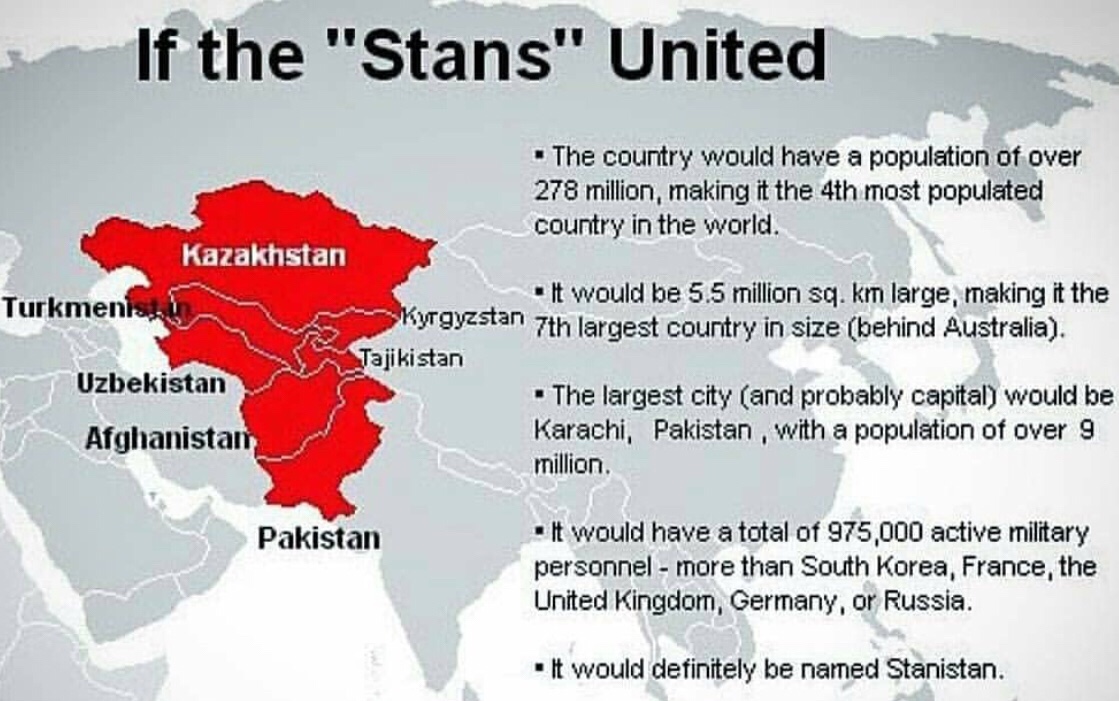
Pakistan’s future lies in solidarity with Turanistan .. I should write in to Imran Bhai and offer to be his foreign policy advisor.

Persian Vs. Punjabi Vs. Urdu

I was going to write a long post about my thoughts on Janus-faced Pakistan and thankfully I deleted it. Instead I stumbled across these rather interesting clips. They should the distinction between popular culture in Pakistan (Punjabi) and the Urdu High Culture.

It’s an interesting clip where Talha can understand virtually all the Persian words but for the accent and Amir can’t get a single Punjabi word.

I found this clip as well and incidentally Amir’s success rate with understanding Urdu just shot up. It is simply unbelievable and wonderful. Also when Talha is in “Urdu” mode he is able to tackle with the Persian words far better than when he was in Punjabi mode because his frame of references shifts away from rustic.

Also as a quibble (I may have to write in) but Pakistani Punjabi (like all languages spoken cis-Radcliffe) is written in Nasta’liq. I do not know why Amir has “over-exoticised” the Punjabi script when he has made subsequent videos with Sikhs etc. Gotta love the Persians and their complete amnesia when it comes to the East; a bit like how Indian has forgotten her historic sway in South East Asia, where Hinduism is the fundamental sub-strata.

Important Links:


Turanistan & the Scythians of India

Rajasthan could be an honorary member. It’s interesting to note that the largest concentrations of Scythians aren’t in Europe, where they are best remembered, but in the border zones of the Subcontinent.

If memory serves me right (and I could be wrong here) but the Gujjars (the Punjabi tribe & Gujarat), the Kambojas, the Rajputs and Jats all have Scythic/Iranian associations. So even in India states such as Haryana, Punjab, Rajastan, Sindh and Gujarat have all seen these influxes.

The difference of course is that these Northwestern invaders had no rival ideology or high culture hence they accommodated themselves into the prevailing milieu with scant memory. I do remember though that the Rajput clans have complicated systems of lineage involving the sun and the moon though..

Lazy Sunday – Pakistan has the best looking leader in the world now

Lazy Sunday and I didn’t want to spam the BP Whatsapp Group so here goes (I may update as the day goes on):

  • Like Most Americans, I Was Raised to Be A White Man
  • Raza Rumi’s new book uses Pakistan’s culture to reveal a diverse, layered, contested country
  • The Rise, Fall and Rise Again of Imran Khan, Pakistan’s Next Leader

  • How White Is London?! Interesting that Nas (I follow him on Facebook) is an Israel-Palestinians Harvard Grad and uses Brown to define himself. I once wrote in one of my first posts in BP that there has always been an other category in the American imagination that was occupied by the Native Americans (Black, White & Red). America has space for three colours..
  • Imran KhanI’m proud to say Pakistan probably has one of the best looking Leaders (on par with Croatia & Canada) in the world and it may have a female president. I’m extremely optics conscious.. Meet Pakistan’s playboy-turned-prime minister
  • I always admonish Pakistanis who let down the side by not being aesthetic enough that’s why I’m probably anti-Hijab, I don’t like badly worn Hijabis. I do think however that Indian women are obviously the best-looking in the world. I admonished my niece yesterday when she thought that on average white women were better looking than Asian women; psychological colonisation.
  • PTI MNA-elect decides not to take salary, other allowances. I’m rapidly winning over to the PTI side since they present the right image of Pakistan, young electable and non-corrupt chaps. I’ll of course be condemned as someone who supports authoritarian candidates and that’s probably true.
  • Pakistan needs to work on its danger image and with our kin-nations Iran, Afghanistan and Pakistan form that erogenous-erotic zone of danger, heady sensuality and restrictions. One interesting thing in the West has been that with the increase in sexual liberalism there is a correspondent decline in eroticism and increase in weird fetishes and an ever increasingly Cornucopia of sexual orientations.
  • Pakistan is a split border territory our kin nations are both Afghanistan and Iran and the Stans however we are of course also tied to our kin nations of SAARC. We aren’t one or the other exactly. Afghanistan is a SAARC nation in the same way as Burma; it doesn’t speak an Indo-Aryan or Dravidian or Munda language which is a central requirement.
  • I think the greatest leader in South Asian history happens to be Indira Gandhi since she neutralised the greatest threat to India for generations to come. Even though I’m partial to Pakistan (how can I not be since I’m partially Paki). I’m quite convinced that one of the avatars of Indira is Vidhi, probably the other is Priyanka..

On ethnicity


A really strange conversation on ethnicity broke out below. The primacy of lots of different variables was argued.

My family arrived in the USA ~1980 when there were not too many South Asians compared to today. Additionally, they have lived in major urban areas, small towns, and medium-sized cities. My parents grew up in (East) Pakistan, married and had their first children in Bangladesh, but have spent most of their lives now in the United States of America. Both speak English with a strong accent and are moderately religious Muslims. You wouldn’t call them secular, but neither are they visibly or ostentatiously Muslim. In American politics, they are staunch Democrats, while if they have an opinion on Bangladeshi politics they are Awami League (the ratio of discussion of American to Bangladesh politics in my family growing up was about 100 to 1 in favor the former).

Today my parents’ social circle, in a relatively large urban area, are Bangladeshis. Most of these people (almost all in fact) arrived in the United States much later than they did. But in the 1980s my parents had a much smaller pool of social acquaintances who were Bangladeshi. In the early 1980s, there were 15,000 Bangladeshis in New York City. Today there are probably closer to 200,000.

Here are some things I will observe in relation to my parents’ more diverse social circles in the 1980s. First, they were overwhelmingly South Asian. Those who were not South Asian were usually married in, and usually white. Second, a core group consisted of Bangladeshis. But the next group probably consisted by Indian Bengalis. A somewhat more established community. In fact, the boundary between Bangladeshis and Indian Bengalis were somewhat fluid. The two groups spoke the same language, and there was a large dietary overlap.

Next in order to the Indian Bengalis were a variety of other social clusters of South Asians that they met through various acquaintances and friends. For example, one cluster of friends consisted mostly of people from the Indian state of Andhra Pradesh, but with a large minority from other parts of India. Because there was ethnolinguistic diversity in this social group generally everyone spoke English, rather than Telugu, which was the most numerous language.

Another group consisted of people from Pakistan and Indian Muslims. This group also had some other token Bangladeshis. The unifying factor in this group was that all were South Asian Muslims. The de-unifying factor in this group is that the non-Bengalis would sometimes make the proactive case for Urdu as a unifying language, which my parents and the other Bengalis always objected to (because of their age, almost all the Bengalis in the group could follow the conversation in Urdu, since they grew up in Pakistan).

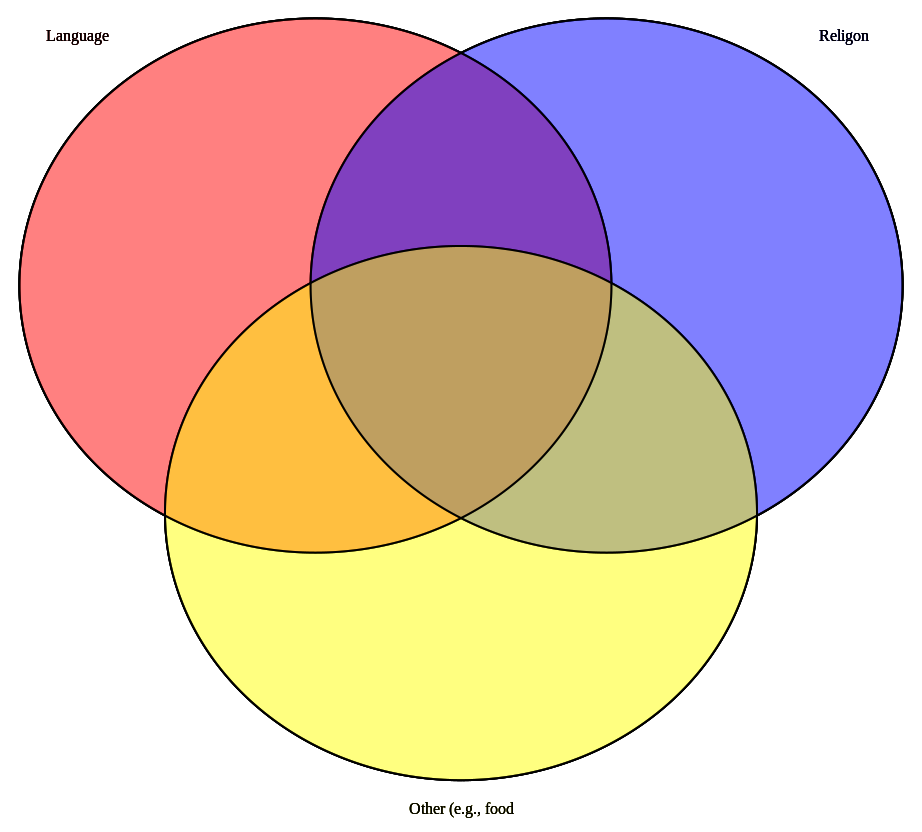
One issue in social circumstances with Pakistanis is that my parents found the food less palatable. This was a very important criterion for them for social interactions and a primary reason why sometimes they preferred going to parties thrown by their Hindu Bengali friends in preference to their Pakistan Muslim friends. By “less palatable”, I mean here that Pakistani cuisine was not “comfort food” for them.

My parents went to a multi-ethnic mosque several times a year. From what I could tell the South Asians kept to themselves, the Arabs kept to themselves, the Turks kept to themselves, etc. There was no real deep interaction. My parents never had any close Muslim friends who were not South Asian. In fact, we went to dinner with Chinese people (my father’s colleagues) more often than we went to dinner at a non-South Asian Muslim’s house.

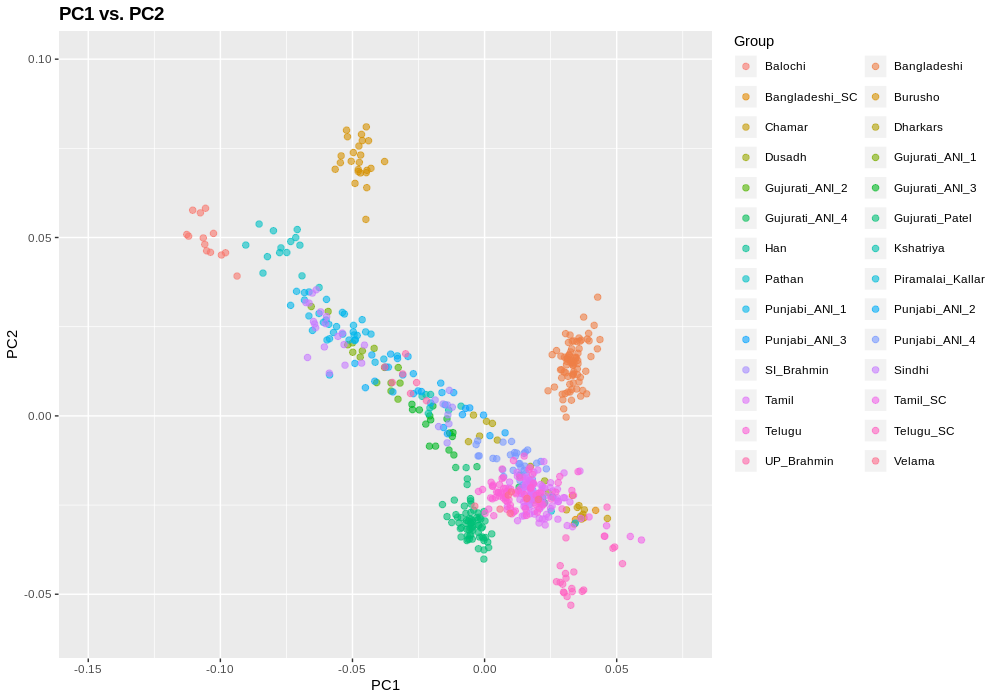
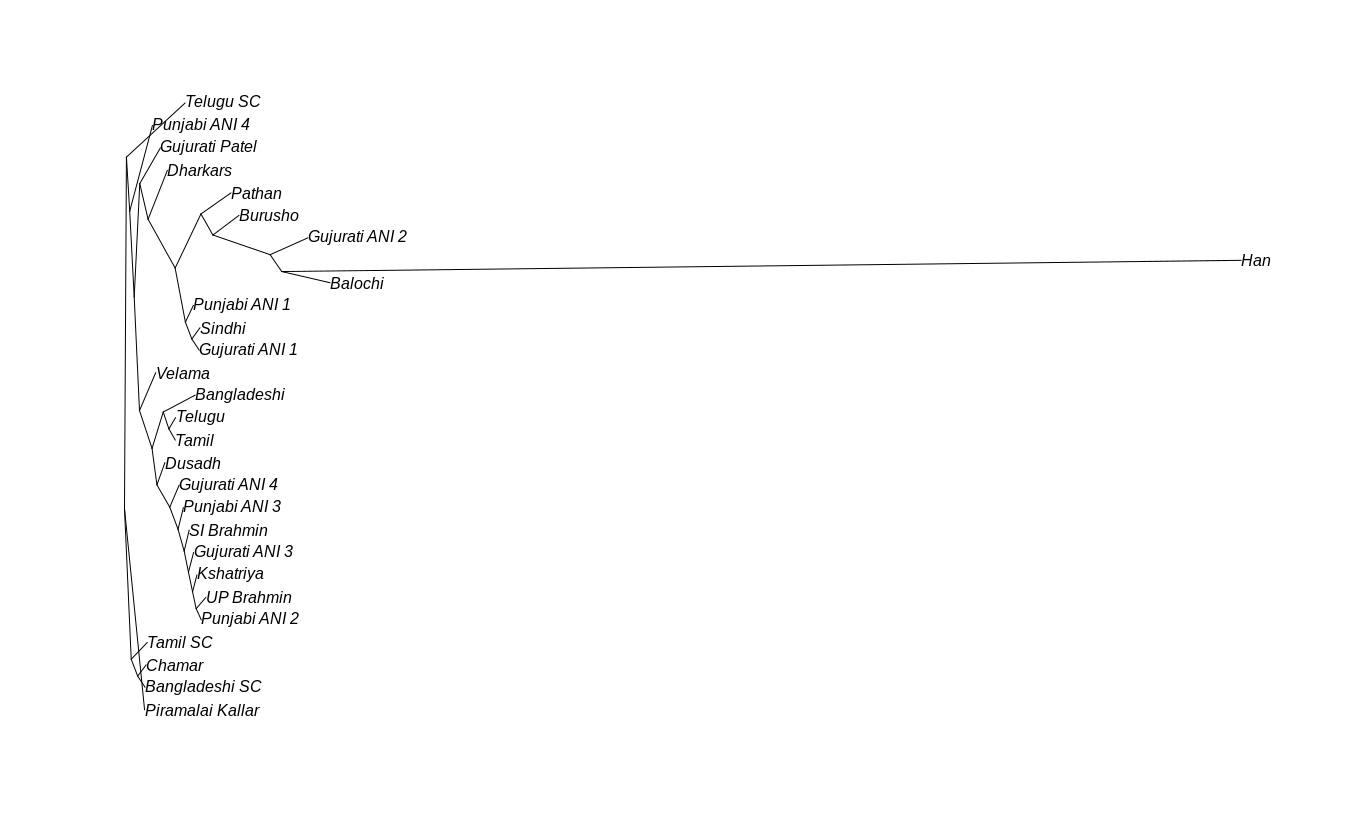
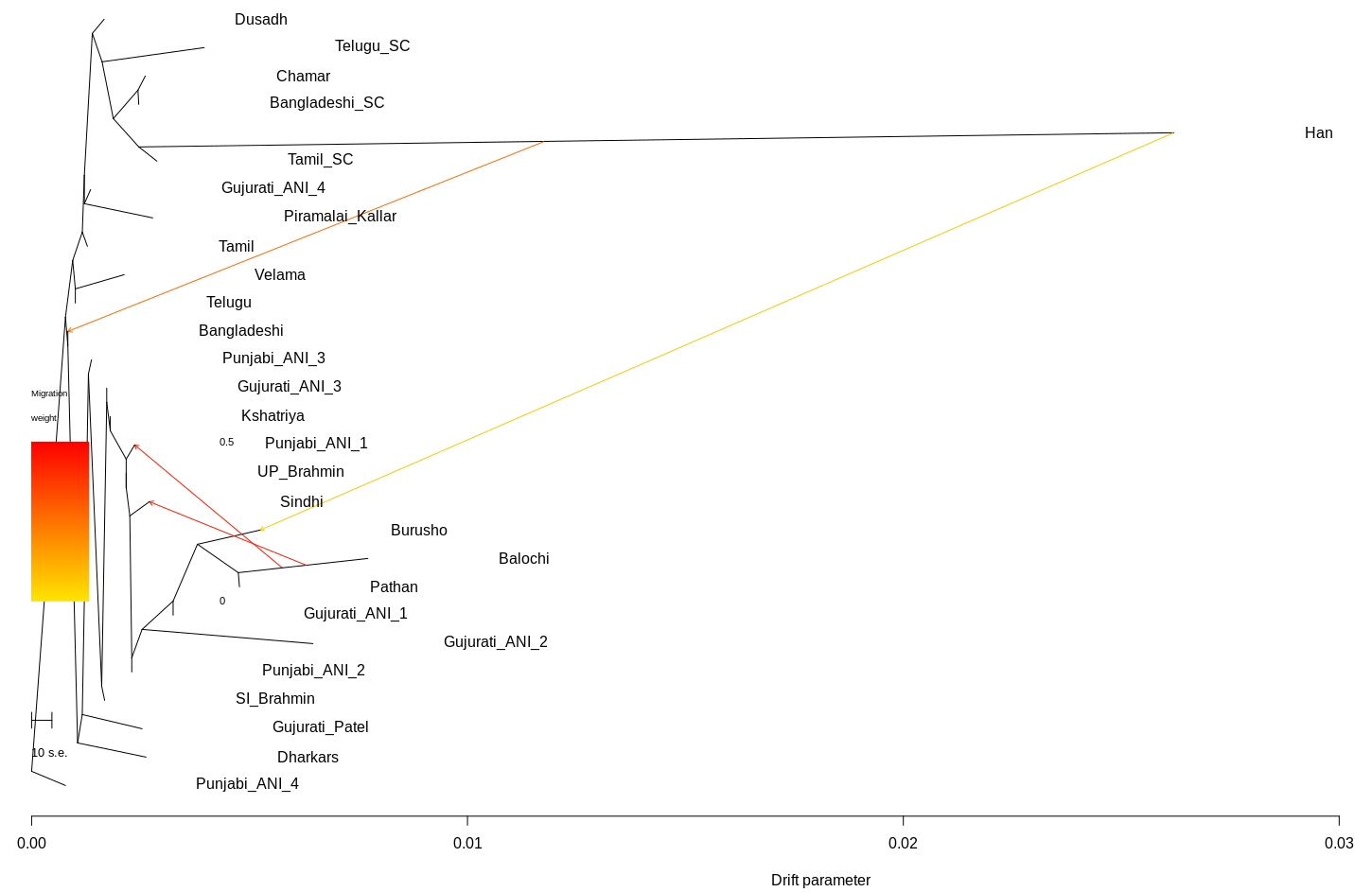
That’s about it from me. Below are some genetic plots.
South Asian nationalism


I happen to have Saloni’s genotype and she is certainly closer genetically to Sindhis than to most other South Asians. That being said, my own response to her tweet is this: my personal experience is that many liberal Pakistani & Indian Americans are highly nationalistic.

To be honest, it’s mostly Indian Americans. I don’t know too many hyper-nationalistic Pakistani Americans. I think that has to do with the fact that despite India’s social-political problems, its democratic and pluralist history, along with the international appeal of Mahatma Gandhi, makes it easier to be an Indian nationalist than a Pakistani nationalist if you are an American.

Also, there is a cultural “code-switching” that is common among Indian Americans, where they are fluent in, and totally embedded within, a Left-of-centre cultural zeitgeist in the American landscape. But, they also are comfortable switching into their parents’ more Indian nationalist views in different contexts. Rather than synthesizing the two worldviews (which may not be possible), Indian Americans just switch facultatively between the two, because the two social milieus never really engage each other.

Because I am Bangladeshi American it is hard for me to relate. Bangladesh is a very young nation. Both my parents have spent more than 3.5 times of their life living in the United States than an independent Bangladesh. In fact, both lived as Pakistanis for far longer than they lived as Bangladeshis! Additionally, it is not a major geopolitical player, and there are ambiguities with the relationship to both India and Pakistan enough that socially my family has felt comfortable with both Indians and Pakistanis in the USA.

P.S. I do get annoyed when I’m identified as Pakistani American by people just because of my last name. Since I am not vocal about being a “Bangladeshi American” I only find out later people had assumed I was Pakistani. Apparently, in some Indian circles, I am known as a “Pakistani American geneticist”, albeit not a particularly nationalistic Pakistani (told to me by an Indian journalist friend).

How English is taking Over

De Swaan divides languages into four categories. Lowest on the pyramid are the “peripheral languages”, which make up 98% of all languages, but are spoken by less than 10% of mankind. These are largely oral, and rarely have any kind of official status. Next are the “central languages”, though a more apt term might be “national languages”.

These are written, are taught in schools, and each has a territory to call its own: Lithuania for Lithuanian, North and South Korea for Korean, Paraguay for Guarani, and so on.

Following these are the 12 “supercentral languages”: Arabic, Chinese, English, French, German, Hindi, Japanese, Malay, Portuguese, Russian, Spanish and Swahili – each of which (except for Swahili) boast 100 million speakers or more. These are languages you can travel with. They connect people across nations. They are commonly spoken as second languages, often (but not exclusively) as a result of their parent nation’s colonial past.

Then, finally, we come to the top of the pyramid, to the languages that connect the supercentral ones. There is only one: English, which De Swaan calls “the hypercentral language that holds the entire world language system together”. The Japanese novelist Minae Mizumura similarly describes English as a “universal language” . For Mizumura, what makes it universal is not that it has many native speakers – Mandarin and Spanish have more – but that it is “used by the greatest number of non-native speakers in the world”. She compares it to a currency used by more and more people until its utility hits a critical mass and it becomes a world currency. The literary critic Jonathan Arac is even more blunt, noting, in a critique of what he calls “Anglo-Globalism”, that “English in culture, like the dollar in economics, serves as the medium through which knowledge may be translated from the local to the global.”

Behemoth, bully, thief: how the English language is taking over the planet

This article seems a bit tired and the entire tone of the Guardian moaning the supremacy of the English language reminds me of the whole furore over white privilege, sometimes it’s simply an exultation that one has it.

Even though I’m writing this in English I don’t think English is taking over; it’s simply reflecting the Anglo-American supremacy from Queen Vic to QE (Trump represents the high water mark of this era).

As China grows in power; 1 point something billion Chinese aren’t going to magically shift to English. Furthermore beyond the Old Commonwealth (the White Dominions + US); English gains its prominence from its usage in the New Commonwealth (Africa & Asia).

One shouldn’t underestimate the importance of a Lingua Franca but neither extol or exaggerate its significance. Just as the Dollar can be easily replaced so can the English language.

As a final thought this is why my idea on Languages + Script = Civilisation is so important (if I say so myself).

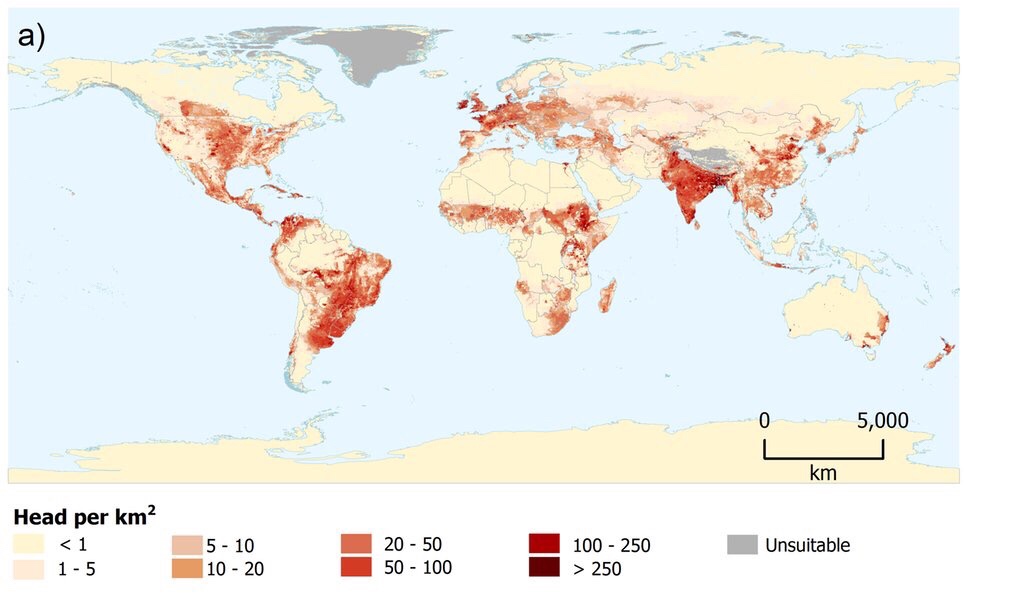
Density of Cows Worldwide

I have been wondering this the past week is that how and why did India become vegetarian. Was it simply a theological quirk or were there some geohistorical reasons for it (the cow was such an economic necessity that it made sense to forgo protein). Was it also an Aryan feature or Dravidian or does that question make no sense?

Another thought that came to mind was that would ancient Indians have been wealthier had they been avid meat-eaters. If there had been lesser resources to go around the population densities would have been lighter perhaps but of course this pales in comparison to bad leadership.

As an aside I definitely concede the fact that more often than not local leadership is almost always better for the population than foreign dynasties. Therefore Hindu dynasties probably were better for India than Muslim ones simply because India was home for the former. The Mughal’s great accomplishments were in art and architecture, which may be very well for posterity but didn’t make them a match for the modern age in contrast to the Safavids who built Iran into a successful nation state.

I would hazard that Ashoka was probably a better Emperor of India than Akbar simply because the former gifted the world India’s most successful export, blue-eyed Buddha (believe it or not the Buddha had blue eyes). We sometimes forget that Buddhism probably ranks as India’s greatest accomplishment in the wider world; it transformed all Eastern religions and became the dominant philosophical paradigm for so much of the ancient world. It’s reflective of Western bias that Indian academics and historians are more concerned with ancient India’s influence on the modern West; the Mitanni were a footnote in history compared to the great accomplishments of Indic civilisation in the East.

However the reason why I think India never really matched China in national identity, sovereignty and political cohesion (even when the Chinese were ruled by foreigners they still managed to maintain their cultural coherence to a very great and recognisable extent) is simply because of caste. The greatest faultline in South Asia, after creed, is caste and that made Indian society vulnerable to foreign despots. The court of Mughal Kings is littered with Brahmins and Rajputs and let’s not forget Urdu was an invention of Khatris and Kayasths. The Brits didn’t only come up with divide and rule; the fissures were inbuilt Into Indian society.. The Sikhs achieved the dominance they did was because they welded a caste-light community to achieve assabiyah, which the different children of Brahma frankly eschewed from time to time. This is something to thank Pakistan and the Muslims; they are such a galvanising force for Hindu society to reconsolidate and shed away such internal divisions..

Interesting Links:

Food Writer Becomes A Butcher To Better Understand The Value Of Meat

Pakistan elects first non-Muslim in modern history to general national assembly seat

Only catastrophe truly reduces inequality, according to a historical survey

Brown Pundits