Noble White Men and the humble brag

I have read 3 articles/posts in the the past 2 weeks of woke white men decrying their “privilege.” It was in the most random of places; the first was Instagram (the artist), the second was a week or so later when I was messing around with Medium (the techie) and the third today was in a London magazine (the editor’s piece).

One is a famous artist, the other is an editor of a magazine and the final is a tech millionaire.

I have a pretty solid bullshit detector and these statements of guilt just set it off.

The hypocrisy in our public discourse has now become so intense that the privileged are learning how to twist it in ever more imaginative ways.

Like all of us I was born with an array of advantages and disadvantages. I recognise I’m Munafiq (a hypocrite) and I contain a ton of contradictions. I won’t make public statement feeling guilty about my privileges, which is simply a convoluted way to show off.

If I really felt bad about my privilege I would resign from my job and give it to the underprivileged. The fact that I don’t do that means I’m pretty ambivalent about my “privilege” (whatever it is) and I should stfu about it.

It’s ok to show, I do it too, but it’s in poor taste to show off and be morally sanctimonious about it.

Only the truly great are truly humble; Shah Rukh and Prince William have no need to show off because they are the Kings of East & West..

Father of the Bum

On 20th January, 1972, Chief Marshal Law Administrator and President of Pakistan—Mr. Zulfiqar Ali Bhutto—called a meeting of the country’s most eminent scientists in Multan. Pakistan had faced the ignominy of terrible defeat at the hands of Indian army a few months ago. Mr. Bhutto asked the scientists to start working on assembly of a nuclear bomb. While the experienced heads declined to commit to this venture, younger scientists unanimously responded that it could be done in five years. Mr. Bhutto was satisfied by the response and promised his help.

In July 1974, a letter arrived at the Prime Minister’s(Mr. Bhutto’s) secretariat from the Netherlands. The correspondent claimed to be a physicist working for a European nuclear consortium. He claimed to have obtained blue prints for a revolutionary new process involved in building a nuclear bomb. The person, let’s call him AK, was working as a technical translator for the multinational URENCO consortium. He had claimed in his letter of ‘writing innumerable research papers and an internationally renowned book’. Son of migrants from the Indian state of Bhopal,AK had been living in Europe for 13 years and was passionate about ‘debates about the Hindu ba**ards over the border who had ransacked his old home in 1947’. Mr. Bhutto tasked an Intelligence Agency to investigate the whereabouts of this mysterious scientist named AK. It was found that he had worked as Inspector of Weights and Measures for the Karachi post office in the 1960s, after obtaining a science degree from Karachi University. He left for West Germany for further studies and received an offer to attend a series of introductory lectures in Metallurgy in September 1962, by West Berlin Technical University. He moved, with his newly married wife, to Holland in 1963 and continued his education at Delft University. In his spare time, he used to write letters to European Newspapers and magazines that he felt had misrepresented Pakistan.

Mr. Bhutto was satisfied by AK’s track record and invited him to start the process of assembling a nuclear bomb for Pakistan. He was provided a laboratory to run and unlimited funding as well as official patronage. After smuggling different parts required for building the bomb from a plethora of countries, through not-so-legal channels, AK succeeded in completing the crucial step in manufacturing a nuclear bomb. The rest of hard work was done by Pakistan Atomic Energy Commission (PAEC), an organization that AK hated with a vengeance.
By this time, AK had developed an acute case of megalomania. AK’s psychiatrist at that time, Professor Haroon Ahmed mentioned in his reports that by this time, ‘he was suffering from depression, and was classically manic’. He used to boast, “Jinnah Built Pakistan but I saved it”. AK even had an intelligence team follow his Dutch Wife and daughters because he thought they were more loyal to Europe than they were to Pakistan. In 1984, he called a reporter at a local Urdu digest and asked him to send a list of questions for interview. He was so disappointed with the list that he threw it away and drafted his own set of questions. He asked himself: “What do you think was your greatest achievement?” and “Did the government recognize your contribution?” In February 1984, he called Nawai Waqt and used the same formula. He used to give charity to mosques and schools, all of which had to bear his name as ‘testimony to his greatness’. In 1986, he invited a journalist from a small-circulation weekly digest called Hurmat to interview him at his laboratory. It resulted in a series of articles and a biography full of accolades for Mr. AK. One of the articles echoed AK’s inner thoughts as “In order to overcome the energy crisis in Pakistan,
the Pakistan Atomic Energy Commission should be overhauled and its leadership should be handed over to this Mard e Momin of Iqbal”.

After Pakistan’s requirements for nuclear materials were fulfilled, AK started selling different parts as surplus to the highest bidder. He chose first Dubai and later Timbuktu as his operational base for nuclear proliferation. The Afghan War prevented United States to clamp down on his activities but the noose started tightening in the 90s. His footprints were all over the nuclear proliferation racket around the world, from Libya to Iran to North Korea, earning him the nickname “Typhoid Mary of Nuclear Proliferation”. In 2001, Musharraf was forced by the International community to get rid of AK and his crime syndicate, after two of AK’s ex-colleagues were found to have travelled to Afghanistan and met Osama bin Laden (OBL) there. Intelligence sources in India and US allege that AK co-owned Al-Shifa chemical factory in Sudan with OBL and OBL had financed construction of Hendrina Khan Hotel in Timbuktu. In 2004, AK apologized to the nation in a televised address for his “errors of judgment related to unauthorized proliferation activities”. Musharraf noted in his memoir, “The truth is that he was just a metallurgist, responsible for only one link in the complex chain of nuclear development. But he had managed to build himself up into Albert Einstein and Robert Openheimer rolled into one”.

The arrogant “Father of the Bomb” started writing elementary- school-style essays for a national newspaper few years ago, continuing his crusade against common sense and reason. He has made hundreds of factual errors in his “columns” over the years along with an attempted whitewash of history. His most recent diatribes have been directed against chairman of PAEC Munir Ahmed Khan and Dr. Abdus Salam, Pakistan’s only nobel laureate. AK has accused them of selling Pakistan’s nuclear secrets while comfortably ignoring his own efforts to sell the same secrets to the highest bidder.Without efforts of these gents, technicians such as AK would have miserably failed in the quest for nuclear bomb.These inneundos amount to slander and should be challenged in a court of law. Or perhaps, people living in stone houses should avoid throwing stones at others?
(previously published by The Nation. https://nation.com.pk/11-Aug-2014/father-of-the-bum)

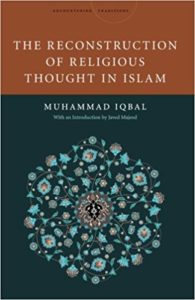
Review: The Reconstruction of Religious Thought in Islam

Allama Iqbal

In the late 1920s the Indian Islamist and poet Mohammed Iqbal delivered six lectures at Madras (to the Madras Muslim Association), Hyderabad and Aligarh, in which he set out his vision of the reconstruction of religious thought in Islam. Apparently Iqbal himself intended to write a second, larger book to be called “The Reconstruction of Legal Thought in Islam”, to which these lectures formed a sort of philosophical prelude.  That second book was never written, but the lectures were combined with a seventh lecture (“is religion possible”) that was delivered to the Aristotelian society in England, and published as a book “The Reconstruction of Religious Thought in Islam”.  By the time the book was published (first in Lahore in 1930, by Kapur Art Press, then with the seventh lecture included, by Oxford in 1934), Iqbal had been knighted for his services to the crown and was already a famous poet (in both Urdu and Persian) and was being honored by the Islamicate elite of India as their philosopher and thinker par excellence. Since this is the only work of philosophy that he ever composed after his PhD thesis, his status as a philosopher is heavily dependent on this slim volume.

The book is primarily targeted at contemporary Muslims, who were keenly aware of their weakness vis-a-vis Europe, as well as of their historic role as a “worthy opponent” that at some point in the past held the upper hand against Western Christian competitors. Iqbal’s primary mission here is not some open ended search for philosophical truth, it is the revival of Muslim greatness, the basic fact of which is taken for granted and is an element of faith. In his own words:

“I have tried to meet, even though partially, this urgent demand by attempting to reconstruct Muslim religious philosophy with due regard to the philosophical traditions of Islam and the more recent developments in the various domains of human knowledge.”

Like many other religiously minded thinkers of the day, he was also quite taken with modern physics and believed “the present moment is quite favorable for such an undertaking. Classical Physics has learned to criticize its own foundations. As a result of this criticism the kind of materialism, which it originally necessitated, is rapidly disappearing; and the day is not far off when Religion and Science may discover hitherto unsuspected mutual harmonies.”

In terms of his education and training, Iqbal was firmly in the Western philosophical tradition (tending mostly towards its German, orientalist, idealist and romantic currents) and like other Islamist modernizers, he took it for granted that the “Muslim world” has to come to terms with modern knowledge, but this was to be done from within the Islamic tradition and while maintaining the distinctive character of Muslim society. His grandfather may have been a Kashmiri Hindu (his son claims the conversion happened 400 years earlier) and it has been claimed that there were branches of the family that remained Hindu, but either because of this relatively recent conversion, or because of his mother’s strong Muslim faith, his commitment to Muslim separatism and supremacism was strong and unbending. He was willing to admire other traditions (including the learning of the Brahmins, about whom he has interesting things to say elsewhere) and learn from them, but they are always “other” traditions, about this there is never any doubt.

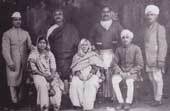
Iqbal’s (supposed) Hindu cousins
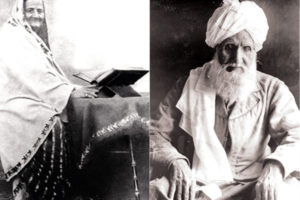
Mom and dad

The books is interesting, especially if you are philosophically inclined towards the “spiritual” and the mystical; on the other hand, if you are somewhere on the “new atheist” spectrum then the book can only be of historical interest. Even those who are willing to entertain metaphysical speculation should be aware that this is not a systematic philosophical text. All the central claims of the book are simply asserted (there is rarely any detailed argument showing why they are correct) and the historical views are very early 20th century, with the ghosts of Spengler and countless lesser writers hovering in the background. Entire cultures and historical epochs are summed up in ex-cathedra pronouncements of the sort that were popular in that age but seem to have fallen out of favor since then. For example  “the cultures of Asia, and in fact, of the whole ancient world failed because they approached reality exclusively from within and moved from within outwards. This procedure gave them theory without power, and on mere theory no durable civilization can be based”.

Always hovering in the background is his (not so original) view that history is progressive and something is gradually unfolding and developing as we move from ancient cultures (India, Greece, never China) to Islam to modern Europe. In this great drama, the “spirit of Islam” is essentially anti-classical and empiricist and it is Islam that created the foundations of modern science by introducing this attitude into humanity (“European culture, on its intellectual side, is only a further development of some of the most important phases of the culture of Islam”). This basically Hegelian view of history was all the rage in the circles that Allama Iqbal frequented (its echoes survive to this day), and if this is still your cup of tea, jump right in, Iqbal will not disappoint you. Continue reading Review: The Reconstruction of Religious Thought in Islam

Why do nonmuslims treat atheist muslims so badly?

This is a continuation of a series:

Please see from 1 hour, 3 minutes in. Nonmuslims treat atheist muslims horrendously; calling them Islamaphobes, racist, sectarian, bigoted, xenophobic, angry, intolerant, emotional. Atheist muslims are also accused by nonmuslims of generalizing their anecdotal experience and not knowing Islam–even if they have heavily studied the Koran, six Hadiths, Sura, Islamic jurisprudence and Islamic theology. Almost always the nonmuslims attacking atheist muslims know almost nothing about Islam.

Continue reading Why do nonmuslims treat atheist muslims so badly?

Bombay – the Billionaire’s playground

Vidhi & I were having a discussion whether Anand Piramal (Mukesh’s future son-in-law) was a Sindhi. We made the observation that while there are many Sindhi millionaires there just aren’t as many billionaires.

Sindhis are a “fast community”; they love to spend what they have. It might be because they are rootless cosmopolitans but that’s not the thrust of the post.

The peculiar pedigree of the business class

India’s particular nexus of politicians, cricketers, Bollywood and billionaire industrialists is creating an elite that’s unlike any other in the world. The American elite seems much more segregated (Zuck didn’t marry an actress) since it’s also divided into different cities (Manhattan, LA, SF etc).

Bombay is becoming a billionaires playground and all eyes on it as flit from funeral to wedding (within the same family – Anand Ahuja seems a fascinating character and an intriguing choice for Sonam Kapoor).

Stolen Loot in British Museum

Any artifacts out in the UK that should be returned.

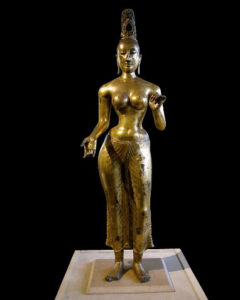
Gilded bronze statue of the Tara Bodhisattva, from the Anuradhapura period (8th century).

The Bodhisattva Tara. Gilded bronze, Sri Lanka, 8th century CE. With her right hand, the bodhisattva makes varadamudra, the gesture of charity or gift-giving, while her left hand may originally have held a lotus. The image is solid cast and would once have had semi-precious stone or crystal inlaid eyes. The niche in the head-dress would have contained a figure of a Dhyani Buddha. This sculpture was found on the east coast of Sri Lanka between Batticaloa and Trincomalee and is evidence of the presence of Mahayana Buddhism in the Anuradhapura period of Sri Lanka. These doctrines are generally more associated with the north of India. Given by Sir Robert Brownrigg.

I like the word “Given”.  Robert Brownrigg, was Governor of Ceylon who finally captured the Kandyan Kingdom

https://en.wikipedia.org/wiki/Buddhism_in_Sri_Lanka#/media/File:British_Museum_Asia_45_(cropped).jpg

Carbon Steel and Zinc in India

Inspired by a comment by bharata bharatavanshi.

Zinc: 
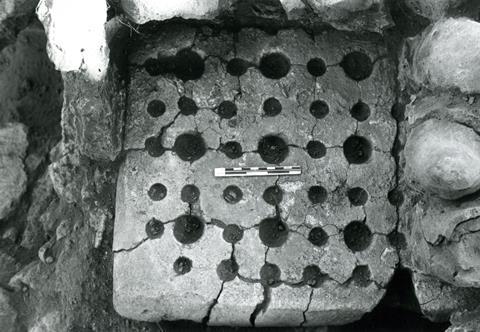
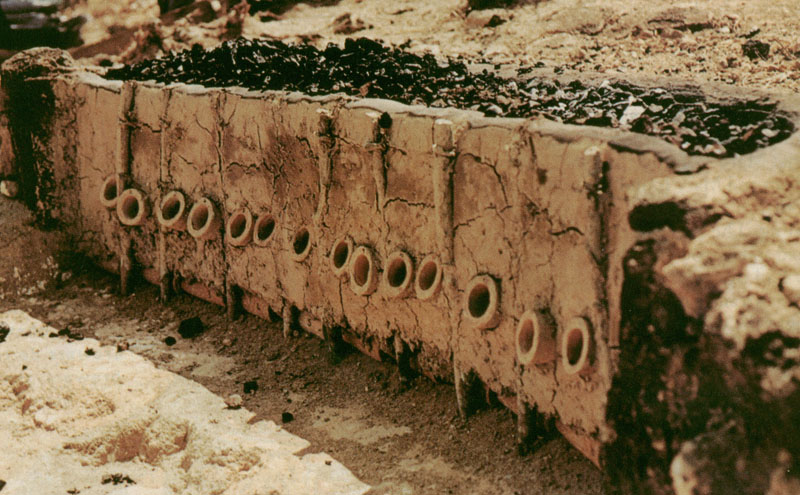
The production of zinc by conventional smelting methods presents considerable difficulties; instead of a liquid metal forming at the base of the furnace, zinc forms a highly reactive vapour (with a boiling point of 913°C) which exits the top of the furnace and promptly re-oxidises. Clearly, some method of containing and condensing the vapour out of contact with the air was needed
1217CW - Science in India - Plate 6.12
By the early second millennium AD, these descriptions had become more detailed. The retort was to be shaped like a brinjal, or aubergine, the condenser shaped like a datura, or thorn apple flower, and the zinc ore was shaped into small balls, still using the exotic organic ingredients.

Carbon Steel (Wootz)

The Carbon steel from India and Sri lanka are thought to be source for the famed Damascus Steel Swords, used by Saladin to defeat the Crusaders.

It is the pioneering steel alloy matrix developed in Southern India in the 6th century BC and exported globally. It was also known in the ancient world by many different names including Wootz, Ukku, Hindvi Steel, Hinduwani Steel, Teling Steel and Seric Iron.

Wootz steel originated in India. There are several ancient Tamil, Telugu, Greek, Chinese and Roman literary references to high carbon Indian steel since the time of Alexander’s India campaign. The crucible steel production process started in the 6th century BC,[citation needed] at production sites of Kodumanal in Tamil Nadu, Golconda in Telangana, Karnataka and Sri Lanka and exported globally; the Tamils of the Chera Dynasty (Kerala) producing what was termed the finest steel in the world, i.e. Seric Iron to the Romans, Egyptians, Chinese and Arabs by 500 BC. The steel was exported as cakes of steely iron that came to be known as “Wootz”. Wootz steel in India had high amount of carbon in it.

The Chinese and locals in Sri Lanka adopted the production methods of creating wootz steel from the Chera Tamils by the 5th century BC. In Sri Lanka, this early steel-making method employed a unique wind furnace, driven by the monsoon winds. Production sites from antiquity have emerged, in places such as Anuradhapura, Tissamaharama and Samanalawewa,

http://wilpattuhouse.com/MiscStuff/juleff-monsoon-steel.html

Steel

1900’s: Betrayal and change in China’s Perception of the West

To China: a few excerpts from a moonofalabama post.  Link is at bottom of post.  Short on words.  Read somewhere, Chinese appear to be rude and abrupt.  Apparently in China, it is rude to take up another’s time.  Once you know Chinese well they can be quite chatty. In Sri Lanka (and SA I assume) ask for direction, and they want have a long conversation on random stuff. Ahh, cultural differences.

I was under the impression the Chinese did not have westernized elite like South Asia (e.g Jinnah,Nehru, SWRDB). I had read about Sun Yat Sen, first President/Prime Minister and about his being kidnapped in the UK from one of my fathers book.  From the short article and little more digging, there was an Westernized Chinese elite.  However,  the west did not honor agreements (whats new) brokered by this Westernized Chinese elite.  I think as a result the influence of this Westernized Chinese elite was marginalized and repudiated.  Here are two examples of Westernized Chinese elite.  Wellington Koo, International law and diplomacy PhD (1912) from Columbia University. His wife Hui-Lan ‘Juliana’ Oei (Madame Koo) apparently was one of the first ladies to indulge in civilian flying and drove her own motor car about London…a little grey two-seater Rolls Royce.

http://www.moonofalabama.org/carlzha/cz02.jpg

To the excerpts
99 years ago, on May 4th 1919, the original Tiananmen student protest broke out. The students protested the Allied Powers’ betrayal at Versailles: The German Shangdong colony was given to Japan instead of returning it to China. This despite China’s sending of 140,000 men to work on the Western front.

Germany took the port city of Qingdao (Tsingtao) on the Shangdong Peninsula where they brought over beer tech giving birth to Tsingtao Beer.

In 1890 Germany played a leading role in attacking the Chinese capital Beijing to suppress the Boxer Rebellion together with the 8 Nation Alliance of Britain, France, United States, Germany, Italy, Russia, Japan and Austria-Hungary.

As World War I wore on longer than anybody expected, the Allied Powers faced acute labor shortages. Britain came up with a scheme to recruit Chinese labors. But China was neutral so she had to be persuaded to join the war.  China wanted to have the German Shangdong colony returned. Entered U.S. President Woodrow Wilson. Wilson asked China to join the war and promised support for China to gain Shangdong back after Germany’s defeat.

While the young republican China sees Britain and France as ruthless Imperial Powers, it has an enormous regard for the U.S. which it hopes to model itself after. Top Chinese diplomat was the American educated Wellington Koo. Madam Koo, an international style icon, popularized Cheongsam/Qipao dresses.

China did as Wilson asked, entered the war against Germany and send 340,000 men to help with the Allied war effort. 140,000 went to the Western Front, 200,000 went to Russia. Chinese comprised the largest non-European labor force on the Allied side during World War I. On the Western front, the 140,000 Chinese labor were know as the Chinese Labour Corp. They dug trenches, worked in timber yards, build steamers, repair railroads. 6,000 were even sent to Iraq to work in Basra.

Unbeknownst to China, while China joined the war on the allied side at the U.S. urging, hoping to gain back Shangdong province, the U.S. and Japan signed the secret Lansing-Ishii Agreement in 1917 where they recognized each other’s special ‘interests’ in China. Japan’s interest is the German colony Qingdao. Fully believing Woodrow Wilson’s promise of self-determination, the top Chinese diplomat Wellington Koo, who won the Columbia-Cornell Debating Medal in his American school days, argued passionately for the return of the Shangdong Peninsula at the Paris Peace Conference.

The Soviets saw a chance to draw China away from the West and into their camp. They leaked details of the secret U.S.-Japan Lansing-Ishii agreement to Eugene Chen in Paris, who then leaked it to the Chinese press. Furious Chinese students took to street to protest at this betrayal especially by the U.S.

Japan then threaten to veto the League of Nations, which would not work without Japan, unless … the U.S. agreed to give Germany’s former Shangdong colony to Japan. Wilson dutifully complied and decide to honor the Lansing-Ishii agreement, selling the Chinese down the river.

Disillusioned with the West and seeking for an alternative political model leads some to look to the newly found Soviet Union. Two leading intellectuals of the May 4th movement, Li Dazhao (left) and Chen Duxiu(right), co-founded the Chinese Communist Party. While heading the Peking University library, Chinese Communist Party co-founder Li Dazhao would influence a young student working there. His name was Mao Zedong.

http://www.moonofalabama.org/2018/05/the-historic-background-of-chinas-perception-of-the-west-by-carl-zha.html#more

Brown Pundits