
Does Colonialism work? . . . metrics to evaluate colonialism

The ever perceptive Zachary Latif asked the question of whether colonialism works. I think this needs to be evaluated on a case by case basis. How to evaluate the success of colonialism? Here is one way to evaluate the success of colonialism:

  • 90% colonization of the mind
    • Has colonization improved the character and self confidence of locals?
    • Or has colonization harmed the character and self confidence of people by creating inferiority complexes and causing locals to turn against each other?
  • 9% strengthening and forming local institutions
    • This includes efficient, effective and fair judicial systems; capable police, capable armed forces, capable other civilian governance institutions. Where “capable” means that institutions provide significant capacity to the government at a reasonable cost relative to services rendered.
    • This also includes capable religious, spiritual, charitable, business association, art, cultural, press, advocacy and other civil society organizations.
    • Additionally includes quality private sector business institutions.
  • 0.9% human capital
    • Don’t need to explain why educated local people benefit the local economy
  • 0.09% physical capital
    • Access to quality and market priced transportation, telecommunications, energy, utilities, tools. Including access to efficient capital markets with a low risk adjusted cost of capital. It matters little who owns physical capital (whether “oppressor” rich people or “oppressor” foreigners); only that it accessible to all economic participants at market prices.
  • 0.01% everything else
    • This includes all income or wealth transfers [theft]; or “oppression” as defined by post modernists. Why does this not materially matter? Because income, wealth, product development, process innovation can be easily created by a team of people with character, health and intelligence. Humans have infinite potential inside them . . . the spark of transcendence. A team of humans can transform and improve the world.
      • Character is defined as love in action, self confidence, purity, authenticity, few vibrations, fluctuations, traumas in the subconscious. In Sanskrit this is called “Chitta Shuddhi”.

How have English colonizers done in their colonization of the minds of their imperial subjects? It is a mixed record at best.

One negative example is exporting post modernism to colonial subjects. “Post Modernism” or “structuralism” were created by Ferdinand de Saussure and his students as a way to deconstruct colonized peoples, causing them to be embarrassed by, hate and reject their ancient history, civilization, culture, religion, spirituality, art, literature, institutions, ancestors and elders. Post modernism divided colonized peoples into many categories of oppressed and oppressors (mostly manufactured irrational concepts) to turn different groups of people against each other; implying that power oppression rather than meritocratic competence defined local hierarchies. Another objective was to create inferiority complexes by brainwashing people with the lie that they were weak, oppressed and unable to manifest their own miracles. Today post modernism heavily influences academia, government and institutions inside most developing countries.

Sadly post modernism was one among many subtle sophisticated tools used by English colonizers to create inferiority complexes among their subject peoples. Another was creating local education systems that discouraged creativity, thinking different and problem solving; while encouraging clerk Babu style rote memorization and repetitive unthinking work.

A positive example would be exporting classical liberalism to colonized peoples. Classical liberalism is partly inspired by eastern philosophy. Ancient Greece is a branch of the ancient eastern Arya civilization. Greek philosophers were again deeply influenced by the east during the time of Alexander the Great circa forth century BC. 15th to 18th century AD European renaissance enlightenment was partly inspired by reading eastern texts.  However, Europeans implemented classical liberalism in their own societies (whereas these ideas remained more theoretical in the East) and inspired people all over the world to practice classical liberalism.

Different people can draw their own conclusions about the benefits and costs of colonization for local peoples in specific instances. However I would hope that they heavily weight the colonization of the mind in their calculations.
Does Colonialism work?

Colonialism can work – just look at Singapore

It is now a rich country in which most of the population lives in municipal housing while their children attend excellent state schools. There is a further crucial difference from the colonial past; Singapore now holds elections to choose its leaders. This was not the case until near the end of British rule, when the colony was allowed a measure of self-government.

But the Singapore story also shows us the price societies pay when their rulers make use of the tools colonial authorities left behind. Under British rule, detention without trial was used to stifle the threat of communism while a licensing system kept the press contained. As many Singaporean dissidents have argued, Singapore has embraced this illiberal colonial tradition to create a tightly controlled modern state.

The consequences are a country that, while wealthy, has a chilling climate for free speech and no independent trade unions. While Singapore does hold elections, there is little space for opposition politics – human rights groups say defamation laws have frequently been used to silence opposition voices.

I’ll share my thoughts later on.

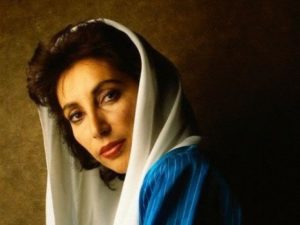
Shaheed Rani. Hasan Mujtaba’s Poem for Benazir Bhutto

The poet Hasan Mujtaba wrote a famous poem on the occasion of Benazir Bhutto’s martyrdom (December 27th 2007), and it is an absolute classic. I have translated it with his approval  (the full urdu text is here, and it also posted at the end of this post):

How many Bhuttos will you kill?

A Bhutto will emerge from every home!

This lament is heard in every home

These tears are seen in every town

These eyes stare in the trackless desert

This slogan echoes in every field of death

These stars scatter like a million stones

Flung by the moon that rises so bright tonight

How many Bhuttos will you kill?

A Bhutto will emerge from every home!

Continue reading Shaheed Rani. Hasan Mujtaba’s Poem for Benazir Bhutto

Will the US Continue to Attract International Science Talent?

We had a little discussion on Twitter about this topic. It was triggered by this post by Sam Altman @Sama, (about increasing political censorship of heterodox ideas in Silicon valley) but became a more general argument about US competitiveness and ability to attract talent, especially scientific talent. I just wanted to put a few random thoughts and questions out there, in the hope of enlightening feedback.

Clearly the US is still the world’s number one destination for exceptional scientific talent. But this is just year one of the reign of the mad king and already there are many reports of racist and bureaucratic obstruction of visas and suchlike (being both racist and bureaucratic, this process naturally has limited connection to rational priorities). There is also the general decline of US reputation across the globe (whether it reflects the reality of US life and to what extent, these are separate issues; the perception itself would likely influence SOME aspiring migrants). This is one (obvious) side of the story. There is also an attack from the Left flank (see below). Continue reading Will the US Continue to Attract International Science Talent?

Bahá’ís & Pakistan

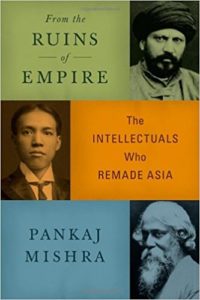
In Omar’s excellent post I was reading his dissection of Pankaj Mishra’s latest book. It was quite funny as I was reading it (and disagreeing with Omar in the role of Muslim power in South Asia, the Mutiny was done in the name of the Mughal Emperor not some petty Maratha, Rajput or Sikh despot) I thought to myself at least nothing was written about the Bahai Faith. Literally as I thought it then came to the section about Jamal-Uddin Afghan, the Babis & the Bahá’í Zarthushti Yazdi emigres to Bombay (my grandmother’s people).

Since I am a Baha’i it’s important on such sensitive matters to always make sure that the correct perspective is shared for no misunderstanding. As an aside the best way to see Urdu is like the Taj Mahal; the supreme symbol of the glories of Muslim-Mughal India. Hindi can be likened to the reconstructed Ram Temple (Inshallah) on the debris of Babri Masjid; gaudy, tacky & built on the ashes of something so beautiful but now sadly forgotten by an angry minority.

I usually am quite a fan of Pankaj Mishra (he makes a lot of sense tbh) but I don’t see the need to slander the Babis & Zarthustis in reference to Jamal-Uddin Afghan.

Of course in 1850 the Bab had been executed and the Babi community was in disarray. The interregnum, is to speak, only came to an end in 1863 when Baha’u’llah proclaimed his Station in the Garden of Ridvan in Baghdad (the King of Festivals).

While it is satisfying to note that so many South Asian Muslim philosophers (JA, Allaja Iqbal, Ahmediyyah) were so impacted by the Bahai Faith (& it’s earlier predecessor Babi religion wholly subsumed by the Baha’i Faith) it is sad to see that they followed the wrong path and stayed as Muslims in Islam (the Bab almost immediately abrogated the Holy Quran so we had diverged from Islam almost immediately on inception). Characters like the above sort of remind me of the desi equivalents Anakin Skywalker or Kylo Ren, exposed to the Force but instead opting for the Sith..

It is also interesting to note the strong intellectual relationship between Iranian thought and the South Asian Muslim community. The febrile atmosphere of the 1840’s-1850’s (where Babism was feared to have consumed Persia) had such strong impacts on the precursors of the Pakistan movement (it could be why the Pakistani Baha’i community are an especially patriotic community).

Incidentally Bahá’ís are only reviled in Iran (& it’s client state Yemen) but otherwise in the wider Islamic world they fare pretty well. Pakistan is especially tolerant and credit to Pakistan that it was a conduit for fleeing Iranian Bahá’ís in the aftermath of the Iranian Revolution.

The Bahai community owes a great & everlasting debt to Pakistan.

Of course this is not to negate that the largest Baha’i community in the world is in India and our beloved Lotus Temple is in New Delhi (as Old as me; 33yrs from 1984).

As always the Faith bridges the divide; maybe India & Pakistan will only heal through the balm of Baha’u’llah.

Review: From the Ruins of Empire; The Intellectuals Who Remade Asia

This was a long rolling rant I wrote 5 years ago while reading Pankaj Mishra’s book “From The Ruins of Empire; The Intellectuals Who Remade Asia“. The format is that I commented as I read the book. So early parts are comments on early chapters and so on. Quotes from Pankaj are in bolded italics. I am reposting today after editing it a little because the topic came up once again.

Spoiler Alert. since the “review” is really a very long rolling rant, written as I read the book, some people may just want to know this one fact: this books is NOT about the intellectuals who remade Asia. That book would have to start with people like Aizawa in Japan, the first Asian nation to be “remade”, but that is one nation and one set of thinkers you will not find in this book. Why? because this book is not about Asia, its history or its renaissance, it is about post-liberal virtue signaling. For details, read on..

Introduction: After being told that everyone from Orhan Pamuk to Pakistani Ambassador (and liberal feminist Jinnahist icon) Sherry Rahman is in love with Pankaj Mishra’s new book I have finally started reading it.
I have only read 50 pages so far but it is beginning to set a certain tone. And its not a very encouraging one. I am not impressed. At all. So Far.

On  page 18 he says: the word Islam, describing the range of Muslim beliefs and  practices, was not used before the 19th century. 
WTF?

This is then negated on the very next page by Mishra himself. The only explanation for this little nugget is that Pankaj knows his audience and will miss no opportunity to slide in some politically correct red meat for his audience. There is a vague sense “out there” in liberal academia that Islam is unfairly maligned as monolithic and even that the label itself may be “Islamophobic”. Pankaj wants to let people know that he has no such incorrect beliefs. It is a noble impulse and it recurs. A lot. Continue reading Review: From the Ruins of Empire; The Intellectuals Who Remade Asia

The Indian Political Service (Raj era)

There is not much known about Indian Political Service (IPS); a service that was involved in three important areas of Empire.  It was part of indirect control of Indian states, frontier areas and peripheral areas of the Empire in Persia and Persian Gulf states.  Following was part of an exchange on the subject.


Indian Political Service (IPS) is a very little studied subject.  My two cents worth comments bolded in the main text.  Hope that adds some additional flavor to a savory dish.


Hamid

ASPIRING FOR THE INDIAN POLITICAL SERVICE – A CASE STUDY OF A FAILED ATTEMPT

By Maj Gen Syed Ali Hamid (Retd)


Syed Shahid Hamid was commissioned from Sandhurst in 1933 and joined 3rd Cavalry a recently Indianised regiment in which he spent six years. The second half of this term were not easy as he did not get along well with the second-in-command who was subsequently promoted to command the regiment. Since there were no vacancies for Indian officers in the other two Indianised cavalry regiments, Shahid sought an entry onto the hallowed ranks of the Indian Political Service (IPS).

The IPS was the cadre of officers which dealt with the Princely States and foreign affairs of the Government of British India. Its genesis lay in a department which was created in 1783 by the East India Company for conducting “secret and political business”. Since in the India of that period Persian was the language of diplomatic correspondence, the head of the department was known as the ‘Persian Secretary’. Its primary responsibility was dealing with the Princely States through British Residents appointed from the Department. It also housed the officers of British India’s diplomatic service i.e. its emissaries to the countries surrounding India and the Trucial States in the Gulf. (The early organization performed various functions including intelligence gathering, diplomatic and foreign affairs.  The Secret & Political Department established in 1784 had three branches; secret, political & foreign. This set up remained in place until 1842.  In 1843, the name was changed to Foreign Department.  In 1914, it was named Foreign & Political Department of the Government of India. In 1937, the title was changed to Indian Political Service.)The IPS cadre was generally referred to as Political Officers, or colloquially as “politicals”. Some famous names in the history of the Middle East served as Political Officers including Sir Percy Coxs who masterminded the British policy in this region during the First World War. (on frontier, the name ‘poltical’ in Pushto still generates an aura among tribesmen although they fondly remember British officers of a bygone era.) Continue reading The Indian Political Service (Raj era)

East Pakistan 1971

This topic comes up every year in December (for obvious reasons) and this year Dawn has published an unusually good summary of events (from a liberal/progressive/reasonable Pakistani POV) and Ahsan Butt has an excellent article about the thinking behind the genocide. You can read these, or read one of the many good books written about the events leading up to the Pakistan army’s surrender in East Pakistan. I have something of a personal interest in this subject (my father and two uncles served in various capacities in East Pakistan in 1971).  In this post, I just want to share my personal opinion about a few aspects of this story. This will likely upset many people, both in Pakistan AND Bangladesh, but my aim is not to upset people, just to get as close to the truth as possible. So here goes..

How many people were killed in East Pakistan and who killed them?

This question gets debated every year; Bangladesh says 3 million Bengalis were killed by the Pakistani army in one of the great genocides of the 20th century. Pakistani nationalists either deny the killings altogether, or insist that “only a few thousand” were killed (which is pretty awful in itself, when you think about it) and that shit happens in civil wars, everyone should move on. In addition, Pakistanis also blame the Bengalis in turn for two separate rounds of killings. The first one in March 1971 when Bengali mobs are accused of killing West Pakistani civilians and Biharis during the civil disobedience phase of events and a second (and bigger) round of killings that took place after the Pakistani army surrendered, when the Mukti Bahini and Bengali mobs took revenge against collaborators and against the Bihari community in general.  

The army’s refusal to call a national assembly session after the Awami League had won the elections led to province wide and near-total civil disobedience in early March 1971; civil disobedience was so complete that the military leadership was unable to find a Bengali judge willing to administer the oath of office to their new governor; banks, post offices, civil administration, everything ground to a complete halt; cantonments were running short of food because no one would sell it to them. The Biharis were Indian immigrants (mostly, not exclusively, from the state of Bihar; they were Urdu speaking, generally leaned Islamist, and supported the army during its crackdown against the Bengalis; many of them joined special “Razakar” (volunteer) groups that fought alongside the Pakistani army and served as their eyes and ears. Many of their members also took the opportunity to settle personal scores and grab Bengali (especially Hindu Bengali) property. Biharis also played a disproportionate role in  two paramilitary organizations set up by the Islamist Jamat Islami party (Al Shams and Al Badar) whose members did much the same as the razakars, but with far greater enthusiasm and ideological commitment. Incidentally, both the razakars and  AlShams and Albadar did have Bengali members, though this is now underplayed in Bangladeshi historiography.  The Jamat e Islami related groups (Alshams and Albadar) are also the prime suspects in a major crime that occurred on the eve of surrender, when many leading Bengali nationalist and progressive intellectuals in Dhaka were mysteriously picked up and killed, most likely as a heinous and calculated attempt to “decapitate” the new state whose independence seemed to be imminent.

So who is telling the truth? No one will ever know with total certainty because the opportunity to systematically examine these events, interview survivors, collect records and produce statistics was lost in the chaos that followed the independence of Bangladesh. What follows is my personal opinion, based on all that I have read and heard: Continue reading East Pakistan 1971

Anushka Sharma – Virat Kohli wedding

So we used the same video company (Wedding Filmer) and Anushka Sharma wore a similar shading and walked to the same song for the pheras as my wife did ??

Coincidence much?

Brown Pundits