Major Amin on Pan-Islamism and Afghanistan, etc

Of historical interest. An old letter to the editor that Major Amin wrote in 2001 before 9-11 happened. At the end I have also added an excerpt from his book (written in 2012) about the grand American strategic failure in Afghanistan.

Letter to the Editor, from Major Amin (in response to some story about Chechens and our Islamic duty to help them). 

The Afghanistan analogy is not applicable to Chechnya. TheRussians withdrew from Afghanistan not because they weremilitarily defeated but because Gorbachev rightly assessed thatstaying on was not cost effective (Pages-207 & 208- Out ofAfghanistan-Cordovez and Harrison-Oxford-1995). Chechnya is analtogether different case because Russian presence there is costeffective because of Chechen oil! The political situation in Russia isonce again stabilising. The Communists are once again regainingstrength while Putin is likely to emerge as a strong statesman. Noamount of statements from the OIC can change the situation. If theRussians are ignoring the OSCE and USA why should they botherabout OIC! Why should Iran surrounded by three hostile or potentially hostile neighbours and one super power which every yearallocates funds to destabilise Iran antagonise the Russians ; theironly trustworthy ally!

Where is Islam in case of Kurds! How many Kurds have diedfighting Iranian Iraqi and Turkish armies since the last one hundredyears! I think ten times more than total number of Chechens killedfrom January 1999! Where is the Islam of the Islamic Contact Groupin case of Kurds who are condemned for eternity to be subjects ofIran, Iraq and Turkey. The first modern Chemical Warfare attackwas carried out against the Iraqi Kurds during the Iran-Iraq war!Where was Islam when genocide was committed in 1971 by aMuslim (a misconceived misnomer!) Army against the BengaliMuslims! Religion, ideology etc is nothing but cheap toolsemployed by the ruling elite to galvanise and drug the masses! Themiddle class and the feudal clique of UP and Punjab becameinterested in Muslim separatism only once their class interests werethreatened with competitive examinations and concepts of Britishdemocracy! The same was true for the Hindu middle and businessclasses that joined the congress! They thought that they would

succeed the British Viceroys in ruling entire India! Hinduism wasonly a slogan, just as was the case with the Muslim elite! Religion isa good slogan but only a slogan! Democracy ends immediatelywhen Muslims leave the Mosque! Lip service is paid but that iswhere Islam ends!

It will be good for our intellectual health if we forget about PanIslamism and try to set our own house in order! So far we havemiserably failed even to stay as one nation in case of East Pakistan!Today we have the smaller ethnic group’s issue which is intricate aswell as genuine and demands good statesmanship which is sadlylacking both in India and Pakistan ! Both have been termed as ‘failedstates’ by political scientists ! Both have a history of using coercive power of a modern state against smaller ethnic groups e.g. Kashmir1989-2000, East Pakistan-1971 , Balochistan 1958-64, Balochistan1974-77 etc etc. Both the states have been steadily involved in anarms race that will end only once a war limited or total is finallyfought . A dispassionate study of history proves that men are butvictims of currents of history and cannot change the tide of history!Europe learned its lesson after two world wars and is saner ! Chinalearned its lesson from 1911-1949 and is now saner ! UnfortunatelyPakistan and India have fought small wars ; petty skirmishes bywestern standards in which total casualties of each side was less than10,000 killed. That is why both have hawks; theoretical hawks Iwould say; arm chair strategists; Don Quixote’s who think thatKashmir can we won (Pakistan) or retained (India)! The motivationof the ruling elite on both sides is ulterior! Its not ideology Islam orsecularism but ego, powers, lusts for glory! Bismarck’s does not leadthem or Churchill’s but myopic men with limited vision, short-termgoals and personal agendas advised by dark horse adventistintelligence agencies! Sundarji called them blind men of Hindustan ;a better name may be ‘Blind men of Hind-o-Pak’! These are

shortsighted men who have not understood what General Shermansaid at Atlanta after the US Civil War i.e. ‘there are many a boyshere who think of war as glory, but it is hell!’ As a soldier I wish that both the countries should either fight it out so that we at leastdiscover (I would say rediscover or confirm as far as ex soldiers areconcerned!) The qualitative efficiency of our general officers orarrive at a settlement! Otherwise it’s a never-ending game of musicalchairs, which the ruling elite of both the countries is making thecommon man play! The qualities of generalship and mediocrity inhigher ranks on both sides have been well proved in 1947-48, 1965and 1971! 2000 if it proves decisive will inshaallah prove as noexception.

And lastly Pan Islamism is dangerous . It is better if we concentrateon setting our own house in order.

Major A.H Amin(Retired)

An excerpt from Major Amin’s book: 
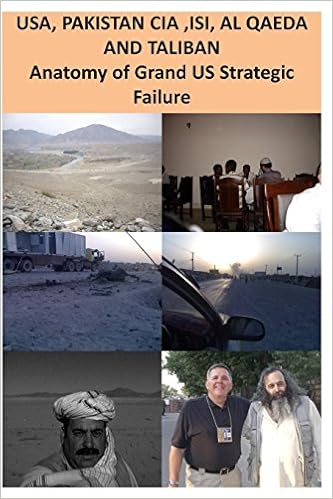
The Mullah who was at the lowest rung of the society was elevated and the traditional leaders of Pashtun society eliminated and destroyed. Basically the Pakistani leadership likethe usurper Zia comprised of men with humble origins preferred pliable Afghans withhumble origins who would obey the third rate ISI major again from lower middle classhumble origins.

Afghan resistance in Pakistan was thus led by Panjsheri puncturemen previously repairingtyres in Kabul , obscure and humble Mullahs like Haqqani and failed engineering universitydropouts with no tribal standing like Hekmatyar. It suited the Pakistanis and their Americanfathers to deal with non entities who could be moulded and manipulated.The Americans were funding people like Zia who was selling eggs to survive with 250 and400 milion dollars annually. It is a white lie to think that the Americans stepped in after theDecember 1979 Soviet invasion of Afghanistan.US and British assistance to the bastardchild Zia military regime started in 1978 and early 1979. The Pakistanis and Americansbrought all types of mad dog Islamists to Pakistan for the so called Afghan Jihad.Nowpeople like Bruce Riedel are blaming and attacking the same characters patronized by theUS in 1980s as Al Qaeda and Islamic extremists. Islamist volunteers were brought by theISI,CIA and Saudi GID to Pakistan because the Afghan mercenaries enlisted by the ISI werenot fighting as ruthlessly as their ISI handlers wanted them to fight. It is ironic that IslamicJihad was transformed into a global cause under CIA stewardship. Characters like HafizSeed , today topping the US hate list were groomed and gained prominence during the CIA-ISIGID Afghan war. HAMAS was established in 1987 with Abdullah Azzam as one of itsideals.

After 1989 Jihad in Afghanistan degraded into a Pakistani version of Jihad. The JihadsAmerican fathers had abandoned Jihad in 1989 after the Soviet withdrawal. The Iraq war of1991 was a watershed event. From 1991 Afghan war assumed a more Pakistani and Saudishape. Mujahideen were increasingly patronized and were replaced with Taliban who weremore rabidly Islamist Pakistani Saudi proxies.Again from the lowest and humblest sectionsof AfghanPashtun society.Men who would readily obey their ISI handlers without anydissent. Pakistans civilian prime minister Nawaz Sharif was an ISI creation and a man withlimited vision.The other civilian prime minister Benazir Bhutto was a subject of ISI blackmail thanks tosome scandalous material gathered by the ISI cheap operatives in the Zia era. BenazirBhuttos handpicked Interior Minister Naseerullah Babar was spiritual Godfather of the maddog Islamist Talibans in Afghanistan.

Benazir Bhutto had no control on Pakistans intelligence in both her tenures and the ISIdid as it pleased in Afghanistan and India.A sad reflection on a supposed secular andeducated prime minister who claimed that she was the best guarantee against Islamicextremism in the region. Hafiz Saeed now much hated by the CIA grew in stature inBenazirs two tenures as prime minister ! It is hilarious when one reads about Benazirsclaims as the wests best bet against Islamic extremism in her last book !

When the Americans ditched the ISI after 1989 , the ISI found a new patron in theKashmir Jihad in shape of China. The Chinese feared that an independent Kashmir would bea US base against China and had decided in late 1980s to support Kashmiri separatists whowanted accession with Pakistan.

The period 1988-2000 was the golden period of ISIs Kashmir War. Ex DG ISI LTG Ziauddinnarrated to this scribe that Pakistan Army regulars and ISI regulars were fully involved inthe Kashmir Jihad and participated in deep penetration raids in Indian Occupied Kashmir.Meanwhile the 8 years of Bill Clinton in the USA from 1992 to 2000 were a total foreignpolicy disaster and during these 8 years the US had literally no Afghan policy. MonicaLewinsky no doubt was a high priority for Bill Clinton. While Osama Bin Laden and Al Qaedatrained and regrouped in Afghanistan the Americans were just sleeping .But now theiranalysts like Riedel brand Pakistan as worlds most dangerous country. It is an ISI and CIAachievement that characters like Mulla Omar became Afghanistans key leaders.Humble menwith no political status were elevated to Afghanistans power brokers just because they weregood sons of some ISI major commanding an ISI detachment ! This is history ! Charismaand power comes when a man sells his soul and works for some one.No tribute to MullaOmars personality.The very word Mulla signifies a mans lowest social status in Pashtunsociety. A large part of what analysts like Riedel now define as Islamic terrorism wascreated by the CIA in its notorious partnership with ISI and CIA in 1980-90. While the USabandoned Afghanistan and Pakistan in the period 1990-2001 , the Pakistani ISI sawAfghanistan as a giant training camp to train ISI proxies for the war in Indian occupiedKashmir.Thus the rise of the Taliban from 1994 to 2001. American policy makers weresimply sleeping during this period and today the Americans are simply paying the price fortheir naive complacency.

A.H Amin


A good, wide-ranging interview with Romila Thapar   (original link is broken, I am not sure what it was, but this video is around the same time (and i posted another one below this post)

I did have a few random thoughts of FB and just copy and paste them here. Not well formulated, but you may get the drift (or I may learn something from any comments):

I have no argument with a lot of the history or the ideal of the neutral, skeptical, inquiring historian.., as far as it goes. But something is missing; her own overall worldview. It is frequently said (mostly by her enemies?) that her basic framework is Marxism. But as far as I know, she does not explicitly claim this. Is it? and if she does not like to claim it, why not? And even if it is, there are so many subcults within Marxism by now, we may need to know more specifics.. But anyway, let us assume it is some sort of Marxism, but Marxist Chinese and Russians ended up with very strong (and expansive) nationalist visions of Russia and China. What is her vision of India? and what is that identity based on (what is “India” in her mind? in her worldview?). Maybe she should lay it out more instead of relying on the understanding and sympathy of others who hold equally vaguely Marxist views?
Let us assume she has a vision of India that requires India to be India (the specific modern state that exists) and not part of the greater Ummah (or ten separate warring states for that matter) but she seems to take it for granted. Maybe she thinks it doesnt need to be contested, it is so obvious and clear. But maybe she should put it out there. Let us judge how solid it is. Maybe it IS very solid. Maybe it will turn out to be rather thin. Or standing on ground that is more “colonial” than her fans would like to admit?
Doesn’t she seem to assume the liberal secular democratic state exists without its own legitimating narrative, common culture, foundation, history, development, challenges and responses? And even economy?

And what about the economy? Supposedly the economy changes and the narratives (mostly half-imaginary) will follow? isnt that what the “Vulgar Marxists” (the only ones who actually ran states) used to say? But it is interesting that those Marxist states remained true to older identities and borders, frequently with a vigourous (and even vicious) nationalism that their Manchu or Romanov or Khmer ancestors would have been proud of…. But anyway, doesnt that raise the problem of her wider circle of supporters and fellow travelers having picked the “wrong” economics? Or does she still think those are the right economics? Maybe she does, but I find that most leftists don’t argue very deeply and firmly about that these days, preferring the easier and more superficial BS about postcolonialism and intersectionality or whatever. This too needs some work..and some discussion.

Anyway, she could be right about ALL the factual details of this raja, that monument, that battle…and still have said little that is deep/insightful about how all that evolved into modern India and where it may/will/should evolve next..or why THIS fact/line in book matters more than that fact/line in book?

That all those movements and kingdoms and conquerors will not fit into the neat categories and stories of various nationalist or religious parties is hardly a great discovery. In India it is sometimes claimed that Hindutvadis are the main mythmakers about the past, but obviously there are as many mythmakers as there are parties contending today. We may need to examine her foundational myth in more detail. Which means she may have to lay it out in more detail..

PS: I would prefer a secular democratic liberal Indian state. But even such a state needs a legitimating narrative, , Look at China or the USA: there is a central culture that is in charge and confident of its place (this last thing may not apply fully to all sections of Western academia but still applies far more than “the sky is falling” critics sometimes claim.. though how that may eventually shift is an interesting question) and it incorporates Muslims into society just as it incorporates other cults, as long as they are law-abiding…otherwise there is trouble. India is far from that ideal, but that IS the ideal. But it presupposes a dominant common culture. Or so I think. Maybe I am wrong. But we may need to debate this more explicitly than she ever does..I am just not sure she has enough to say about the development of that ideal, and the challenges that stand in its way today, in India, in any deep sense. ..
Of course, whatever it is, I dont expect it to make me happy necessarily. Happiness being a whole separate issue, much smaller in scale most of the time.

Fragmented Consciousness:Do Varna-Jatis Learn?


Keep the slanderer near you, build him a hut in your courtyard —
For, without soap or water, he will scrub your character clean. ~Kabir


Ancient India post Indus civilization did not have a written language. Therefore the creations of Vedas and the requirements of memory in order to preserve it was the driving force for the believers. It therefore was a constraint to overcome, and in doing so created a class of people beginning from various stock to record and memorize verbally what was central to their lives and to enact the rituals.

Over time,as the volume of the content increased it perhaps became more laborious to try to remember all the relevant information and rituals, that meant the learning had to start early. This created a constraint for the preservers of knowledge (Veda) to become a lineage and over time for it to pass on from father to son and so on. This happened for a period of 1500 yrs before the writing system came to them. A very unique event. The consequence of this kind of development was that knowledge and learning was specific to particular varna-Jatis that developed as a result and the knowledge gained would not reverberate across all of society. And the consciousness of the people as a whole would be fragmented, the concerns fractured, the languages of the people also fragmented.

One notices the learning and who was eligible to acquire it go from a set of general principles to particulars. Consider the Artha Shastra, It speaks of a past referring to schools of similar genre before it.

” The usanas school considered that the only source of knowledge was the science of government.The Brihaspati school, considered that there were only two sources of knowledge, the science of government and the science of economics,Vedas but were a pretext to make it seem the rulers were not solely materialistic in their aims.The Manu school considered that there were three sources of knowledge, economics,science of government,Vedas and Anvishiki was but a part of Vedas. For Chankaya, there were four sources of knowledge, economics,science of government,Vedas and Anvishiki. Of these for Chanakya, Anvishiki is the lamp that illuminates all the other three sciences. “

 Of the above three predecessors, chanakya seems a radical realist only in comparison with the manu school. What was new in chanakya was the value for anvishiki. For chanakya , anvisiki meant sankhya,yoga,lokayata and could hence perhaps be called as “philosophy” in his specific case. However one cannot simply use terms such as “philosophy” in general to describe it for the later period. What was clear though is that even during his time, nothing much was recorded about the yavanas, their ways of life , their beliefs,the place they come from, their politics,social systems . The contact with Alexander was a moment for the people of India to confront a different point of view, a different worldview, to see them in their own eyes without being lost in their own world. This opportunity was lost.  And the opportunity of what could have developed from the term “Anvishiki” into philosophy was also lost. As a consequence varna-jatis never built true “philosophy”. They instead built different soteriological traditions.

Philosophy proper is interested in knowledge for its own sake, irrespective of soteriological aims.For philosophy is interested in various forms of ordering society which is rarely discussed. The next group of conquerors were the kushans, once again, the traditions of India never seem to record these groups that they came in contact for being part of kushan empire,  who they were, what was their social system?. And then came the Huns. By now India did have formal writing systems, but one never records the social systems and beliefs of the outsiders nor developed any work of History despite coming in contact with both the hellenics and chinese who did have such a tradition. Time and again there was an inwardness and aloofness to all things foreign and developed no curiosity to familiarize and learn about their social structures etc We know this as there was extensive interaction with China through Buddhism.The Chinese emperor did send material about Confucianism to India (Argumentative Indian). This peculiar ignorance seems to be due to the social system built around Varna-Jati.  

Consider therefore the shape of ignorance as a result. One could say that there was growth of knowledge in regards to mathematics, developed by some Jatis, similar was the case with what one would call as chemistry, metallurgy,grammar also by some Jatis .Then we see nyaya, a logical system was also a soteriological view of shedding one’s ignorance. Unlike other paths, under this path even the statements of mlecchas could not be rejected. However over time their motivations went from shedding ignorance to one of providing support for vedas for at least some (jayantha bhatta ,author of much ado about religion). And traditional dharmashastras like manusmriti (7.3 ) called for kings to be trained in only approved forms of anvisiki and to discard the science of reasoning of buddhists, charvakas and others as they are injurious to beliefs of vedas if one is not sufficiently intelligent. So in spite of a robust presence of a tradition of nyaya, one does not hear much about their critique of caste. And when it came to the question of History, such a system of knowledge was never developed in most of the country until perhaps kalhana in kashmir, so was the case of knowledge of foreigners or their societies. The travel to foreign countries through seas was hence considered prohibited, so was it the case that settling beyond the country of India was permissible only to Sudras during distress (manusmriti 2.24). Even now there is controversy regarding priests of famous temples and mutts going abroad. There thus seems to be a strong correlation with ignorance of the very specific knowledge that could challenge the ideas of Varna-Jati . So much so, that some Historians consider the mimamsa view to declare Vedas as authorless was a way to make it ahistorical so as to avoid them being brought into disrepute as a scheme of priests to earn money. The stance of school of mimamsa, the peculiar ignorance of History and complete lack of curiosity of foreigners and restrictions to travel abroad even for the purpose of strategic intelligence seem to correlate with the belief of Varna Jatis.  

How is it that with a very long interaction of Islam in India, there is no traditional commentary on what the belief system is, its motivation, the threats brought about by it by any of the shankaracharya?. The closest one gets is perhaps in bhavishya purana?. This is an astounding degree of ignorance. Such a system makes it difficult to pass on the learnings of one specific jati to others in the society. By comparison one can consider Christianity . One can clearly see the difference in regarding the motivation for learning. Christians were not in power under the Romans, their skill was to make converts from a position of not being in power. They needed to use a method of acculturation in a clever way, their need for social conquest was their motivation. And that meant they had to master the art of assimilating knowledge that helps them on this purpose and learn the invisible threads that held the society together and dissolve them accordingly. So they mastered a kind of social knowledge. The presence of Philosophy was useful for this purpose too. They do it to this day, Conquest brings about a motivation to learn, to interact across different people and different ideas , to challenge oneself against them again and again.A sophistication one sees in Chanakya and no where else. If Chanakya seems smarter it was due to his aim for conquest that brought about problems needing solutions to be integrated into a united framework. By comparison the Varna Jati system did not provide any motivation for one set of subgroups to familiarize themselves to the threats posed by others elsewhere in the north.One can see that even now to the plight of dalits or other groups in districts where they are in minority or without power,wealth in much of the country and those stuck in pakistan,bangladesh. And the stories of those unfortunate people does not reverberate, its not recorded for historical posterity and so gets questioned by those on the left. Why is it that one does not record the memory ?. It is from this that one often hears questions on the presence of Hinduism before the contact with the British. One could legitimately compare the record of the catholic church interactions with the Mongols and the crusades. Was there any such pan Varna-Jatis concern among the believers of what one would call Hinduism?.Much worse, the basic recognition of dignity for lower classes as important politically for its own good was perhaps not understood among many until the contact with the British. Unlike Islam which didnt concern itself with learning and exploiting the issue of dignity , christianity however did . One can see that in kerala and tamilnadu. Dignity and egalitarianism are pieces of political knowledge of strategic value.A mistake Chanakya would have clearly understood. The Indians did Interact with China and yet never picked up on egalitarianism or the examination system either. Which could have been of value. 

Although Gita originally does bring about a synthesis in forms of different systems of yoga ,its implication didnt go far until the modern times. And one rarely addresses the question of people of other faiths outside of India, beliefs in other lands, what does the belief system say of their fates?. They don’t have a Varna-Jati system, so how important is it?.Why is it that one does not recognize to educate other believers?.What is their position in this. Such questions are rarely considered. 

It could be said that the knowledge to bring about a synthesis was already there, isolated, fractured among various traditions. But there was not much motivation to bring them together. It was under threat of Islam and later christianity that the motivation was there to do so. Here too the tradition among the non elites beginning with alwars and later to veera shaivas (before Islam), ramananda, dadupanth,nath yogis played its part.  One could also perhaps see such pan resistance was in the militant sanyasis and it is hard not to see that they are the only groups where to join them , neither caste nor gender was relevant.The religious ecstasy available to bhakti cults, yogis and the elite intellectual tradition of advaita came together as an intersection of overlapping commitments among the believers. It is this we call today as Hinduism. Commitments beyond one’s own Varna-Jati and sampradayas. For some offered better arguments, others egalitarian views and even others better strategic value ,resources. One can see an example of this in the book , much ado about religion in Jayanta Bhatta.And how in a debate a follower of saiva and mimamsa divided their work in order to defeat a charvaka in a debate.  And this further continued later due to the interaction with the british, the availability of printing press. Some pejoratively call this as neo advaita or neo hinduism. A pejorative term with politically loaded implication of being inauthentic. But one rarely calls christianity as neo christianity in spite of the many disguises it puts on to achieve its social conquest. The difference however is in the pace of learning,the motivation for conquest vs the motivation for self preservation.  

 What one could realize from this is that the diversity of ideas in thought is different from the diversity of traditions lying in close proximity even if interacting with one another. And how little a role did the tradition of nyaya(logic) itself play in furthering this synthesis. To possess a logical framework of views made little difference in of itself to society as it too was not philosophy, it too was a soteriological tradition. And the atheists among Hindus only found value in the society only during times of danger.  Here is the fact, Jati-varna traditions interacted with Buddhists, Jains but never learned the value for egalitarianism while they too believed in reincarnation, they had contacts with hellenics but never developed philosophy, had interactions with chinese civilization but never profited from the views of Confucian view nor learn of the better system of examinations conducted there. Had interactions with the atheists but never saw any benefit in them until the likes of savarkar in modern times or during danger (somadeva  a Jain, 9th century talks of learning from charvakas in dealing with enemies). They were in contact with Islam for close to 1000 yrs and yet never bothered to write down what it was. Infact much of the persecution due to Islam was perhaps better recorded by muslims themselves  than the native. 

It’s clear that the pace of learning was very slow and  there was an unwillingness to learn from criticism of others on the social issues, it was mostly ignored even when it was of strategic value.This in part explains why history turned out the way it did.

As sun tzu put it, “If you know the enemy and know yourself, you need not fear the result of a hundred battles.If you know yourself but not the enemy, for every victory gained you will also suffer a defeat.If you know neither the enemy nor yourself, you will succumb in every battle” .

This recognition was a jolt to me, by looking at the mathematical and other sciences and logical and intellectual traditions I assumed premodern Hinduism (Jati Varna system ) was philosophically rich. It turns out that it was a retarded system that only learned to interconnect and integrate either sporadically or when under mortal threat.For there was hardly any true internal motivation to transcend one’s narrow parochial view. It also is a blow to the arguments purely from ideas. That “ideas have consequences”, when in fact the social reality has bigger consequences than ideas themselves, so much so as to retard the synthesis of ideas over long periods of time.Much of what Hindus have achieved in past 1000 yrs and especially in last 200 years has been due to their willingness to have multiple commitments across different varnas, Jatis and sampradaya ,creating very many cross links as to create a clear and a fully aware consciousness.

 In response to the pejorative view of neo advaita/neo Hinduism, there is now work being done to bring awareness to “Greater Advaita” which goes beyond the orthodox works and sanskrit to vernacular works of various traditions. Thus premodern Hinduism was long periods of stagnation with few periods of synthesis between various traditions.  https://link.springer.com/article/10.1007/s10781-019-09417-x

Browncast: North India 700 to 1200 AD.

Sindh 700ad.jpg

Another Browncast is up. You can listen on LibsynAppleSpotify, and Stitcher (and a variety of other platforms). Probably the easiest way to keep up the podcast since we don’t have a regular schedule is to subscribe to one of the links above!

The history podcast returns to North India. Gaurav, Omar and Jay are in conversation with Maneesh about the changes in the North Indian landscape as the Islamicate invasions of India begin, first with the Arab colonization of Sindh, then heating up with the Turkic plunder raids of Mahmud of Ghazna and the gradual colonization of the Northwest by Turkic and Afghan raiders.

The tragedy of Pakistan

Pakistan has spent its entire life trying to be an answer to an Indian fringe. The end result has been chronic political instability, retarded economic growth and shambolic human development. In its deluded and inexplicable search to be an answer to extreme right wing Hindus, Pakistan has been egged on by both the US and China. The superpowers have had their own strategic and political interests at heart, and Pakistan has been a victim of their cynical and self serving maneuvers.

Pakistan should take a leaf out of its Muslim counterparts to think about its relations with India. UAE, Saudi, Oman and Bangladesh all have excellent relations with India. Indonesia, the largest Muslim country on earth provides visa on arrival to Indians (but not to Pakistanis). Iran trades with India in Indian rupees. Afghan cricketers are feted as heroes in the IPL. All this is with a right wing party in power in Delhi for nearly a decade. Yet Pakistan clings to its self anointed role as the shield to India’s right wing.

Pakistan’s own history should remind it that extreme political movements (left, right, Hindu, Muslim, Christian, Communist etc) eventually become a bigger problem for the communities that breed them.

On the Great Mughals: Indian or not?

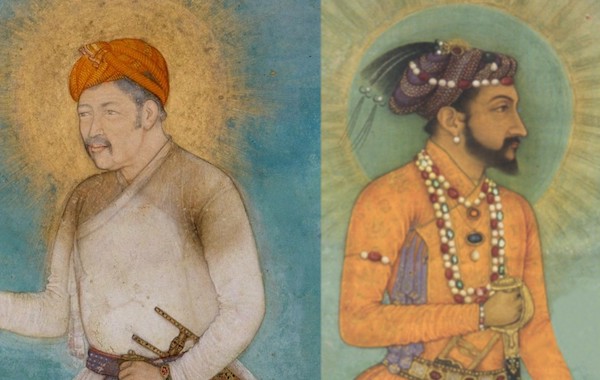
The above are portraits of Akbar the Great and his grandson Shah Jahan that date to about 1630. Akbar had died about 25 years before the portrait, but its likeness seems close to how he was described by his relatives; fair-skinned and with a definite East Asian cast to his features. Akbar’s mother was ethnically Persian, while his father was mostly of Turco-Mongol background. Shah Jahan, in contrast, looks typical for a North Indian noble. This is reasonable because three of his grandparents were Hindu Rajputs. Only Akbar himself was not ethnically Indian.

But they say do not judge a book by its cover. A stylized fact of the Mughals at their peak is that from Akbar, to Jehangir, to Shah Jahan and finally Aurangzeb, there was a progressive ratcheting up in the power and influence of Sunni orthodoxy in the inner circle of the court. The 100 years after the reign of Akbar can be seen a series of victories by international Sunni institutions like the Naqsbandi order. This integration into a broader Islamic world can even be seen in Shah Jahan’s choice of Muntaz Mahal, an ethnic Persian of recent immigrant background, as his primary consort.

I think of these things sometimes because periodically there are outbreaks of argument about whether the Mughals were Indian or colonizers on the internet, and the two sides are extremely reductive and stark. This makes sense since it’s all rhetoric. But often they collapse and erase the texture.

One thing that is important to note is that it does seem clear that the Mughal conquest of India saw a deeper integration of India into the Islamic world than the period of the Delhi Sultanate and its successor states. Though many of these states were of Turco-Iranian origin, and cultivated Persian high culture, they were not as coherent or focused in their ideology as the Mughal Empire that succeeded them (during the Bengal Sultanate that Bengali did become a language at court). India had long been seen as a land of opportunity for Muslim adventures, but the Mughals systematized it, encouraging the migration of Iranians, especially Sunnis fleeing a newly Shia state, into its civil administration and Afghans and Turkic Central Asians into its military.

Of Indian Americans and American Indians

Of all ethnic groups in the United States, second generation Indian Americans are the only ones who experience a decline in income relative to the first generation. The art and media produced by Indian Americans tends to angsty, brooding and dispiriting.

Brown Pundits