Brussels. Islam, War on Terror, History..

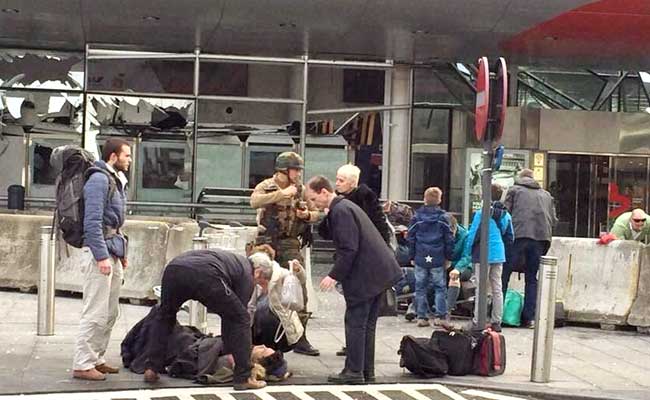
The latest Islamist-terrorist atrocity hit the city of Brussels. The attackers no doubt think they are about to meet their 72 virgins. I have nothing new to say about this, but am posting excerpts from two previous posts (one written after the Paris attacks, the second after the San Bernadino attack) that may shed some light on SOME of the cultural and religious issues in this war. I do want to add that I while I think cultural issues are critical in the long run, they matter far less in the short term than policing, spying, arrests and retaliation. Wars tend to do that: they concentrate matters and short term immediate action is what counts most. Intellectuals who specialize in history and philosophy may matter more in the long term, but once war has begun, it’s “action this day”. This distinction is not news, but it does sometimes get lost.

And I would add that I do not believe the “Eurabia” BS either. Even Sweden will not become Muslim. Muslims will assimilate into Europe, or will face fascism, expulsion and worse. And I will go out on a limb and even predict that England will neither become Islamic, nor resort to naked fascism (it has a culture strong enough to survive/avoid both). Maybe this is true of most European countries. We will see. But the “Eurabia” paranoia is just slightly less silly than the Islamicate dream of an Islamicized Europe.

The following post is an unedited mishmash at places, but you will get the point.

1. Is ISIS Islamic? 
Short Answer: Yes
For a “secular observer”, this is a no-brainer. The secular (and even more so, religious) outsider obviously does not believe in any particular version of Islam as the one true faith, etc etc. To them, Islam is (or should be) whatever any Muslim claims as his religion (this obviously means that for any such observer there is no one Islam, there are many Islams). To such an observer (if he or she is well-informed), Islam is a religion that started in Arabia, took up very notable strands from Rome (aka Byzantium), Persia, Judaism, etc and evolved into many different schools and sects. An exceptionally well-informed observer could indeed comment that ISIS does not replicate the dominant Sunni theology of the Ummayads or the Abbasids and has more in common with the relatively small Kharijite tradition, but even so, it would be the height of “Whitesplaining” for, say, professor Juan Cole to step in and deign to tell Syrian and Iraqi Muslims in ISIS that they are doing it wrong and their Islam is not “real Islam”. The appropriate answer (and this is exactly the answer many different Jihadist groups have given) is “WE know what Islam is and you dont have to come down from Michigan to tell us what our religion should look like”.  To sum up: well-informed outsiders can indeed note that ISIS is more like this, less like that; not representative of ALL Muslims (who is?), not representative of all Muslim states, not typical of all Islamist movements, etc. But for Bush or Blair to announce that ISIS is not really Islamic carries no weight. Islamic is what Islamists think is Islamic. THEY disagree among themselves, giving rise to many different Islams, Some represent bigger groups and larger sects, some are small cults, but all are Islamic.

For the believing Muslim, the answer depends on what sect/group/tendency they believe in. If their sect/tendency regards extremely vicious and extremely literalist Islamists as unislamic, more power to them. But some of them do indeed regard ISIS as Islamic (as is obvious from the thousands of Muslims (including neo-converts) who have flocked to the banner of ISIS in recent years. Others regard them as mostly Islamic, but occasionally doing things that a good Muslim would not do. This group is not trivial in numbers. Finally, countless others hold no firm opinion, but waiver between admiration of some acts and total opposition to others. Humans have complicated loyalties and psychologies. Would it surprise anyone (or at least, anyone not educated in the current Western postmodern left-liberal “tradition”) that a Palestinian or a Turk or a Pakistani may hold internally contradictory views on ISIS; sometimes admiring their deep faith and readiness to fight for Islam, even against overwhelming odds, other times cursing them for their cruelties, and last but not least, at other times worrying about what ISIS’ actions may do to his or her job prospects, visa status or college prospects. We are all human.

My own view: ALL of Islamic history is characterized by a struggle between three political-theolgoical camps that all appeared fairly early in the rise of the Arab empire and the Islamic religion (the two, empire and religion were obviously intertwined and interdependent):

1. Sunnis. Those who thought the rising Arab empire was best led by the consensus of the elite, with a tendency to rally around whoever had managed to fight his way to the top, provided he paid lip service to religion, patronized the rising ulama class and (most important) kept his eyes on the ball as far as managing and growing the empire was concerned. While Sunni clerics developed what seems to be a theory of politics (who is a just ruler? who has the right to rule? what do the people owe their ruler? etc.) on closer inspection it turns out to be pretty much divorced from actual politics. Rulers and their courts had more in common with past Roman, Persian and Central Asian traditions than anything specifically Islamic. Rulers usually grabbed power by force, then tried to pass it on to their children rather than some ideal “just ruler”. Dynasties rose and fell with little concern for theological rules. No “Muslim church” acquired a tenth of the influence of the Roman Catholic church. This tradition is not ISIS-like in detail, but it also paid lip service to ideals that ISIS can and does fling in the face of “court clerics” who happily go along with whoever happens to be the ruler (from King Hassan to Hussain to Salman..and even Sisi). Sunni tradition is not ISIS, but it trains and teaches children using ideals that ISIS may aspire to more strongly than the Sunni rulers themselves. This hypocrisy-crisis is a recurrent feature of modern Islamicate politics. And it is the reason why “moderate Muslims” (aka mainstream Sunnis) regularly fall prey to “Wahabism”. They are not falling prey to a new religion, they are falling prey to a more distilled and internally consistent version of what they have been taught is indeed their own religion. Classical Sunni ideals overlap with modern Jihadist ideology, their true-believers tend to find Wahabism attractive.
2. Shias. Those who felt there was something special about the family of the prophet and in particular, the family of Ali and developed theologies that included varying combinations of the charismatic Imamate and its heritage of revolt against Sunni authority. Since Shias are a majority in only a few places, (most important, Iran) and their history includes long periods of conflict with mainstream Sunni rule, they are more or less immune to the appeal of Sunni revivalists, whether they are the milder Maudoodi types or the harsher ISIS types. They have set up their own theocracy in Iran (much more effectively so than any Sunni revivalist has managed to do) but they are not ISIS. For the purposes of this post (i.e. for outsiders who dont have to live in Iran), they are “objectively liberal”.

3. Khwarij. The Khwarij insisted that neither the elite, nor the family of the prophet had a special right to rule. Only the most pious, the most thoroughly “Islamic” person could do that. Muslims who committed major sins or failed to meet their standard of Islamic fervor were as much the enemy as any infidel. Even more so in fact. The Khwarij were always small in number and they were repeatedly defeated by both Shia and Sunni rulers, but their tendency has never completely gone away. Something within Islamic tradition keeps them alive. Mainstream Sunnis frequently pay only lip service to Jihad and the harshest punishments of shariah law (particularly in modern times), but these ideals are present in their theology. This theology that was rarely an impediment to statecraft and its priorities in the actual golden age of Islamic imperium, but it still paid lip service to those ideals. In fact, the more divorced it was from actual politics, the more it could fly off into discussions about the ideal ruler,the ideal law and the ideal Jihad, all un-encumbered by any contact with reality. But ideals can effect some people. True believers arise, and in times of anarchy and state collapse, they may be the lowest common denominator, providing a framework around which the asabiya of Islam can cohere and in which the community can see hope for a return to a commonly-imagined (though mostly imaginary) golden age.

Groups like the Wahabis, Lashkar e Tayaba, the Taliban and ISIS are simply combining the waters of 1 and 3, usually with more 3 than 1. But they are NOT relying on some new ideology invented out of whole cloth by Wahab or some other evil Saudi. They are (in their own mind and in the mind of many idealistic Muslims) simply purifying actually existing Sunnism (with its tendency to compromise with realities). 

In fact, even reformers who have some mainstream cred can drink quite a bit from #3 in this age of Western domination (perhaps to be replaced soon with mixed Chinese AND Western domination, but still with no Islamic empire in sight); see Maudoodi, Syed Qutb and others. Not as far from ISIS as you may wish.

Just as an aside: What about Sufism? In many cases Sufis can simply be described as mainstream Sunnis with mystical or humanistic instincts; trying to get the most good out of religion while leaving out most of the imperialist and legalistic baggage.  In some cases, they may be more akin to a secret society (like the Freemasons), influencing much from behind the scenes, but by definition, it is not really easy to disentangle myth (and self-promotion) from shadowy reality in this scenario.  In other cases, they may think of themselves as  the perennial philosophy, operating within Islam as it operates in all true religions. And in some cases, they are hardline Sunni Jihadists with a “master and novice” framework added to it, rallying the troops for holy war and conversion of the infidels. Take your pick. But do remember that Sufism is not really a sect with any single reasonably well-defined theology.

This post is not really qualified to go too deeply into what religion (any religion) may mean (and may do) to those struck by epiphanies on the road to Damascus. That whole issue is alluded to here by the always erudite Tanner Greer. Hopefully, he will have more to say in a longer post soon.

2. Does Islamist Terrorism have anything to do with Islam?
In light of the above, one answer would be: of course not. There IS no one thing called Islam. There are many Islams. And most of them are not terrorist. Case closed.
But, again in the light of the above, one may also say that mainstream Sunni Islam is remarkably uniform in its theology and its ideals. The vast majority of the world’s Muslims are Sunnis. Within Sunni Islam, there are four recognized schools of law. In principle, the vast majority of Sunnis honor and respect these schools and their doctors. The vast majority has no idea what is IN those schools or in the writings of their doctors, but they honor them and idealize them. It is very common for educated Muslims to own a book or two of fiqh and hadith. Rarely read, but always honored. A small minority of highly westernized postmodern Muslims believe that those medieval books and their authors are no longer valid for us and Islam (like modern Christianity) is more or less “spiritual” and can (or should) be whatever a believer sincerely thinks it is. Even these postmodern Muslims frequently believe that the Quran is the inerrant, literal word of God, but given that most classical Islamic theology is not lifted straight out of the Quran, they feel they can safely reject aspects of classical theology that are no longer fashionable. That they have usually not read the Quran makes this kind of cherry-picking even easier. But as numerous public opinion polls have repeatedly shown, most Sunni Muslims do not share this postmodern view of their religion. Whatever they may do in practice (and they frequently do exactly what adherents of all other religions are doing in similar econcomic and political circumstances; the much-mentioned “Muslims who just want to have a sandwich and send their kids to good schools”), they do believe that Islam is more than just an identity token. They believe it is “a complete code of life” and if enforced in its true letter and spirit, it holds the possibility of reversing all our communal ills. And what is that letter, if not that spirit? it is the books of Shariah written by medieval Sunni theologians. Books that were composed in the midst of a warlike expanding empire by confident intellectuals of a dominant creed. Books that idealize holy war (not “inner struggle”, Karen Armstrong notwithstanding) and a society where Muslims rule and non-Muslims know their (inferior) place in society. Books that idealize pious rulers and the enforcement of shariah law (stonings and amputations included). Books that idealize martyrdom and war against the infidels. Books that prime some of them to fall for preachers who preach purity and a true Islamic state.  Only some of them. But that is enough. A convert from France felt strongly enough about this to sacrifice his own life in a suicide mission that aimed to kill random innocent Frenchmen. Well, not innocent in his eyes any longer.

 So yes, classical Sunni Islam tends to prime some people for joining Jihadist organizations (whether ISIS or LET or Islamic Jihad or any other of an alphabet soup of Jihadi groups) and committing atrocities with a good conscience. See the ten young men who went to Mumbai on the first “Mumbai-style attack”; what motivated them to go on that suicide mission? Nothing to do with Islam? I think is hard to say that with a straight face..
Unless you happen to be in the postmodern Western liberal elite, in which case you may suffer from what Tanner Greer calls “the limits of liberal education in the 21st century, far better at teaching platitudes than exploring the depths of the human condition; and the inability of secular elites to understand religion and the religious masses who earnestly believe in them…

3. George Bush/Western colonialism/imperialism is responsible for this attack. 
Short answer: Yes.
Long answer: Yes, But.
It is true that the rise of Western power and the defeat of the Ottomans in the first world war created the modern middle east. And it is a staple Western left-liberal talking point (picked up and used by Islamists and by other imperial powers like Russia as needed) that British and French imperialists created the modern Middle East via the Sykes-Picot agreement and messed it up, leading to all or most current problems. This is obviously not true in any strong sense. Britain and France did not look at some blank piece of paper and convert it into the modern Middle East. They grabbed and missed opportunities galore (as did the Turks, who chose the losing side in world war one when they may not have had to do any such thing), worked around existing populations and structures (many of them Imperial Ottoman in origin), argued and tried to double-cross each other before and after Sykes-Picot, were resisted by new forces, adjusted to the results of world wars and local wars, and so on..in short, history happened; not just two people meeting and making up what they wanted and determining all that has happened since then. But let us leave details for another day. Let us use Sykes-Picot as short hand for the modern post World War II Middle Eastern system of nation-states that arose after the brief British and French colonial interlude, primarily (but not always) under the control of local elites groomed or put in place by those two powers.

These elites ruled what were formally (if not very deeply), “Westphalian” nation-states on the “European model”. What that means and why that is so bad (or such an improvement) over past models is another debate we can leave for another day. But the modern Middle East came into being. The states that were created were like most postcolonial states, a mixture of past divisions and new creations, some of them more arbitrary and artificial than others (Pakistani nationalists, take a bow).
Israel was the obvious outlier. With a more Westernized/modern population and with a direct (and at least temporarily, mostly sympathetic) connection to the Western world, it was an order of magnitude more capable (in terms of knowledge, organization, sophistication, ability to fight) than it’s unfortunate neighbors and it’s own aboriginal inhabitants. Even though the physical infrastructure of the state (and the weapons it was able to acquire) were not (at least initially) much superior to those of its enemies, the software was so much better that they were able to whip larger opponents with some regularity. Even so, an order of magnitude is still only an order of magnitude. It may have reached or exceeded the limits of it’s superiority by now. Or it may not. In a battle, it does not matter who is absolutely good at fighting, just who is relatively better. In purely military terms, the Israeli advantage may yet grow; and if present trends accelerate and the Sunni-Shia-Wahabi-Whatever shit totally hits the fan, they may well annex some more territory. History can be cruel. Vae Victis and all that. But moving on..
What about the Arab states of the region?

A. Iraq has splintered after the American invasion and is unlikely to see peace in the immediate future. Some sort of three way division seemed possible, but with ISIS taking over the role of “Sunni resistance”, enough Sunnis may prefer cohabitation with Shias, so maybe the split is not totally final. On the other hand, with Saudi Arabia and the Gulf states still interested in fighting Shia-Iranian domination, anti-Shia forces may still get enough weapons and money to keep fighting for a very long time. The safest bet is “more of the same”. But whatever happens, in the near future it will not be able to contend for regional hegemon, that much is given.

2. Syria has totally crashed and burned. Neither the Assad regime nor its various opponents(including irreconcilable Sunni-Jihadists) are in a position to win completely anytime soon. Continuing violence seems to be the near and medium-term future.

3. Yemen is in flames and has now been invaded by a multi-national coalition led by Saudi Arabia (ostensibly in support of the last “elected” government of the state). Conquering North Yemen has never been an easy prospect and great powers from Rome to the Ottomans have tried and failed to impose their authority over the whole country. The British took control of Aden (all they really wanted) and managed the surrounding tribes with bribes and punitive policing, but never controlled the whole country. The Egyptian adventure in the 1960s ended up being “Egypt’s Vietnam”, so the chances that the Saudis will prevail completely are pretty much nil. Stil, in the near-term it is likely that the people of Yemen will pay the heaviest price, not the people or the elites of Saudi Arabia. Yemen is broken and no policy, no matter how sensible (a faint possibility in any case) will put it together again in the foreseeable future.

For some White or Desi (as in Indian-ish) Leftists, this is time to say “I told you so”. Some of them have reacted to these implosions with barely disguised glee, celebrating the collapse of the borders and states they had always decried as a colonial imposition, and throwing in formula appeals for a “revolutionary” or “pro-people” program to build a new future, blah blah blah. We can ignore this lot. Other Leftists (especially those with family and friends in the region, who do not have the luxury of simply enjoying being “right” about Sykes-Picot) are more confused. They know there is no leftist hegemon or potential hegemon in view that has a reasonable chance of building a new peace out of this chaos, and they have too much local knowledge to blithely generate fantasy stories about the heroic Syrian regime, or the Yemeni rebels for that matter. Between Asad and Sisi and ISIS, who is one to root for? Many of them will likely end up rooting for the existing “Sykes-Picot” states and forget the dream of erasing those hated borders?  But still, that order was neo-colonial and will not return to status quo ante even if many people wish it were so. As the colonial and neo-colonial order fades, what will replace it (in the region as a whole)? With little local knowledge it is not for me to attempt a detailed prediction, but even with limited knowledge, we can say this much: as in any region, the power that imposes order will have to possess sufficient solidarity and ideological clarity to be able to ensure the loyalty of their own core and to compel the loyalty of a critical mass of those they incorporate into their system of rule. What ideal and what asabiya will provide that glue and that motivation in the middle east?

Sunni Islam is one obvious contender (Arab nationalism was another, but seems to have lost out. Marxism was never a serious contender, smaller ethnic nationalisms will save some). Western intervention has destroyed some states, but not provided an alternative (and really cannot provide an alternative). The result, in Syria and Libya and Sunni Iraq is chaos. In that chaos, ISIS has risen to power in parts of Syria and Iraq. And it has been attacked by many powers. Among them, France and Hezbollah and Russia. And all three have been hit by atrocities against soft targets in response.

Even if one does not believe conspiracy theories about the CIA and Mossad creating or helping ISIS (I don’t), one can easily say that ham-handed/short-sighted Western intervention in Iraq and Syria created the conditions that allowed ISIS to rise. They also created or supported many of the grievances (real and imagined) that local Muslims find humiliating and unjust (again, whether the anger is all justified or not, it hardly matters, this is how it feels to many people). So yes, Bush and imperialism do share the blame. But not necessarily in the total and exculpatory way the postmodern Left imagines.


Second, and equally important: the Saudi Royal family is not the source of religious ideology in Saudi Arabia. They allied with this religious movement to gain power, but at crucial points, they have been willing to go against the wishes of their Wahabi base. It is the people of Najd (the wahabi heartland, so to speak) and specially their religious scholars, who are the real fanatics in Saudi Arabia. A democratic Saudi Arabia would likely be more Wahabist than the royal family.
Incidentally the main oil reserves are located in the (relatively small) Shia region of Saudi Arabia. This region became part of Saudi Arabia  by conquest (not by imperialist manipulation or “Sykes-Picot”;  Brown people have agency, their leaders can conquer people too). American companies (invited in by Al Saud because he, quite rationally, feared the British imperialists more) found oil there. Soon the world war accelerated oil demand and the US became an ally of the Saudi Royal family, which it remains to this day. For a long time, the US ignored and sometimes (most egregiously, in  Afghanistan and Pakistan) actively encouraged the export of Jihadist Islam from Saudi Arabia. This was short-sighted and morally wrong, but it was based on a serious under-estimation of the potential of jihadism as an ideology, as well as a prioritization of anti-communism over good sense. But contrary to Eurocentric Left-wing propaganda, Saudi support for pan-Islamic causes was not primarily initiated by the US. It was the “push” of their own religious motivation plus the “pull” of demand for pan-Islamism in newly minted “Islamic” countries like Pakistan that drove most of this effort .

In any case, the US has not actively encouraging this process after  9-11. The Saudi Royal family has also slowly (too slowly for most of us) moved away from unrestrained support for the most extreme international  Jihadists, but continues to support many Islamic causes worldwide (not just Wahabi causes, but mainstream Sunni causes that it hopes to co-opt) and continues to support “moderate Sunni Jihadis” in their regional war against Shia Iran and its allies. And of course, they continue to impose ISIS-like punishments (cutting off hands and feet, beheading  etc) for crimes including the crime of apostasy (all of which are a standard part of mainstream Sunni Shariah, and that therefore have the theoretical, but not always the practical, approval of mainstream Sunnis). This causes many liberals in the West (and elsewhere) to insist that the US should break its alliance with Saudi Arabia and even bomb them.  But what happens then? Will they become less jihadist or more? And who gets the oil? Iran? Russia? China?

The point is this: if there is a quick and direct way to weaken Saudi power and the hardline shariah-based Islam they encourage, it requires taking the oil away from them (since oil wealth is the source of their power). This can be done. The local population is historically Shia. Maybe Iran can capture the oilfields and set up a Shia-client state and defend it against Saudi attack? Or Russia Or China can do this job? Or the US can do it itself; but such a grab would be a naked imperialist military intervention, and it would surely require shooting any Wahabi who shows up in the oil-region. There is no pretty way to do it. If the US just breaks off relations, the Saudis will look for a new protector. Pakistan, China, maybe even Russia could be tempted. But Jihadism does not come solely (or now, even mostly) from the US alliance, and will not go away if that alliance breaks. It likely can be moderated if the Royal family is pressured, but it will be moderated against the wishes of the people of Saudi Arabia, not on their behalf. And it will be moderated by an authoritarian regime willing to use torture and violence to impose its will on a hardline Islamic population (at least in the Najdi heartland). If all this is not clear, then the appeals to “break off our alliance” are just liberal posturing and virtue-signaling, not real policy.

By the way, any such invasion and occupation to impose liberalism and good 21st century behavior would also invite the ire of all pro-Shariah-true-believer Sunnis in the world. Prepare for that too. Otherwise, the Royal family is the best bet in Saudi Arabia and that is simply the ugly unpalatable truth.

The alternative to a bad situation is sometimes worse. Shit happens. There is no universal framework of liberal democracy (or socialism, or whatever you regard as ideal) and human rights that exists a priori in all places, only waiting for the overlay of imperialism or neoliberalism to be removed to allow universal peace and tranquility to break out. Everything is hard work. Institutions take time. Ideologies matter. Humans are humans everywhere, but they do not live in the same history and the same circumstances. Within the limits of what can be done with human biology, much can vary. And sometimes, things fall apart.

Even when they don’t fall apart, one can easily see that not everyone is happy in liberal democracies. In fact, some of their best intellectuals are the most unhappy, and are willing to entertain almost any movement that threatens to overthrow this sorry scheme of things entire…Some of us may fear what will follow if the revolution actually happens, but all of us can agree that the revolutionary dream has support. In the Middle East, this dream may take Islamicate forms. No surprise.

4. What next? Spontaneous Jihad Syndrome?

 Any Muslim can become radicalized and fall victim to spontaneous jihad syndrome at any time.
This is the right-wing fringe’s mirror-image of the liberal belief that Islam never causes jihad and all of it can be explained by “inequality” or “Sykes-Picot” or some such story.  Both mirror-images are clearly false. The real situation is that we can look at the Muslims of the world and see several disparate groups; Shias, Ismailis and Ahmedis are outside the Sunni Jihadist universe and so are not going to spontaneously take up arms in the war between shariah-based Islam and other civilizations.  They are all relatively small minorities, but they are the most obvious examples of “Muslims who will not get radicalized and join the Sunni Jihad, foreign policy, Israel, Sykes-Picot and Picketty notwithstanding. These supposedly powerful motives for hating America will not cause these groups to go postal. There is a lesson in there somewhere.

 Coming to Sunni Muslims, we have a very large number are “moderate Muslims”, which is shorthand for Muslims who were not brought up in shariah-compliant households and who do not practice that kind of Islam. Their numbers vary from country to country, but one can say with a lot of confidence that they are not spontaneous jihad material either. They can covert, but it is a slow process, it is observable and even preventable (if they are kept away from hardline preachers). Then there are the shariah-compliant Muslims who believe that the Shariah’s orders for Jihad are meant for very specific situations where a Sunni state has declared Jihad and those situations (fortunately) do not exist. So they get on with life in all parts of the world. Many of them are model citizens because they avoid intoxicants, deal honestly and follow the law. A very tiny fraction of them may “radicalize” but most will not. The same applies to converts. So yes, about these (small) groups one may say “they can radicalize” , but very rarely. And even then, there are warning signs and it is never an overnight process. Finally, there are the true-believer Jihadists. They have obvious links with Jihadist schools, groups and teachers. They are small in number and they are not hard for the community to identify, if is so chooses. And they are indeed high risk. Liberals see none of them, right-wingers see too many. Both are wrong.

I guess what I am saying is that notions of Muslim hordes just waiting for a chance to attack are far outside the bounds of reality. Common sense can actually be a guide here. There is no need to throw the baby out with the bathwater and equally there is no need to be willfully blind to warning signs. Biased agenda pushers on BOTH sides of this debate have obscured common sense options. And while Liberals may underestimate or misrepresent the threat from radical Muslims, conservatives frequently generalize the threat to all Muslims.

Last but not the least, all nutcases cannot be stopped beforehand. Some surprises will always happen in a large and complex society . There is no risk-free society, with or without Muslims. But this is not World-War Three. Not in the United States. In parts of Europe the proportion of jihadists is likely higher (for various reasons, including racism and multiculturalist liberalism). Meanwhile, in the core of the Muslim world itself, all bets are off. There is no well-articulated theology of liberal Sunnism. Other organizing ideologies (like Marxism and pan-Arab nationalism) have manifestly failed. The authoritarian regimes that exist are (for now) the only game in town. These authoritarian elites, who disproportionately  benefit from the modern world,  impose their will using a combination of force, persuasion and foreign support. But they lack a deep legitimating ideology. This crisis of ideology is extremely serious, and it may devour some of those countries (though the survival of Jordan is a good example of the fact that even the most arbitrary modern states have more strength than we sometimes imagine). Those Muslim states that are further away from the Arab heartland (and the Israeli-Palestinian conflict) may do better. They can frequently rely on other identities to maintain the legitimacy of their states and new Islams can arise in them with time. But even they will not be compltely free of Jihadist conflict. No state is completely free of conflict of course, and many conflicts unrelated to Islam or Jihad could easily kill millions and destroy whole countries. But predominantly Islamic countries do have the added burden of the conflict of Classical Islamic ideals with modern civilization (not just Western civilization), and it will take time to resolve this conflict.
Hold on tight.

Do read Tanner Greer’s post about the limitations of the Western liberal worldview when it comes to Islam, or any religion for that matter.
Excerpt: The truth is that most faiths, though of course not all, possess a concept something like what the Christian Church Fathers called metanoia — usually translated as “repentance” but more properly the transformation of the soul. It is visible in the tales of Paul, Raskolnikov, and Malcolm X. It is not “people get[ting] out of [religions] what they bring into them.” Quite the opposite: it is people getting out of religion what they never had before. Max Fisher of Vox does not misunderstand this because he lacks a grasp of faith: he misunderstands this because he does not grasp the nature of man. He possesses a graduate degree in international security issues from the Johns Hopkins University, writes for a major publication, is a go-to for White House narrative promulgation, and he lacks this most basic element of the liberal education.

This is not to condemn him as any sort of unusual creature. He is not the exception. He is the rule. Our elites are well credentialed: but the danger they pose to us lies in the dismaying truth that they are not wise. Worse, they are not even smart.

Also See this from Razib Khan for another angle.
Excerpt:
The power of the Islamic State derives in part from the fact that it inverts the moral order of the world. Some of its soldiers are clear psychopaths, as the most violent and brutal of international jihadis have been drawn to the Islamic State (as opposed to Al Qaeda, which is more pragmatic!). But a substantial number believe in its utopian vision of an Islamic society constructed upon narrow lines. A positive vision of a few evil goals, rather than a grand quantity of small evil pleasures. The Islamic State ushers in an evil new order, it does not unleash unbridled chaos. Though its self-conception that it is resurrecting the first decades of Islam is self-delusion in my opinion, it is still a vision which can entice some in the Islamic international.

I do not think that the Islamic State is here to stay. I believe it will be gone within the next five years, torn apart by its own contradictions and its rebellion against normal human conventions, traditions, and instincts. But that does not mean it is not going to cause misery for many on its way down. The irony is that the iconoclastic Islamic State may as well be worshiping the idols conjured in the most fervid of Christian evangelical apocalyptic literature, because they shall tear the land end to end and leave it in a thousand pieces, a material sacrifice to their god. They live under the illusion that they are building utopia, but they are coming to destroy an imperfect world and leave hell in its wake.

* The modern Salafis are just the latest in a particular extreme of Sunni belief, which goes back to individuals such as Ibn Taymiyyah.

And Shadi Hamid’s excellent post from 2014: The roots of the Islamic State’s appeal.  
Excerpts: 

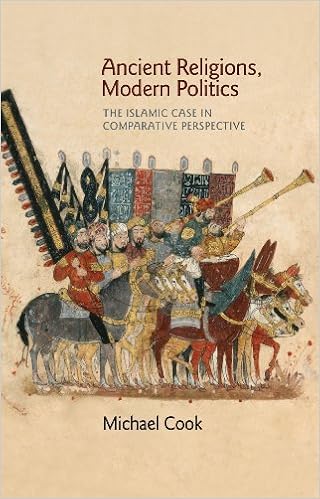
Islam is distinctive in how it relates to politics. This isn’t necessarily bad or good. It just is. Comparing it with other religions helps illuminate what makes it so. For example, Indian Prime Minister Narendra Modi and his ruling BJP may be Hindu nationalists, but the ideological distance between them and the secular Congress Party isn’t as great as it may seem. In part, this is because traditional Hindu kingship—with its fiercely inegalitarian vision of a caste-based social order—is simply less relevant to modern, mass politics and largely incompatible with democratic decision-making. As Cook writes in his new book Ancient Religions, Modern Politics, “Christians have no law to restore while Hindus do have one but show little interest in restoring it.” Muslims, on the other hand, not only have a law but also one that is taken seriously by large majorities throughout the Middle East.


..If ISIS and what will surely be a growing number of imitators are to be defeated, then statehood—and, more importantly, states that are inclusive and accountable to their own people—are essential. The state-centric order in the Arab world, for all its artificiality and arbitrariness, is preferable to ungoverned chaos and permanently contested borders. But for the Westphalian system to survive in the region, Islam, or even Islamism, may be needed to legitimate it. To drive even the more pragmatic, participatory variants of Islamism out of the state system would be to doom weak, failing states and strong, brittle ones alike to a long, destructive cycle of civil conflict and political violence.


Last but not the least, from Ali Minai, unreal Islam. 
Which brings us back to the issue of “real Islam”. As someone in love with the cultural traditions of Islam and as a diligent student of its history, I agree that the acts of the jihadis do not represent the vast majority of Muslims today or in history. Humans are a violent species and Muslims have contributed their share, but it is completely asinine to think that Muslims have been, historically, any more violent than other groups. However, it is equally absurd to deny that the ideology underlying jihadism draws upon mainstream Islamic beliefs and is, therefore, undeniably a form of “real Islam” – albeit of a very extreme form. It is more accurate to say that this extremism is “not the only Islam”, and, by historical standards, it is a version very different from what the vast majority of Muslims have practiced. That’s why groups espousing such puritanical and rigid attitudes were traditionally called “khawarij” – the alienated ones. At the same time, Muslims should acknowledge that they have not constructed the logical and theoretical framework within which extremism can be rejected formally. If anything, the opposite has happened in the last century, with increasingly literalist attitudes gaining strength for political reasons. And that is the core problem: A literal reading of even moderate Muslim beliefs can, and does, lead to behaviors incompatible with modern society. Like Christians, Jews, Hindus and others, Muslims have to turn towards a less literal, more inspirational and humanistic reading of their sacred traditions, drawing from them principles that can stand the test of time rather than literal, ahistorical prescriptions. This does not require the invention of a “new Islam”, or the imposition of an “official Islam” by states. Nor does it require a rewriting of Muslim sacred texts any more than the Enlightenment needed a rewriting of the Old Testament – Thomas Jefferson notwithstanding. What is needed is a change of attitude, of how people relate to the texts and traditions. Strong strands of humanism, compassion, diversity of ideas and acceptance of differences already exist within the Islamic tradition – among Sufis, among poets, and even among scholars. The trick is to rediscover, re-emphasize and reinterpret them for our times. And even as we wring our hands in despair, brave individuals within Muslim societies are trying to ignite just such a change at great risk to their lives. The least we can do is to add our voices to theirs.

Oh, and Razib Khan on the poverty of multicultural discourse: Excerpts
The problem with the bleeding over of academic “discourse” into the public forum is that it obfuscates real discussion, and often has had a chilling effect upon attempts at moral or ethical clarity. Unlike the individual above I am skeptical of moral or ethical truth in a deep ontological sense. But I have opinions on the proper order of things on a more human scale of existence. You don’t have to reject the wrongness of a thing if you reject the idea that that thing is wrong is some deep Platonic sense. I can, in some cases will, make the argument for why some form of the Western liberal democratic order is superior to most other forms of arranging human affairs, despite being a skeptic of what I perceive to be its egalitarian excesses. I can, and in some cases will, make the argument for why legal sexual equality is also the preferred state of human affairs. But to have this discussion I have to be forthright about my norms and presuppositions, and not apologize for them. They are what they are, and the views of those who disagree are what they are.

An academic discourse tends to totally muddy a clear and crisp discussion. The reality is that most Egyptians have barbaric attitudes on a whole host of questions (e.g., ~80 percent of Egyptians favor the death penalty for apostasy from Islam). It was not surprising at all that the majority of the Egyptian electorate supported parties with reactionary cultural political planks; because the classification of these views as “reactionary” only makes sense if you use as your point of reference the Westernized social and economic elite. The majority of Egyptians have never been part of this world, and for them upward mobility has been accompanied by a greater self-consciousness of their Islamic identity.

This reality is not comforting to many, and so there has been an evasion of this. If we accept, for example, the hegemonic superiority of sexual equality, should we not impose the right arrangement upon those who oppress women? This is a serious question, but the fear of engaging in “dangerous” analysis in the “discourse” allows us to sidestep this question. Rather, by minimizing the concrete realities of cultural difference and the depths of their origin, Egyptians are easily transformed into Czechs in 1989 with browner skins and a Muslim affiliation. This is a totally false equivalence. As Eastern Europeans go the Czech population is atypical in its secularism and historical commitment to liberal democracy (one could argue the weakness of the Catholic church goes as far back as the Hussite rebellion and the later suppression of Protestantism by the Habsburgs). While other post-World War I polities switched toward authoritarianism in the inter-war period, the Czechs retained a liberal democratic orientation until the Nazi German invasion. After the collapse of Communism they reverted back to this state. Notably, extreme nationalist parties with anti-democratic tendencies have come to the fore in most post-Communist states, but not so in the Czech Republic.


The irony here is that an academic position which espouses the deep incommensurability of different societies and cultures in terms of their values, rendering inter-cultural analysis or critique suspect, has resulted in the domain of practical discussion a tendency to recast inter-cultural differences of deep import into deviations or artificialities imposed from the outside. In this particular case that artificiality is the Egyptian military, but in most cases it is Western colonialism, which has an almost demonic power to reshape and disfigure postcolonial societies, which lack all internal agency or direction. This is simply not the true state of affairs. The paradoxical fact is that there is commensurability across very different cultures. You can understand, analyze, and critique other societies, if imperfectly. For example, I can understand, and even agree with, some of the criticisms of Western society by Salafist radicals for its materialism and excessive focus on proximate hedonism. The Salafists are not aliens, but rather one comprehensible expression of human cultural types. But that does not deny that I find their vision of human flourishing abhorrent. I understand it, therefore I reject it.

And my own comment on the multiculti question: 

“One angle (not the most important one, but I think its there) could be that while many casual adherents and self-satisfied groupthink nurtured “thinkers” are just mindlessly repeating the party line there ARE a number of people who are seriously committed to what they imagine is a worldwide organized movement to overthrow the existing system (including the system in which they work and draw a salary or get grants). i.e. they may know that a lot of their bullshit is bullshit, but its useful bullshit in a higher cause. It undermines the dominant civilization and its armies and bankers (or so they think..I think the actual contribution of Tariq Ali or even the far more scholarly Vijay Prashad to bringing down Western civ is negligible compared to the contribution of wall street bankers). but there IS a hardcore of calculation and conscious propaganda mixed into the postcolonial bullshit…
Once war has been undertaken, no peace is made by pretending there is no war.
—- Duryodhana (the Mahabharata)

“With two thousand years of examples behind us, we have no excuses when fighting for not fighting well.” T. E. Lawrence

Everyone has a plan ’till they get punched in the mouth.
Mike Tyson

Trump, the phenomenon

This “explanation of no-explanation” is the best piece on the Trump phenomenon yet (because it is not really about the Trump phenomenon, but about phenomenae and societal norms in general).
 I think the internet and its ability to bypass ideological and behavioral gatekeepers in the establishment has been part of the “why now” question. Interestingly, some on the more clueless sections of the “left” are surprised that the internet is not just promoting “progress”. Ironies abound.

The last two paragraphs of the Adam Elkus piece: 

The key for future historians to analyze is simply Kurzman’s “why now?” question. Our institutions — formal and informal — have been fraying for a very long time. And the strategy of ingroup-outgroup outbidding that Trump has exploited is not exactly new to modern American politics either. Perhaps the answer lies in a very granular analysis of what precisely happened in the ground during the GOP primary as a flawed and increasingly tottering array of institutions tried and failed to bend the electorate to their will and people began to feel like they were part of something larger and greater than themselves. But the reason why I have focused on the flaws, contradictions, and weaknesses of institutions and professionals despite Kurzman’s emphasis on contingent outcomes is that social structures work by minimizing possibilities for contingent outcomes.


When the possibility for great upheaval exists in contingency, the hour may go to the man or woman willing to seize it. This is something Karl Marx explained quite well in his 18th Brumaire, the story of why a revolt that might have succeeded in an earlier time failed catastrophically. The uncertainty of how much adherence to what we would think to be common norms of behavior exists as well as the impact of the manner in which our institutions and elites only partially at best observe those norms creates a space for contingency, chance, and possibility. And this space has been dramatically and vigorously seized by a quasi-fascist populist sloganeering thug with a bad haircut and his army of passionate followers. For now, explaining Trump may just be as simple as that.


Image result for trump

 Allah will sort things out (and some will no doubt land on their feet even after the revolution), though I do hope Trump appoints Christie as chief garbage collector just to humiliate him some more. We all have our dreams 🙂

By the way, I am firmly convinced that Trump is not some kind of “genius manipulator” and he is definitely NOT some kind of political genius who has a vision (or even the latent ability to generate a vision) of what to do with power once he has it..His entire record indicates that he is a shrewd businessman and conman who fails at more deals than he makes, but who frequently manages to leave someone else holding the can as he exits. He has hit on a few clever moves, but his repertoire is limited. He will not be some kind of revolutionary leader in any way, shape or form. He will make a mess of things. The only question is: how big a mess? If the US is lucky, it will be a small mess (and mostly just a continuation of establishment Republican policies; good, bad and awful), but who knows. Allah may have more dangerous intentions. Simply put, he is no Napoleon or Bismarck or Octavian or even Nixon. He is not Hitler either. He is just a salesman who has hit on a winning sales pitch. But being president is not the same as running for president. A mediocrity can get by, with conventional ideas, a conventional team, conventional decisions, an occasional gaffe. The system can handle that. But his fans are expecting hope and change well beyond what Obama fans were expecting .. And they aint gonna get it.

In fact, my main hope for why he may lose in November is his clueless low IQ team (yesterday his spokeswoman was confused by “bringing a knife to a gunfight” and it was painful to watch). Unless he dumps most of them soon, THEY will trip him up.. Inshallah. They were hired when he had limited options (and when even he may not have been too sure of getting this far) and they are absolutely not ready for prime-time.

There is a much larger group of analyses that focus on Trumpers as authority worshipers , proto fascists, racists or retards, I am a bit leery of them though. There is more than a whiff of elitist self satisfaction about a lot of them.. And some of them are almost comically un-self-aware..like the race-obsessed and race-baiting SJWs complaining that Trump is racist.

The ones that seem to confirm the favorite prejudices of their authors are especially suspicious. If they are such profound analysts, maybe they would have seen this coming before it happened? They do frequently appear to retrospectively paint every event as confirmation of their own pet theory about people/politics/society… I am a bit skeptical

Of course the Republican party has spent a lot of time building up a constituency that can be “activated” using these cues and yes, now Trump has hijacked that group using their con against them.. Good for him. Ali Minai said this very eloquently recently, ,and so have others. But what I find suspicious is the extension of this (relatively straightforward) observation into psychobabble about dumb hicks craving authority figures blah blah blah. THAT too may be true, but it may also be be junk-social-psychology, of which there is an awful lot about. 🙂

I don’t think a Republican alternative is really possible now. They have all been happily selling snake oil for ages (in their defense they can say that they were only doing what the entire political class regarded as “appropriate political behavior”, i.e. tell lies and deal in pithy soundbites and then do what you really want to do after you are elected. The problem is, having done that all their life (including in the first half of this primary season) they have now been Trumped at that game and have no defense. It is too late to argue that you have a real plan and the short-fingered vulgarian casino-operator does not.

Sic transit gloria mundi..

Though the libertarians at Reason see it more positively..

PS: @Sam_Schulman on Twitter argued that Trump’s most important winning point is his attack on political correctness. save image

I think that is definitely a factor, though I dont think the “Muslim-ban” part is the biggest differentiator from other Republicans (all of whom are perfectly willing to kill Muslims in large numbers, so I don’t think Trump is getting too much special credit for being the only one who stands up to “secret-Muslim-Obama”). I think it is his attack on PC more generally; with race and immigration being two of the most critical factors. But then again, as a Muslim maybe I am trying/wishing to see less “muslim-ban” intensity in the Republican electorate than is really out there.

Of course, the “arugula Left” has left no stone unturned in its quest to make PC as silly and monumentally stupid as possible. See this post from Razib Khan for an excellent example: Sumo-scale cultural appropriation. 

Btw, he is not bad at reading poetry 🙂

And his enemies list includes FOX news and Romney-Ryan 2012. Interesting times.. This may be more interesting than I thought..

save image

Drone Warfare; The Unblinking Eye

From our regular contributor, Dr Hamid Hussain.

The Unblinking Eye
Hamid Hussain

“With the monstrous weapons man already has, humanity is in danger of being trapped in this world by its moral adolescents”.  General Omar Bradley

Unmanned Aerial Vehicle (UAV) commonly known as drone is the most open secret of modern warfare.  UAV is primarily an intelligence platform but use of armed drones for target killing generates heated debate in public.  Opponents of armed drones consider it an indiscriminate killer while proponents claim that this is the cleanest way of eliminating opponents.  In the last fifteen years, information about several aspects of drone operations has become available to sketch a reasonable picture. In the immediate aftermath of September 11, 2001, U.S. intelligence community was busy capturing terrorists from all over the globe.  Existing legal system was seen as inadequate therefore detainees were kept at ‘black sites’ all over the globe. Several alleged prisoner abuse scandals sent shock waves and ‘jailers’ got a pretty bad name.  If you can’t jail the bad guys then the only other option is to eliminate them.  This is how the drone warfare started and then rapidly expanded.

In the last fifteen years, drones have evolved.  Initially drones were used for Intelligence, Surveillance and Reconnaissance (ISR) and later some were weaponized for targeted strikes.  A number of unmanned aerial systems are operated by all branches of armed forces but Predator and Reaper became famous.  Army uses Hunter, Pointer, Raven and Shadow, air force uses Desert Hawk and Marine Corps uses Pioneer and Dragon Eye.

MQ-1 B Predator’s primary mission is ISR.  It is also armed with two AGM-114 Hellfire missiles (each missile costing $99’000).  MQ-1C Gray Eagle is advanced version with increased endurance, updated electronic equipment and armed with four Hellfire missiles. Unit cost of this bird is $4.98 million. MQ-1C will eventually replace MQ-1B.  MQ-9 Reaper is a larger version with double the speed of Predator and better surveillance and targeting systems.  It is armed with four AGM-114 Hellfire missiles, two 500 pound GBU-38 Joint Direct Attack Munitions (JDAM) or two GBU-12 Paveway II laser guided bombs. The unit cost of this exotic bird is $13.7 million and maintenance cost about $5 million per year.

UAV is a two operator craft with one piloting the aircraft and the other operating sensors.  Hellfire missile can be fired in several different modes depending on the location of the target.  Direct strike mode takes missile directly to the target and high mode drops missile vertically down on a target.  In indirect mode, missile dives to earth and then in low trajectory skims earth surface to hit the target under cover. UAVs need ground support systems that collect, analyze and process incoming data, disseminate to other entities and then direct strikes on specific targets. Remotely Operated Video Enhanced Receiver (ROVER) used by soldiers on the ground can see the Predator feed in real time.

In the early season of hunting, CIA operated Predators and coordinated with Joint Special Operations Command (JSOC).  Air Force, army and CIA waged some tough turf battles about who would control these new birds.  When it was suggested that all UAVs should be placed under air force command, army pushed back arguing that its own UAVs were now integral parts of the division.  A high level ISR task force was established at Pentagon to address these conflicts.  In the end, army ended up keeping Gray Eagle and Air Force getting Reaper. However, a percentage of drones controlled by air force are operated by CIA.  Inside CIA, there was also a fight between its paramilitary section known as Special Activities Division (SAD) and Counter Terrorism Center (CTC) over control of drones. In the end CTC got control over drones and eventually became the most powerful division. It rapidly expanded with a large budget and ever increasing number of personnel.  Anyone aspiring to climb the career ladder was rushing in for a stint at CTC.  Director of CTC became a powerful player inside and outside the agency. In 2006, a new director who was a convert to Islam and a strong proponent of assassination program took over. He served for long due to his connections with White House and Capitol Hill despite clashes with colleagues including director of the CIA.

A ‘targeted strike’ is elimination of a known high value target after prolonged surveillance.  A ‘signature strike’ is not a confirmed strike on a known target but simply targeting a suspicious activity. When it became evident that after the first strike, militants sealed off the area to hide the identity of the killed and therefore the initial crowd after the strike only consisted of bad guys, a new tactic of ‘follow up strike’ also called ‘double tap’ was implemented. Initially strikes were directed at buildings that inevitably resulted in death of civilians inhabiting the same building.  When pressure mounted regarding deaths of civilians, the process was refined and more strikes were directed at vehicles to avoid civilian casualties.

President George W. Bush and Vice President Dick Cheney were executives before coming to White House while President Obama and Vice President Joe Biden are lawyers. The difference between Bush and Obama White House was difference between corporate and attorney cultures.  In case of drone warfare, Bush made the decision and let the agencies work out details.  When CIA needed legal cover, Bush would provide them necessary legal cover.  Obama looked at the problem with the eye of an attorney and first put in place all legal elements and then sat on top of the food chain personally signing off on almost all drone strikes.

Three days after his inauguration, President Obama authorized two drone strikes in North and South Waziristan. These were not directed at a high value target and several civilians were killed.  CIA director Michael Hayden went to White House to explain ‘signature strikes’ and Obama was not happy. He overhauled the whole process of selection and targeting.  Now, a whole bureaucracy nick named ‘Kill Chain’ is involved in the process.  The first part is ‘developing the target’ where intelligence community provides all the information about the target and risks it poses to U.S. national security. The second ‘authorization process’ starts from regional command and moves to Chairman Joint Chiefs of Staff Committee (CJCSC), Secretary of Defence, Principles Committee of National Security (consisting of National Security Advisor, CJCSC, Attorney General, Advisor of Counter Terrorism, Director National Intelligence, Secretaries of State, Defence, Homeland Security, Treasury, Ambassador to United Nations and White House Chief of Staff) and finally the President.  Final authorization has an expiration date of sixty days and if target is not eliminated in this time period the process starts all over again.  This gives a hint that there may be pressure on those executing the order to hit the target before the expiration date and in this rush ‘certainty’ bar may be lowered resulting in wrong strikes and death of civilians.

President Obama is a fan of St. Thomas Aquinas and his theory of just war is based on theory expounded by Aquinas. According to Aquinas, three requisites of a just war are authority of the prince, a just cause such as avenging an injury and a right intention of promoting good and avoiding evil. However, President Obama conveniently forgot other advice of Aquinas about excesses of war warning about “eagerness to hurt, bloodthirsty desire for revenge, an untamed and unforgiving temper, ferocity in renewing the struggle”. This was the case in many strikes in Federally Administered Tribal Area (FATA) of Pakistan where frustration, anger and revenge took precedence over use of a tactical weapon based on a meticulous and thoughtful strategy.

The case of Lebanese born British citizen Bilal Berjawi is a good case study to understand the new face of modern warfare.  He was travelling to Kenya and Somalia and attending all militant pow wows.  Berjawi was under British surveillance for over four years. From all the evidence collected over the years, it was quite clear that he had gone to the ‘dark side’.  However, he had not yet committed any crime and couldn’t be charged under existing laws. One the other hand from the profile developed over the years, it was clear that he will commit some violent act possibly in Britain.  In September 2010, Britain revoked his nationality and in January 2012, he was killed by a U.S. drone strike on his vehicle in Somalia.  After his death, militant group issued a statement confirming that he was a senior al-Qaeda commander in Somalia and released a video about plan of a suicide mission by Berjawi. Proponents and opponents of use of drones can study this case and suggest how these tricky issues can be addressed.

When any new weapon system is introduced, there is a risk of ‘infatuation’ resulting in overuse and runaway costs.  In April 2008, during the battle for Sadar City against a Shia militia, one army brigade was supported by two Predators from air force, two drones operated by Special Forces and several Shadow and Ravens of army. This was in addition to several manned platforms including intelligence aircrafts, U-2; six Apache attack helicopters and national satellite network.  Each party has a vested interest to exaggerate its importance in the battle therefore it is crucial to have independent supervision and audit. In addition, ‘obsession’ with the toy can cloud the judgment about the weakness of the system.  Feeds from the drones can be hacked by the third party and it was recently disclosed that United Kingdom and United States were able to hack the feeds from Israeli drones and watching feeds in real time. There are also serious issues about the stability of Reaper drones during flight and an unprecedented twenty Reapers crashed in 2015. Only money is burned in a crashed drone and no human life is lost but that should not be the case for complacency.

Earlier versions of drones carried a very small price tag compared to high ticket items such as fighter jets therefore major defense contractors had very little interest in the project.  However, when Pentagon bureaucracy fell in love with this new toy and willing to dole any amount of money, then major defense contractors jumped on the bandwagon with the thought that if they can make drones bigger and expensive as well as get into the support services business then it is worth the effort.  In 2008, a new ISR task force was established with acquisition authority.  In four years, the task force spent $10 billion.

Northrop Grumman manufactured Global Hawk at the cost of $300 million per piece.  Northrop also made two delta winged X-47 B for navy to be operated from an aircraft carrier at the cost of $1.7 billion. Battlefield Airborne Communication Node (BACN) covers areas out of range of normal systems. This was specific for mountains of Afghanistan and Pakistan. Bombardier business jet was converted into an ISR platform.  Northrop Grumman got a $250 million contract for three BACN Bombardiers. Global Hawks were also fitted with BACN (EQ-4) by Northrop Grumman and fifty birds cost a staggering $10 billion.  Raytheon manufactures sensors and radars for the UAVs.  It provided Enhanced Integrated Sensor Suite (EISS) for Global Hawk. Initial cost estimate of $10 million skyrocketed to $233 million per copy. A stealth drone RQ-170 manufactured by Lockheed Martin is secret therefore cost is not publicly available but some estimates put the price tag at $200 million per copy.  

UAVs are only platforms and support systems are very costly.  Distributed Common Ground Systems (DCGS) is the nerve center and air force DCGS was primarily supporting airstrikes.  Other services also jumped in and army instituted its own DCGS-A at the cost of $2.3 billion and navy is not behind to create its own DCGS-N.  Air Force started to expand its ground networks supporting UAV missions called ‘reach back sites’.  EUR-I in Germany supports missions in Asia and Central Asia, EUR-2 in Italy for missions in Africa, PAC-1 at Kadena Air Force base in Japan and PAC-2 in Pacific Ocean for UAV flights over South East Asia and South China Sea.

Every system needs a cost benefit analysis as money cannot be thrown in a bucket with no bottom.  In one case, six hellfire missiles from Cobra attack helicopters and five from Predators were used to kill about a dozen low level foot soldiers in al-Qaim on Iraq-Syria border. Each Hellfire costs $ 99’000 and simple math tells us that one million dollar worth of ammunition was dropped on a dozen low level foot soldiers.  In another case, two GBU-12 bombs; each carrying a five hundred pound warhead and each with a price tag of $19’000 were dropped on two people in two tents in a remote area in Kunar in Afghanistan.  Only one bomb exploded while other was a dud but incidentally dropped directly on one tent killing its occupant. They forgot President Bush’s promise in September 2001 that “when I take action, I’m not going to fire a $2 million missile at a $10 empty tent and hit a camel in the butt”.

Drone is a tool of warfare like tanks, artillery and jet planes and like any instrument of war has its benefits and side effects.  It is easy to be mesmerized by a new war toy and loose the bigger picture.  On the other hand, it is also easy to denounce the tool because of its side effects or misuse.  UAV is an excellent ISR platform and there is enough proof that compared to all other options, armed drones had the major impact on disrupting militant activities in Pakistan’s tribal areas especially taking out high value targets.  However, it is also true that a large number of civilians were also killed.  In my view it was overused thus negating many of its benefits.  I think only about twenty five to thirty percent of the strikes were successful removing important leader’s especially foreign militants.  Killing of two to three hundred foot soldiers which could be easily replaced didn’t serve any strategic purpose.

A tactical weapon has an impact on strategy and just like introduction of artillery, tanks and fighter jets had an impact on the larger strategic canvass of the art of war, drones will also have a similar impact.  Like tactical nuclear weapons, the production and deployment of drones is going at a fast pace before its role in strategy is figured out.  Another area of concern is rapid escalation of cost and now all major defense contractors are in the game putting out products with marginal benefits but with an astronomical price tag.  This is right time for adult supervision at Pentagon to prevent establishment of another behemoth drone bureaucracy that can eventually become ‘too big to fail’. In addition to the military aspect, a broader discussion about legal, ethical and moral aspects need to involve broader segments of the society. UAV will ultimately settle down as ISR platform with marked reduction of use of armed drones.

Sources:

– For specifics of Predator and Reaper, see air force fact sheets; http://www.af.mil/AboutUs/FactSheets/Display/tabid/224/Article/104470/mq-9-reaper.aspx
– http://www.af.mil/AboutUs/FactSheets/Display/tabid/224/Article/104469/mq-1b-predator.aspx

– The Drone Papers.  The Intercept,  https://theintercept.com/drone-papers/

– Lt. Colonel T. Mark McCurley and Kevin Maurer.  Hunter Killer: Inside America’s Unmanned Air War (New York: Dutton, 2015)

– William M. Arkin.  Unmanned: Drones, Data and the Illusion of Perfect Warfare (New York: Little Brown and Company, 2015)

– Andre Cockburn.  Kill Chain: The Rise of the High-Tech Assassins (New York Henry Holt and Company, 2015)

– Chris Woods. Sudden Justice: America’s Secret Drone Wars (New York: Oxford University Press, 2015)

– Richard Whittle. Predator: The Secret Origins of Drone Revolution

– Jeremy Scahill.  Dirty Wars: The World is a battlefield (New York: Nation Books, 2013)

– Mark Mazzetti.  The Way Of The Knife (New York: The Penguin Press, 2013)

– Steve Coll.  The Unblinking Stare: The Drone War in Pakistan.  The New Yorker, November 24, 2014.

– Der Spiegel, December 04, 2013, Pakistani CIA Informant, http://www.spiegel.de/international/zeitgeist/interview-pakistani-cia-informant-on-drone-warfare-and-taliban-a-937045.html

Hamid Hussain
coeusconsultant@optonline.net
February 27, 2016

Defence Journal, March 2016

________________________________________

This email has been checked for viruses by Avast antivirus software.
www.avast.com

Bhutto Hereticizes the Ahmedis

I saw this facebook comment from Ammar Qureshi, referring to the days leading up to the 2nd amendment to the Pakistani constitution (which declared Ahmedis to be non-Muslims).

The question was, did Zulfiqar Ali Bhutto, the prime minister of Pakistan and a vaguely leftist politician, but also a Paknationalist who dreamed of leading the Ummah, put this issue to the National Assembly because he wanted/intended this amendment to be passed (for political gain? for foreign policy objectives? to make himself Salahuddin?)?
 OR did he hope to defuse the issue but ended up having to get it passed against his own inclinations because of public pressure on this issue? (there was a nationwide agitation launched by Islamist parties on this issue, using Ahmedis as a wedge issue to regain their position in Pakistani politics).

I thought this comment should be preserved in a blog post, and other people can add their observations and opinions if they wish.

“My father as SSP Sargodha and later as DIG Quetta attended many law and order related meetings presided by Bhutto when anti-Ahmedi agitation was at its peak. He also accompanied Mirza Nasir to National Assembly as a security incharge for his presentation to the assembly. He attended meetings in which he remembered that Bhutto was not intially interested in declaring them non-Muslims and challenged Kausar Niazi and other members of PPP. However, Niazi told him that the foreign Muslims countries do not consider them Muslims so we have to take a decision as the agitation in streets had become a big issue for his government. ZAB was advised by his party members that he should take the matter to assembly in order to relieve the pressure on the streets. His party members in the meeting also flattered him that any decision he will take in this regard would be acceptable to the people. Bhutto since he enjoyed majority in the assembly thought that he would be able to get a grip on the issue to his liking if he takes the matter to National Assembly. However, his stength in the assembly became a big liability for him. Pressure on the streets subsided after the matter was taken to Assembly. However, now the pressure was on MNAs etc to declare them non-muslims. Initially it was assumed that PPP has majority in assembly so they can take any decision which ZAB likes. However, when MNAs came under pressure from their constituency on this subject, they told ZAB that they will become unpopular if they go against popular mood. Despite majority, Bhutto had to bow before the public pressure exerted on MNAs and declared Ahmedis non-Muslims as he realised that he will lose popularity due to this issue. “

.. my father attended the in-camera briefing in which Mirza Nasir explained his religion to the Assembly members. In fact there was no one sitting in the visitors gallery except my father and his team of police officials meant for security of Mirza Nasir. Mirza Nasir made presentation to the assembly and in his address explained the main tenets of his religion. However, the problem arose in the Q & A session. What proved to be the last question was asked by Kausar Niazi. He asked him as to what is the position of the Qadianis regarding those people who did not believe in the Qadiani’s belief regarding final prophet. Instead of being diplomatic to save his community, Mirza Nasir was very blunt and said that he considers them outside the pale of religion but consider them part of Millat ( community). All hell broke lose when he said this members of the assembly stood up and shouted Kafir Kafir in the Assembly. My father had to jump to the stage with his police escort to save Mirza Nasir- otherwise he would have been lynched by MNAs there in the assembly My father encircled Mirza Nasir and protected him for 20 minutes. He waited for 20 minutes but the uproar in the assembly did not die down so he sent a messenger to Kausar Niazi and asked him as to how long should he wait for the uproar to die down so that Mirza Nasir can resume his speech. Kausar Niazi said that there is no need to wait and he could take him. My father took him to a safe place and spent the whole day in that rest house with Mirza Nasir and at night took him in the car through unknown roads to Rabwah as there were reports coming on wireless that on all known routes to Rabwah there were security threats. On the way back, my father spoke with Mirza Nasir and told him that he should have been diplomatic and tried to save his community. However, Mirza Nasir was under the delusion that Ahmedis had voted for PPP and Bhutto had given him the assurance that he will go through the motions but not declare them non-Muslims. My father found Mirza Nasir’s reply quite strange if not delusional given what had happened few hours before and how could be sure that his community would not be declared non-Muslims. Even if ZAB had promised him something, he should have known that ZAB is a populist politician and will be guided, like any leader in a democracy, by the popular mood. When my father dropped Mirza Nasir safely at his Rabwah residence, he wrote in the log book that police gave him to sign- that SSP Police saved his life twice in one day- once in the National Assembly when he would have been lynched by the MNAs and second time when he took him through unknown route to Rabwah.

Sahibzada Yaqub Khan

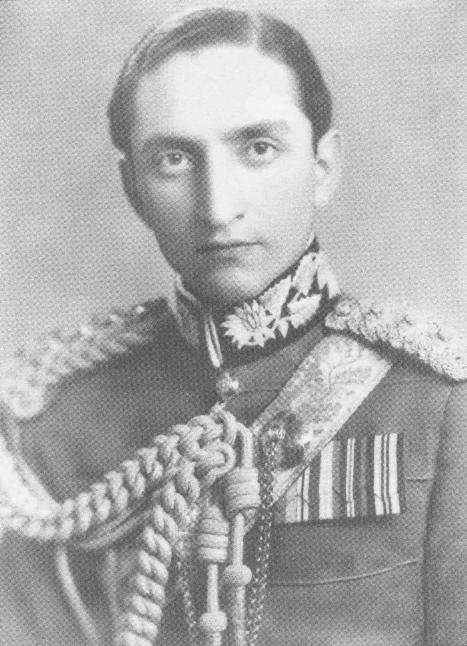
The following are three notes about Major General Sahibzada Yaqub Khan, who passed away January 25th after a long and very eventful life. First and foremost is an article about him that was written a few years ago by Dr Hamid Hussain, a well known, extremely erudite and highly respected chronicler of the British Indian army and its successor armies. The second is from Major Aghan Humayun Amin whose knowledge of military history in general and the history of the Pakistani army in particular, is second to none, and who is not shy of making his opinion known in sometimes salty and direct language. The last one is from Abbas Raza, who runs the famous 3quarksdaily.com and who has written a very personal obituary about a man he clearly greatly admires.


Before we get to any of these notes, let me put out there some questions of my own. Anyone who has answers to these, please let us know in the comments section; you will do a service to history 🙂

My questions are about his actions in March 1971. Unfortunately now that he has passed away without giving his own account of those days, we need someone else to step in with the details.

Sahibzada Yaqub Khan was the martial law administrator in East Pakistan as well as commander Eastern Command. His command had already prepared contingency plans for military action as early as November or December 1971 (“operation Blitz”). In February 1971 Admiral SM Ahsan (Governor East Pakistan) took a stand against the Yahya Khan regime’s actions (Sheikh Mujib had just won a majority in the National assembly, but his becoming Prime Minister was forestalled by Yahya’s decision to delay the national assembly session using various excuses) and Ahsan objected to this policy, then resigned and left Dhaka (in early March). All this is well documented in official records and personal accounts. Later on it became general knowledge that General Yaqub had been similarly courageous and far-sighted and had resigned rather than carry out the poliicy being sent down by GHQ. Once this was mentioned in one or two books, it was re-quoted in other books and by now it is “common knowledge”. But if you look closer, matters are a bit more muddled. It is not clear at what stage  and to what extent he made his opposition known, and no resignation is clearly mentioned. All we know is that he left Dhaka around 5-7 March (as far as I know, no one claims he had resigned before he left Dhaka) and went to Karachi; what happened when he got there? I have heard from junior officers (obviously not direct participants in high level meetings) that Yahya Khan was very angry with Yaqub for “having left his post without permission” and there are claims that General Yaqub was in danger of being court-martialed for desertion. According to Major Amin, he was questioned in the transit camp in Karachi and was then demoted to major General. Where was he posted then? Had he resigned? or was he forcibly retired? A formal inquiry was supposedly held against him for leaving his post, but its contents have never been revealed either (and may no longer be traceable). I am sure that as a highly intelligent person, he very likely opposed the army action being contemplated then by the high command, but the point is, the details of his opposition and actions remain unknown.

So, can someone fill in this gap with direct information or with quotes from written accounts? When did he leave Dhaka? and in what circumstances? Did he offer to resign? Was there an inquiry against him and what were its conclusions? What were his formal postings after that event? Under what circimstances did he eventually leave the army? Did he retain his pension and benefits when he did leave the army?
I hope someone can clarify these points.

By the way, what is clearly documented (by Altaf Gauhar in newspaper articles if I remember correctly) is his positive role in another fiasco: when Zia was President the army considered an early version of the Kargil plan that Musharraf later put into effect. General Yaqub Khan was Zia’s foreign minister at that time and opposed the plan in a cabinet meeting and it was dropped because of his opposition.
He may have been similarly prescient about 1971, but the details remain murky. For the sake of history, it would be good to find out exactly what happened and when..

Of course, Sahibzada sahib’s career as Bhutto’s ambassador to several great powers, as Zia’s foreign minister, then as the establishment’s chosen foreign minister to keep Benazir in check, and then as Musharraf’s envoy to justify his coup, all indicate that he was a solid and upstanding member of Pakistan’s ruling elite and was comfortable with military rule, and with the foreign policy priorities of the Zia and Musharraf regimes (including the jihad in Afghanistan and its softer version in the Musharraf era). He was also highly educated and well read and had an impressive personality that a lot of people remember with awe. And of course, he got high praise from people like Nixon and Kissinger. One imagines that had he been born into the elite of a great power (instead of being born into the fading North Indian Muslim elite) he could have been an Edward Grey, though probably not a Curzon or Palmerston.
I wish he had written his memoirs.


From Dr Hamid Hussain: 

MG ® Sahabzada Yaqub Khan recently passed away.  Last of the generation of officers raised in Raj army and served with successor states armies.  Few years ago, I wrote a piece about him that was published in his alma mater RIMC Dehra Dun magazine.  In addition to profile of Sahabzada, I also took a detour into archaic regimental histories as I found some facts fascinating.  May be this can be a tribute and obituary of the officer and gentleman.  Rest in Peace Sahabzada.

Hamid

Stranger Than Fiction – Lieutenant General ® Sahabzada Muhammad Yaqub Khan 
Hamid Hussain

Sahabzada Muhammad Yaqub Khan is part of that generation of subcontinent that witnessed some of the most exciting events of the last seventy years.  He was not only a witness but active participant in many events of these challenging times.  Some events of his life seem material for a novel rather than real life experiences.  This generation born at the zenith of British Raj in India received the best education that the Raj could offer and joined Indian army during Second World War.  Young lads from different religions and ethnicities were comrades in elite regiments fighting under the guidance of their British mentors.  As Captains and Majors they saw the independence of their land and departure of British.  Some had to leave their ancestral lands that happened to fall on the wrong side of the divide.  Former comrades became foes when their newly independent countries got entangled into prolonged conflict over the disputed territory of Kashmir.  Many fought against each other as Captains and Majors in 1947-48 war in Kashmir, in 1965 war as Brigadiers and Major Generals and in 1971 war as senior commanders of their respective armies.  In case of Pakistan, they saw the successful secession of eastern wing in 1971.  Yaqub is a poster child of this generation of officers.

Yaqub was born in the aristocratic household in the princely state of Rampur.  He studied at Prince of Wales Royal Military College at Dehra Dun.  He joined Royal Indian Military Academy at Dehra Dun and commissioned in Indian army.  He joined elite 18th King Edward VII Own Cavalry of Indian army.  During Second World War, 18th Cavalry left India in January 1941 for the Middle East theatre and landed in Egypt.  Regiment was then commanded by Lieutenant Colonel Howard Fowler (he had just taken over command from Lieutenant Colonel H. M. Tulloch) and senior most Indian Viceroy commissioned Officer (VCO) was Risaldar Major Kapur Singh.  Lieutenant Yaqub was with A Squadron (Hindu Jat) commanded by Captain J. M. Barlow.

18th Cavalry was part of 3rd Indian Motor Brigade commanded by Brigadier E. W. D. Vaughan (later Brigadier Filose) and grouped with  two other elite cavalry regiments; 2nd Royal Lancers (Gardner’s Horse) and 11th Prince Albert Victors’ Own (PAVO) Cavalry.  They were supported by 2nd Field Regiment of Indian Artillery.  Volunteers from all three cavalry regiments of 3rd Indian Motor Brigade formed Indian Long Range Scouts (ILRS).  It was a squadron strength organization commanded by Major Samuel Vallis McCoy and consisting of J (Jat), R (Rajput), M (Muslim) and S (Sikh) patrols.  In May 1942, Italian forces overran 3rd Indian Motor Brigade and large number of Indian officers and men became Prisoners of War (POW).   Yaqub’s comrade in 18th Cavalry was Second Lieutenant Abhey Singh.  Yaqub and Abhey came from similar backgrounds.  Yaqub was from the princely house of Najibabad and his father Sir Abdul Samad Khan was Prime Minister of the princely state of Rampur.  Abhey was from the princely state of Kota where his father Major General Sir Onkar Singh was Prime Minister of the state.   Two other officers of the regiments fighting alongside Yaqub’s 18th Cavalry were also from aristocratic families.  Major Rajendrasinhji Jadeja (he has the distinction of being first Indian officer to win DSO and later rose to become Chief of Staff of Indian Army 1953-55) commanding B Squadron of 2nd Lancers was from the princely state of Nawanagar and Lieutenant Sardar Hissamuddin Mahmud el- Effendi of 11th PAVO Cavalry was scion of the Afghan royal family.  Yaqub and Hissam were later polo buddies (along with Colonel ‘Huskey’ Baig and Colonel Sikku Baig they played at Lahore Polo Club).

Yaqub and Abhey along with the senior most Indian officer Major P. P. Kumaramangalam (2nd Field Regiment) were together in Italian POW camps of Avers and Avezzano.  In the confusing times of 1943 when Italian forces capitulated, these three officers escaped.  Yaqub had learnt Italian during captivity therefore he was leading the pack interacting with Italian peasants to try to reach the allied lines.   They were captured again, this time by Germans and they spent next few years in German POW camp of Braunschweig.  Yaqub learned German during his stay with Germans.  He was repatriated after the end of war in 1945.  1947 Yaqub opted for Pakistan army while his comrade Abhey Singh stayed with Indian army.  Abhey transferred to 17th Poona Horse and led a tank squadron in ‘Operation Polo’ when Indian army moved into the state of Hyderabad in 1948.  In 1965 war, Yaqub’s parent battalion 18th Cavalry managed to reach the Burki Police Station on Lahore front and their commandant Lieutenant Colonel Hari Singh Deora (later Brigadier) had his picture taken in front of Burki police station.  Yaqub commanded 11th PAVO Cavalry in 1952-3; the regiment that was in the same formation when he served with 18th Cavalry during Second World War.  In 1947, Hindu and Sikh soldiers of regiments allotted to Pakistan went to India and Muslim soldiers of regiments allotted to India came to Pakistan.  Muslim elements of 2nd Lancers (along with some elements of 8th Cavalry and 9th Deccan Horse) joined 11th PAVO Cavalry while Sikh squadron of 11th PAVO Cavalry went to 18th Cavalry and thus the circle was completed.

In 1947, Yaqub was Second in Command of Viceroy’s Bodyguards then commanded by Lt. Colonel Peter Hussey.  Indian army regiments were divided between India and Pakistan including Viceroy’s Bodyguards.  This unit consisted of Punjabi Muslims and Sikhs.  Like all other regiments, personnel and equipment of bodyguards was also divided.  Major Yaqub representing Pakistan and Major Gobind Singh (Jaipur Guards) representing India went to the stables of Viceroy’s Lodge to divide the property of the regiment.  Mountbatten’s ADC Lieutenant Commander Peter Howes arbitrated and at one time a coin toss decided about which country will get the gold carriage of Viceroy.   Yaqub came to Pakistan with the Muslim component and their share of the property of one of the oldest regiment of Indian army and became the first commandant of Governor General’s Bodyguards.  Yaqub’s elder brother Sahabzada Muhammad Yunus Khan was commissioned in Indian army from Officers Training School (OTS) at Bangalore and served with Garhwal Rifles.  In Second World War both brothers fought under Union Jack and both earned Indian General Service Medal (IGSM).  In 1947, Yunus opted for Indian army.  Immediately after independence, India and Pakistan went to war in Kashmir.  Yaqub was sent by Pakistan army while Yunus was sent to the same theatre by Indian army.  Yunus was with Garhwal Rifles (most likely 3/18 Garhwal Rifles commanded by a fine officer Lt. Colonel Kaman Singh and a superb senior most JCO Subedar Major Sher Singh Rawat as this unit saw lot of action and 1/18 Garhwal Rifles came to the theatre quite late in July 1948).  Yunus served as Deputy Military Secretary to President of India and retired at the rank of Colonel.

A number of Indian and British officers were captured by Italians in Middle East theatre in May 1942.  All three commanding officers of the regiments of 3rd Indian Motor Brigade; Lt. Colonel Fowler CO of 18th Cavalry, Lt. Colonel De Salis CO of 2nd Lancers and Lt. Colonel P. R. Tathem CO of 11th  PAVO Cavalry were bagged by Italians.  In the Aversa POW camp in Italy, a very strange chapter of Indian military history was recorded.   Italian commander of the POW camp, Colonel Errera appointed several Indian officers for management of prisoners.  These officers of different faiths and ethnicities were fighting under the flag of British Indian army and were now prisoners.  Major Kumaramangalam (2nd Field Regiment) being the senior most officer was appointed commanding officer of the camp.  Captain Yahya Khan (4/10 Baluch Regiment, now 11 Baloch of Pakistan army) was camp Adjutant and his assistant was Lieutenant Shamsher Singh.  Captain Tikka Khan (2nd Field Regiment) was Quarter Master.  Other inmates of the camp were Yaqub Khan (18th Cavalry), Major Ajit Singh (Royal Indian Army Service Corps), Captain Kalyan Singh (2nd Field Regiment), Captain A. S. Naravane (2nd Field Regiment), Lieutenant Abhey Singh (18th Cavalry) and Lieutenant Sardar Hissamuddin Mahmud el-Effendi (11th PAVO Cavalry).  Many officers of this POW camp later played important part in the history of India and Pakistan.  The Italian Colonel of the POW camp could not have imagined that he was holding a whole crop of future high power society.  This camp has the world record of holding so many future senior officers under its roof.  Kumaramangalam escaped from Italy but captured by Germans and was their guest for few years.  He later became Chief of Army Staff of India (1966-69).  Yahya Khan rose to become Pakistan army chief and then President (1966-71).  In 1971, Tikka Khan was Commander of Eastern Command and later became Pakistan army chief (1972-76).  2nd Field Regiment of artillery can be proud to have two army chiefs of rival India and Pakistan.  Yaqub Khan became Lieutenant General and served as commander of Eastern Command during the fateful days of 1971.   After retirement he served as ambassador at several important posts and Foreign Minister of Pakistan.  Hissam rose to the rank of Brigadier in Pakistan army.  Ajit Singh rose in the ranks to become Lieutenant General, Kalyan Singh and Naravane became Major Generals and Shamsher Singh Brigadier in Indian army.

Yaqub left his mark on Pakistan army.  He has many admirers as well as his critics.  Yaqub is pioneer of starting the intellectual life in Pakistan army.  He served as Director Armored Corps as Brigadier, 6th Armored Division commander, Commandant of Staff College and Chief of General Staff (CGS)  as Major General and Corps Commander of East Pakistan at the rank of Lieutenant General .  As Commandant of Staff College at Quetta, he introduced Pakistani officers to the higher direction of war.  He was also instrumental in establishment of National Defence College (now National Defence University) with its two tiered course.  There were not too many thinking generals in Pakistan army at that time.

In view of his aristocratic background and intellectual bent, Yaqub was different in outlook.  He was from the old school of strict adherence to protocol and traditions.  One of his junior officers who served with Yaqub when later was commanding 11th PAVO Cavalry recalls an incident in the mess.  In one of the early days of his command, Yaqub stormed out of the dinning room because his cold meat was not properly dressed and potatoes were not of uniform size.  The officer swears that he saw tears in Yaqub’s eyes.  I can easily visualize that during Second World War, when ready to surrender, Yaqub donning his best cavalry uniform and asking his orderly to polish the boots with extra shine and then put on his cavalry sword and wait for the Italian officer to show up and Yaqub surrendering with full protocol.

Yaqub’s critics point to three incidents pertaining to three different times of his life.  First is when he was in Kashmir war in 1947-48.  Yaqub was ordered to rescue a small picket surrounded by Indians.  He was a thinking officer and kept calculating his own likely action and enemy’s possible reaction.  In the meantime, Indians overran the picket.  Second was when he refused to carry out military action against Bengalis when he was commander of Eastern Command.  Yaqub was sacked from the army for his refusal.  At that time, almost all officers regardless of their rank and social background denounced Yaqub.  Later, with hindsight, some changed their mind and thought Yaqub did the right thing.  Third criticism relates to his post retirement career.  He served at important ambassadorial positions under Prime Minister Zulfiqar Ali Bhutto and later served as Foreign Minister of Bhutto’s executioner General Muhammad Zia ul Haq without any qualms.

In one life, Yaqub has enjoyed every aspect of an adventurous journey.  A long and fulfilling military career was followed by an equally rewarding career of a well respected diplomat.  In addition to these full time occupations, he continued his passion of reading (his grandfather Abdus Salam Khan was an avid reader and kept a large library) with some philosophical bent and played polo.  He is probably the oldest living officer in Pakistan and at the ripe age of 91 he has a treasure chest of memories that can bring a smile as well as a tear or two in the eyes.

Notes:

1- Major General Partap Narain.  Subedar to Field Marshal (New Delhi: Manas Publications, 1999)
2- Major General ® A. S. Naravane.  A Soldier’s Life in War and Peace (New Delhi:  A. P. H. Publishing Corporation, 2004) 
3- Larry Collins and Dominique Lapierre.  Freedom at Midnight (New York: Simon & Schuster, 1975)
4- Charles Chenevix Trench.  The Indian Army and the King’s Enemies 1900-1947 (New York: Thames & Hudson, 1988) 
5- The Tiger Kills (London: Her Majesty’s Stationary Office,1944)
6- M. Y. Effendi.  Punjab Cavalry: Evolution, Role, Organisation, and Tactical Doctrine 11 Cavalry (Frontier Force) 1849-1971  (Karachi: Oxford University Press, 2007)
7- Colonel Abdul Qayyum.  Pakistan Army’s Mosaic of Ideas – I.  Defence Journal, July 2000
8- Hamid Hussain.  Stranger than Fiction – Story of Identity, Loyalty, Sacrifice and Betrayal.  Defence Journal, December 2007
9- Hamid Hussain.  Lest We Forget.  Defence Journal, March 2010

Agha H Amin , Major (Retired) ,
11 Cavalry , 29 Cavalry (attached) , 58 Cavalry , 15 Lancers , 5 IAS (commanded) , 14 Lancers, 15 SP (attached)

From Major Agha Humayun Amin: 

My fascination with Sahibzada Yaqub Ali Khan began in 1975 as I read about him and heard about him from my father.

He descended from Yusufzai Pathans from a village called Maneri near Swabi , who migrated to Raohailkhand as raiders and maruaders in 17th and 18th century .I made it a point to visit Maneri while serving as an instructor at Armour School Nowshera in 1991 . Interestingly I found Maneris fame as a top class village of UJRATIS , paid assasins who in 1991 killed people for as low as 3000 Rs in 1991. My Pashtun friends told me that women of Swabi were notorious or illustrious for being EXCEEDINGLY DOMINATING.

 A similar breed of Shinwaris as Sahibzadas ancestors, from Dur Baba constituted my maternal grandfathers fifth ancestor Mattay Khan a Shinwari from Dur Baba  present day Ningrahar who settled in Sikandara Rao in Aligarh District. Mattay Khan built a Haveli on a hill overlooking a pond (Jouhar) or (Hauli) . The Haveli still exists and the owner was the principal of the High School at Sikandara Rao.

Colonel Salman famous as Ustaad of Ustaads in Afghanistan having taught all the WHOS WHO from Hekmatyar and Ahmad Shah Massoud down to OBL and Mulla Omar belonged to a family who had migrated with Babar from Uzbekistan to Dibai near Sikandara Rao . Salmans father Colonel Ahmad won an MC in Burma while serving in Punjab Regiment and later raised 1 East Bengal. His uncle Aftab Sahib was my maternal uncle Saad Khairis batchmate in the CSP/PFS. Aftabs niece is married to my first cousin. Major General Wajahat also belonged to a village near Sikandara Rao.

When I visited Dur Baba last in January 2015 it was more notorious for being targeted by US drones.

These Shinwaris served in Mugahl Army , army of Nawab of Oudhs  and in Maratha Cavalry as part of various Risallahs of Pathans.They also contributed to all Ten Light Cavalry regiments of Bengal Army from 1780 to 1857. In 1857 Sikandara Rao followed Punjabi Opportunism in staying loyal to English East India Company while major part of Aligarh district was in rebellion against the company. Five of my maternal grandfathers uncles and grand uncles joined the rebellion and simply disappeared after 1858 . But Sultan Khans grandfather remained staunchly loyal although 5th Light Cavalry and Sultan Khans father served as Prosecuting inspector at Hoshiarpur till 1901 or so.Veteran PPP leader ND Khan also hailed from Sikandara Rao or surrounding area.Sikandara Rao had a varied collection of Shinwaris , Yusufzais and Sherwanis who were the leading zamindars and talukdars of Aligarh district.A relative Obaidullah Sherwani rose to rank of Deputy Secretary Establishment in Pakistan retiring in early 1960s. His son in law Mr Karrar served as General Manager of the glorious Midway House owned by KLM for many years from late 1960s to 1980 or so. Karrar Uncles son migrated to UK and married an Italian lady.

He appeared to be an ideal military personality and I quoted him as a high calibre personality in my article Orders and Obedience published in Pakistan Army Journal in March 1991.

I met him in 1994 and met him frequently till 1999 or so.

As I studied Pakistans 1971 debacle Ex Major General Yaqub Ali Khan (demoted to Major General in 1971) appeared a highly overrated character.

When the Sahibzada resigned he was a three star general . He was then demoted to two star and made to sit in a majors office in Transit Camp Karachi which now houses the ISI . His resignation was then accepted a few months later .

A rare case where a Pakistan Army officer resigned which means surrendering all pension and privileges.

Ill informed and poorly read Pakistani journalists fallaciously describe General Jahangir Karamats retirement as resignation while in reality it was forced retirement with the general enjoying all military perks and privilieges including pension.

He was admired for being a strategist but he FAILED to correctly formulate a strategic plan for the Pakistan Army for 1971 war . This includes his successors and all the stewards of strategic planning of Pakistan Army from 1947 to 1971.

While Mr ZA Bhutto was painted as Pakistan Armys scape goat for 1971 Crisis the hard fact is that Pakistan Army was TOTALLY STRATEGICALLY CLUELESS and had no viable STRATEGIC PLAN to deal with Indian Major Attack on East Pakistan.

When Sahibzada Yaqub Ali Khan was ordered to carry out a military crackdown in East Pakistan he refused . His motives are not clear . Whether it was excess of Moral Courage or Irresolution , we do not know and he never made it clear as long as he lived.

A man of all seasons he served in various ambassadorial assignments under various civilian and military governments.

As one who contributed in education of future generations by sharing his knowledge , his role was ZERO as he did not publish any memoirs.

He was an untested horseman in actual operations of war as he never commanded anything in war except as a very juniour officer at Gazala where he was captured by DAK and incarcerated as a PW in Italy.

His role at Chawinda remains controversial and unclear and many allege that he was responsible for the Pakistani rout at Phillora although Sardar Yahya Effendi tried to give him a clean chit.

His conduct as PW was eventless and drab as unlike his fellow prisoner Yahya Khan he never made any attempt to escape.Also another PW in Italy was another overrated general Tikka Khan who later rose to be Pakistan Army chief who also never tried to escape.

It goes to Yahya Khans credit that he made four attempts to escape.After his failed third attempt the Wehrmacht German camp commandant warned him that if he tried to escape again he would have him shot.

Yahya Khan succeeded in his fourth attempt and walked 350 miles cross country , enjoying traditional Italian hospitality in many villages to join the British Indian forces in middle of Italy.

A famous incident about Sahibzada Yaqub Ali Khan  as Commanding officer 11 Cavalry was when he asked the Risaldar Major for 5000 Rupees and when the Risaldar Major gave him 5000 Rs kept searching the regimental accounts for the missing 5000 Rs .

When the Risaldar Major inquired why he remained in office that whole night he told him that he was searching for the 5000 Rs that he gave him .The RM in disgust showed him his cheque book and told him that he had withdrwan 5000 Rs from his personal bank account and the 5000 had nothing to do with PAVO 11 Cavalry Funds.

If Aunty Nunni ( daughter of Nawab Mumtaz Hassan Khan Bangash of Jahangirabad and a descendant of Nawab Shefta Khan Bangash) is to be believed he frequently visited his brother in Rohailkhand in India to settle his share of the properties in India.

In best tradition of Indian Muslims no Nawab from India migrated from UP to Pakistan as this would have disinherited them.Only Nawabzadas , Sahibzadas came who were not entitled to any major share in Talukas or Jageers by law of primogeniture that entitled only the eldest son to the estate).


From Abbas Raza:
At 3quarksdaily.com
A great man and one of the most significant figures in the history of Pakistan has just died. I consider it my great fortune that I came to know him and the idea of a world without him in it is quite unbearable. Here is what I wrote about him more than 10 years ago on 3QD:

Sahabzada Yaqub Khan is the father of one of my closest friends, Samad Khan. He is also probably the most remarkable man I have ever met. All Pakistanis know who he is, as do many others, especially world leaders and diplomats, but to those of you for whom his name is new, I would like to take this opportunity to introduce him.

The first time that I met Sahabzada Yaqub Khan about six years ago, he was in Washington and New York as part of a tour of four or five countries (America, Russia, China, Japan, etc.) relations with which are especially important to Pakistan. He had come as President Musharraf’s special envoy to reassure these governments in the wake of the fall of the kleptocratic shambles that was Prime Minister Nawaz Sharif’s so-called democratic government. Samad Khan, or Sammy K as he is affectionately known to friends, invited me over to his apartment to meet his Dad. I had heard and read much about Sahabzada Yaqub and knew his reputation for fierce intellect and even more intimidating, had heard reports of his impatience with and inability to suffer fools, so I was nervous when I walked in. Over the next couple of hours I was blown away: Sahabzada Yaqub was not much interested in talking about politics, and instead, asked about my doctoral studies in philosophy. It was soon apparent that he had read widely and deeply in the subject, and knew quite a bit about the Anglo-American analytic philosophy I had spent the previous five years reading. He even asked some pointed questions about aspects of philosophy which even some graduate students in the field might not know about, much less laymen. Though we were interrupted by a series of phone calls from the likes of Henry Kissinger wanting to pay their respects while Sahabzada Yaqub was in town, we managed to talk not just about philosophy, but also physics (he wanted to know more about string theory), Goethe (SYK explained some of his little-known scientific work, in addition to quoting and then explicating some difficult passages from Faust), the implications of Gödel’s incompleteness theorem, and Urdu literature, of which Sahabzada Yaqub has been a lifelong devotee.

001

PS: a note from Khalid Hasan regarding SYK:

By the way, now that we are on anecdotes, here is one i heard from an officer who was with him in the armored corps: General Zia (then colonel Zia) was his GSO, but he wouldnt let Zia ride in his car with him…he said Zia puts oil in his hair and it makes his car smell of hair oil. … Darogh ba gardan e ravi 🙂

More “collateral damage” in Bacha Khan University

Taliban terrorists attacked Bacha Khan university in Charsadda in Northwest Pakistan 2 days ago and killed at least 22 students and faculty. The same group that claimed responsibility for a horrendous school massacre in December 2014 has claimed responsibility for this one.  The attack should not come as too big a surprise, since Umar Mansoor, the “Khalifa” of the Taliban group that claimed the first attack had vowed after that attack to attack more schools and universities. You can see his statement in the video below.

After the last attack, the Pakistani army claimed it had killed those involved in planning and facilitating the attack and stopped talking about Umar Mansoor until he showed up a few months later to claim some new attack. Even then, he would be in the news for a day or two and then disappear from the radar. He is now back in the news. In a few days, he will again disappear from it.
So it goes.

Meanwhile, Pakistan’s incredibly efficient and competent “Inter-Services Public Relations” (ISPR) department (headed by a three star general, probably the only military PR department in the world, perhaps the only one in history, to be led by a three star general; we may not produce Guderians and Rommels, but we do produce Bajwas, Mashallah) was on air within minutes to make sure we all understood how:
A. The army had reacted extremely competently to the attack and the attackers had been killed in short order (this claim has some credibility; our mid-level officers and soldiers are indeed competent, brave and aggressive and deserve some credit. They are certainly more competent than their Indian counterparts and in Pakistan, that may be all that matters. The university’s security staff and the police may or may not deserve some credit as well, but we will likely never know, since Police-ISPR and Chowkidar-ISPR are not as well funded as the army’s ISPR).

B. The attackers came from Afghanistan and may have had foreign backing (hint hint cough RAW cough cough), so dear contrymen, we are off the hook. WE didnt do it and neither did OUR proxies.

C. The army chief is flying around as we speak, raising morale, calling the Afghan president for a chat and generally doing stuff (and need we say, the civilians have no clue).

But what this ISPR effort (and the concurrent appearance of multiple military proxies on TV channels, all claiming that India was behind this attack) really tells us is that the game remains the same. Even as we were being told that we are the victims of cross-border terrorism and that this was intolerable and no state could allow its neighbors to harbor terrorists who come across the border and kill innocents, OUR terrorists (the good Taliban) proudly claimed responsibility for killing another group of innocent civilians in Kabul. And of course, this comes just weeks after another party of “good terrorists” had attacked an Indian airbase in Pathankot, and of course we need not go back all the way to another group of “good terrorists” who shot up civilians in Mumbai train stations and hotels several years ago.
And so it goes.

General Asad Durrani, ex-chief of the ISI and proud “intellectual soldier” said it best; the deaths of hundreds of innocent students in Pakistan are the collateral damage of our successful strategy of “winning” in Afghanistan. Great nations have to be willing to make small sacrifices. And what are a few lies between friends?

Watch at 9 minute mark onwards. Please do. You will not regret it.

 What more can one say?
There are, literally, no words.

But the people are beginning to lose their patience.

Pakistan and India 2016. To talk or not to talk?

Terrorists attacked an Indian Air Force base in Pathankot in a New Year strike that threatens to derail yet another attempt (this time on Prime Minister Modi’s initiative) at improving relations.

Some of the terrorists’ fellow operatives in Pakistan have been identified in the media (as expected, they are university graduates unhappy at the Picketty-inequality they see around them), take a look:
Embedded image permalinkEmbedded image permalink
Embedded image permalink

Myra Macdonald has summed up the strategic situation around this attack very well in this excellent piece and it should be read in its entirety as background for this post. As the piece makes clear, the situation is not too optimistic and it may well be that it will get worse. On the other hand, Pakistan has not gone into its habitual denial mode and may even take some action against some of the terrorist networks involved. But some action may not be the same as enough action and enough action may not even be possible for the current regime in Pakistan. The question then arises, why should India bother to continue any talks with Pakistan? Since I remain in favor of such talks (albeit at mid-level and with clear and specific aims), I get a lot of heat on social media from Indians (as well as some Pakistanis) on this topic. I will try to explain some of my reasoning by trying to re-enact the sequence in which a pro-talks position can seem reasonable (at least for now), and as usual, I will have to start quite far back:


1. I take it as a given that partition was a poor solution to a real problem and has only served to perpetuate and strengthen Hindu-Muslim differences in the Indian subcontinent. But what has happened has happened, and history has moved on. Borders have been in place for decades and even though Bangladesh separated from West Pakistan, the basic formula of separating Muslim majorities at the Eastern and Western extremities of the subcontinent from the modern state of India remains in place and is unlikely to be reversed in the foreseeable future. This is recognized not just be those who cooked up the original two-nation theory, it is also recognized by most Indian nationalists and Hindutvadis (a smaller core may continue to harbor dreams of reuniting all of Indian civilization in one Hindu-dominated country, but even the dreamers do not see this as an imminent possibility; some of them even see partition as a painful but necessary first step in defanging India’s Muslim minority, but this is all a discussion for another day).

2. The Two-nation theory (TNT) in its full Pakistan military academy format (a format that really took hold well AFTER the theory was used to create Pakistan) is a dangerous theory and a recipe for endless war. This theory implies (though not all adherents are conscious of this implication) that ALL Indian Muslims became “un-Indian” the day they became Muslim. Anywhere that they are in majority, they deserve to be formally separated from secular (or Hindutvadi) India so that they can live in their new and true desired state of Islamic Pakistan.  Anywhere that they are in a minority, they are only staying in India because it is not feasible to separate YET.
Kashmir, being a Muslim majority state (though including two large infidel-majority regions within it) therefore belongs to Pakistan and must be reunited with it. Arguments about rivers and communications are added to provide secular cover for this theory. That is the project which our Jihadist policy is supposed to accomplish. This obviously means conflict with India is not resolvable until Kashmir is handed over to Pakistan. Since it is abundantly clear that no Indian government will accept that solution, conflict will be endless until one side wins.

3. It is the historic task of the Pakistani bourgeoisie to give up on the two-nation theory so that they can stop this endless war and make a reasonable peace with India,  with its associated peace dividend for the great mass of Indians and Pakistanis (and those beyond the two countries who pay for our proxy wars, as in Afghanistan and to a lesser extent, Bangladesh, Nepal and even Sri-Lanka).

4. As the Jihadist project grew, it also grew to be a threat to other nations (USA, China, Iran, and everyone everywhere) and to the people, and then even the elite, of Pakistan itself.  Since the project involved setting up and supporting a vast infrastructure of Jihadist Sunni Islam, it has been poison for all non-Sunni residents of the nation (this is simply a given because radical Sunni Islam prescribes very harsh conditions for the survival, if any, of heterodox sects and other religions; and no survival at all for atheists). As armed gangs proliferated they learned to do other things armed gangs normally do. They extort, rob, kill for payment, etc. etc.  Even the United States (initially a major supporter and patron of the Jihadi project) switched sides and is no longer tolerant of most (and some will claims, of all) such gangs. The toll exacted by their depredations on the economy and the social fabric needs no further explanation.

5. In this setting many in the civilian elite (especially those whose main concern is making money) are willing to give up on the Jihadi project if that is the only way to get peace and international patronage. The deep state has been more obstinate. They have given up bits and pieces of the project when pushed very hard, but they have not given up on its core: the “good jihadis” who target India. This has opened a bit of a gulf between the civilian politicians (most of whom, except the explicitly Islamist parties) are willing to give up the project, and the deep state, which still clings to its original Indian phase (and for that matter, with greater circumspection, even to its Afghan phase) of this violent and nihilistic project.

6. India (at least for now) does not have decisive military superiority and cannot simply impose war on Pakistan to force its will on Pakistan (not without risking unacceptable casualties and setbacks to its economic dreams). When an attack happens, it has to look for other levers, short of outright war. Many such levers probably exist, but the international community will not cooperate with India in this regard unless attacks cross some internationally accepted red line. Currently that red line does not include low casualty attacks. This irks many Indians no end (and understandably so), but the real point is that this may change in the future. Until it does so, India’s options are limited, but when it changes, they become much more plausible and threatening to Pakistan.

7. If and when the narrative shifts decisively against Pakistan (and unfortunately for GHQ, it is shifting rather fast), more and more of these levers will become usable. This is the crucial point: India can do more right now, but it is risky and may reverse its own international standing and economic progress in the process. But if and when the narrative shifts decisively in its favor, its freedom of action will expand.

8. By clearly taking the initiative for peace, India is resetting at least one part of that international narrative. It is making it harder to blame Indian intransigence for the failure of peace moves. By continuing to talk (albeit at mid-level and with very clear demands) it may also exacerbate the civil-military conflict within Pakistan.
It would be a mistake to think that the security establishment simply does what it pleases in Pakistan. It does not, and it faces increasing rifts within the elite. When someone like Ashraf Jahangir Qazi (a pillar of the sane deep state) writes like this, it means they face very real resistance. In time (and this time is not infinite, we are talking relatively short term), this makes it harder for the security establishment to maintain its own red lines within the country and outside it. Outside powers increasingly see an establishment at odds with its OWN elite. Domestic groups see it as being dangerous and even suicidal. Perceptions matter. It is in the interest of India as well as of the peace lobby (which is really the “anti-hard-TNT” lobby) in Pakistan to change perceptions and create a clear separation between the civilian ruling elite and the security establishment if the security establishment refuses to change policy. 


9. This may not work at the first level, i.e. at the level of “peace talks succeed, peace breaks out”, that may not happenIn fact, it may even be LIKELY that it will not work in this way and the security establishment will sabotage peace moves or will be unable to deliver peace even if it changes its mind and wants to act sanely.  But even if the initiative fails at this level, it will work to change the international narrative decisively in India’s favor (and by this, I don’t just mean the PR side of things, though that too matters to a small extent. I mean how the great powers actually perceive the situation and what options they support or tolerate). i.e. it will help change the “narrative” in favor of India’s position and make the next red line easier to enforce.

10. I obviously hope it works at the first level. As a Pakistani, I would much prefer that the security establishment comes to its senses and the country manages to get out of the jihadi violence cycle (none of which will be easy in any and every imaginable scenario). I don’t think war is in the interest of the Pakistani OR Indian elite or their long-suffering common people. Very narrow sections of the elite may believe it is in their benefit to stoke conflict, but they are narrow sections in both countries…that is exactly the reason why there is an opening.
That may be hoping for too much. But miracles are possible. I am afraid that the core Islamicate region is in the throes of a major civilizational crisis. As a major Islamic state, we share in that crisis, over and above our India-centric adventures. But we are also part of Indic civilization and our divorce from that civilization is not complete. If we can move back into that orbit (NOT back into the Indian state, just back into Indian orbit) we will have many problems to solve (the largest collection of really poor, malnourished, poorly governed people in the world for example) but at least we will not have to solve the Islamic political crisis just to continue living. That will be a major relief and a huge step forward. For that to happen, we need to make peace with India. For that to happen, both India and Pakistan will need to try (even at the cost of transiently looking bad to their own nationalist constituency) some very patient and competent maneuvers. That sounds like a tall order.
But we have to hope.
narendra modi, modi pakistan visit, modi lahore visit, modi sharif meet, modi nawaz meet, modi twitter, india news, latest news

Images

Modeling ISIS chances in your country..

This is just a random thought. I just wondered if more capable people may comment on this:

Can we construct a simple model using only 2 variables (yes, many other variable are relevant; the whole point is, can we still make a good guess based on just these two):

1. Strength of affiliation of Muslim population with Sunni classcial shariah (determined by polling results?)
2. Strength of state security institutions (determines by ??)

This model to predict whether a serious ISIS threat is coming to country X in the near future.

e.g. Malaysian Muslims are very strongly in favor of classical Sunni Shariah. But Malaysia is also a strong state, with effective institutions of law enforcement, intelligence, internal security, what have you. So, maybe not a serious ISIS threat. In the short term.

Azeri Muslims do not have a very strong Shariahist affiliation. Also pretty strong state security institutions. So low threat.

Pakistan has strong shariah affiliation in the population, and areas where the state is very weak (and security institutions are compromised by infiltrators?), so a serious threat.

Bangladesh has moderately strong shariah affiliation, moderately weak security institutions. High risk or moderate risk?

Iran has no Sunnis to speak of, and strong institutions. So very low risk..

Egypt has strong shariah affiliation, and areas where the state is weak, so high risk?

Saudi Arabia has VERY strong shariah affiliation, but also strong security institutions. So risk is still lower than Egypt?

And so on.

Are there some other “two variable models” that do better?

Just a random thought (and yes, I put no numbers out there, so hardly a mathematical model. But can it be one??)

Roger Scruton on the Postmodern Turn

Even if we do not have a very deep connection with Scruton’s own loyalties and ideals, this essay has some excellent insights.
Excerpts:
“..And reflecting on this I noticed certain peculiar and recurring features of all the literature that I have mentioned. First it is literature directed at an enemy. All of it is devoted to describing the ruses and machinations that maintain the existing order in being, and also to describing that order as oppressive, machine-like, and in some deep sense alien. Secondly, the nonsense, although it cannot be deciphered intellectually, in terms of the true and the false or the valid and the invalid, can be easily deciphered politically. It is directed nonsense, and it is directed at the enemy. It is not just the existence of the enemy that is under attack. The assault is aimed primarily at the language through which the enemy lays claim to the world, the language that we know as rational argument and the pursuit of truth. ‘The love of truth,’ declared Jacques Lacan, ‘is the love of this weakness whose veil we have lifted; it is the love of what truth hides, which is called castration.'[6] The love of truth, therefore, has no independent validity, being merely a disguise worn by the weaker party. There is no real commodity at issue save power: the enemy shoots out words, and so do we. And victory is brought by the magic wand, the square root of minus one which, waved in the face of the enemy, reveals that he has no balls.
Two other features of the 68 literature deserve mention. First there was an extraordinary agreement among all the writers concerning the nature of the enemy. The enemy was the bourgeoisie, the class that had (according to the Marxist caricature of history) monopolised the institutions of French society since the Revolution of 1789, and whose ‘ideology’ had spread through all the channels of communication since then. Behind the patriarchal family excoriated by de Beauvoir, behind the institutions of the prison and the madhouse debunked by Foucault, behind the ‘machine désirante’ of Deleuze and Guattari and the norms of heterosexual respectability mocked by Sartre in Saint Genet stood the same force, both economic and spiritual and too vast and pervasive to be identical with any merely human group, the force of the bourgeoisie. The amateur revolutionaries to whom I would speak were very unclear, as a rule, as to what they hoped to put in the place of the ‘system’ and the ‘structures’ that they were intent on destroying. But they were united in their conception of the enemy, and in the determination to destroy him or it. The inimical bourgeois was an all-pervasive abstraction, which could be encountered anywhere, and whose presence was proved precisely by the sudden eruption into consciousness of an implacable desire to attack. If the impulse arose to turn over a car and set fire to it, then this car was a symbol and a possession of the bourgeoisie. If you were stirred to anger by the sight of a couple respectably dressed and walking arm and arm through the street, then that proved they were members of the bourgeoisie. If the sight of a policeman led you to pick up a stone, then that was because policemen in general, and this one in particular, are bourgeois agents. If a book, a picture or a piece of music offended you, then that was a proof of its bourgeois origins, and if you could not pass a priest without mocking and insulting him, this was the clearest sign that religion is a bourgeois institution. Defoe wrote at the time of Queen Anne that the streets of London ‘were full of stout fellows prepared to fight to the death against Popery, without knowing whether it be a man or a horse’. So was it true of the Paris of my youth, that its streets were full of young people prepared to fight to the death against the bourgeoisie, without knowing whether it be an idea or a uniform, and certainly not knowing that, by any reasonable understanding of the term, they themselves were it.
One other feature of the literature of 68 deserves mention, because it bears on the lasting influence that this literature has had, especially on academic studies in America. Behind all the flamboyance and the nonsense it was possible to discern the vestiges of previous ideas – ideas that had been alive at the end of the war, when Paris was a centre of serious intellectual debate and when the post-war generation was attempting to shake off the memory of occupation and betrayal, and to conceal the bad things that it had felt and done. The discussions of the Prague school of linguistics, members of which had sought refuge in France in the 1930s, and who had been inspired by the work of Saussure, were absorbed into those of academic Marxism and literary Freudianism, to produce the peculiar synthesis that we find in the work of Roland Barthes. The distinctions between ‘signified and signifier’, between langue and parole, between phoneme and morpheme, entered the new language, alongside the theories of base and superstructure, use value and exchange value, production and exploitation taken from Marx and the theories of repression and the libido borrowed from Freud. The distinctions and theories were stirred together in the great cauldron that sat in the revolutionary fire, and extraordinary and exciting results often followed, such as Lacan’s proof that ‘schizophrenia’, and I quote from one of the great man’s followers, ‘designates a purely metonymic form of desire untrammelled by the metaphoric associations of equivalence and meaning imposed on desire by social and/or linguistic codes operating in the name of the father’.[7] Or Guattari’s proof that, by getting beyond the signifying semiologies in which we have hitherto been bound to become ‘a-signifying semiotic machines’ we will ‘free desire-production, the singularities of desire, from the signifiers of national, familial, personal, racial, humanist, and transcendent values (including the semiotic myth of a return to nature), to the pre-signifying world of a-semiotic encodings’.[8] The monsters of unmeaning that loom in this prose attract our attention because they are clothed in the fragments of theories, picked up from the aftermath of forgotten battles – the Marxist theory of production, the Saussurean theory of the signifier, the Freudian theory of the Oedipus complex, all I should say, thoroughly refuted by subsequent science, but all somehow retrieved by the Parisian scavengers, and given a ghoulish after-life in the steam above the cauldron.

….These tell us that the world is in the hands of the Other; that the other is capitalism, bourgeois society, patriarchy, the family, in other words, the array of traditional power-structures from which we must be liberated; that we can understand and decipher the secrets through which these structures are maintained in being; and that by understanding the Other we empower the self. In short, the metaliterature that has arisen in the wake of 68 consists of spells, with which to subdue an alien world and open a path to liberation. And that is why it has secured its extraordinary following.
To me this is the most important cultural fact: not that nonsense should survive and propagate itself. This is nothing new, as we know from the history of alchemy and ‘esoteric doctrine’ – the history of dullness, as Pope called it, in a satire as pertinent today as it was more than two centuries ago. Even if we lack a plausible epidemiology of nonsense,[13] there is no mystery in the fact that nonsense, once introduced, has a natural capacity to reproduce itself.

The answer, I believe, is membership. There are broadly two motives for embracing an intellectual movement: one is the love of truth, the other the need for membership. Religions pretend to address the first of those motives, while in fact recruiting the second. Science ignores the second and promotes the first. But the humanities have always been caught in an awkward position between the two. The common sense curriculum frames the study of art and literature in the language of truth: it asks you to collect the data, to evaluate them, to draw conclusions as to their lasting worth and their place in the wider scheme of things. It does not promise to make sense of the world, to bring companionship or love, still less does it bring an offer of redemption. Young people are drawn to the humanities, however, because they have felt in themselves the need for something other than bare truth and argument. They are drawn by a primal human need, which is for the rite of passage, the transition into the community. The existence of this primal need was one of the major discoveries of French anthropology at the turn of the 20th century. And what quickly became clear in the wake of thinkers like Arnold Van Gennep and Claude Lévi-Strauss is that modern societies don’t provide for it. Rites of passage, in post-industrial society, are truncated or non-existent, and this is one reason why so many people find the escape from adolescence so hard.

Take a sentence like this (from an essay on Deleuze): ‘social production is not contraction on a progressive, historical continuum or a subject-orientated linearity, but is a resonation of the virtual as a fractal attractor.'[16] Taken out of context that sentence is nonsense; but so, you will discover, is the context. On the other hand it is futile to complain that the sentence does not mean anything, or that there is no way either to refute or to confirm what it says. For that is its point. By writing in this way the author is displaying her membership: she is showing that she has undergone the ordeal of initiation, in which her mind was stripped of the old and oppressive meanings, and offered a new and purer way of thinking, in which truth has no voice, as sin has no voice in the mind of the born-again Christian.

Take a sentence like this (from an essay on Deleuze): ‘social production is not contraction on a progressive, historical continuum or a subject-orientated linearity, but is a resonation of the virtual as a fractal attractor.'[16] Taken out of context that sentence is nonsense; but so, you will discover, is the context. On the other hand it is futile to complain that the sentence does not mean anything, or that there is no way either to refute or to confirm what it says. For that is its point. By writing in this way the author is displaying her membership: she is showing that she has undergone the ordeal of initiation, in which her mind was stripped of the old and oppressive meanings, and offered a new and purer way of thinking, in which truth has no voice, as sin has no voice in the mind of the born-again Christian.

But what is the salvation that this community offers? The freedom to ‘speak in tongues’ has a certain value, certainly; but in itself it is no lasting consolation. The born-again soul requires solidarity, immersion in a cause, the sense of standing side-by-side with fellow initiates in the indestructible phalanx of the saved. Politics enters the liturgy as the binding promise of redemption, the thing that holds the community together in defiance of the world. If you ask why the politics should be invariably left-wing, and subversive of the ‘power structures’ of the bourgeois order, then surely the question, conceived in this way, will answer itself. The membership that is offered is one of repudiation – a defiance of a social order that has offered no clear path to inclusion, and which makes no obvious space for an academic leisured class. Of course, there will be schisms and heresies, just as there are in Marxism, Freudianism and the other subversive movements of recent times. But there will also be a shared posture of negation. Academies are in the business of defining themselves as another space outside the ‘bourgeois’ order, a space in which old hierarchies, customs and rites of passage have no authority, and into which young people can be recruited at the very time of life when recruitment has become an urgent need – a need of the blood.

By the way, I think there is another aspect that this particular essay does not touch upon: and that is the important role played by “postcolonialism” and the various native informants recruited into the postmodern academy; it is these (generally super-elite westernized, left-wing) intellectuals that give the postmodern turn some bare-minimum legitimacy and a certain frisson that can only come from actual occupation, imprisonment, cultural imperialism, appropriation and shedding of blood. Something that narcissistic bullcrap alone could not have managed to carry off on its own steam forever. I am not saying postcolonial BS is all true. Clearly a lot of it is just BS, or consists of facts shorn of context, or cherry picked shamelessly (or ignorantly; never ascribe to malice what can be explained by ignorance).. But at least it still contains traces of real events. Actual invasions, decapitations, floggings, caged displays and hangings. Without them, where would the postmodern turn go?
I like to think that our elite desi intellectuals, by their brave willingness to “witness” and regurgitate the nonsense generator, and to generously donate some facts to it, have provided some of the fuel that keeps this crap alive; We are owed more professorships than we have got 😉
Image result for gayatri spivakImage result for scruton
Image result for postmodernism art

Saudi TV Host and Islamic Militant

Watch this and note that the Saudi host has no logical argument against the articulate Jihadi sitting in front of him. Once you accept the basic Wahabi ideology (which is really just classical Sunni Islam taken to its logical conclusions without compromise of any sort), it is very hard to see why the militant is wrong and the host is right.
Tough.

Indian Islamist Zakir Naik is by no means unique in thinking grave worship is wrong. You do not have to be a wahabi to think that. But they do take it to its logical conclusion.
Logic is the enemy. Seriously.

Brown Pundits